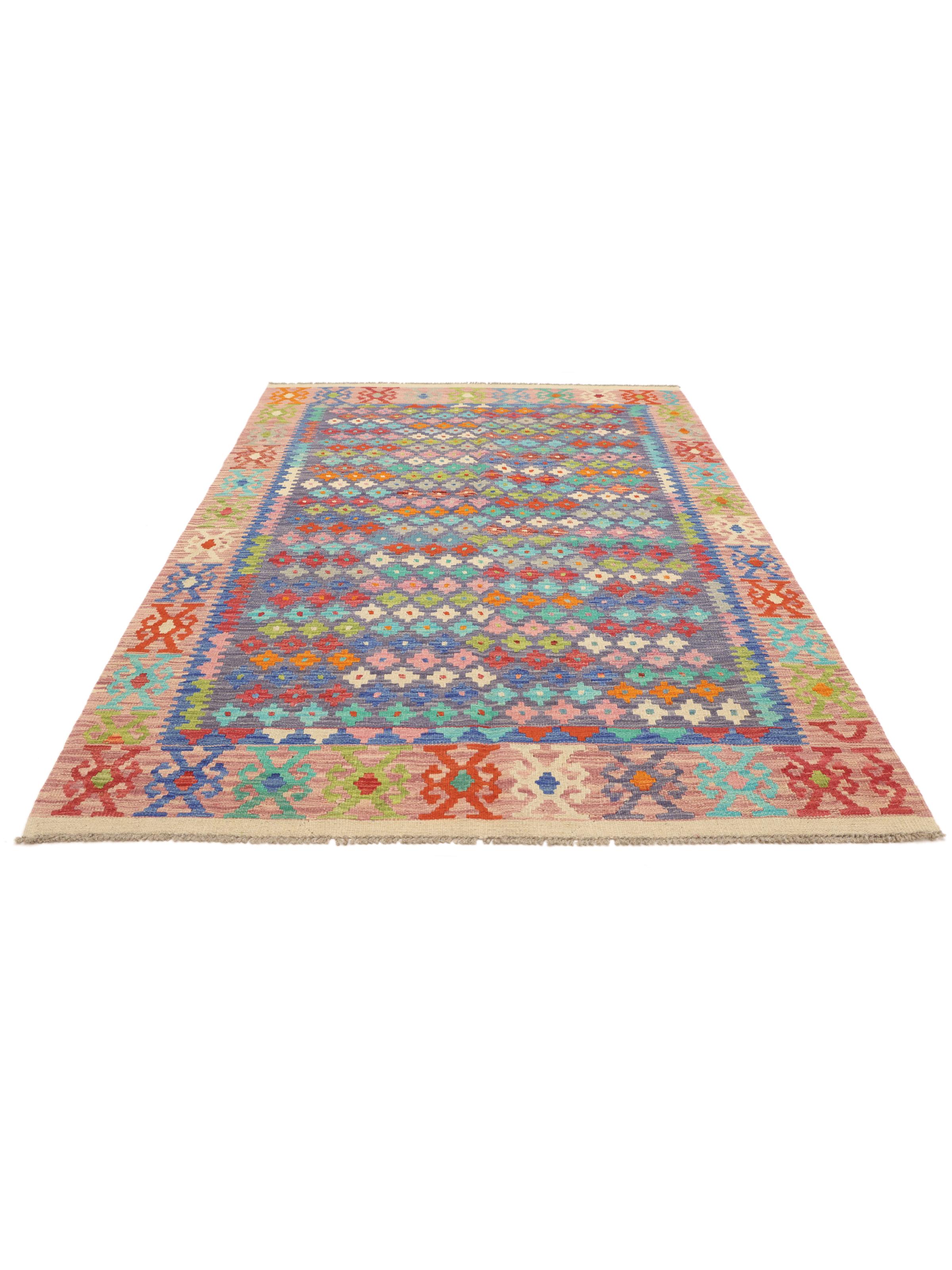
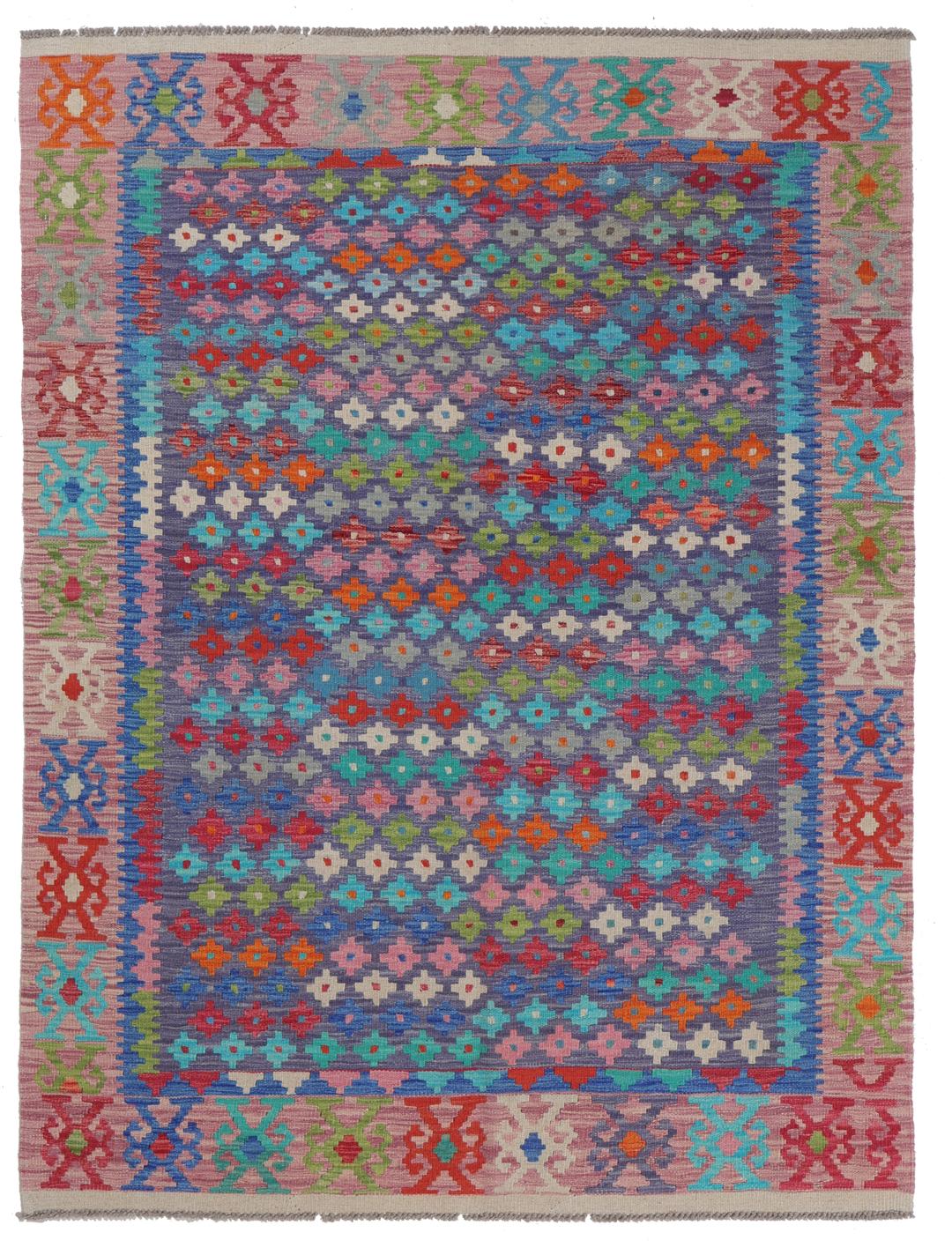
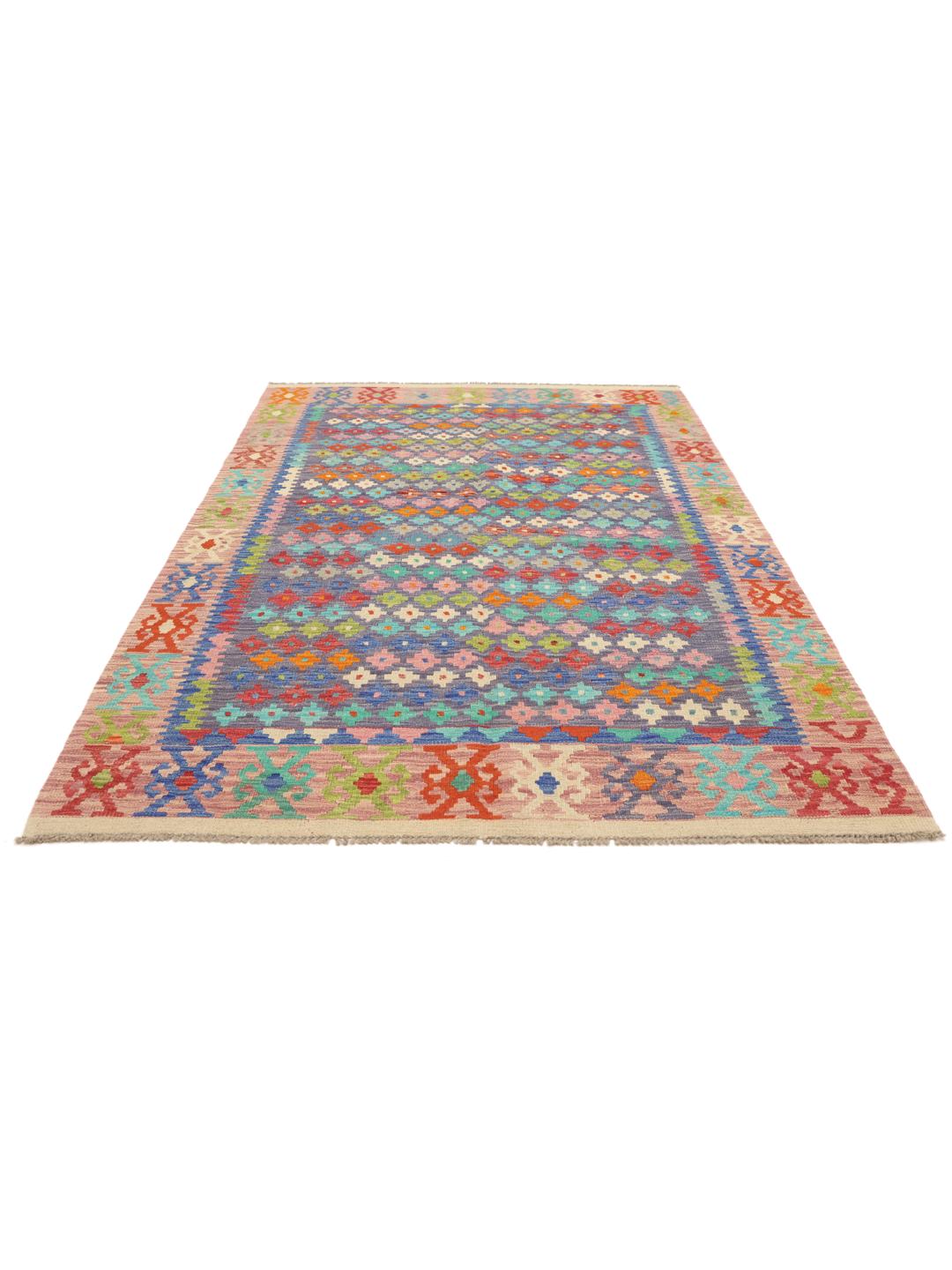
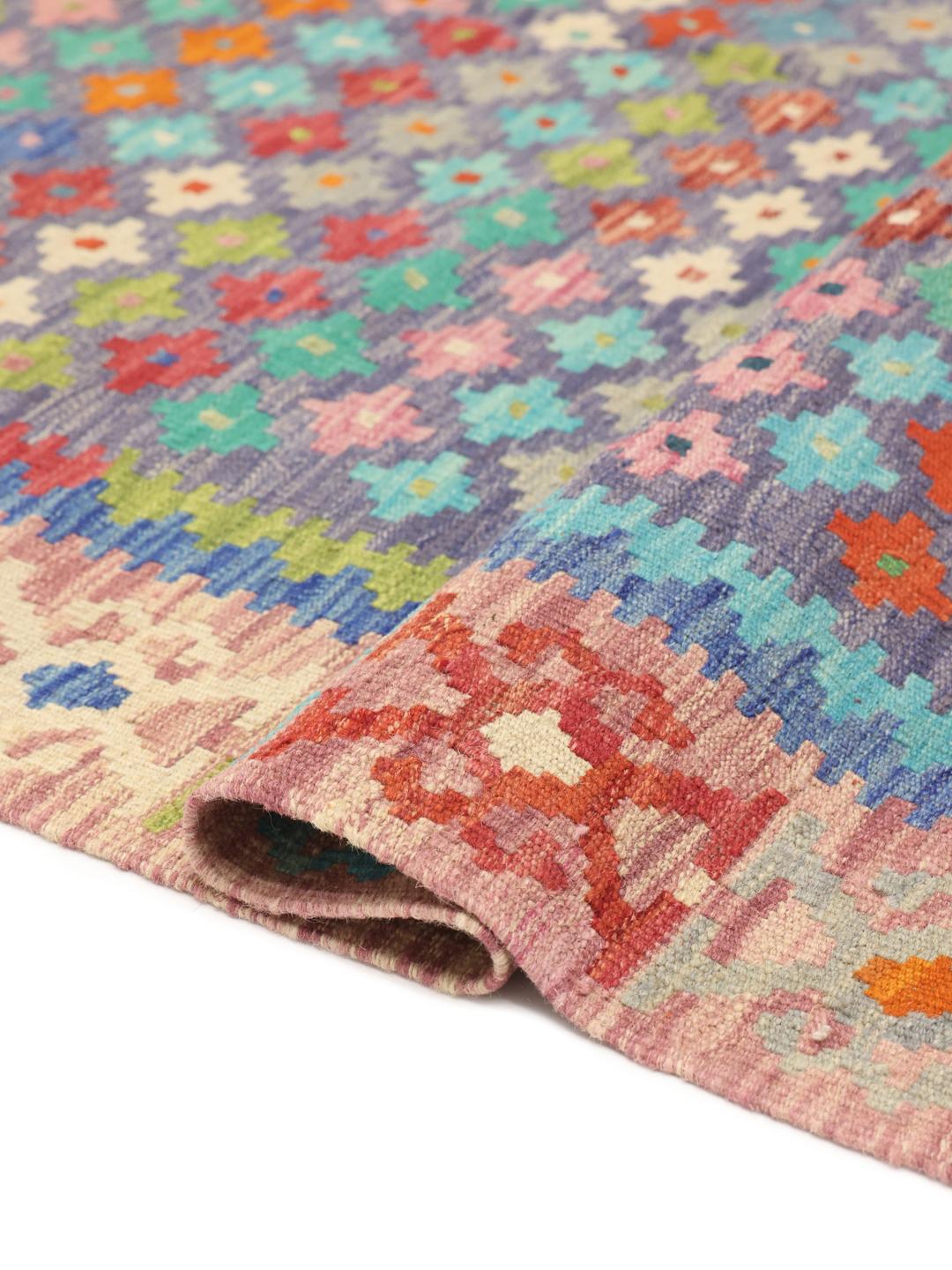
The tradition of weaving Kelims is deeply embedded in the history of the Middle East and Central Asia. These rugs are a hallmark of nomadic and semi-nomadic cultures, where the craft was passed down through generations. Afghan Kelims, in particular, are celebrated for their bold use of colour and geometric storytelling, reflecting the landscapes and cultural motifs of the region where they are created.
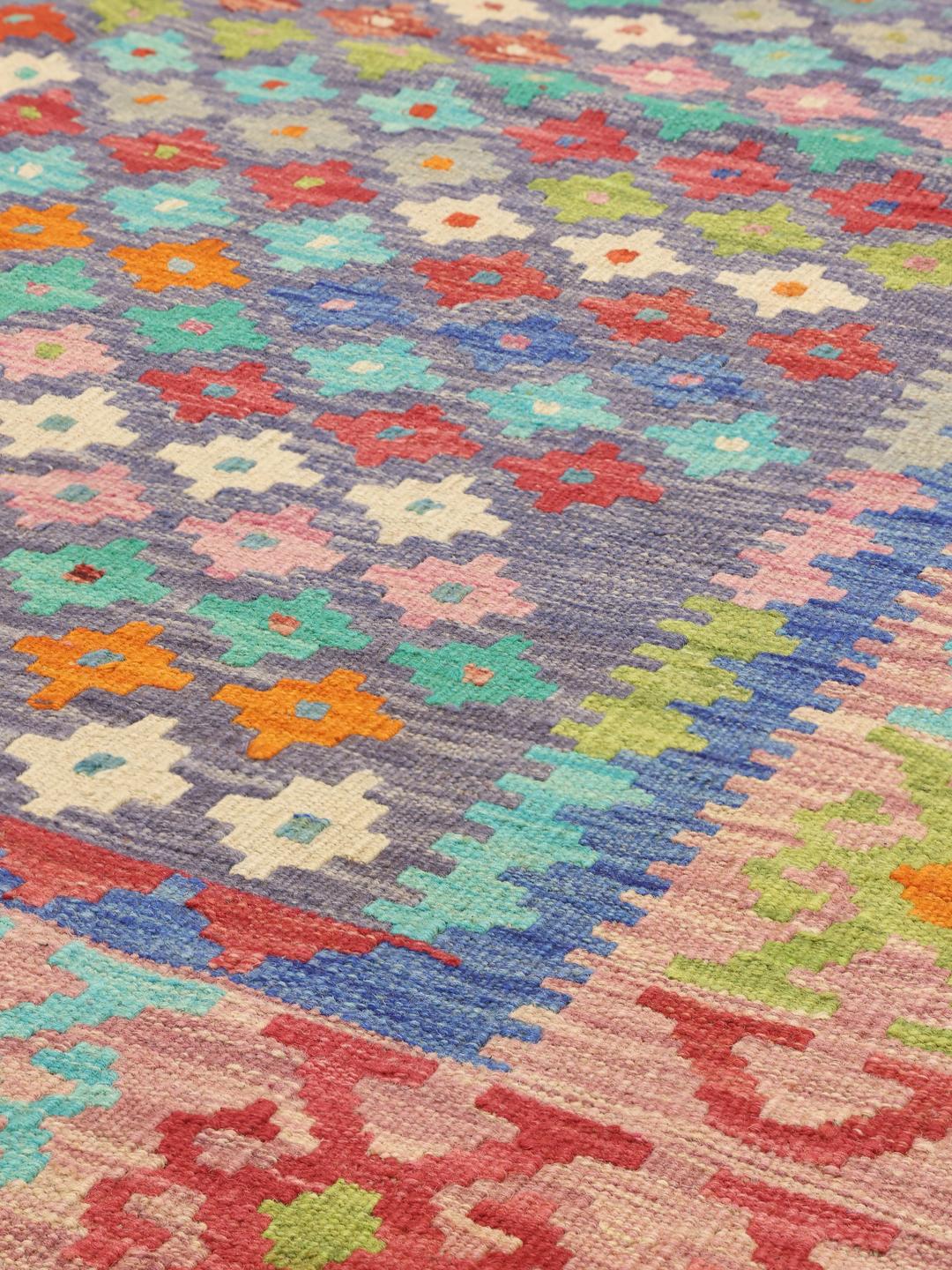
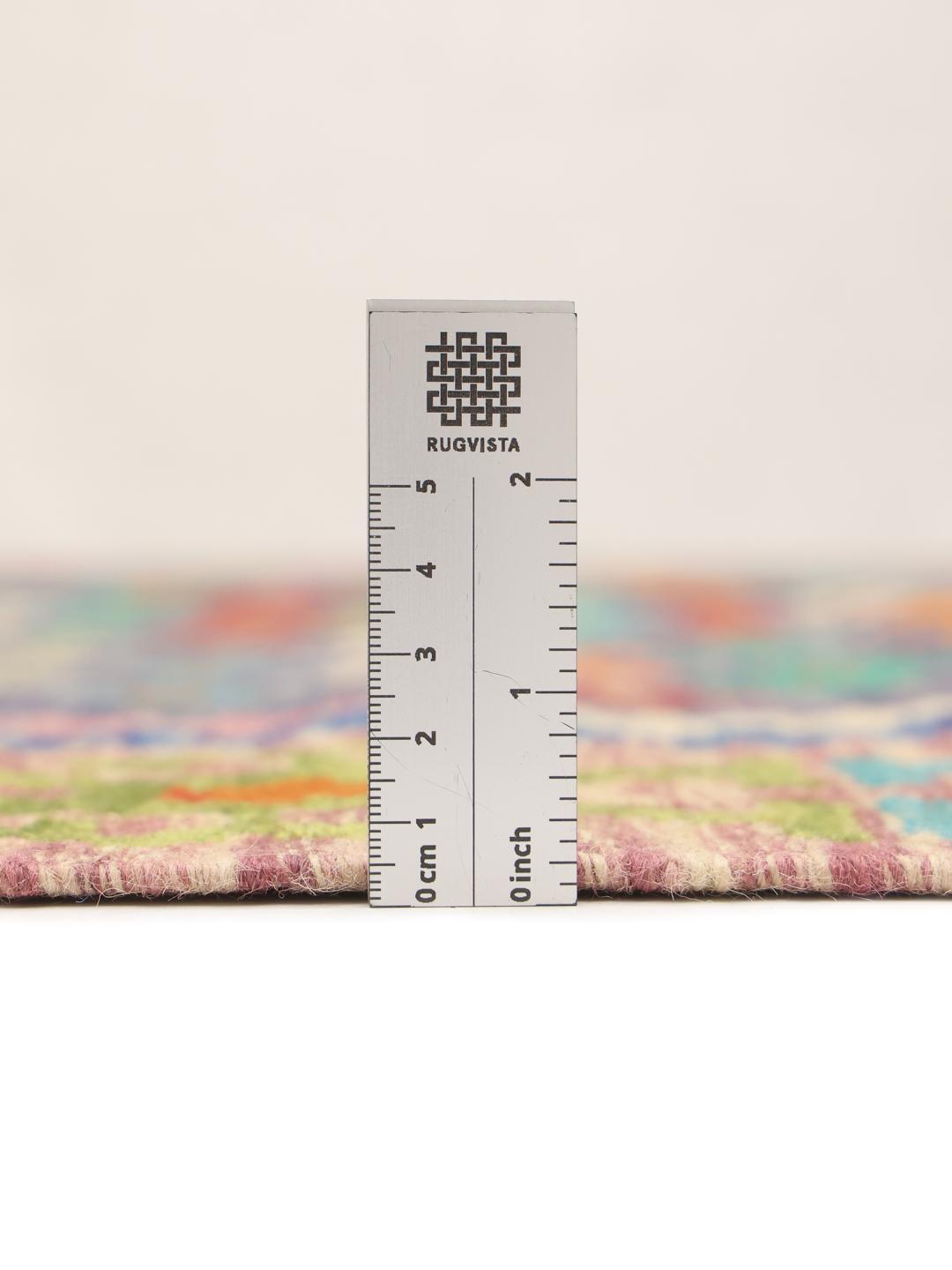
The term 'Kelim' refers to a specific flat-weaving technique that does not produce a pile, resulting in a thin, versatile fabric. This method involves the weft threads being passed through the warp threads in a simple, tight weave. This construction is highly valued for its strength and the way it highlights the clarity of the pattern, as there are no pile fibres to obscure the sharp, crisp edges of the geometric shapes.
Visually, these rugs are defined by their use of repeated diamond, triangle, and tribal motifs. The patterns often serve as a language of their own, with traditional symbols passed down through families to represent protection, fertility, or the natural world. This particular piece showcases a rich array of colours that are characteristic of the Afghan style, blending traditional techniques with a lively aesthetic that feels both ancient and contemporary.
Collecting a Kelim is an investment in cultural heritage and human skill. Because each rug is made by hand without a pre-set blueprint, they are highly regarded by collectors for their authenticity and the story they tell. Owning one means holding a piece of history that has been shaped by the hands of an artisan, preserving a craft tradition that has provided beauty and utility to homes for centuries.