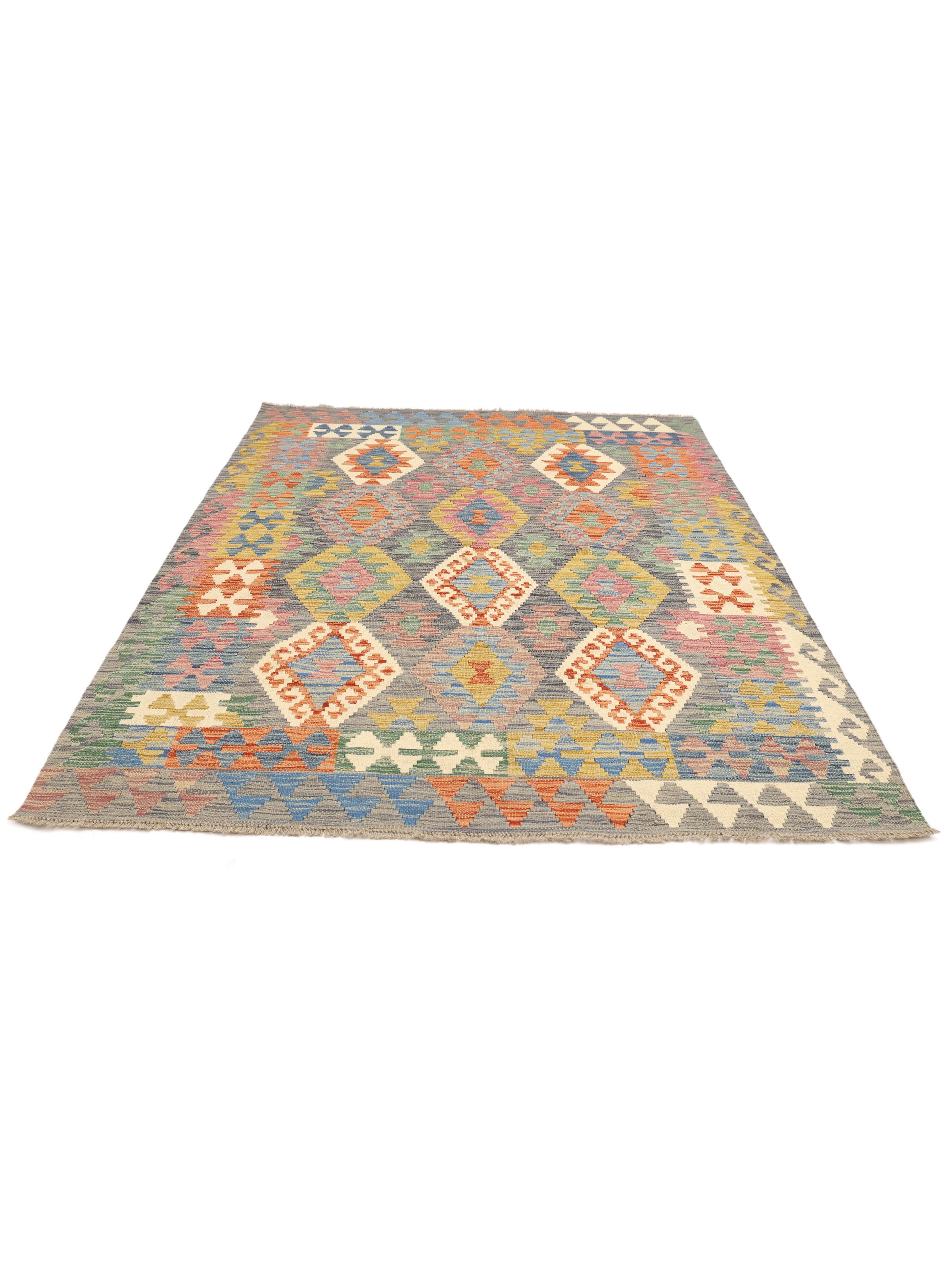
Kelim rugs have been a cornerstone of Middle Eastern textile culture for centuries, serving as both functional floor coverings and expressions of regional identity. Originating from nomadic tribes, these flat-woven pieces were traditionally designed to be portable, durable, and highly decorative. Today, Afghanistan remains a vital centre for this craft, where weavers continue to utilise time-honoured techniques to produce textiles that reflect the history and spirit of the region.
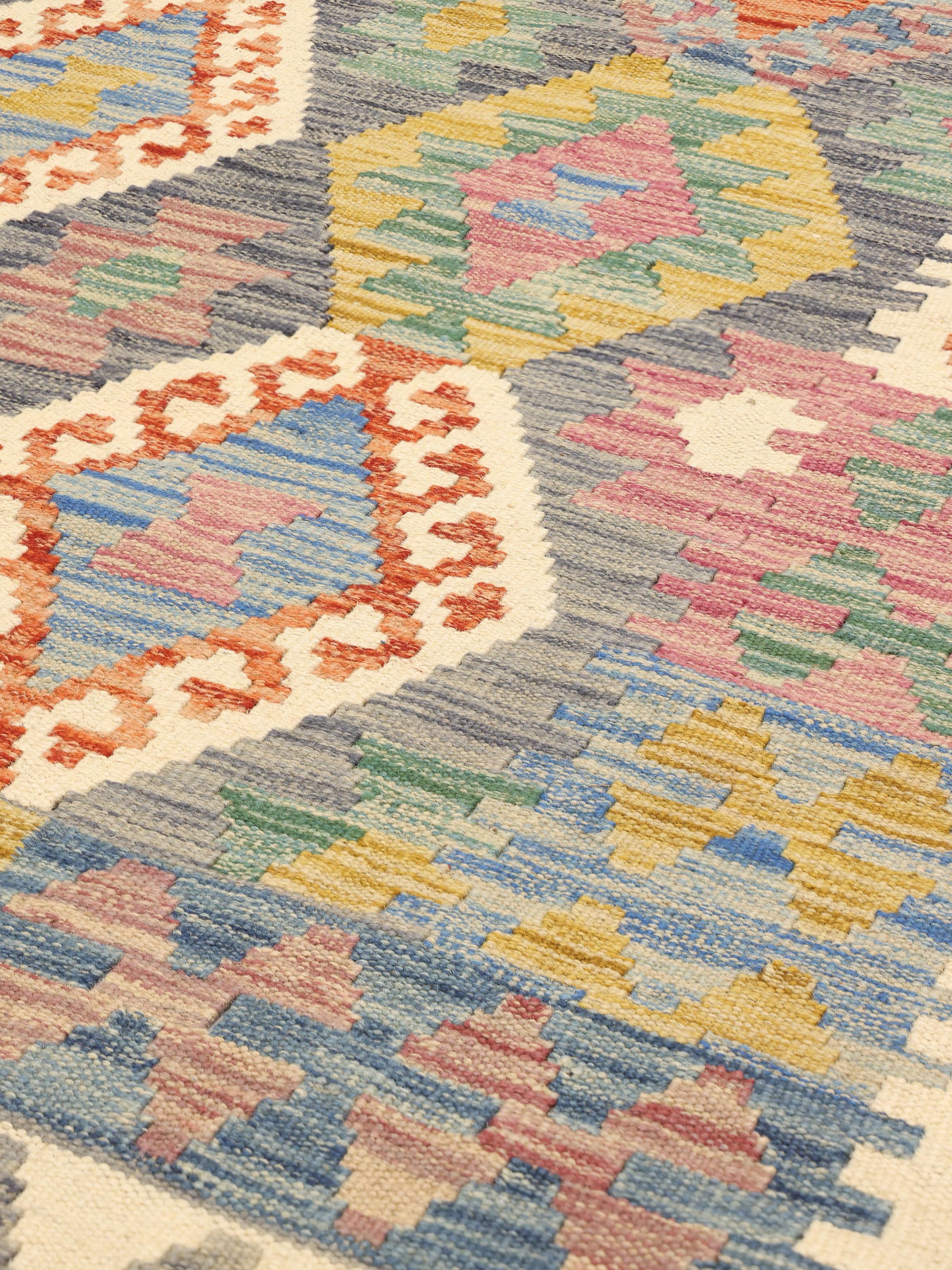
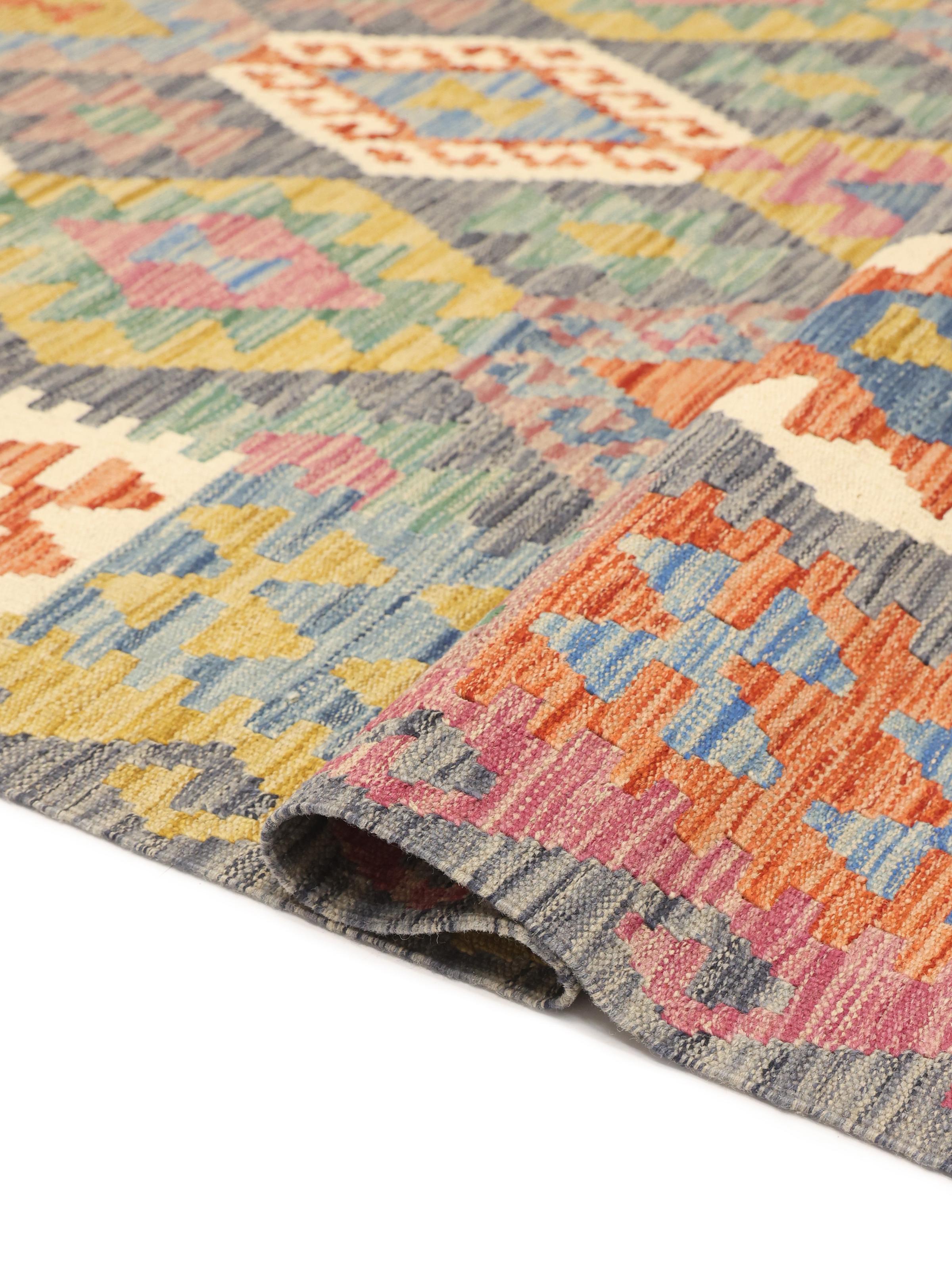
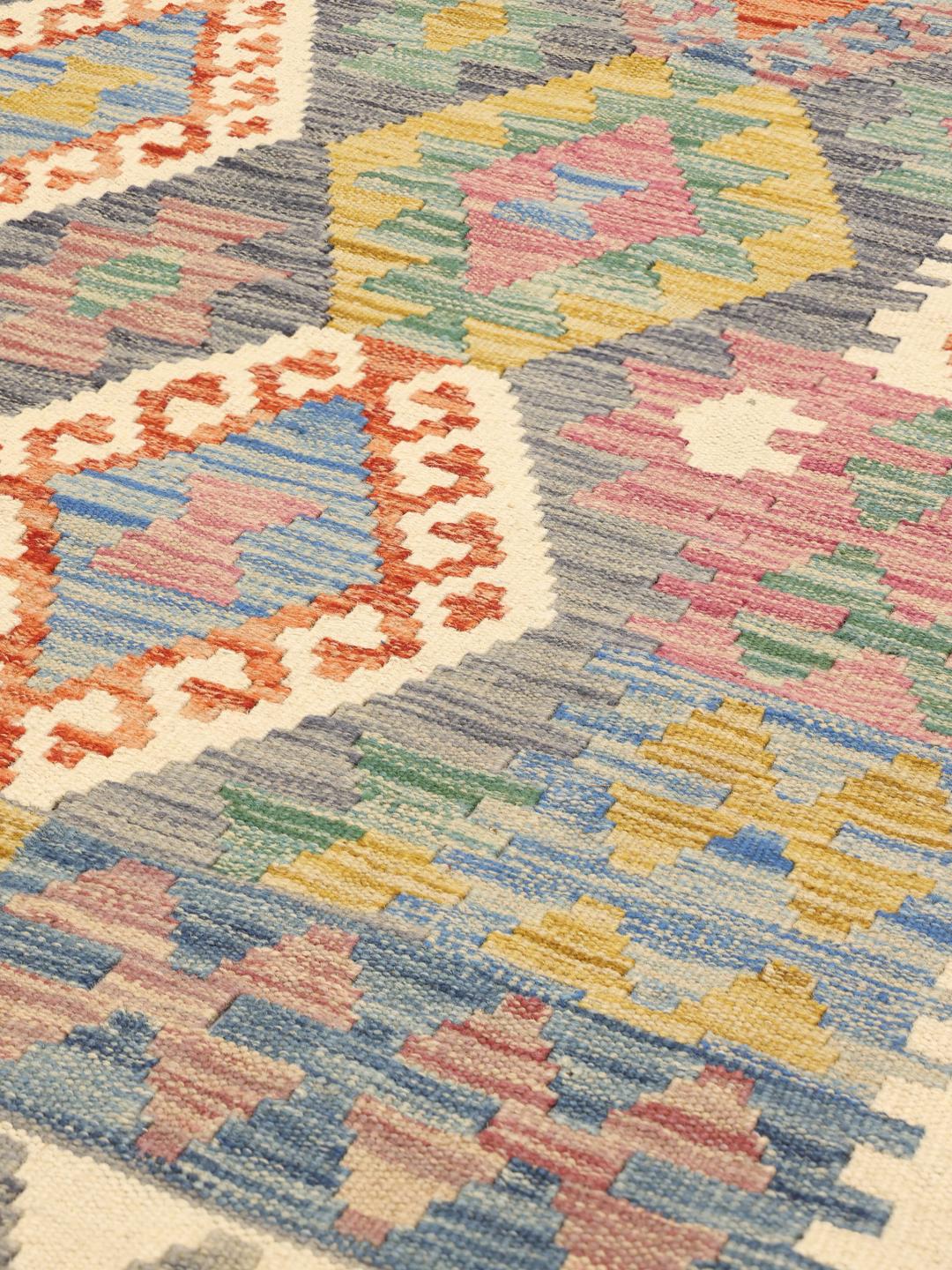
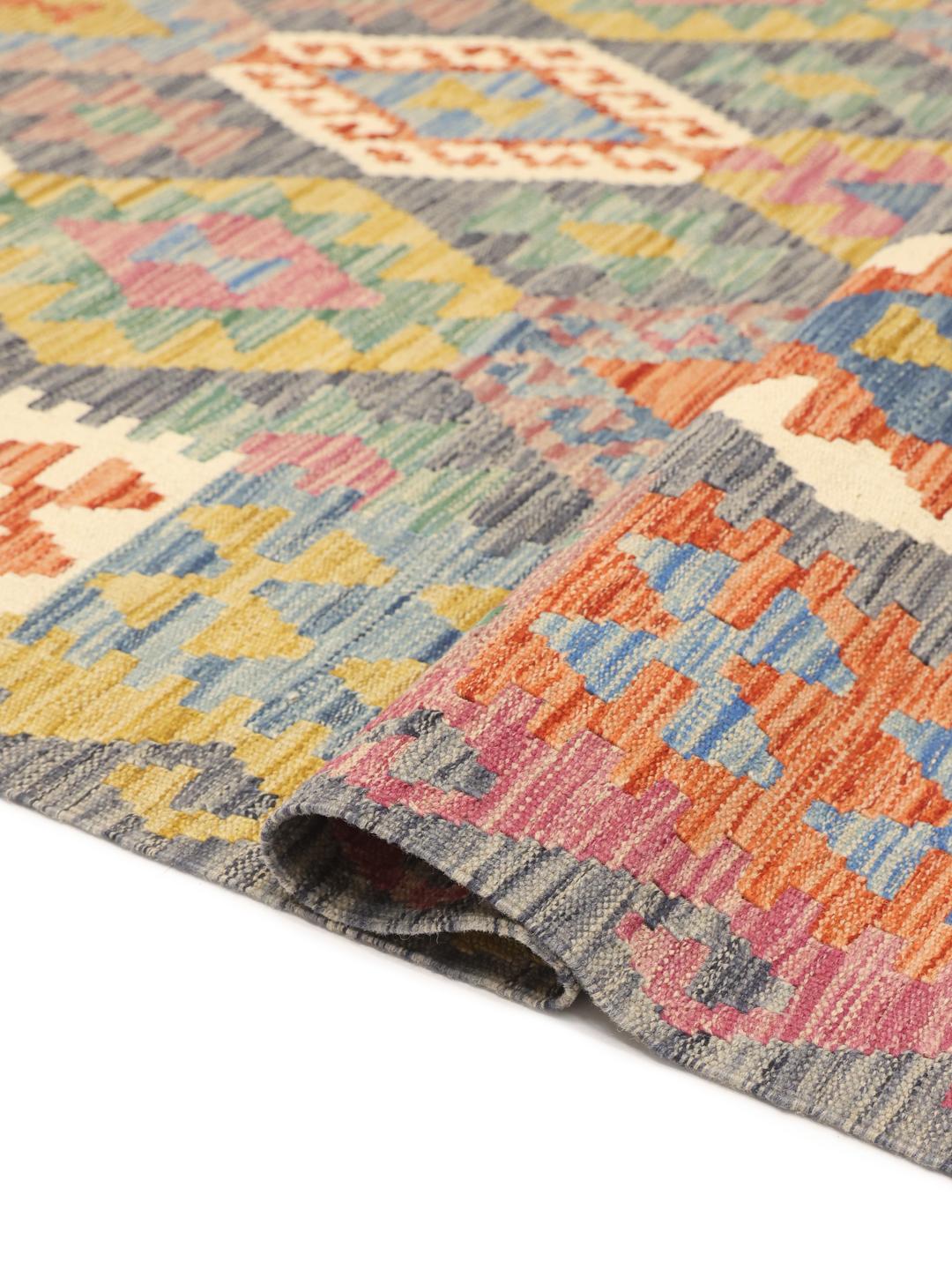
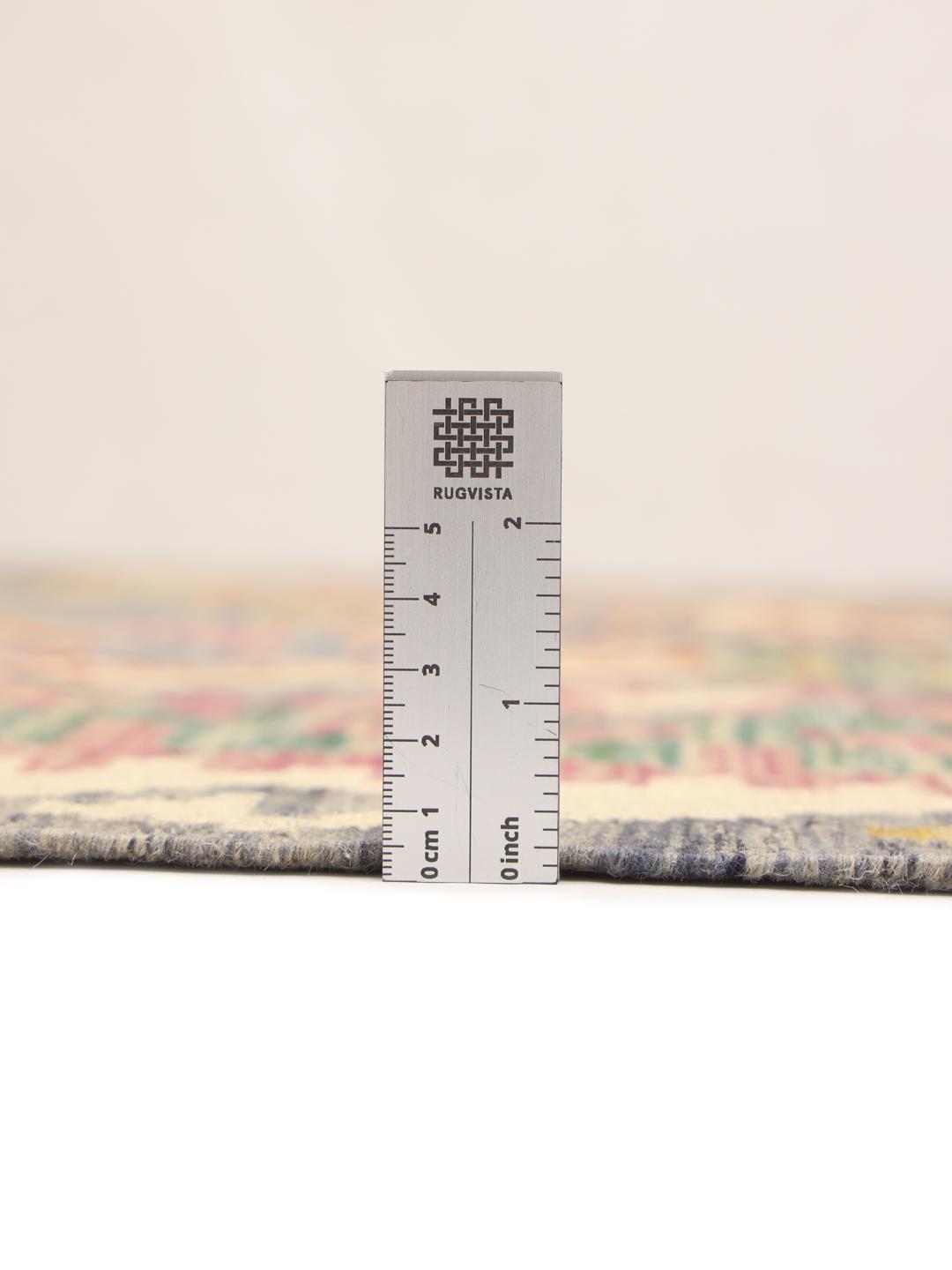
The term 'Kelim' refers to the specific flat-weaving technique where the weft threads are pulled tightly over the warp, resulting in a thin, pile-less surface. This method is technically demanding because the pattern is created during the weaving process itself rather than added later. For the collector, this means that the design is essentially the structure of the rug, making it a highly honest and authentic form of textile art.
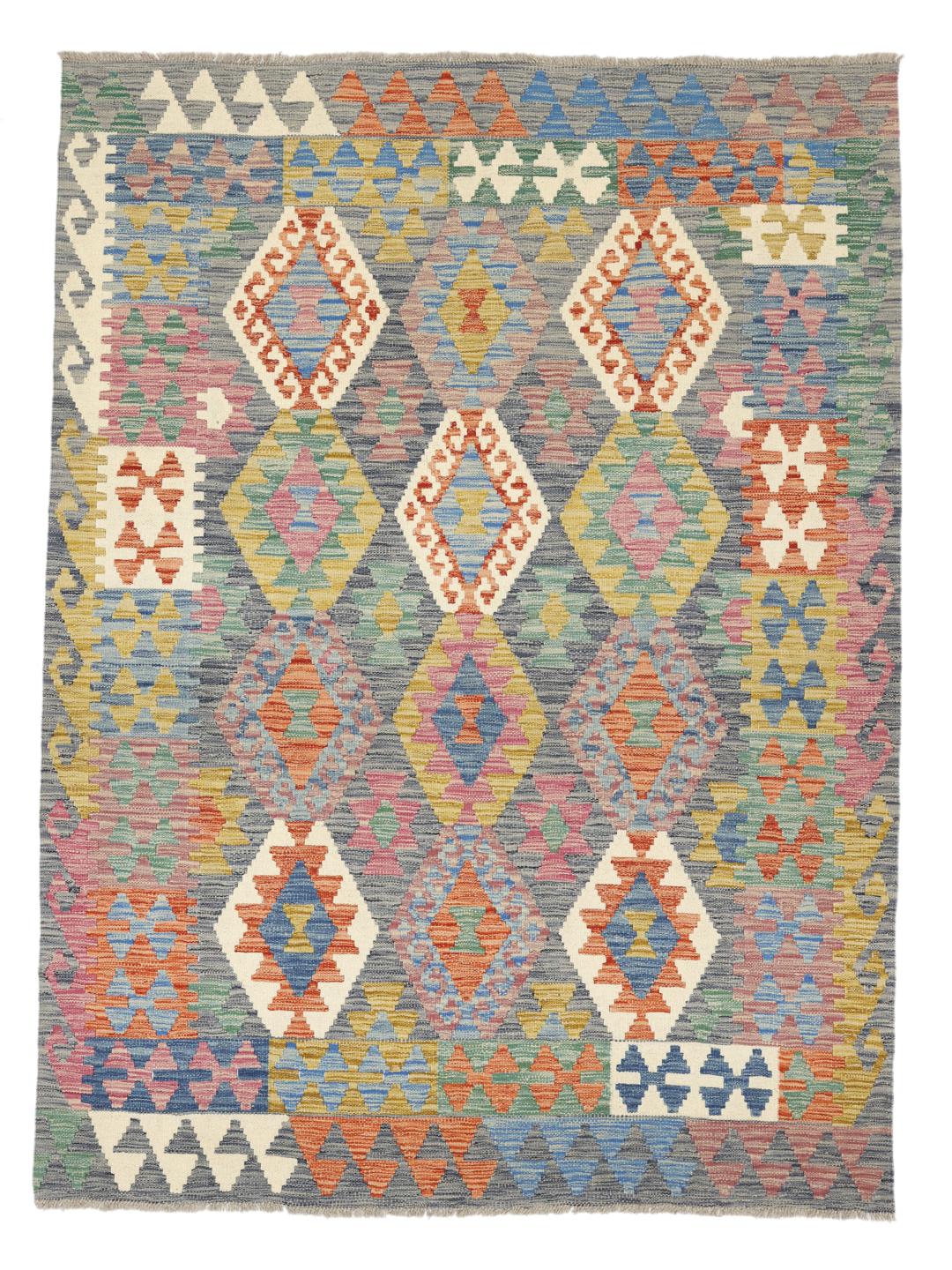
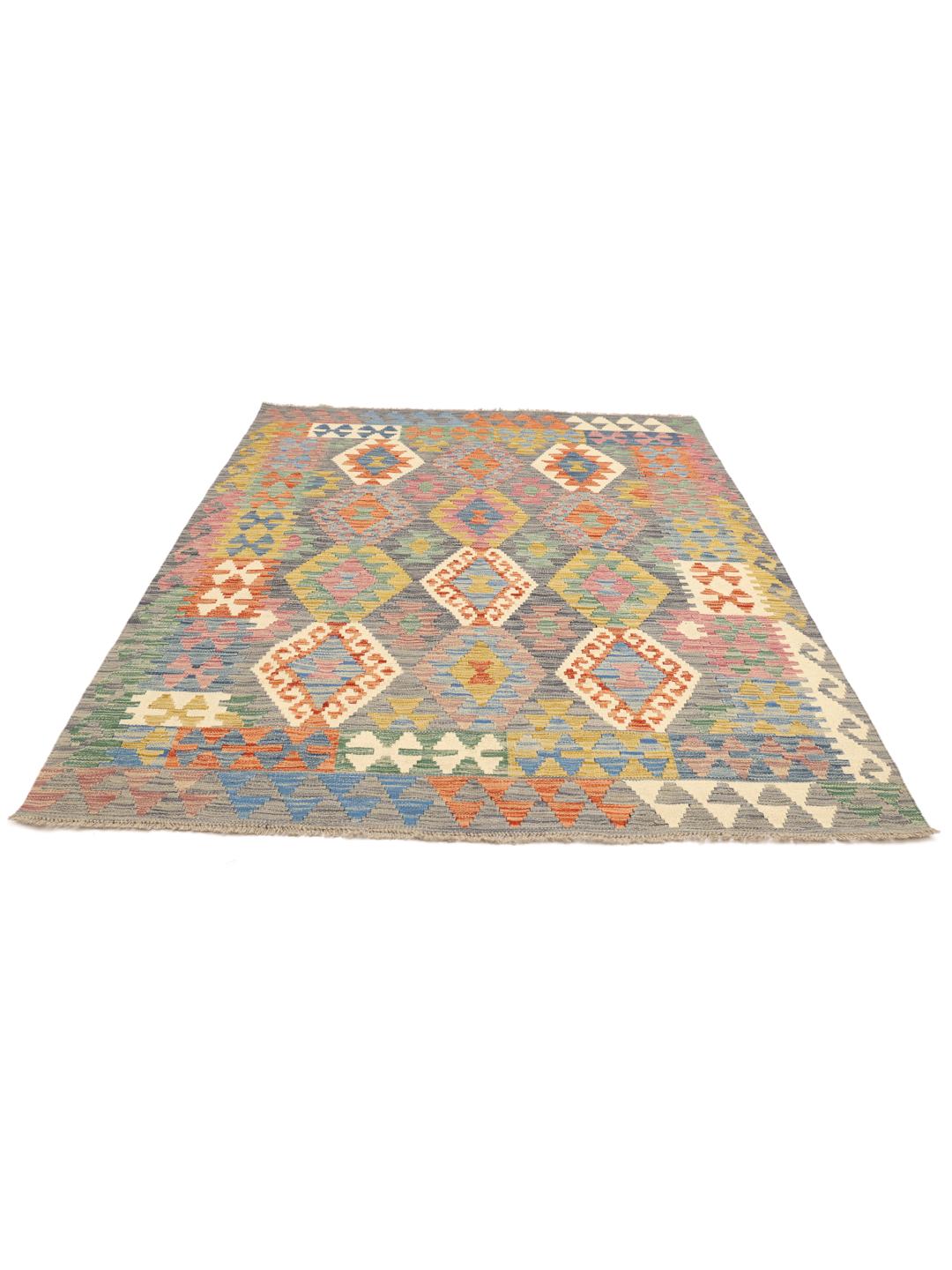
Visually, these rugs are defined by their sharp, geometric motifs and a bold use of colour. You will often see repeating diamond shapes, triangles, and intricate borders that carry symbolic meanings rooted in local folklore and tribal history. This particular piece displays a harmonious blend of hues, showcasing the traditional colour palettes that have been favoured by Afghan weavers for generations to evoke warmth and vitality.
Collecting an Afghan Kelim is more than a purchase; it is an act of preserving a cultural legacy. These rugs are highly valued for their authenticity and the sheer human effort required to create them. Owning one offers a connection to a long-standing tradition of craftsmanship, providing a sense of heritage and enduring beauty that is rarely found in modern, mass-produced home decor.