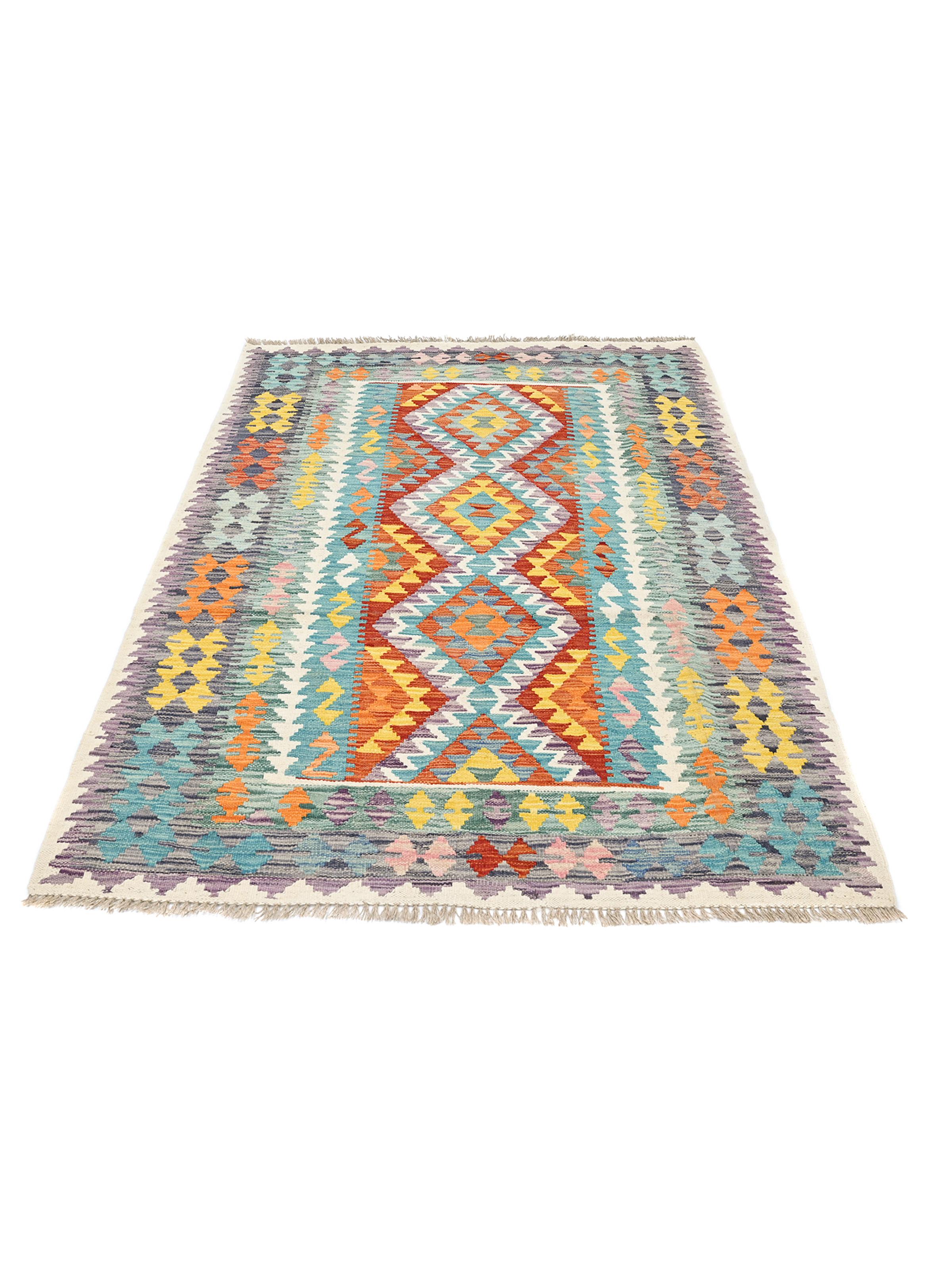
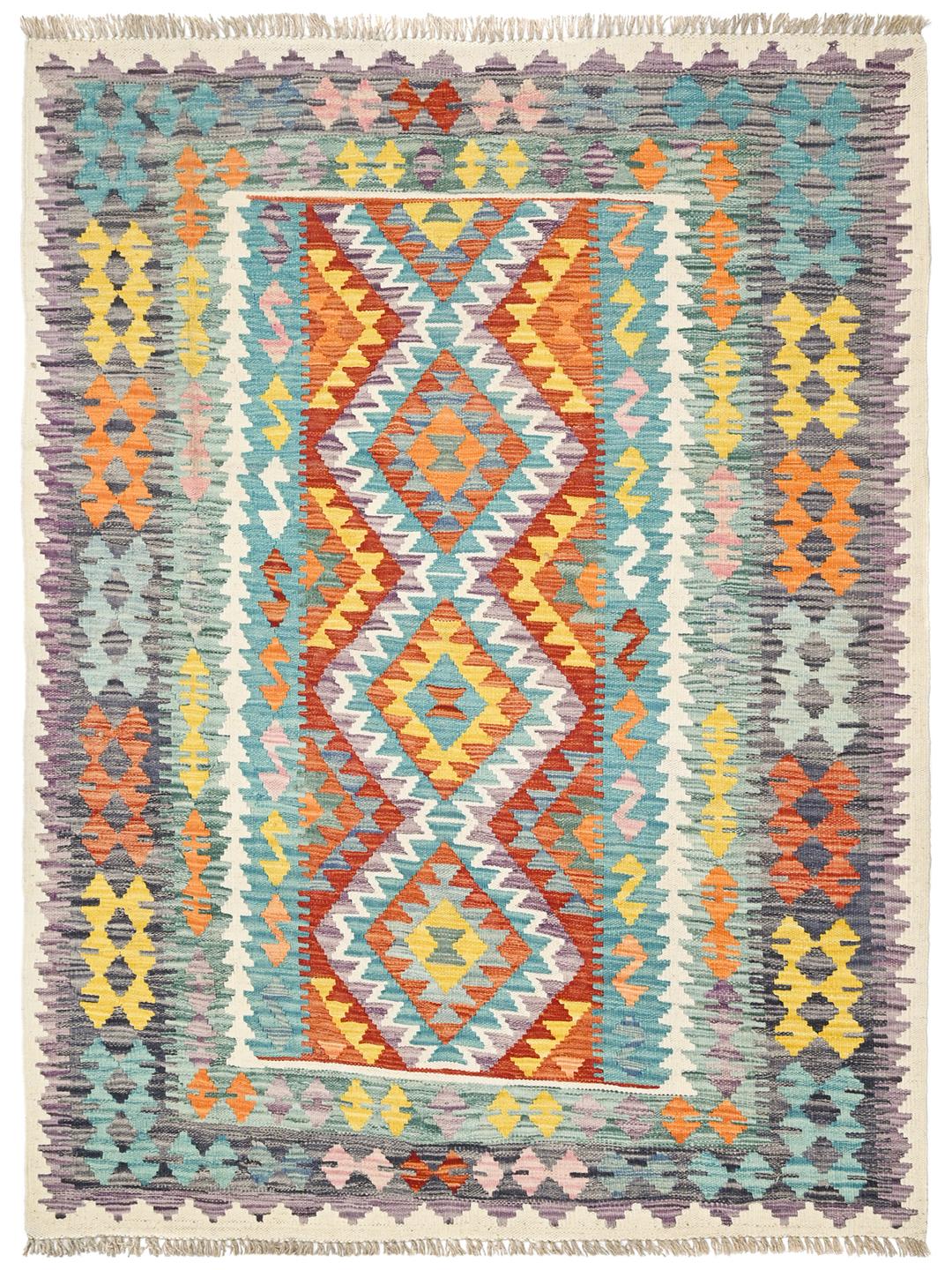
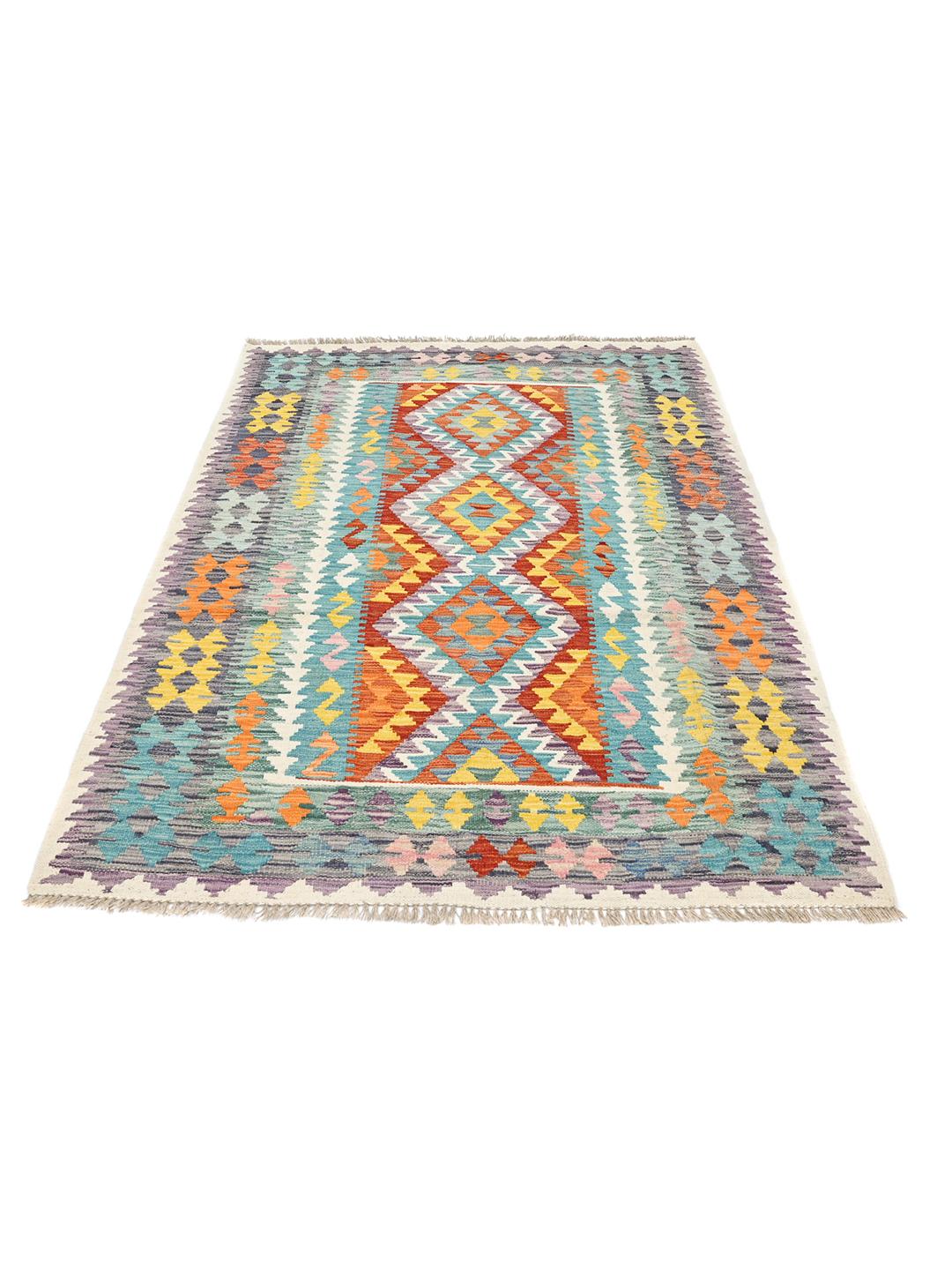
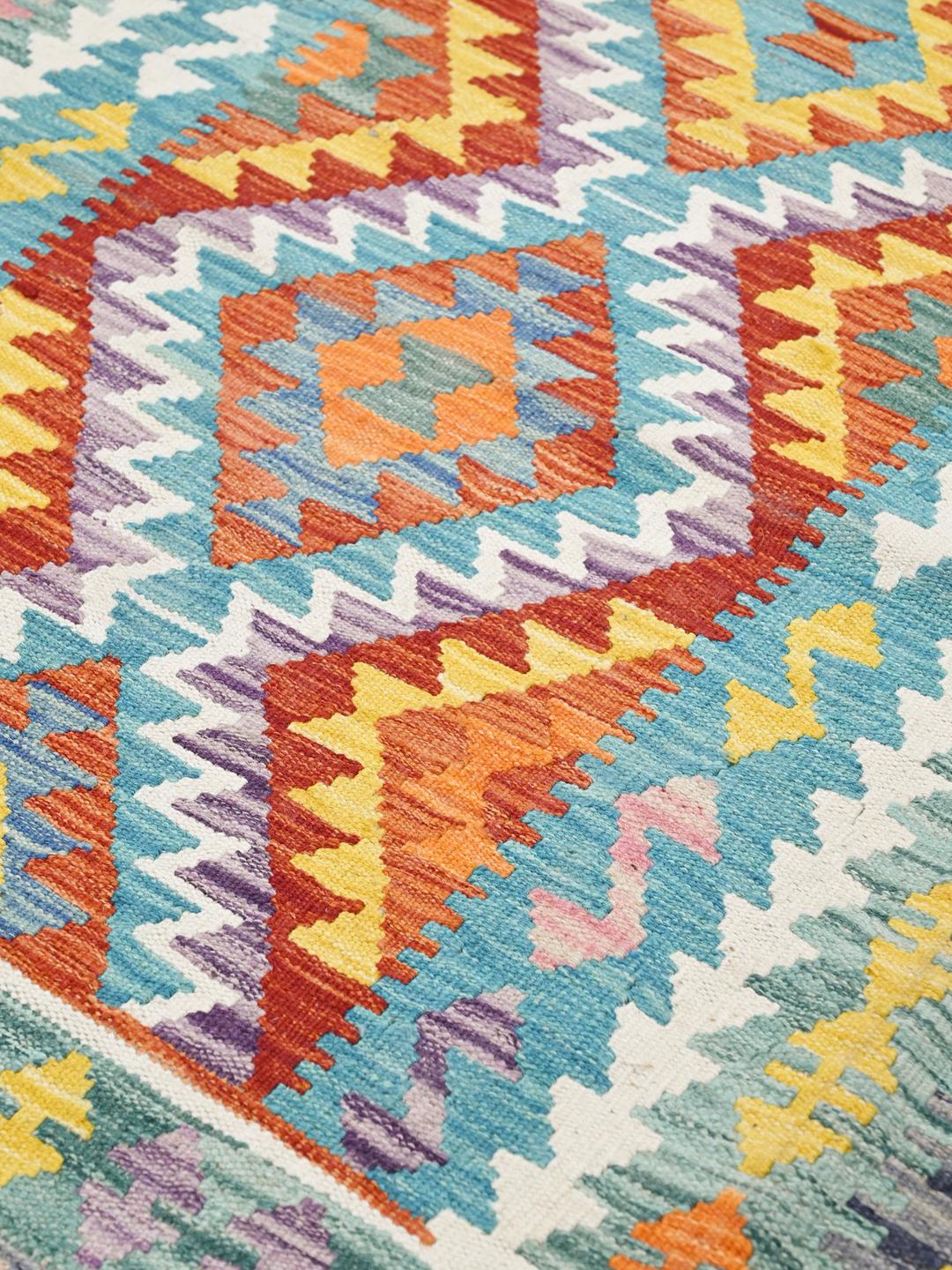
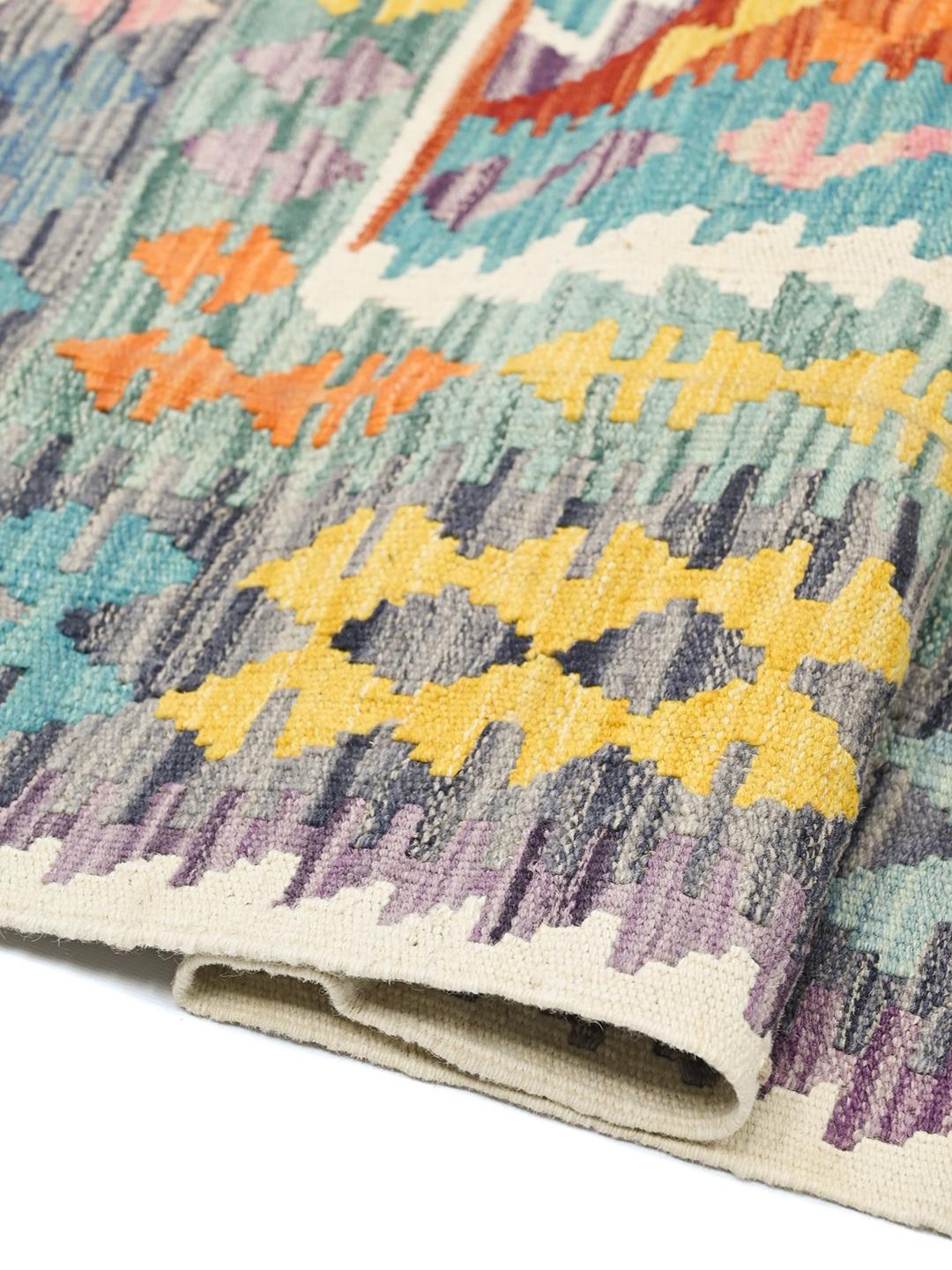
The Afghan Kelim tradition is deeply rooted in the nomadic history of the Middle East, where portable, flat-woven rugs served as essential floor coverings, blankets, and storage bags. These pieces evolved from the necessity of life on the move, reflecting the cultural identity and environmental surroundings of the tribes that created them.
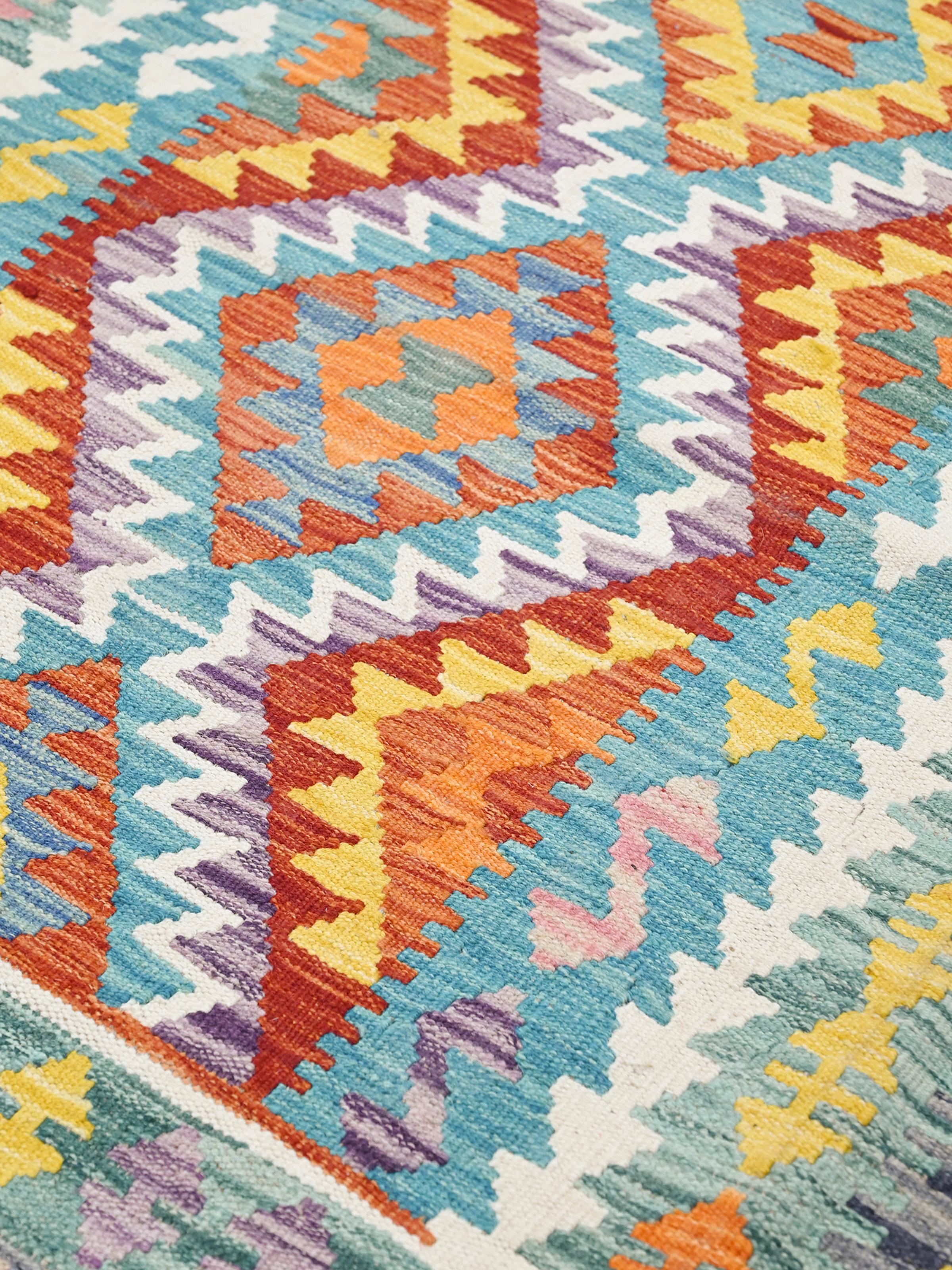
The term Kelim refers to the specific slit-weave technique used to create these rugs. Unlike knotted rugs, the pattern is formed by interweaving the coloured weft threads through the warp, resulting in a smooth, reversible textile. This technique allows for sharp, crisp geometric lines that have become the hallmark of this tradition.
Design motifs in Afghan Kelims are often symbolic, featuring repeating diamonds, triangles, and stylised floral elements that tell stories of family, protection, and nature. The vibrant colours are traditionally derived from natural dyes, giving each piece a depth and warmth that feels both grounded and expressive.
Today, these rugs are highly sought after by collectors who value the balance of ancestral skill and functional design. By bringing one into your home, you are not just acquiring a floor covering but a piece of cultural heritage that honours the dedication of the artisans who kept this ancient craft alive.