The Kelim tradition finds its deepest roots in the nomadic cultures of the Middle East and Central Asia. Historically, these flat-woven rugs were essential to nomadic life, serving as durable floor coverings, wall hangings, and protective covers for goods during migration. Over centuries, the craft evolved into a sophisticated art form, with each region developing its own distinct vocabulary of motifs and colour palettes that reflect the local landscape and cultural identity.
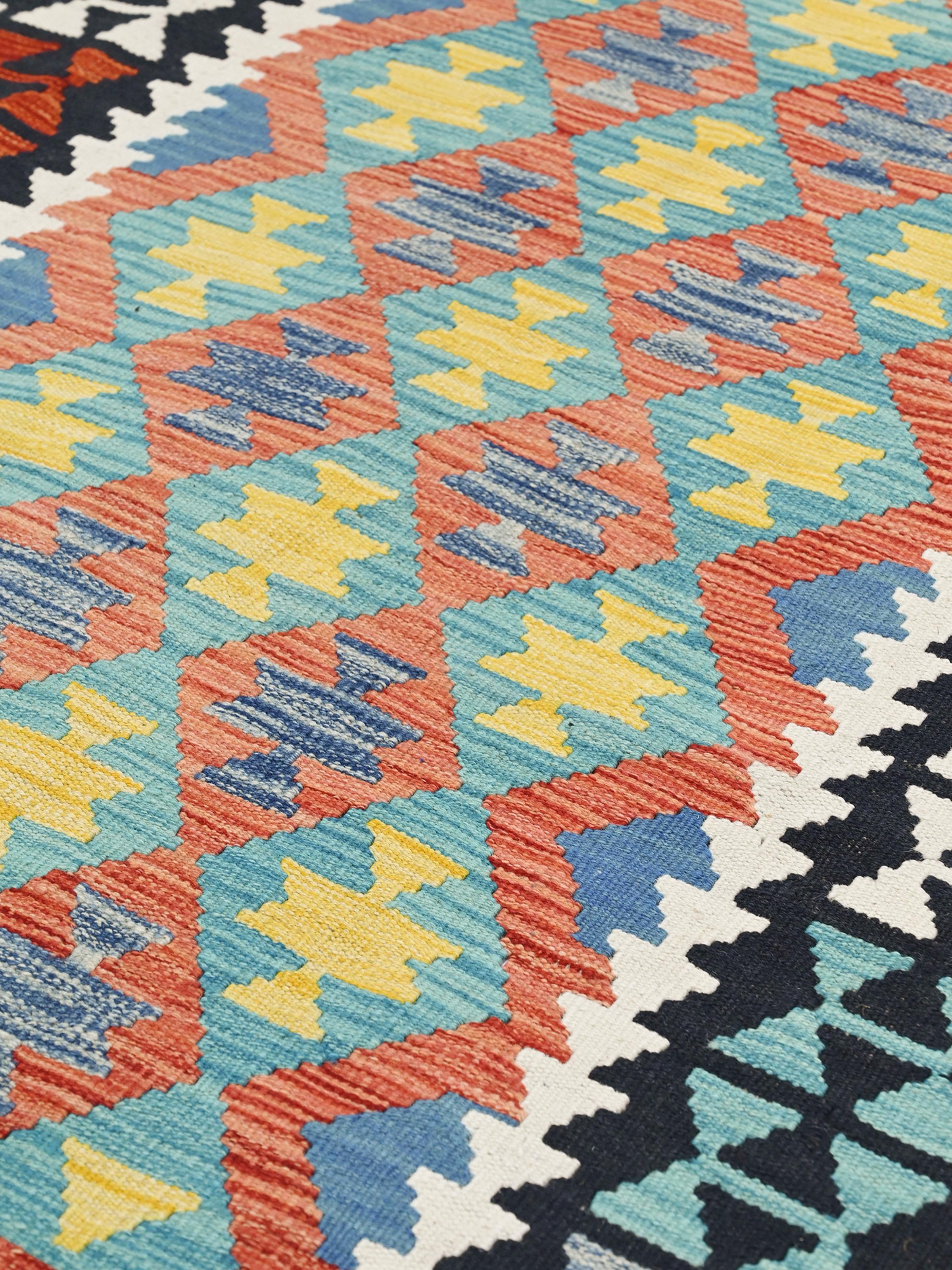
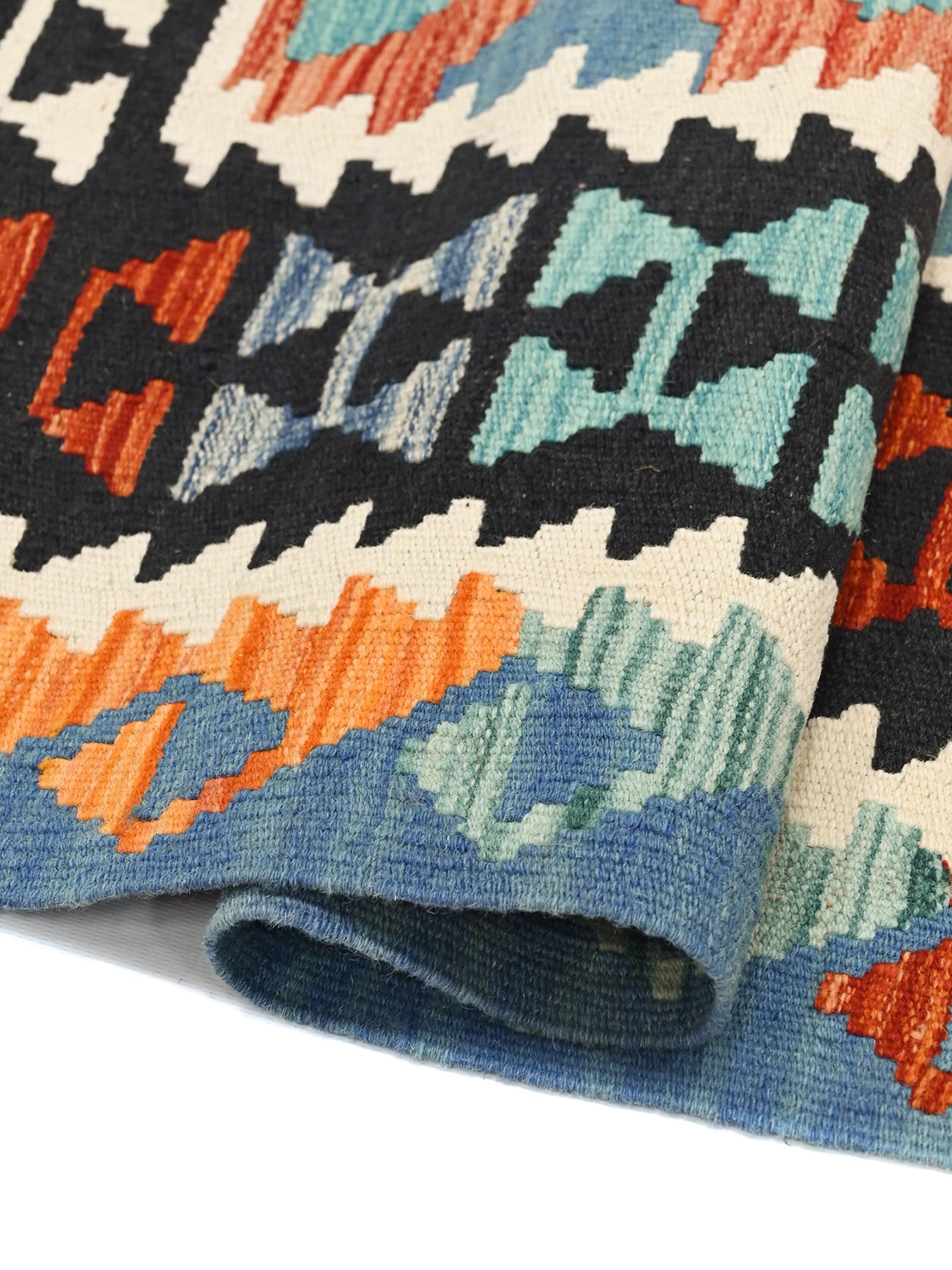
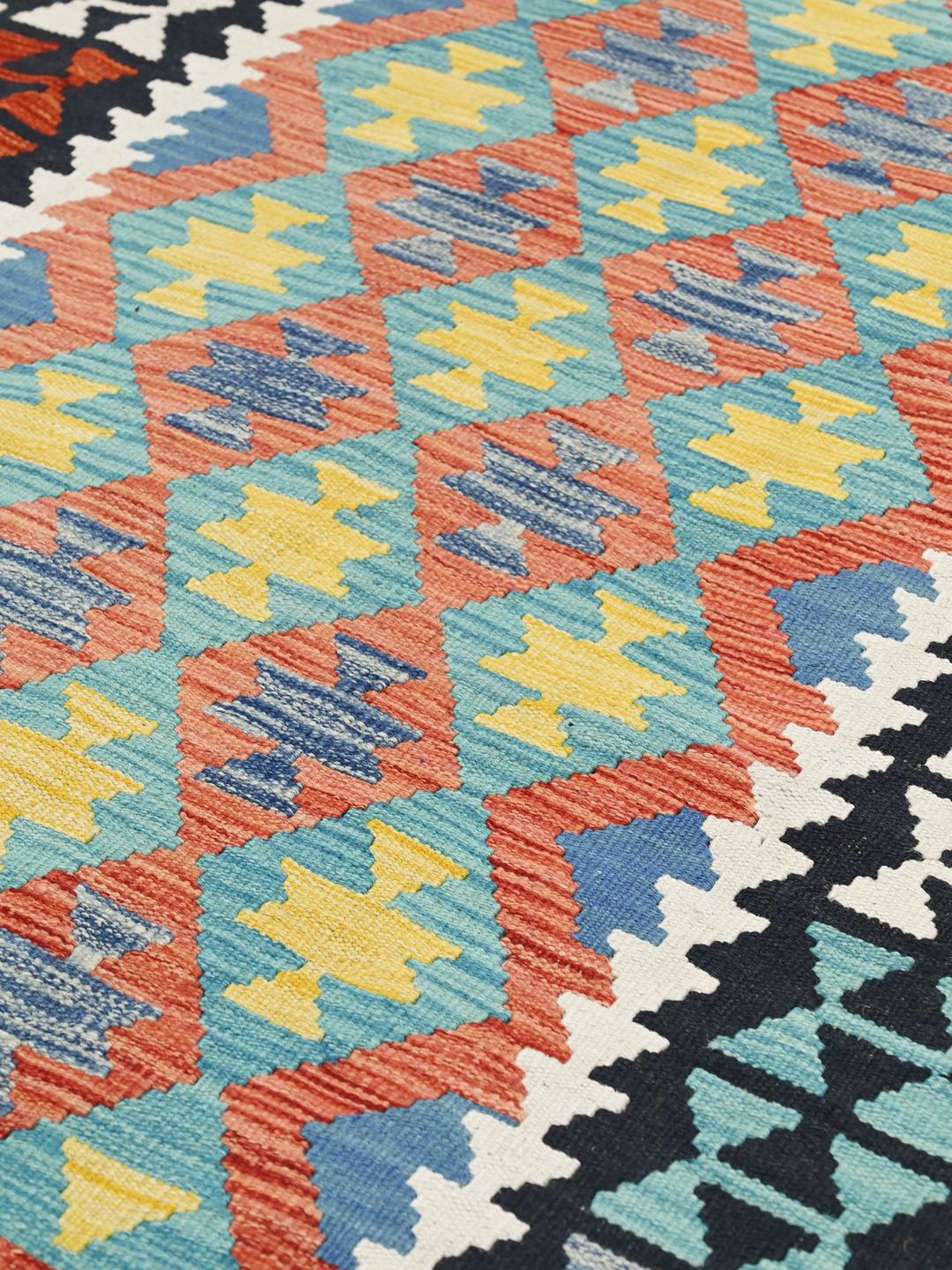
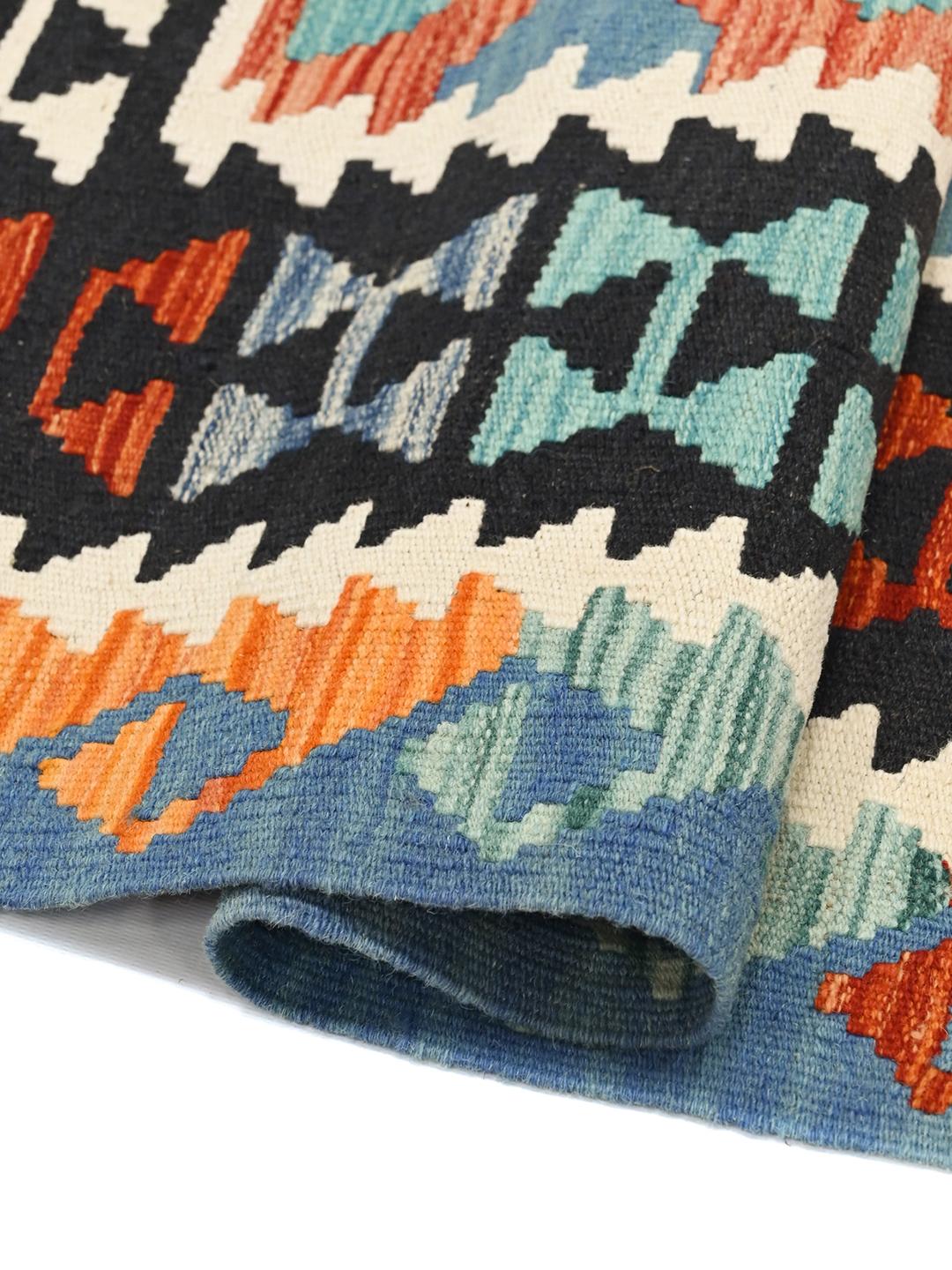
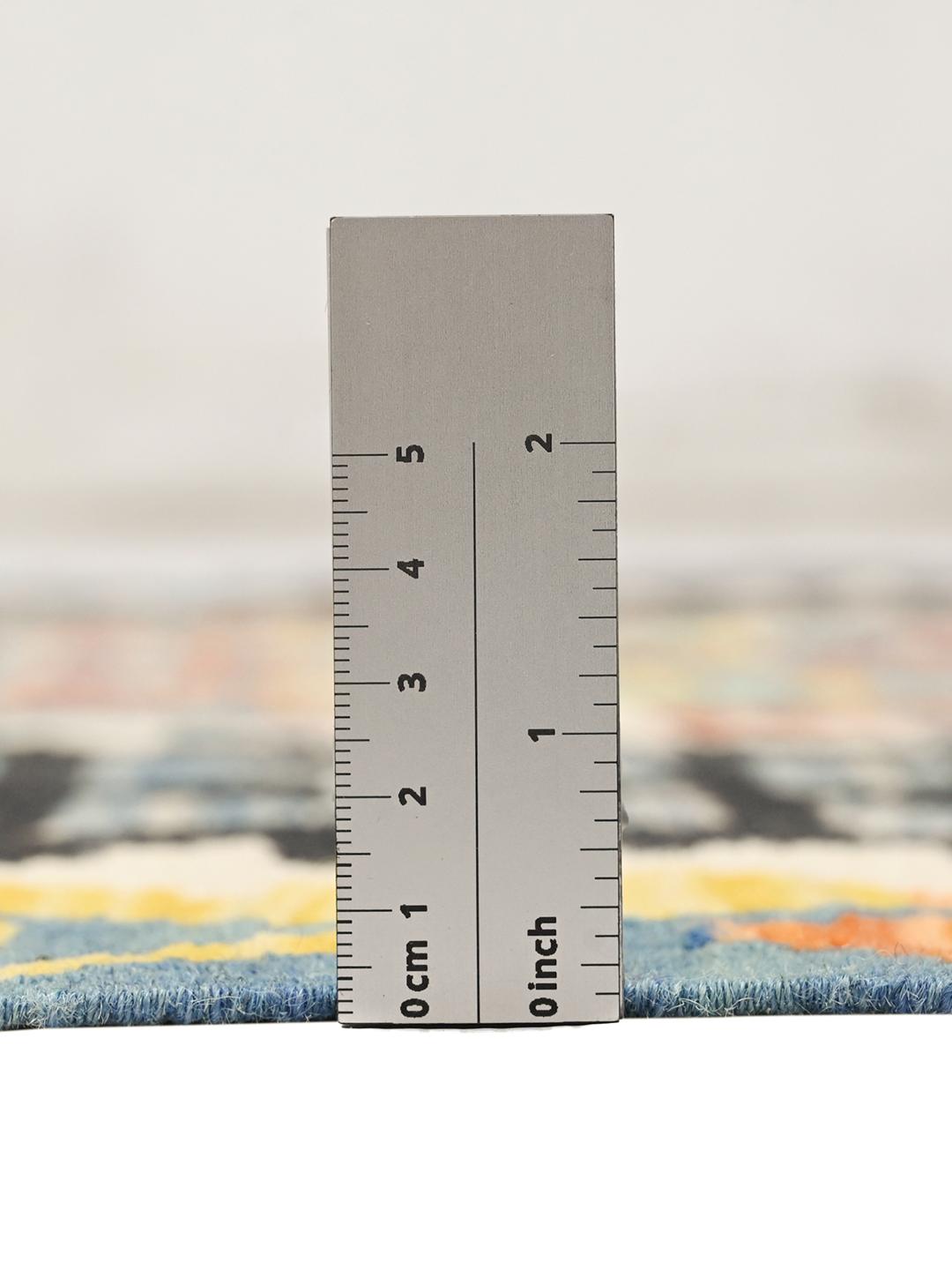
The term 'Kelim' refers specifically to the flat-weaving technique where there is no pile. This construction is achieved by interlocking the weft threads tightly around the warp, a process that creates a lightweight yet incredibly strong fabric. Because they lack the dense pile of traditional carpets, these rugs are versatile and portable, representing a functional elegance that has remained unchanged for hundreds of years.
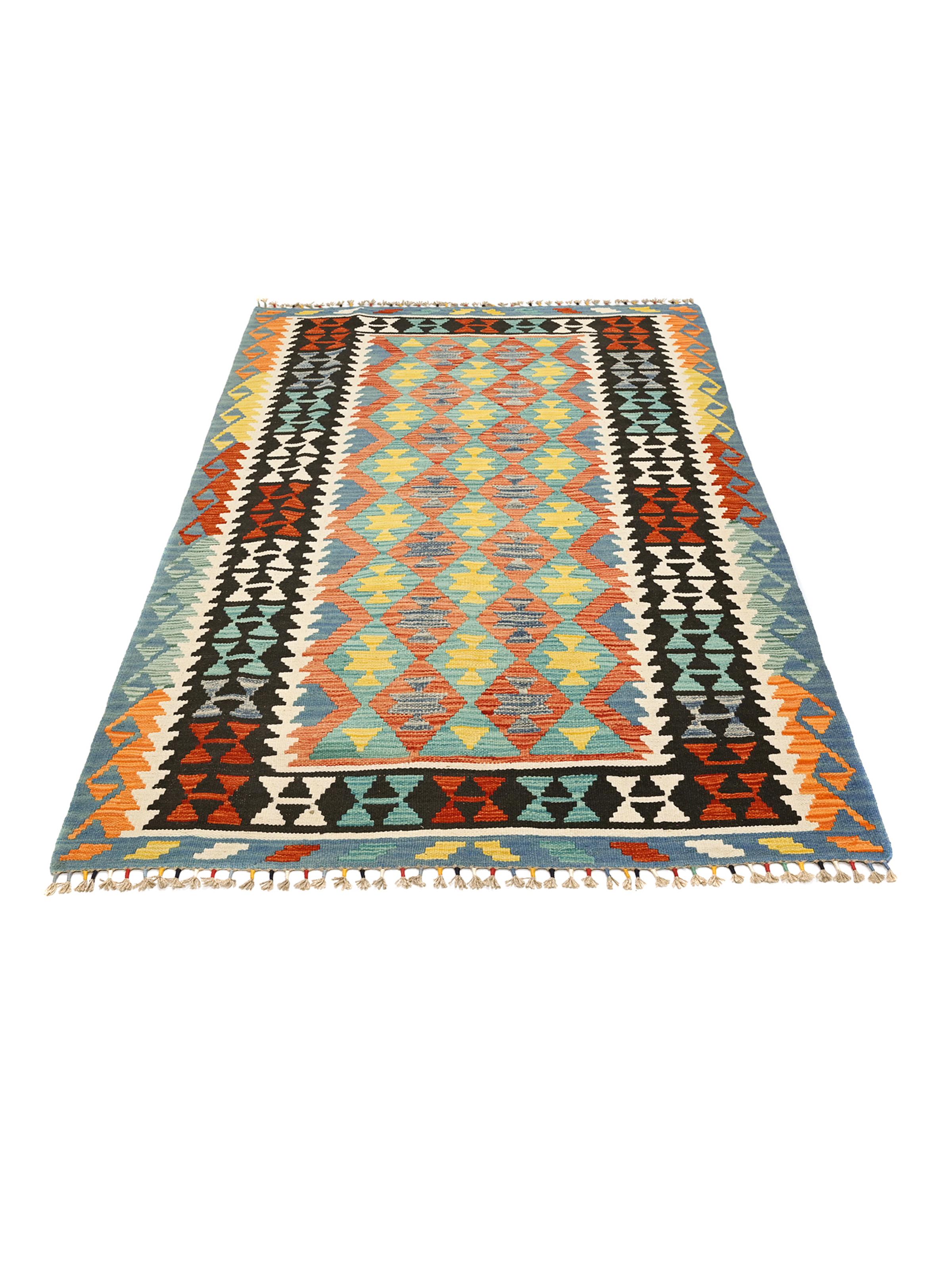
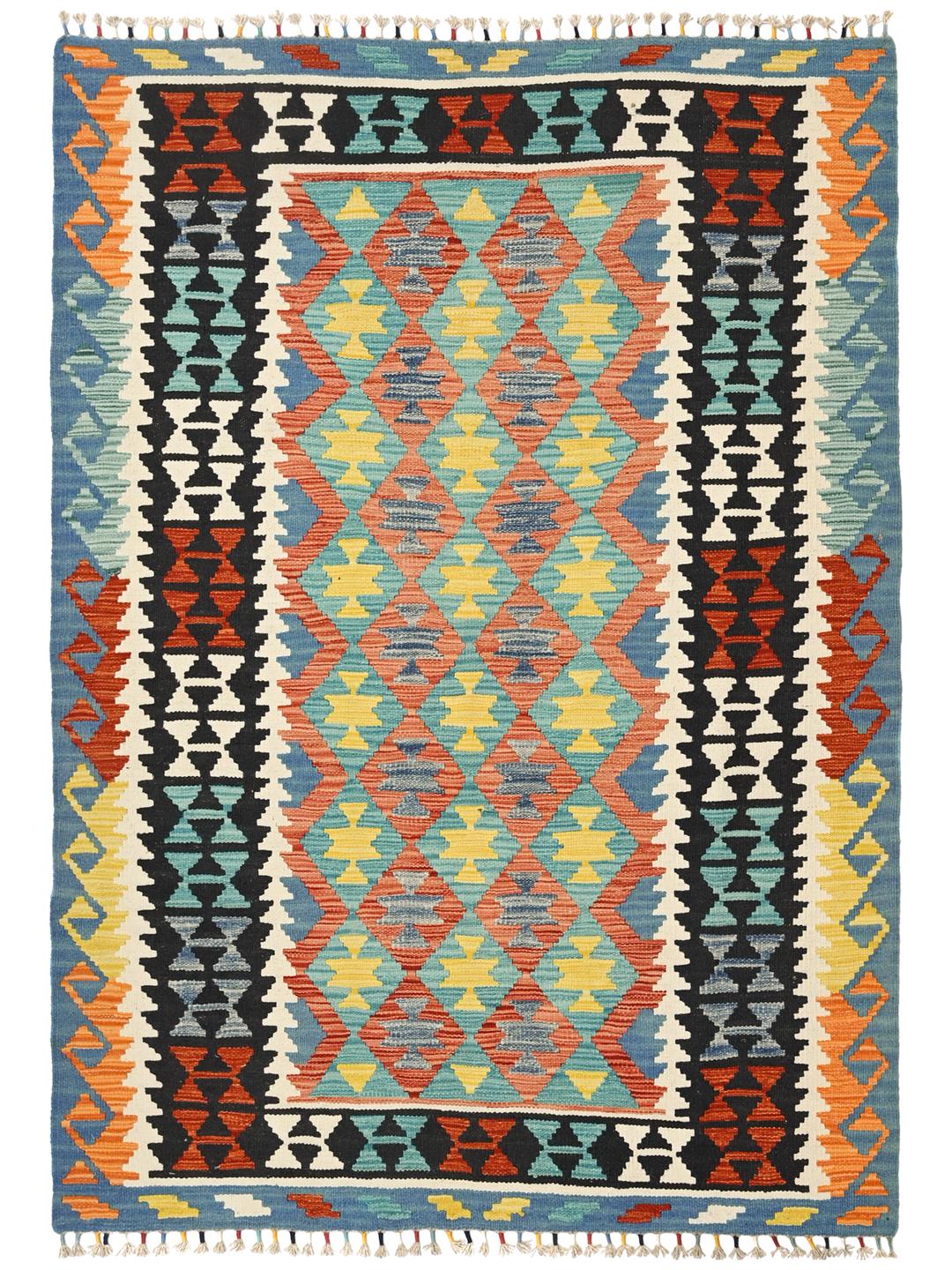
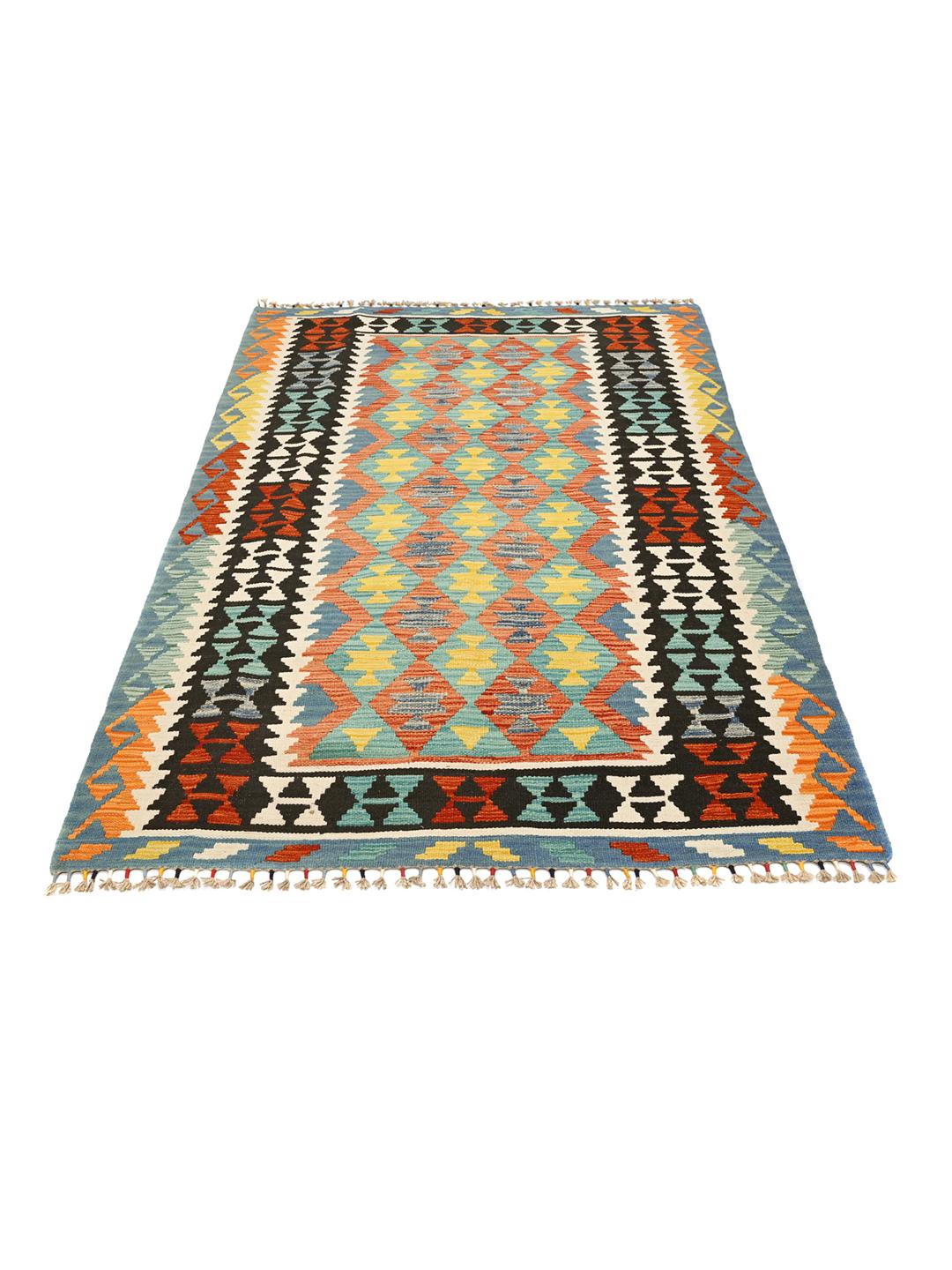
Visually, this rug showcases the classic geometric language found in Afghan flat-weaves. The frequent use of diamonds, triangles, and bold borders is typical of the tribal styles from this region. These motifs are often symbolic, representing protection, fertility, or the natural world, and they are arranged in balanced, repeating patterns that create a sense of harmony. The specific combination of colours seen here highlights the traditional dye palettes that have been favoured by weavers for generations.
Collecting Afghan Kelims is an investment in cultural heritage. Because they are produced by hand in small batches or as individual commissions, each piece carries the distinct creative signature of the person who wove it. By choosing this rug, you are not merely purchasing a floor covering, but participating in a long-standing tradition of craft that values human skill and artistic storytelling over mass production.