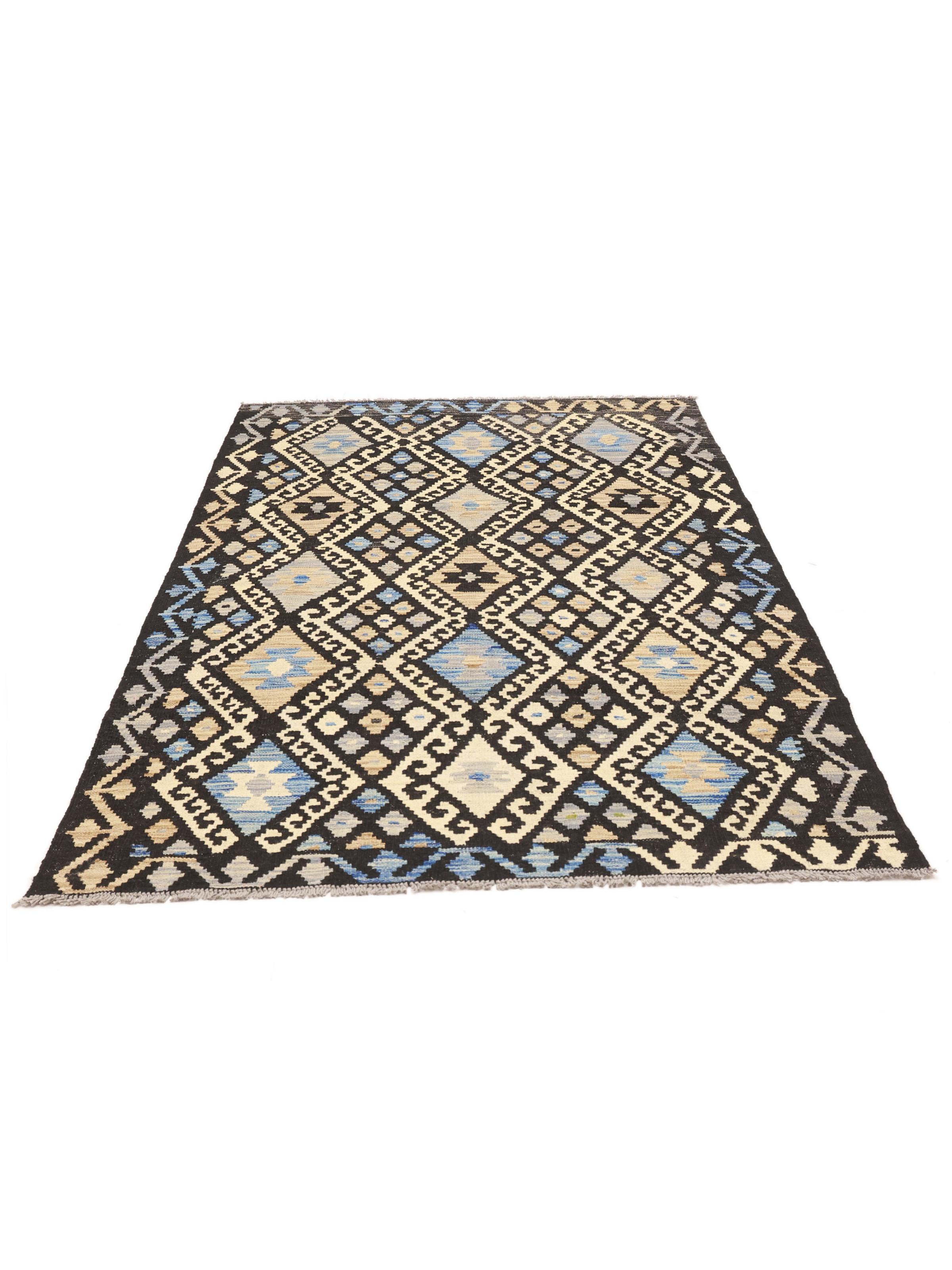
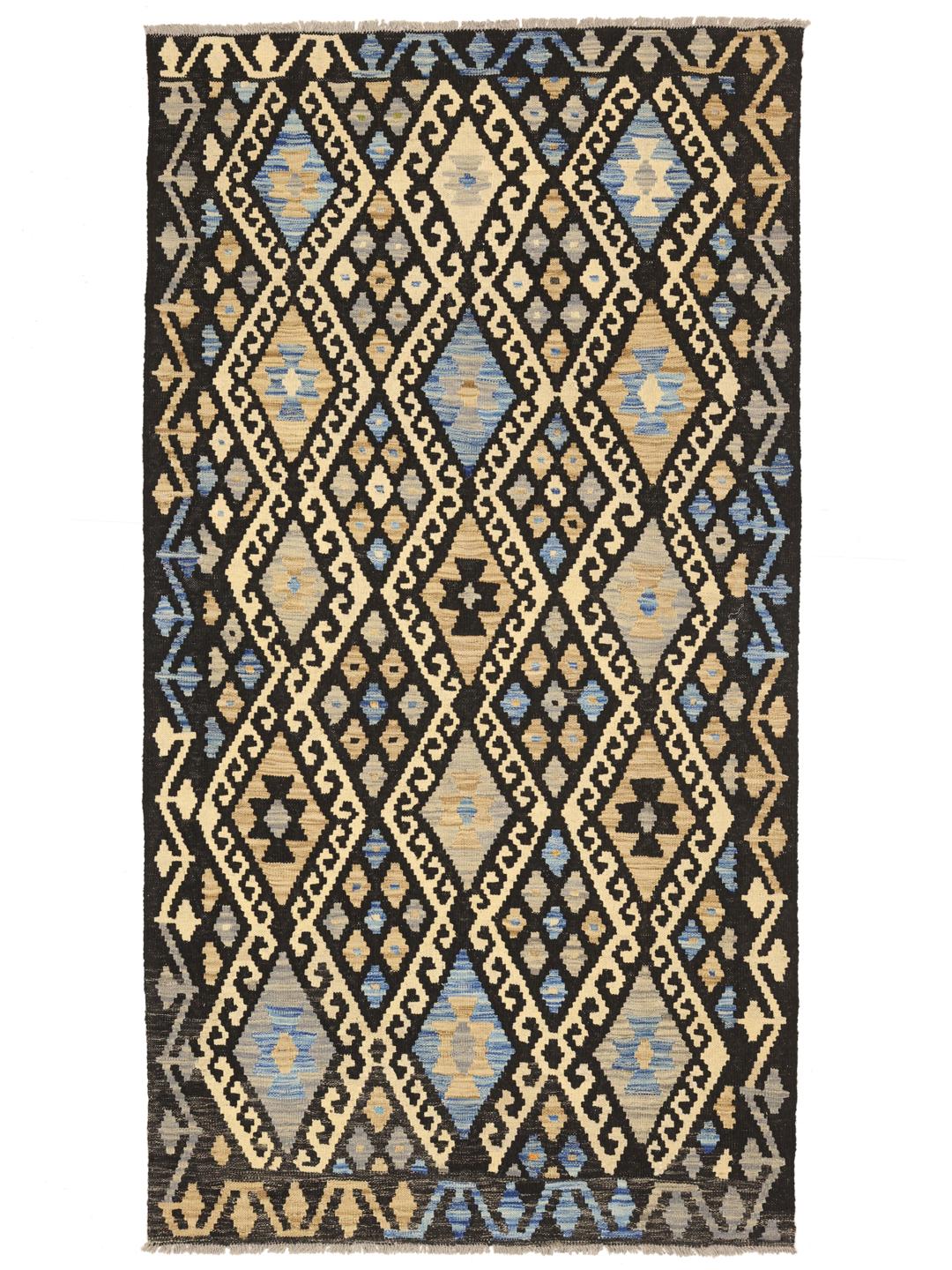
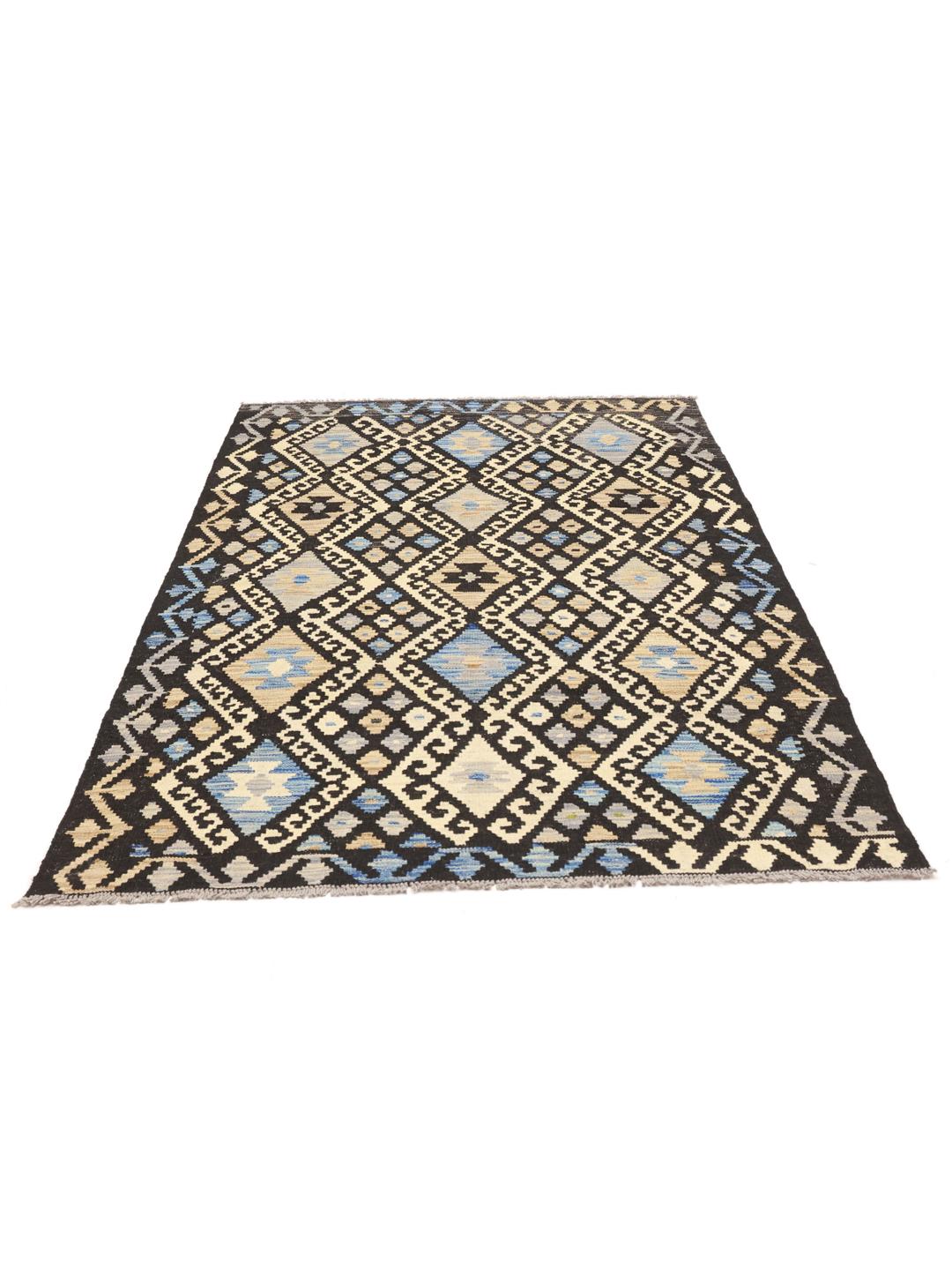
The Afghan Kelim tradition is deeply rooted in the nomadic history of the Middle East, where weaving served as both a practical necessity and a vital form of artistic expression. These flat-woven rugs were traditionally crafted by tribal groups to provide portable, durable floor coverings, saddlebags, and tent decorations. Over time, these functional pieces evolved into the highly sought-after decorative items we cherish today.
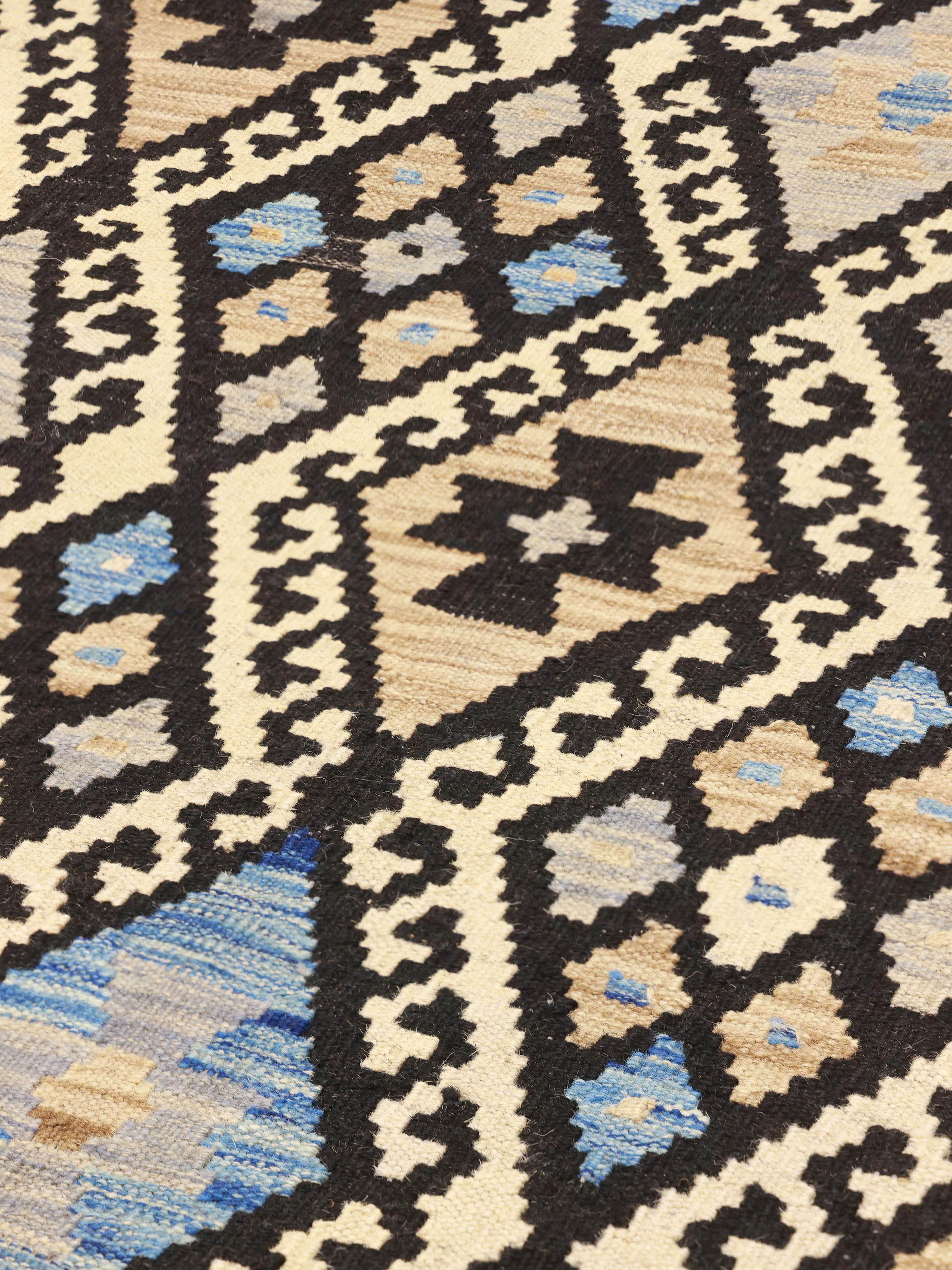
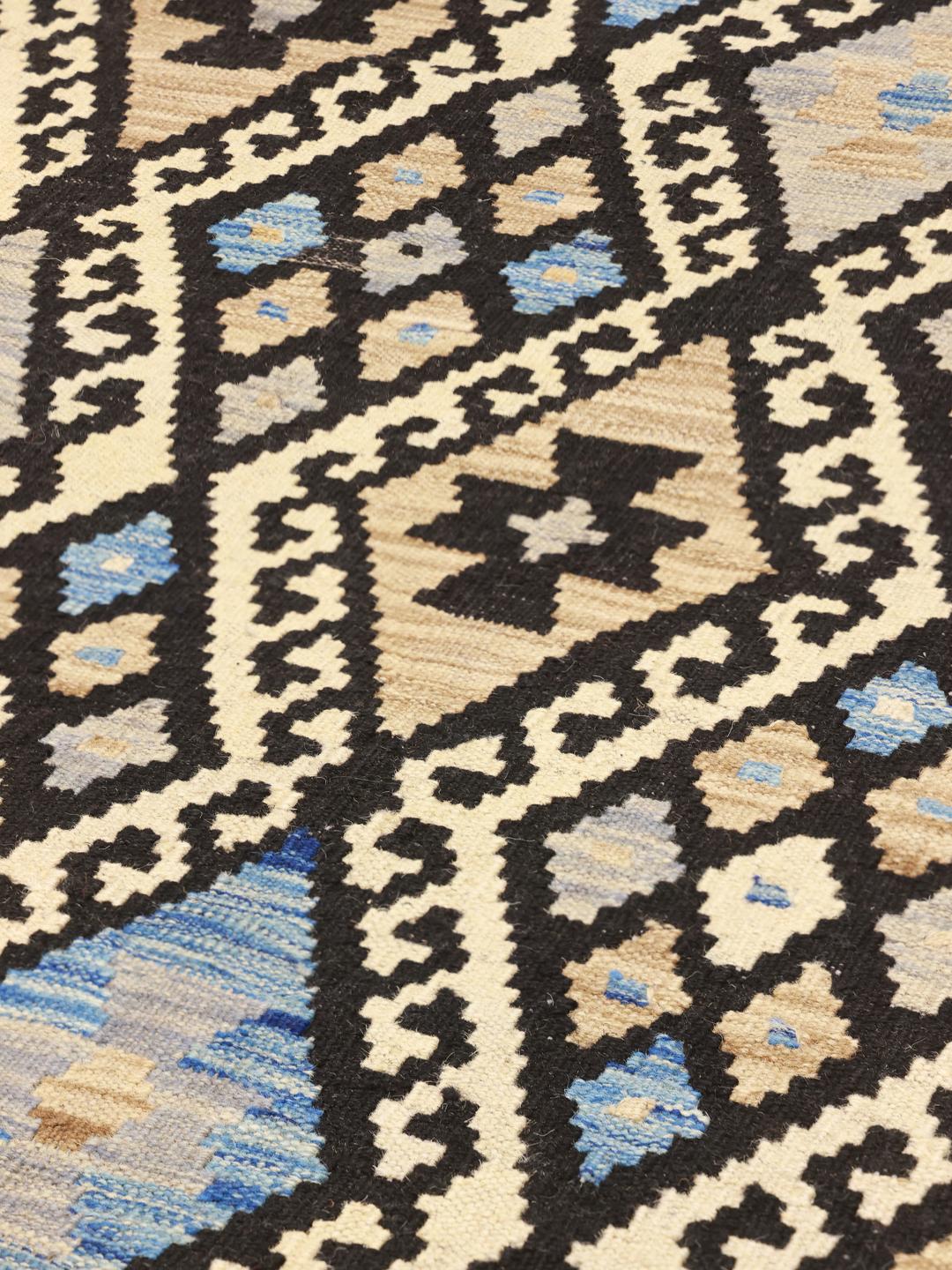
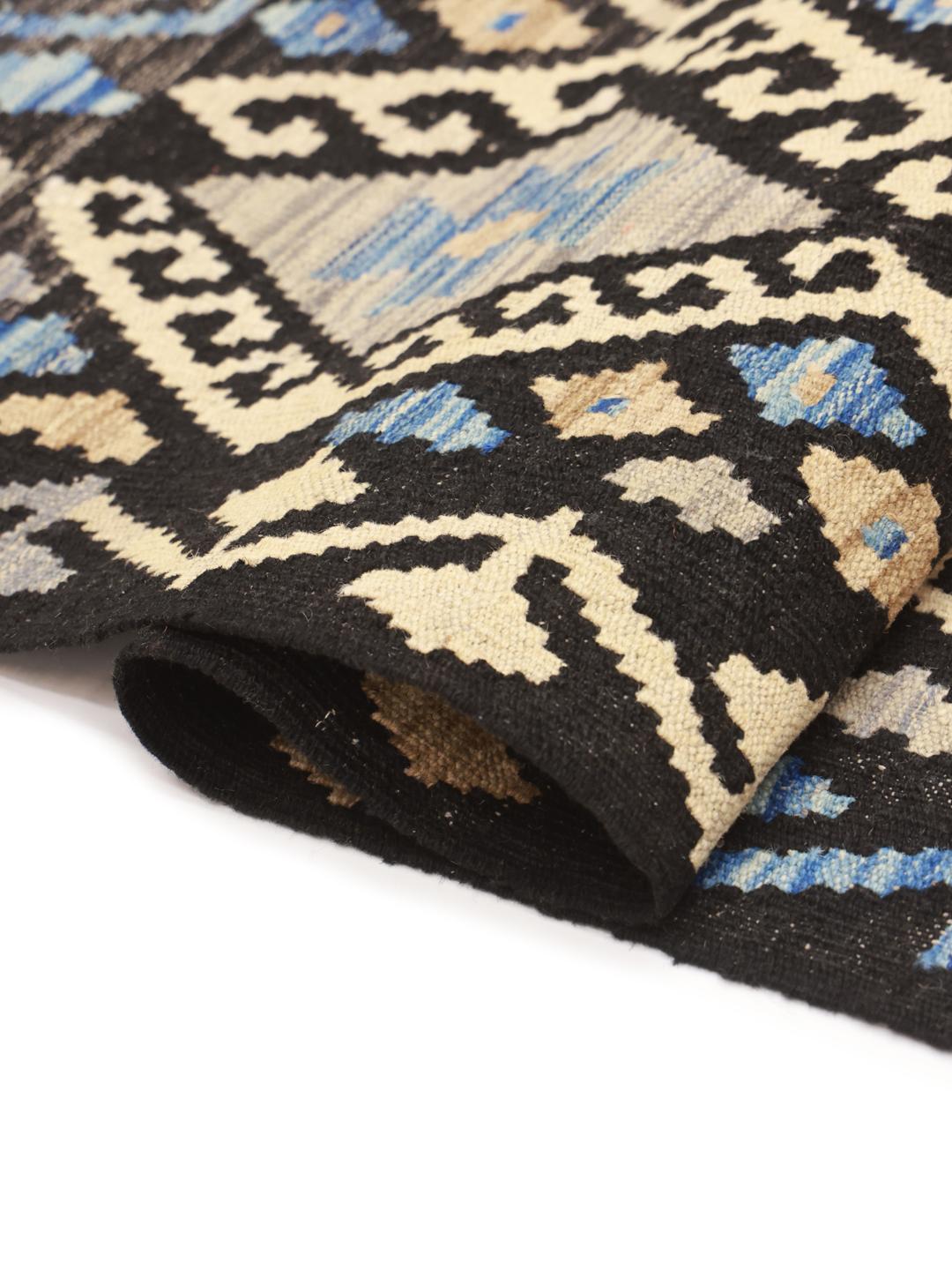
A Kelim is defined by its slit-weave construction, a technique where the weft threads are looped back at the edges of each colour block to create a clean, sharp gap. This technical approach allows for the creation of intricate, angular patterns that are iconic to the style. Because there is no pile to hide the structure, the quality of the weave is immediately visible, requiring immense skill to keep the surface uniform and the edges straight.
Signature design elements in these rugs typically feature bold, geometric motifs such as diamonds, triangles, and stylized floral forms. The use of dark, earthy palettes is a hallmark of the old-style tradition, often contrasted with vibrant pops of colour that highlight the central medallions or decorative borders. This specific piece showcases a sophisticated balance of these elements, reflecting the classic aesthetic of the region.
Collectors value these rugs for their cultural weight and the tangible connection they provide to ancient weaving lineages. Owning a Kelim is more than just purchasing a floor covering; it is an investment in a heritage of skill and human creativity. Each piece stands as a durable, beautiful artifact that captures the spirit of its origin, making it a meaningful addition to any collection.