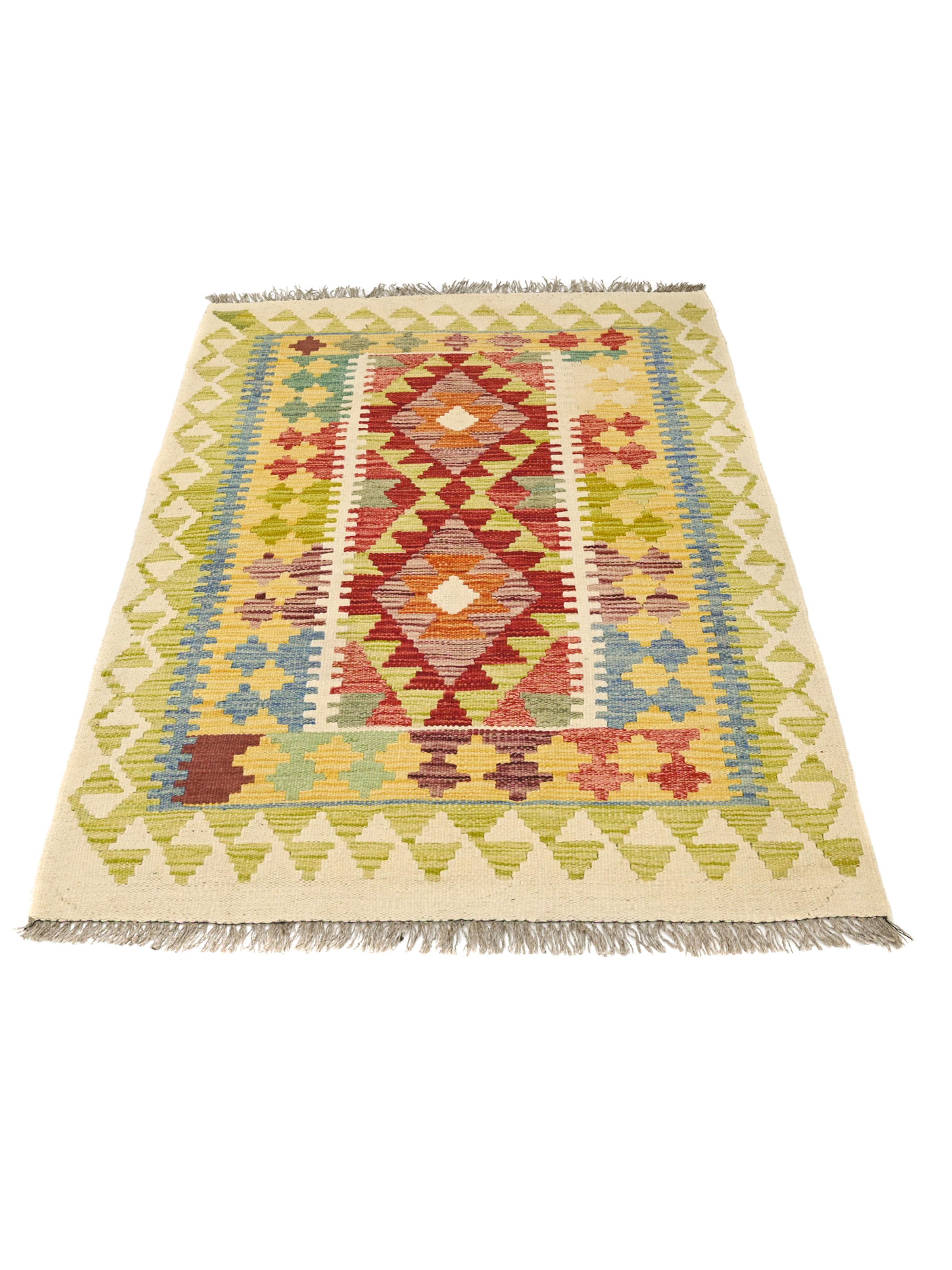
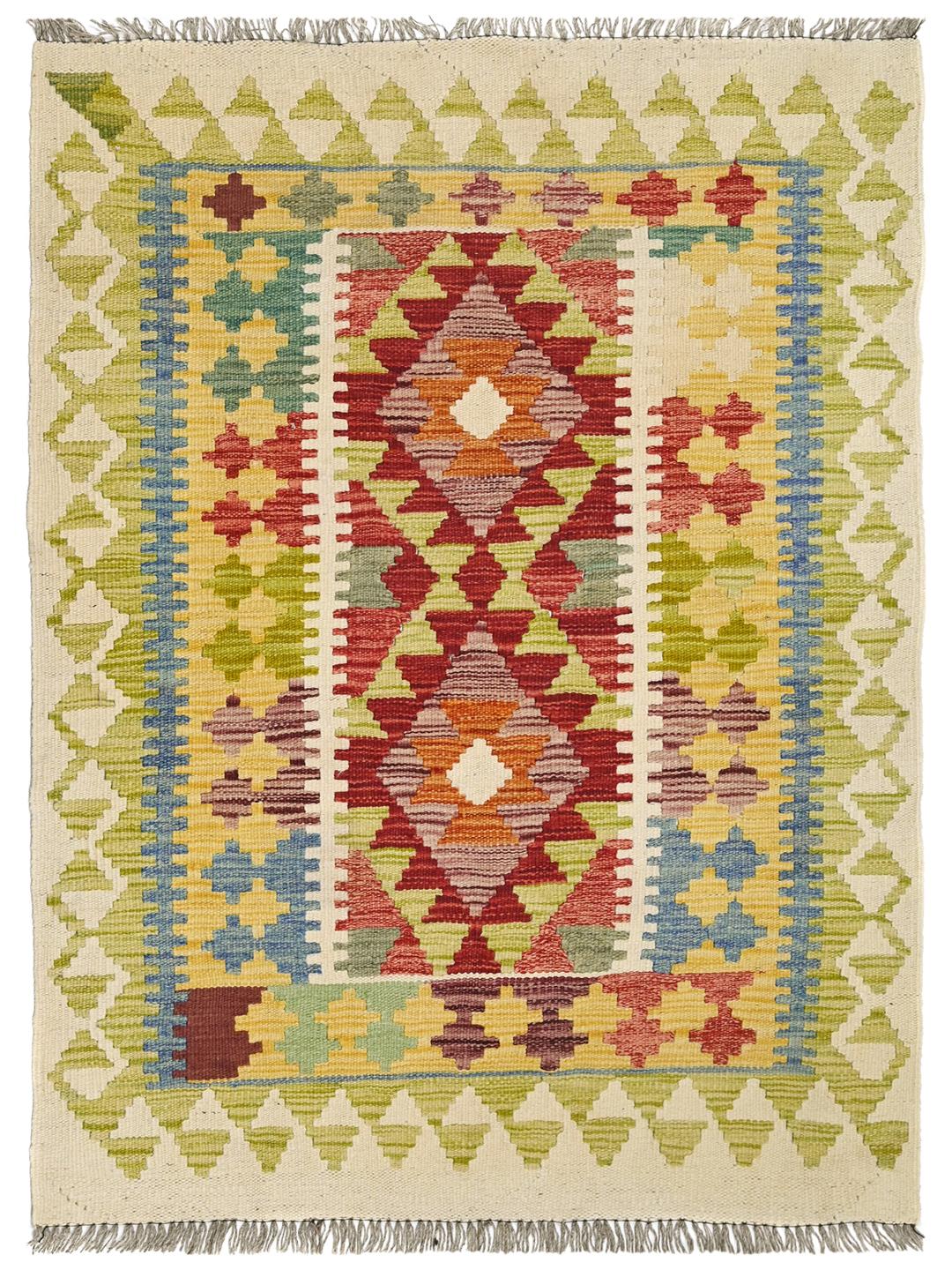
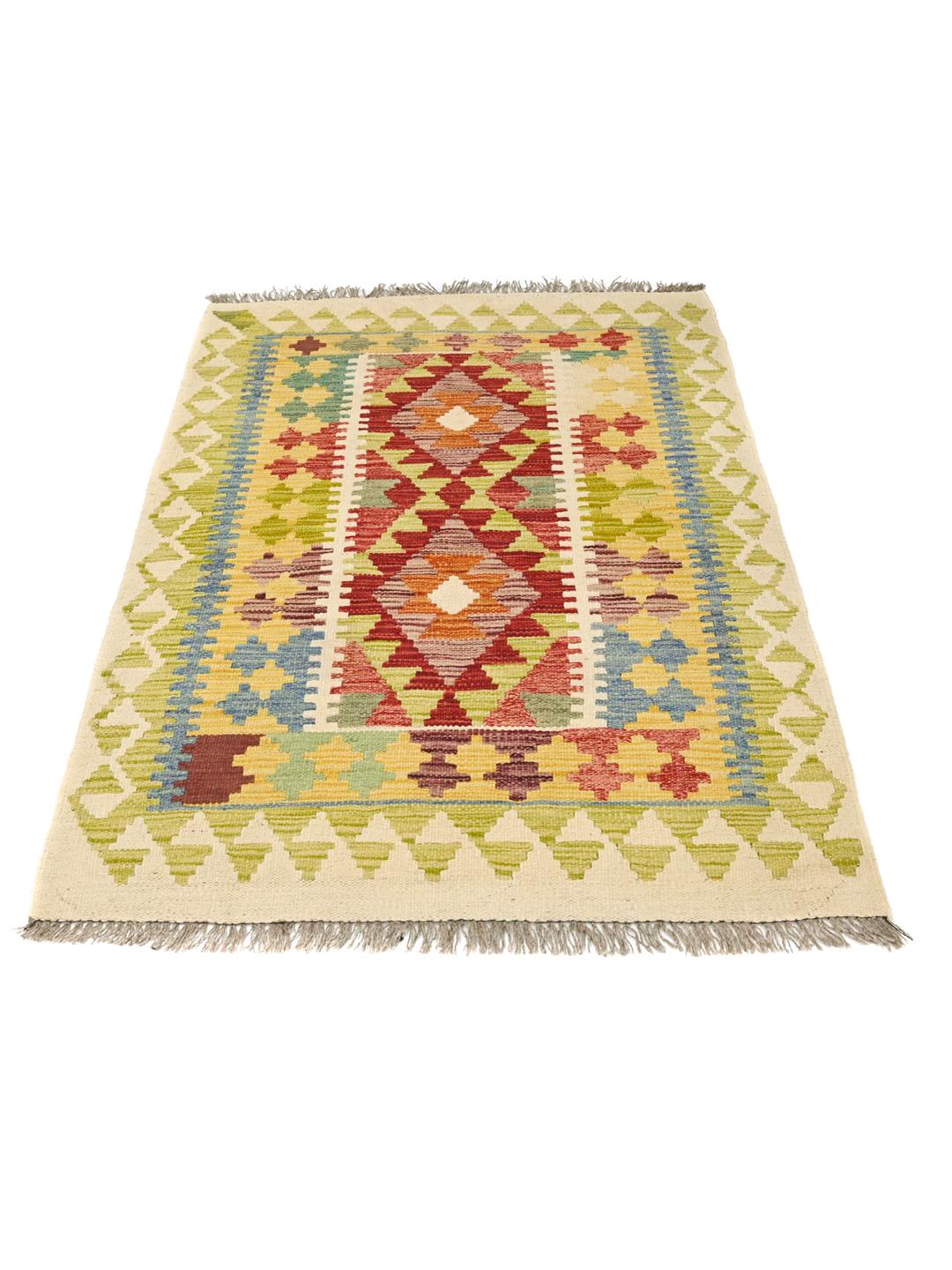
Kelim weaving in Afghanistan forms part of an ancient nomadic craft tradition that spans centuries across Central Asia. Traditionally created for practical use within tribal homes, these flatwoven textiles served as floor coverings, wall hangings, and protective sacks before gaining global recognition for their artistry.
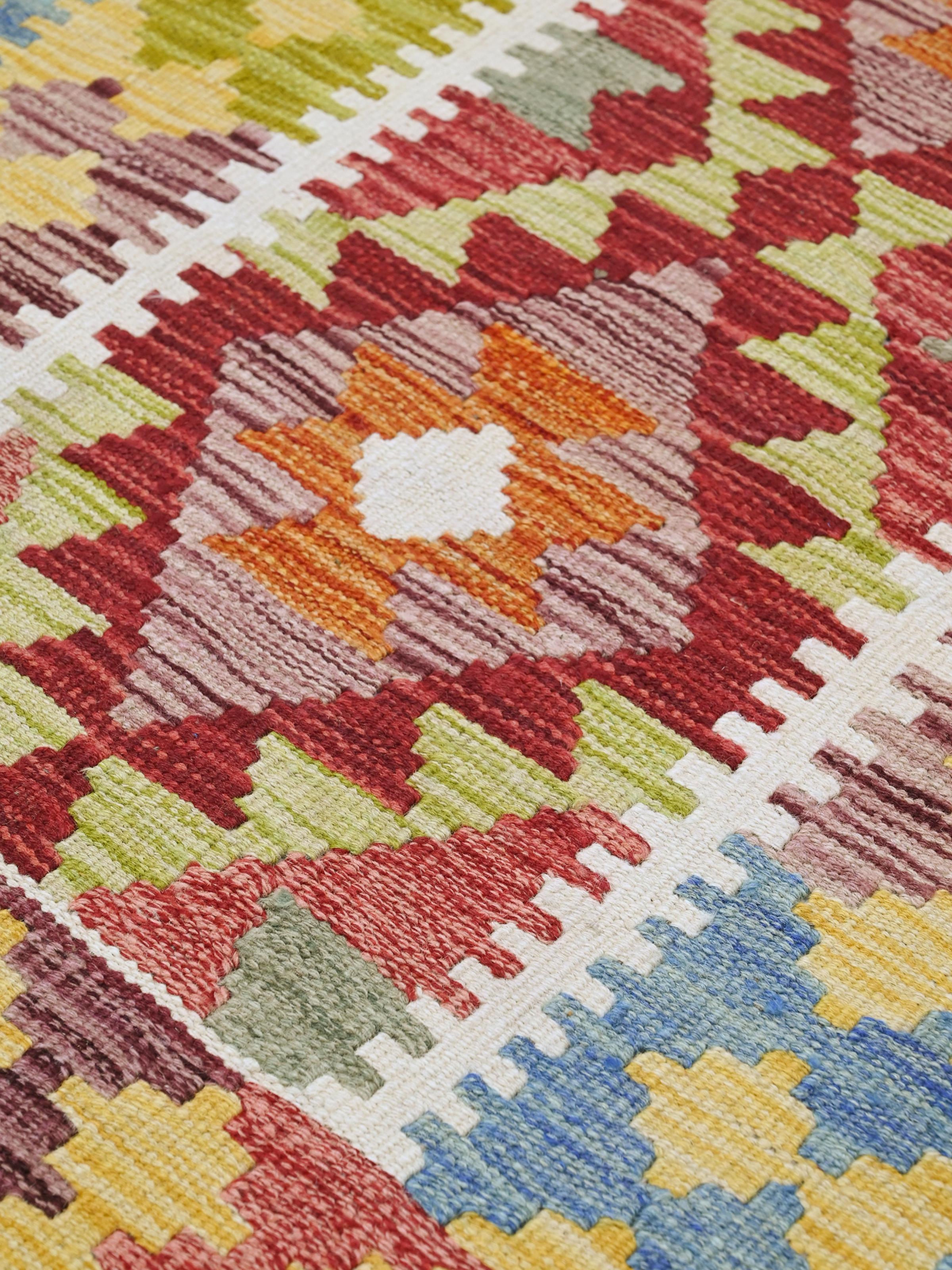
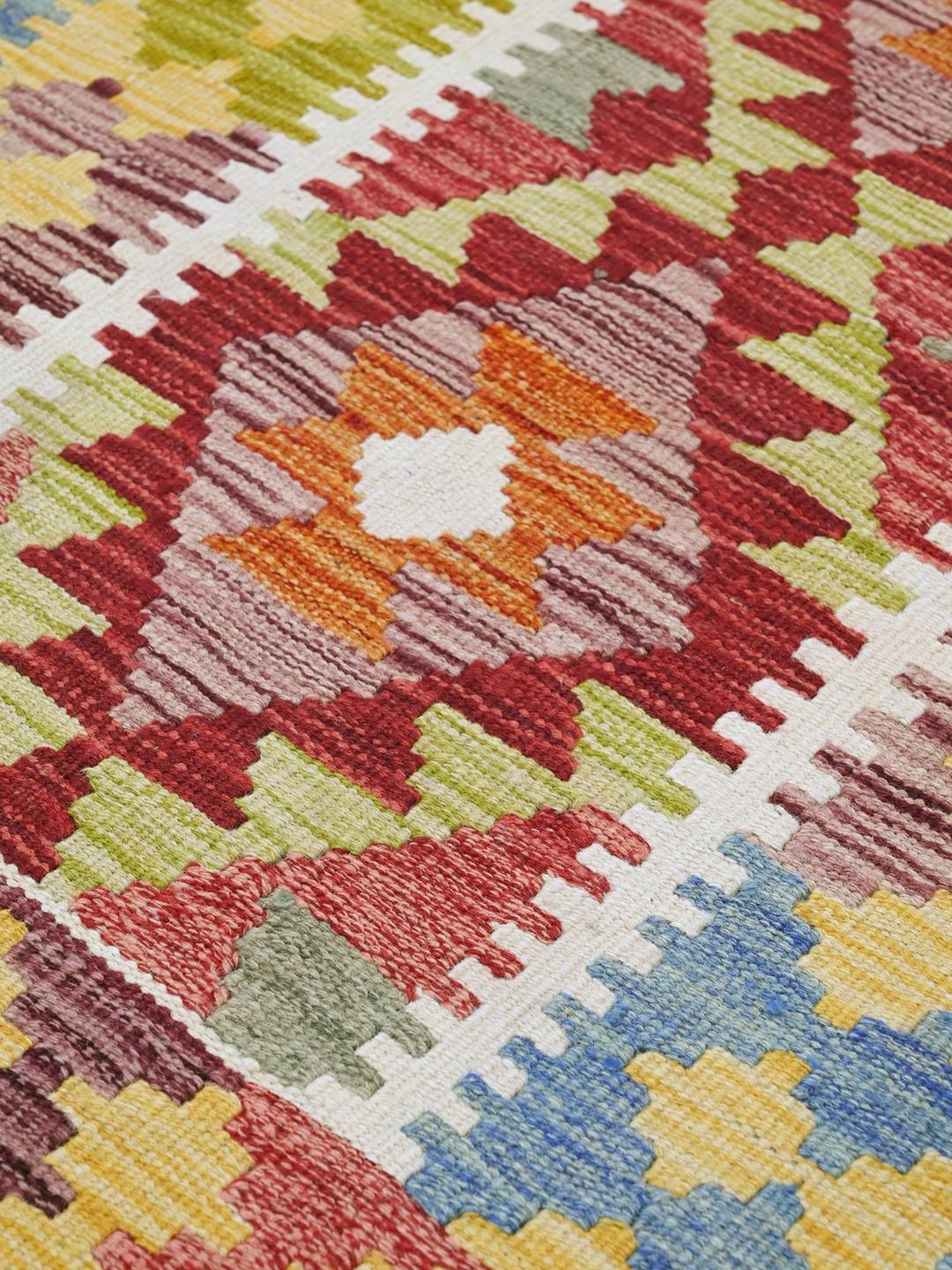
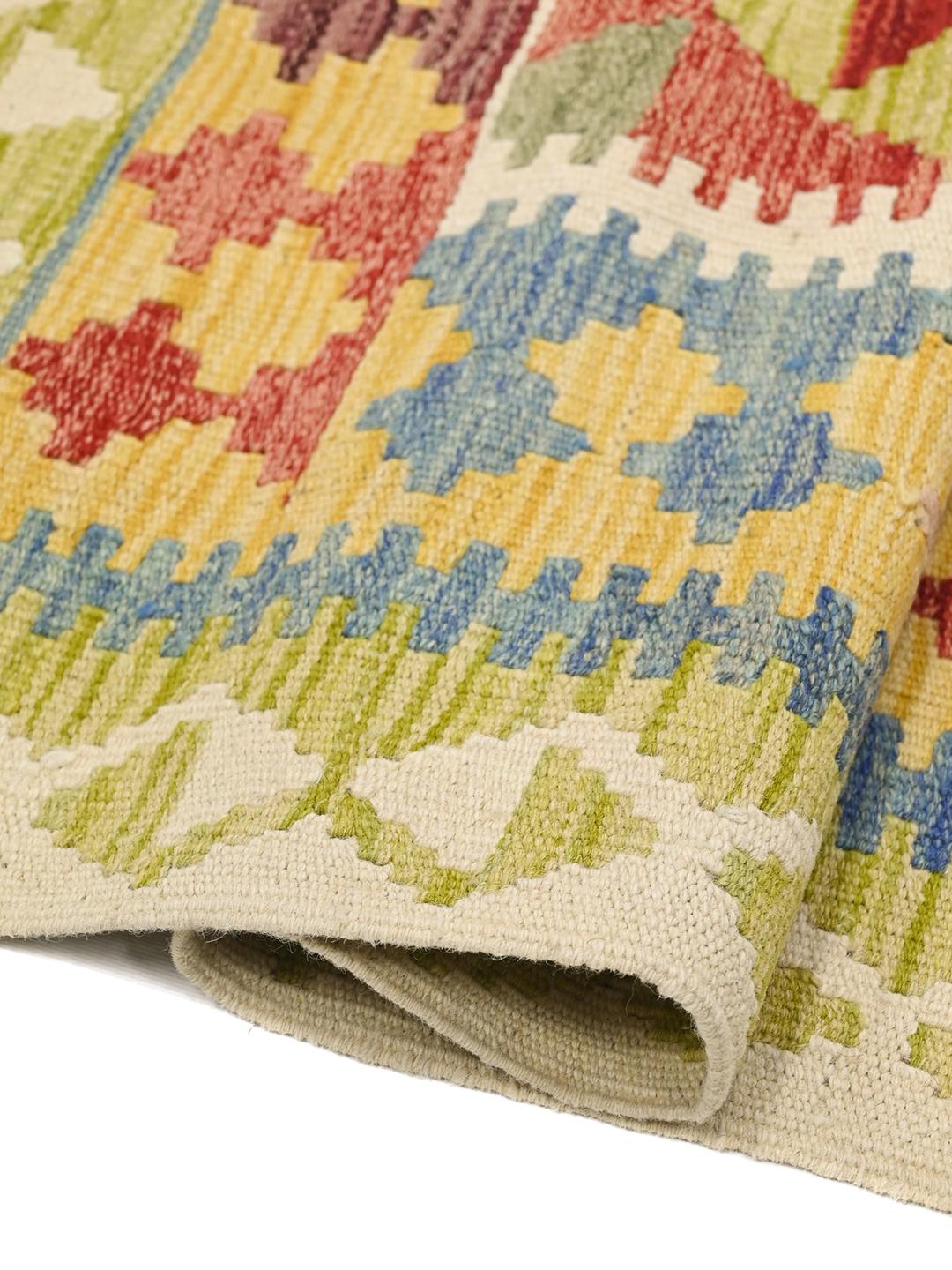
The Old Style designation refers to classic weaving traditions where geometric patterns and flatweave structures are produced using hand-spun wool yarn. Unlike pile carpets, kilims are made by tightly interweaving the warp and weft strands, producing a smooth, pileless surface that is light, durable, and reversible.
Visual language in Afghan kilims relies heavily on bold geometric forms, including repeating diamond motifs and structured decorative borders. Traditional compositions use contrasting colour bands to frame central fields, creating a rhythmic pattern that reflects regional heritage and local weaving customs.
Collectors and design enthusiasts value Afghan kilims for their raw authenticity, expressive use of colour, and honest craft. Acquiring a vintage hand-woven piece offers an enduring connection to traditional artisan cultures and historical textile heritage.