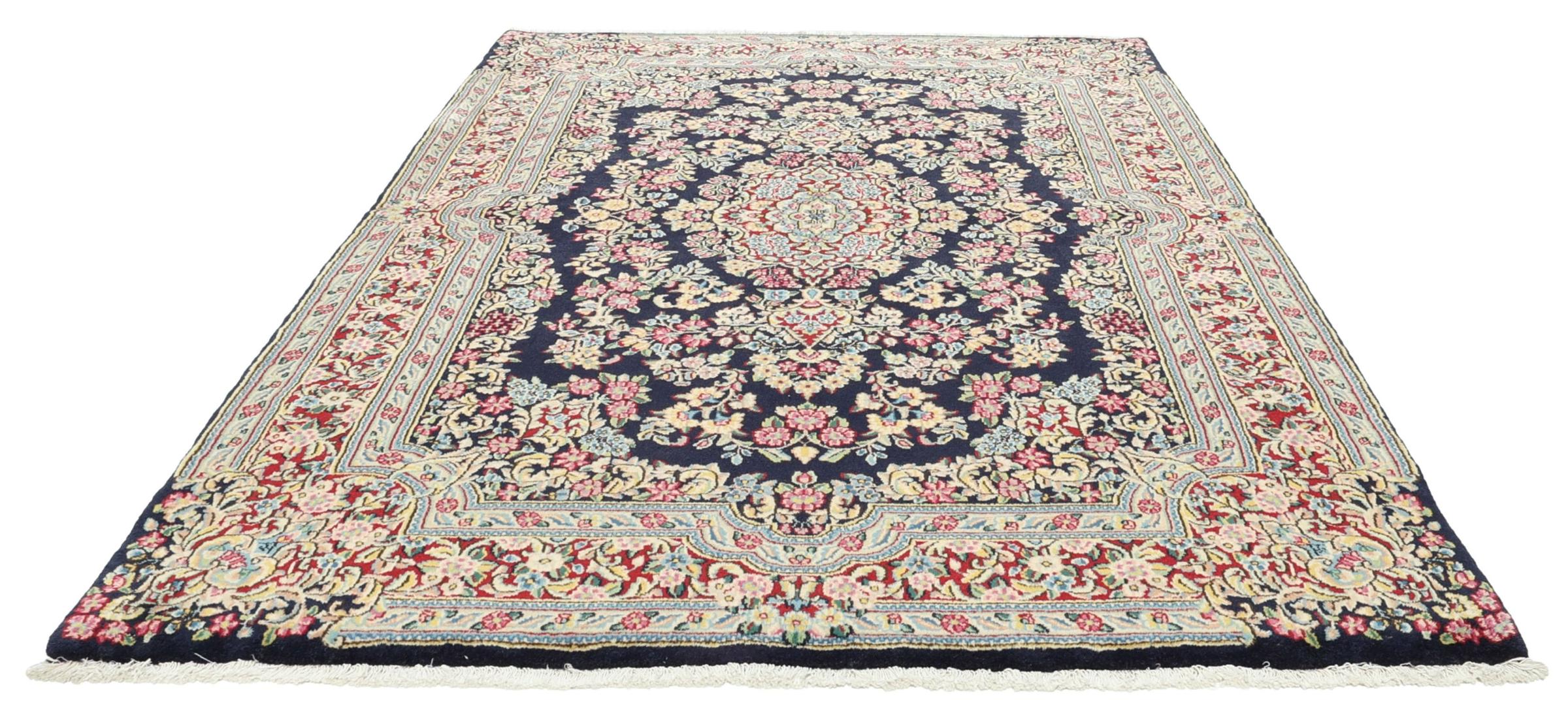
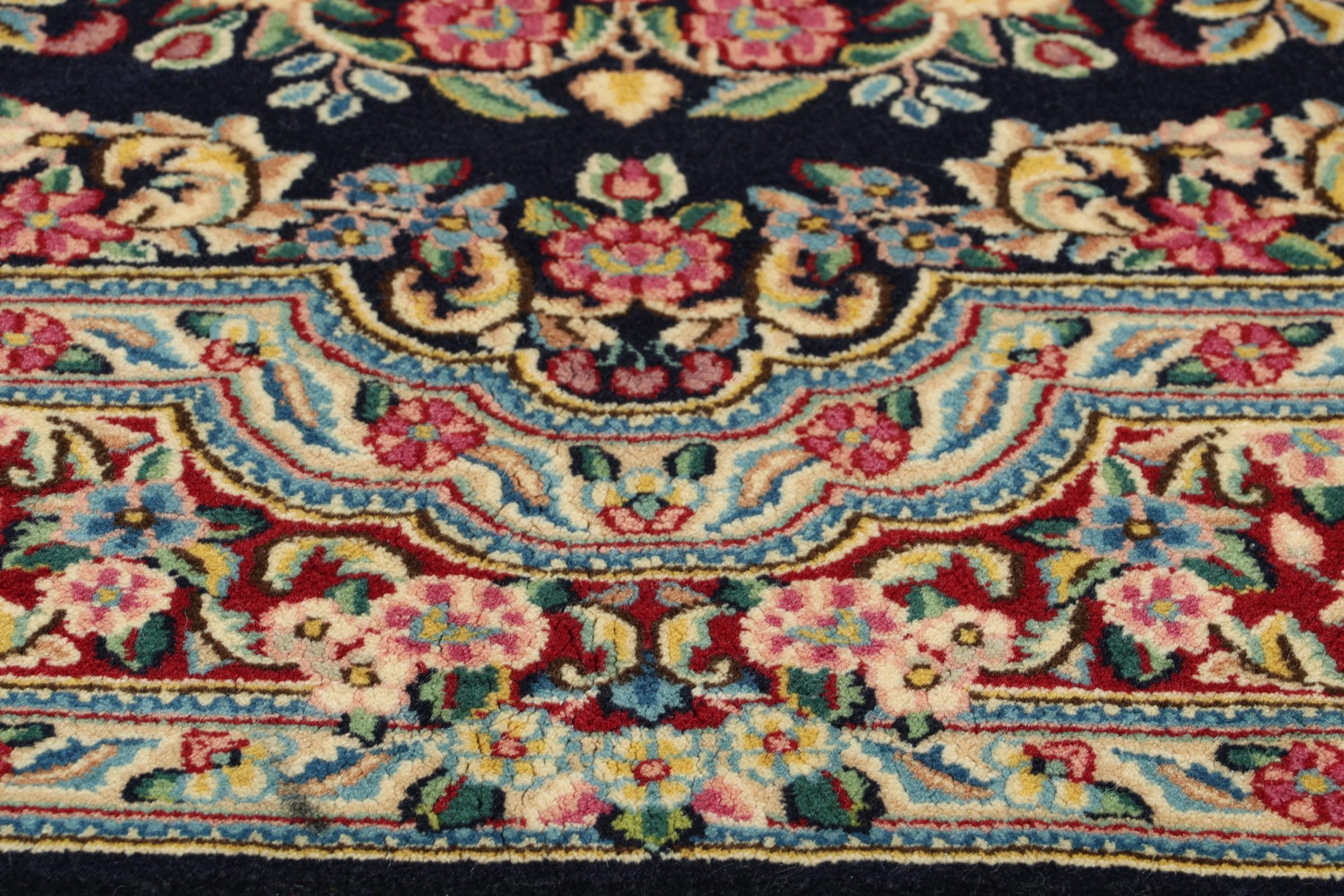
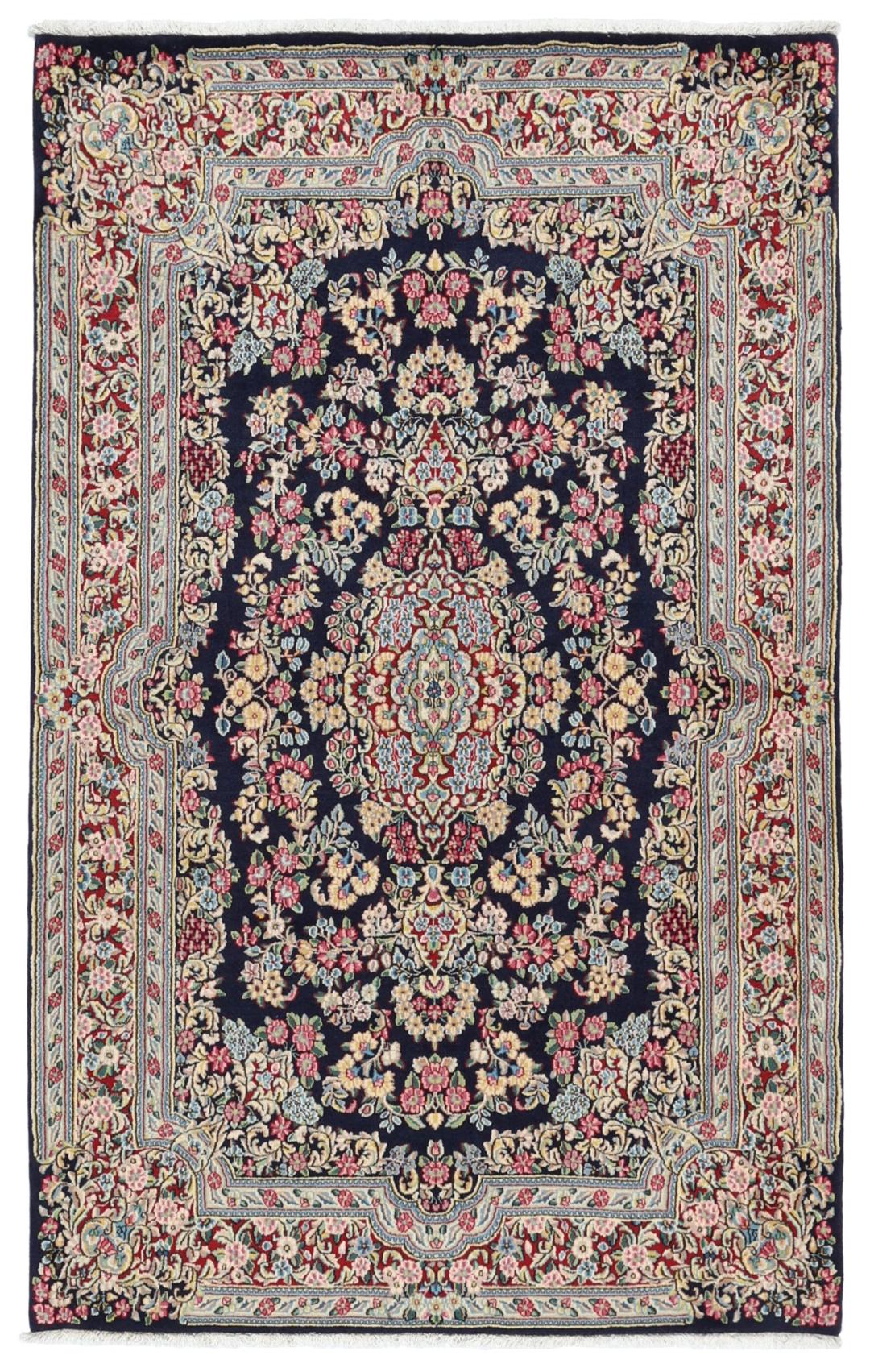
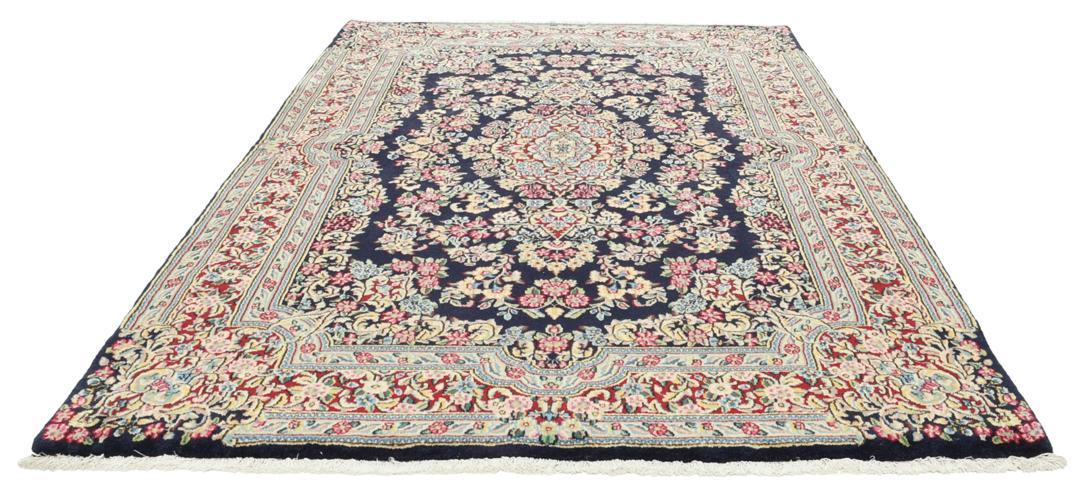
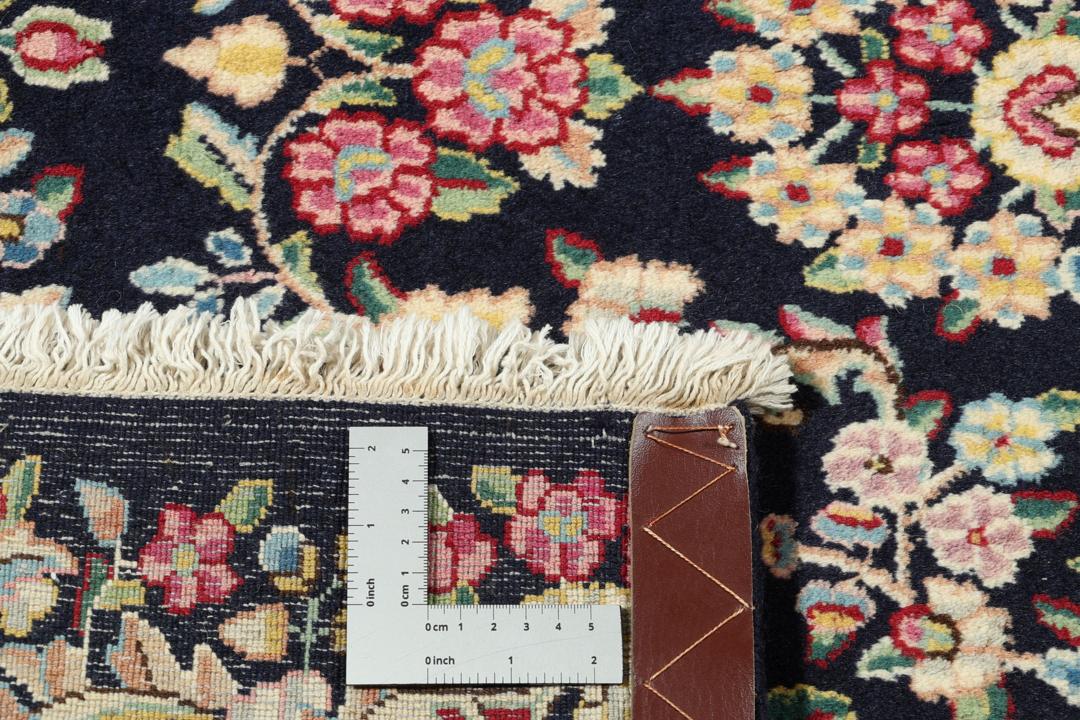
Kerman rugs originate from the desert city of Kerman in the Middle East, a historic centre of trade and culture that has been famous for its textile production since the 16th century. Historically, these rugs were highly sought after by royalty and nobility, often commissioned for their sophisticated designs and the unique quality of the wool sourced from high-altitude flocks.
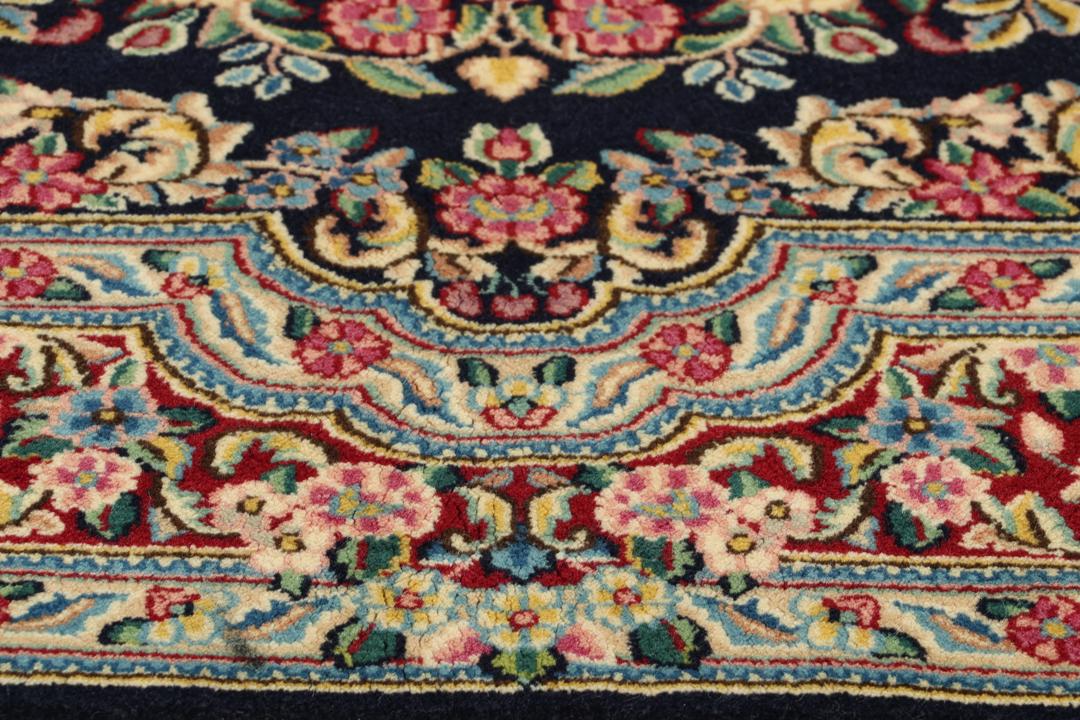
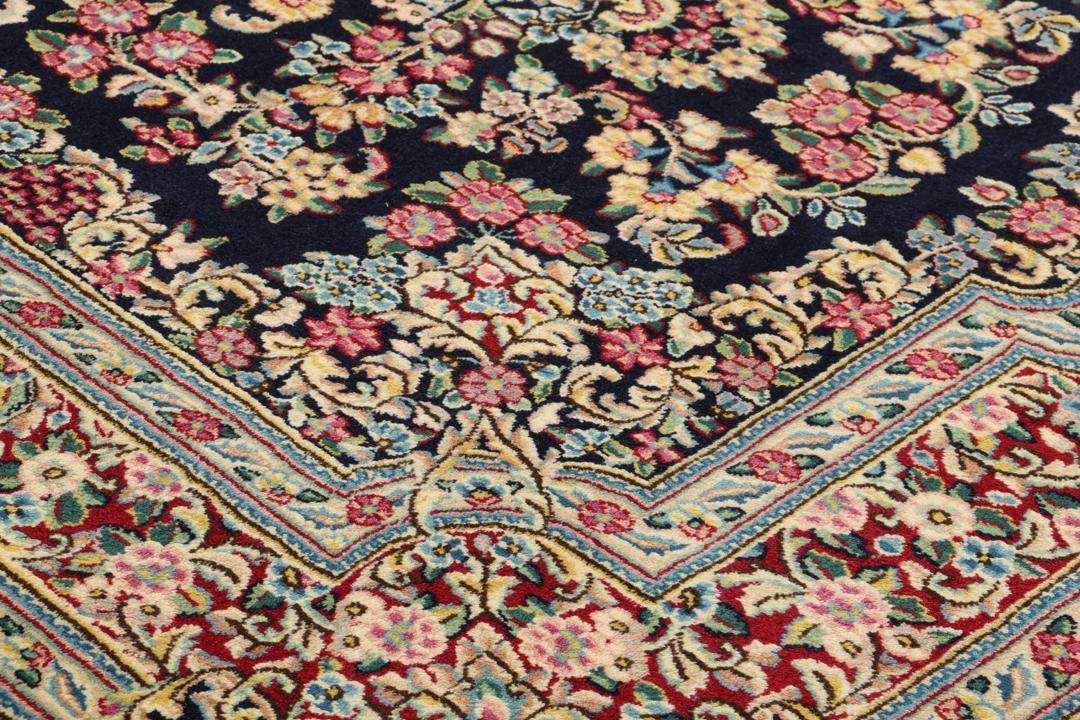
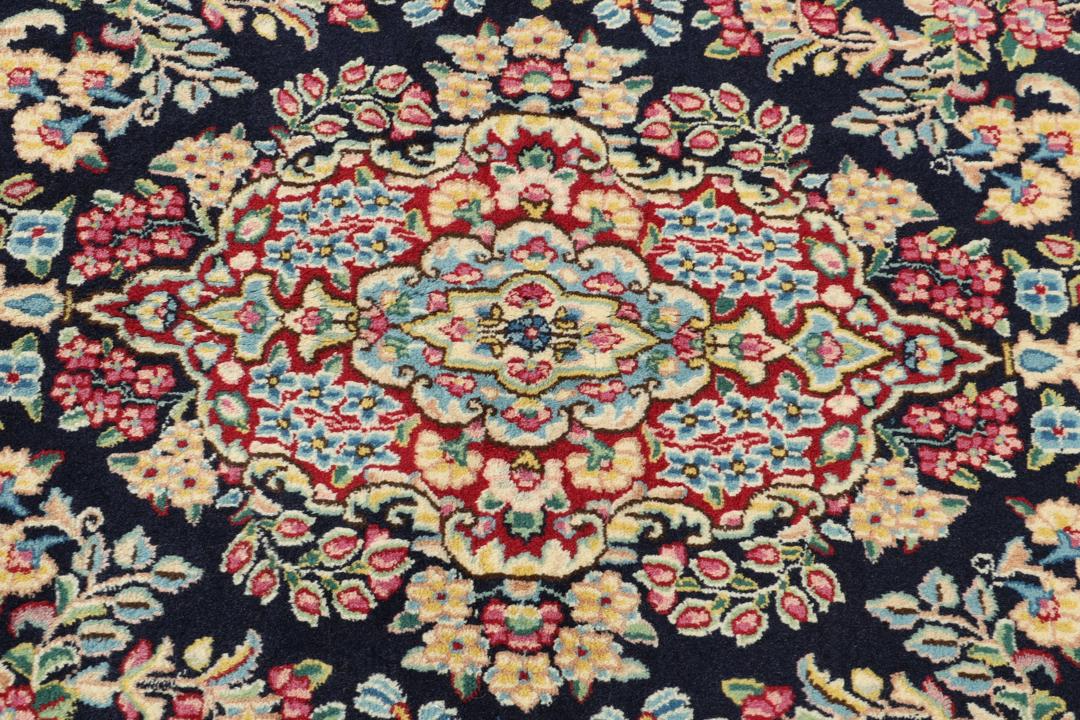
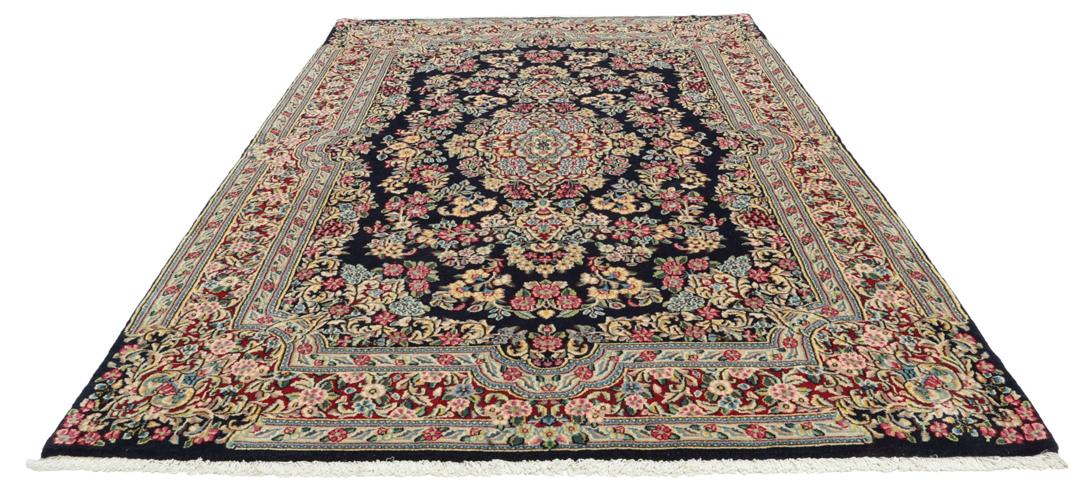
The term Kerman refers to a specific tradition of weaving that emphasises elegance and botanical artistry. These rugs are known for their complex, flowing floral patterns that often cover the entire field, creating a sense of movement and depth. Unlike more geometric traditions, the Kerman style leans into curves, delicate vines, and large, ornate central medallions.
Signature elements of this tradition include the use of a rich, diverse colour palette and highly developed floral sprays. While many rugs from the region feature bold, repeating tribal patterns, Kerman designs are celebrated for their painterly quality, often resembling a vibrant garden captured in wool. The borders are typically as detailed as the centre, creating a balanced and formal composition.
Collecting a Kerman rug is an investment in a legacy of skill that has been passed down through generations of weavers. Because these rugs are valued for their artistic complexity and the immense patience required to execute such detailed work, they are considered prized possessions that add a layer of cultural weight and historical beauty to any home.