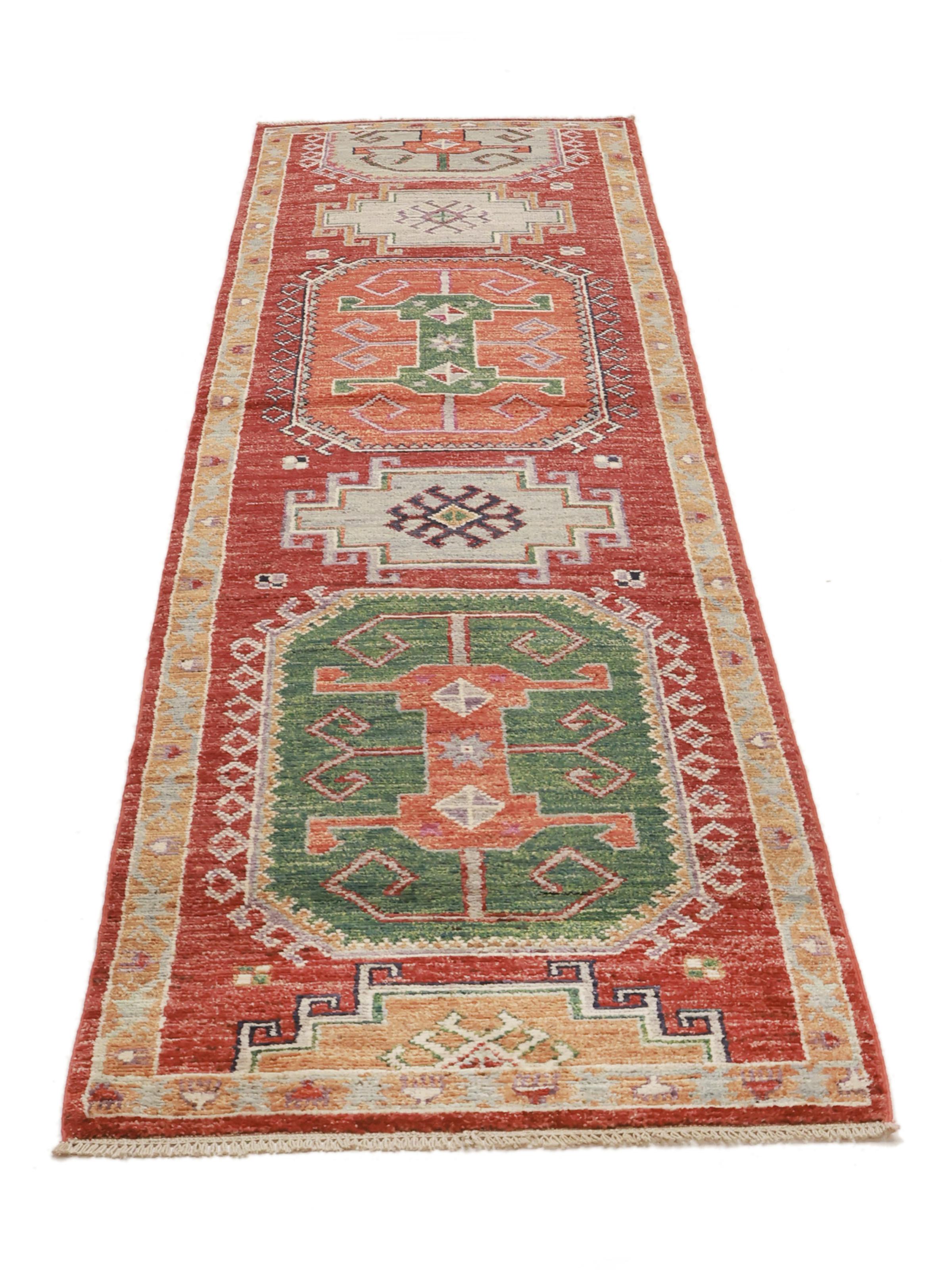
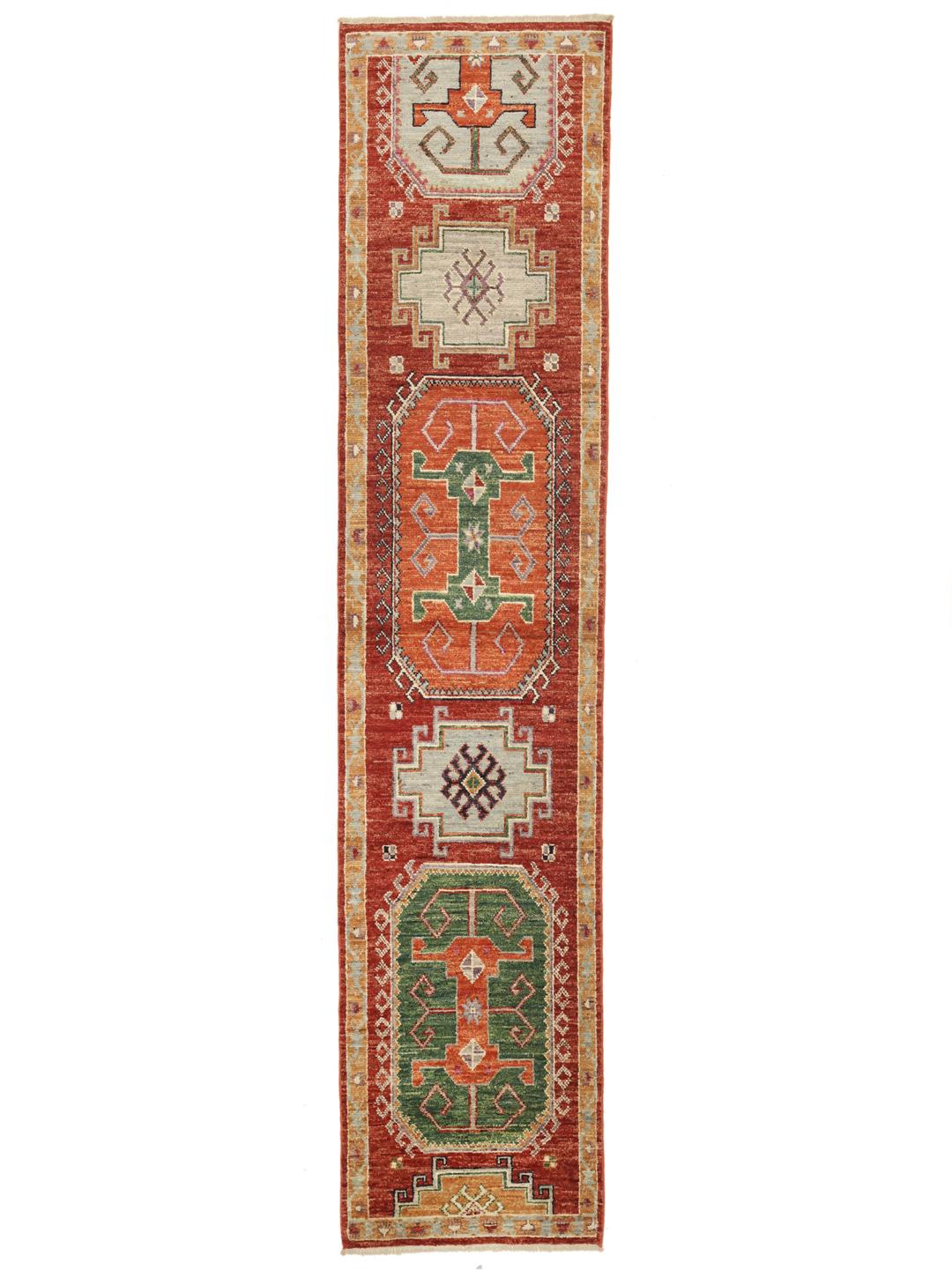
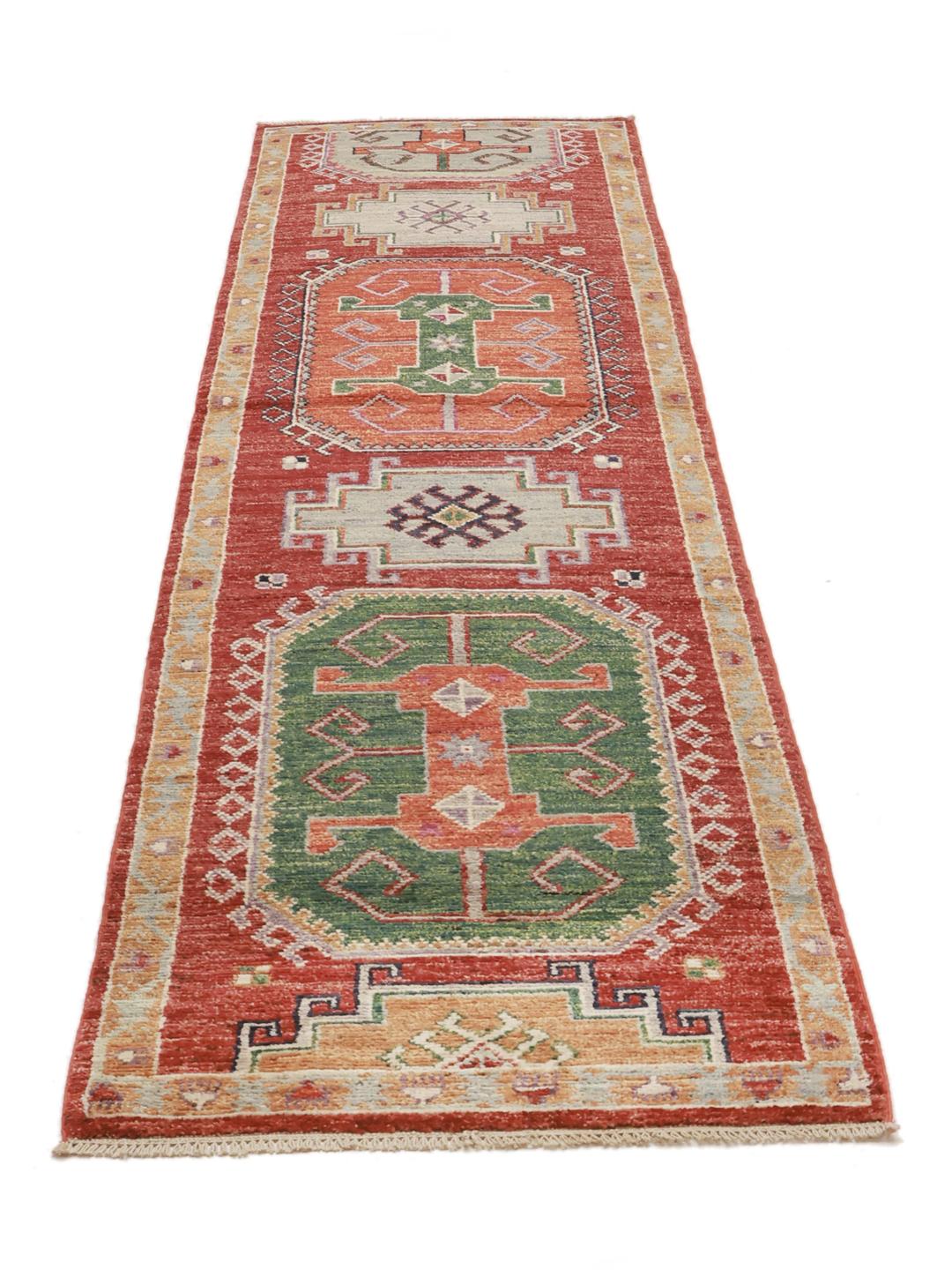
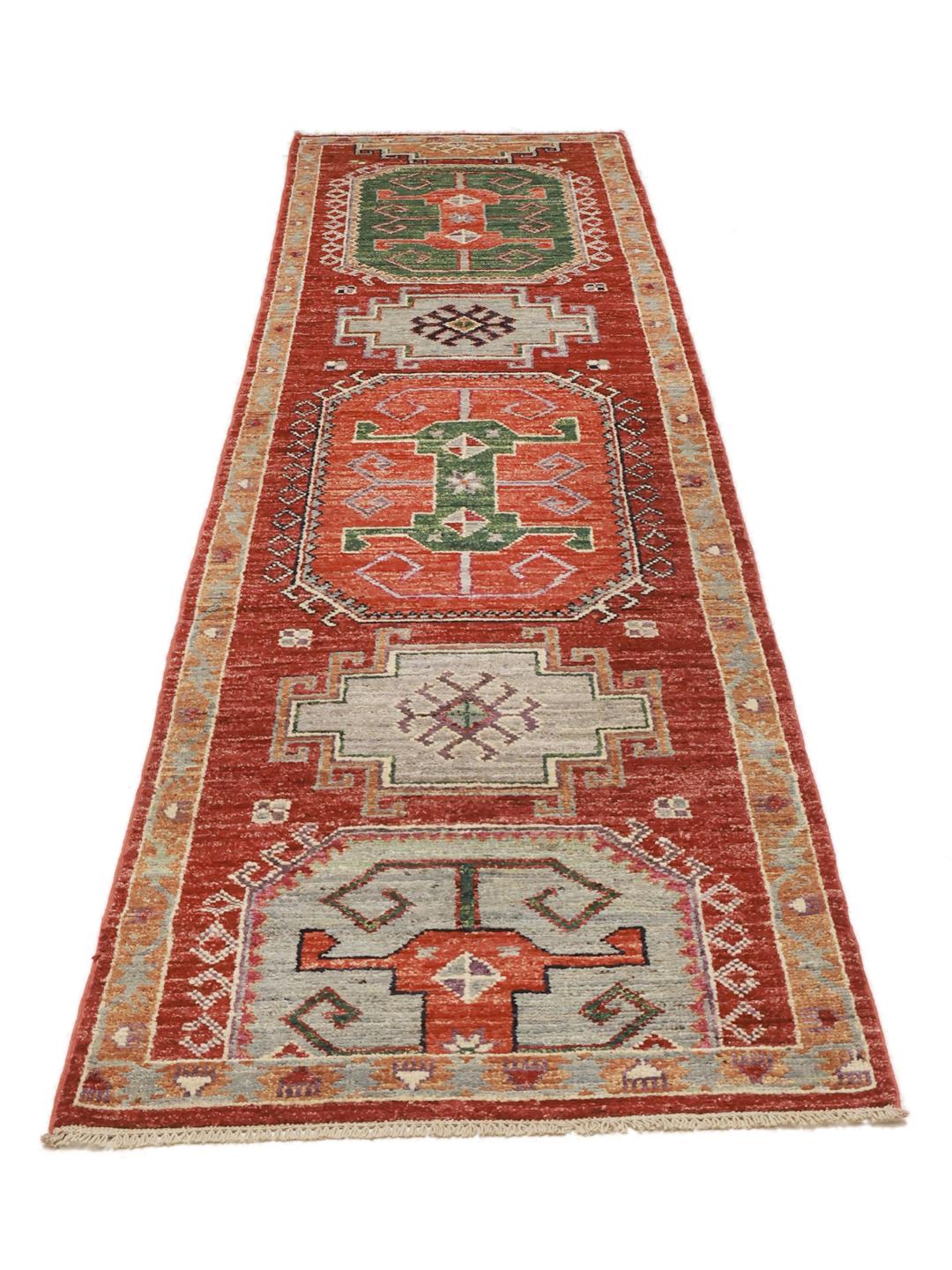
Kazak rugs originate from the Caucasus region, historically serving as a bridge between nomadic traditions and sophisticated weaving techniques. Today, the art of weaving these rugs has flourished in Afghanistan, where artisans continue to honour the classic, bold aesthetic that has made these pieces iconic for centuries.
The term 'Kazak' refers to a specific style of village weaving known for its geometric clarity and robust construction. These rugs are highly valued for their use of bold, saturated colours and large-scale, striking motifs, which distinguish them from the more delicate, curvilinear patterns found in other regional styles.
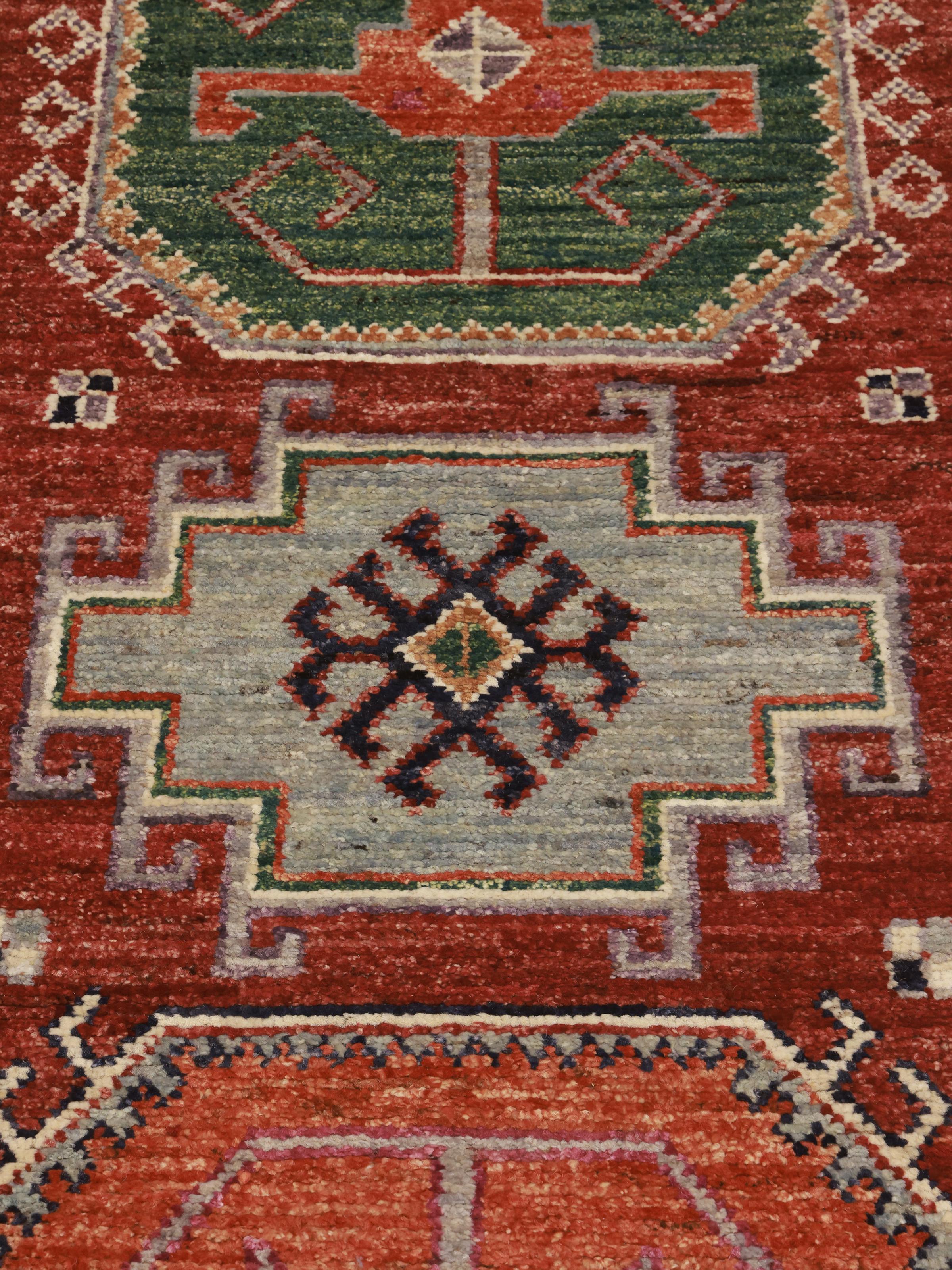
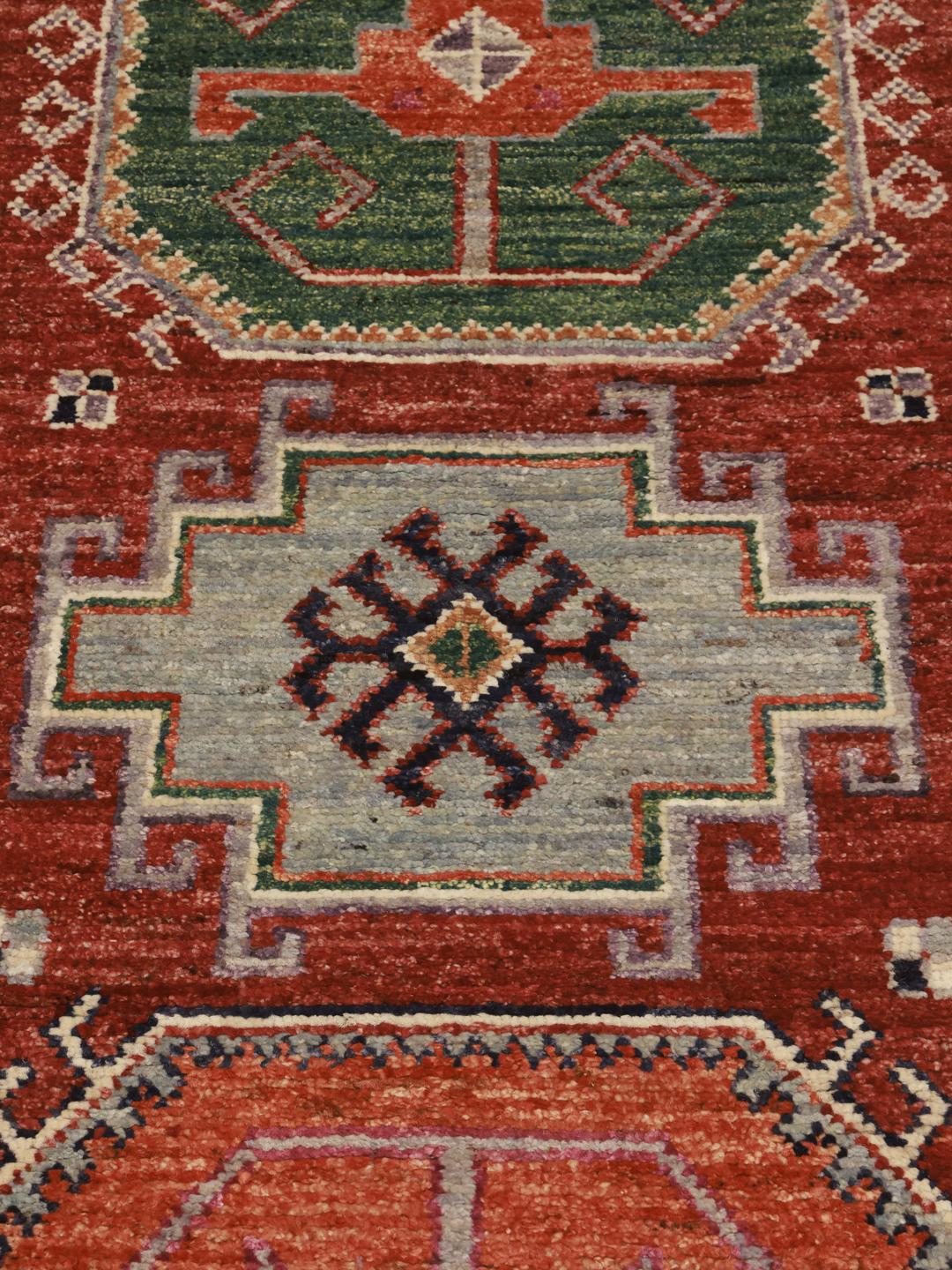
Central to the Kazak aesthetic are the geometric medallions and tribal motifs that often decorate the field. Each shape is steeped in meaning, often passed down through generations of weavers. The borders are typically formal and balanced, acting as a frame that highlights the complex, symbolic storytelling happening within the central field.
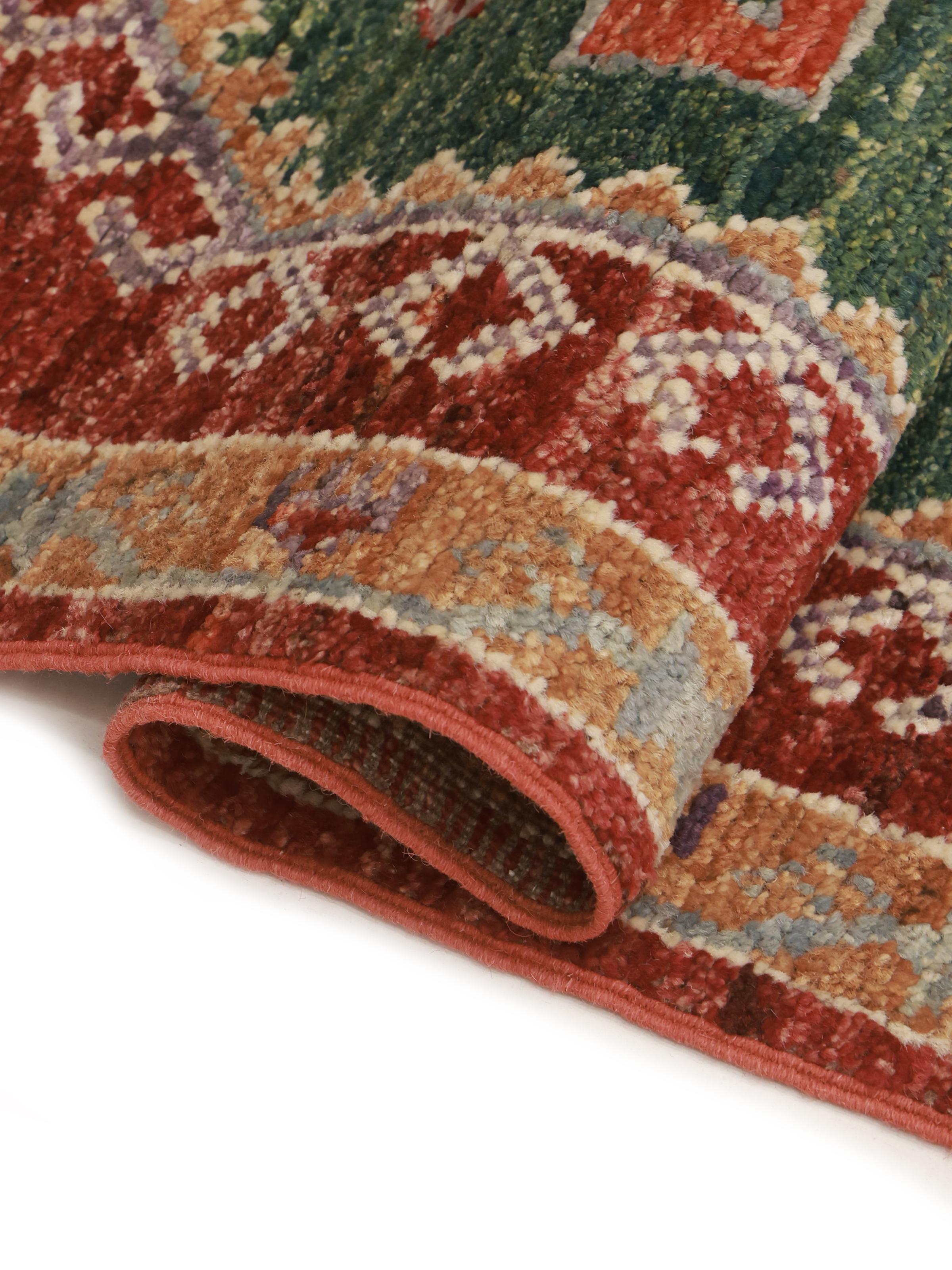
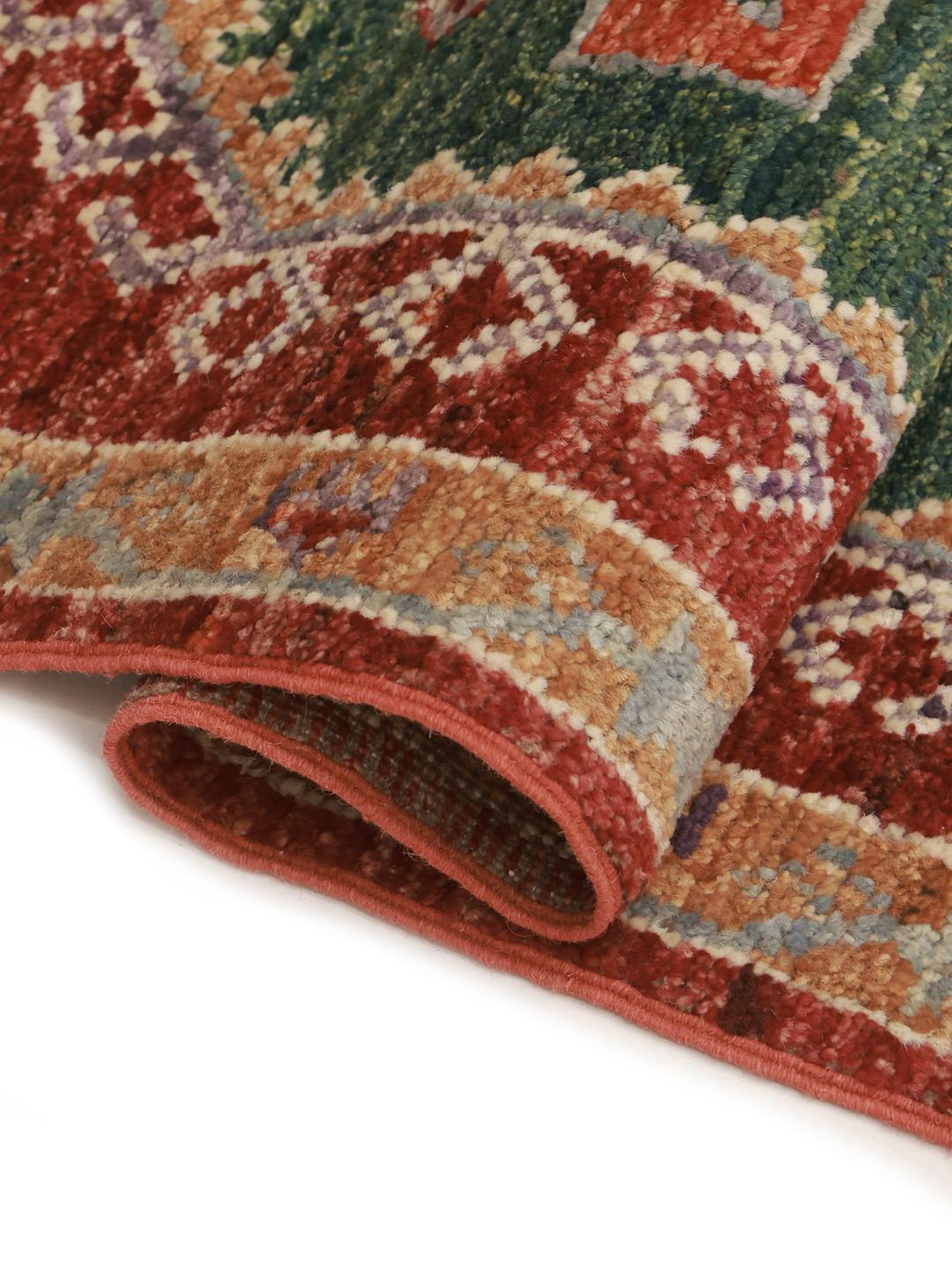
Collectors value Kazak rugs for their raw, expressive character and the immense skill required to produce such precise geometric patterns by hand. Owning one is an investment in cultural heritage, as these rugs represent a living tradition that prioritises enduring quality and the human connection found in every knot.