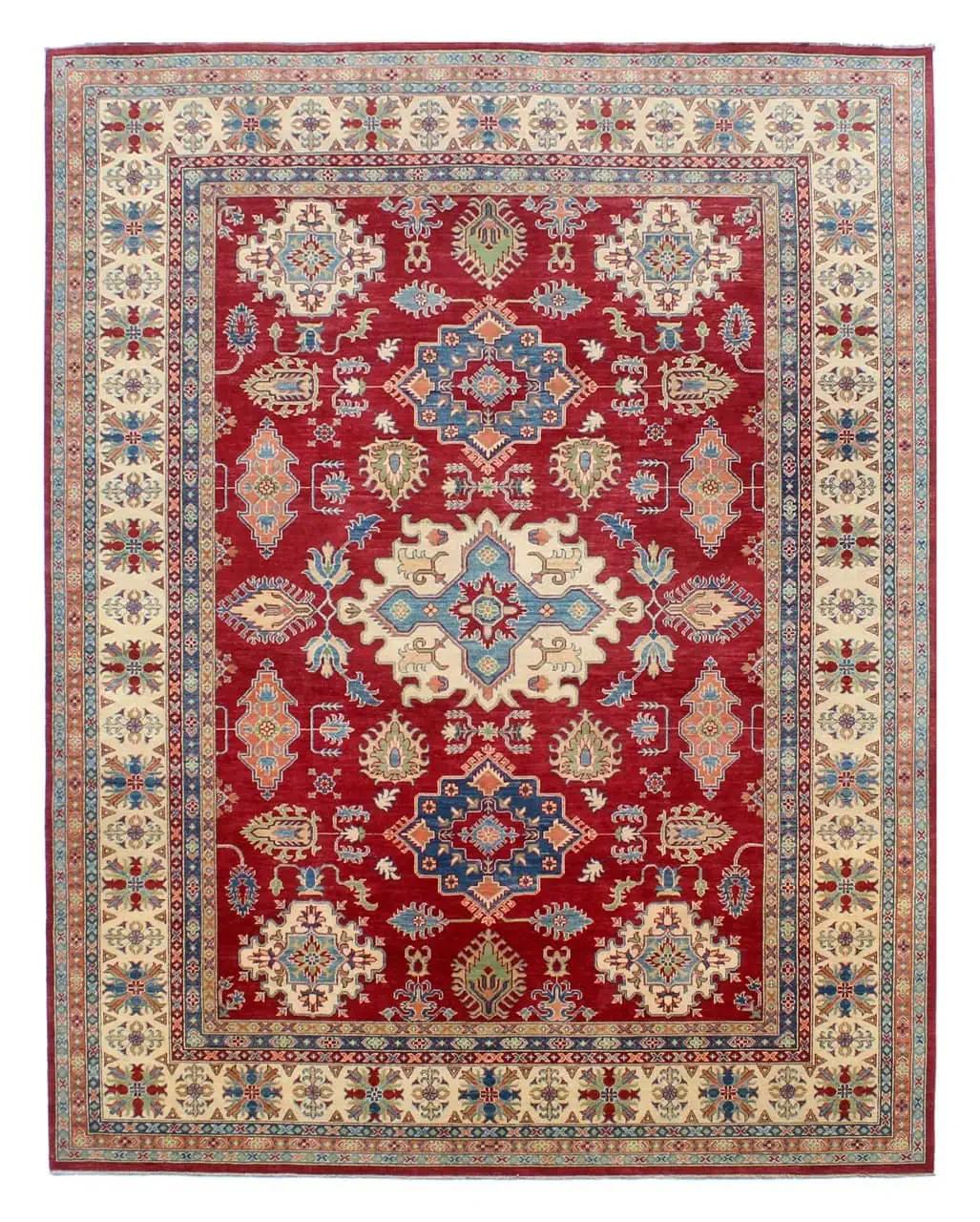
Kazak rugs are celebrated for their bold, powerful geometric designs and rich, saturated colours. Historically, the term refers to rugs woven in the Caucasus region, specifically by nomadic or semi-nomadic tribes. Today, the tradition is vibrantly alive in Afghanistan, where weavers use the same time-honoured techniques to produce rugs that honour the heritage of their ancestors while adapting to modern living spaces.
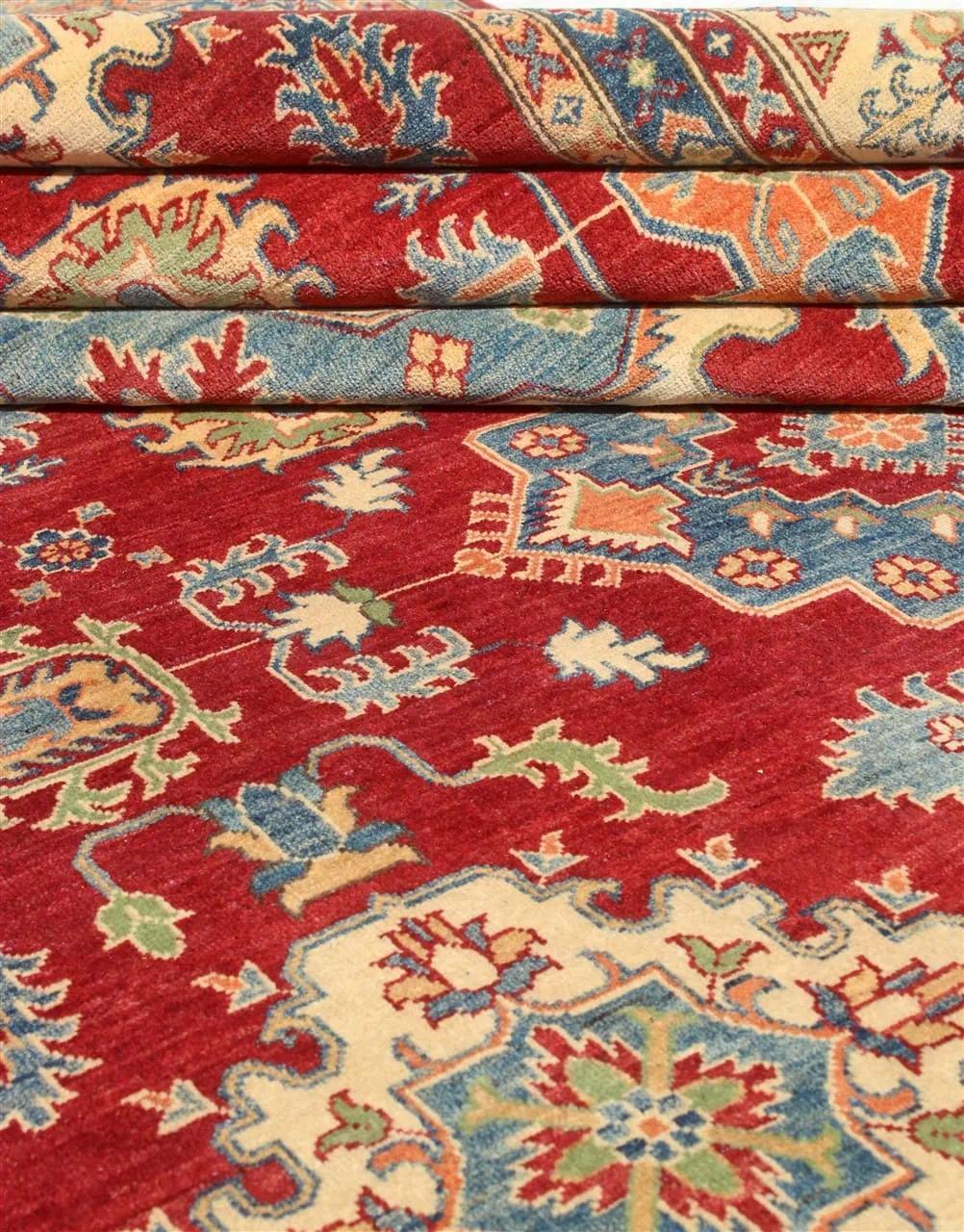
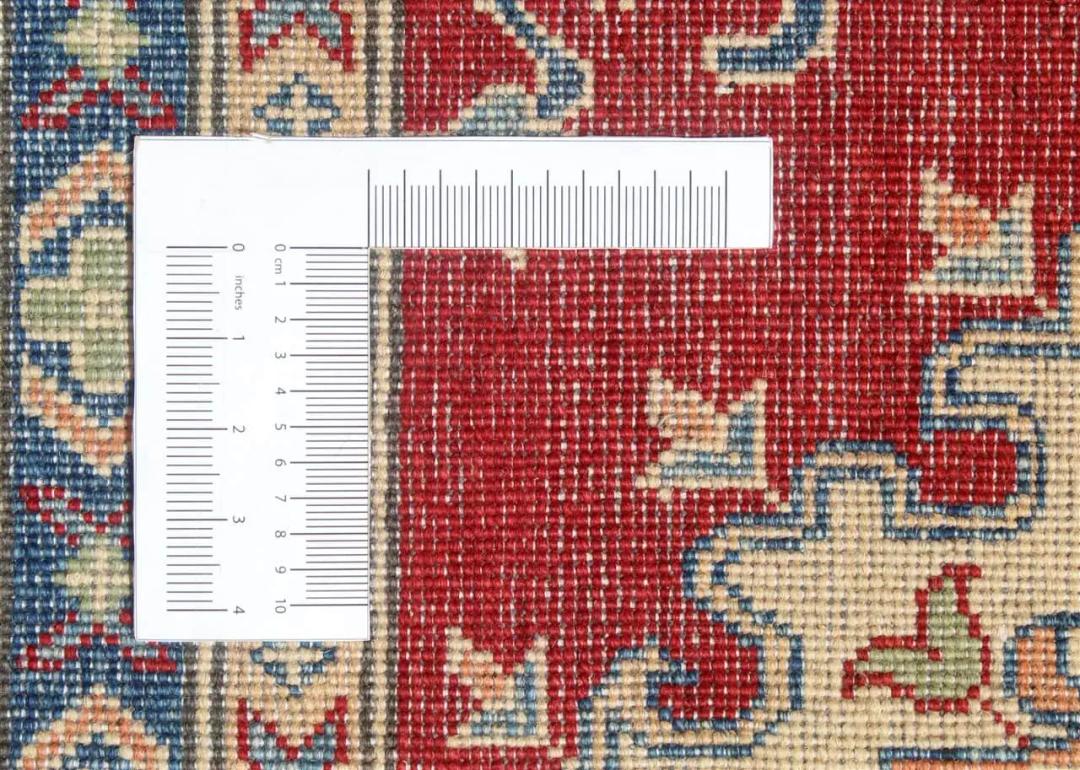
The construction of a Kazak rug is defined by the use of thick, lustrous wool, which is often hand-spun to maintain the natural character of the fibre. This material choice is not merely aesthetic; it provides the resilience needed for a rug to withstand years of daily use. The foundation is typically made from sturdy cotton, which provides the necessary tension for the weavers to create the tight, precise knots that define the structure and quality of the finished piece.
Visually, these rugs are defined by their iconic geometric vocabulary, featuring large, stylised medallions, latch-hook motifs, and intricate borders. The red field is a traditional hallmark of the style, often contrasted with shades of blue, ivory, and earthy tones that create a sense of harmony and depth. The patterns are not just decorative but often carry symbolic meaning, passed down through generations of weaving families as a visual language of their cultural history.
For collectors and homeowners alike, owning a Kazak rug is an investment in human skill and cultural heritage. They are valued for their raw, expressive energy and their ability to bring a sense of history into a home. By choosing an authentic piece like this, you are preserving a craft tradition that prioritises manual precision and artistic expression over mass production.