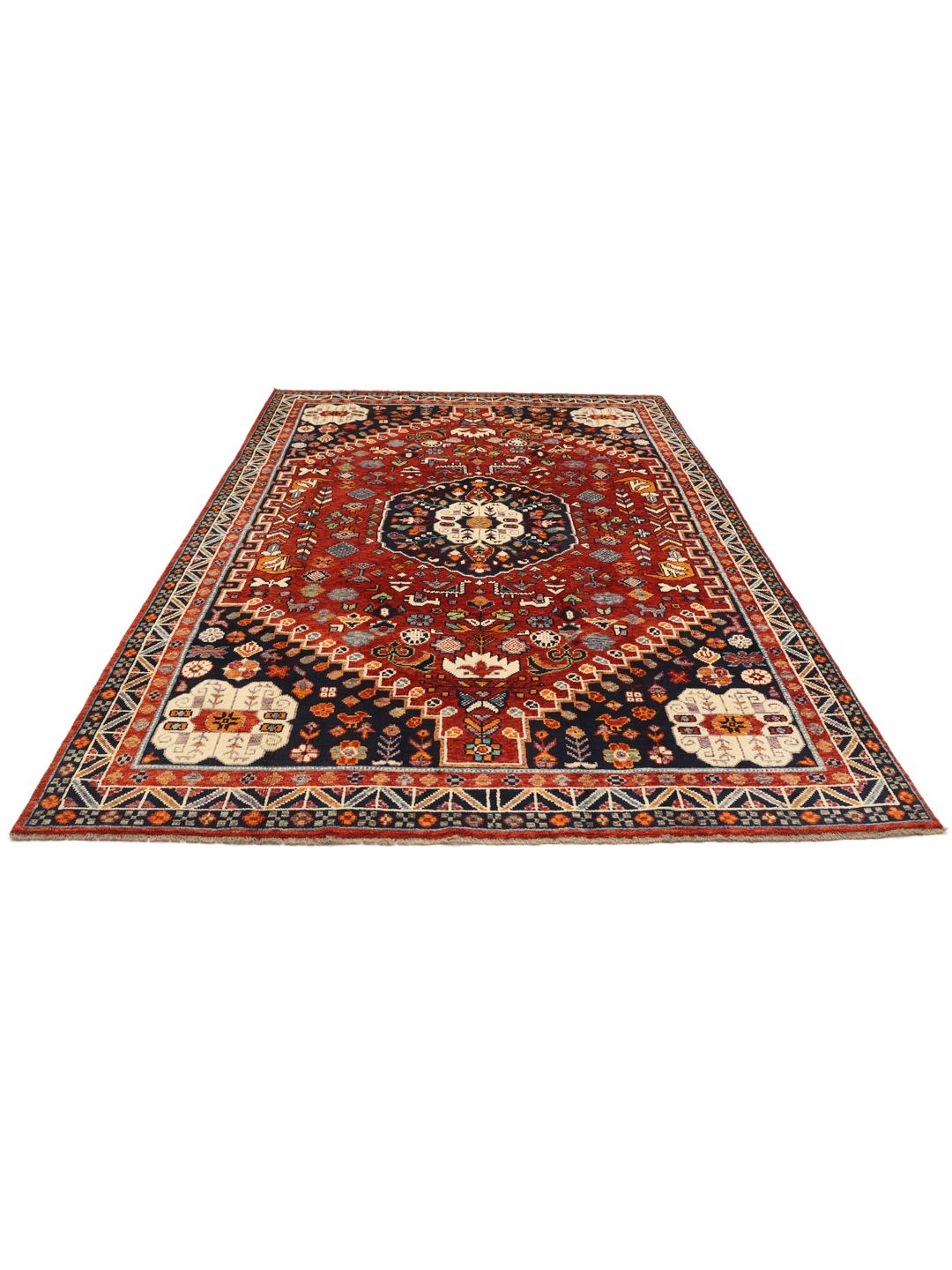
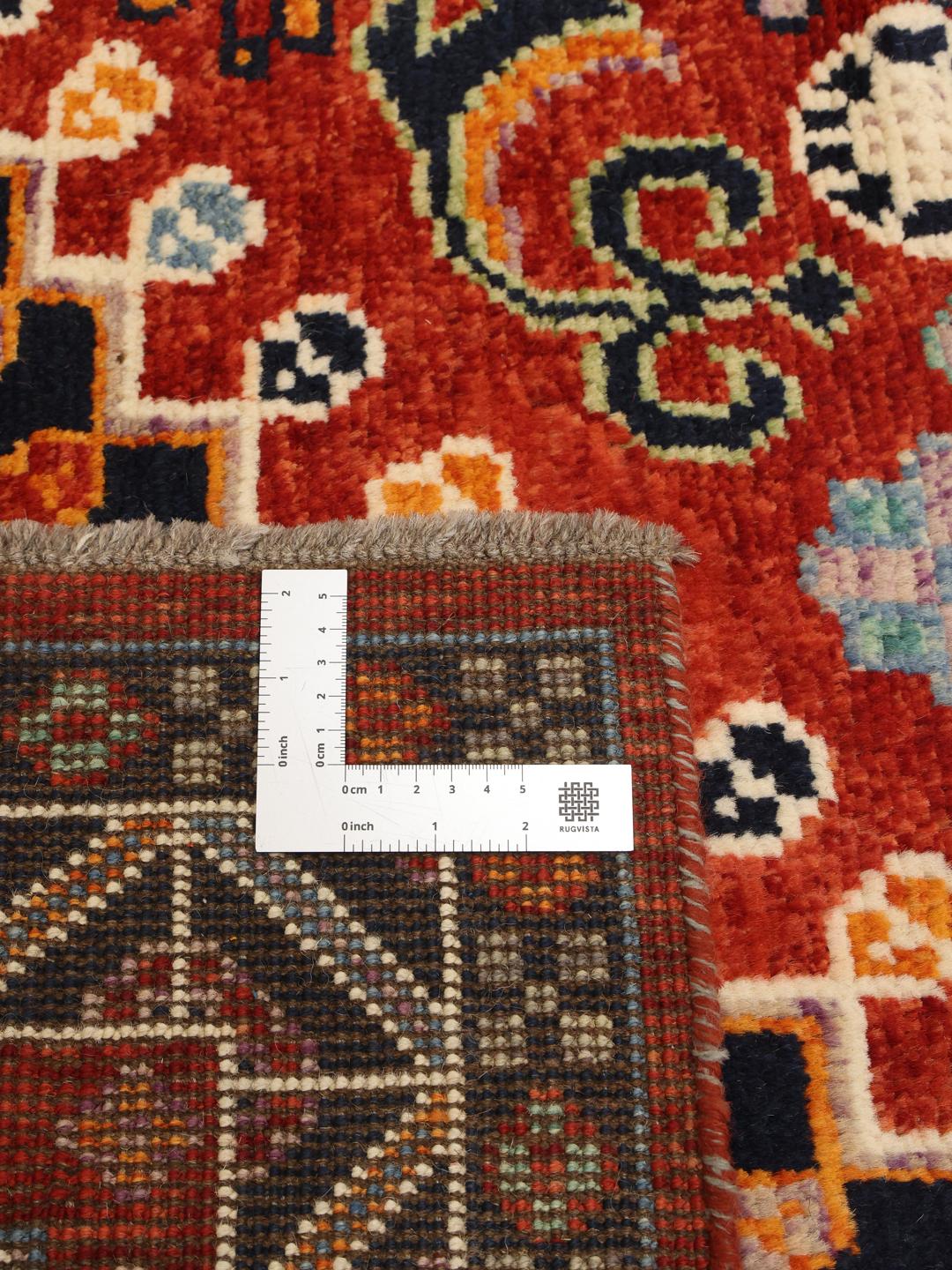
Kazak rugs trace their rich heritage to the Caucasus region, where nomadic and village weavers developed a distinct visual vocabulary defined by bold geometry and vibrant natural dyes. While the style originated in the mountainous borderlands between the Black Sea and the Caspian Sea, the tradition of weaving these striking pieces eventually spread across neighbouring regions, where skilled artisans continue to preserve the classic motifs.
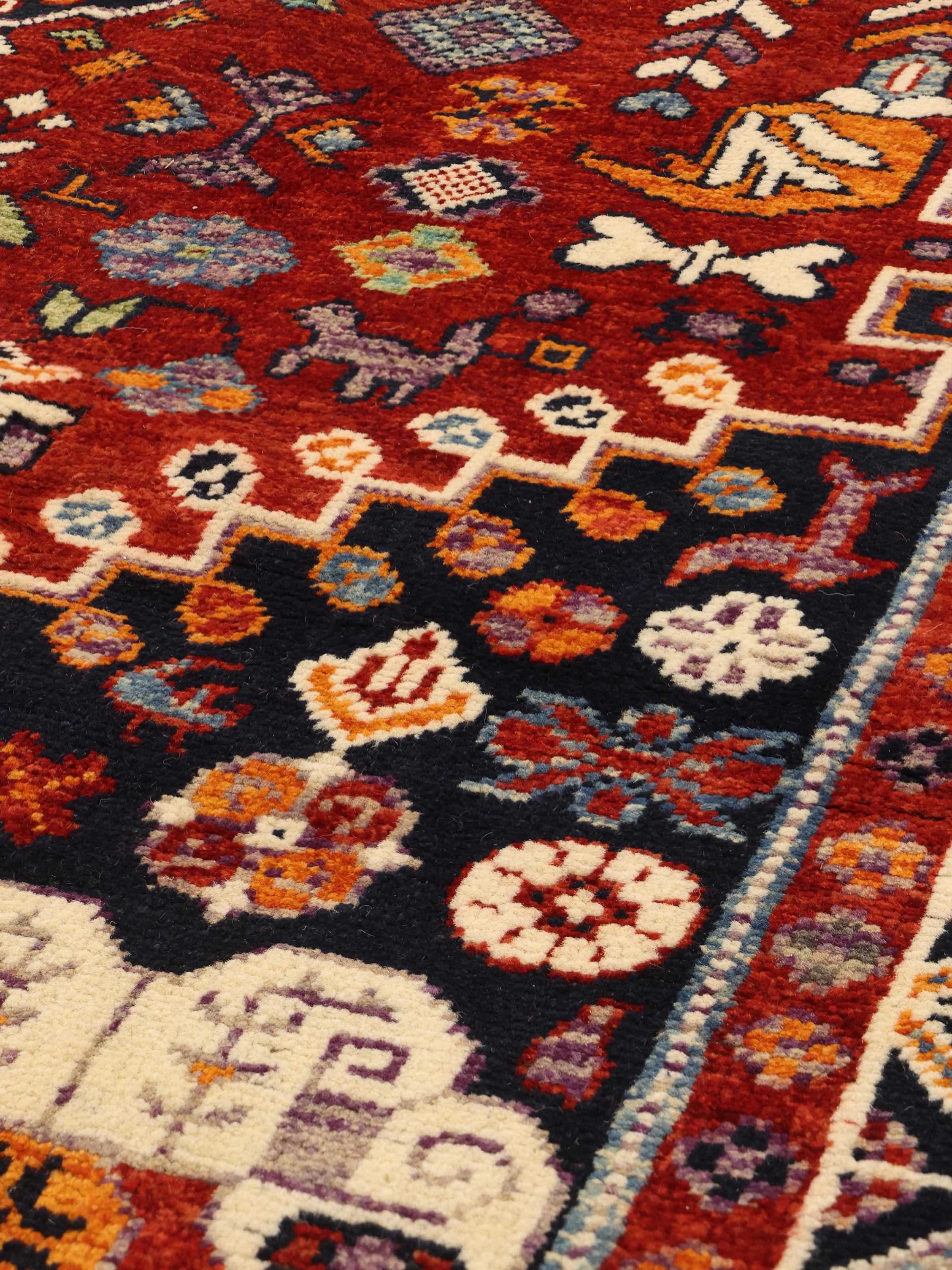
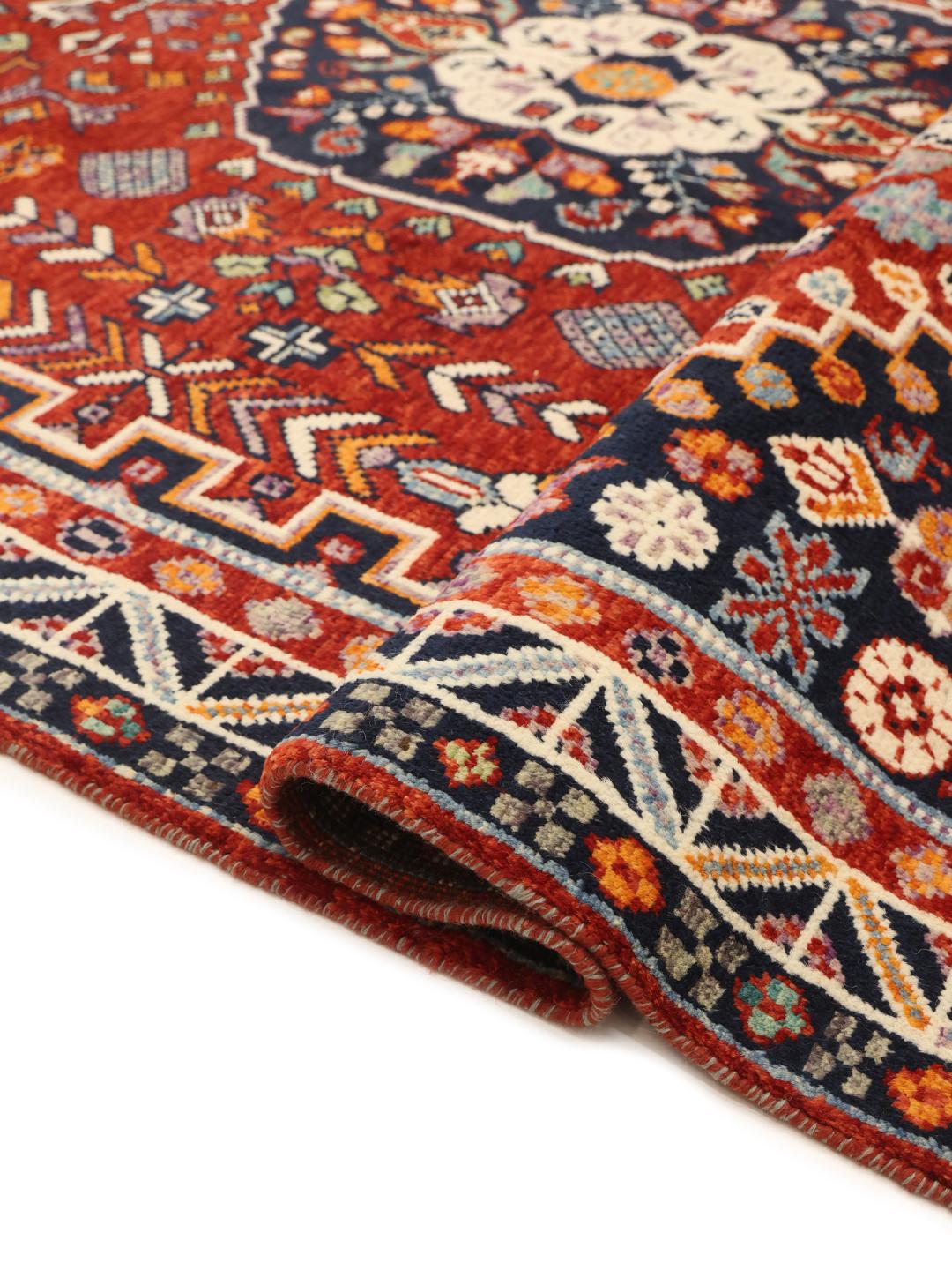
The terminology surrounding these rugs reflects generations of accumulated craft knowledge, where traditional methods of hand-knotting are passed down through families. Weaving a Kazak rug involves tying individual strands of wool onto a sturdy foundation, creating a dense pile that stands up to heavy daily use while retaining its characteristic lustre and rich tactile feel.
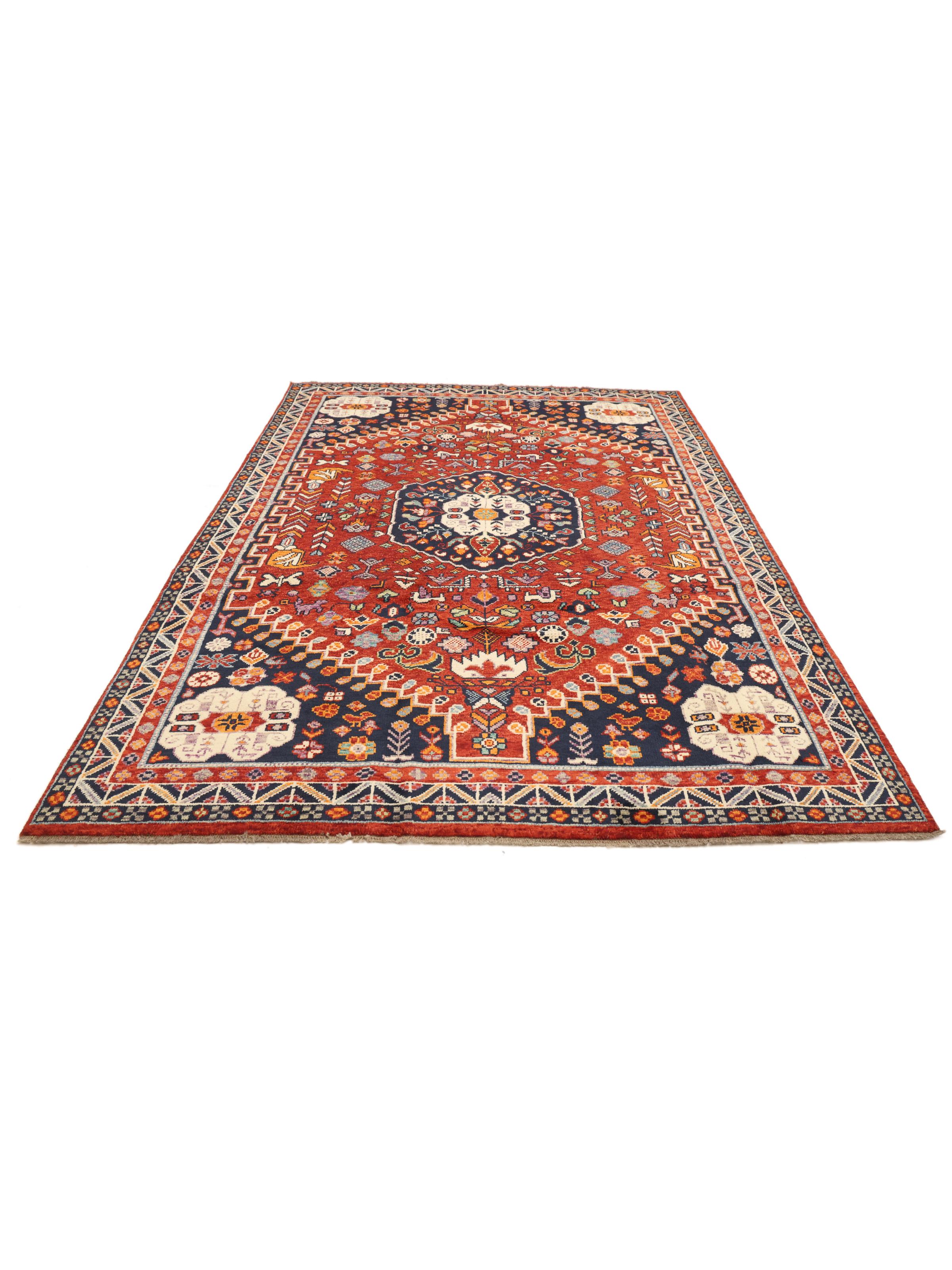
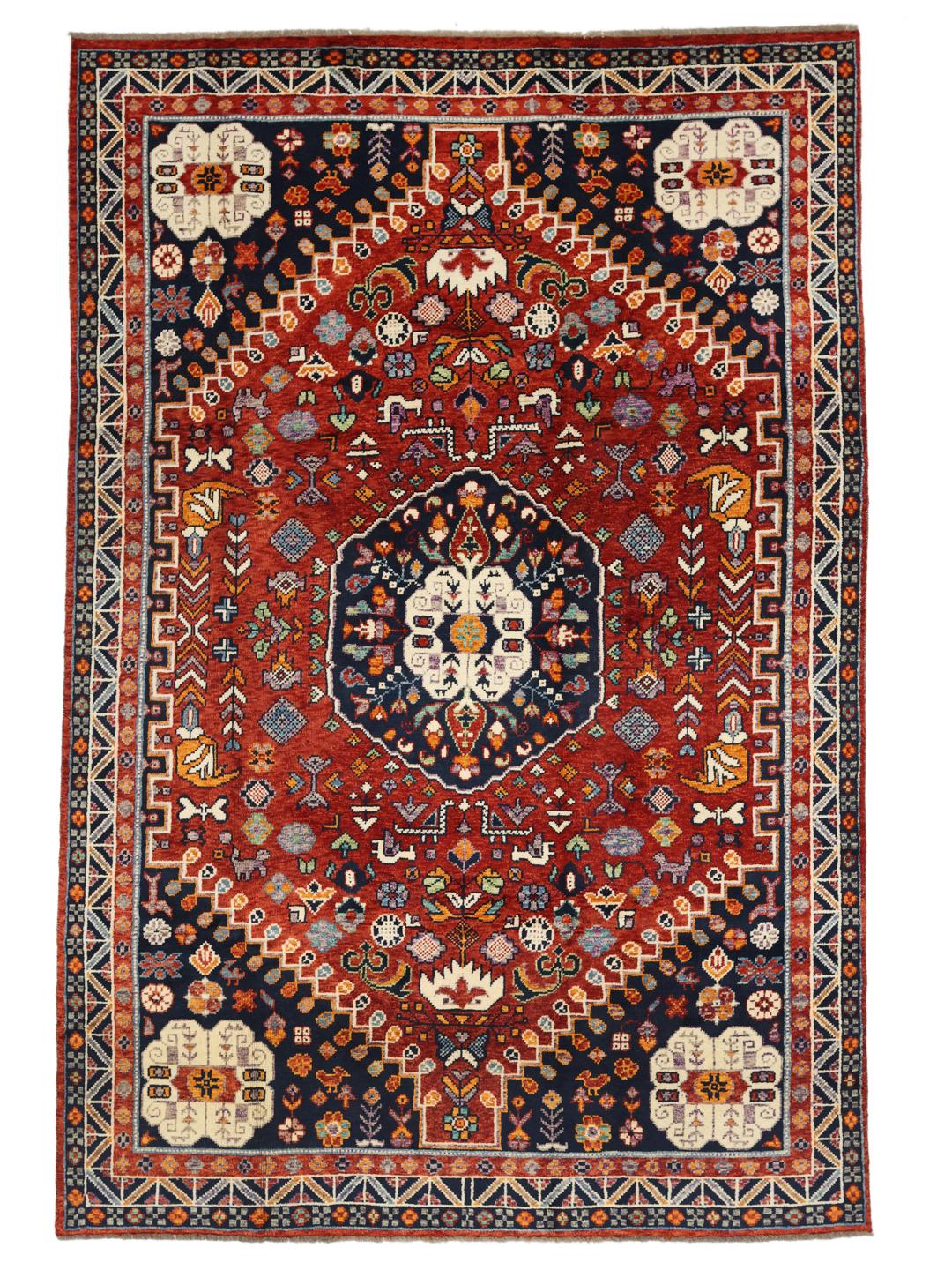
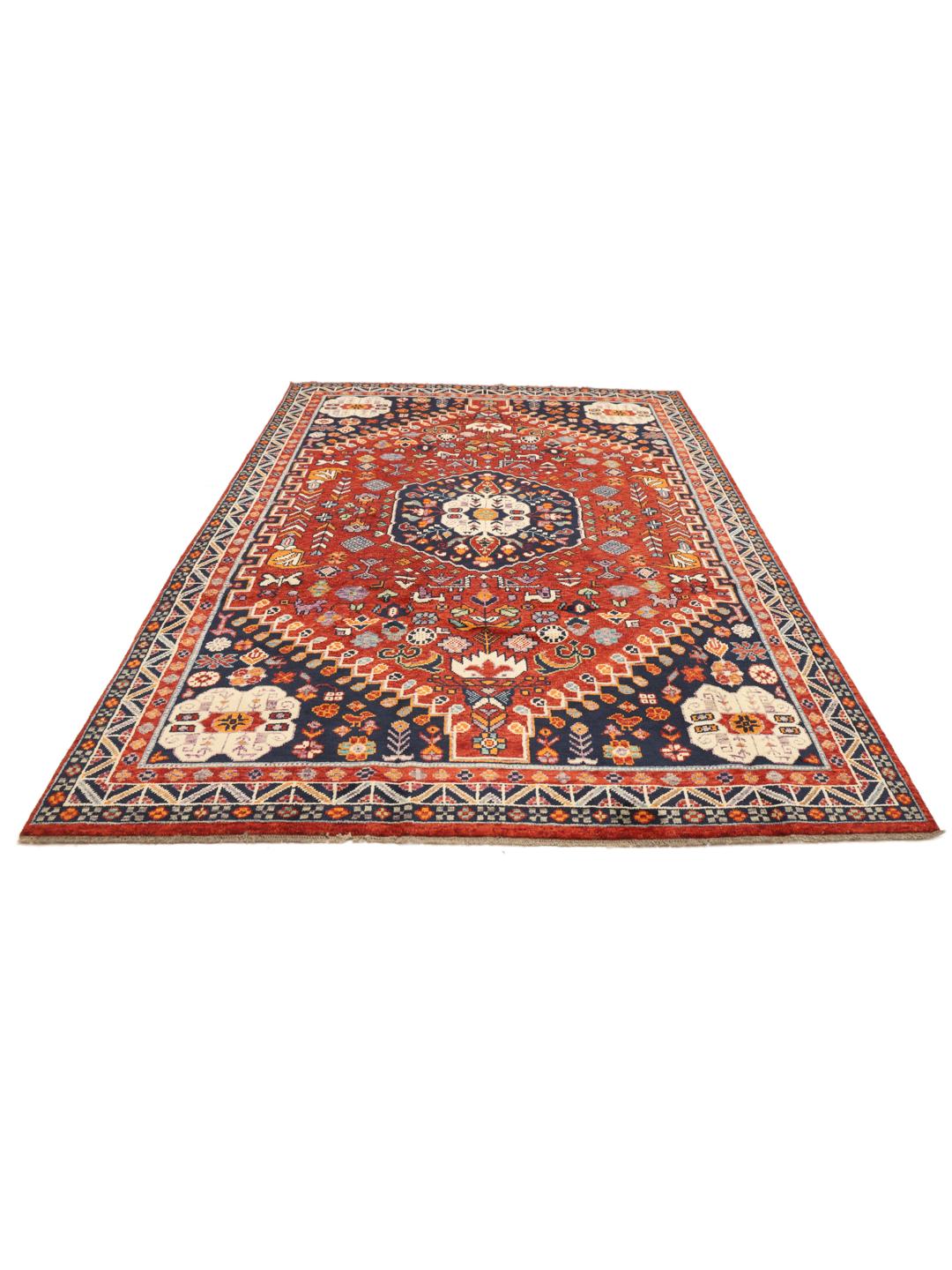
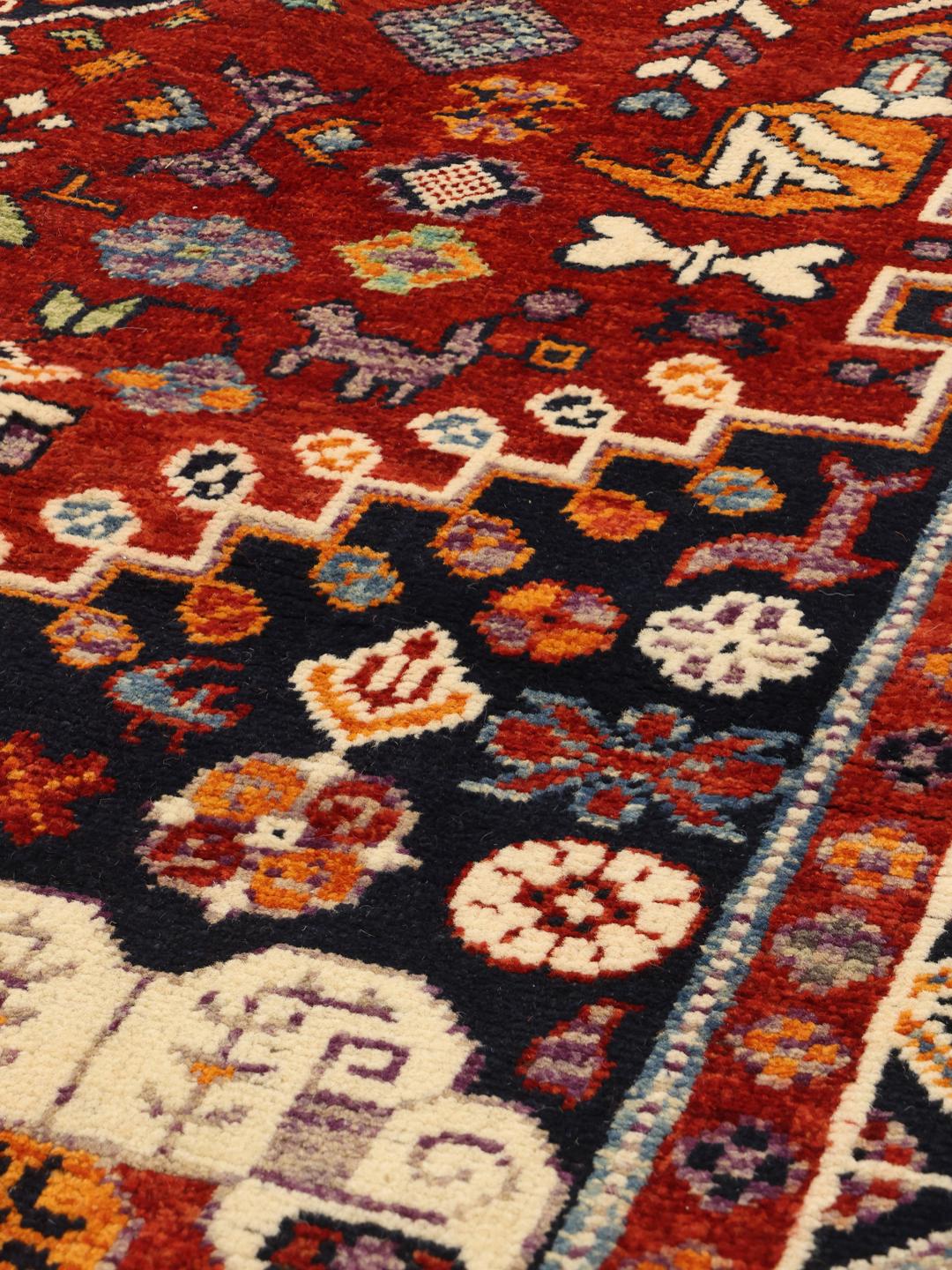
Visually, Kazak rugs are celebrated for their strong geometric motifs, central medallions, and stylised animal or floral symbols arranged in striking symmetry. This particular piece features a captivating arrangement of traditional motifs set against a dramatic red field, framed by carefully balanced borders that showcase the enduring appeal of this Middle Eastern design tradition.
Collectors and interior enthusiasts value Kazak rugs for their authentic cultural weight, robust construction, and ability to anchor a room with genuine historical character. Owning a piece from this tradition means acquiring a durable floor covering that represents centuries of human skill, artistic expression, and enduring craft heritage.