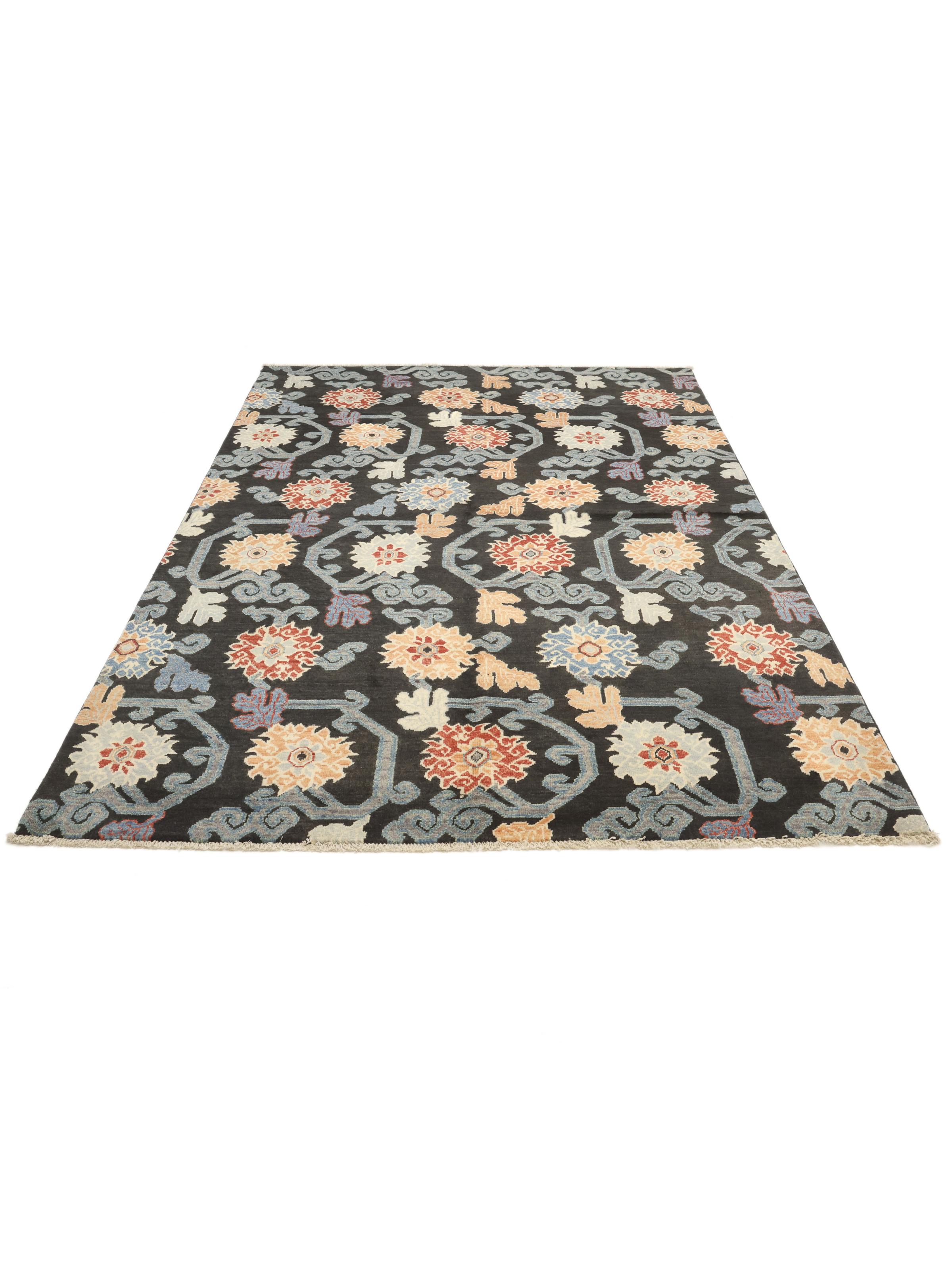
Kazak rugs originate from the Caucasus region, historically serving as a testament to the nomadic traditions of the area. While the style has deep roots in the mountainous landscapes of the Caucasus, the tradition of weaving these bold, geometric, and floral pieces has been expertly preserved and evolved in Afghanistan, where master weavers continue to honour the classic techniques that define the category.
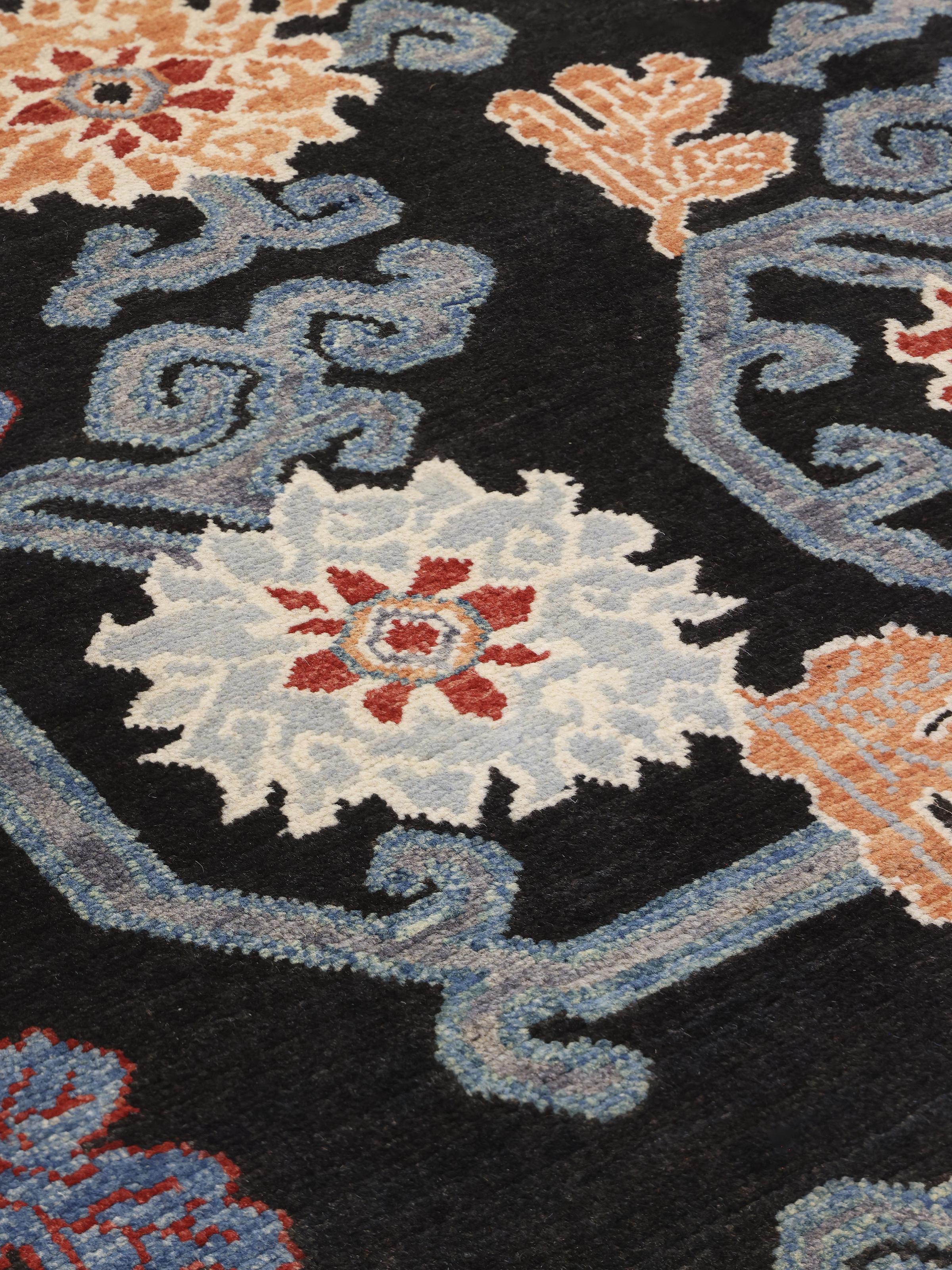
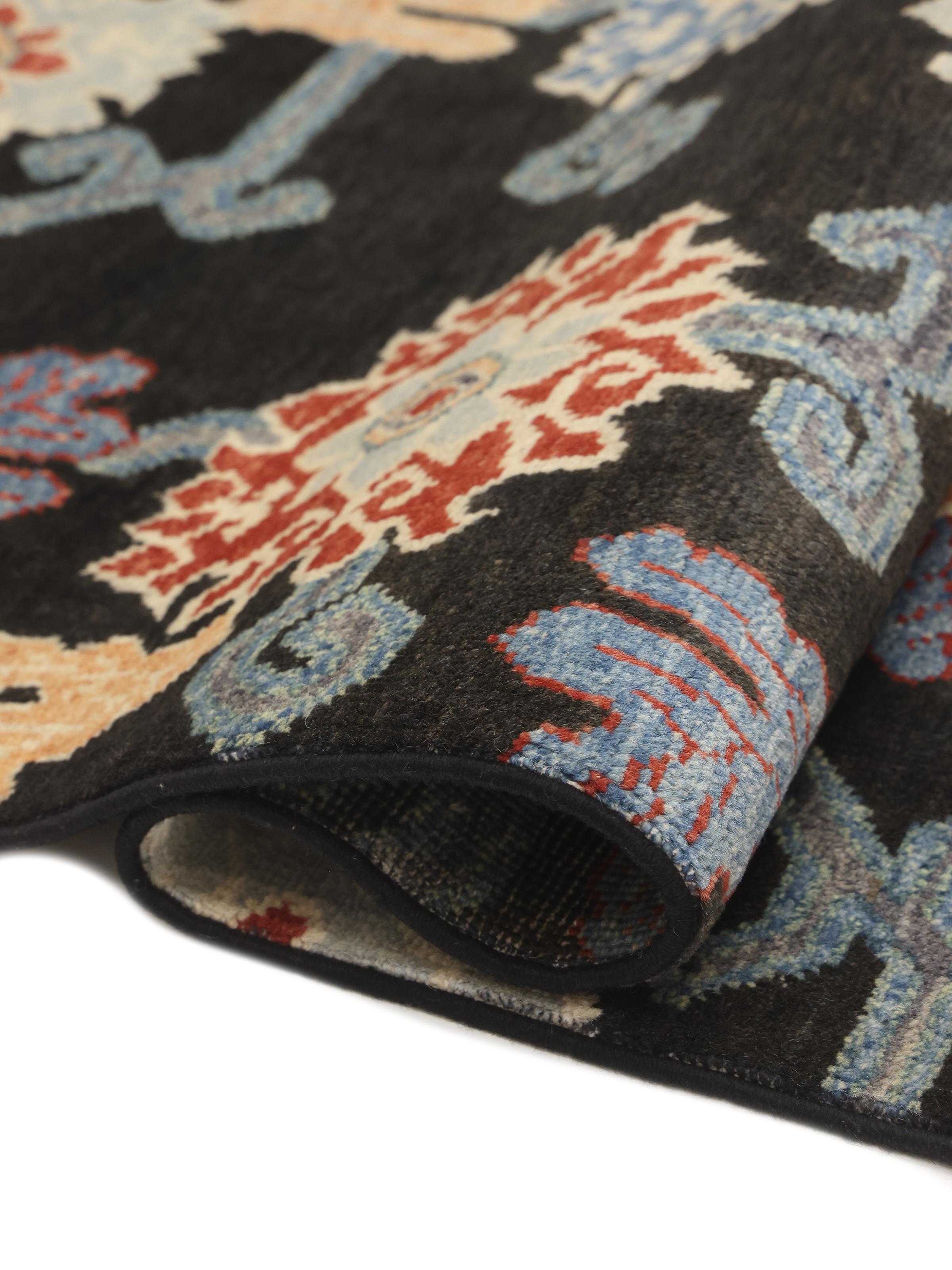
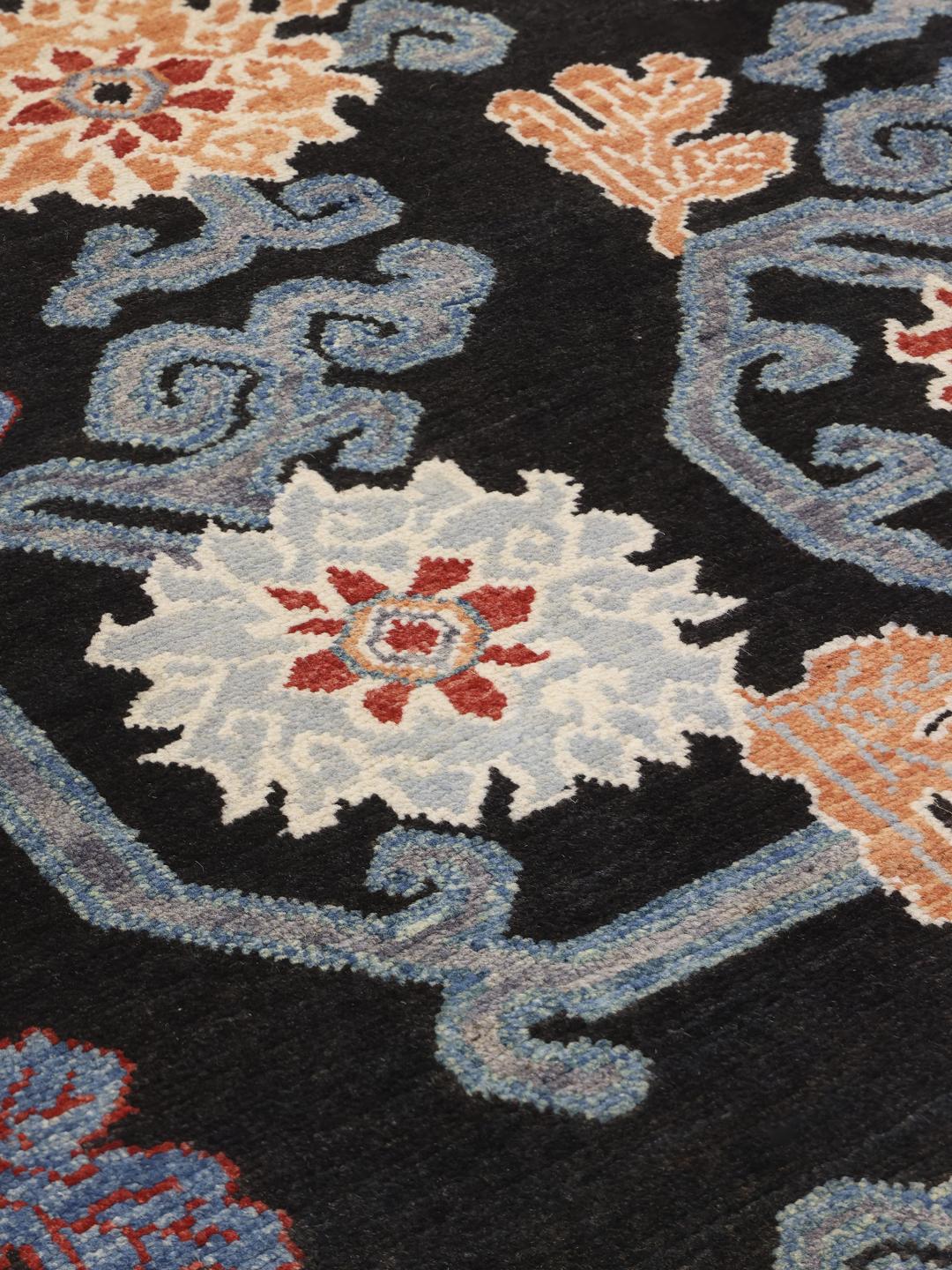
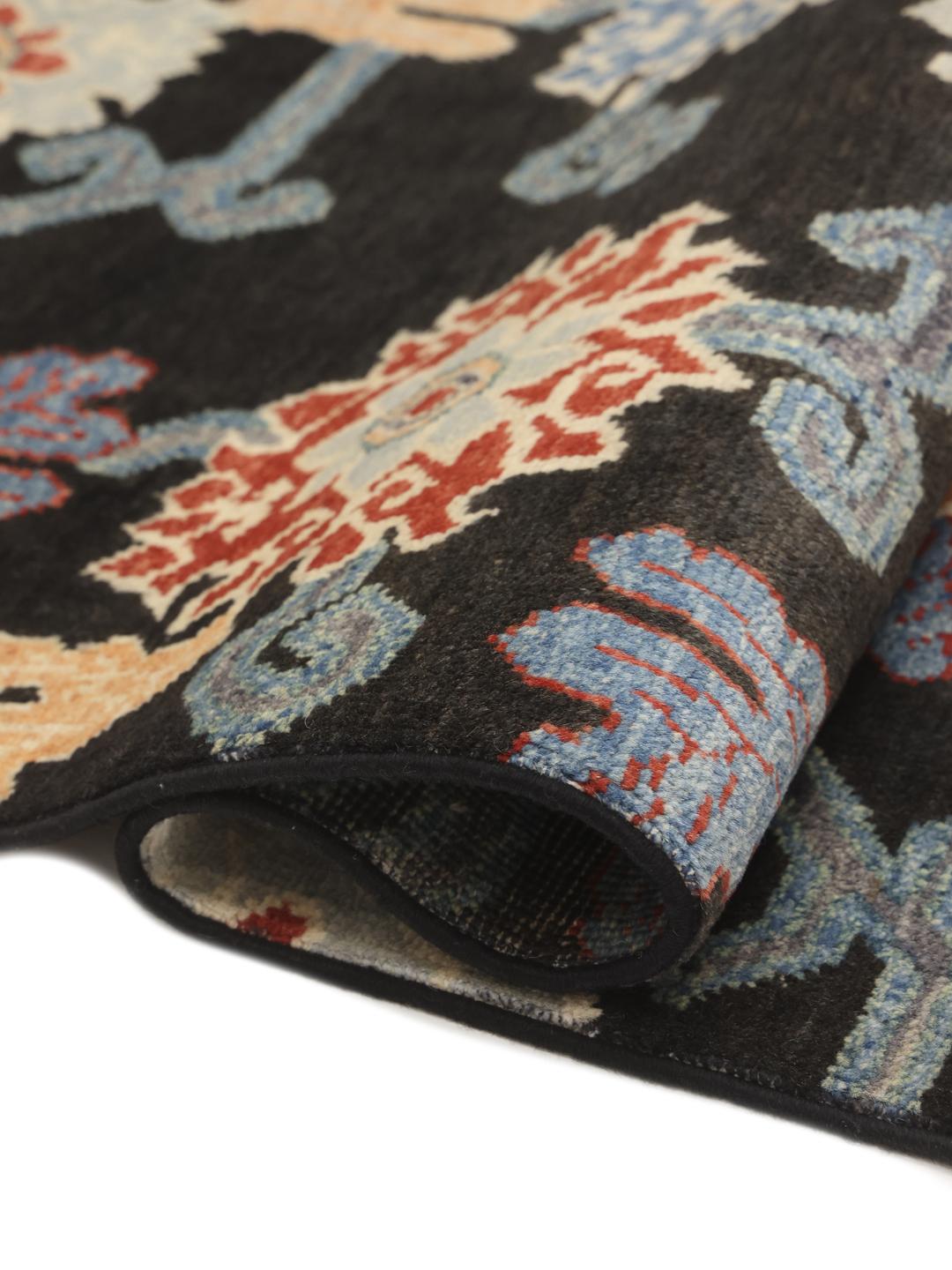
The term Kazak refers to a specific design language rather than a single village, characterised by a certain boldness in pattern and a robust, high-quality construction. These rugs are traditionally known for their use of thick, lustrous wool, which provides both a luxurious tactile experience and incredible resilience. The construction techniques involved prioritise a dense knotting process that allows for sharp, clear motifs that remain vibrant over decades of use.
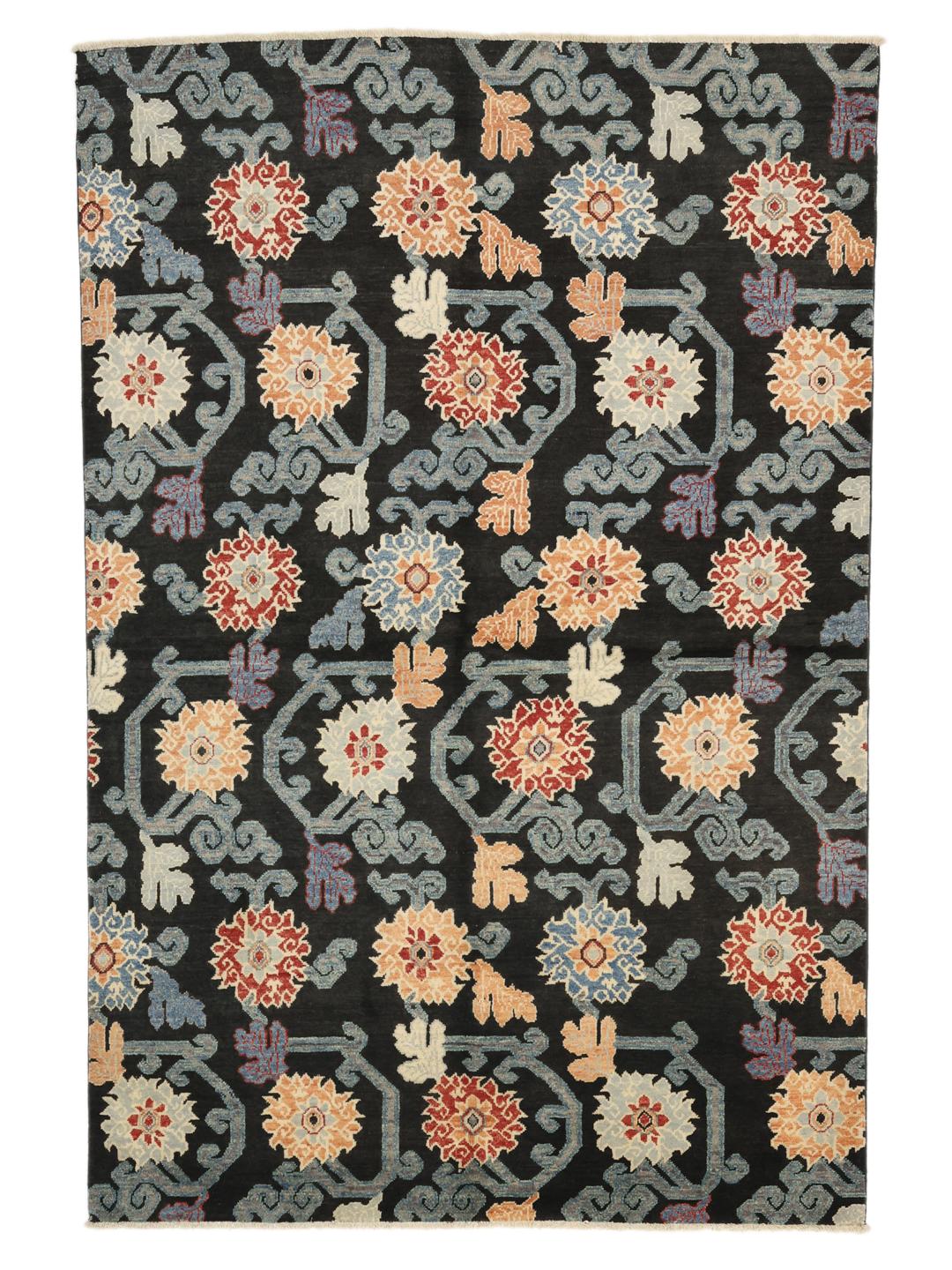
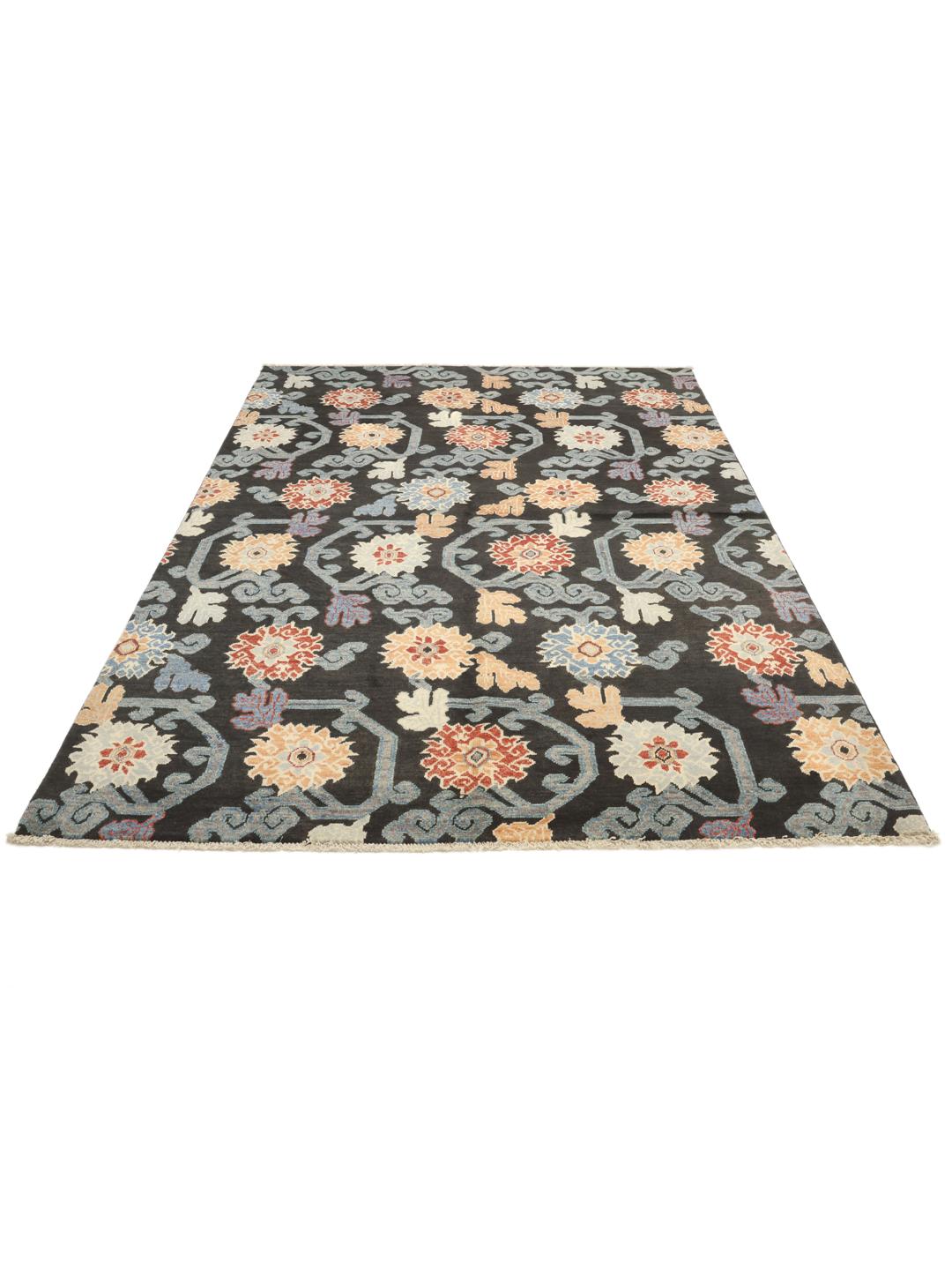
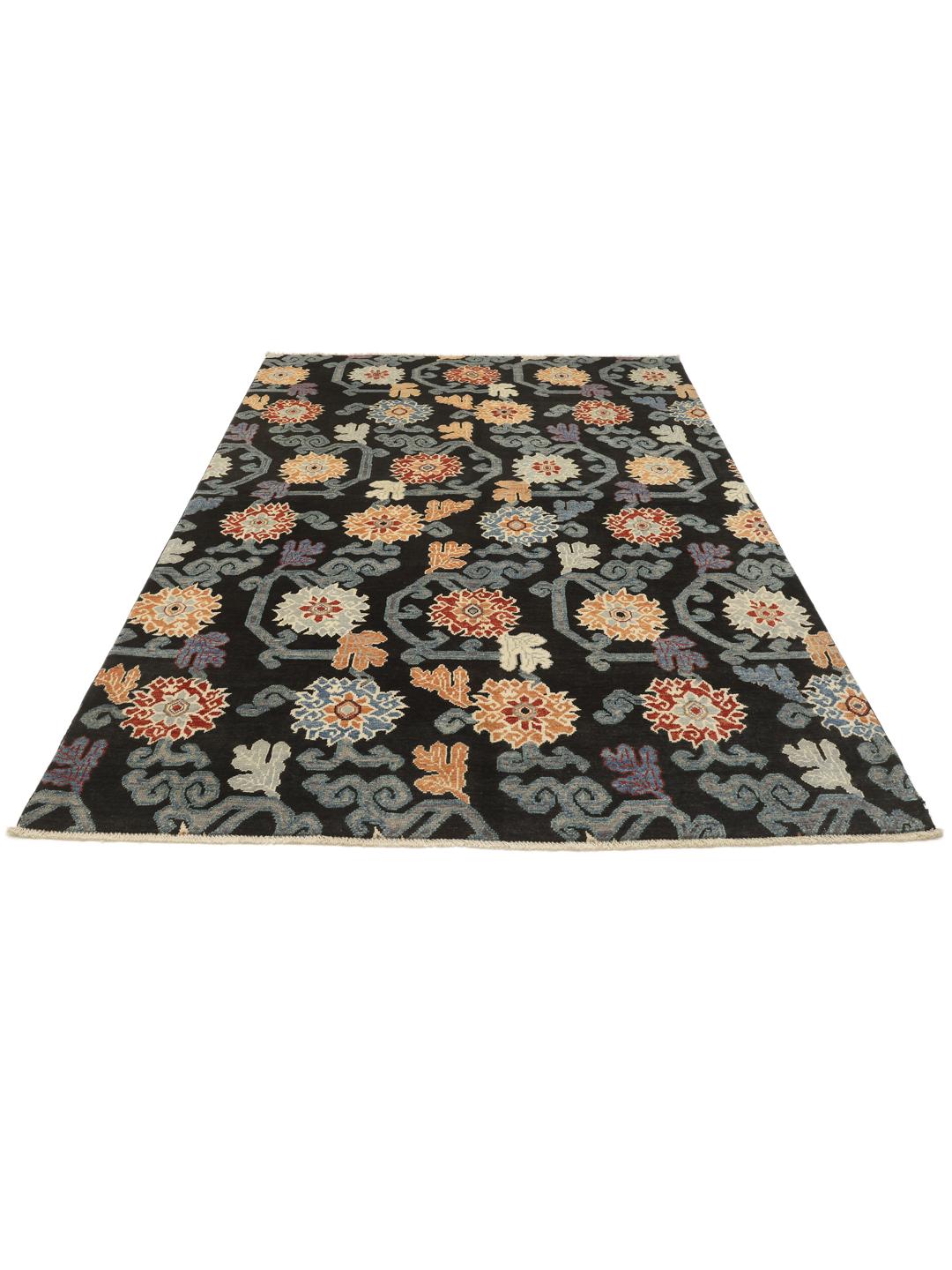
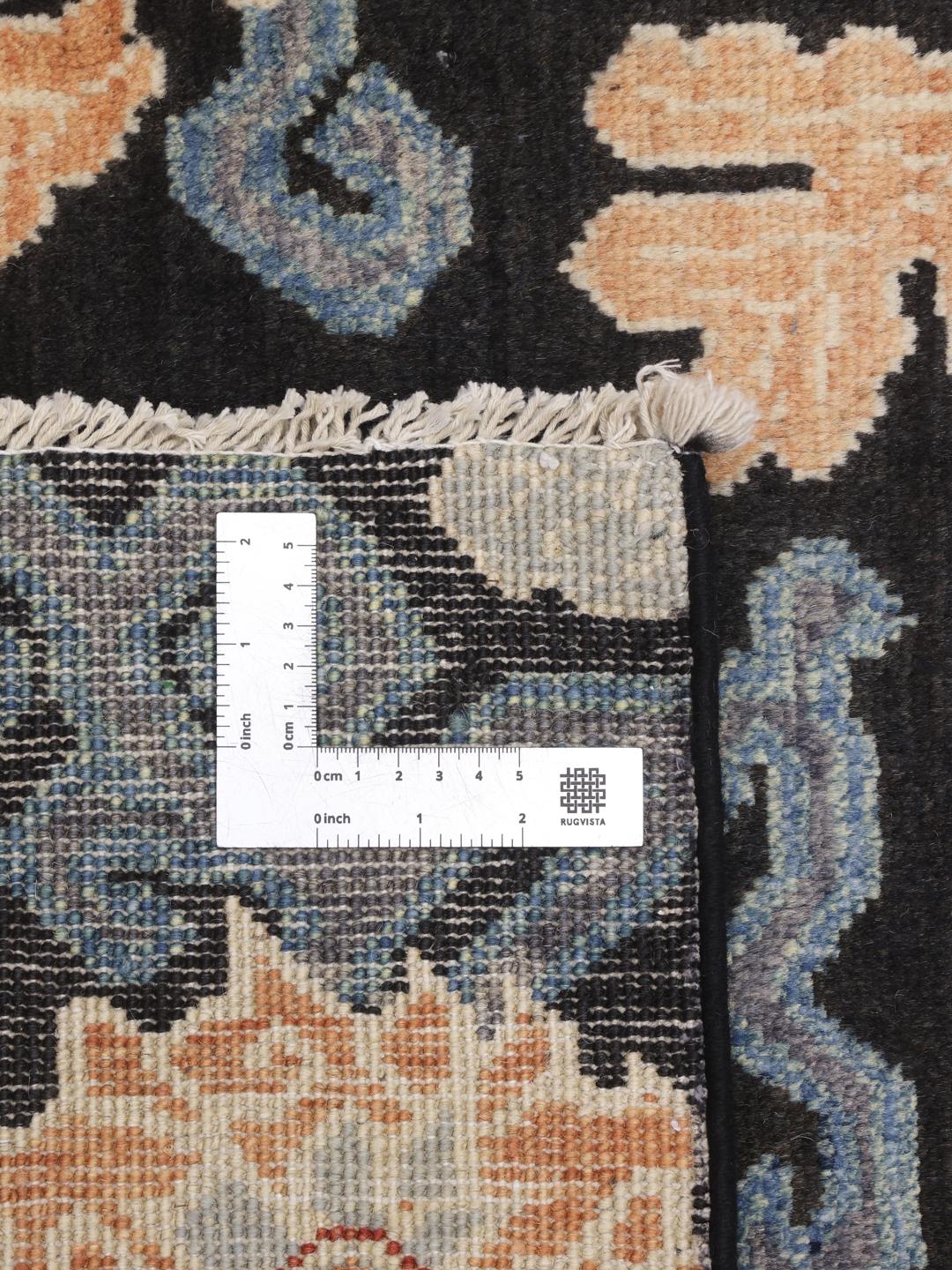
Signature design elements of the Kazak style often include large-scale geometric shapes, stylised floral motifs, and strong, symbolic borders. This particular piece showcases a beautiful floral arrangement, which is a classic motif often interpreted with a more stylised, artistic flair in the Afghan tradition. The use of a black field is a striking choice that highlights the interplay between the intricate floral elements and the depth of the background.
Collectors and enthusiasts value Kazak rugs for their cultural weight and the incredible skill required to execute such complex designs by hand. Owning a rug from this tradition is about more than just floor coverage; it is about bringing a piece of living history into your home. Each rug represents a bridge between generations of craftspeople and the contemporary home, offering a level of character and authenticity that is impossible to replicate with modern manufacturing.