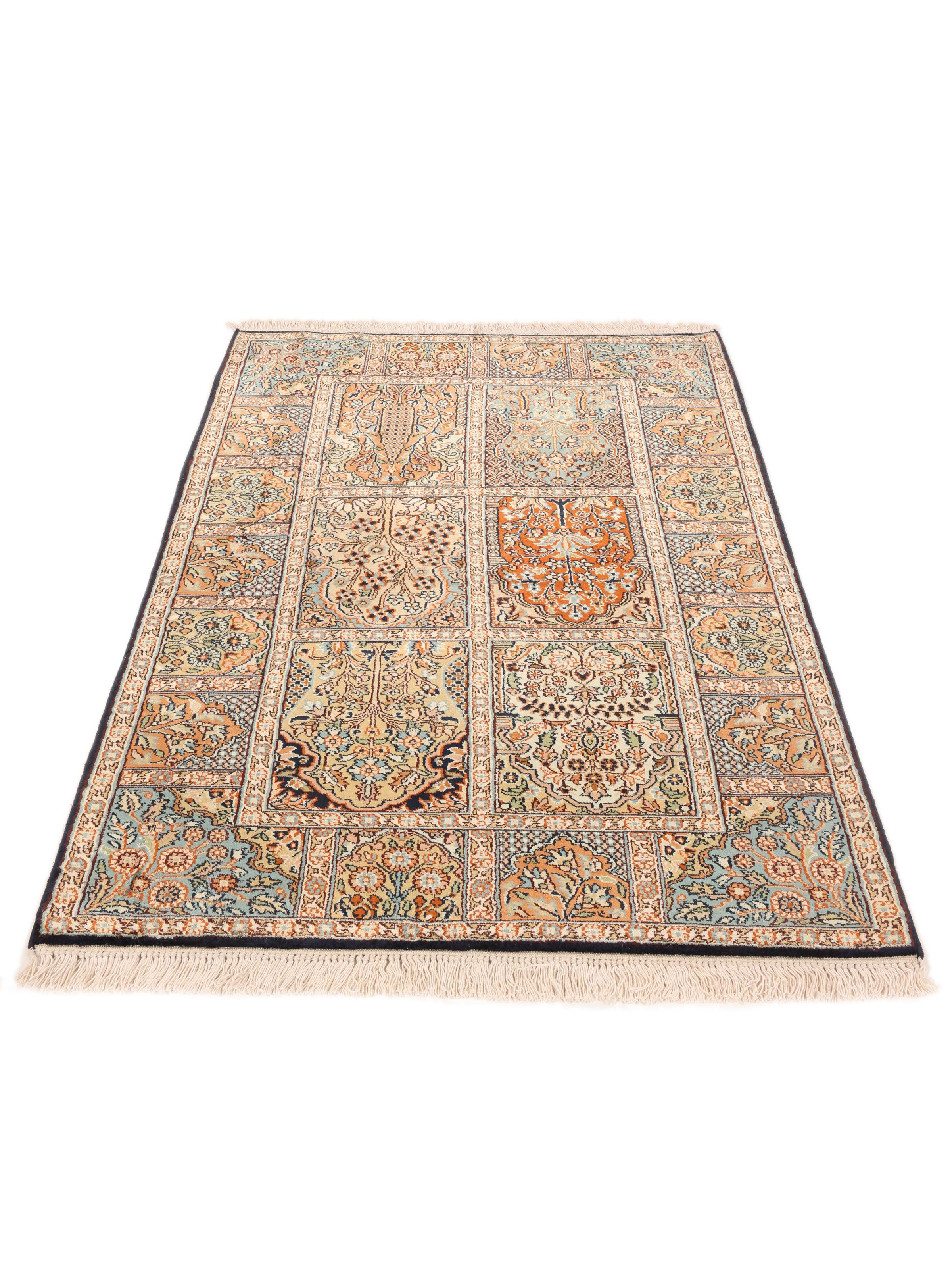
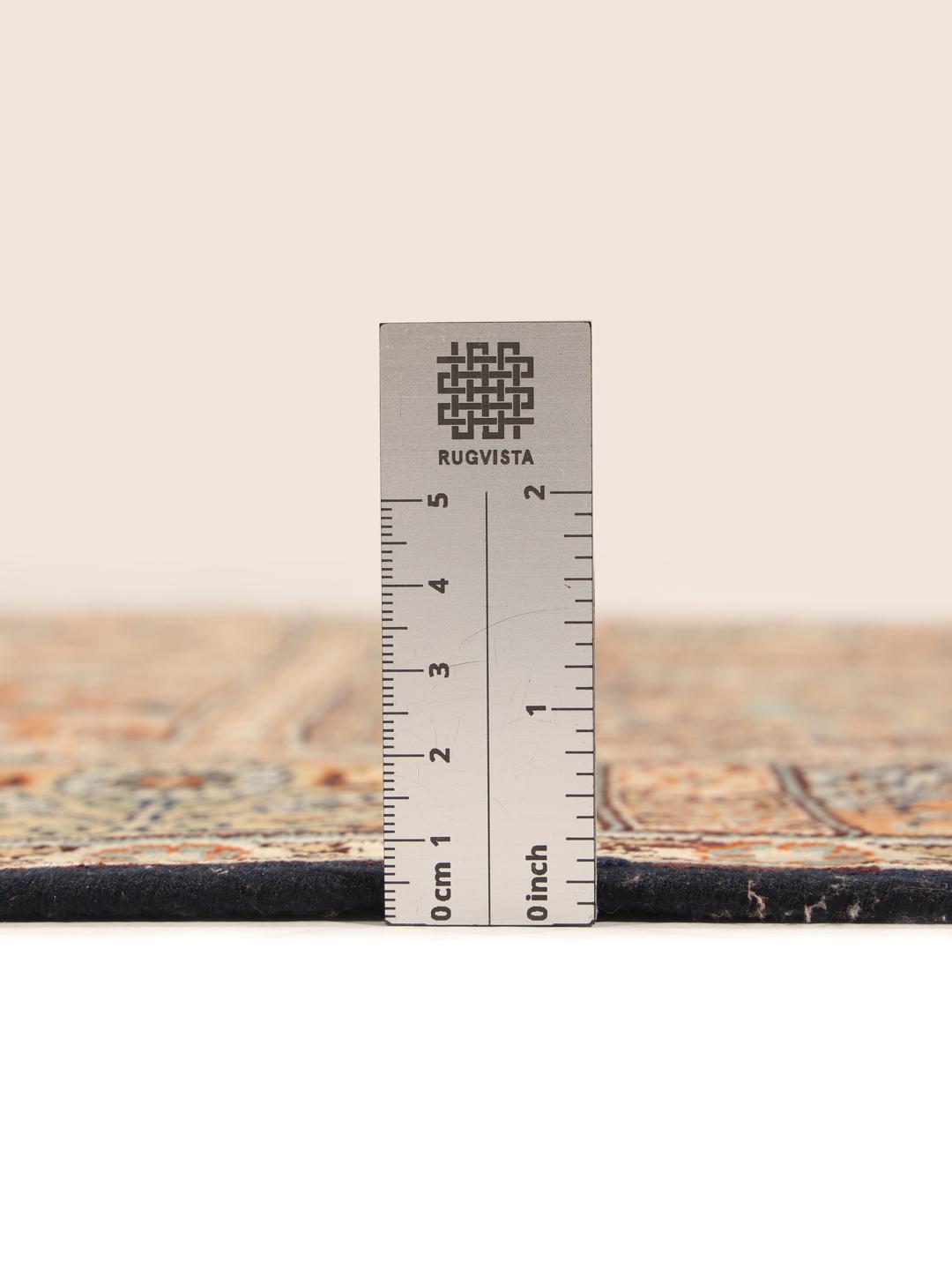
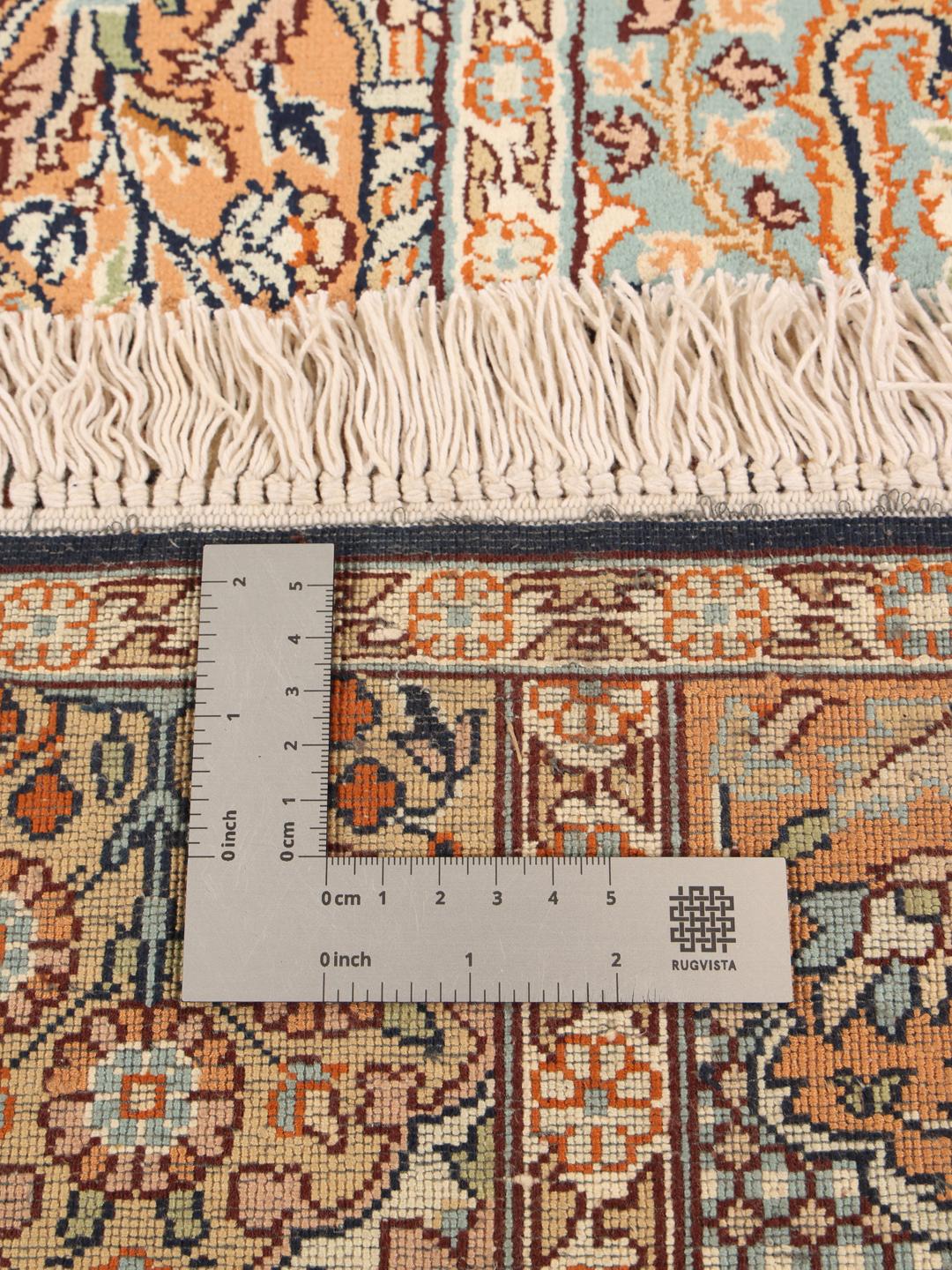
Kashmir silk rugs are celebrated globally for their connection to the legendary weaving centres of Northern India. This tradition evolved from centuries of influence, blending local artistic sensibilities with techniques that migrated across ancient trade routes, resulting in a style that is uniquely recognisable for its technical finesse.
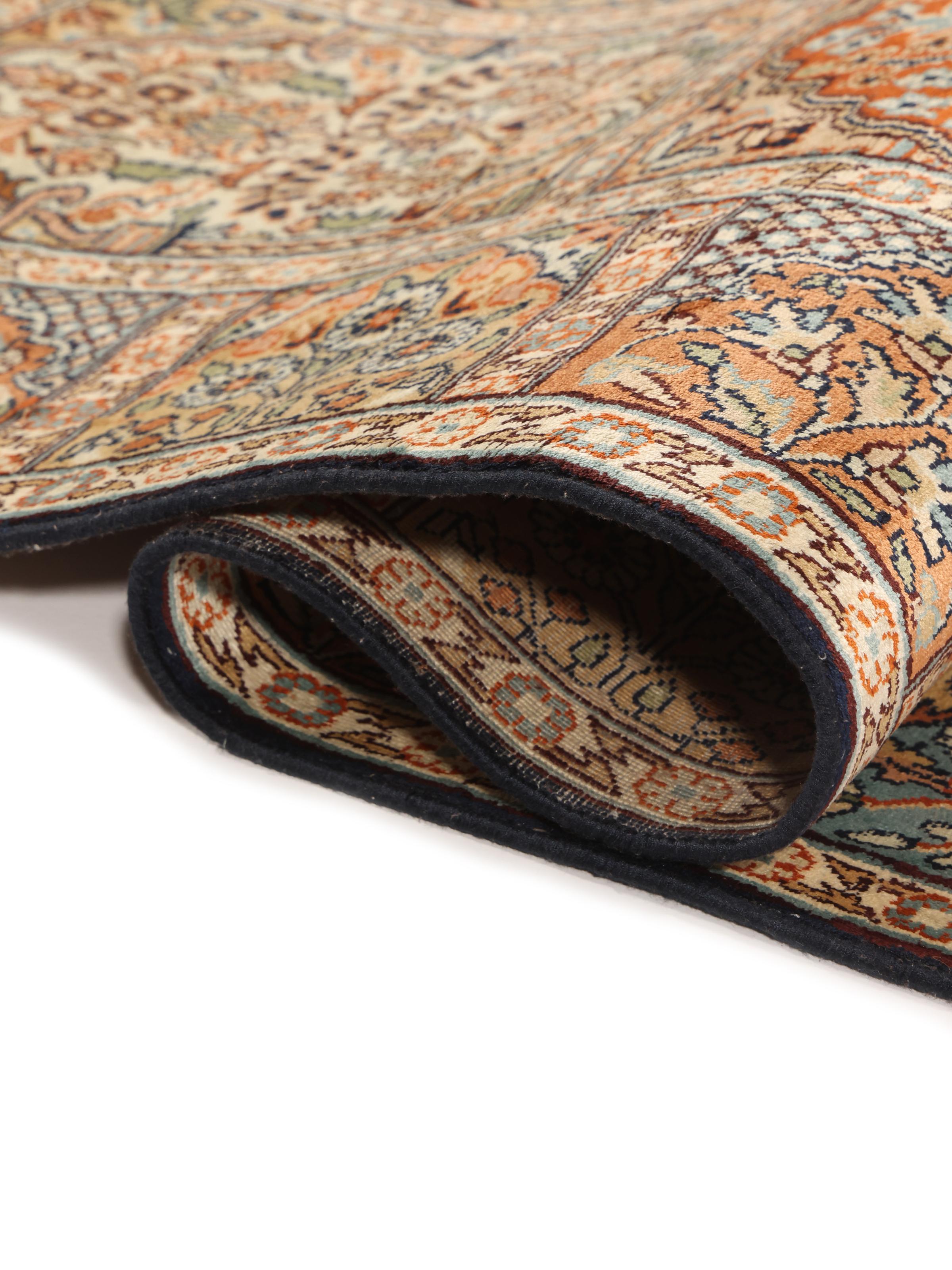
The term 'Kashmir silk' refers to a specific lineage of rug-making that prioritises the use of high-quality, lustrous silk. This material is prized not only for its natural shimmer but also for its ability to hold exceptionally fine dyes and complex, curvilinear designs that would be impossible to achieve with coarser fibres.
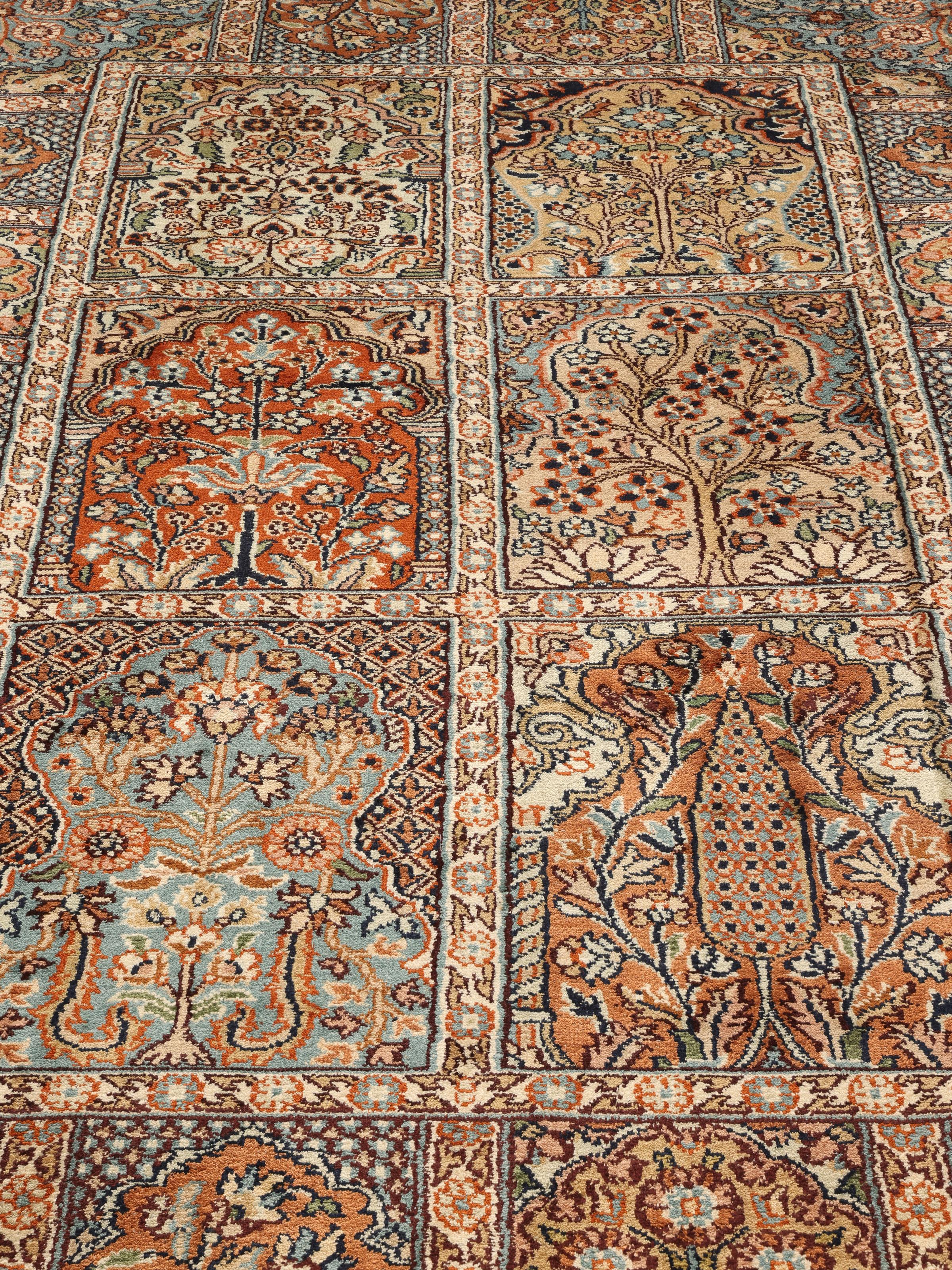
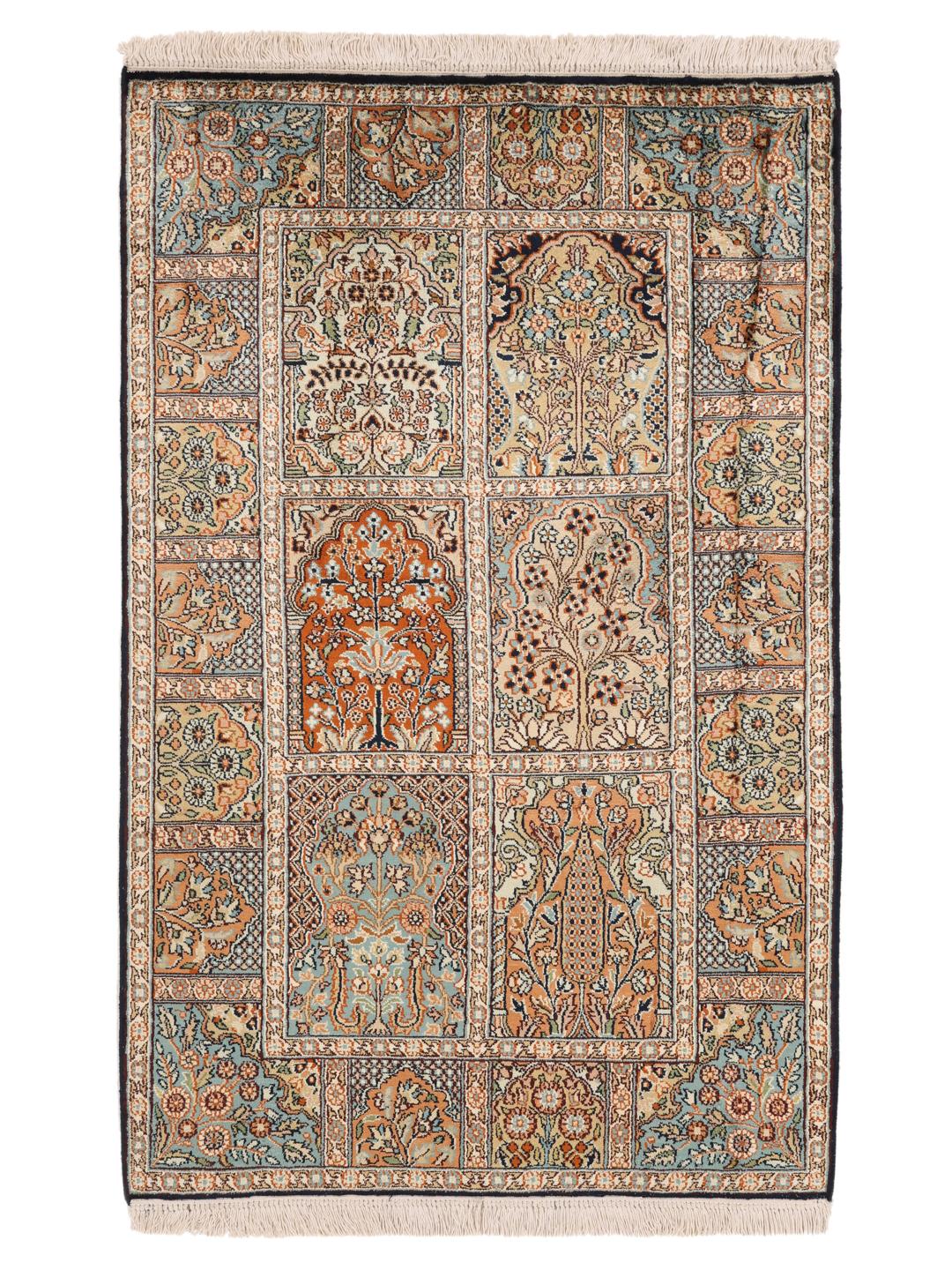
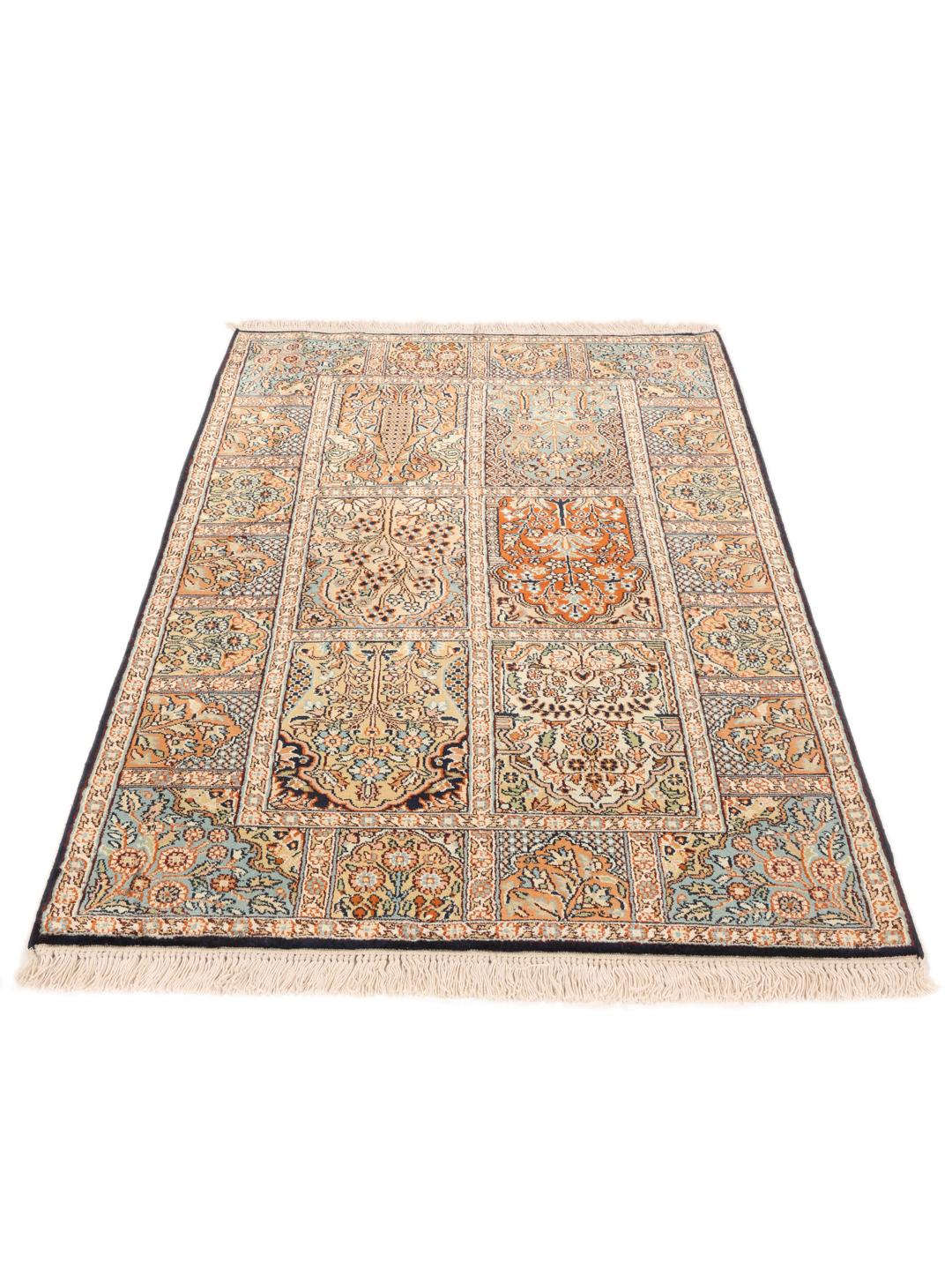
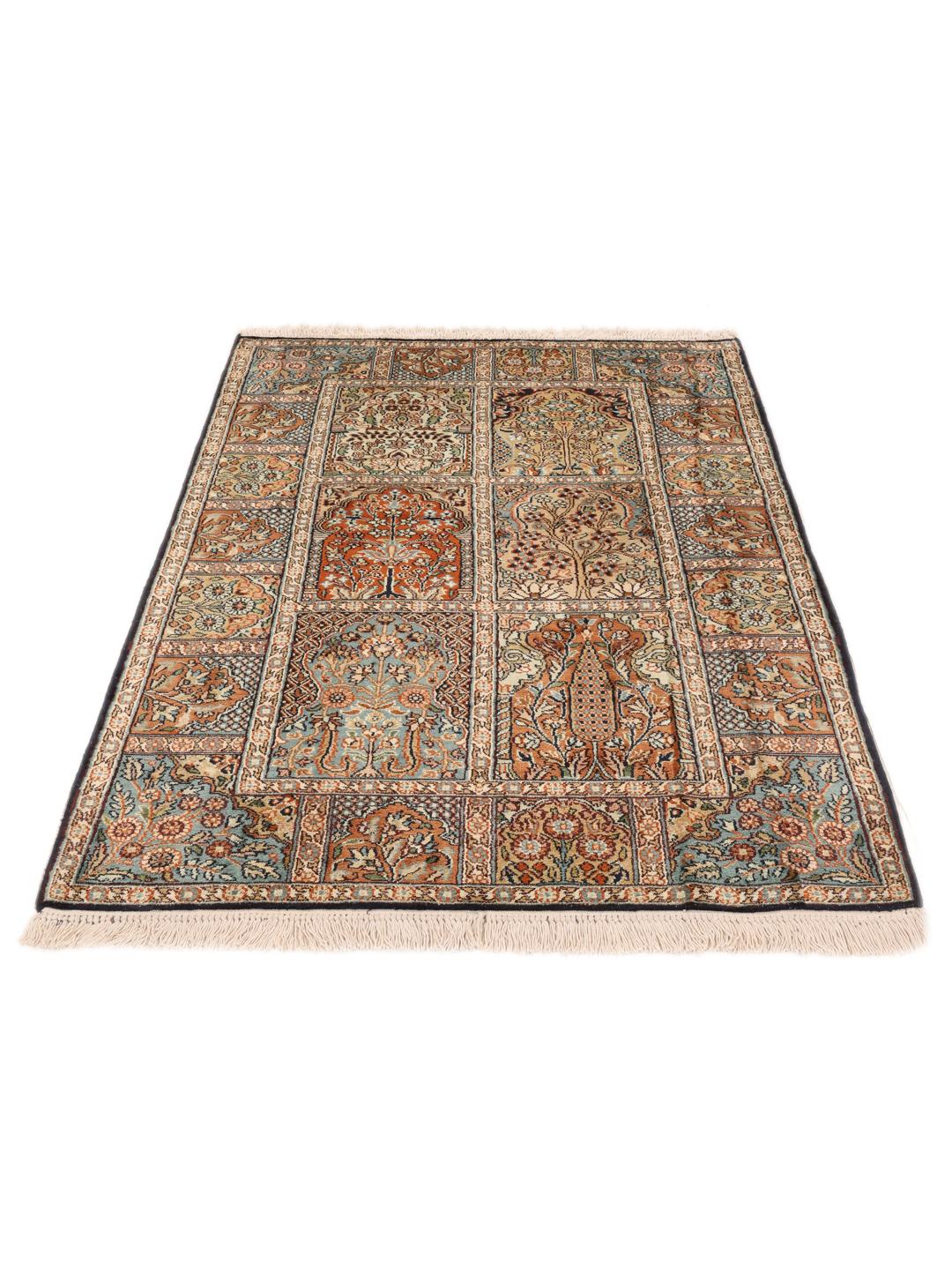
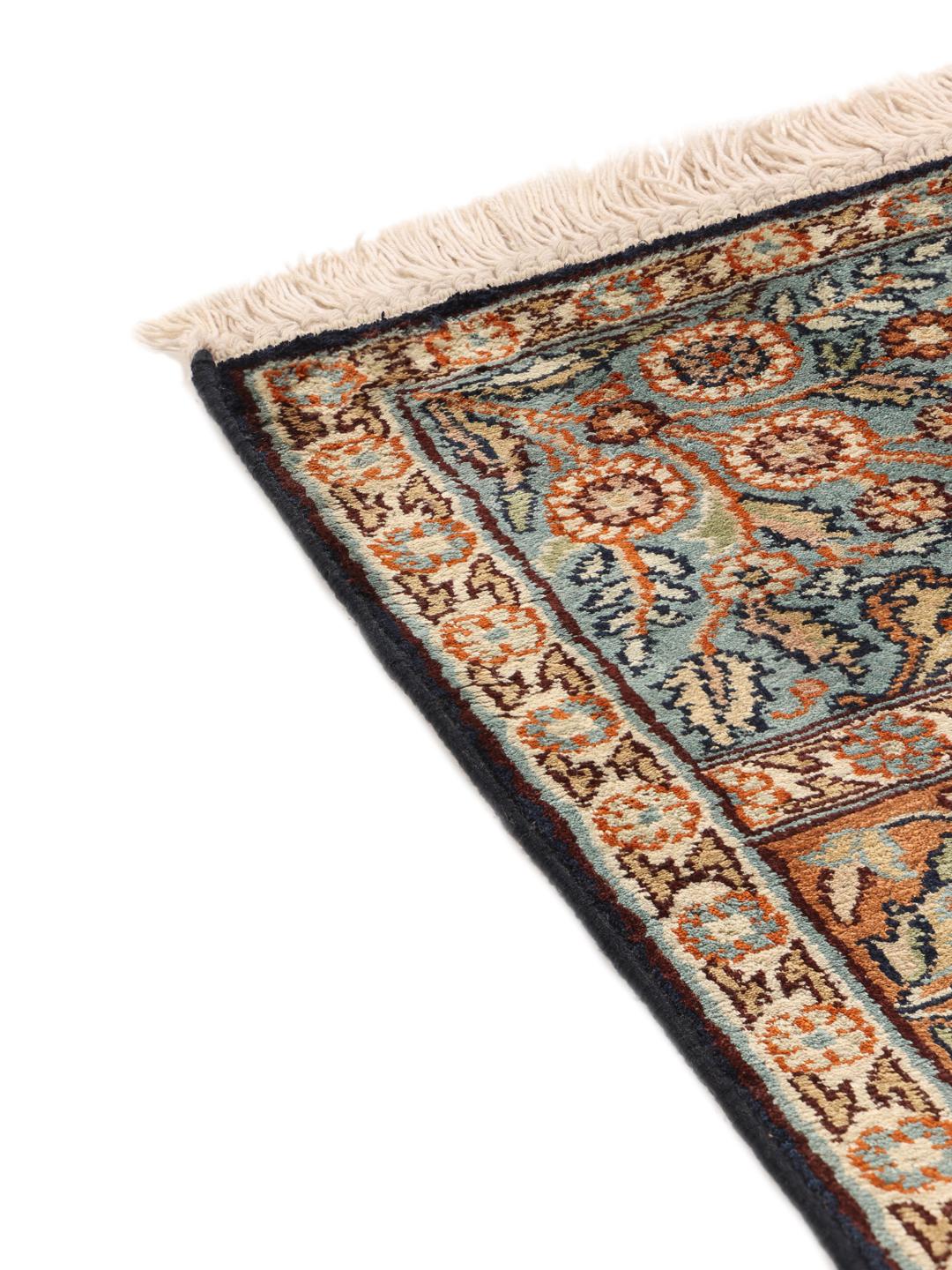
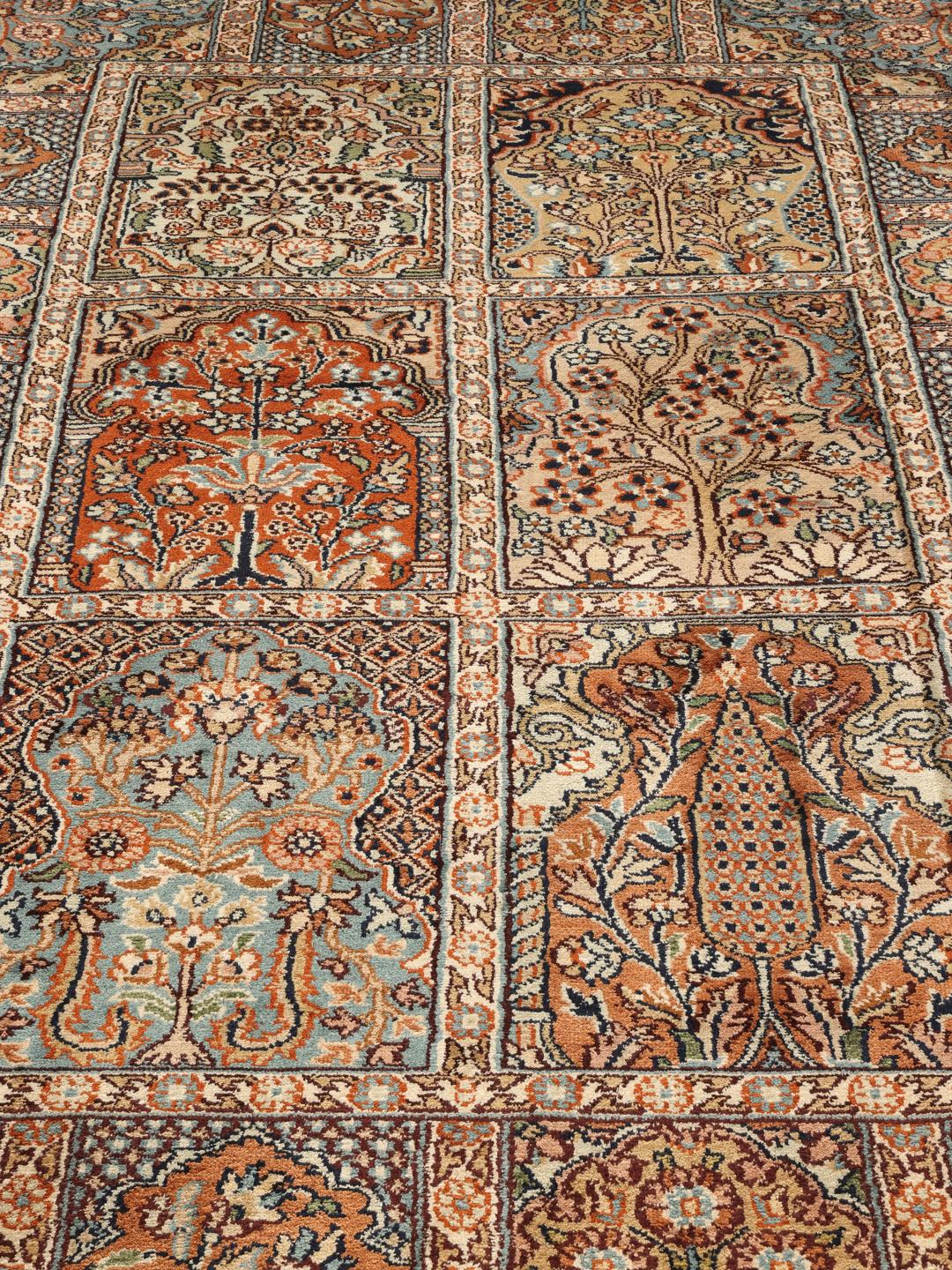
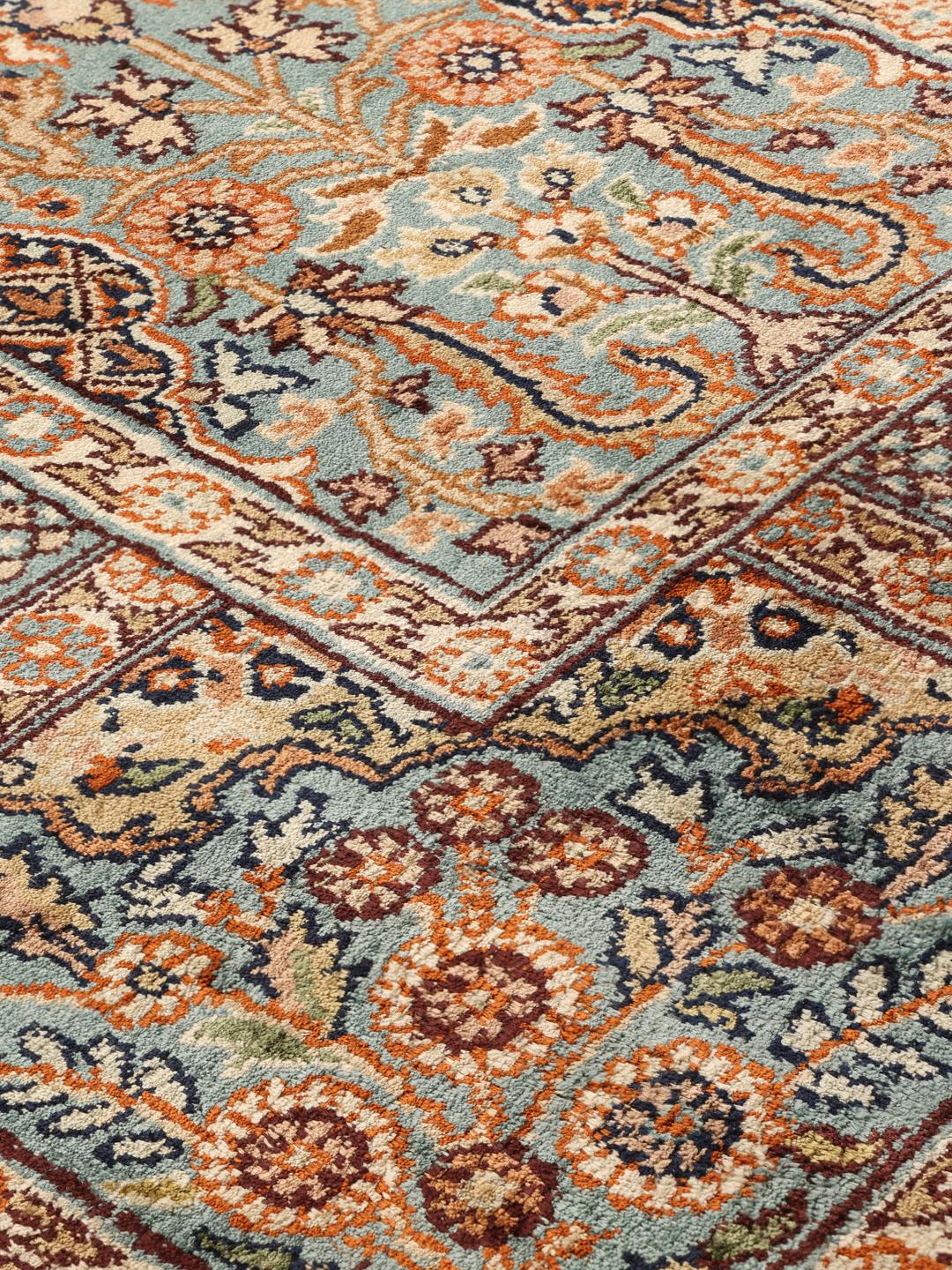
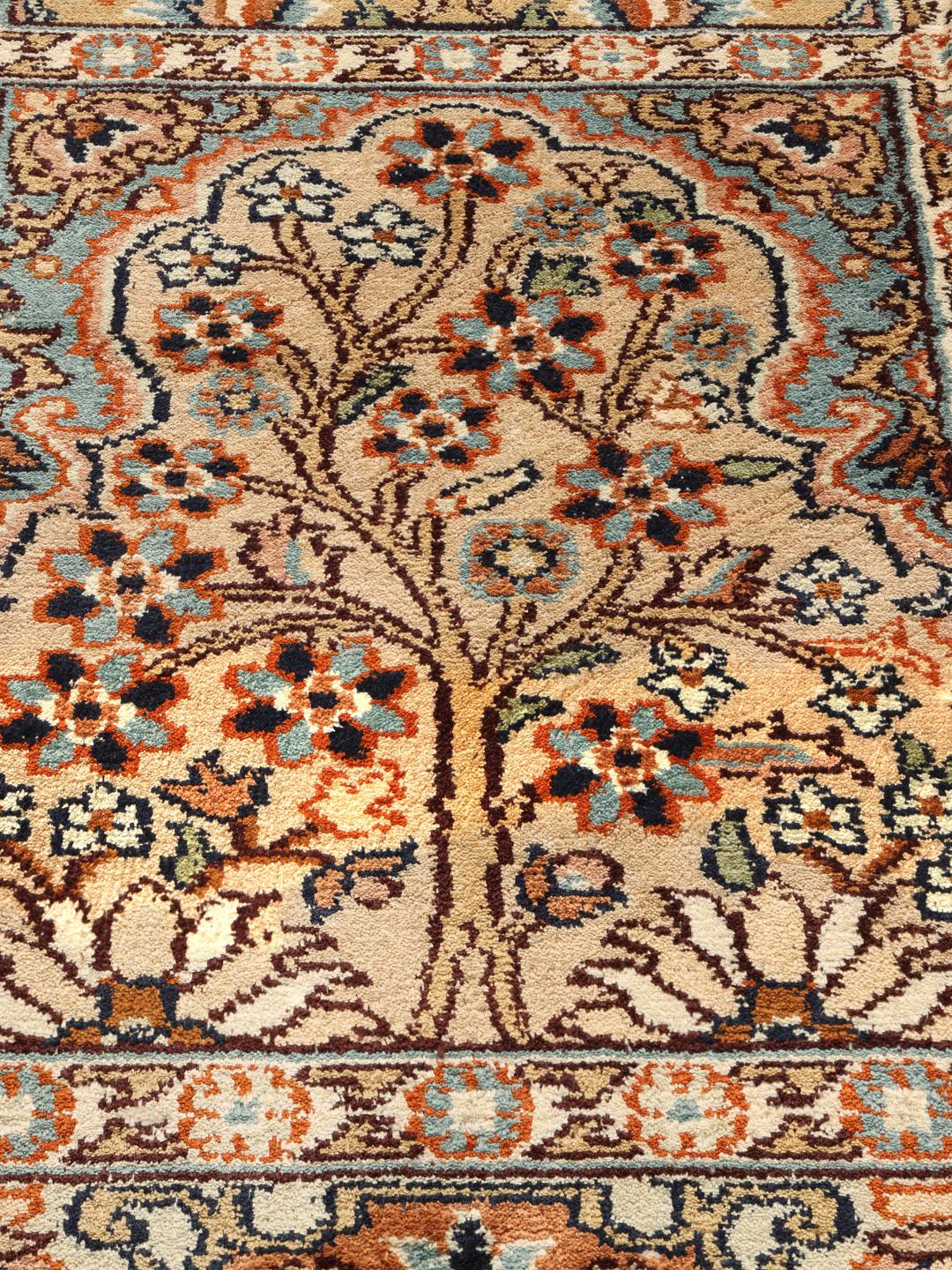
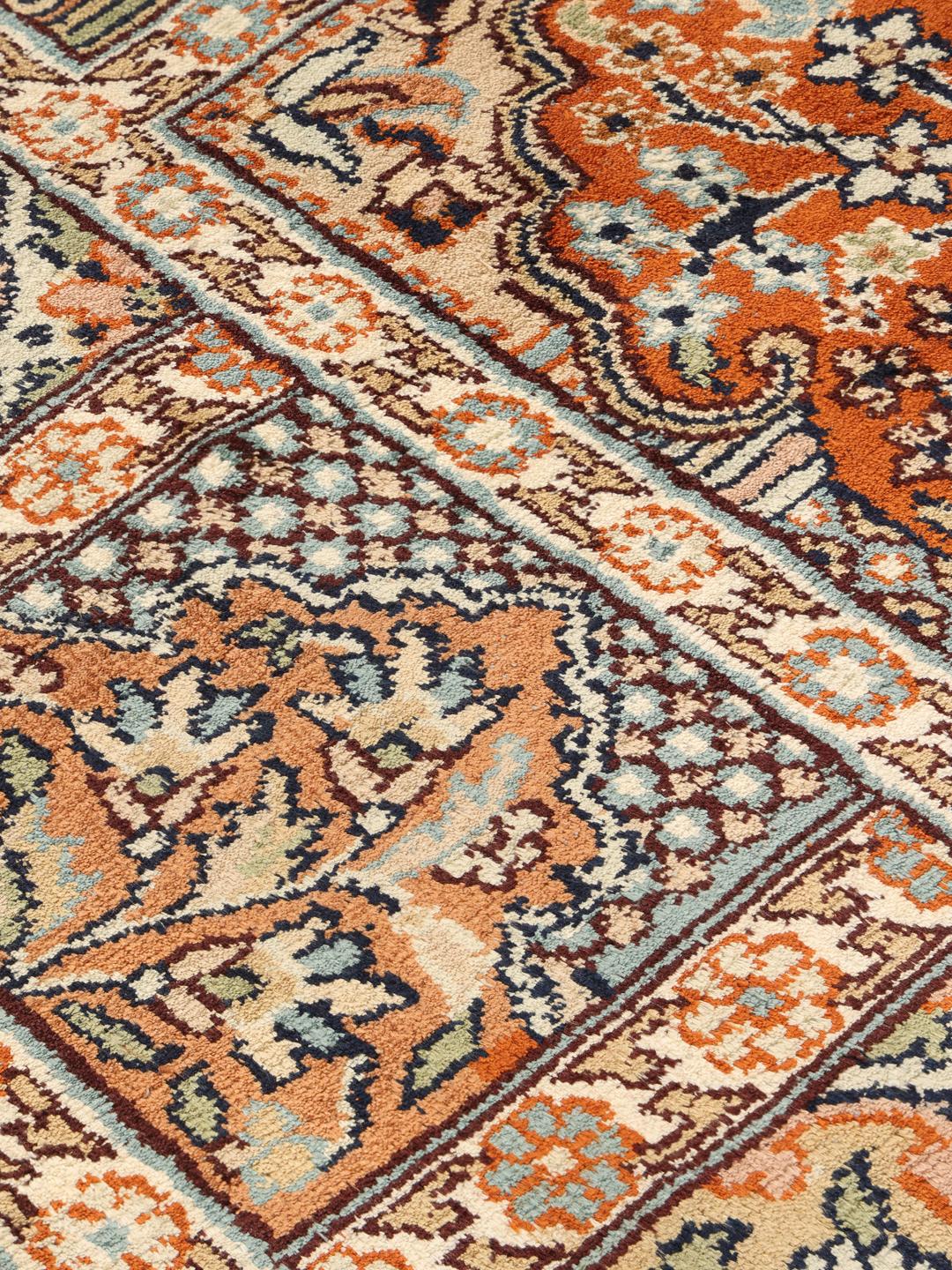
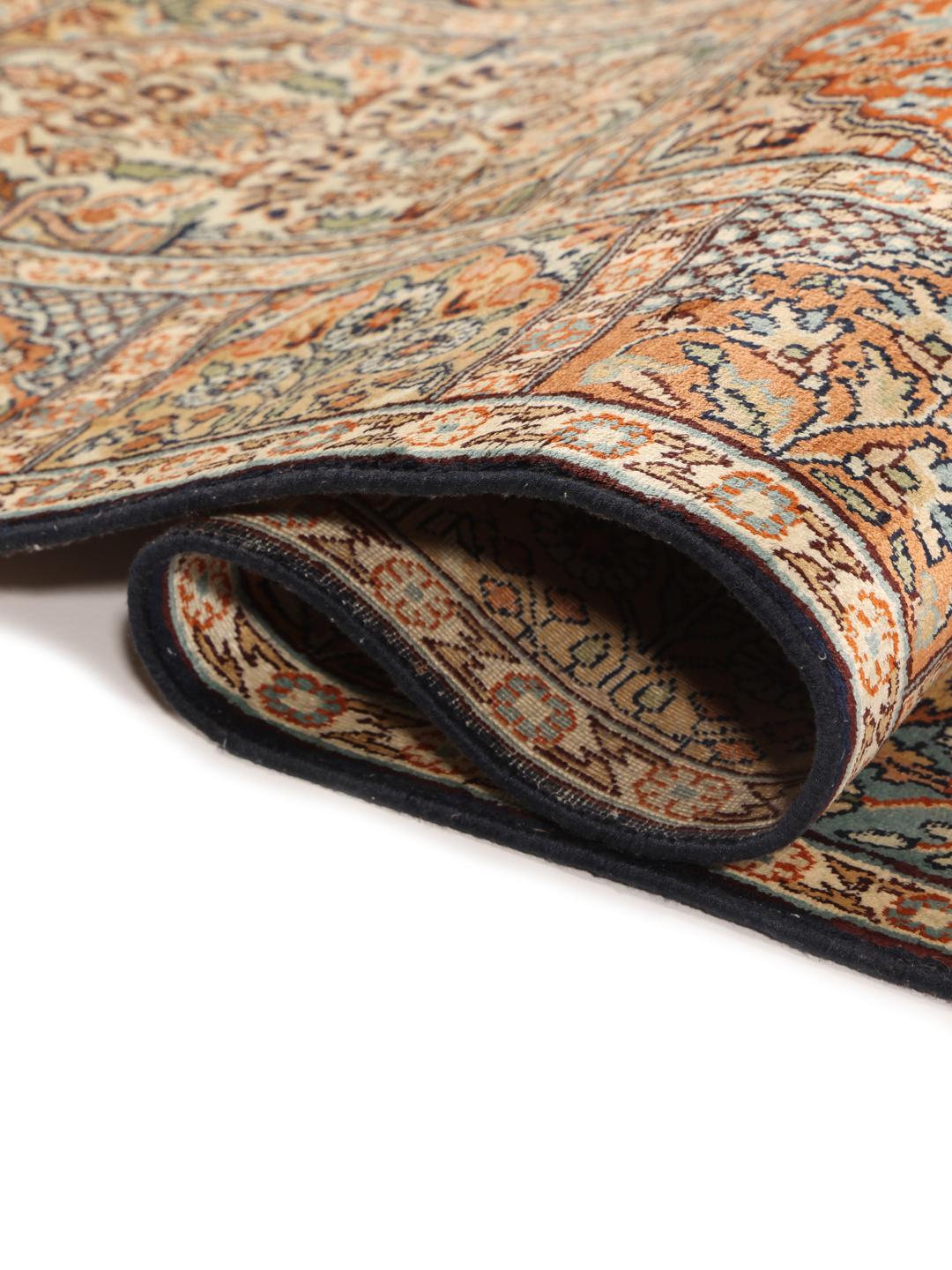
Visually, these rugs are defined by their dense, garden-inspired motifs, often featuring a central medallion or, as seen here, a structured arrangement of panels filled with floral sprays, vines, and leaves. The borders are typically narrow and intricate, framing the main field like a miniature painting, which reflects the deep historical appreciation for Middle Eastern-influenced design in the region.
Owning a hand-knotted piece from this tradition is an investment in cultural heritage. Collectors value these rugs for the immense skill required to produce them and the way they transform light within a room, offering a sense of enduring elegance that transcends passing design trends.