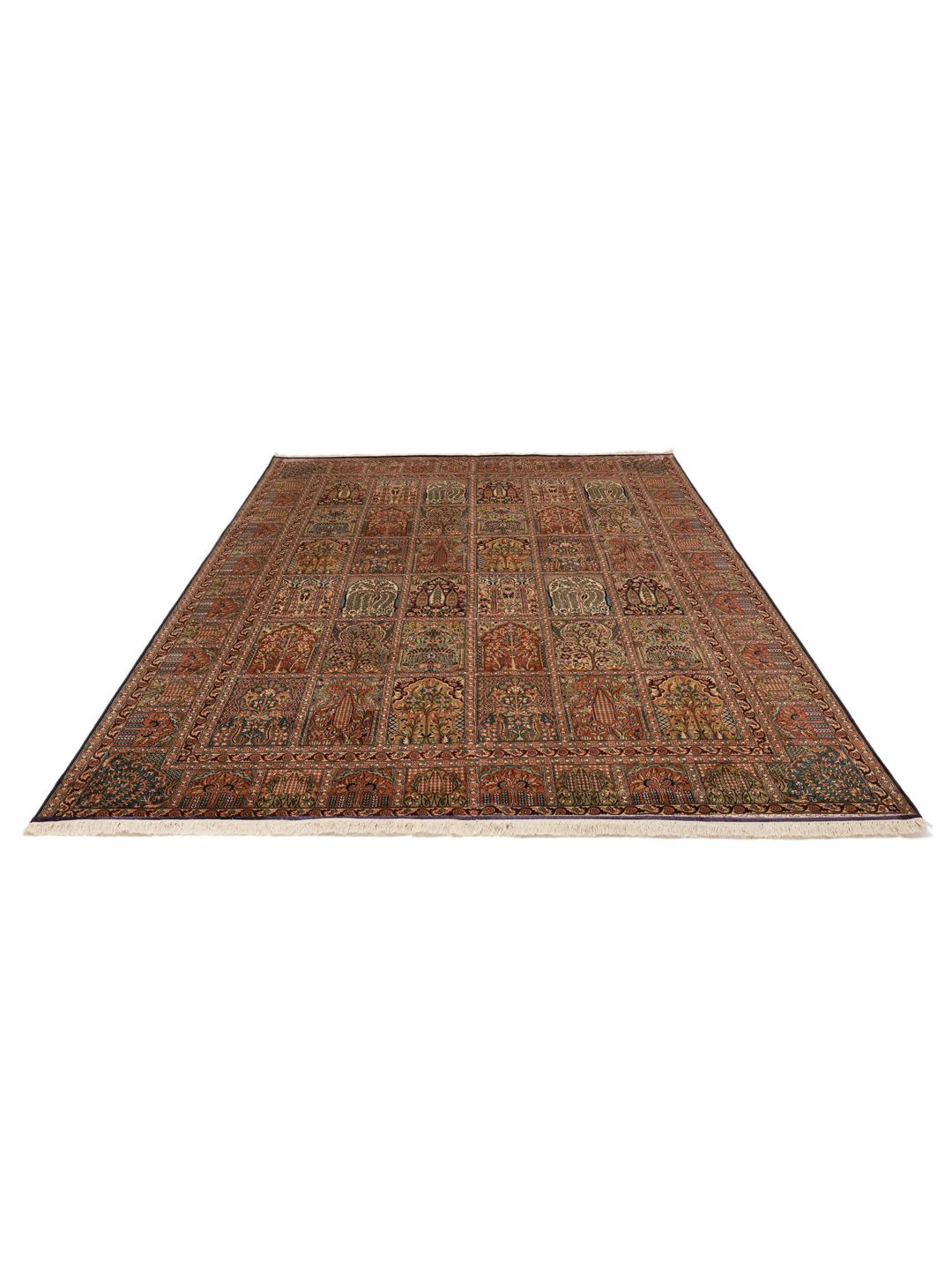
Kashmir silk rugs are celebrated for their deep roots in the rich textile history of Northern India. The tradition of weaving these fine pieces was historically influenced by the artistic styles of the Middle East, which were brought to the Kashmir Valley centuries ago. Over time, local artisans adapted these influences, infusing them with their own regional aesthetic to create a distinct style known for its elegance and complexity.
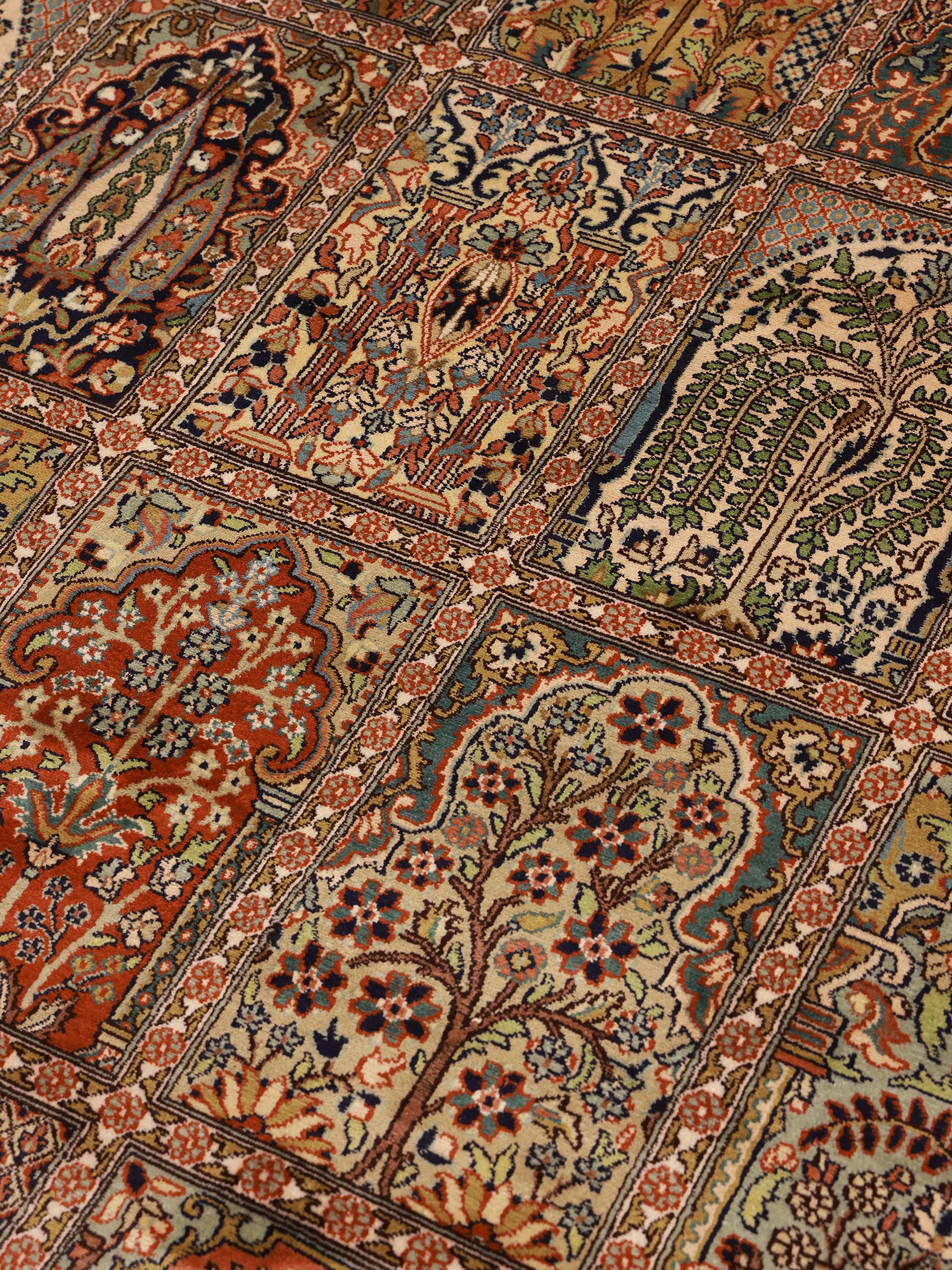
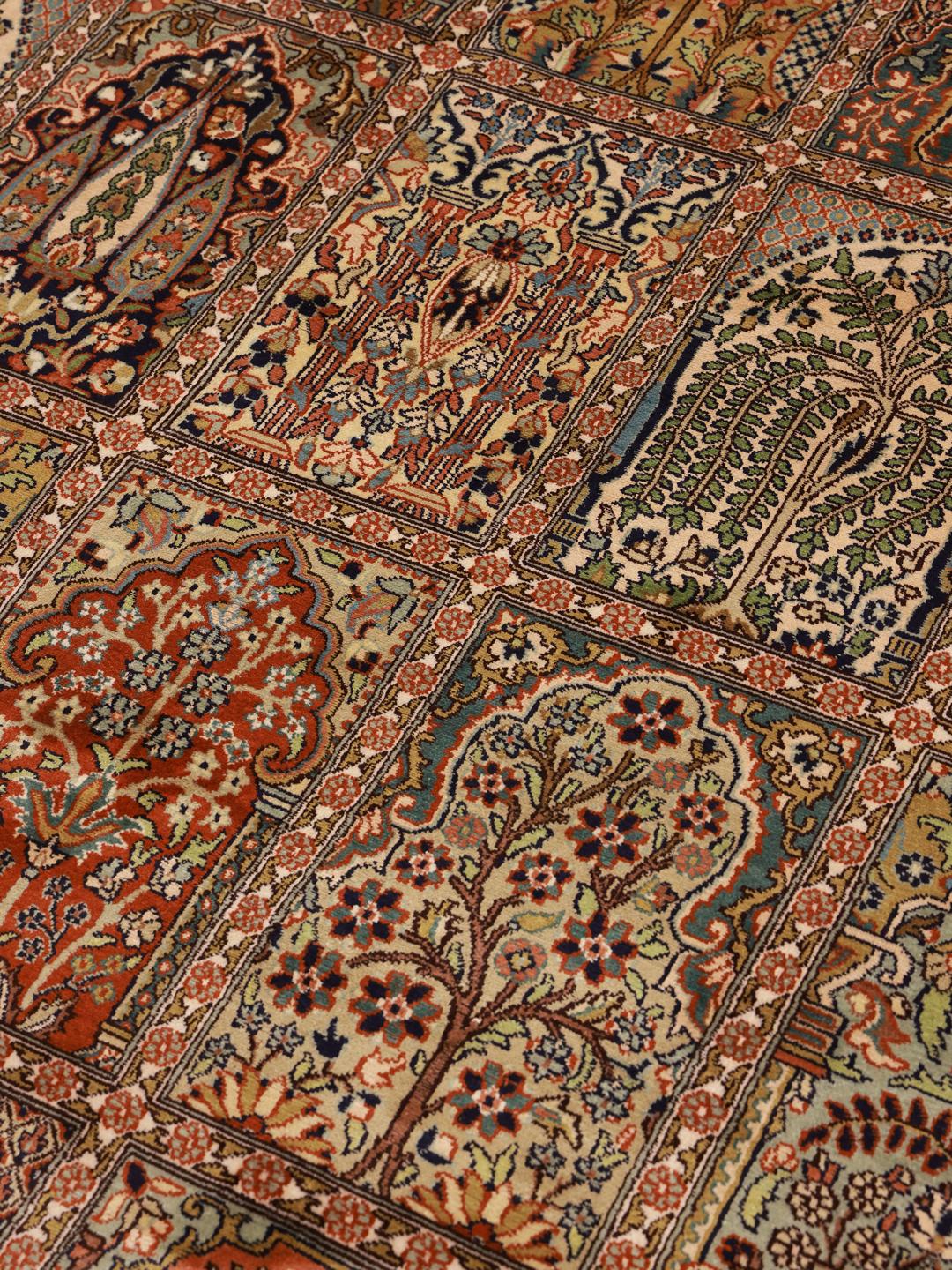
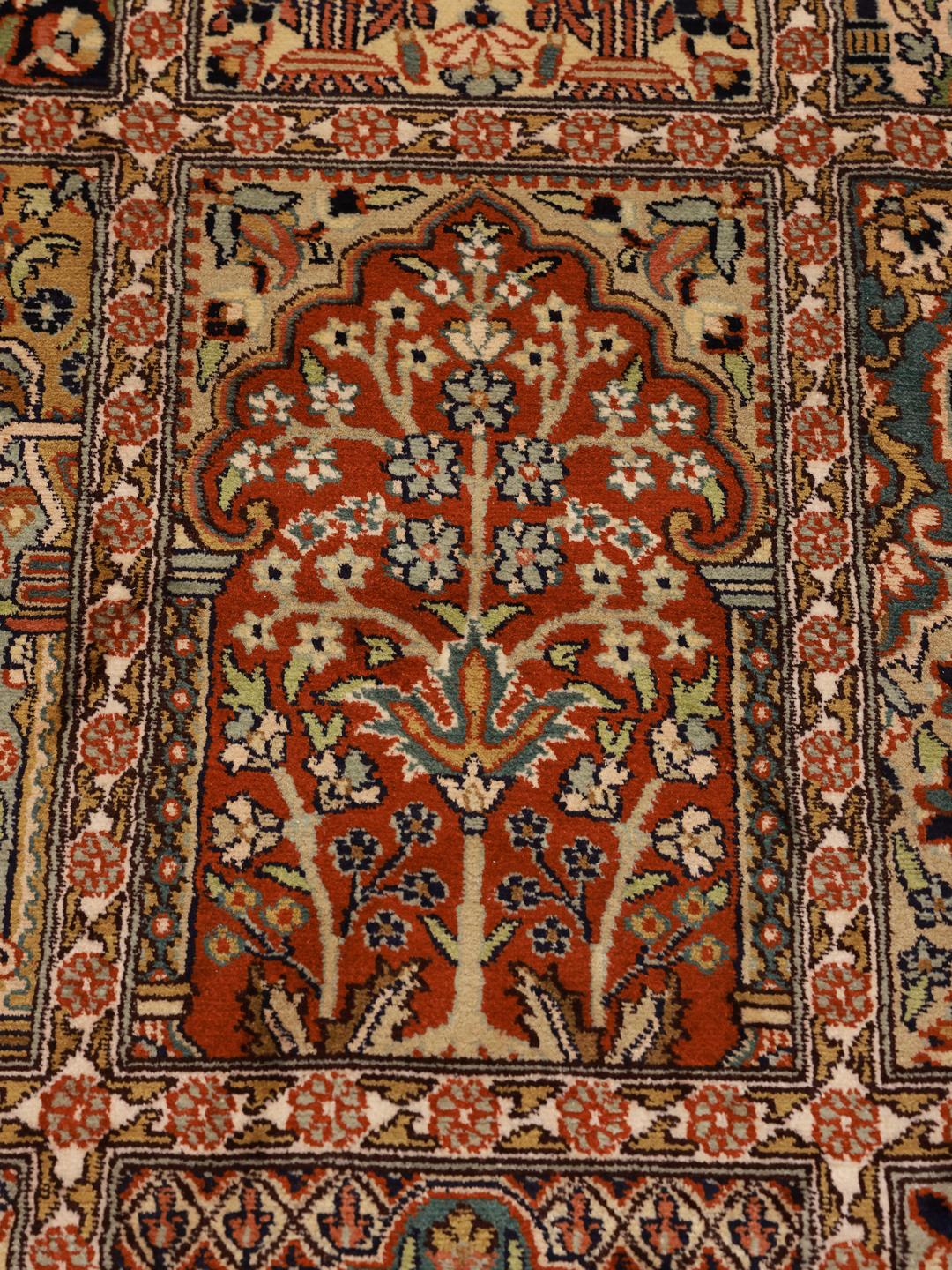
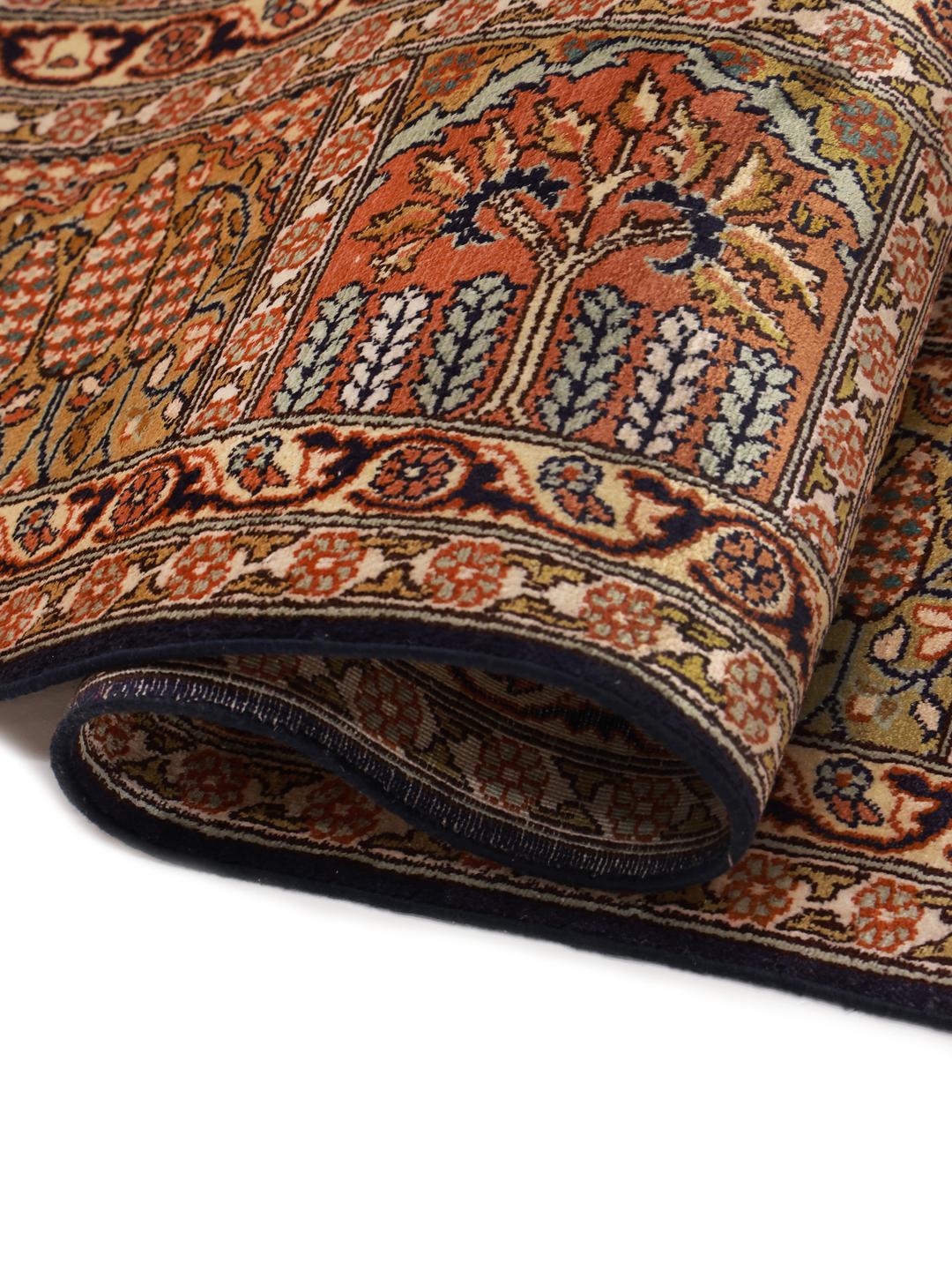
The term 'Kashmir silk' refers to the use of high-quality, lustrous silk, which is renowned for its strength and ability to hold vibrant dyes. The weaving process is a labour-intensive tradition passed down through generations, where the mastery of knotting techniques determines the quality of the final piece. Using silk allows for a much finer knot density than wool, which is why these rugs are famous for their incredibly detailed, almost painting-like patterns.
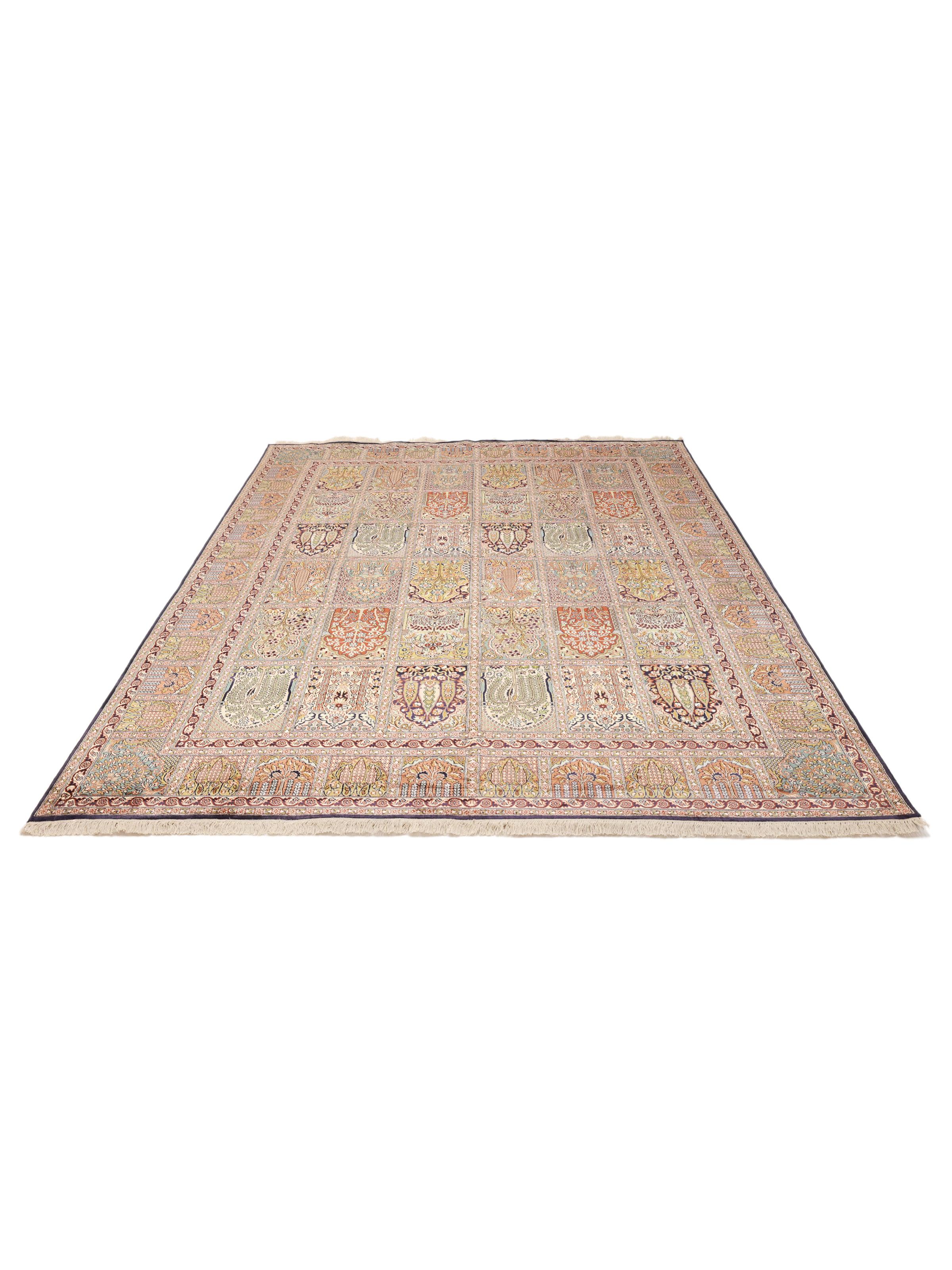
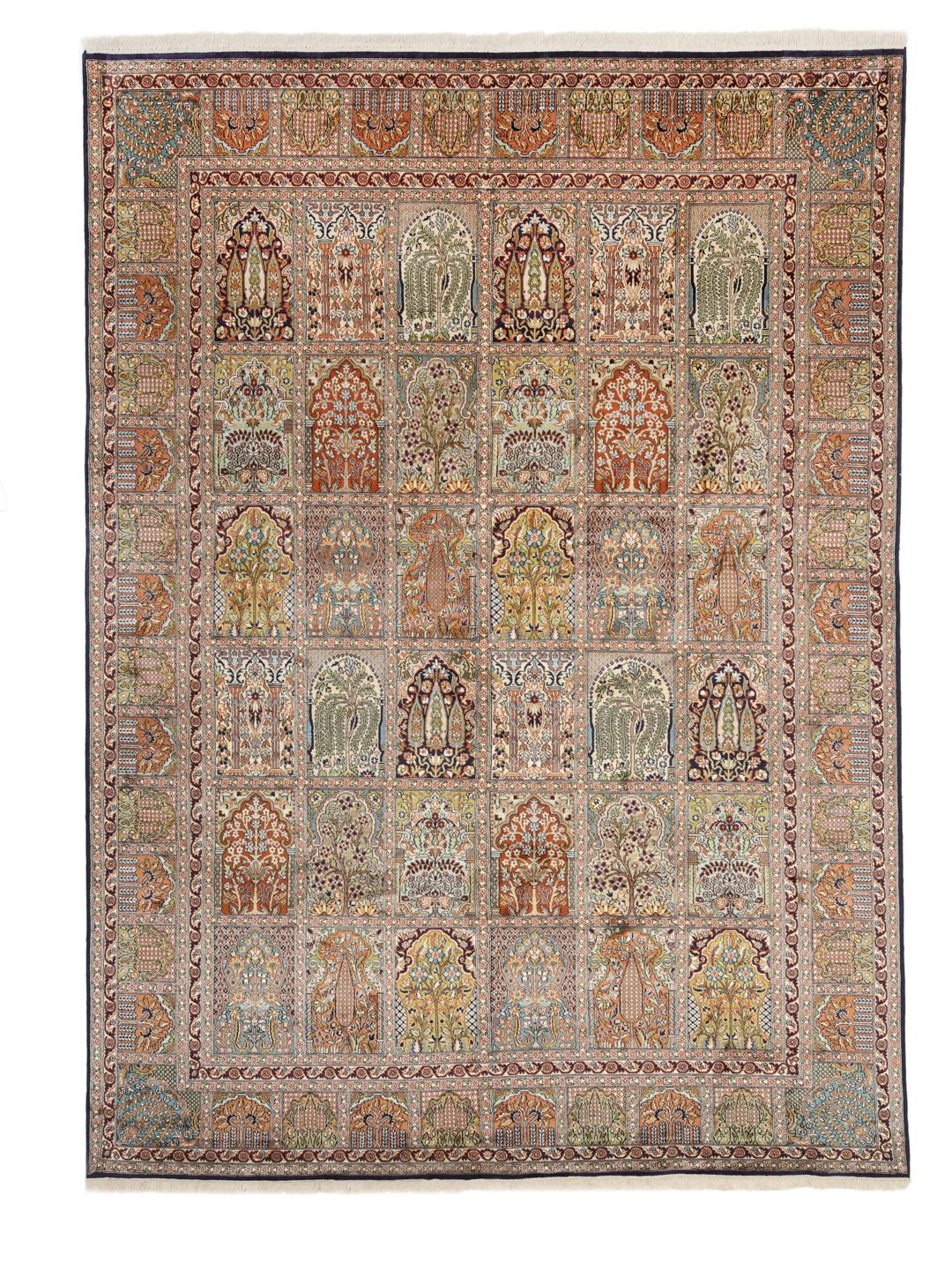
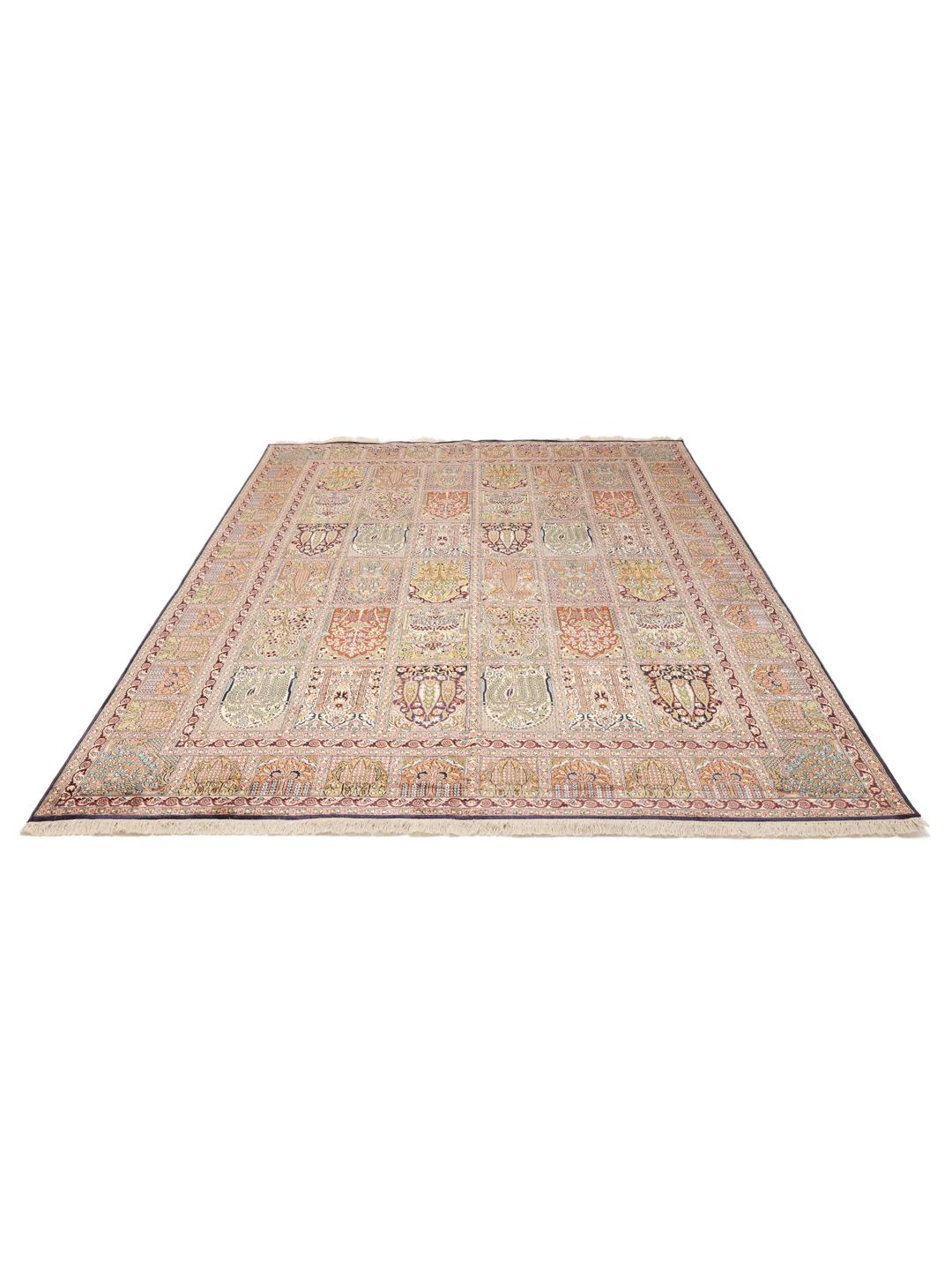
The design of this rug draws from the classic 'garden' motif, a traditional layout that represents paradise on earth. It features a series of arches and floral compartments that are characteristic of this region's historical design language. These motifs are not merely decorative but hold symbolic meaning, often representing the harmony of nature and the cultural importance of garden architecture in the history of the region.
Collectors value these rugs for their combination of artistic vision and the high level of human effort required to produce them. Owning a Kashmir silk rug is a way of preserving a piece of cultural history. The skill involved in creating such detailed work ensures that these rugs are not just floor coverings, but heirloom pieces that gain value and character as they age within a home.