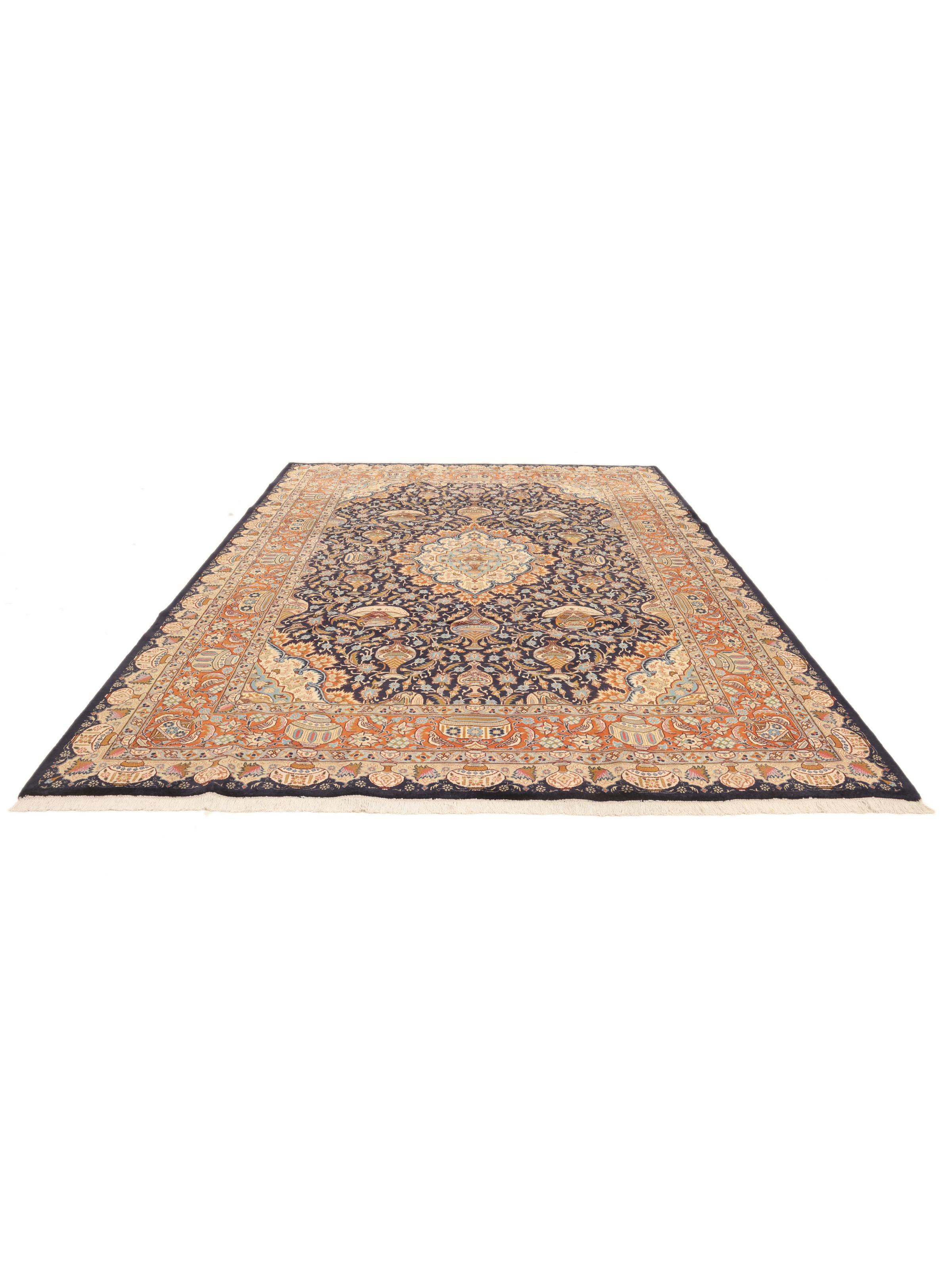
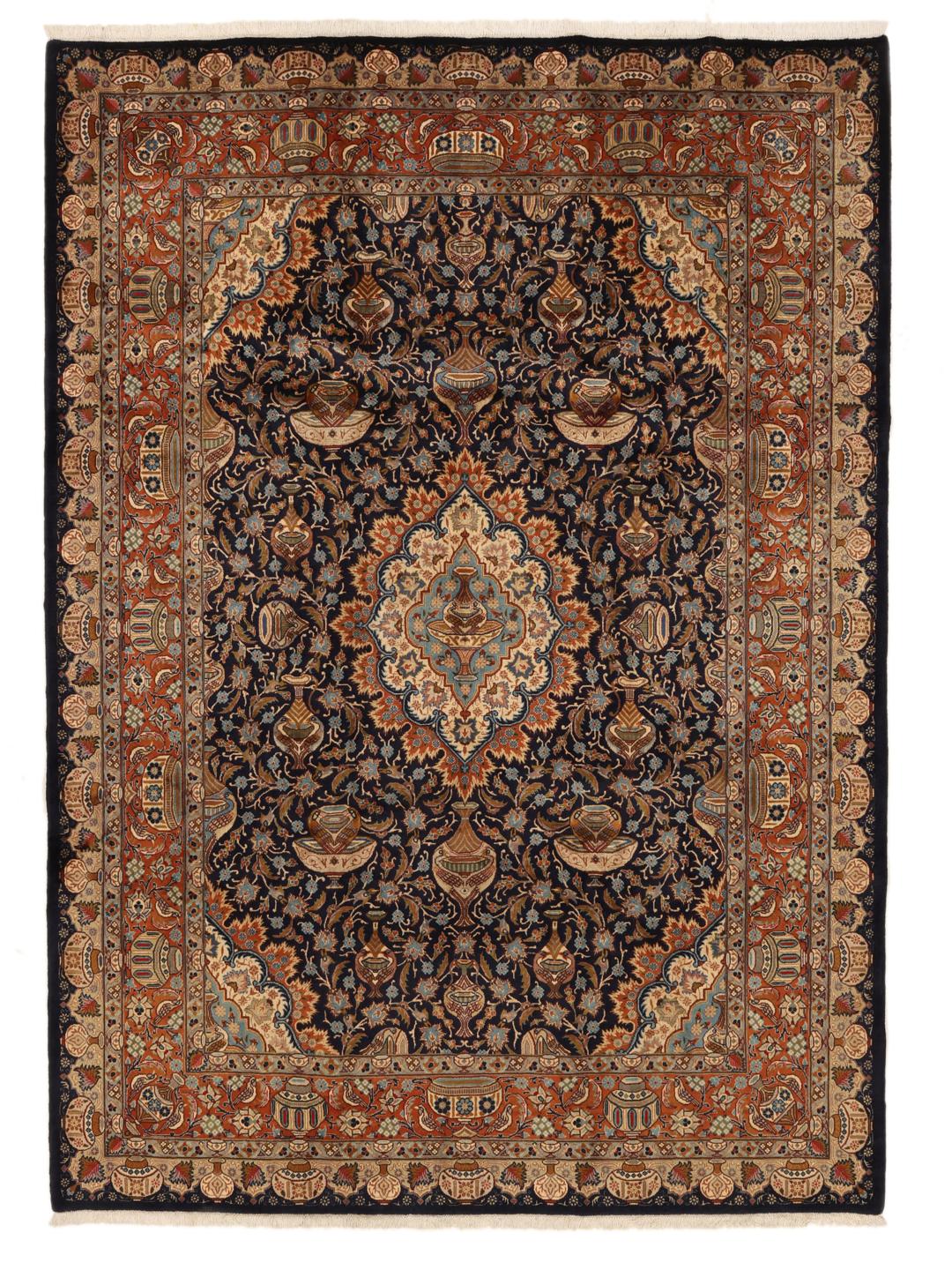
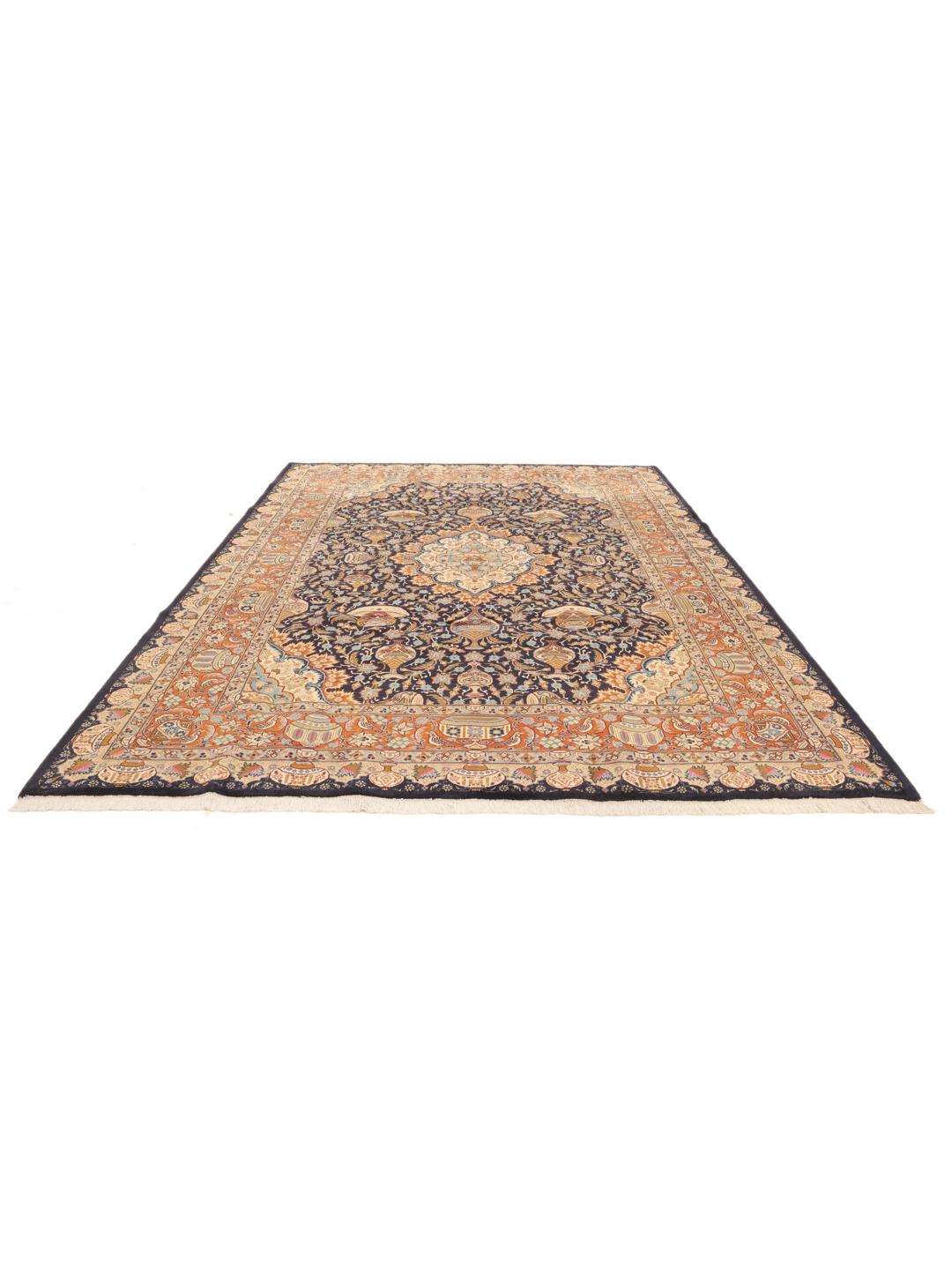
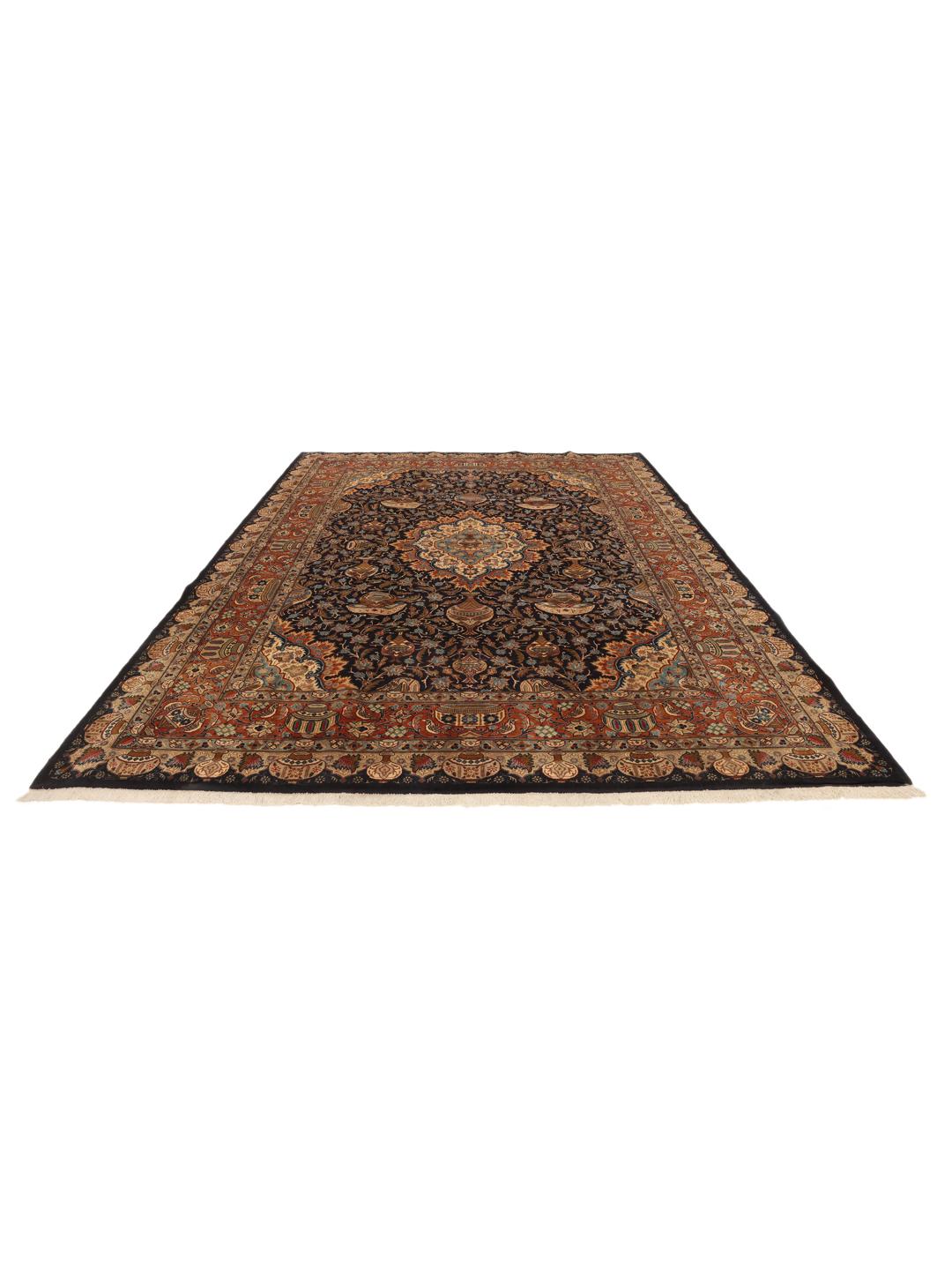
Kashmar rugs originate from the city of the same name, located in the Khorasan province of the Middle East. This region has long been a vital centre for rug production, historically bridging the gap between the nomadic weaving traditions of the steppes and the sophisticated urban workshops of the major cultural centres. Kashmar rugs are celebrated for their ability to weave together a wide array of historical influences into a cohesive, highly detailed visual language.
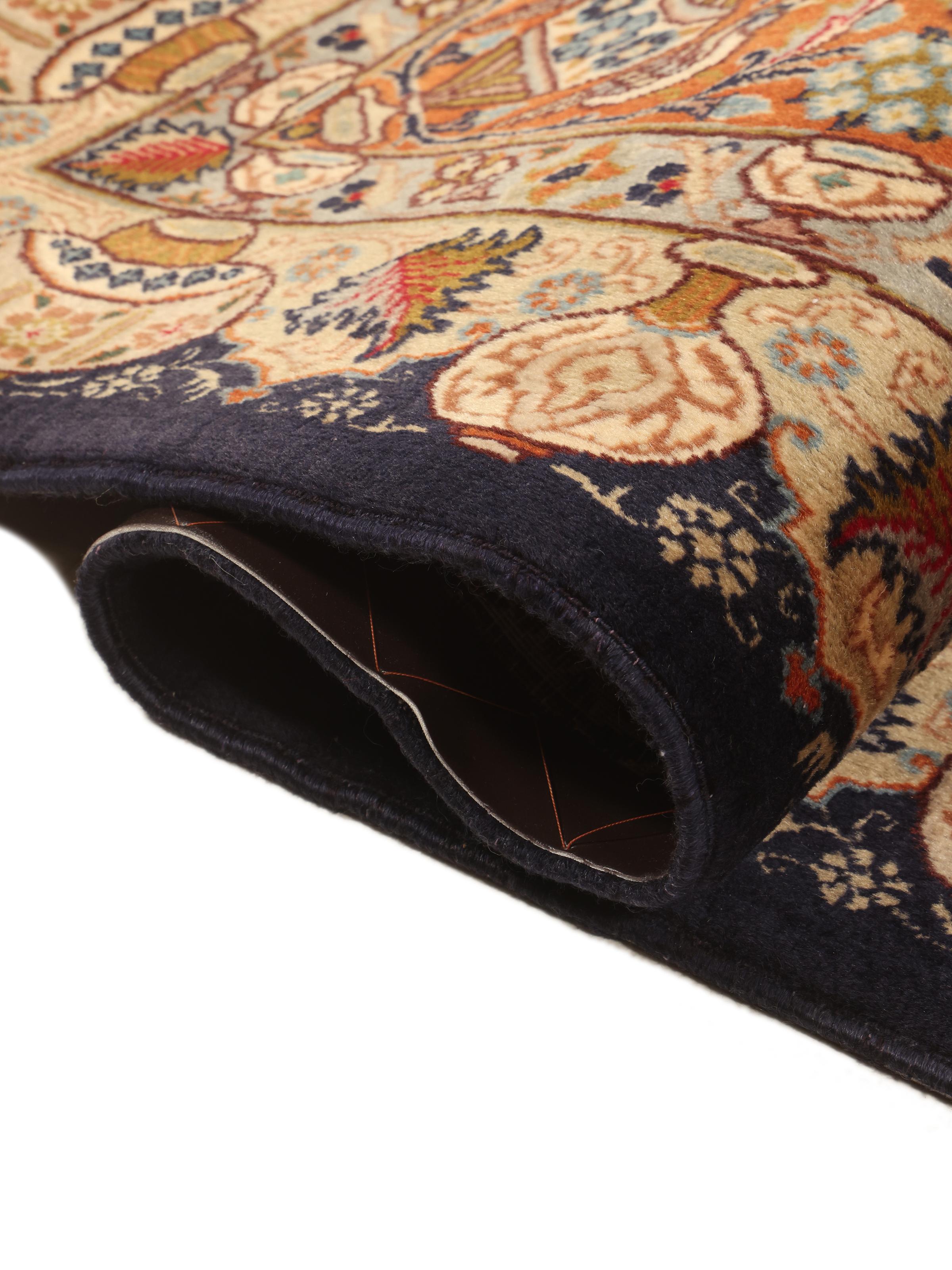
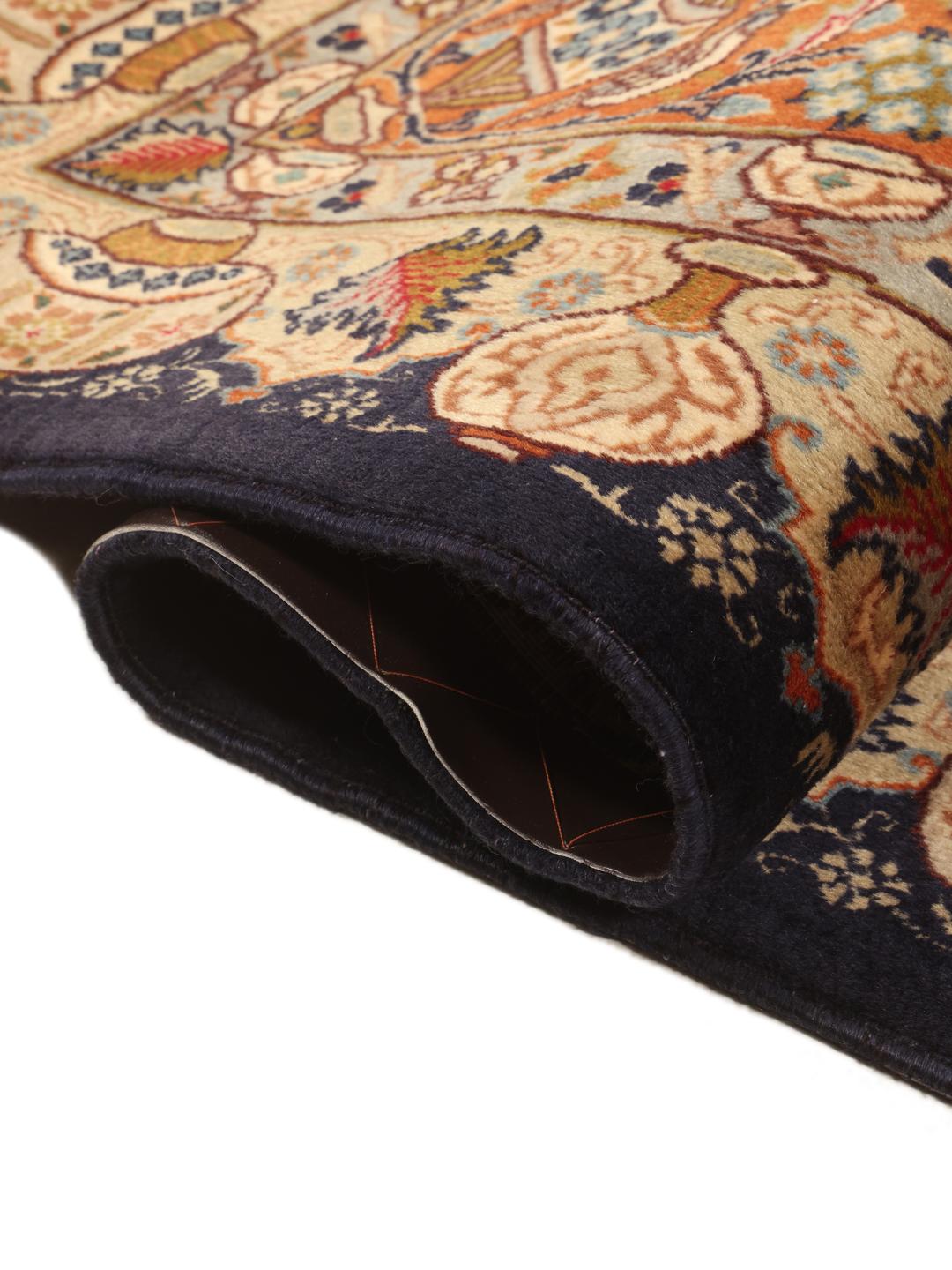
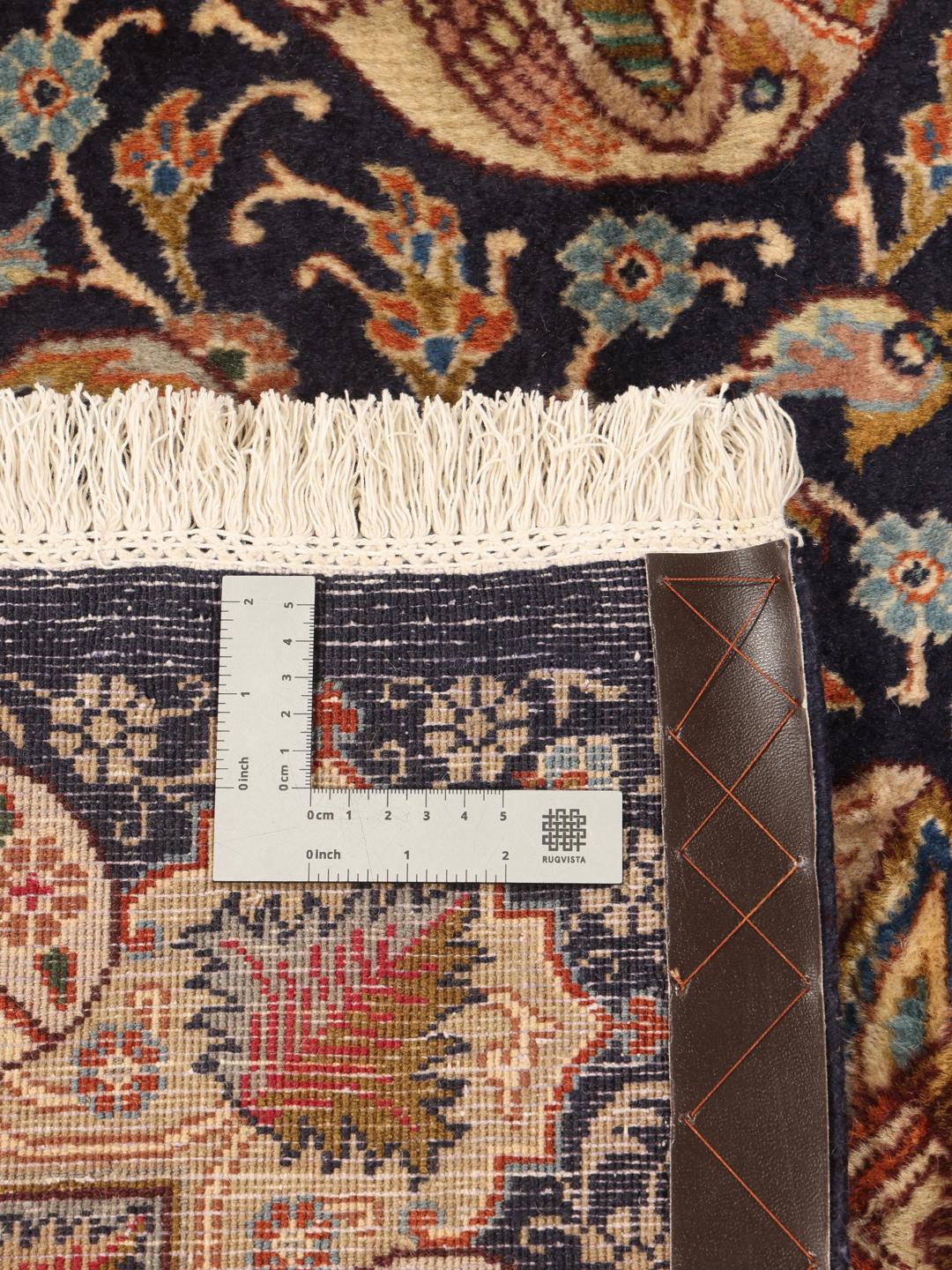
The term Kashmar signifies a specific regional style that is often associated with high-quality materials and a refined approach to design. The construction of these rugs relies on a firm foundation, which allows the weavers to achieve the intricate, curvilinear patterns that define the style. This structural integrity is what makes these rugs prized, as it ensures that the elaborate designs are supported by a durable and long-lasting foundation.
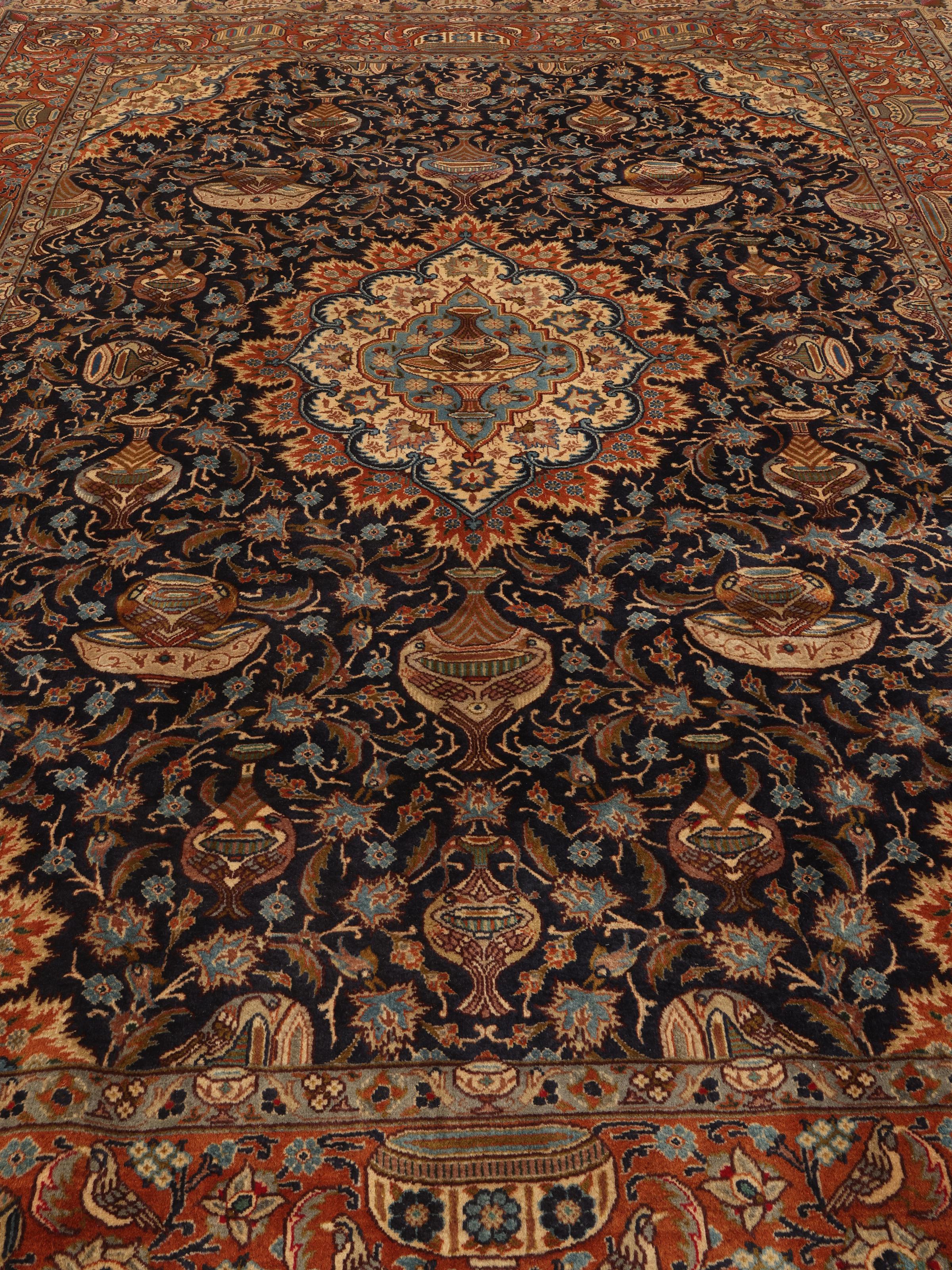
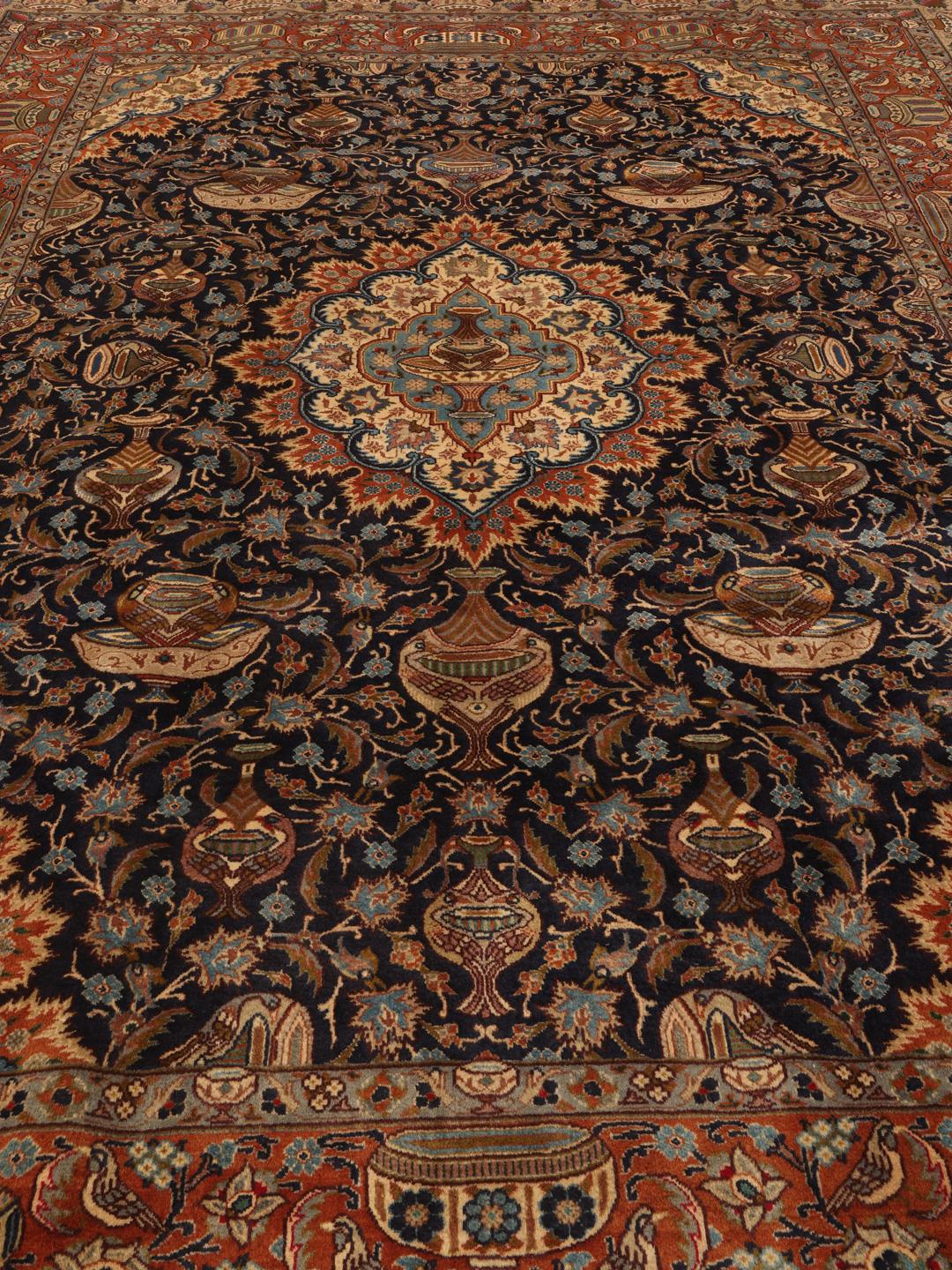
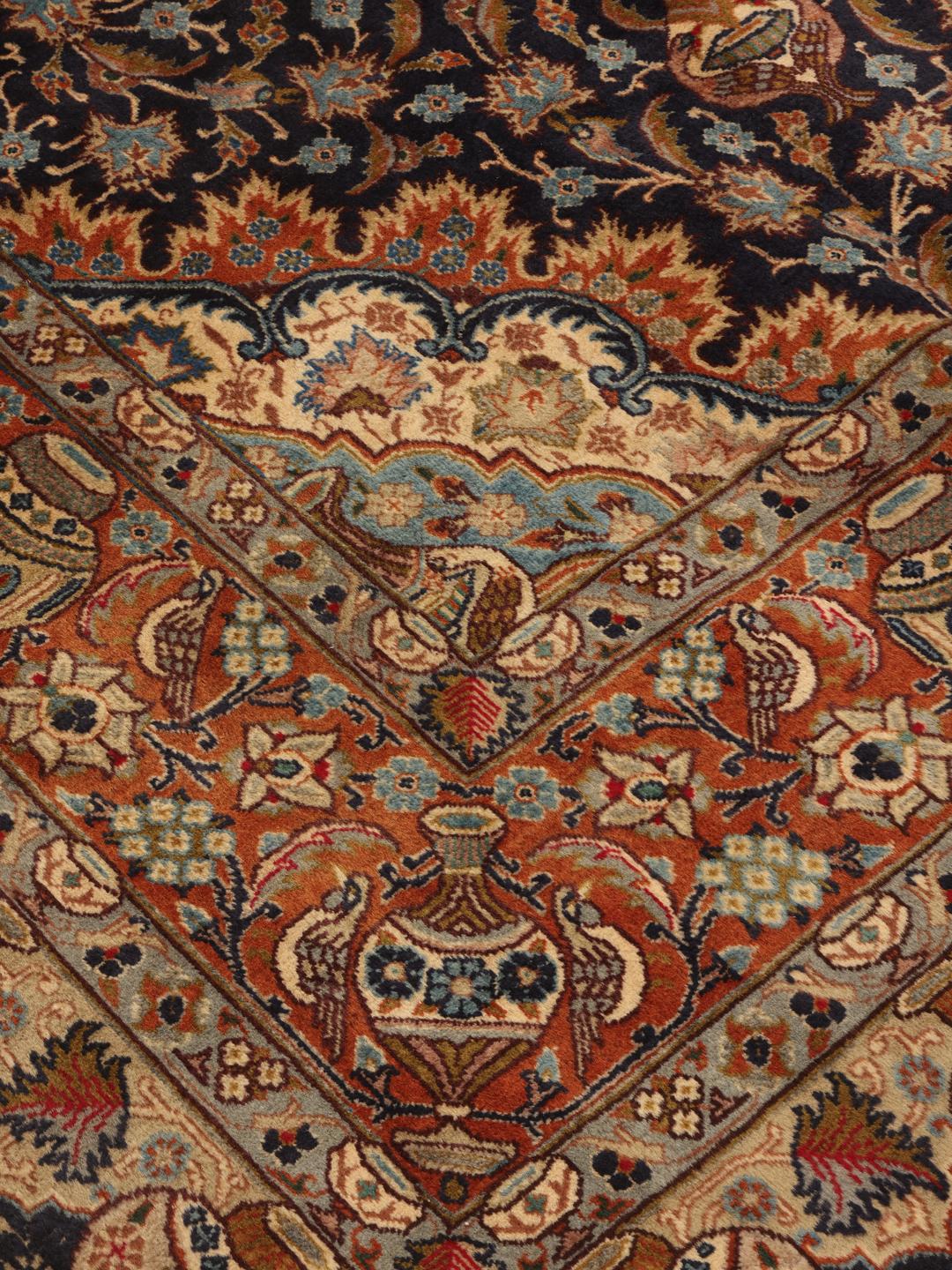
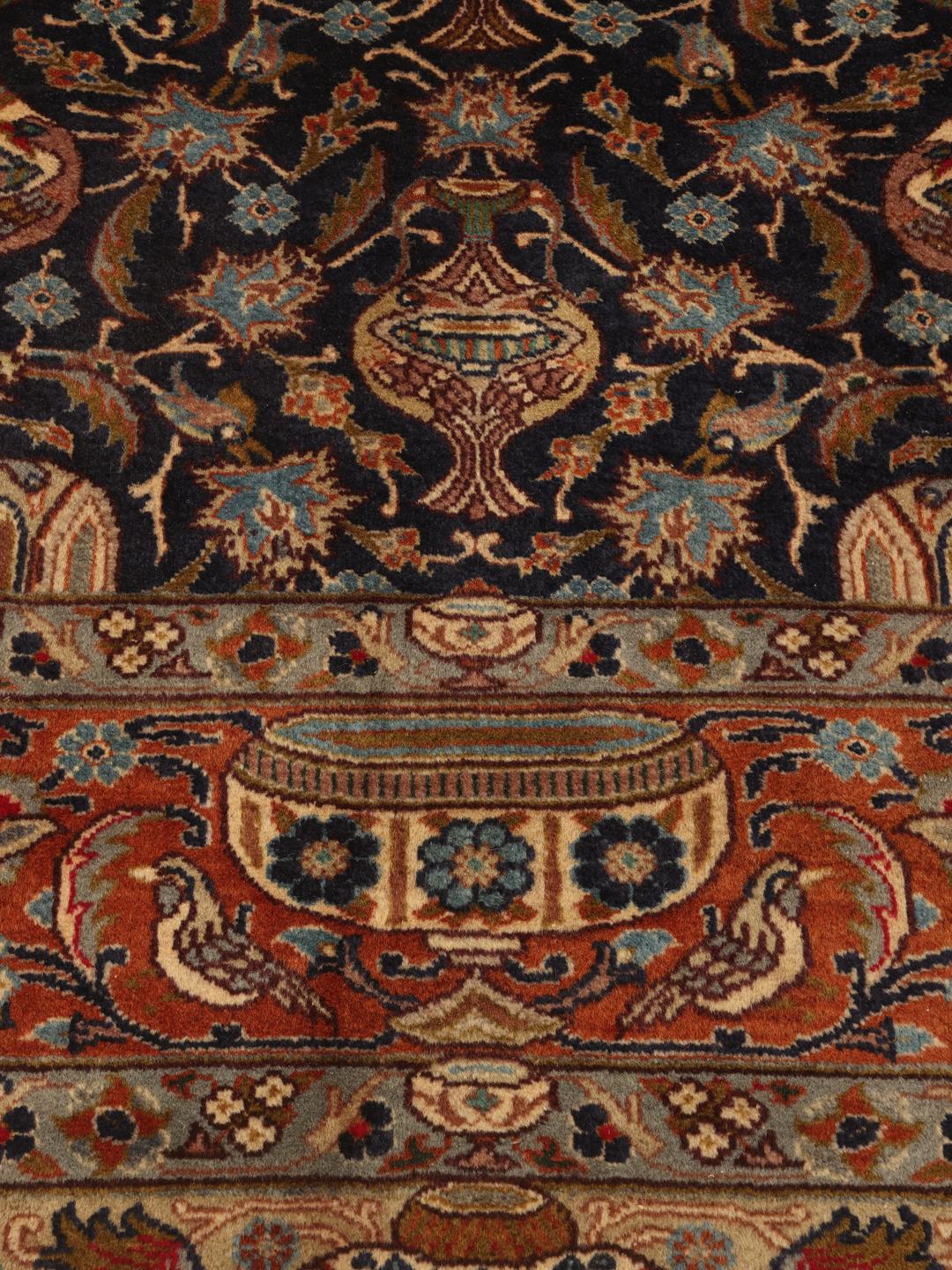
Visually, these rugs are known for their expansive fields filled with complex floral motifs, often incorporating the 'vase' design or elaborate urns, which are surrounded by intricate scrolling vines and blossoms. The borders are typically as detailed as the field, featuring repetitive decorative patterns that frame the composition. The use of deep, rich colours like navy blue and warm reds is a hallmark of the tradition, providing a sophisticated backdrop that highlights the finer details of the design.
Collecting a Kashmar rug is an investment in a living tradition. These pieces are valued for their complexity, the skill required to execute such detailed patterns, and the way they capture the cultural identity of their origin. Owning one is more than just a decor choice; it is an act of preserving a craft that has been refined over generations. Each rug serves as a testament to the artisan's ability to create beauty through a combination of traditional techniques and artistic vision.