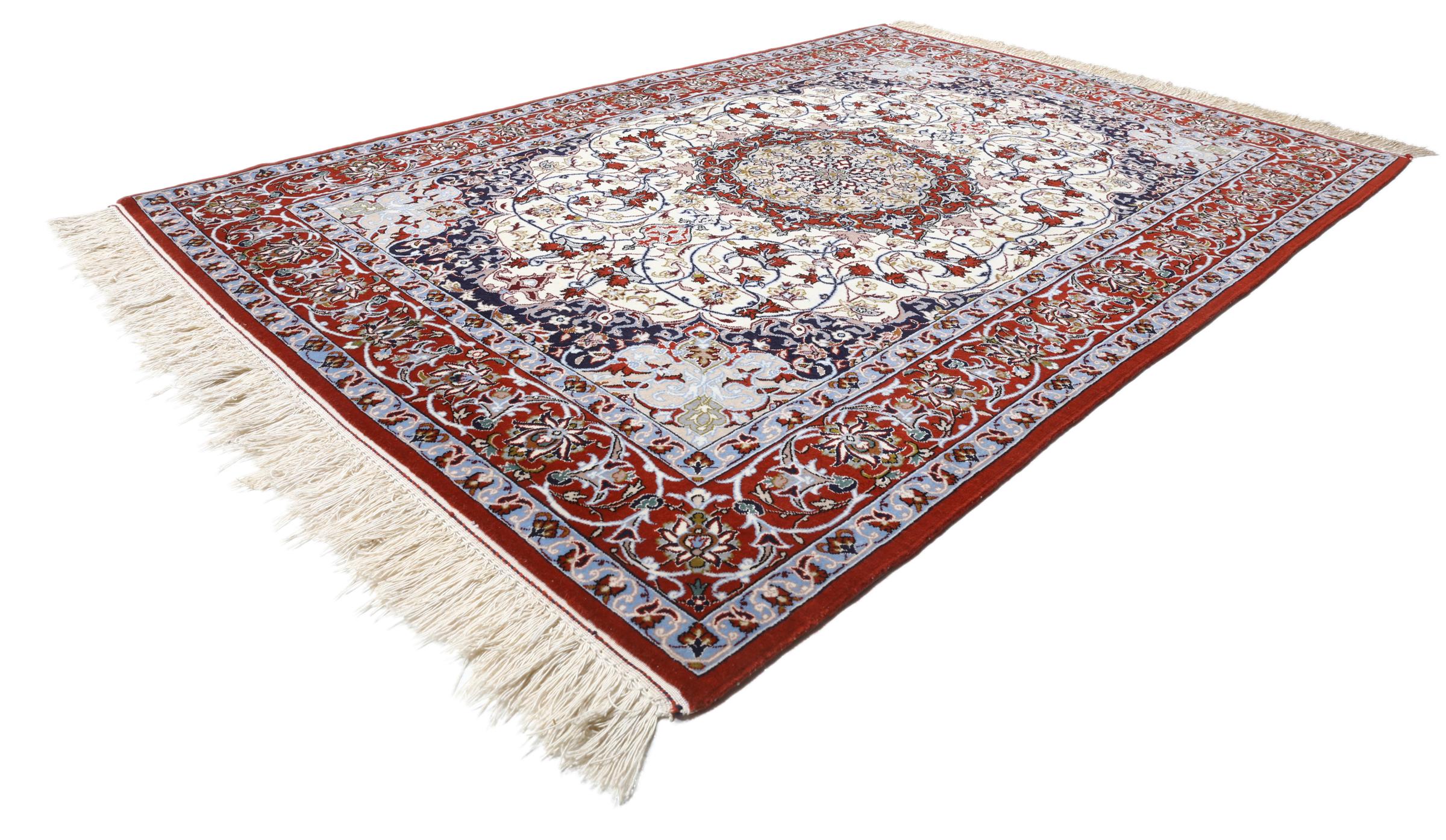
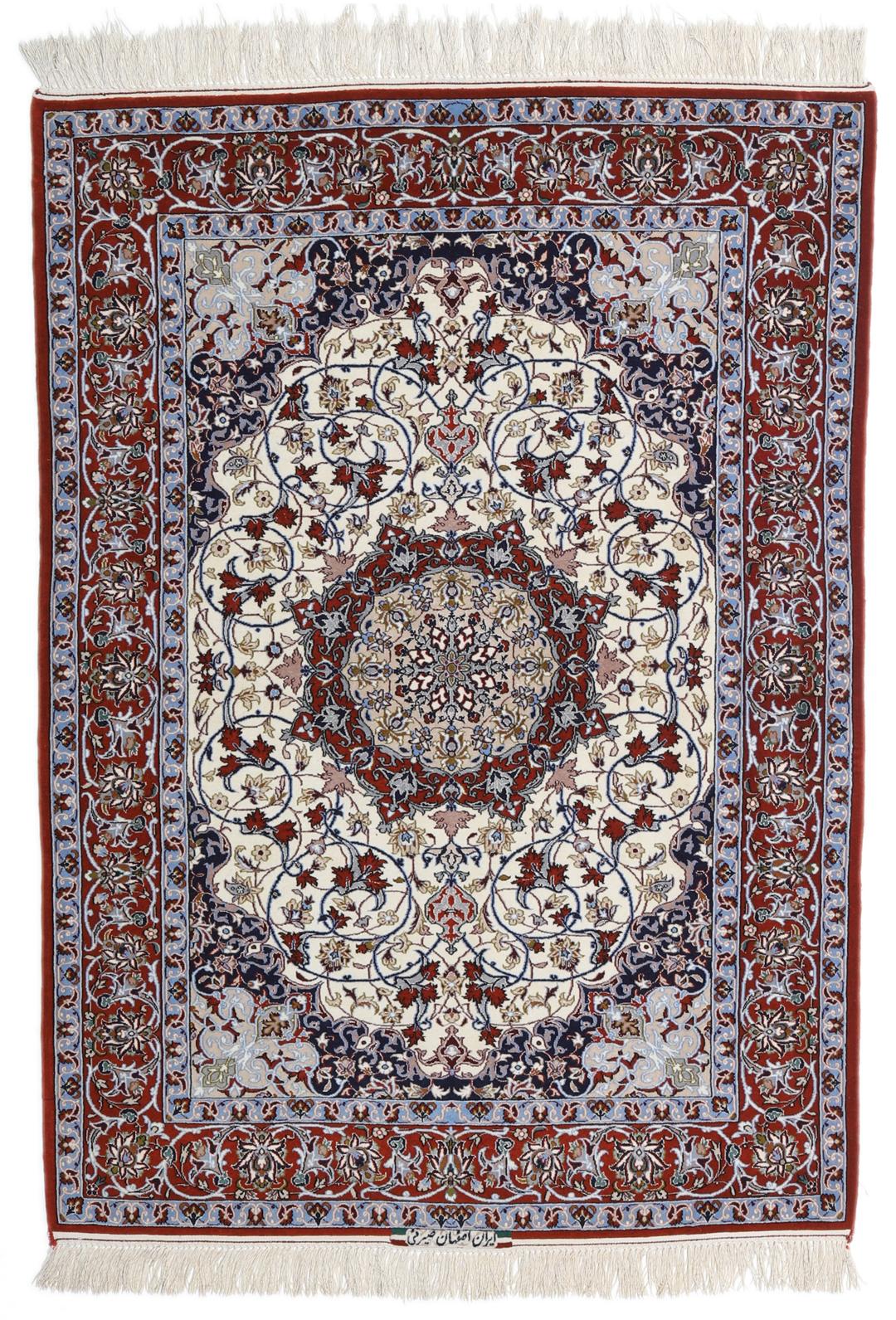
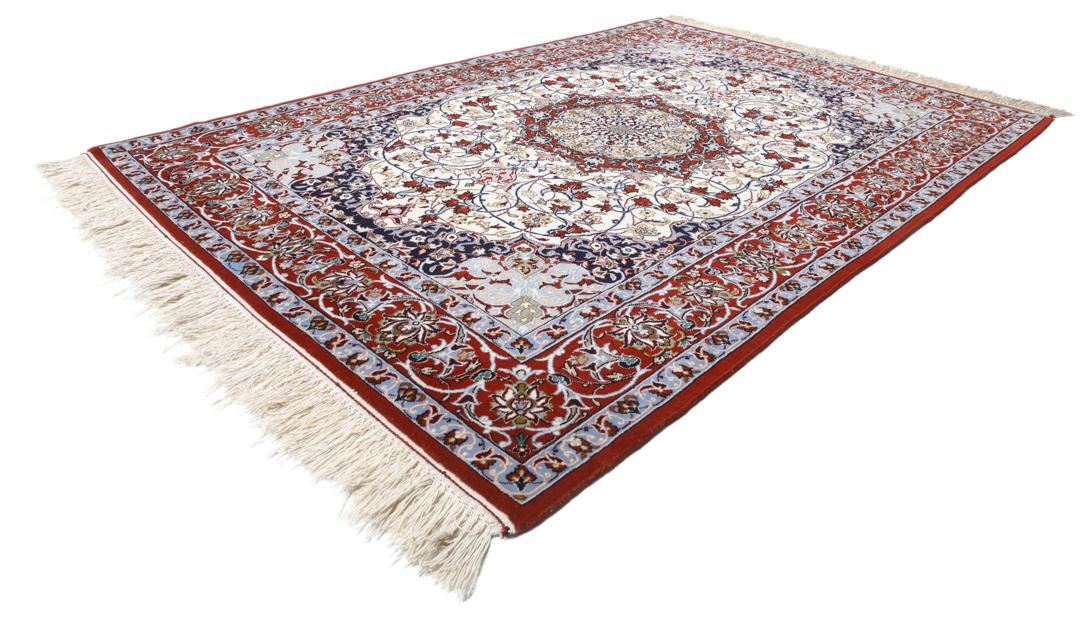
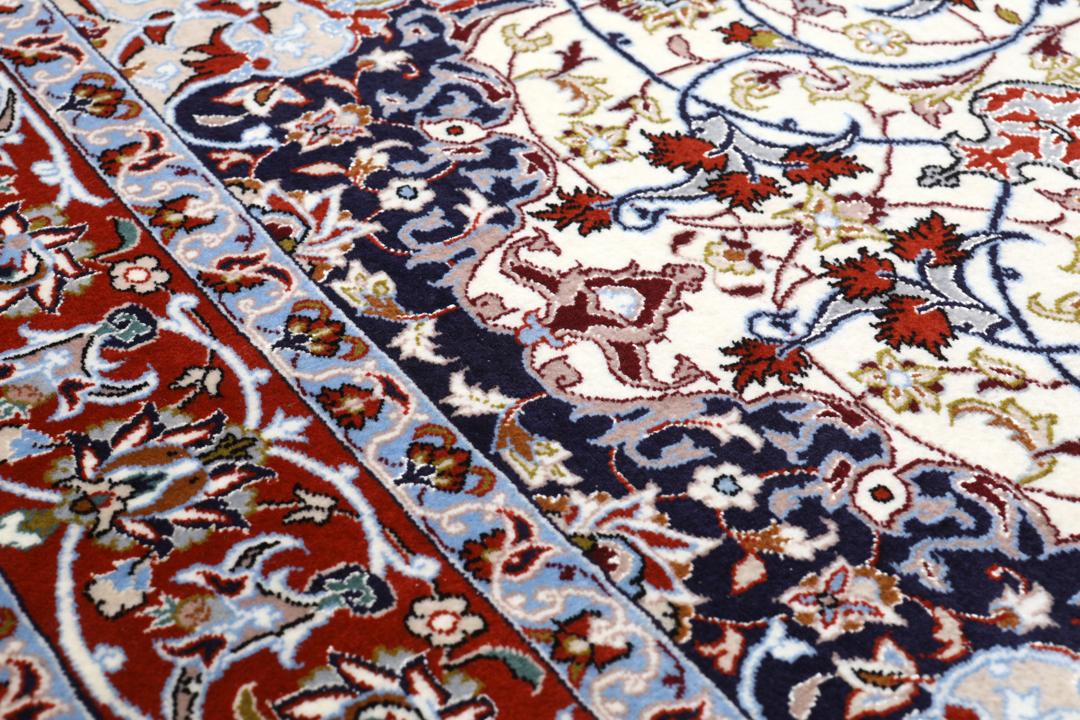
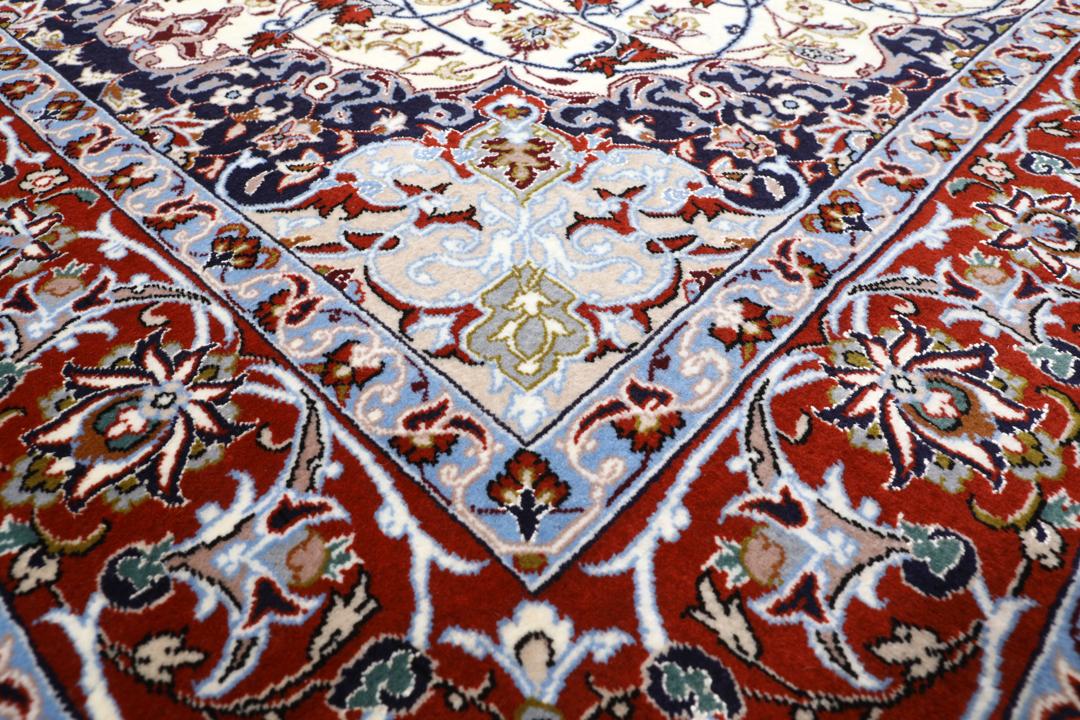
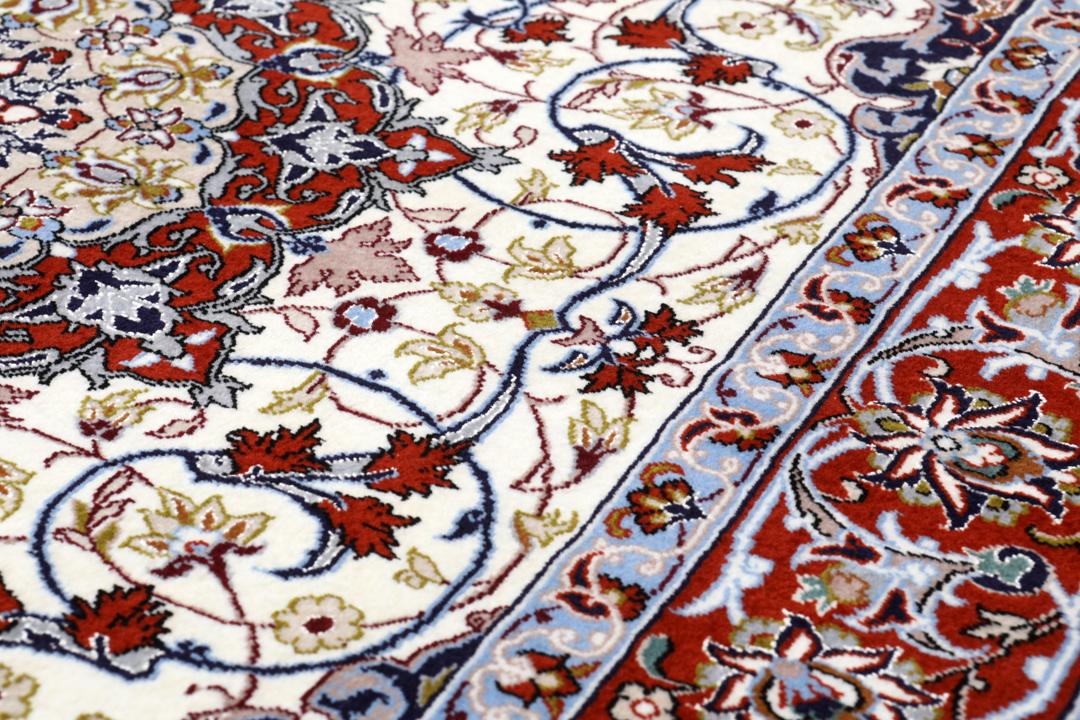
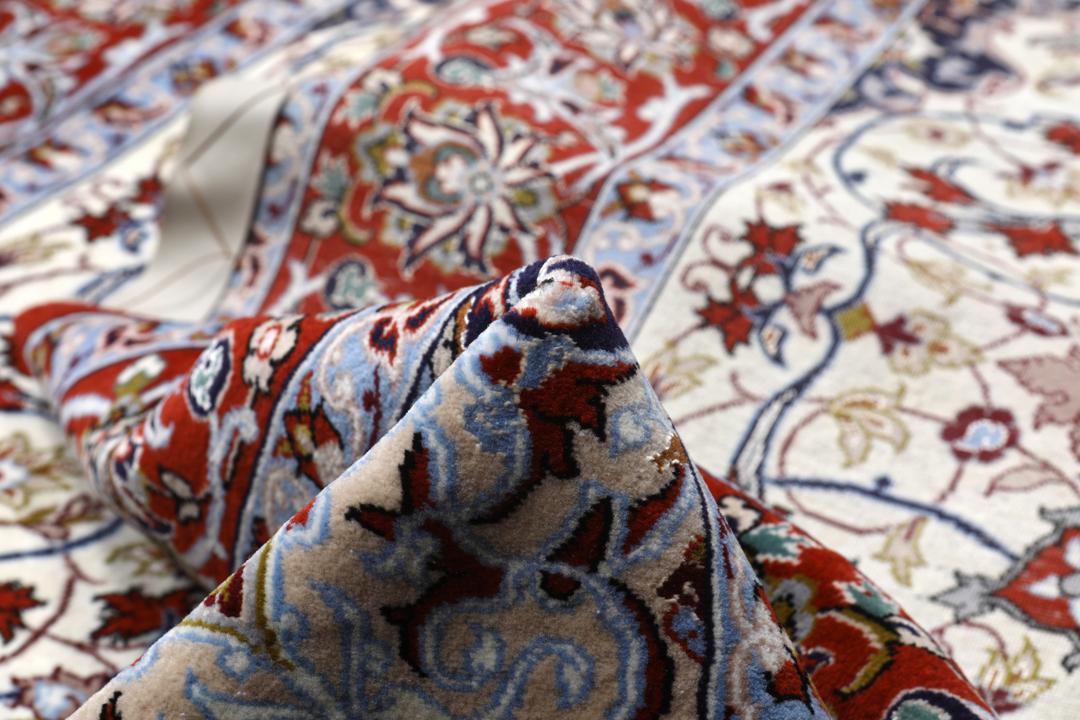
Isfahan rugs originate from the city of Isfahan in the Middle East, a historic centre of culture and art that has long been synonymous with the peak of rug-weaving excellence. This tradition emerged from a city known for its grand architecture and vibrant artistic heritage, where the weaving of carpets became an extension of the same refined aesthetic found in its famous tiled mosques and palaces.
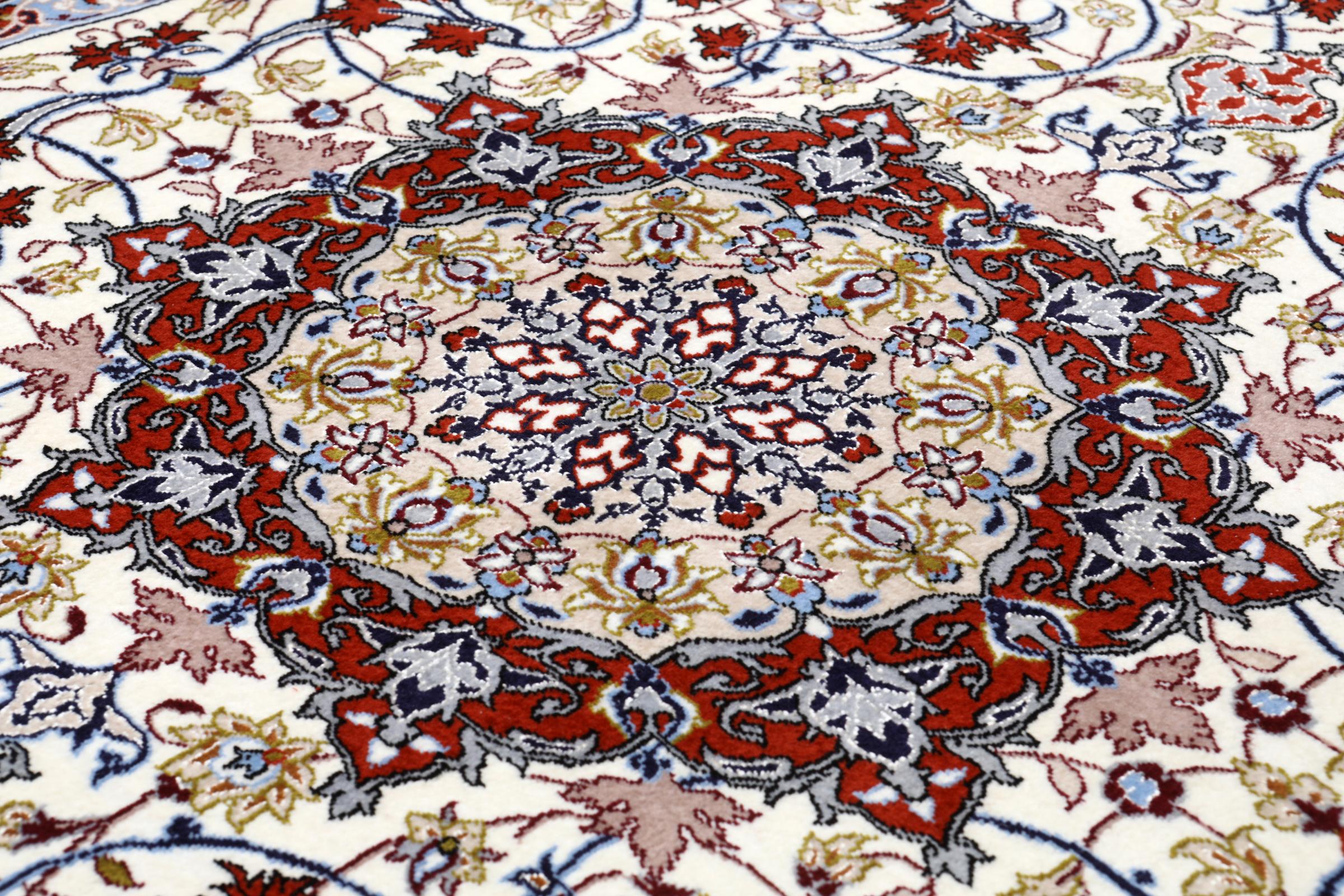
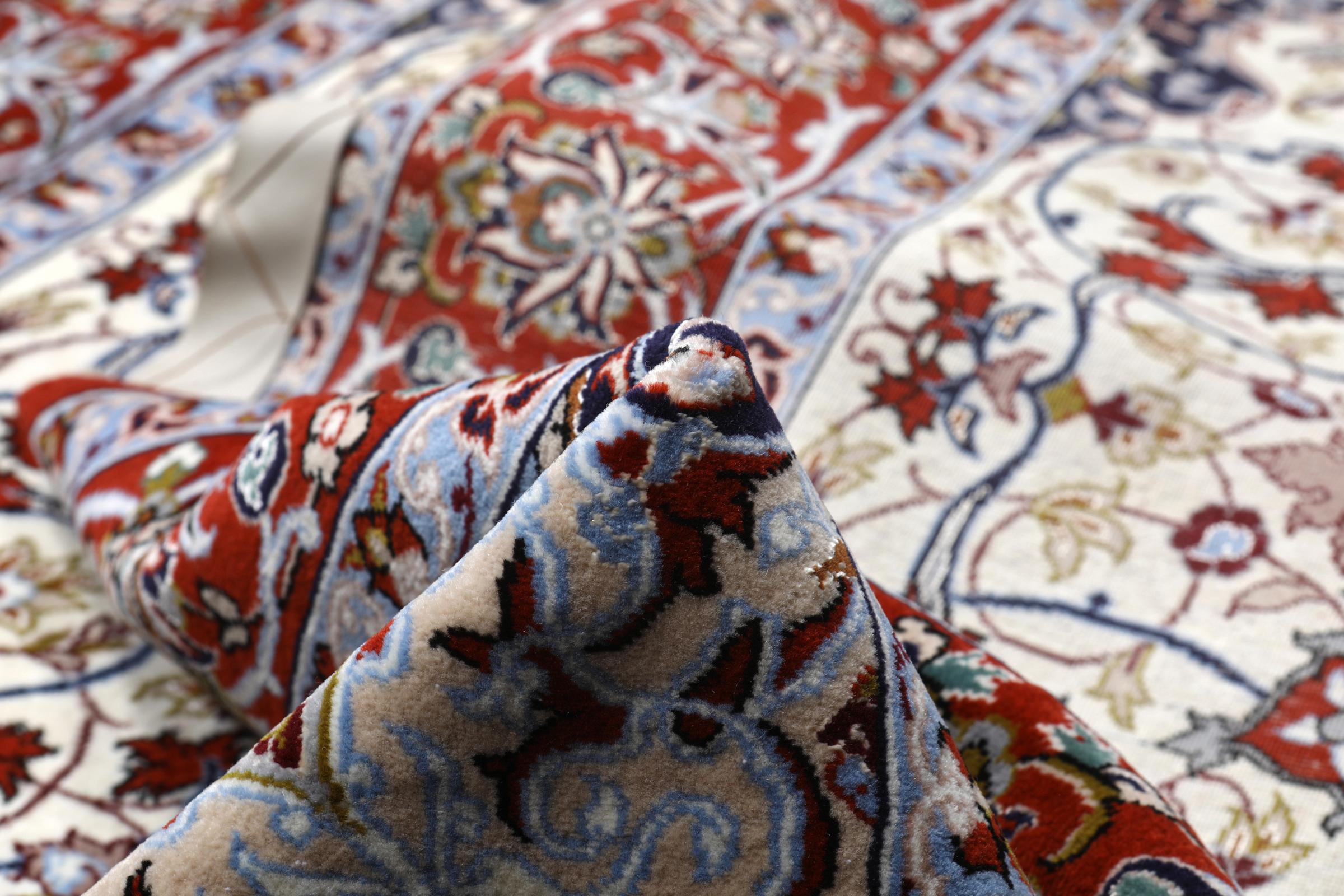
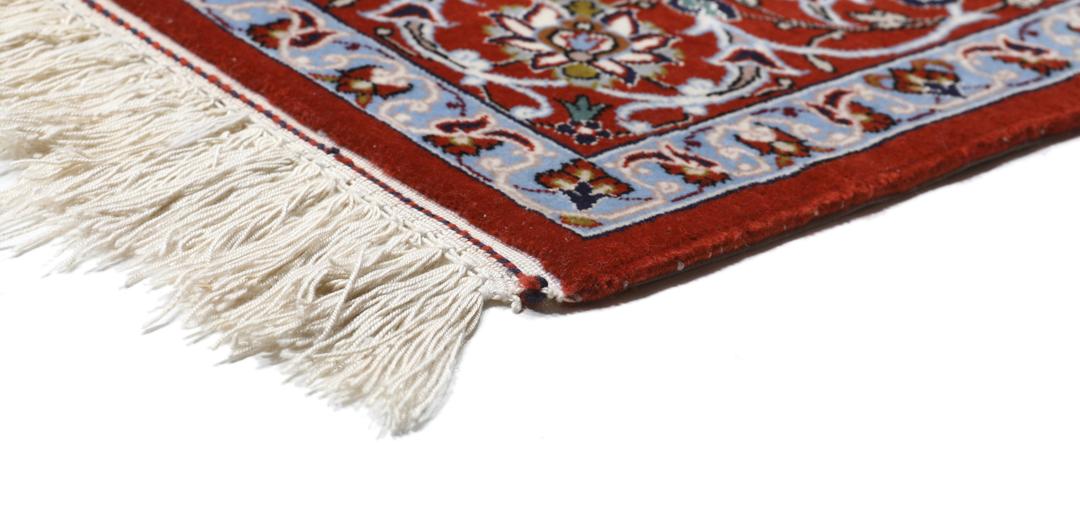
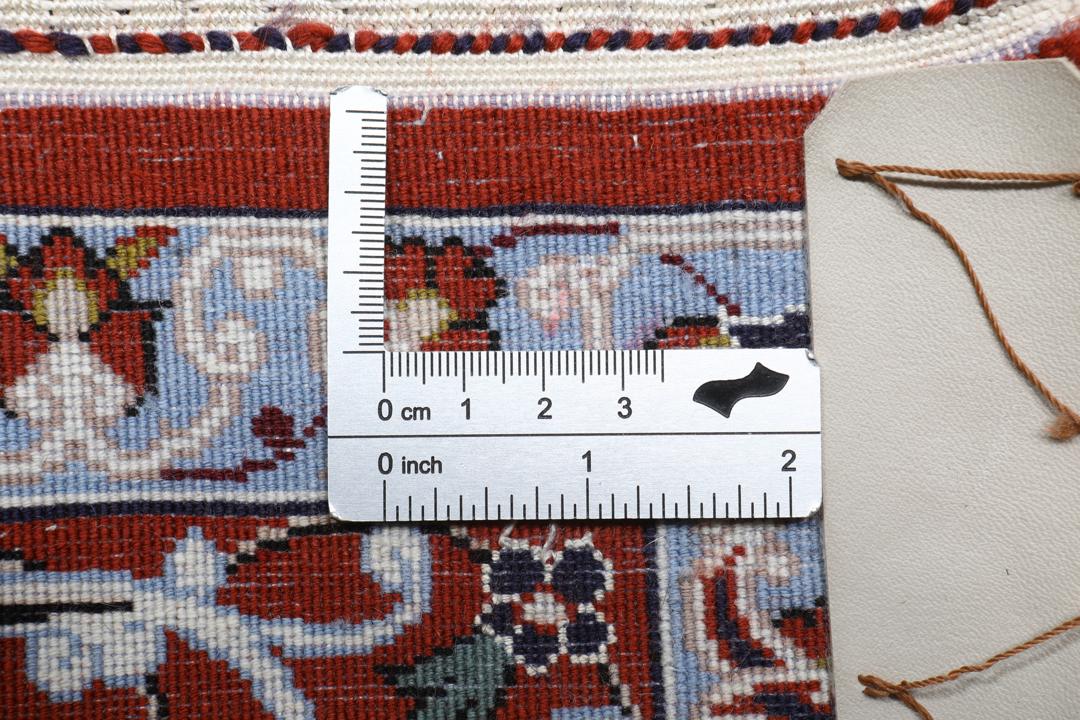
The term 'Silkwarp' refers to the use of silk in the foundation of the rug, a hallmark of superior craftsmanship. By using silk, the weavers create a thinner, stronger base that allows for a much higher knot density and a more delicate, flexible handle. This technical choice is what enables the characteristic complexity and fine-lined detail that distinguish Isfahan rugs from those of other regions.
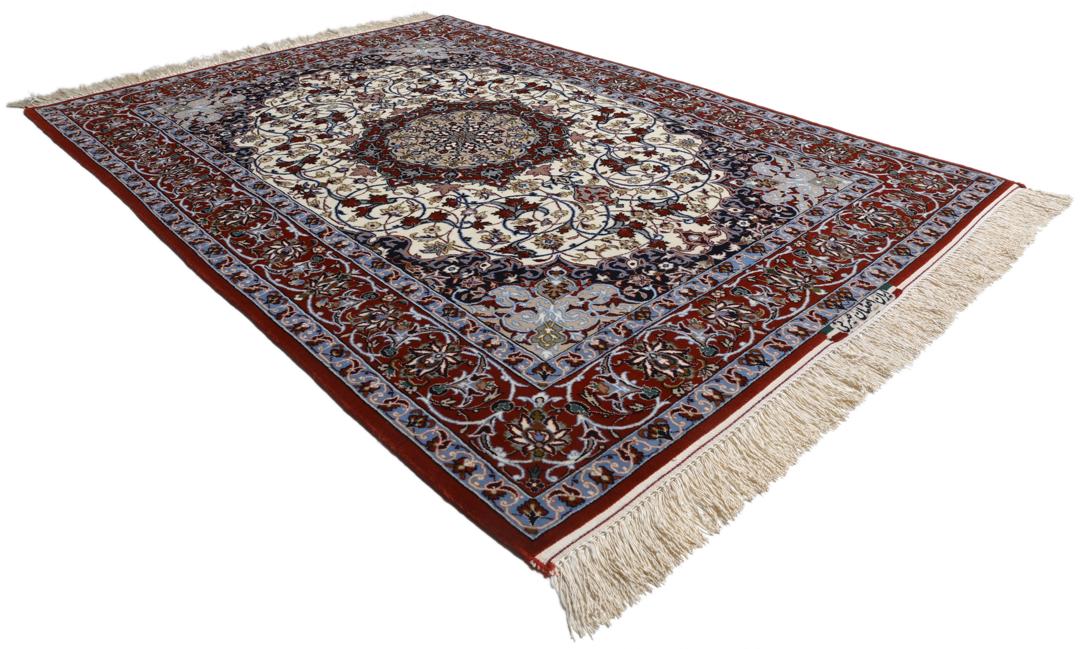
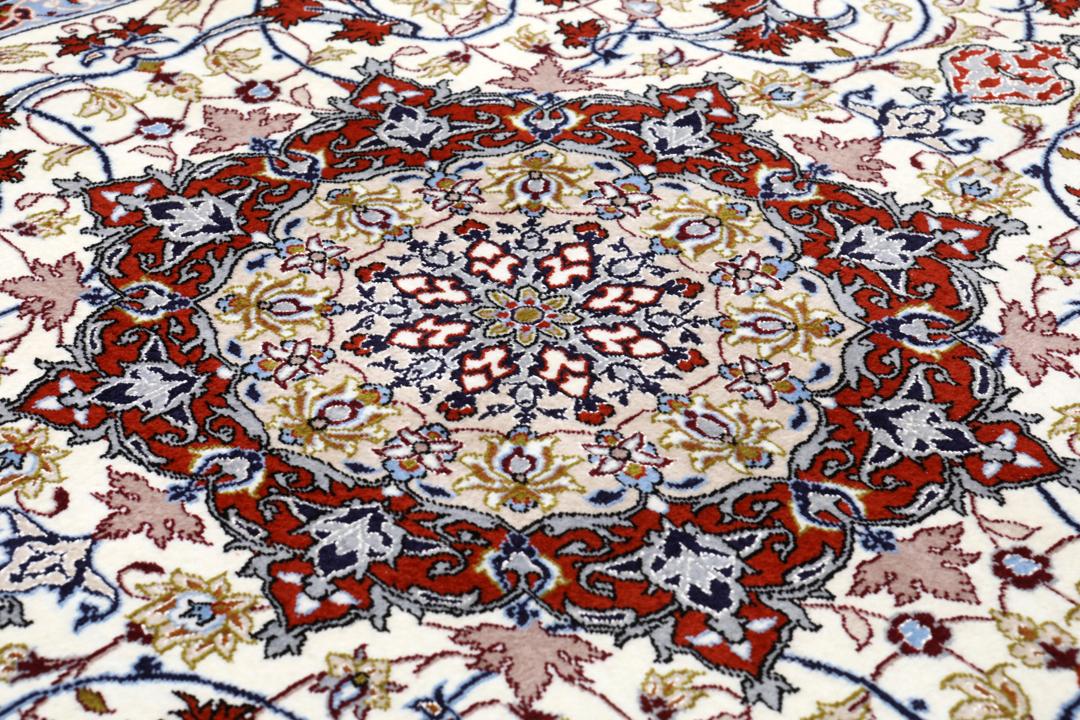
Design-wise, these rugs are celebrated for their sophisticated 'Shah Abbas' patterns, which typically feature intricate floral scrolls, palmettes, and central medallions. The signed nature of this piece by the Intashari workshop adds a layer of provenance, as such signatures denote the work of master designers who have dedicated their lives to perfecting the aesthetic language of this specific tradition.
Owning an Isfahan rug is a recognition of a tradition that has been refined over centuries, valued globally by collectors for its elegance and technical perfection. It is a piece that carries the weight of a long history, serving as a bridge between the ancient artisanal techniques of the Middle East and the contemporary home.