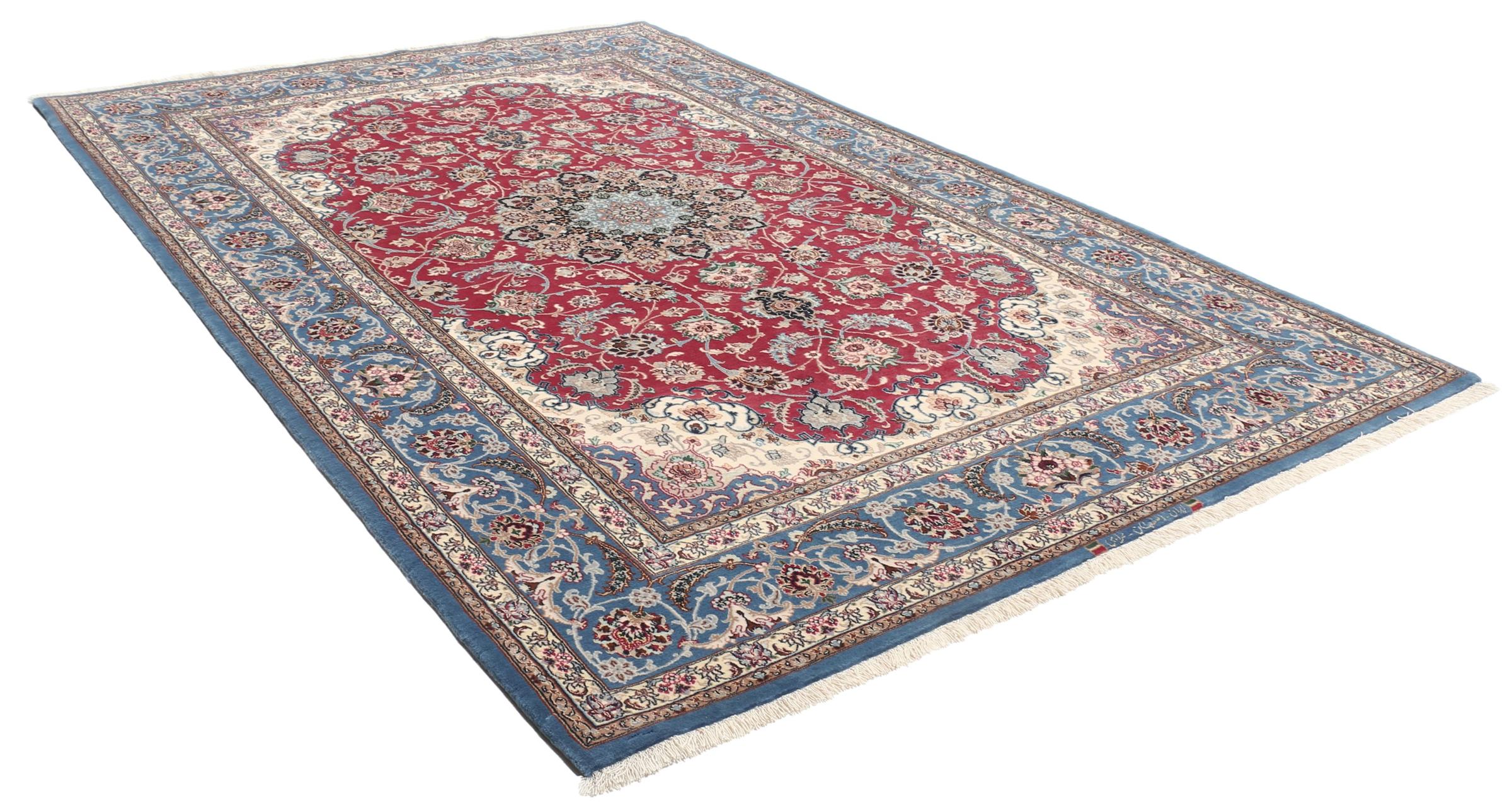
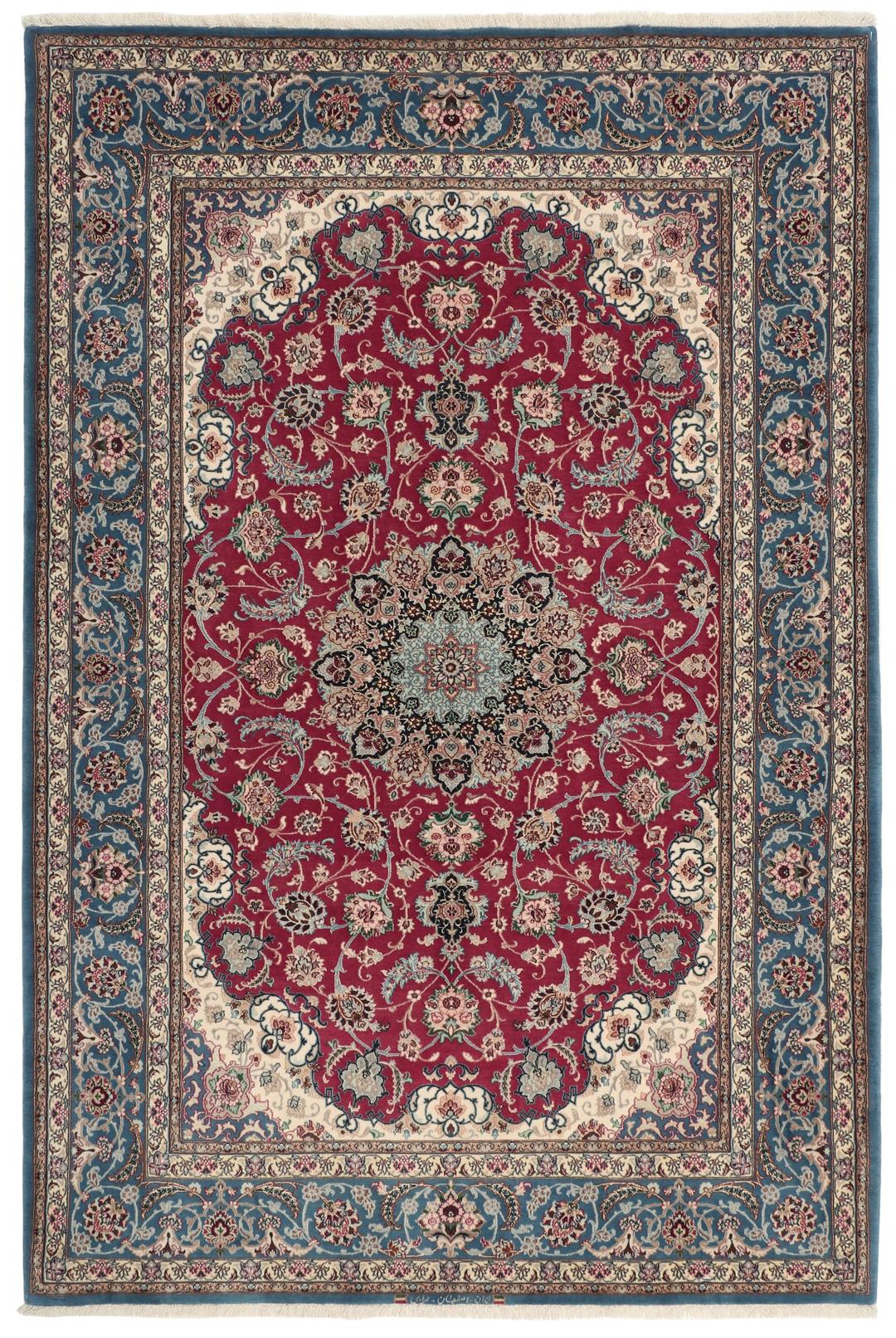
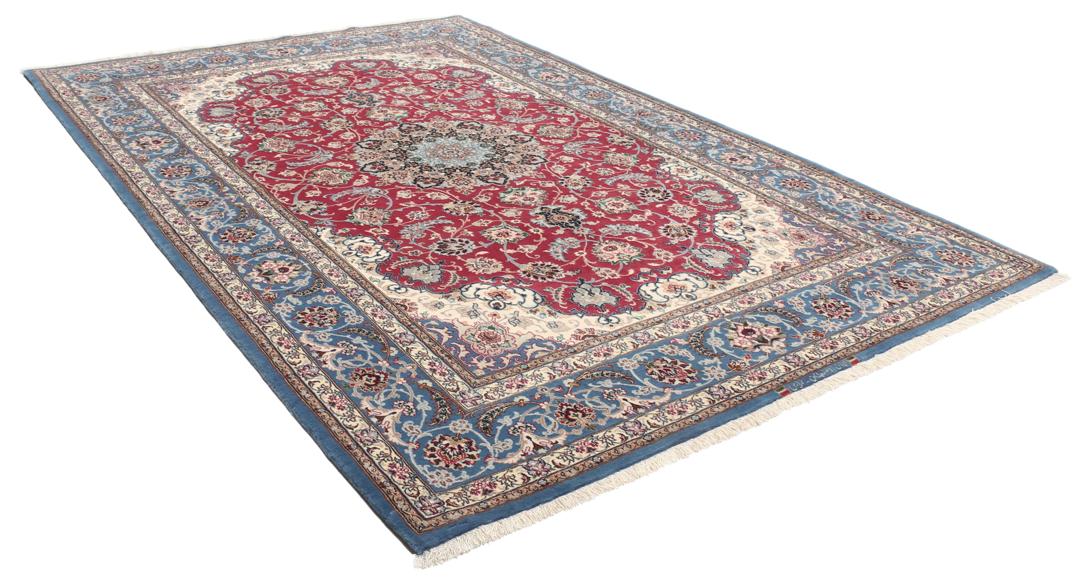
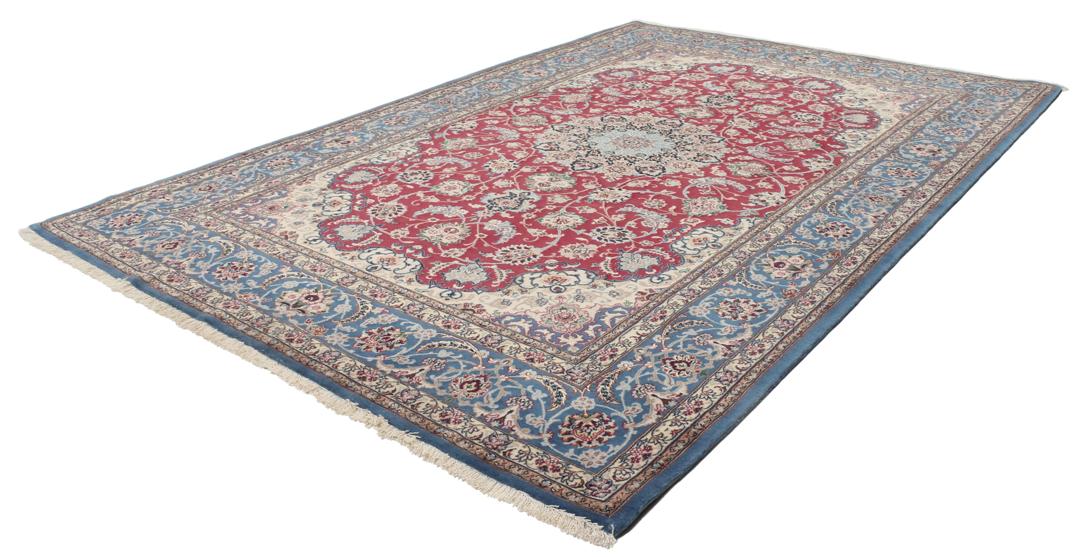
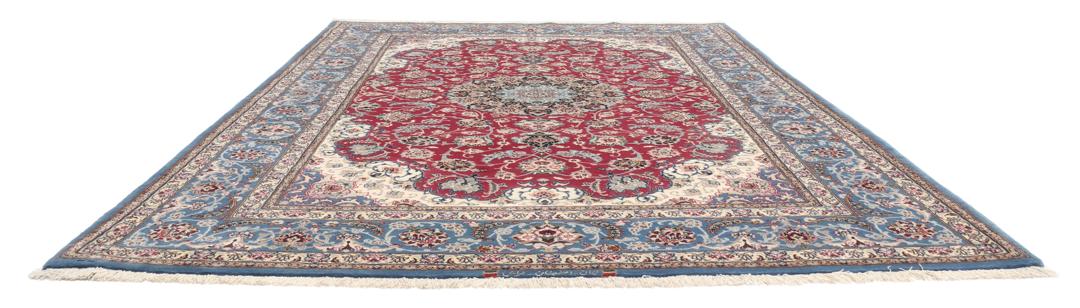
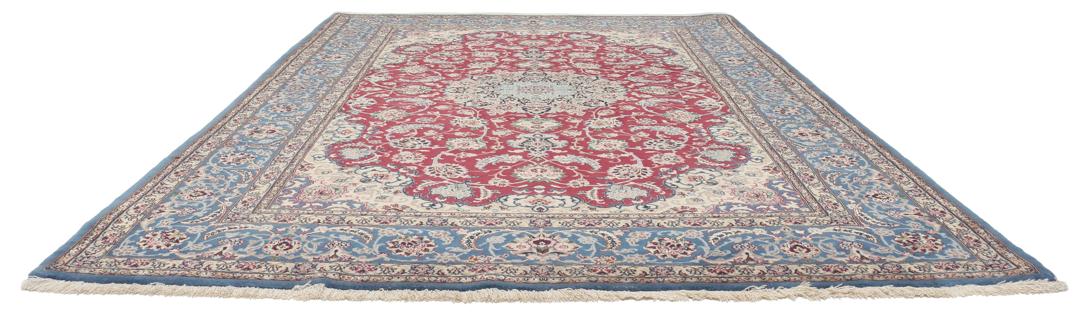
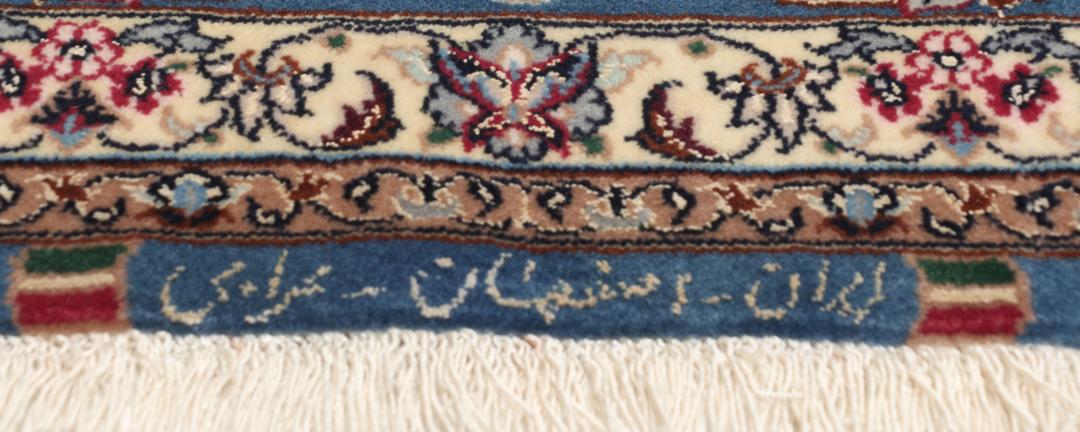
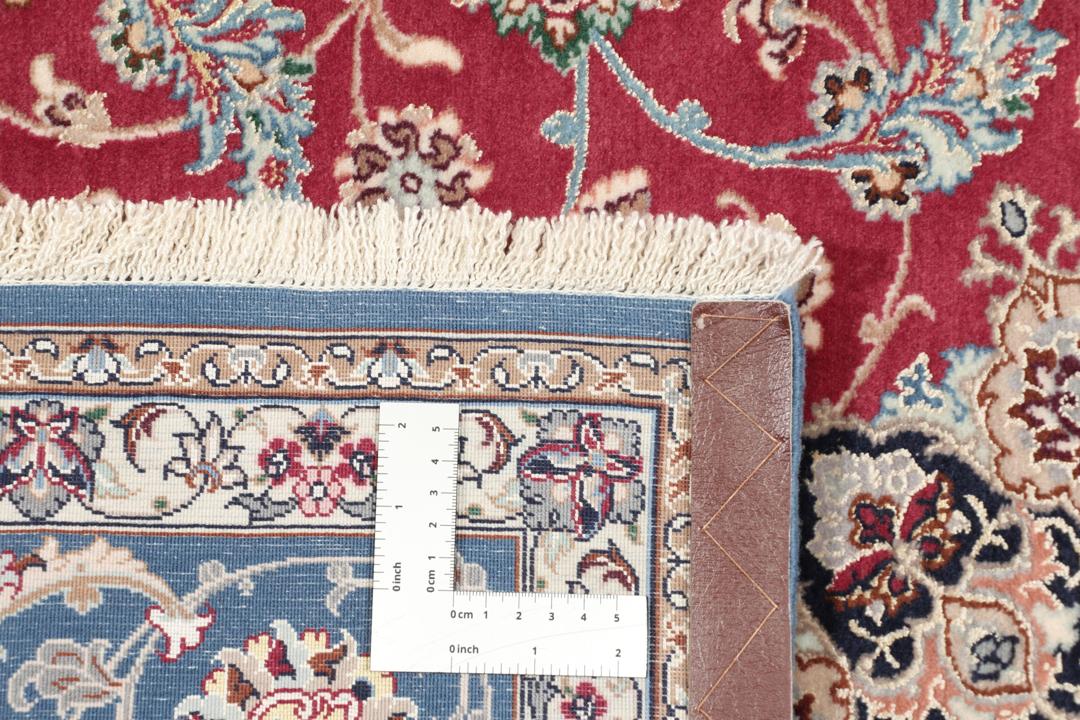
Isfahan rugs are celebrated as some of the most sophisticated examples of Middle Eastern weaving. Originating from the historic city of Isfahan, these rugs have long been associated with the imperial courts and the patronage of royalty, which pushed weavers to achieve levels of complexity and refinement that are still admired today.
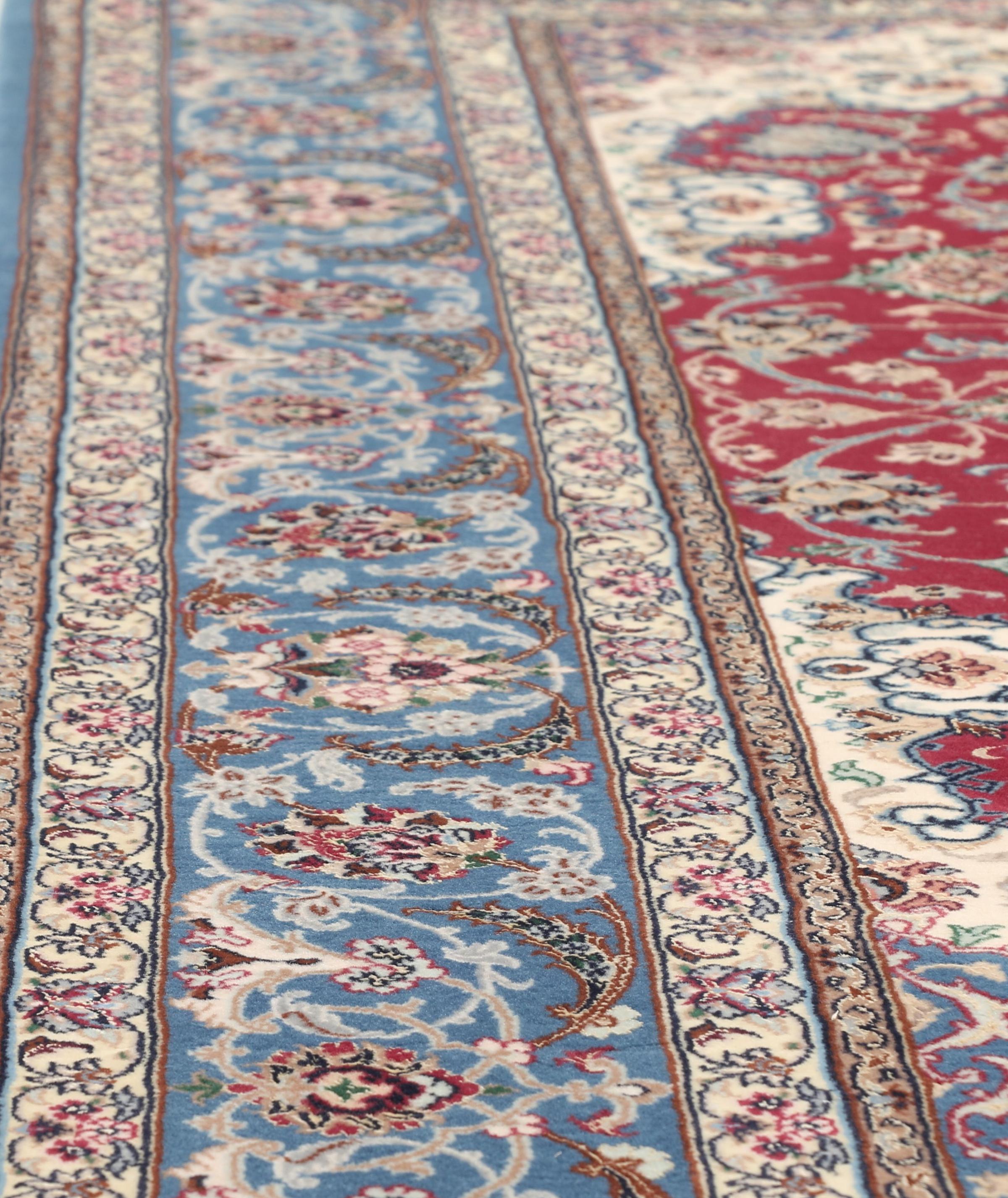
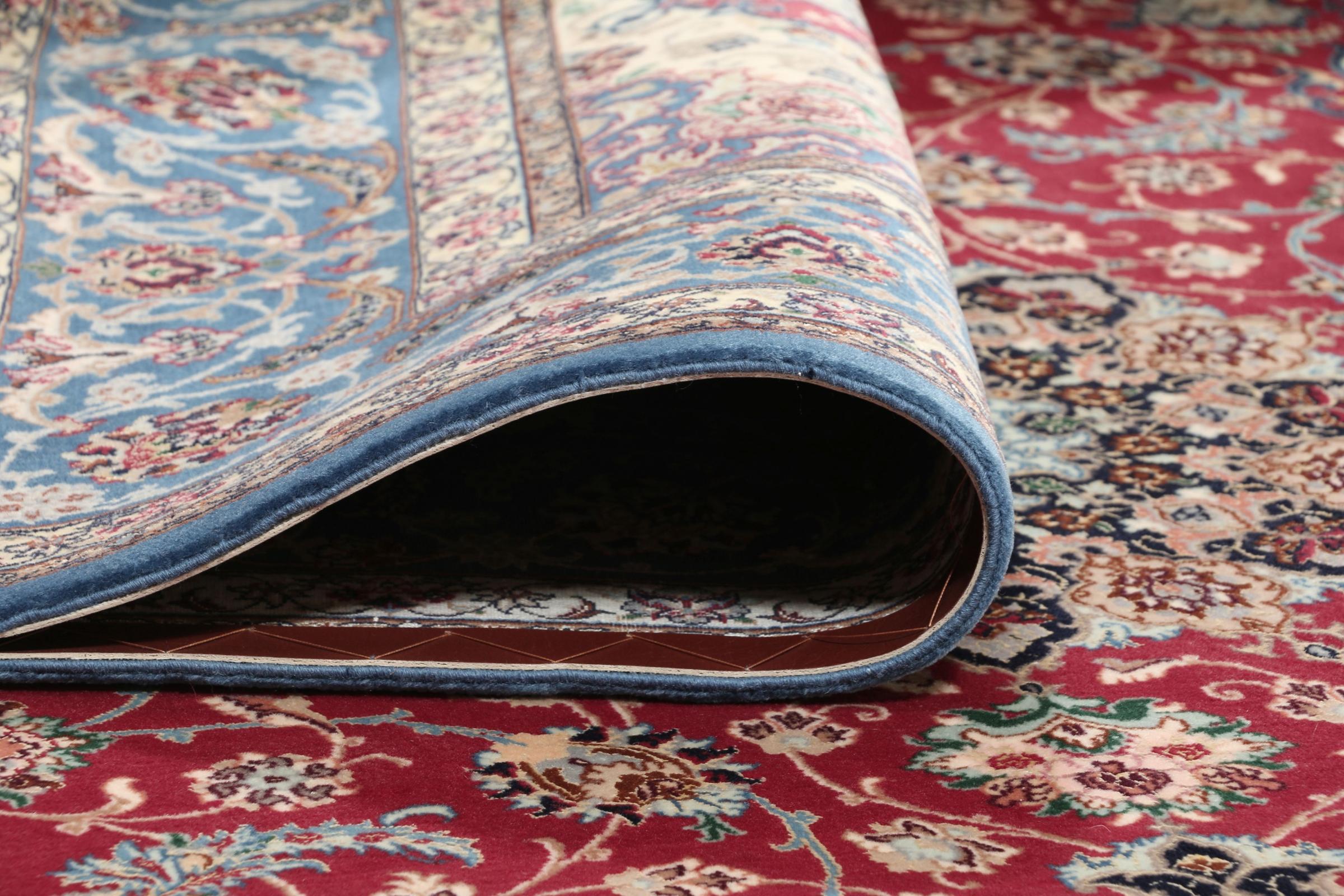
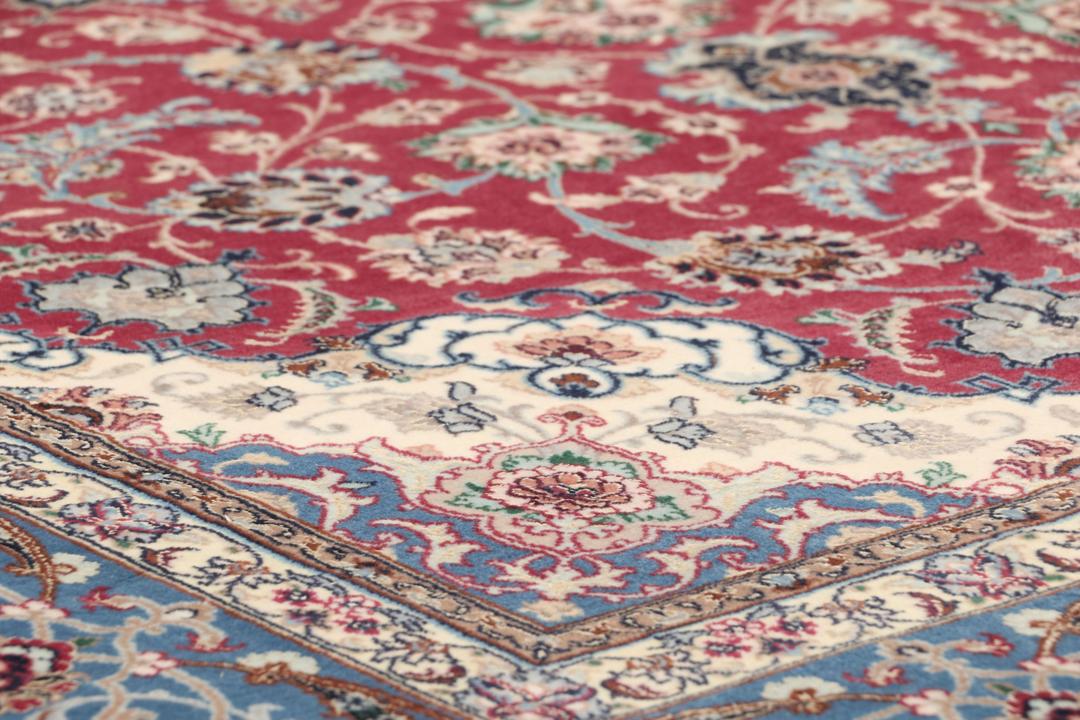
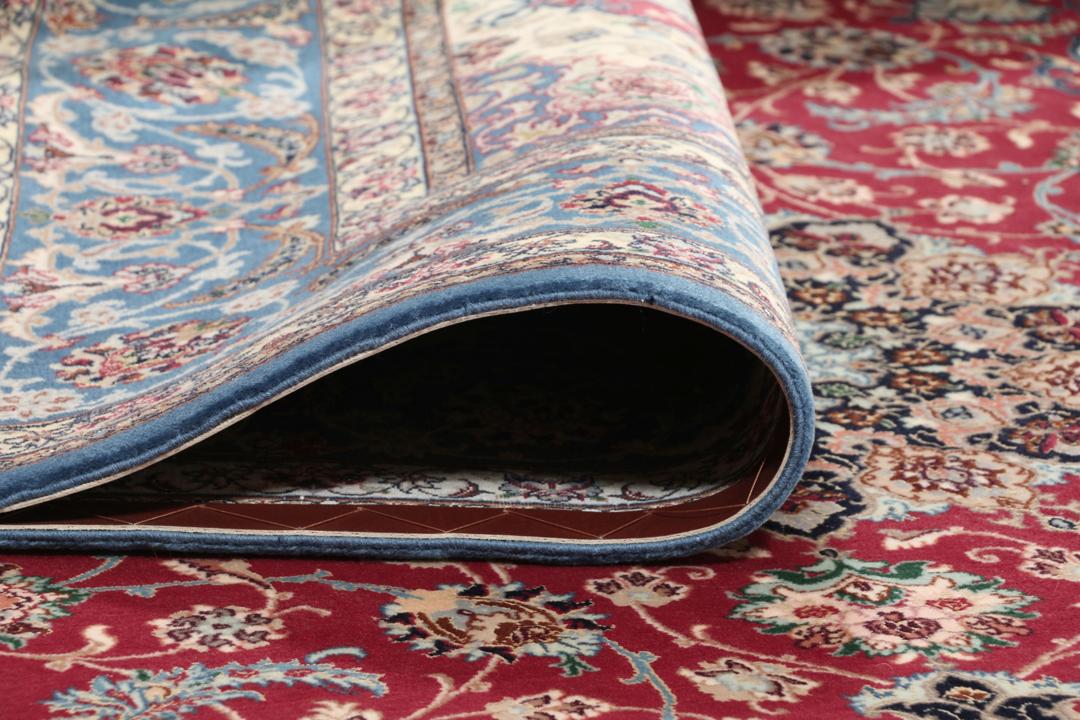
The quality of these rugs is often defined by the precision of their construction and the choice of materials. The use of a silk foundation, as found in this piece, allows for a much finer weave and thinner, more delicate knots, which in turn enables the creation of highly detailed, pictorial, and curvilinear designs that would be impossible on a coarser base.
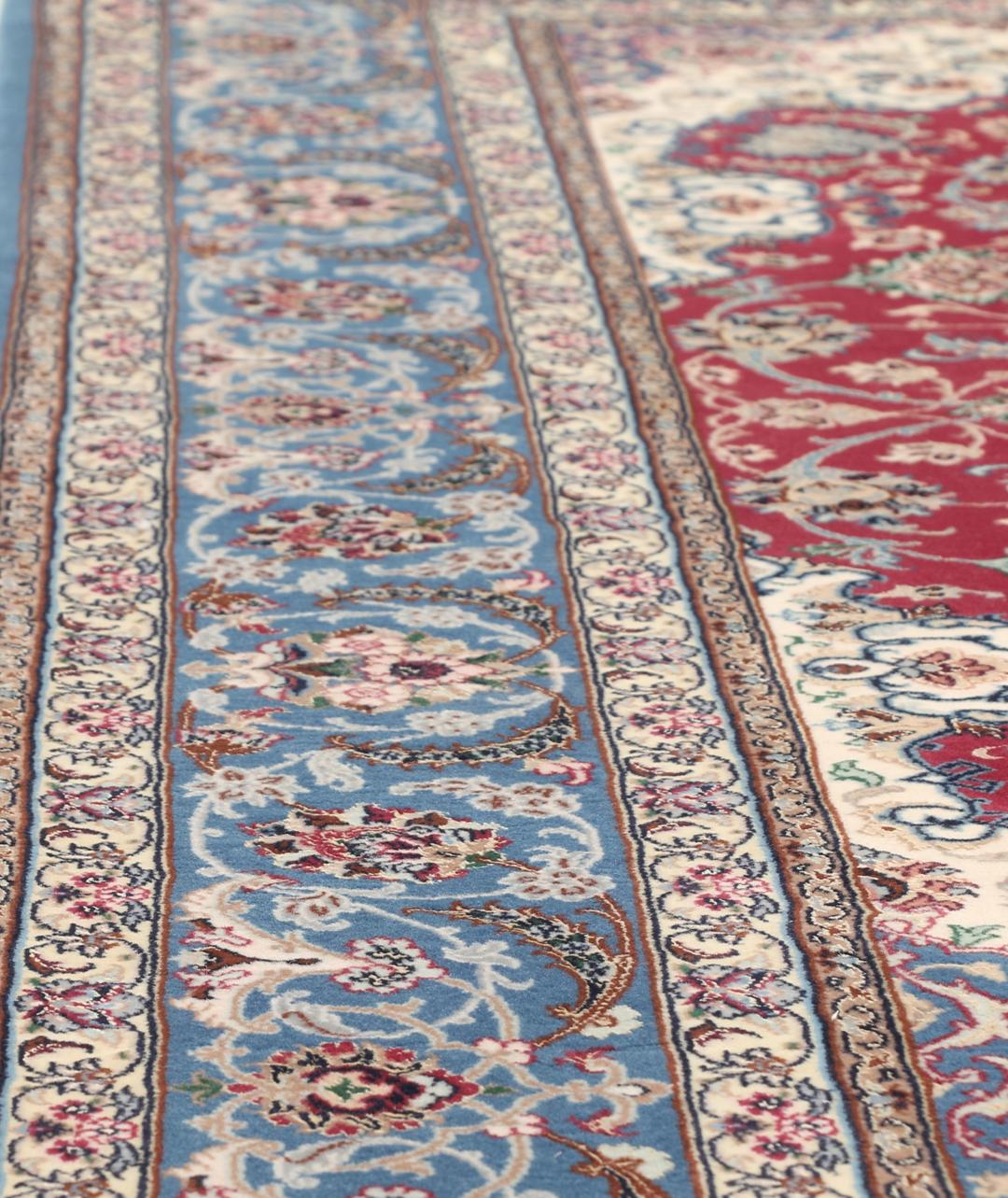
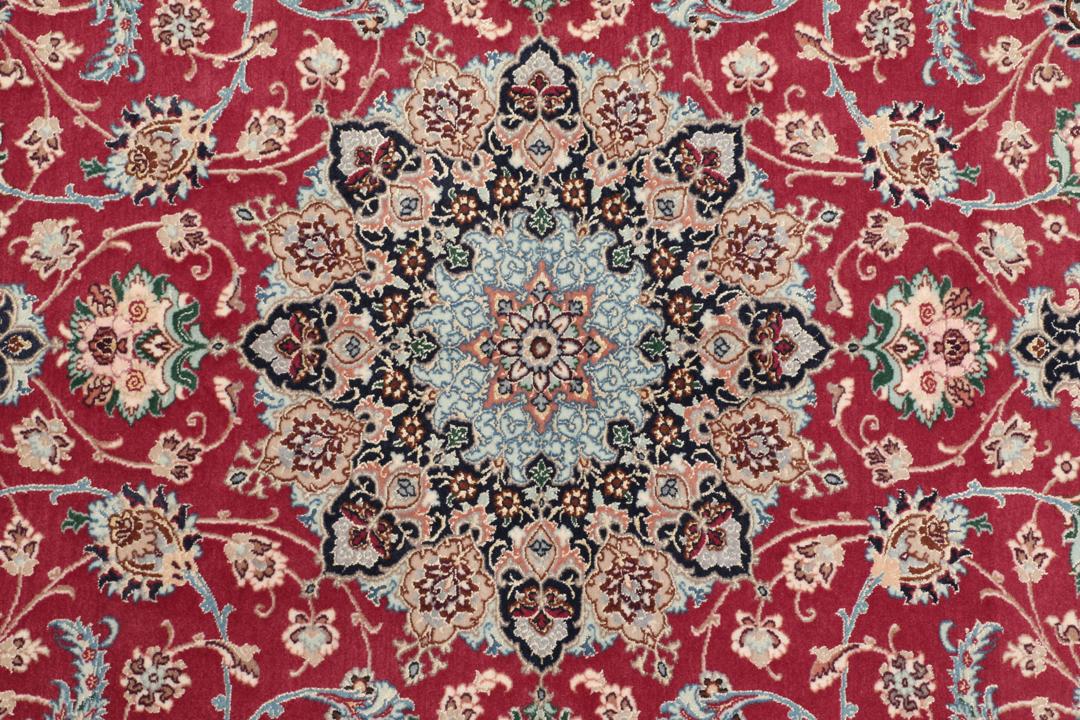
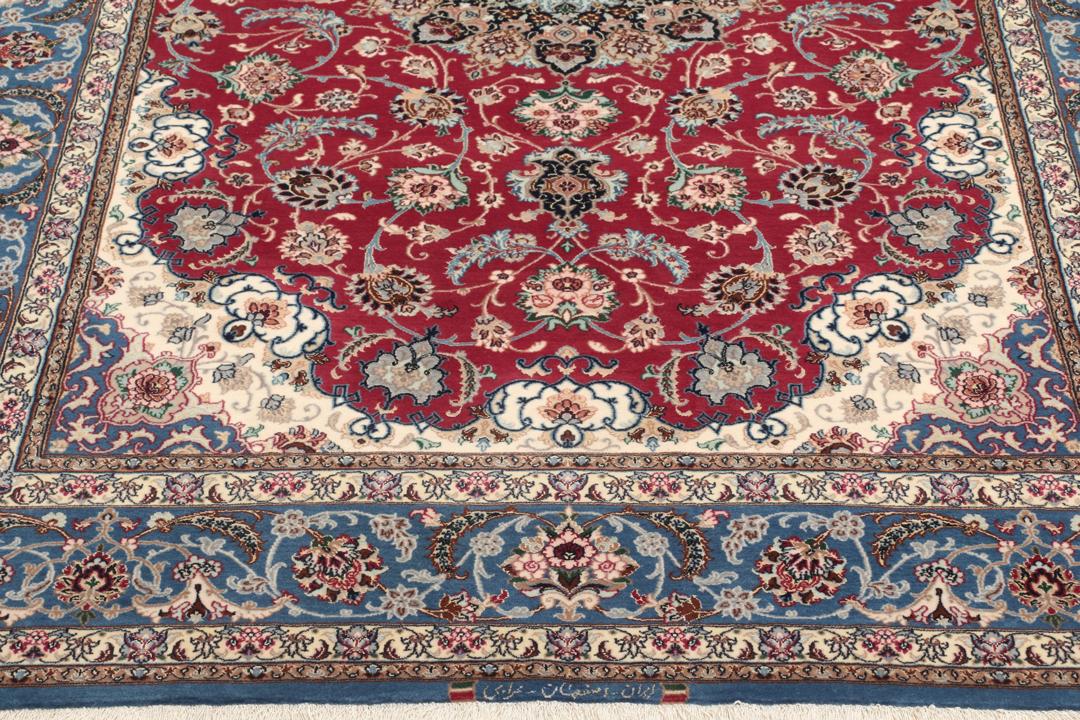
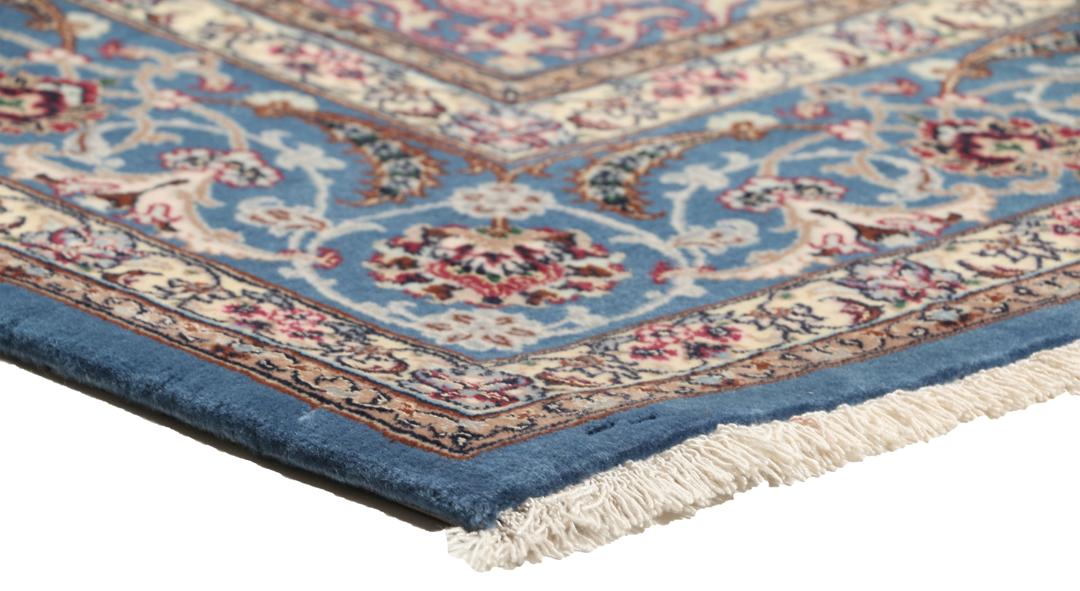
Signature design elements of an Isfahan often include a central medallion surrounded by dense, swirling floral motifs such as Shah Abbasi palmettes and intricate vine scrolls. The borders are typically multi-layered and formal, framing the field with a balanced, symmetrical elegance that reflects the classical artistic traditions of the region.
Owning an Isfahan rug is a way to connect with a long-standing heritage of aesthetic excellence. These rugs are highly valued by collectors and design enthusiasts alike, not only for their beauty but for the immense human effort and cultural history woven into every thread. They are considered lasting investments that maintain their cultural and visual significance over time.