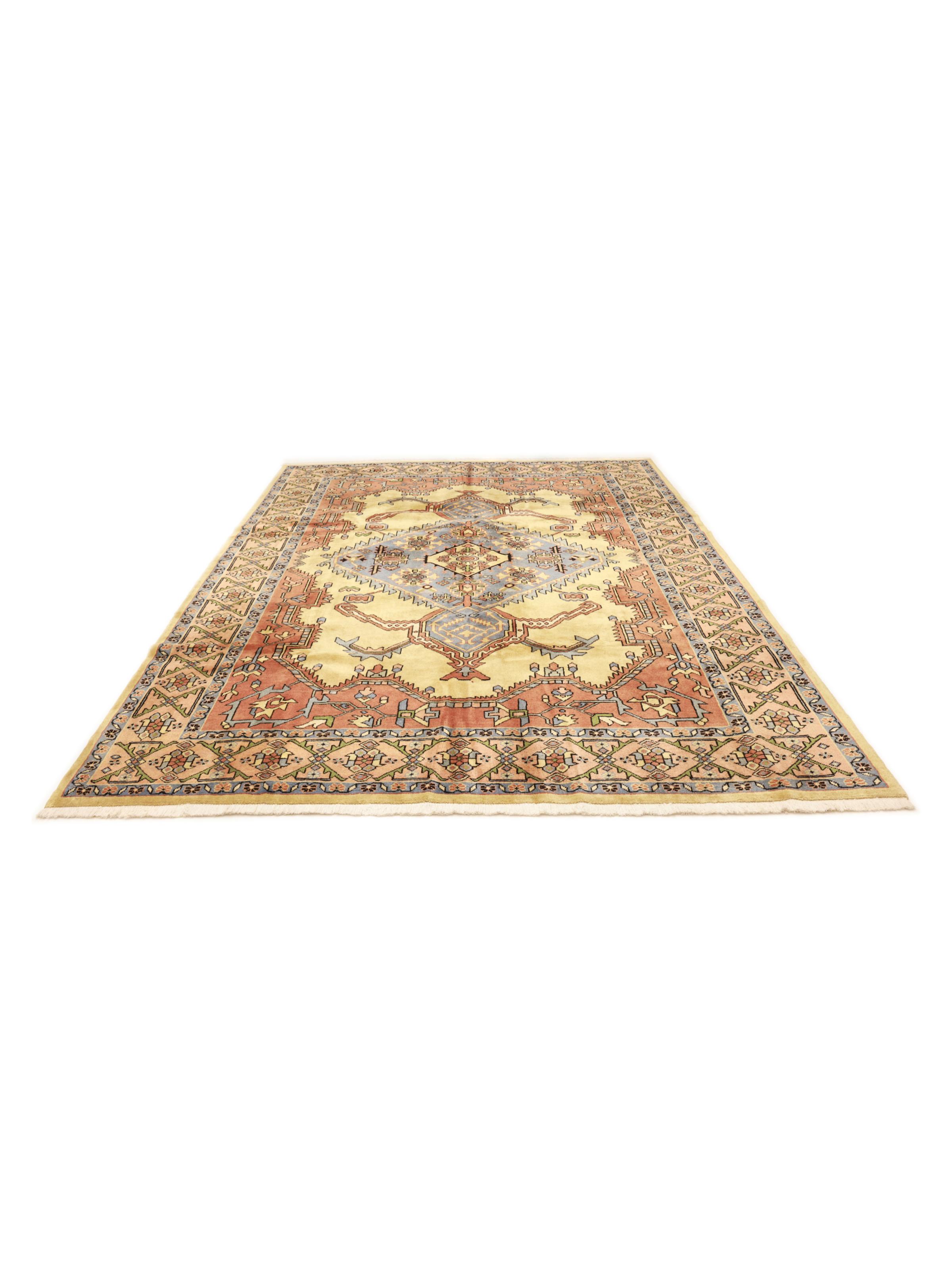
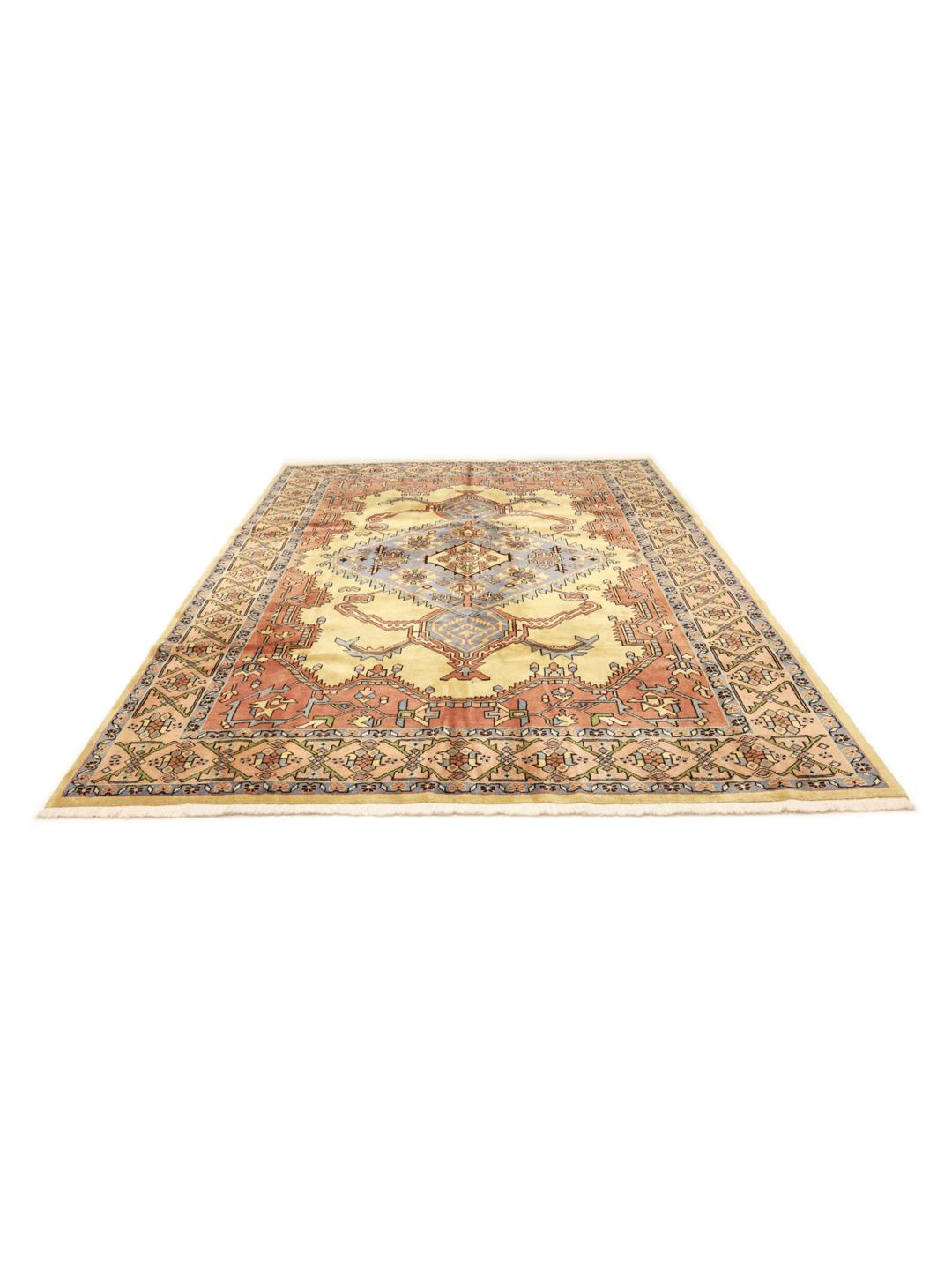
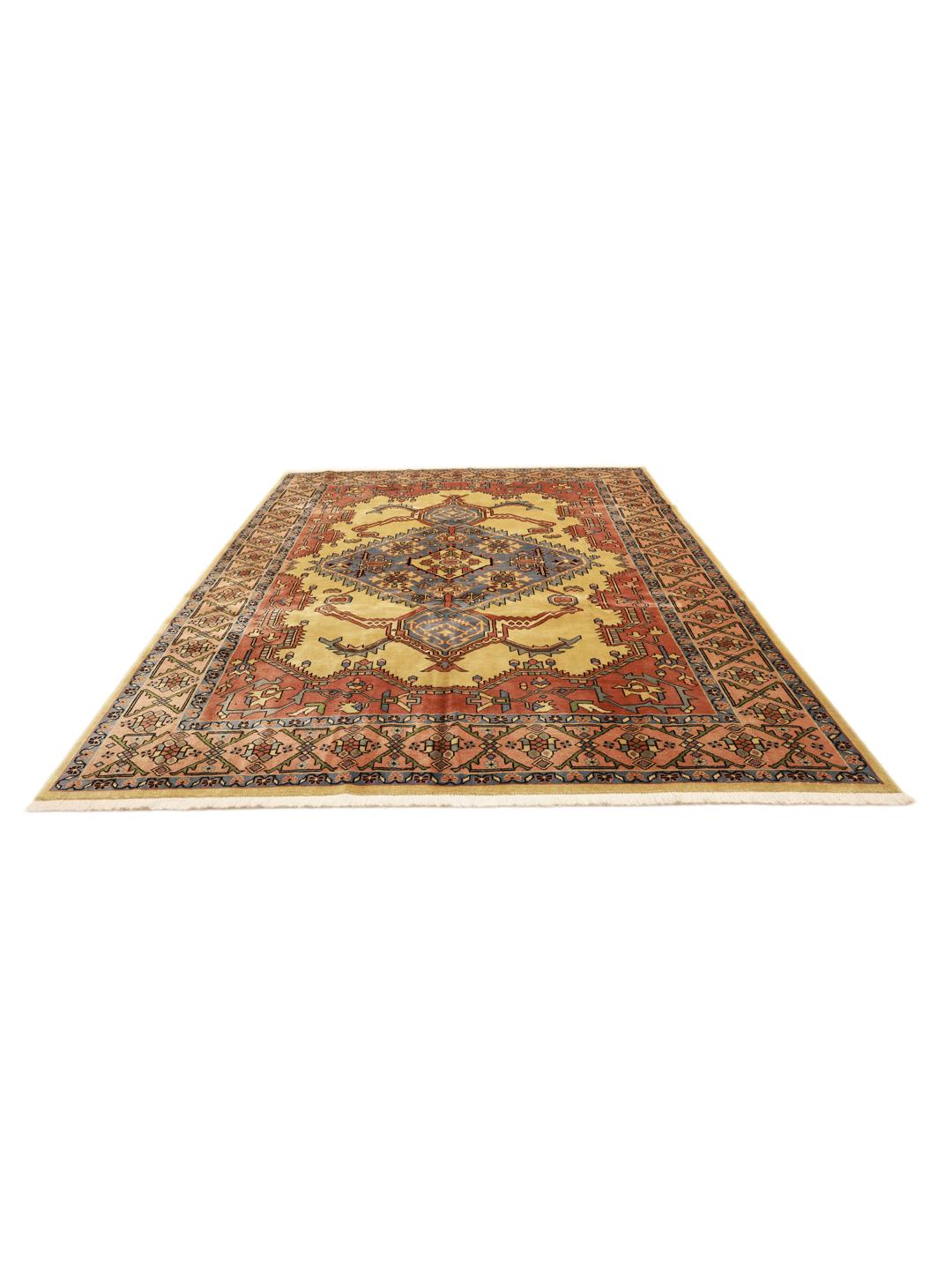
Heriz rugs originate from the rugged, mountainous regions of the Middle East, specifically from the area surrounding the village of Heriz. This region is famous for its unique approach to rug-making, which has evolved over centuries to reflect the harsh, beautiful landscape and the resilient spirit of the people who live there. These rugs are often considered the most durable of all floor coverings from this part of the world.
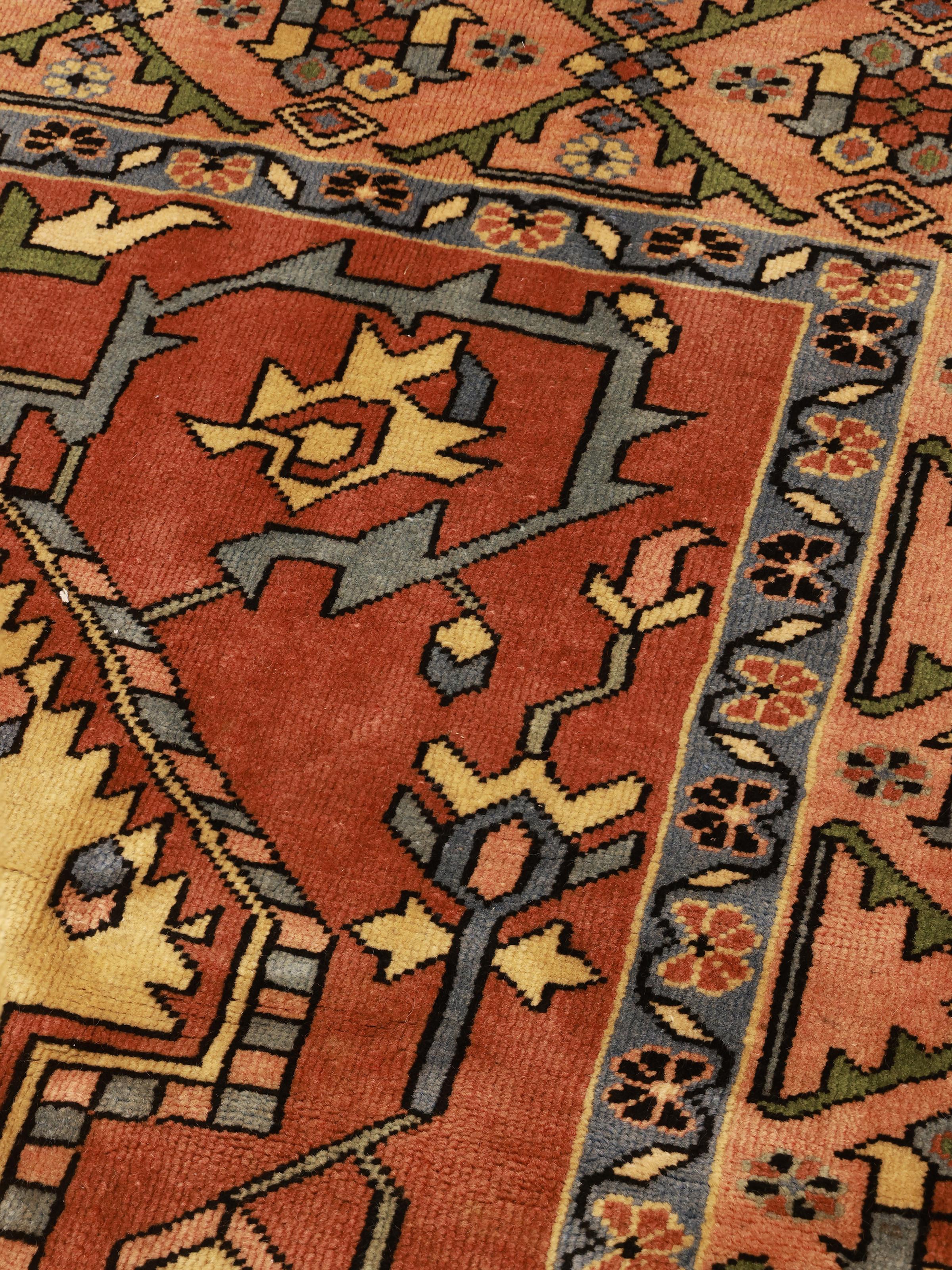
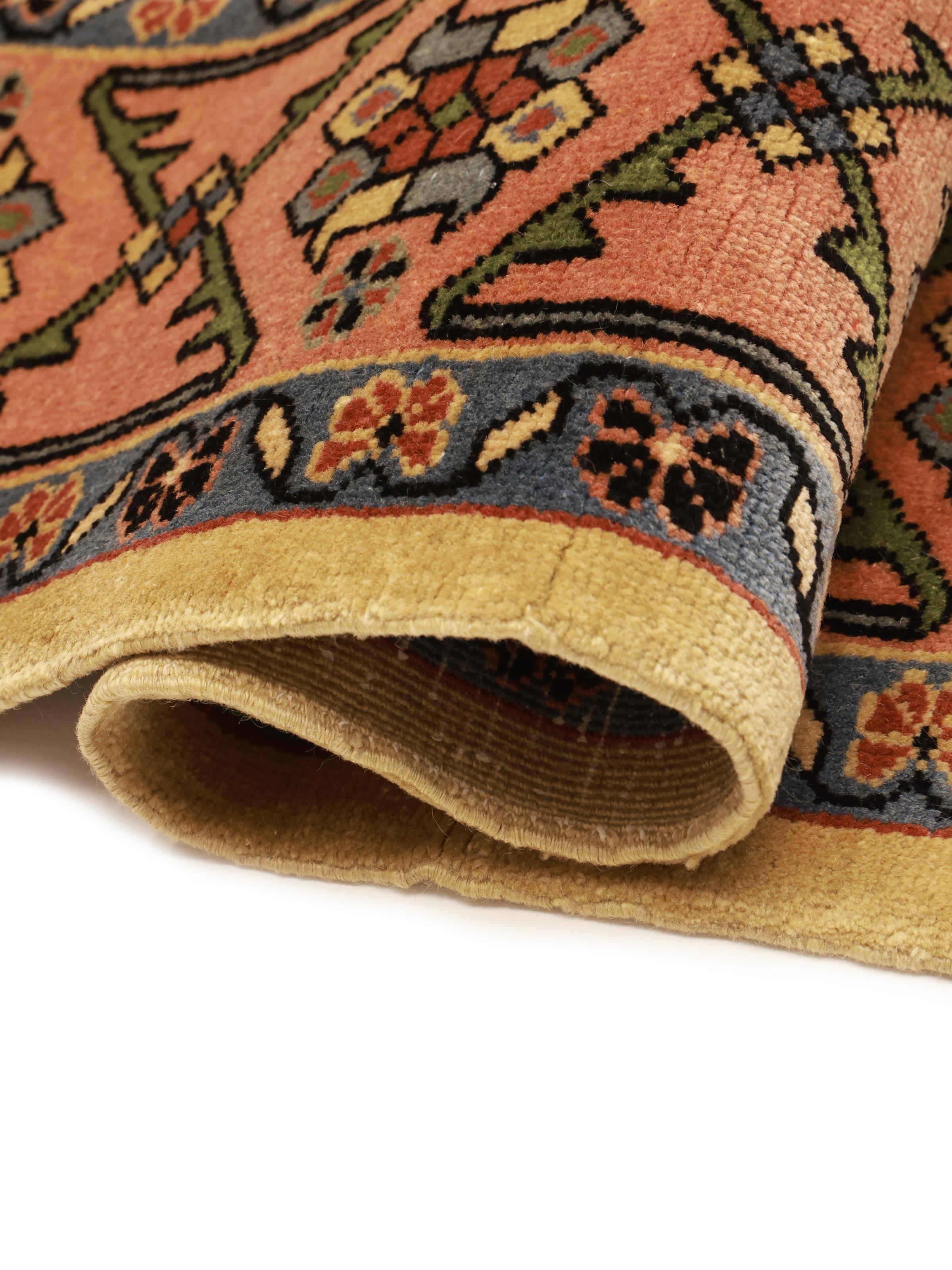
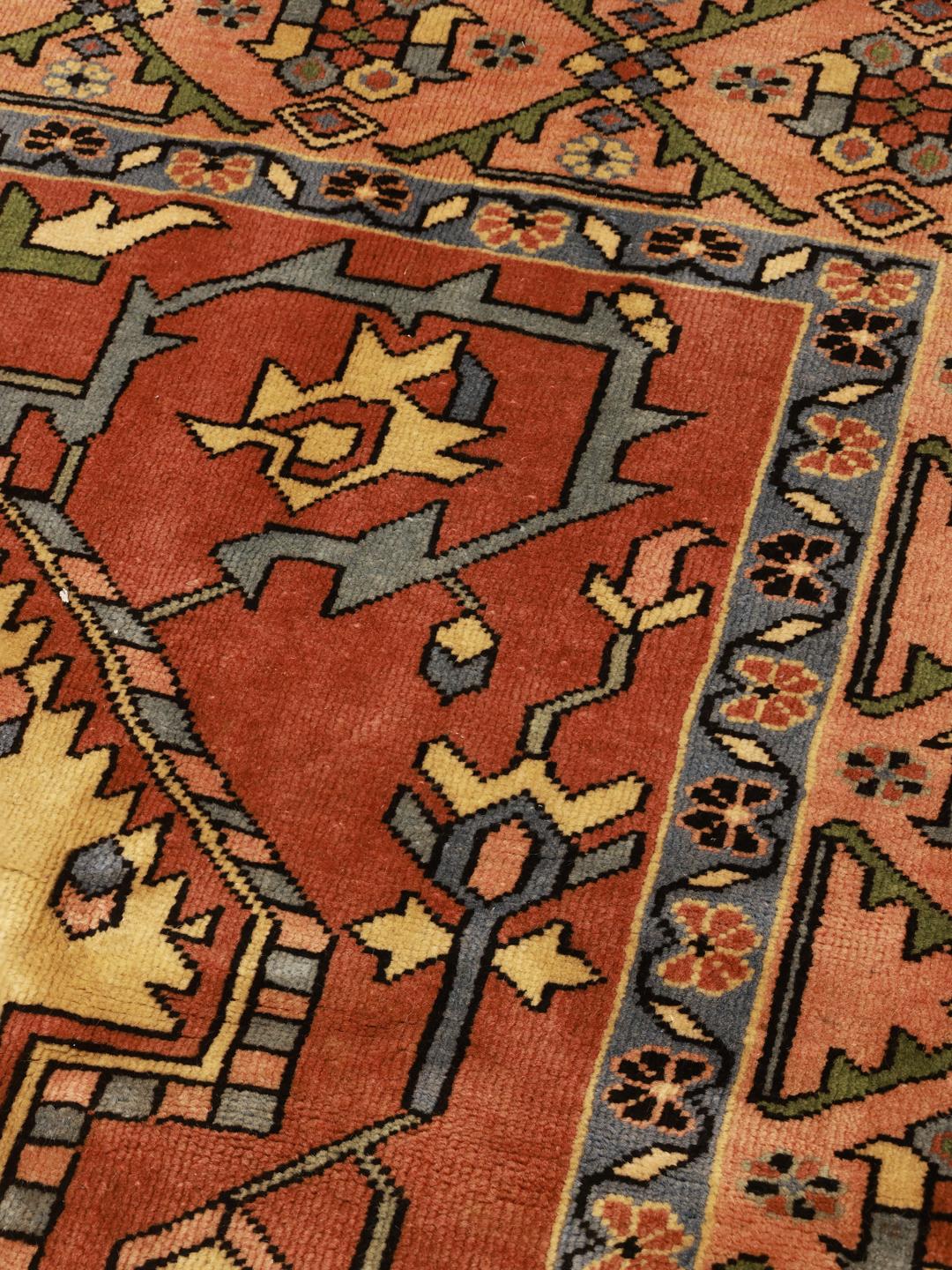
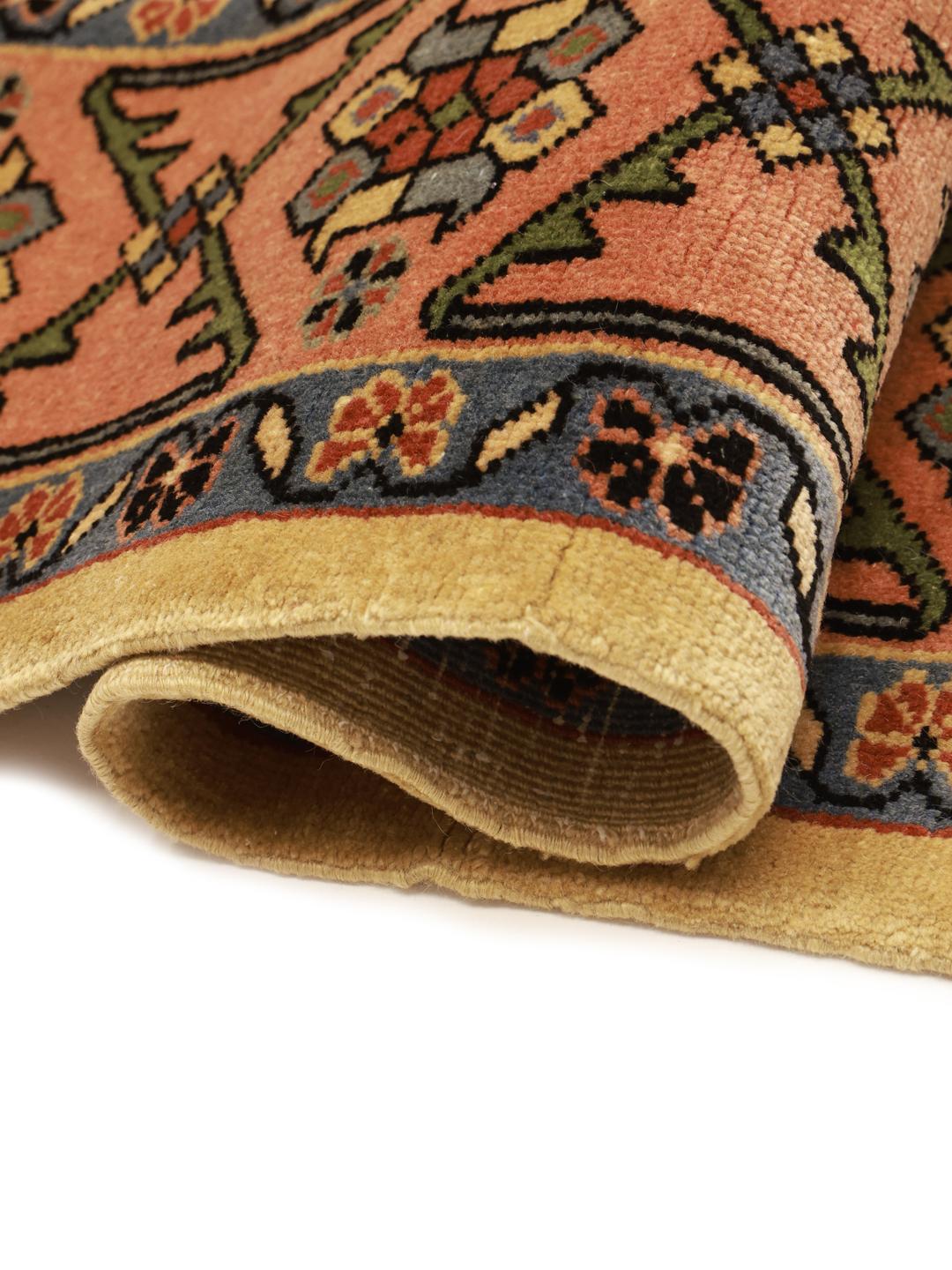
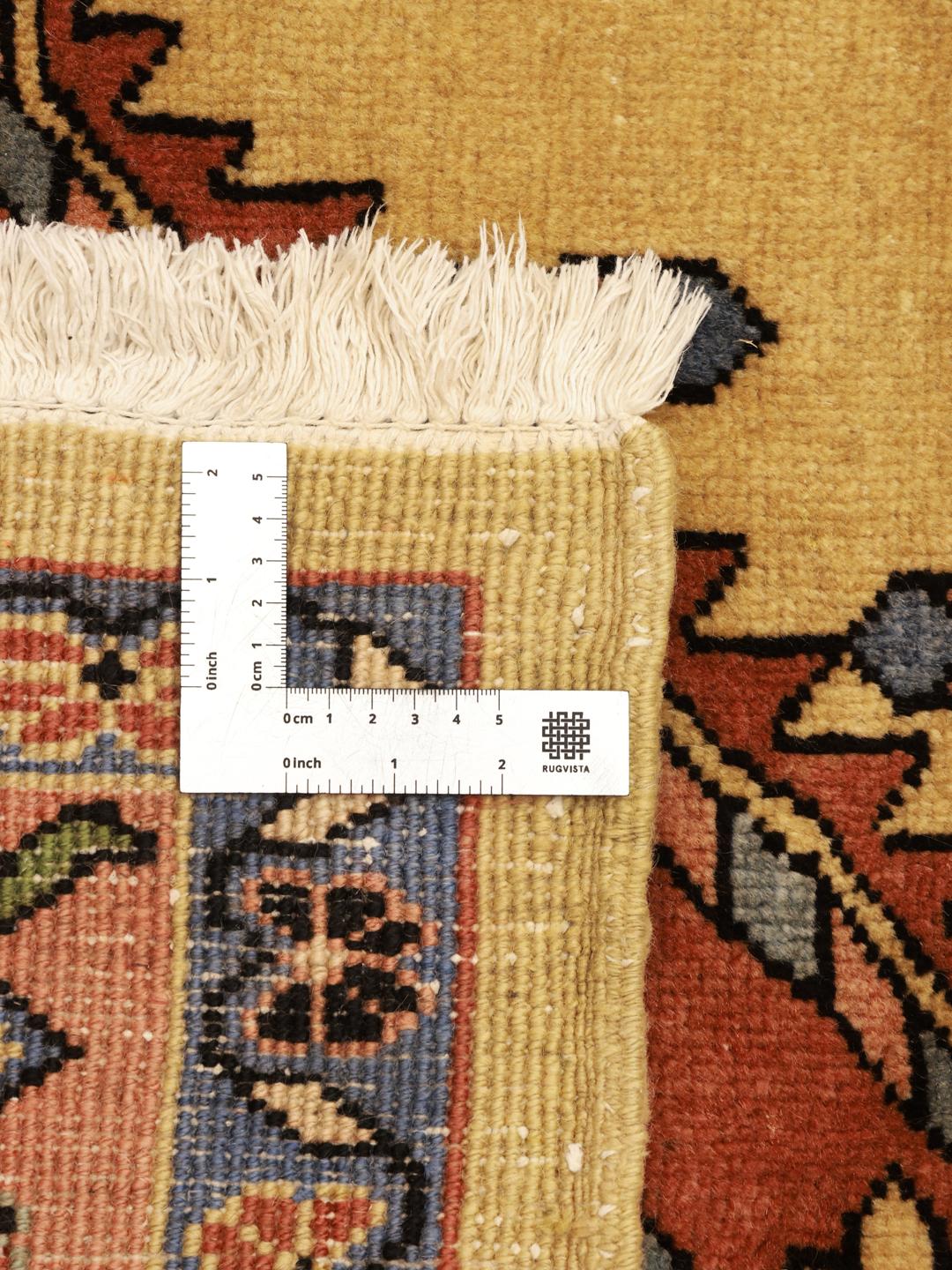
The quality of these rugs is defined by their robust construction. They are traditionally woven using thick, sturdy wool, which makes them incredibly resistant to wear and tear. This density is not just for longevity; it also gives the rugs a distinctively sharp and clear geometric pattern that is easily recognisable to those familiar with this specific tradition.
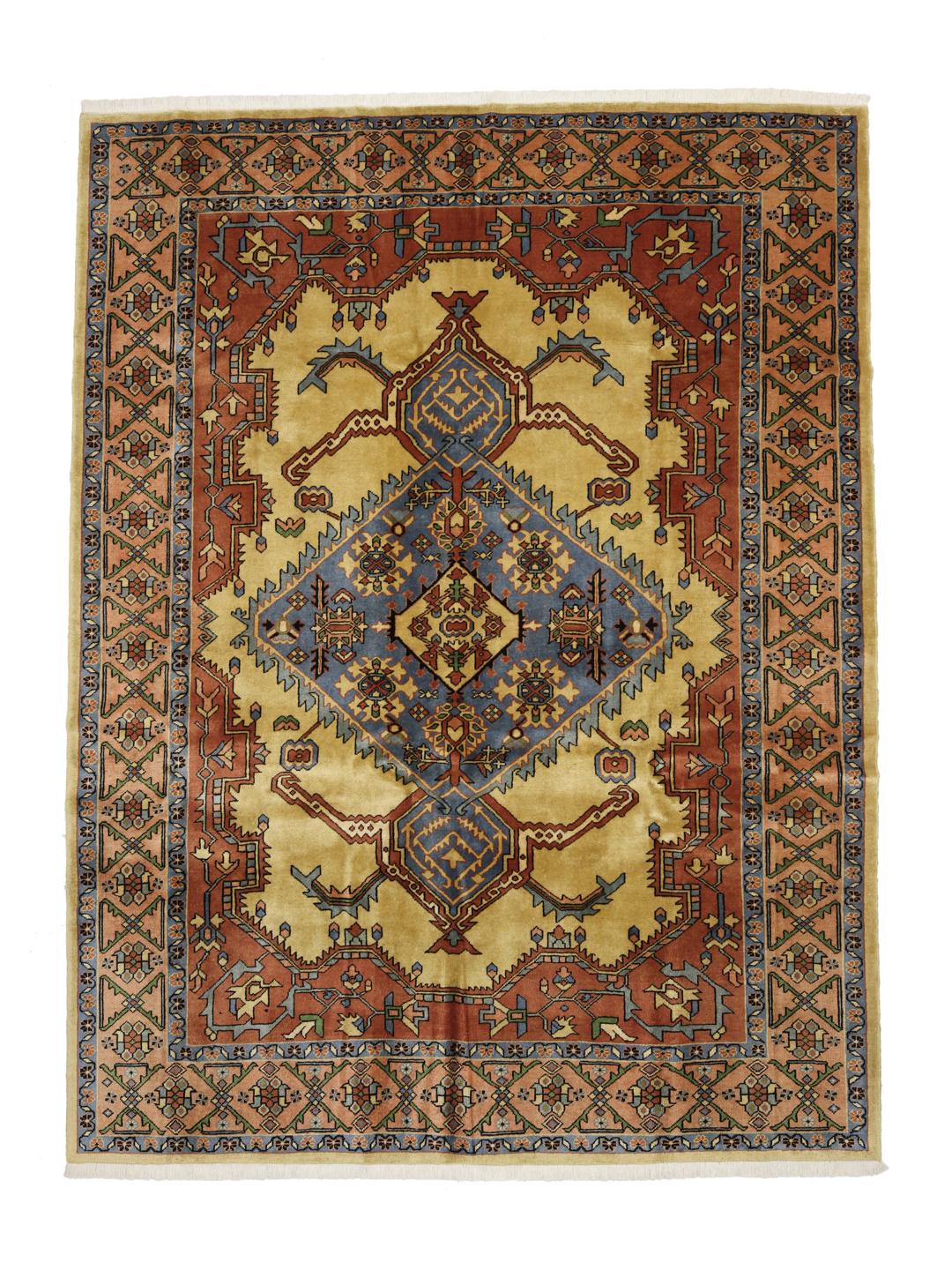
Visually, the Heriz style is defined by a large, central geometric medallion, often with angular, stylized floral motifs. Unlike the more delicate, curvilinear designs found in other regions, the Heriz aesthetic is bold and architectural. The borders are typically wide and filled with intricate geometric patterns that frame the central field perfectly, creating a sense of balance and strength in the design.
Owning a piece from this tradition is highly valued by collectors because it represents a bridge between ancient craft and functional, everyday living. It is a testament to the skill of the weavers who produce these rugs, often working without paper patterns, relying instead on generations of knowledge passed down through families. To have one in your home is to own a piece of cultural history that continues to be relevant and beautiful today.