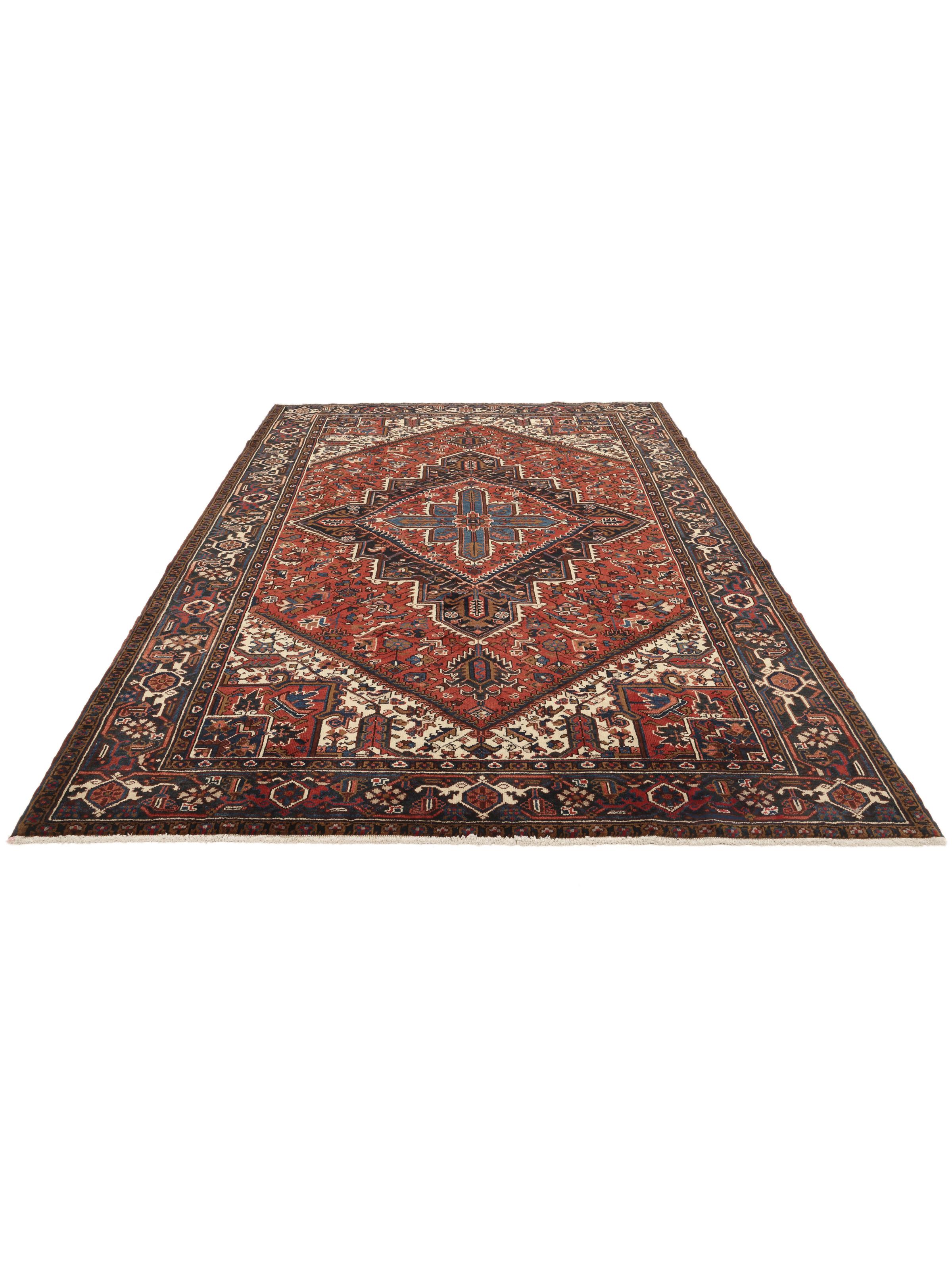
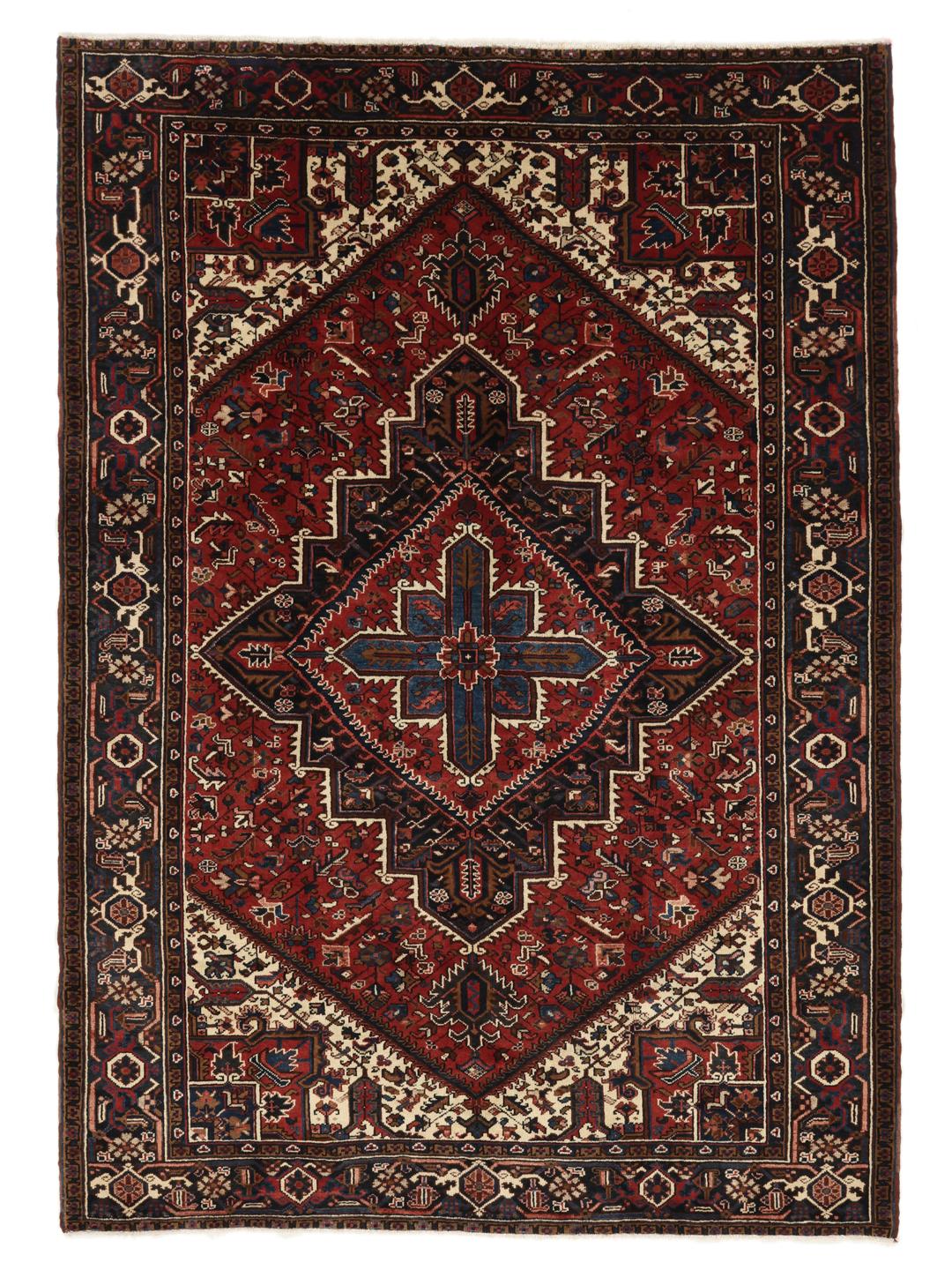
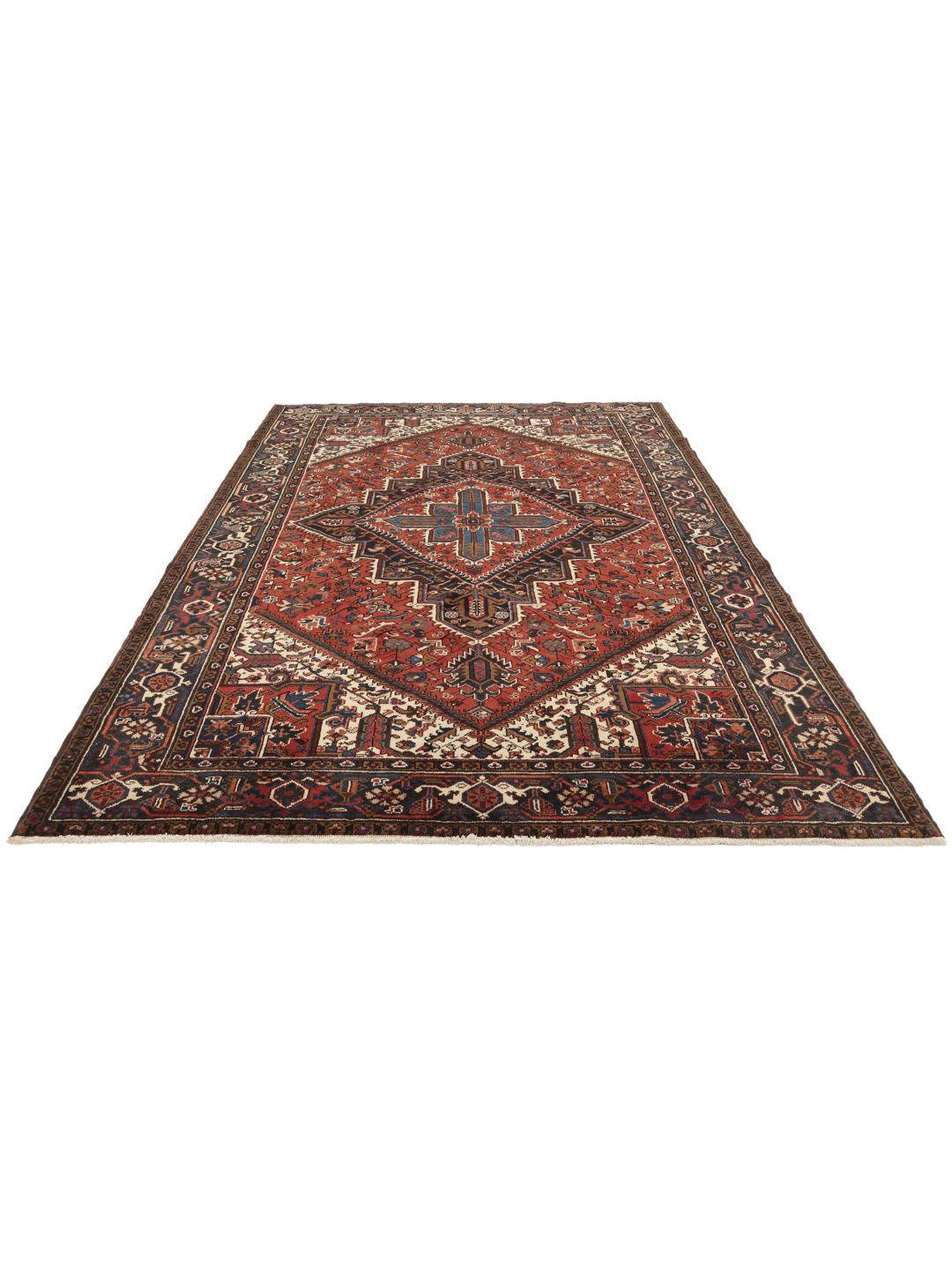
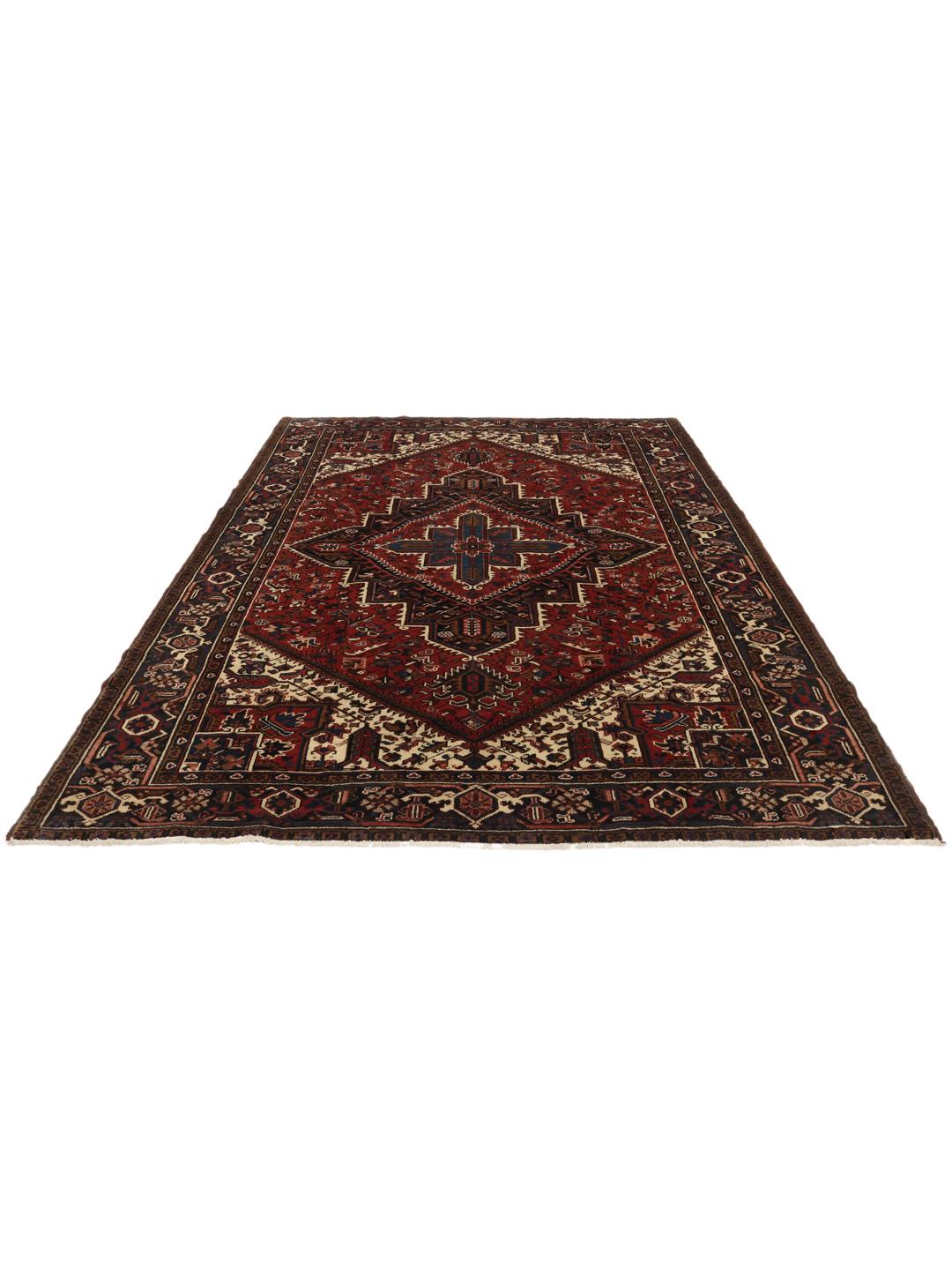
Heriz rugs originate from the mountainous regions of the Middle East, where the harsh climate and rugged terrain have long influenced the local design aesthetic. These rugs are famously durable, built to withstand the demands of nomadic and village life, and they have become highly sought after for their bold, powerful visual language.
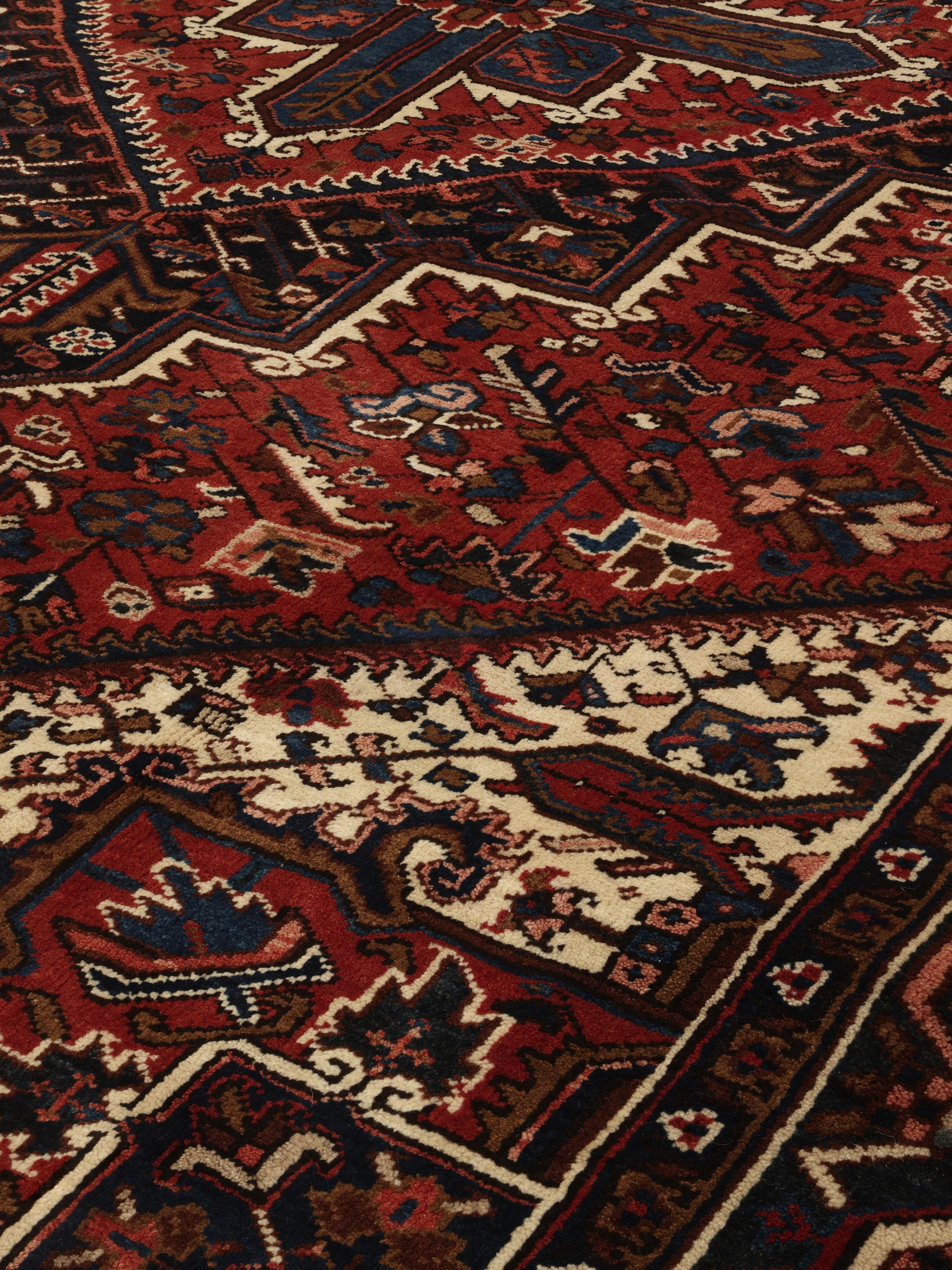
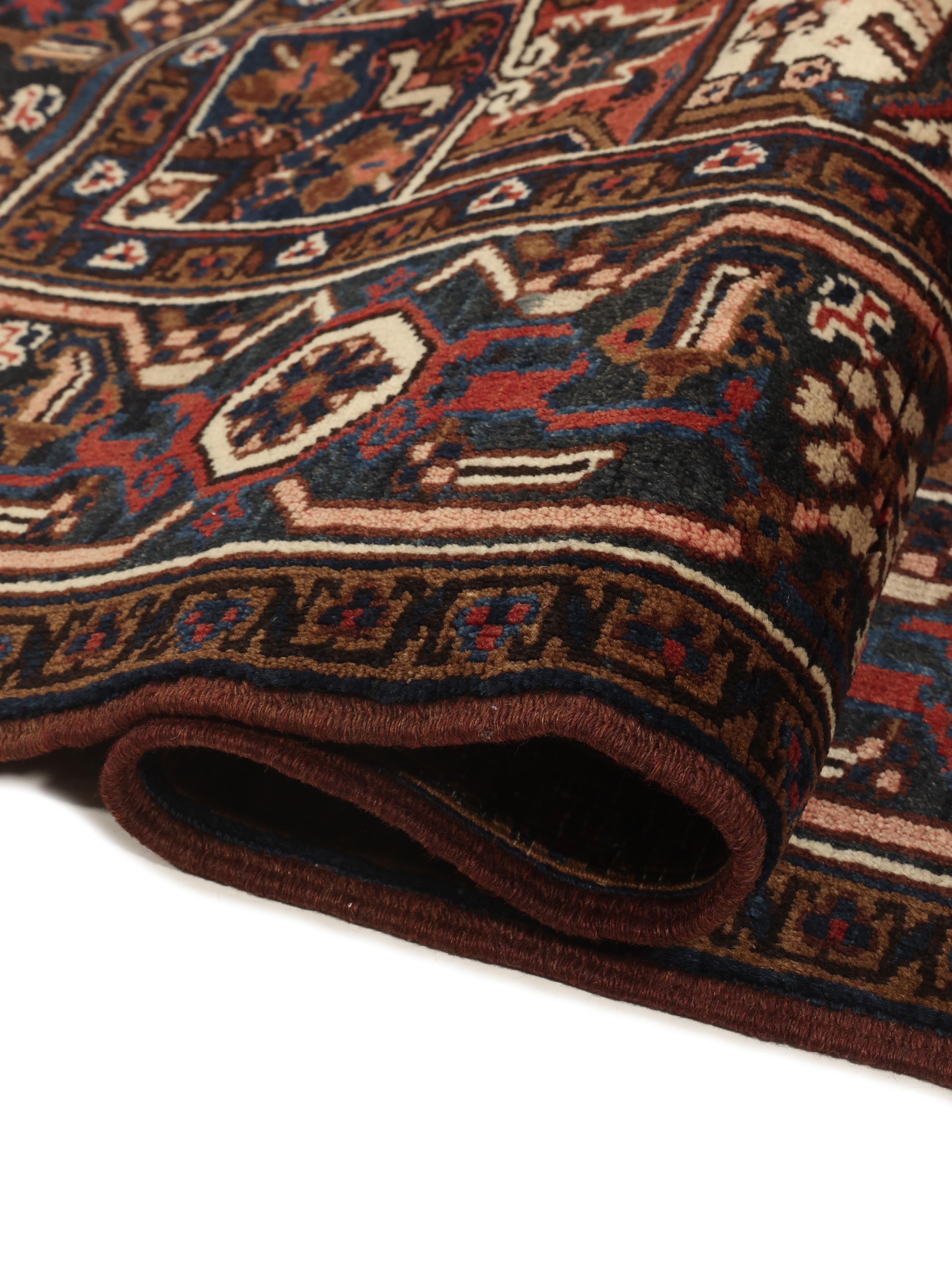
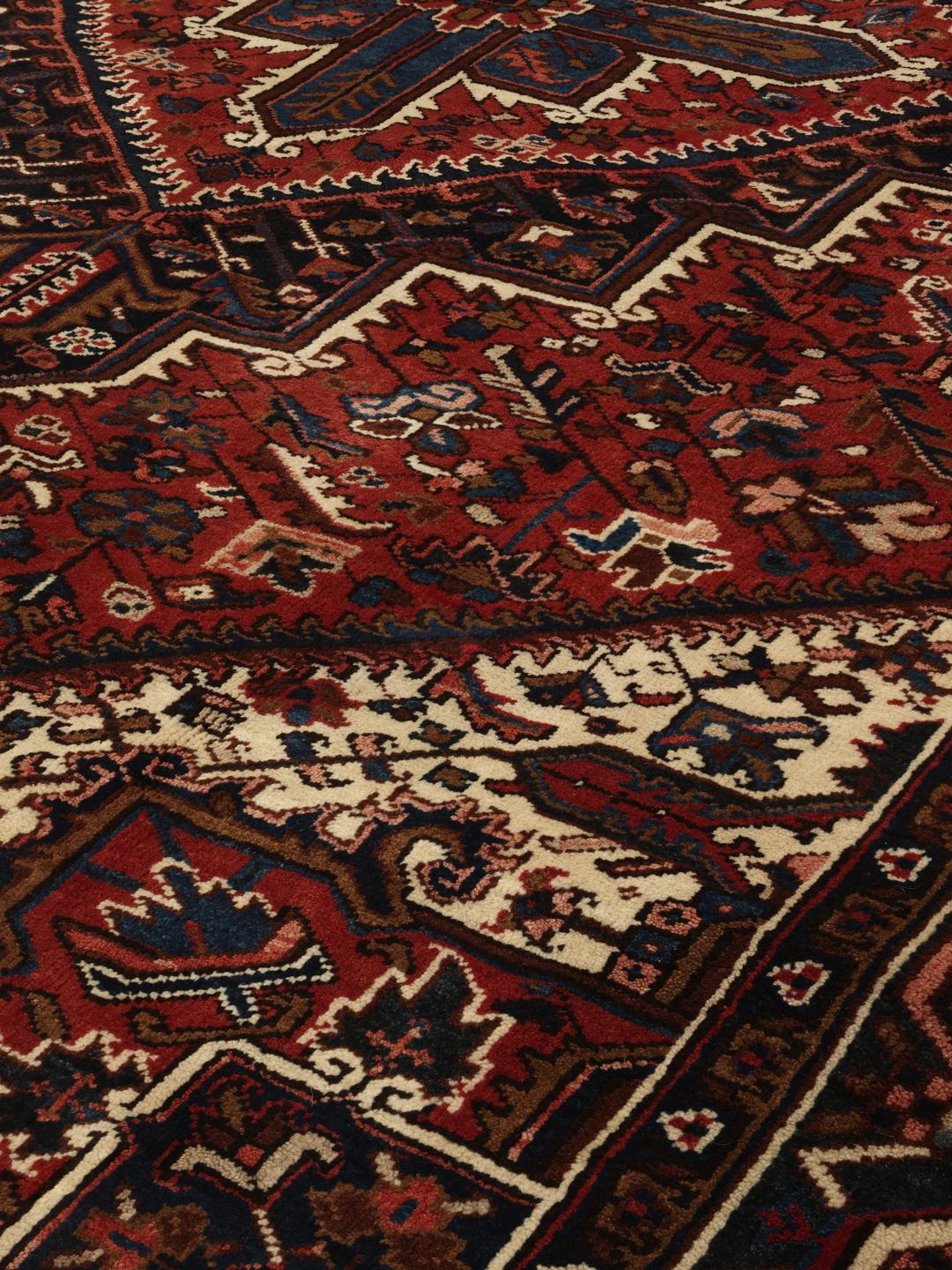
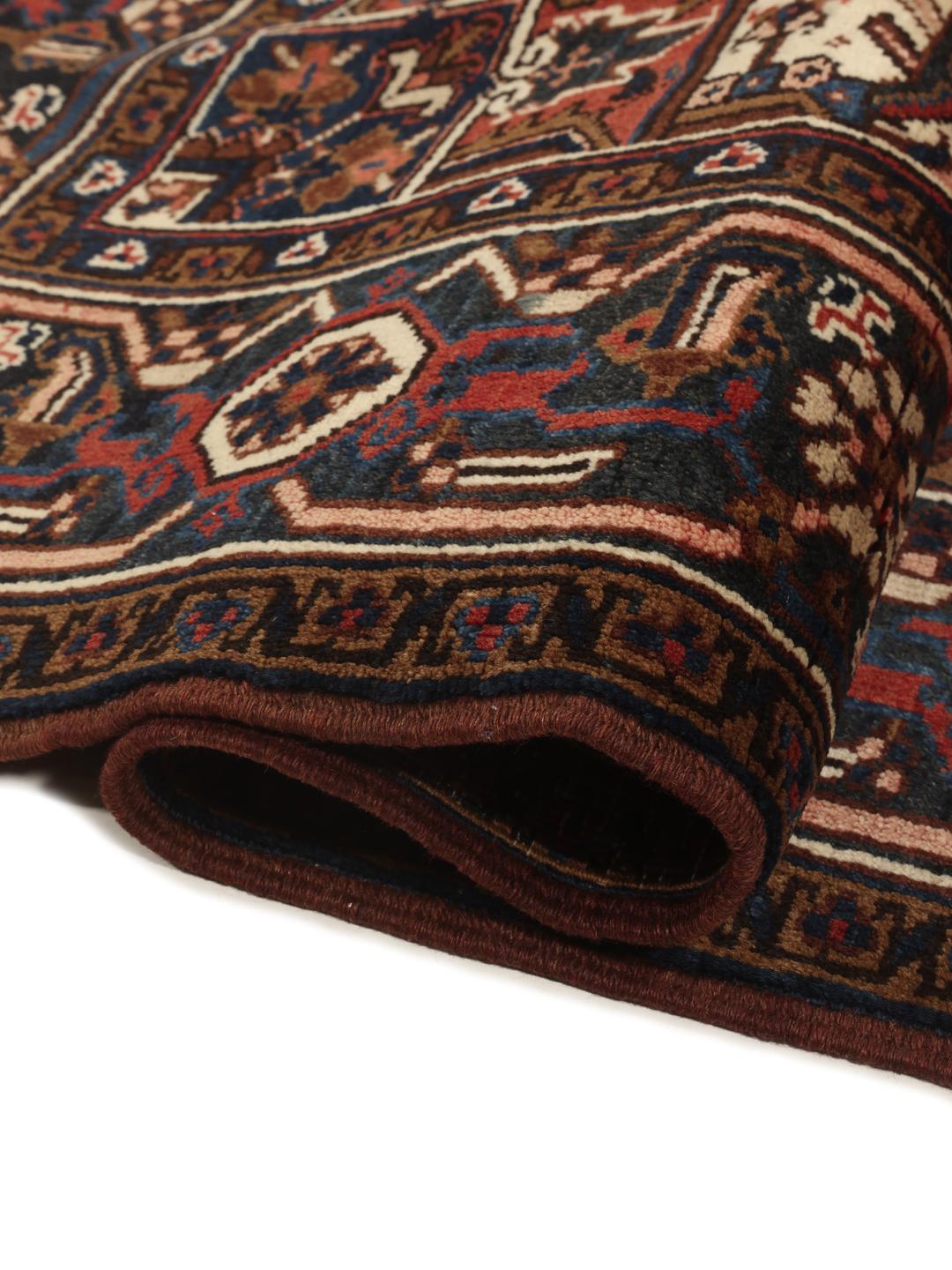
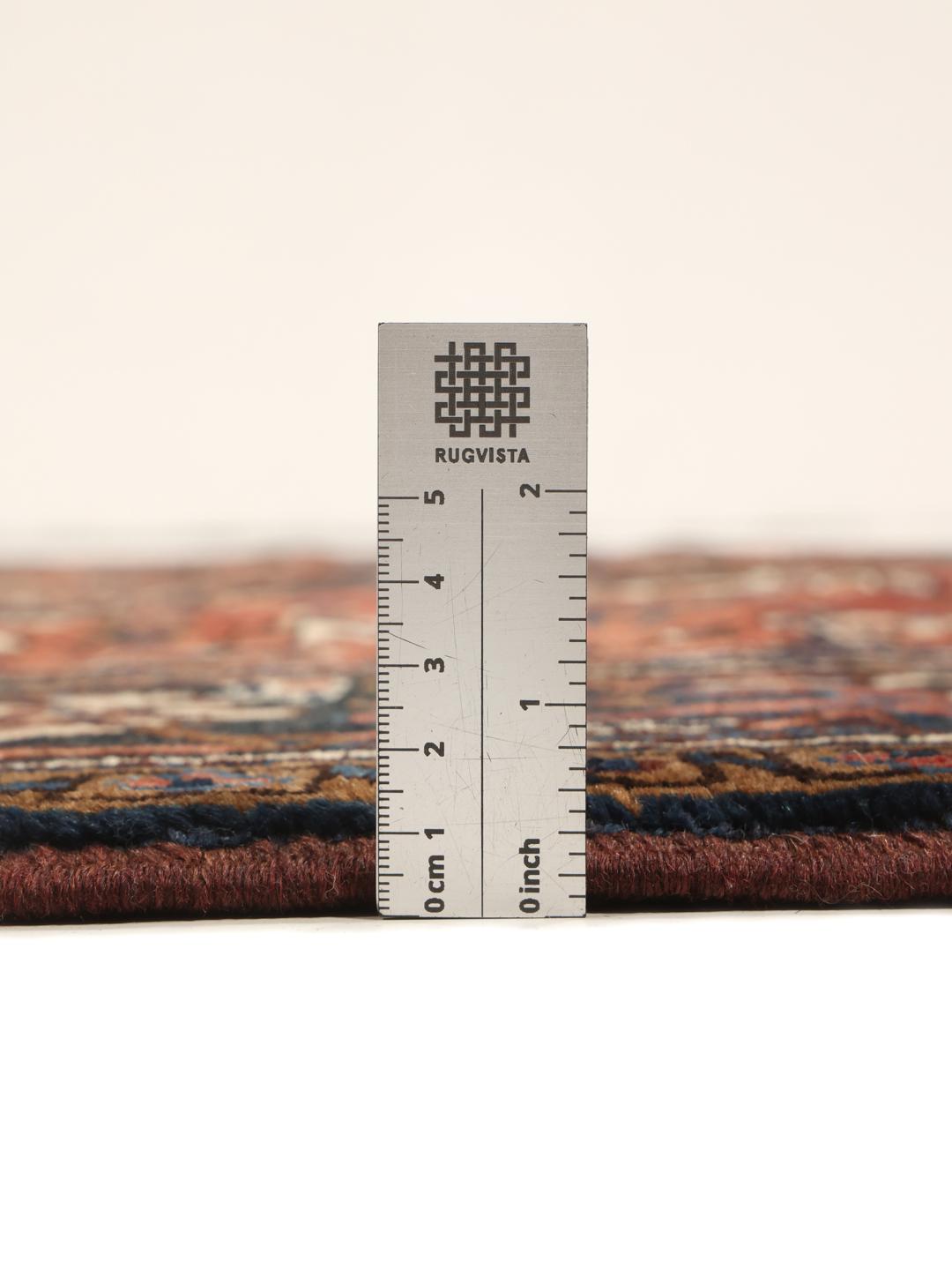
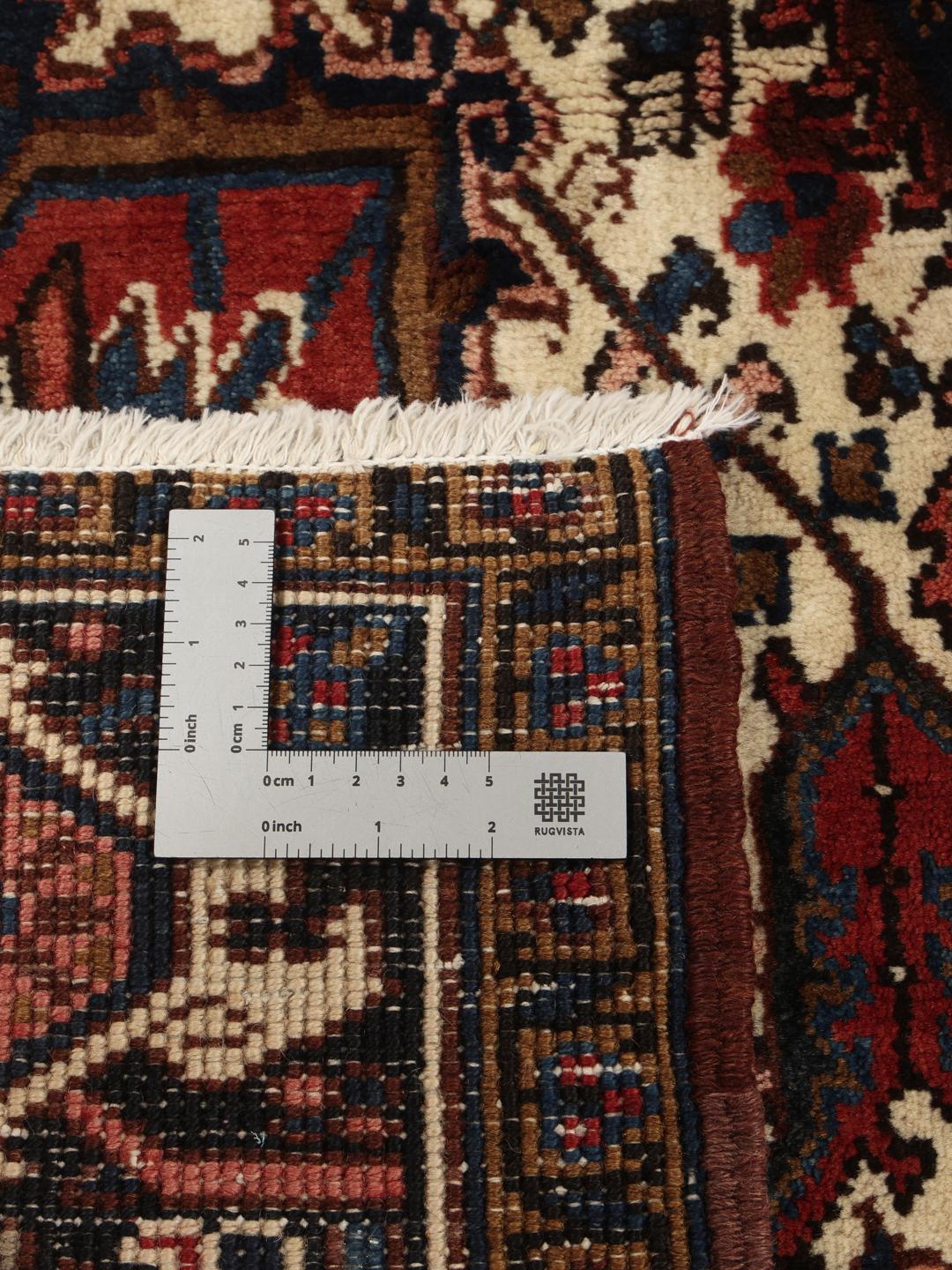
The construction of a Heriz rug is defined by the use of strong, resilient wool and a sturdy foundation. This combination creates a dense pile that is both soft to the touch and incredibly hard-wearing. The quality of the wool, often sourced from local mountain sheep, allows for deep, saturated dyes that retain their vibrancy over generations.
Signature design elements of these rugs include large, dramatic medallion motifs and angular geometric patterns. Unlike the flowing, curvilinear designs found in other regions, Heriz rugs are known for their striking, stylized forms that often appear almost architectural. The borders are typically wide and complex, framing the central field with repeating patterns that balance the boldness of the main design.
Owning a Heriz rug is a testament to the appreciation of traditional craft and enduring beauty. These pieces are valued by collectors and homeowners alike for their ability to bring a sense of heritage and weight to a space. They represent a bridge between ancient techniques and modern living, offering a piece of cultural history that remains as functional today as it was when it was first created.