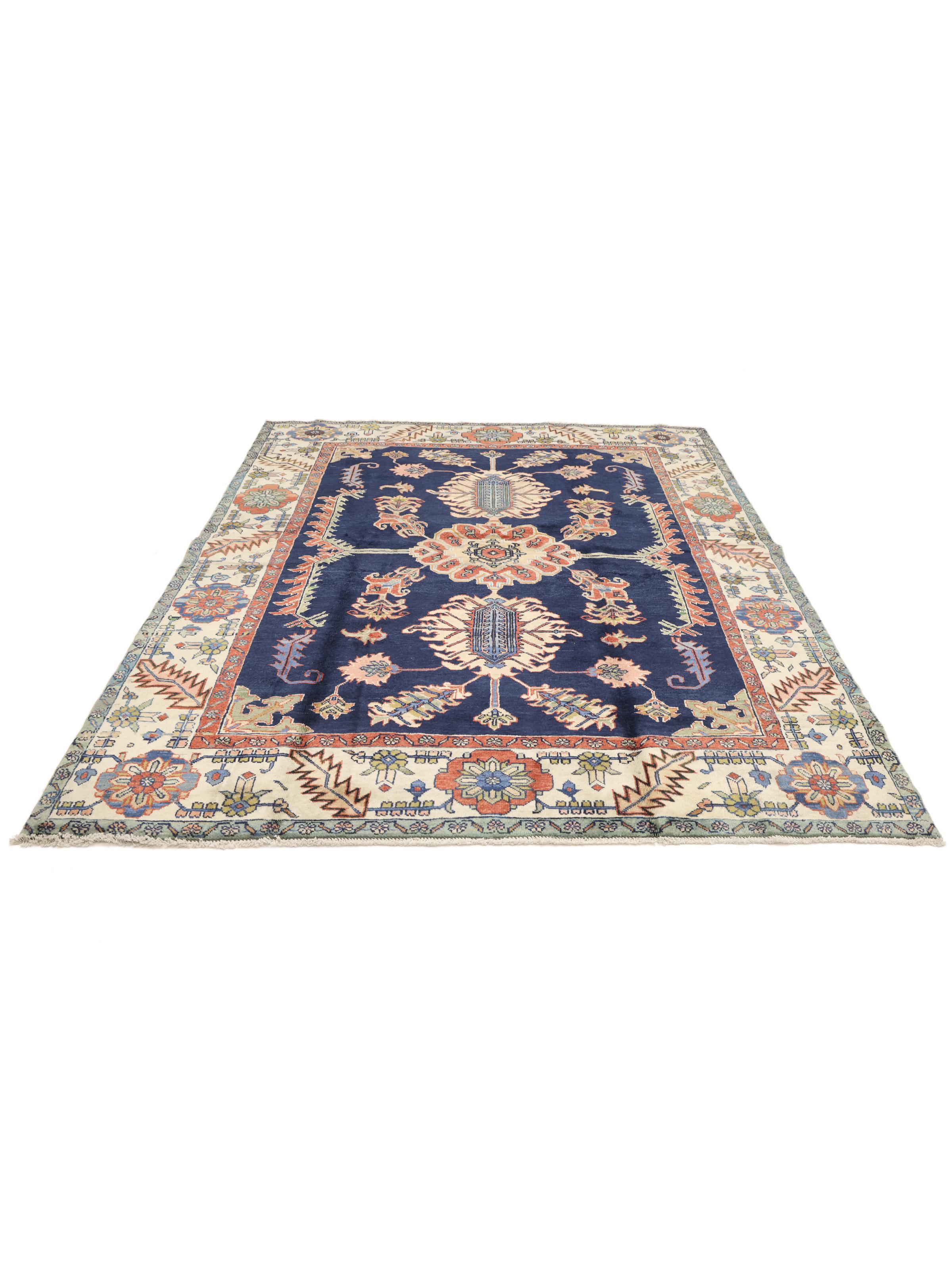
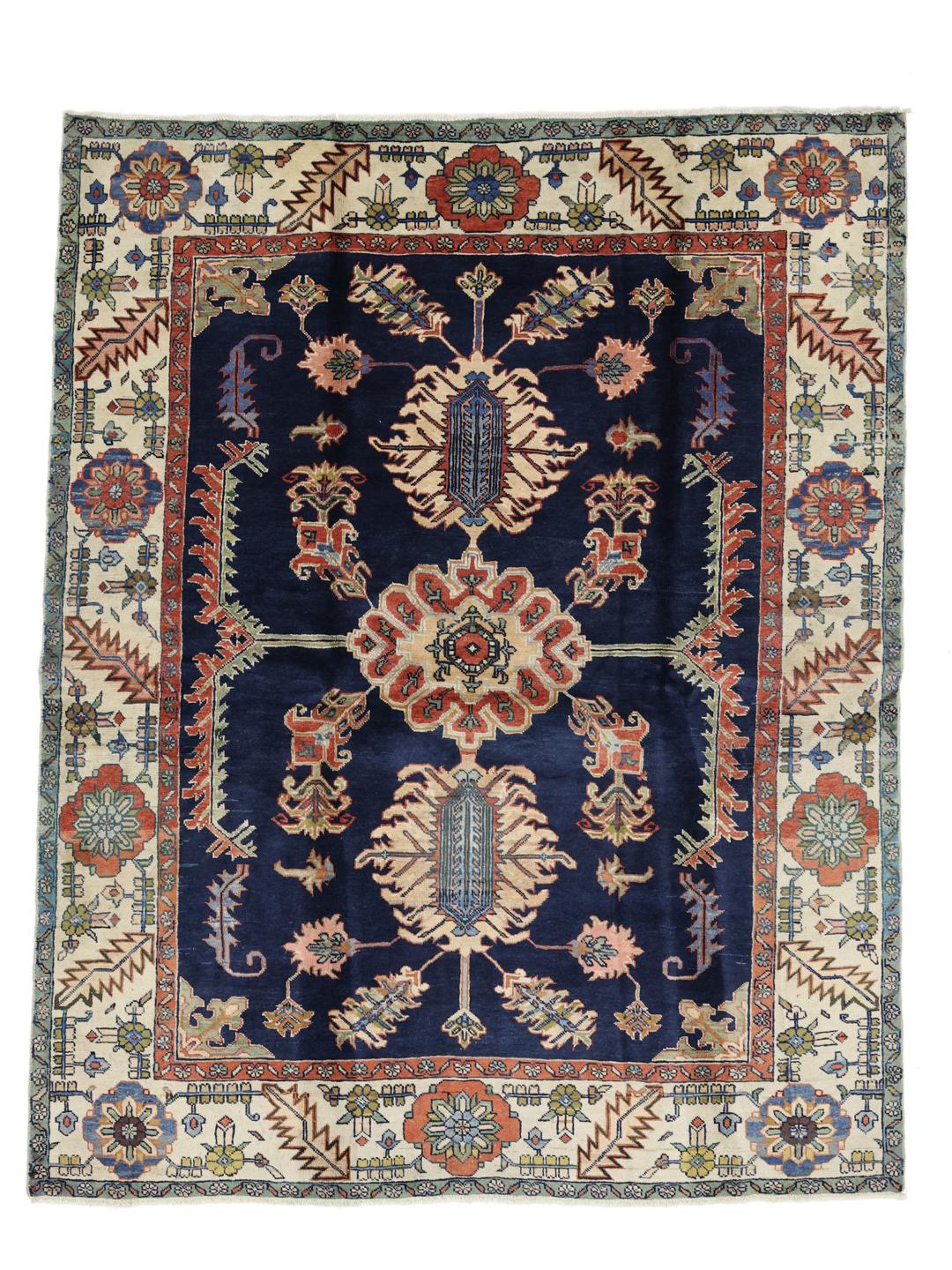
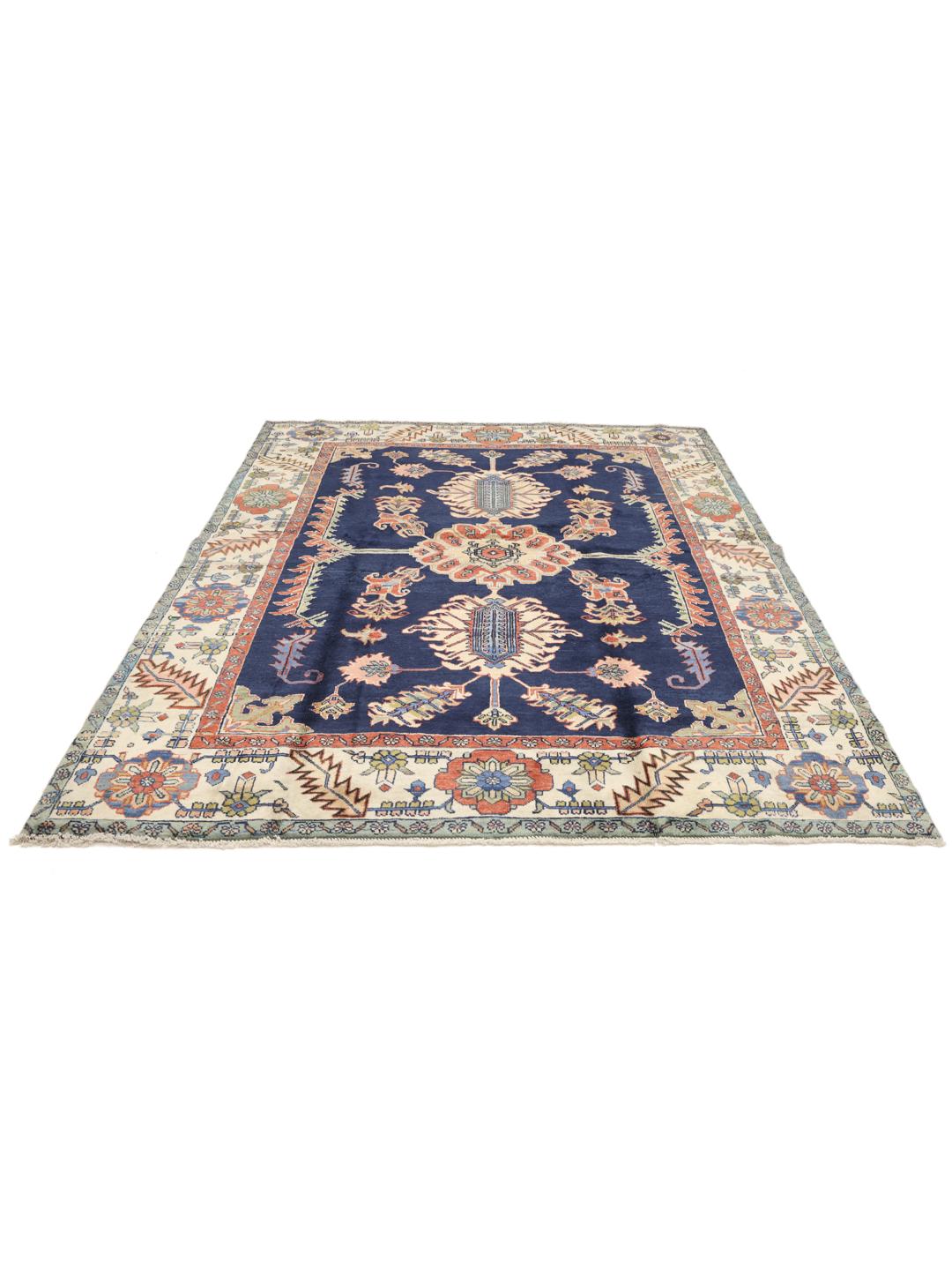
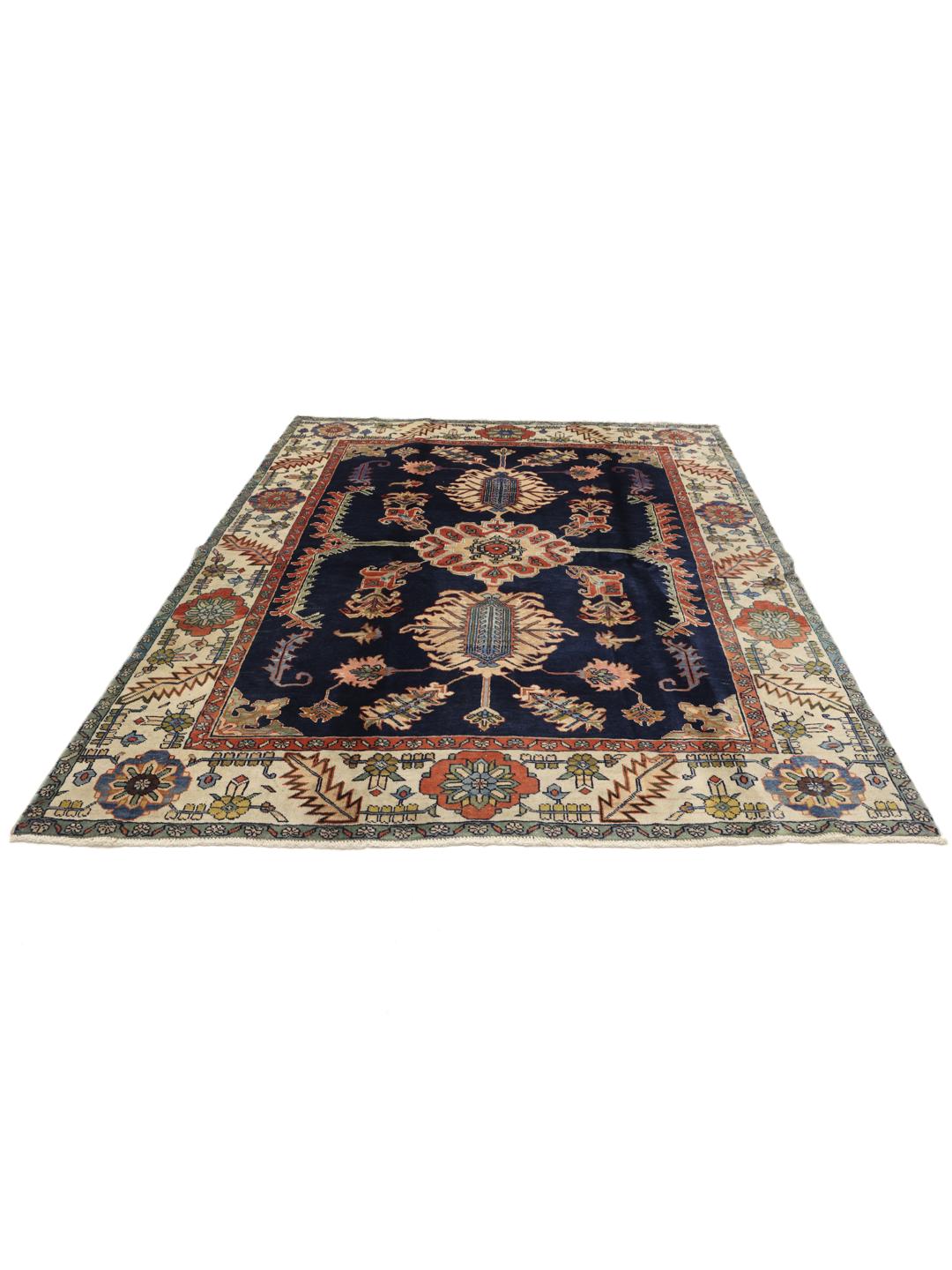
Heriz rugs originate from the mountainous region of East Azerbaijan in the Middle East, specifically from the area surrounding the town of Heriz. This region has a long-standing reputation for producing rugs that are as durable as they are visually striking, often featuring bold, geometric interpretations of traditional floral motifs. These rugs have historically been favoured for their robustness, a necessity for the high-altitude, rugged climate of their origin.
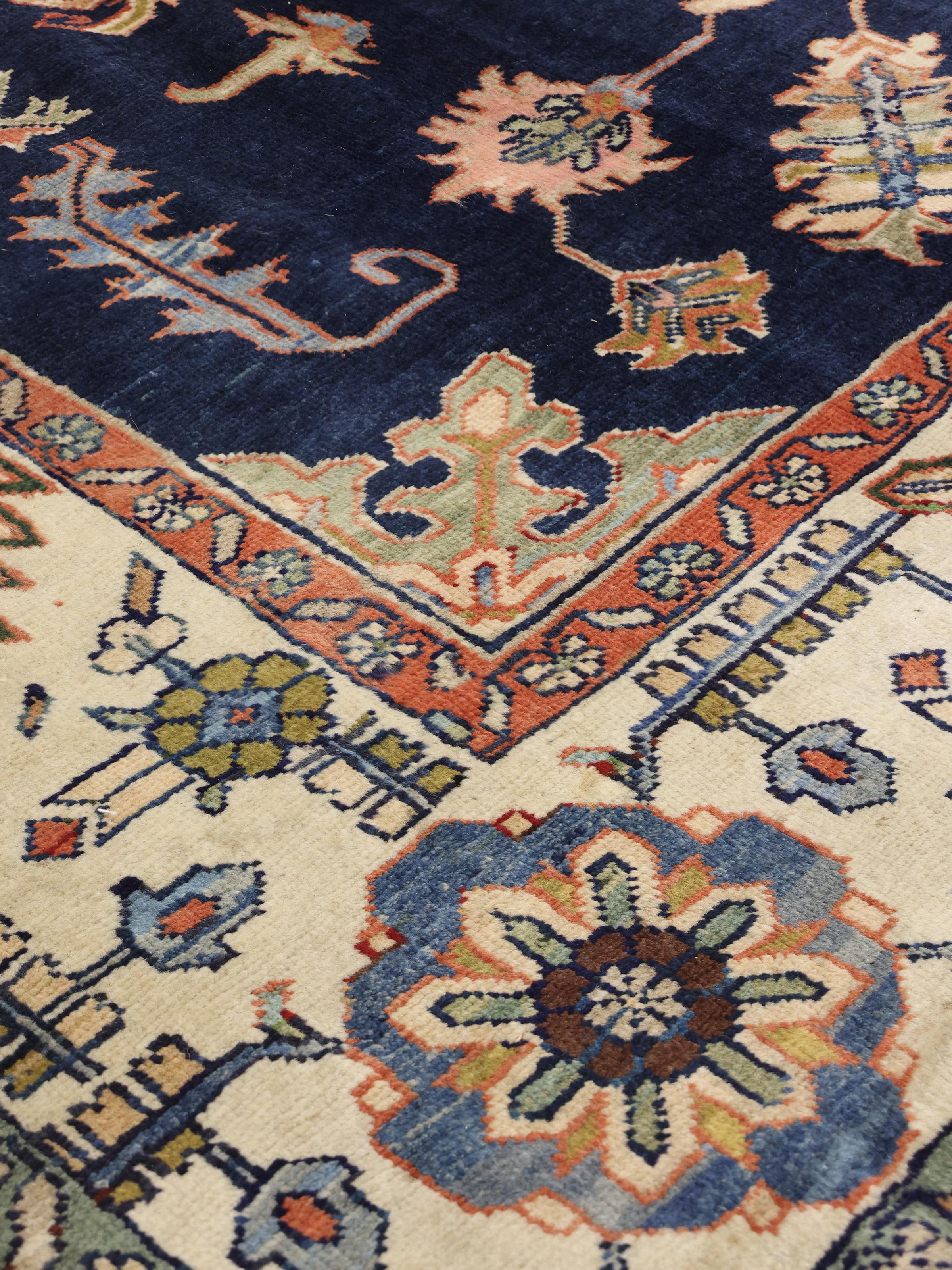
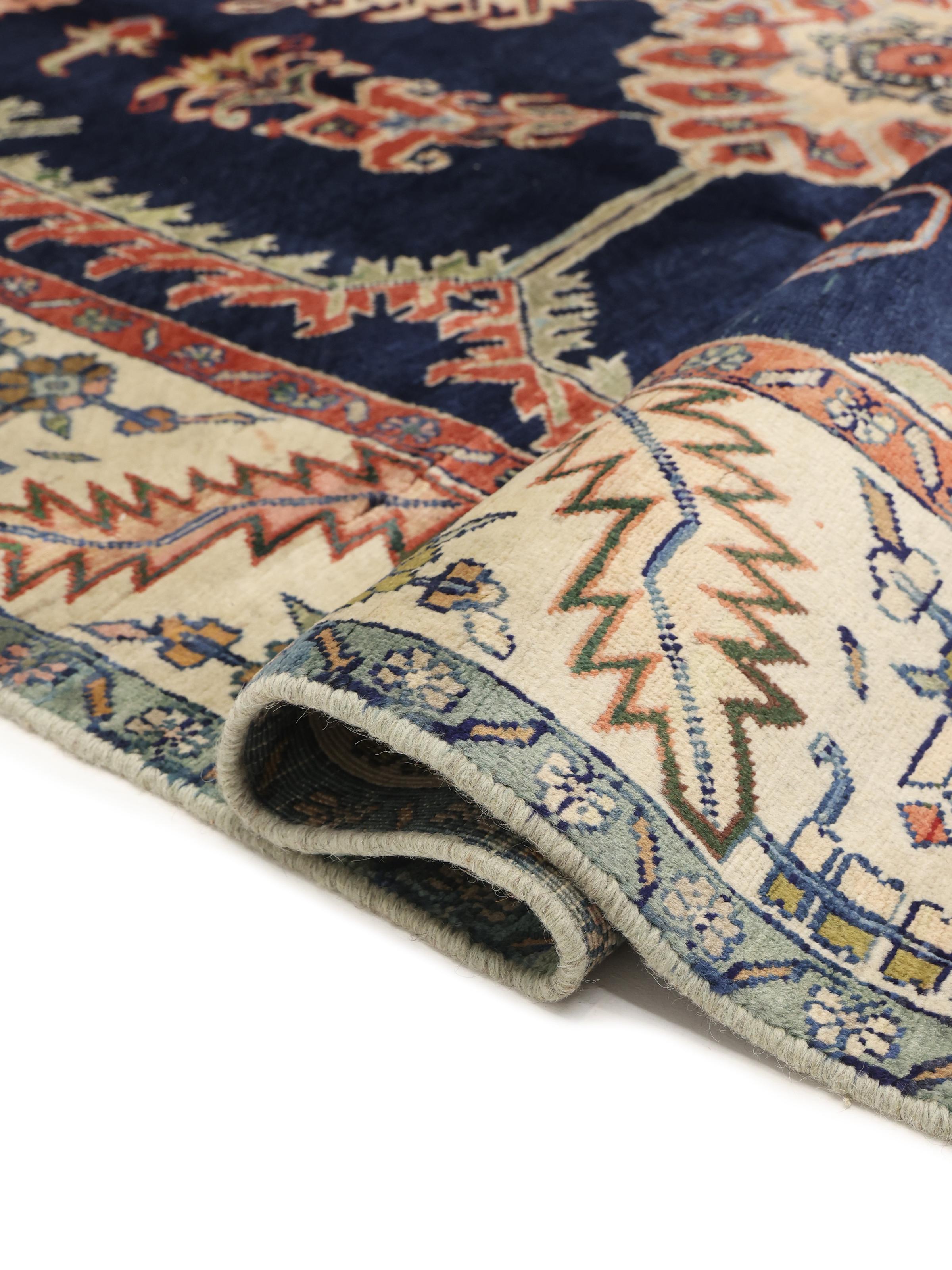
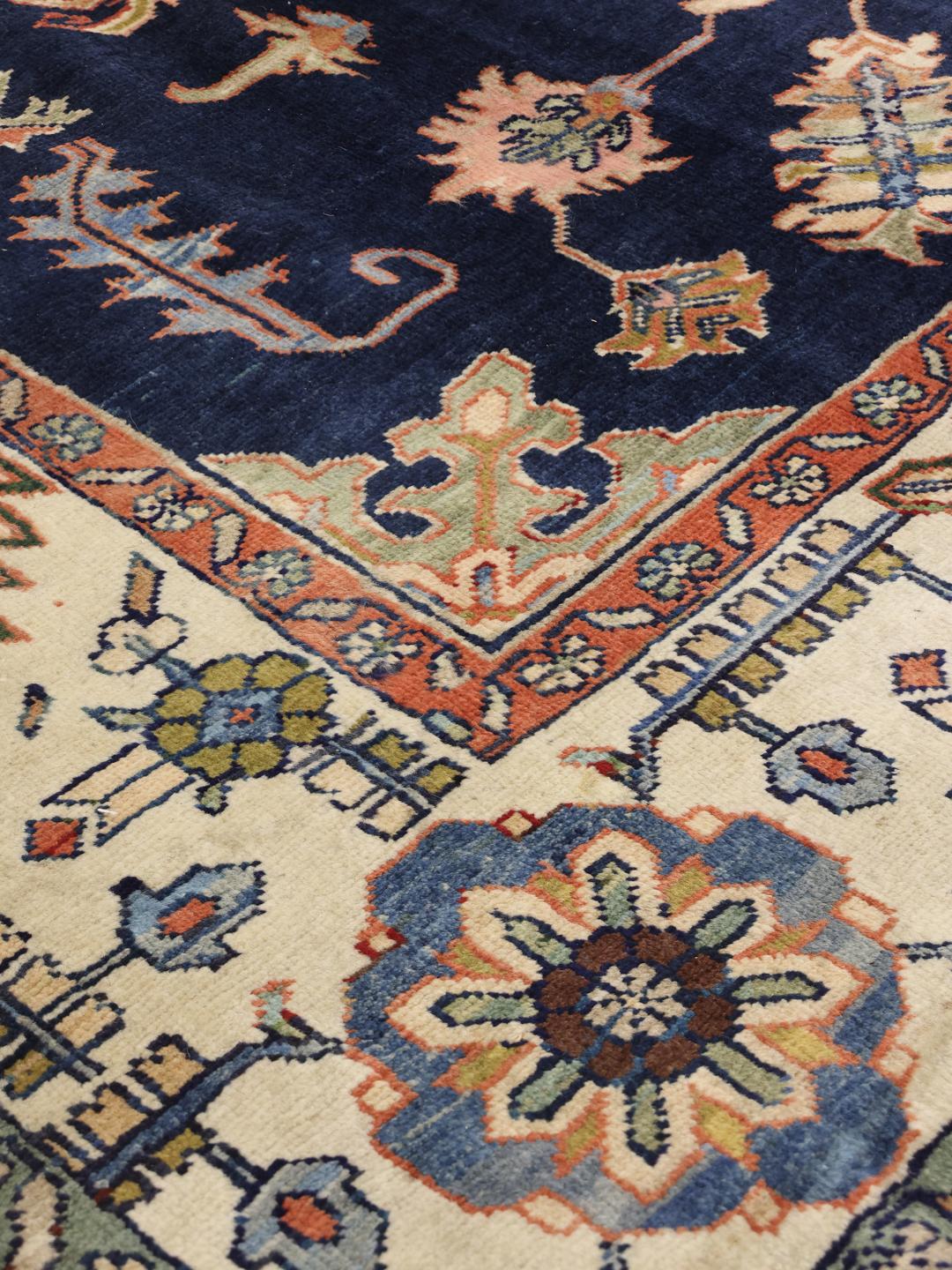
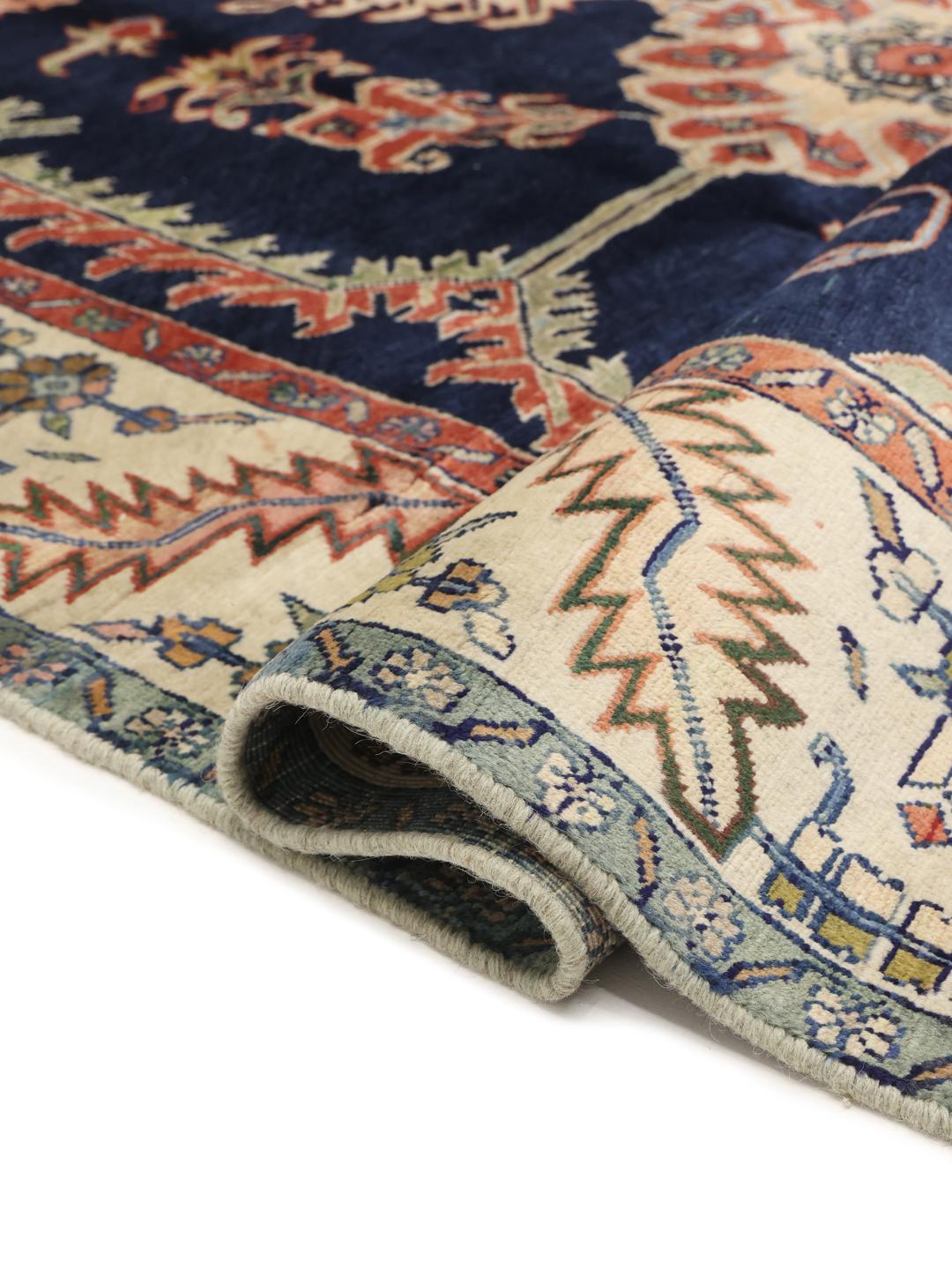
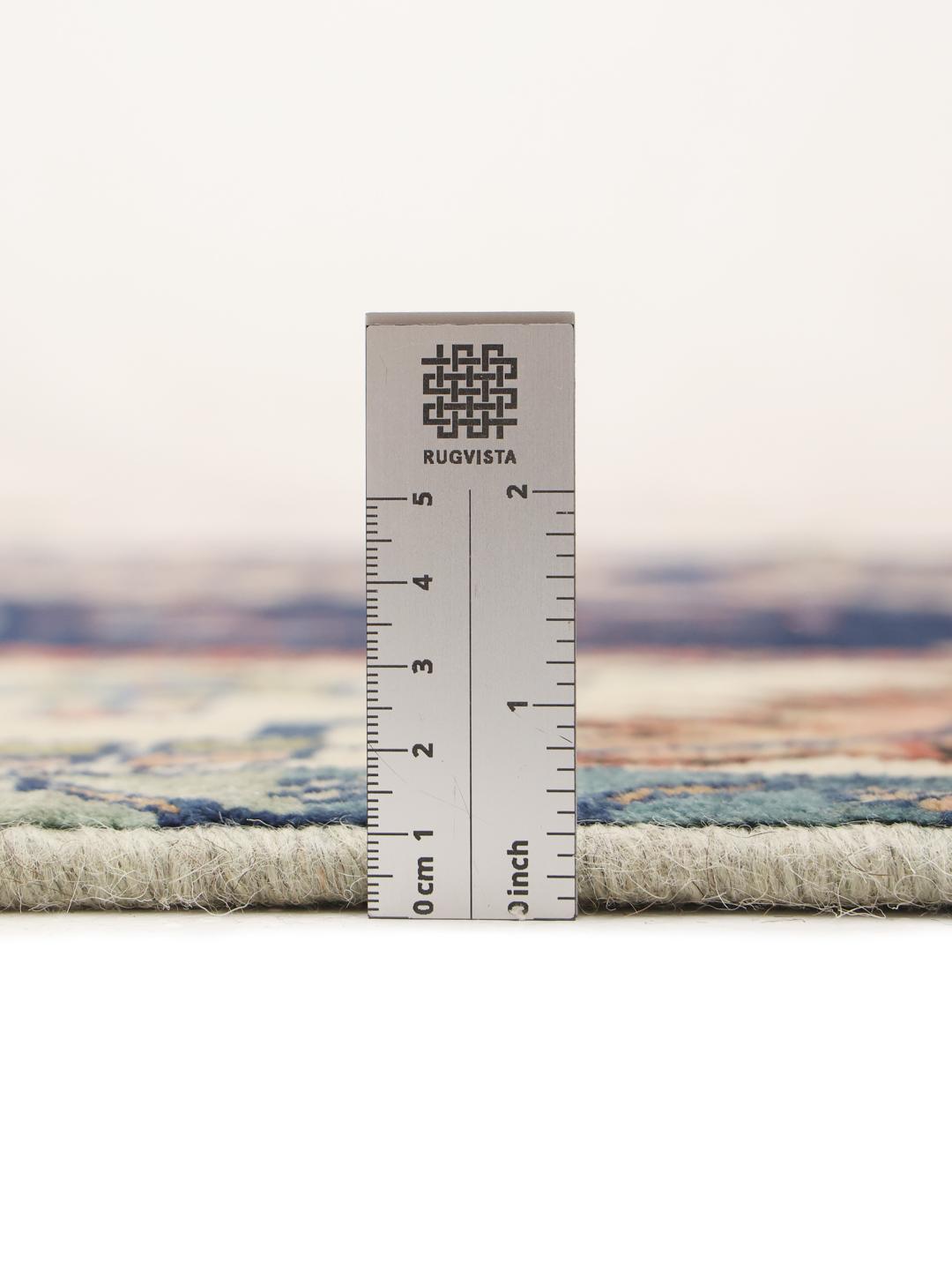
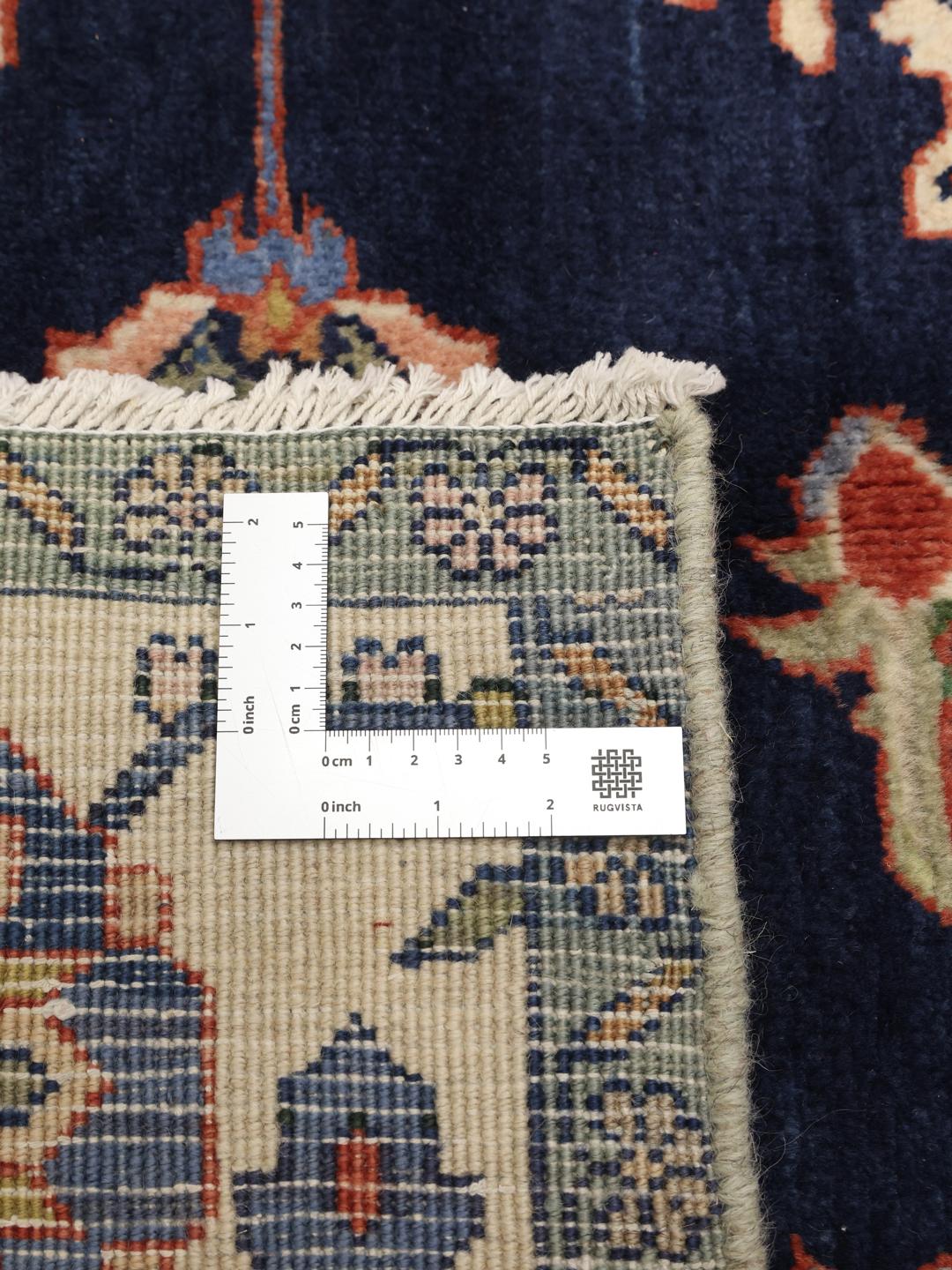
The construction of a Heriz rug is defined by the use of sturdy cotton foundations, which provide the necessary tension for the dense wool pile to be knotted into place. This combination creates a resilient, long-lasting surface. The knotting technique used here is highly specialised, allowing for the characteristic geometric shapes that define the Heriz aesthetic, moving away from the fluid, curved lines found in other regional styles.
Visually, Heriz rugs are famous for their large-scale, stylised medallions that often dominate the centre of the field. These central motifs are typically surrounded by angular, abstract floral patterns and interconnected vines. The borders are often quite wide and feature a repeating geometric design, providing a formal frame that balances the bold central medallion. The use of deep, saturated tones is a hallmark of the tradition, creating a strong contrast with lighter, often ivory or cream-coloured backgrounds.
Collectors value Heriz rugs for their artistic integrity and the deep cultural narrative they represent. Each piece is a testament to the skill of the weavers who interpret traditional designs through a lens of regional pride. Owning a Heriz rug is an investment in a craft tradition that has been refined over centuries, offering a piece of history that adds both weight and cultural significance to any contemporary home.