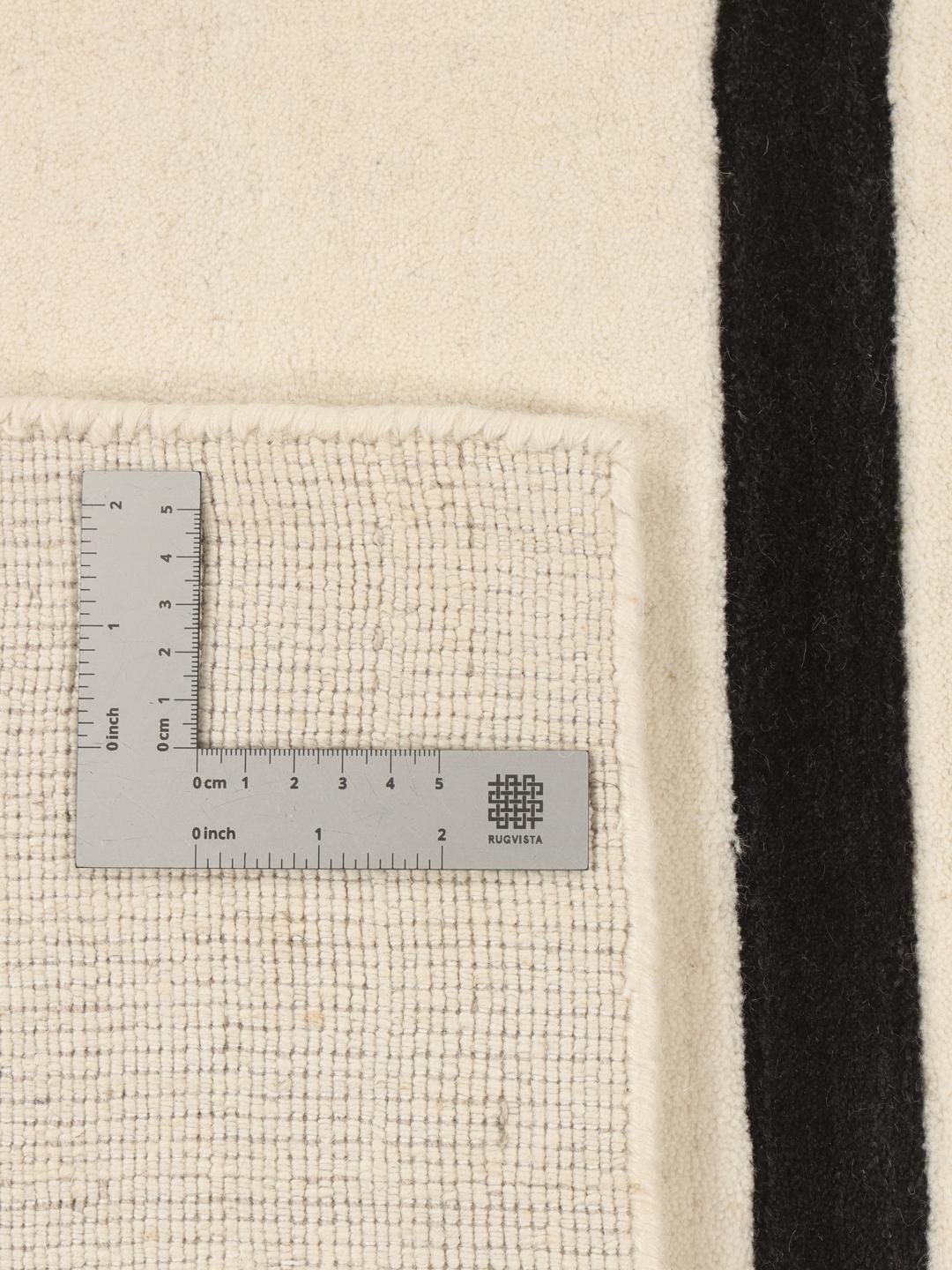
The tradition of hand-woven rugs in India is a vast and ancient craft that has evolved over centuries to incorporate both traditional motifs and contemporary design sensibilities. Rooted in the rich cultural heritage of regional weaving hubs, Indian rug making has become globally recognised for its ability to blend complex artisanal techniques with modern artistic visions.
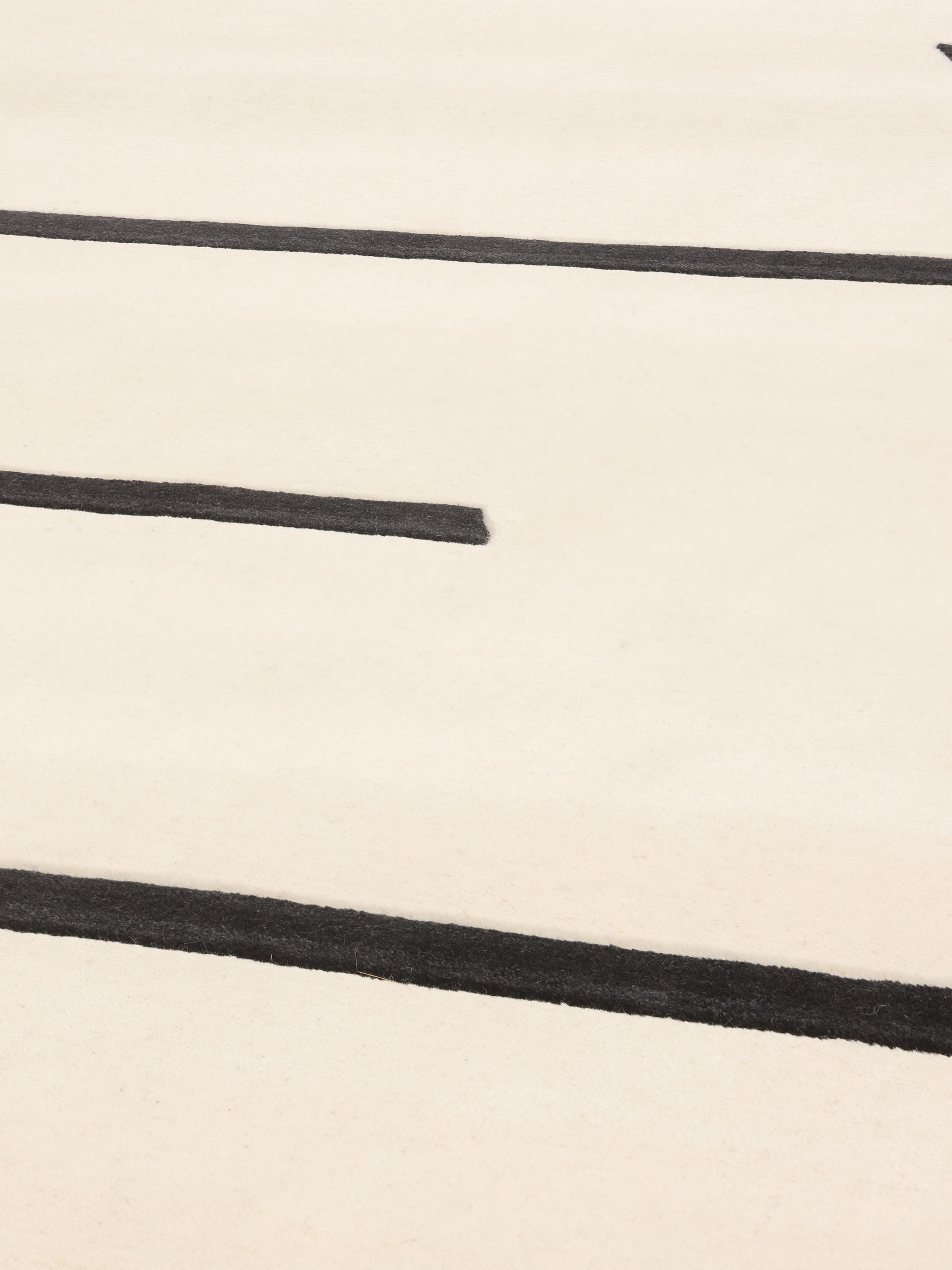
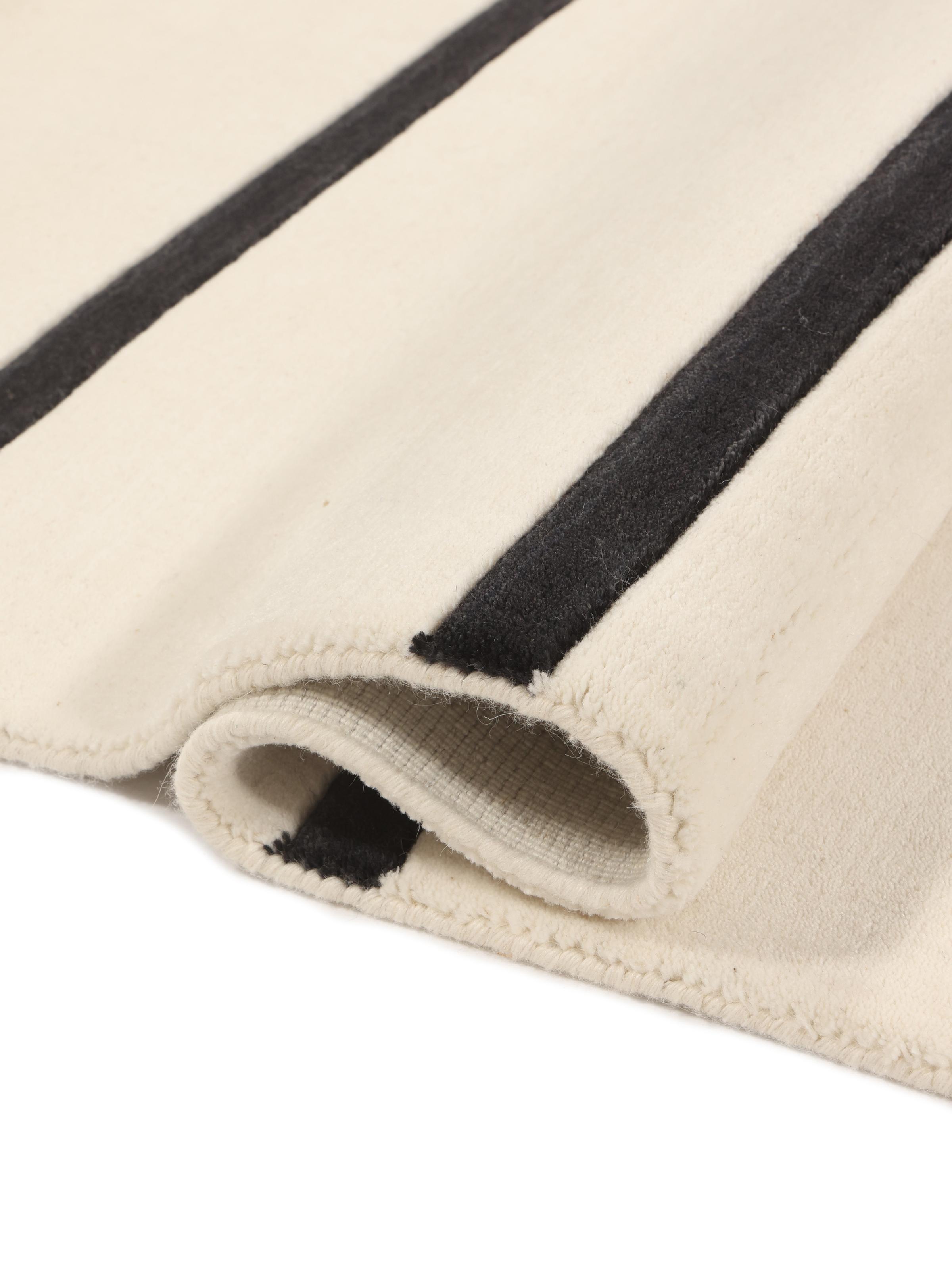
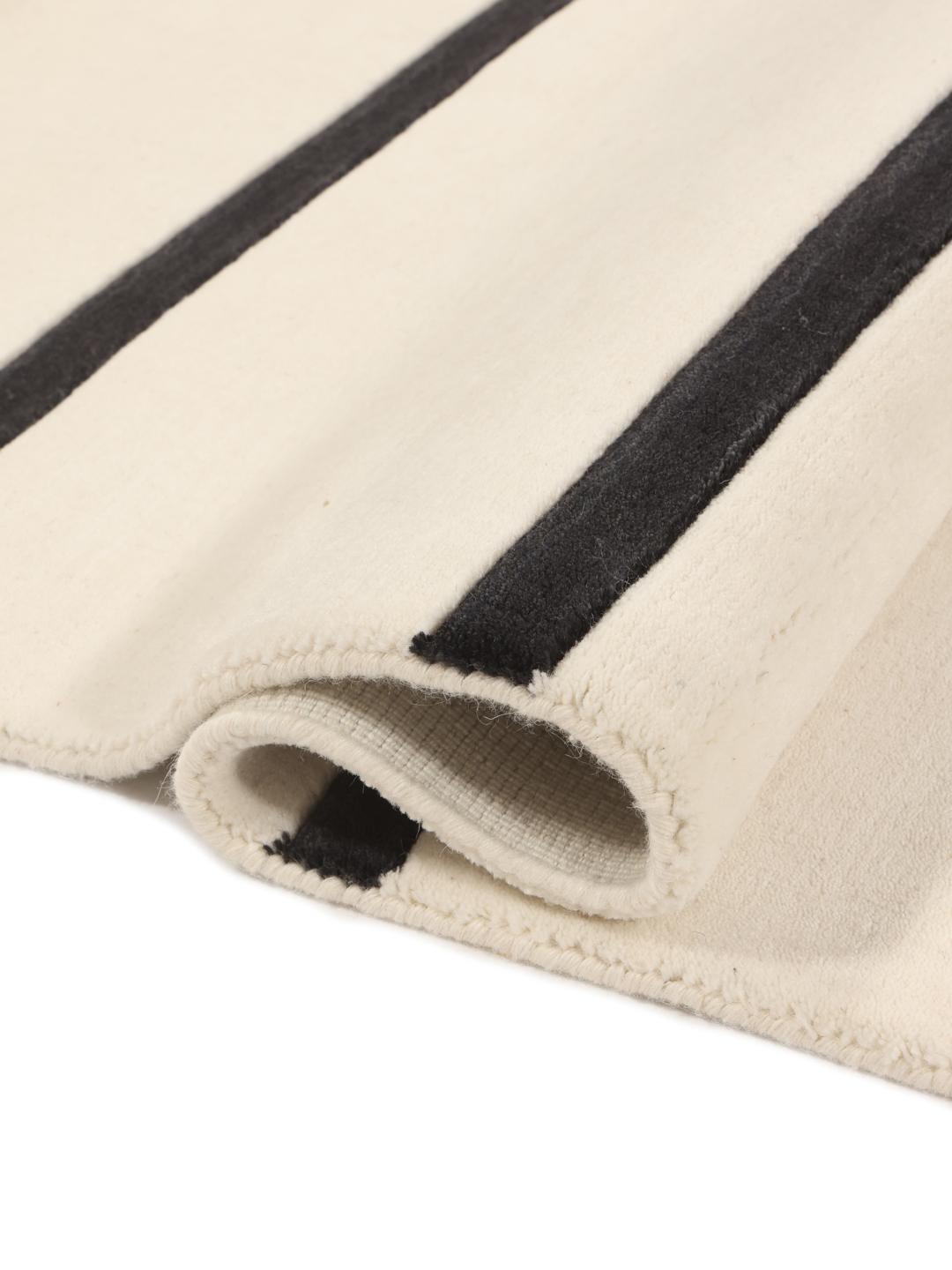
Handloom weaving involves a frame-based construction where the warp and weft are interlaced by hand to create the rug's body. This method is distinct from other techniques, as it relies on the rhythmic, physical coordination of the weaver. The resulting texture is often more uniform than other types of handmade rugs, providing a smooth, high-quality surface that is both durable and aesthetically pleasing.
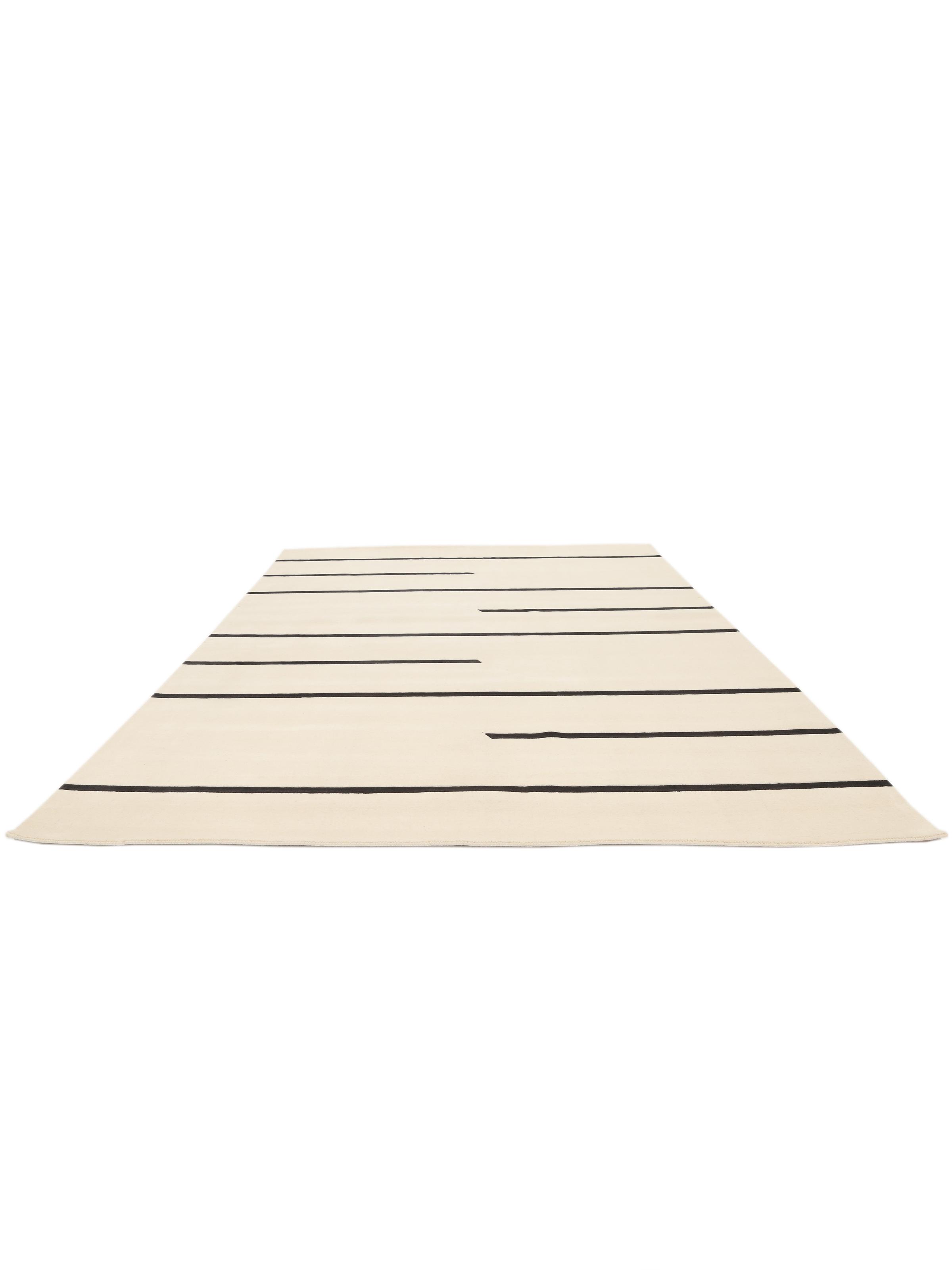
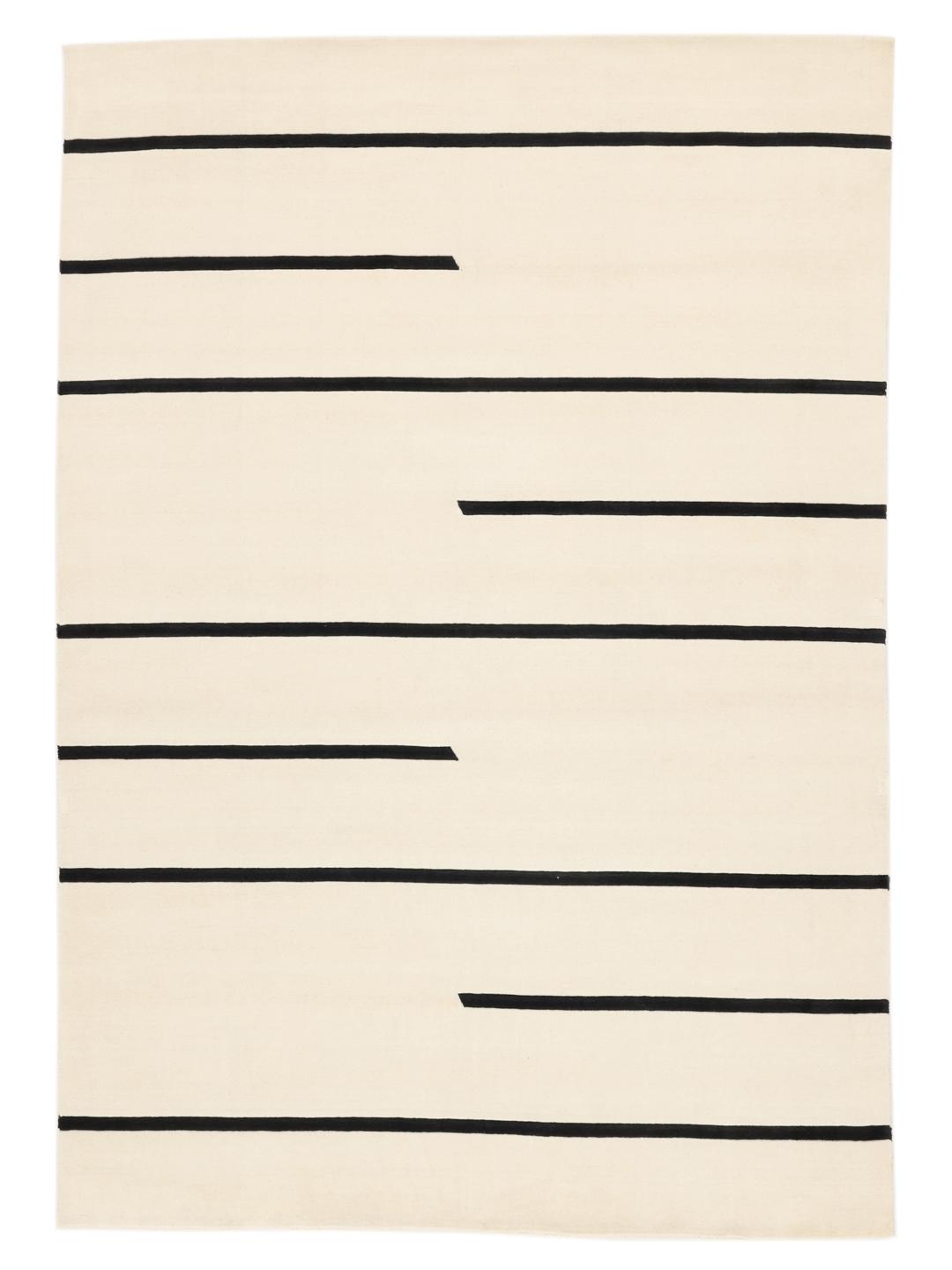
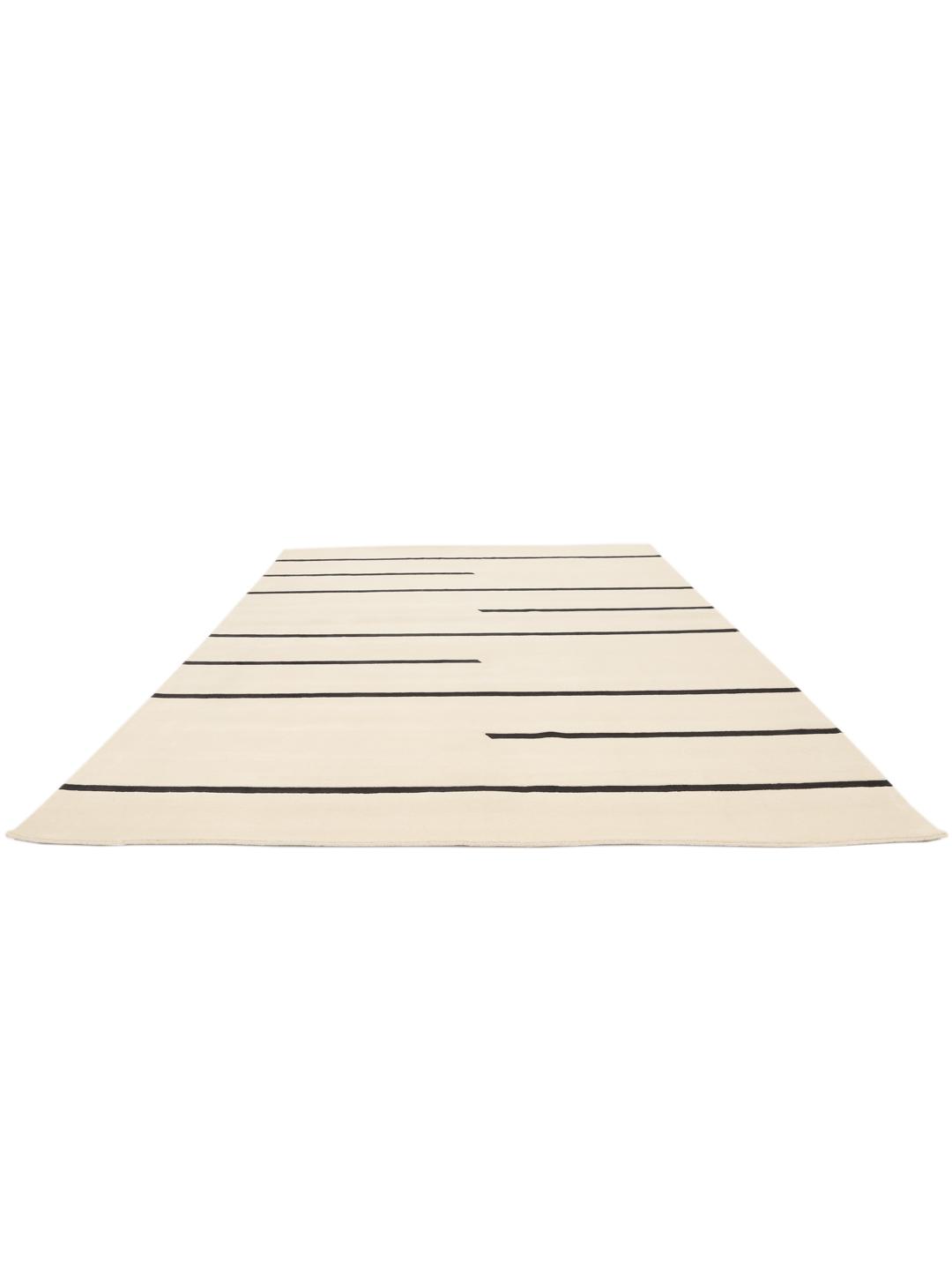
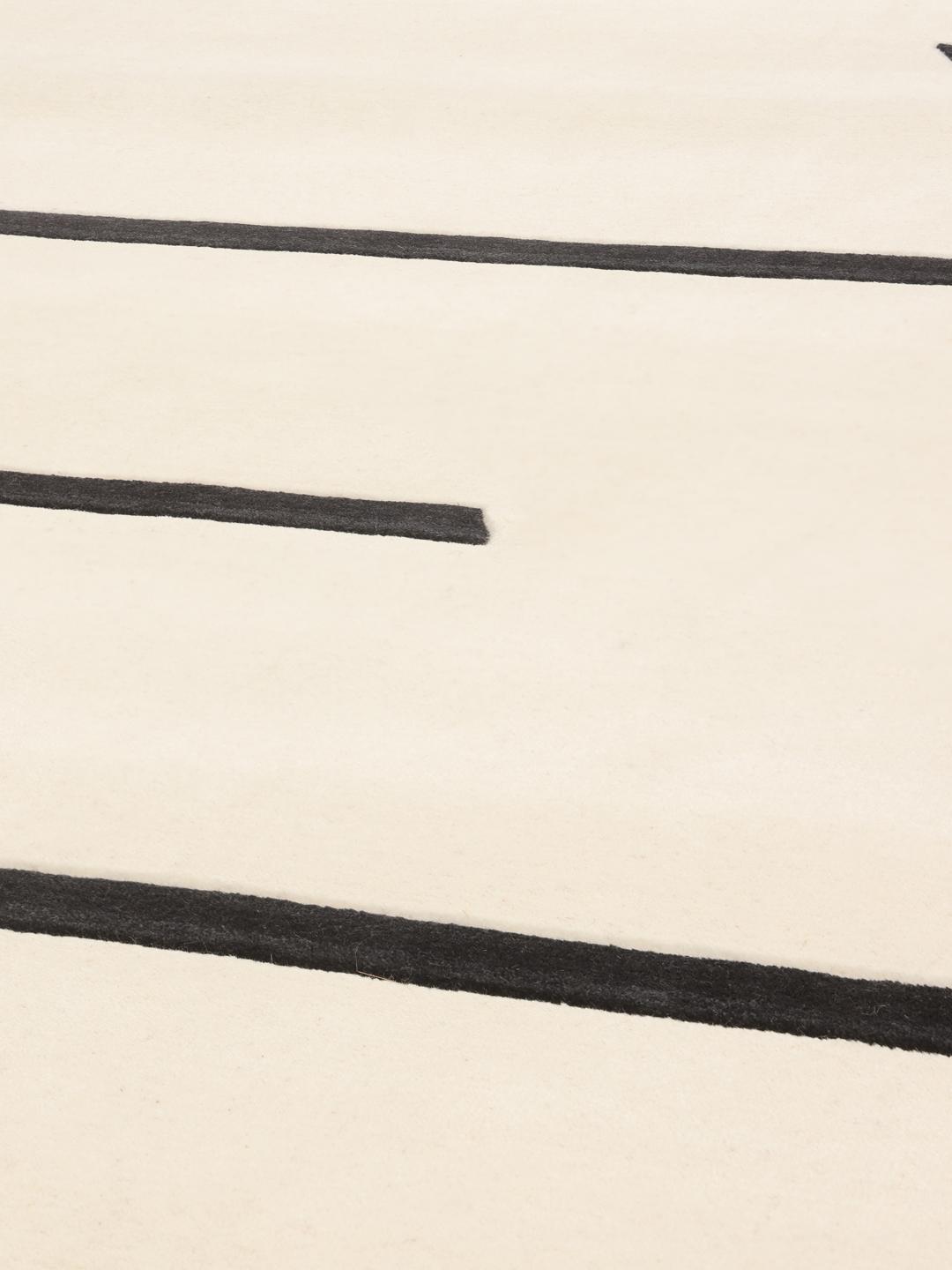
This specific rug features a minimalist, linear aesthetic that highlights the contrast between its clean field and stark, bold stripes. Such patterns are a modern evolution of the geometric traditions found in many weaving cultures, where lines and shapes were used to create visual rhythm. By stripping away traditional ornamentation, this rug places the focus entirely on composition and the purity of the material.
Owning a hand-woven piece from India is an investment in human skill and regional history. Collectors and homeowners alike value these rugs for their authenticity and the labour-intensive process required to bring them to life. By choosing a one-of-a-kind piece, you are supporting a craft tradition that prioritises quality over mass production, ensuring that your space is defined by genuine artistry.