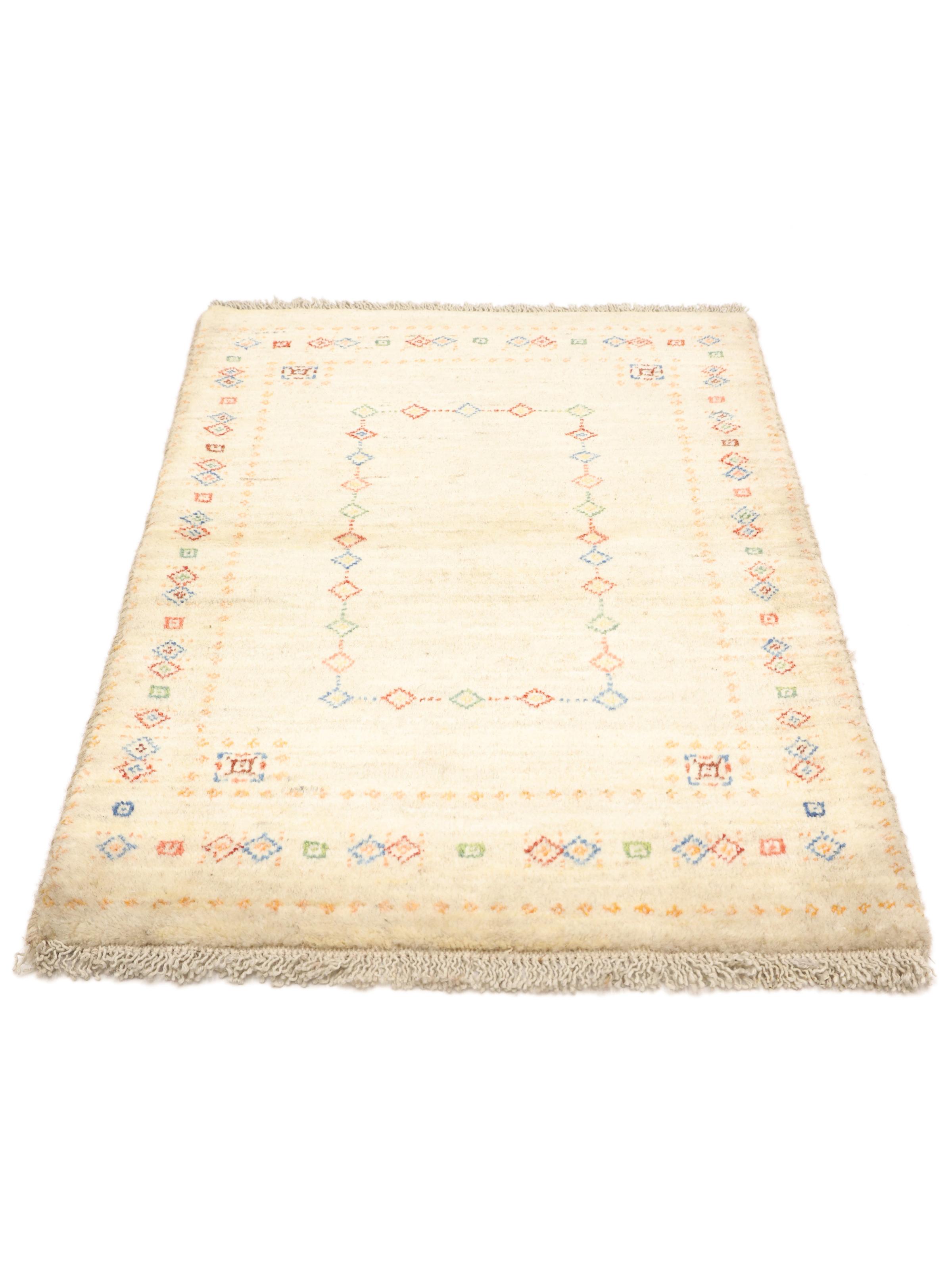
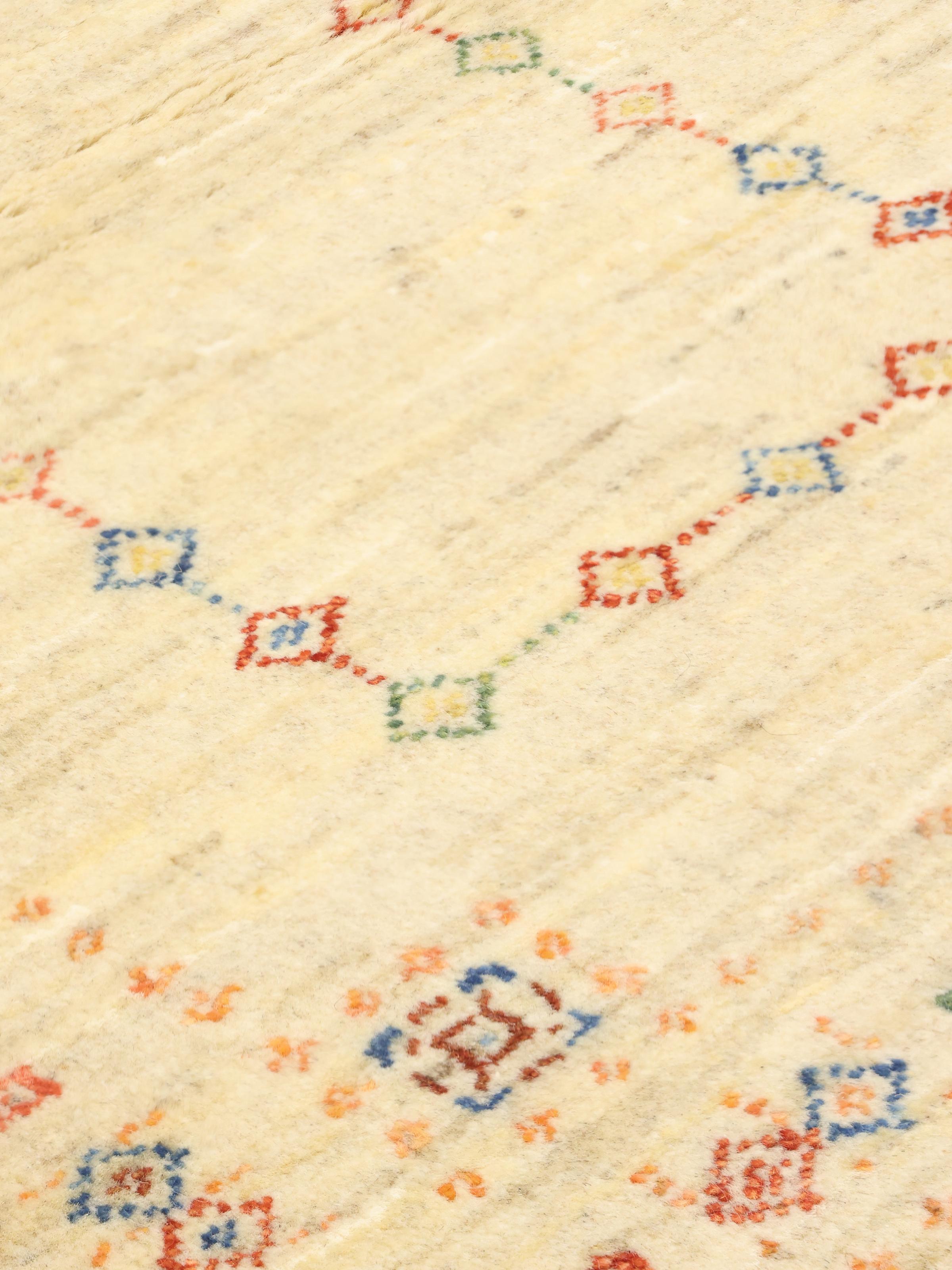
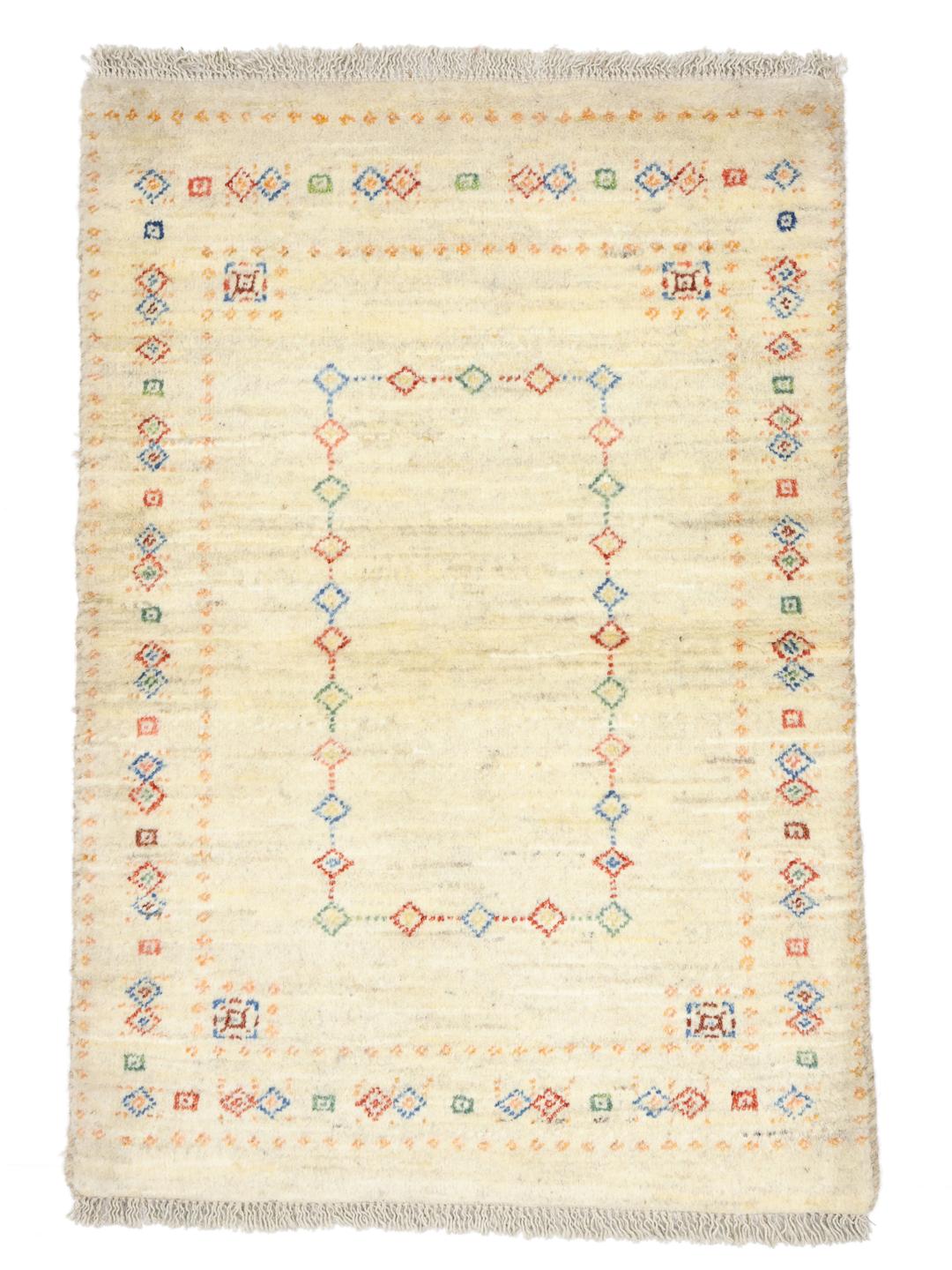
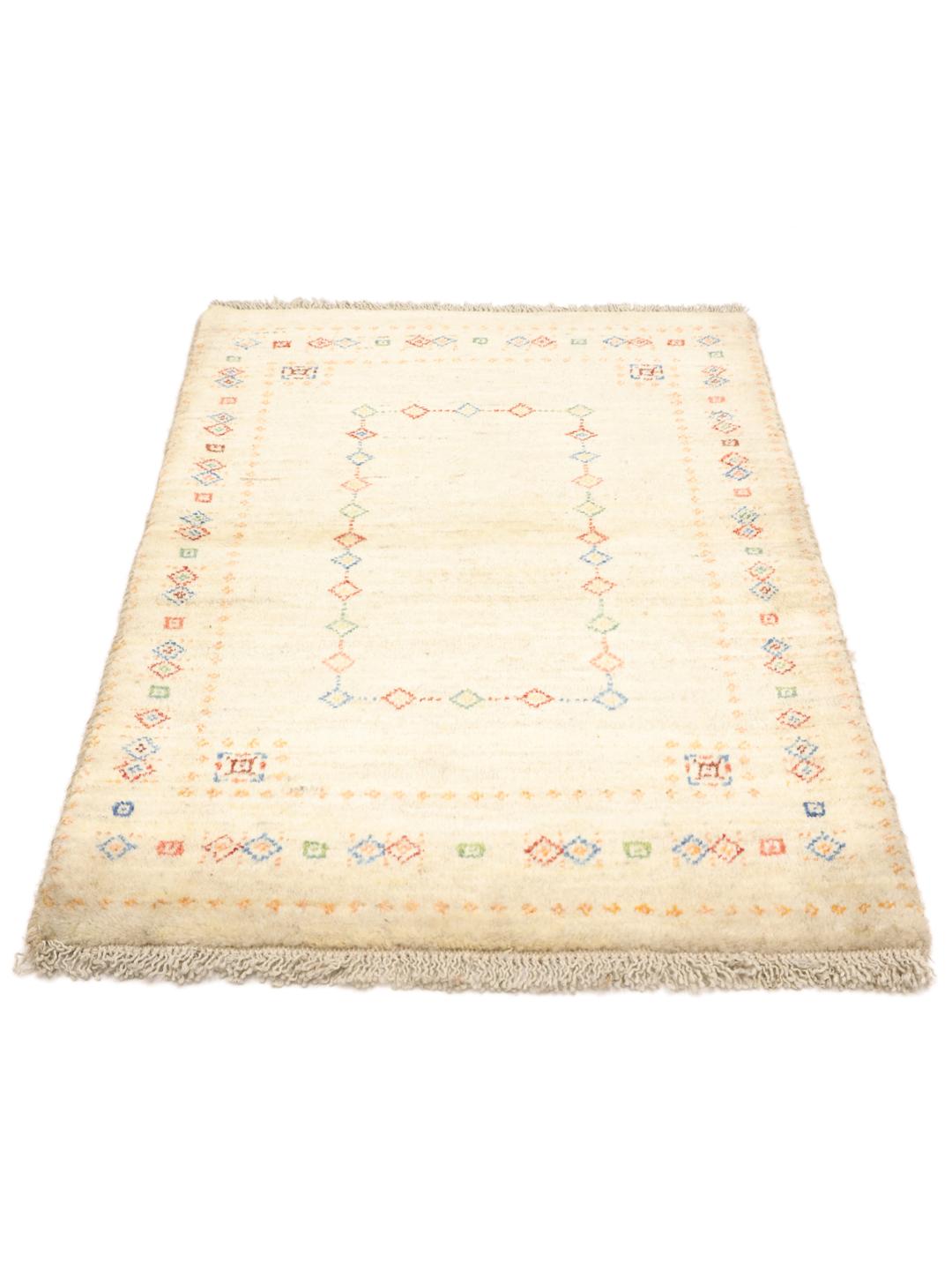
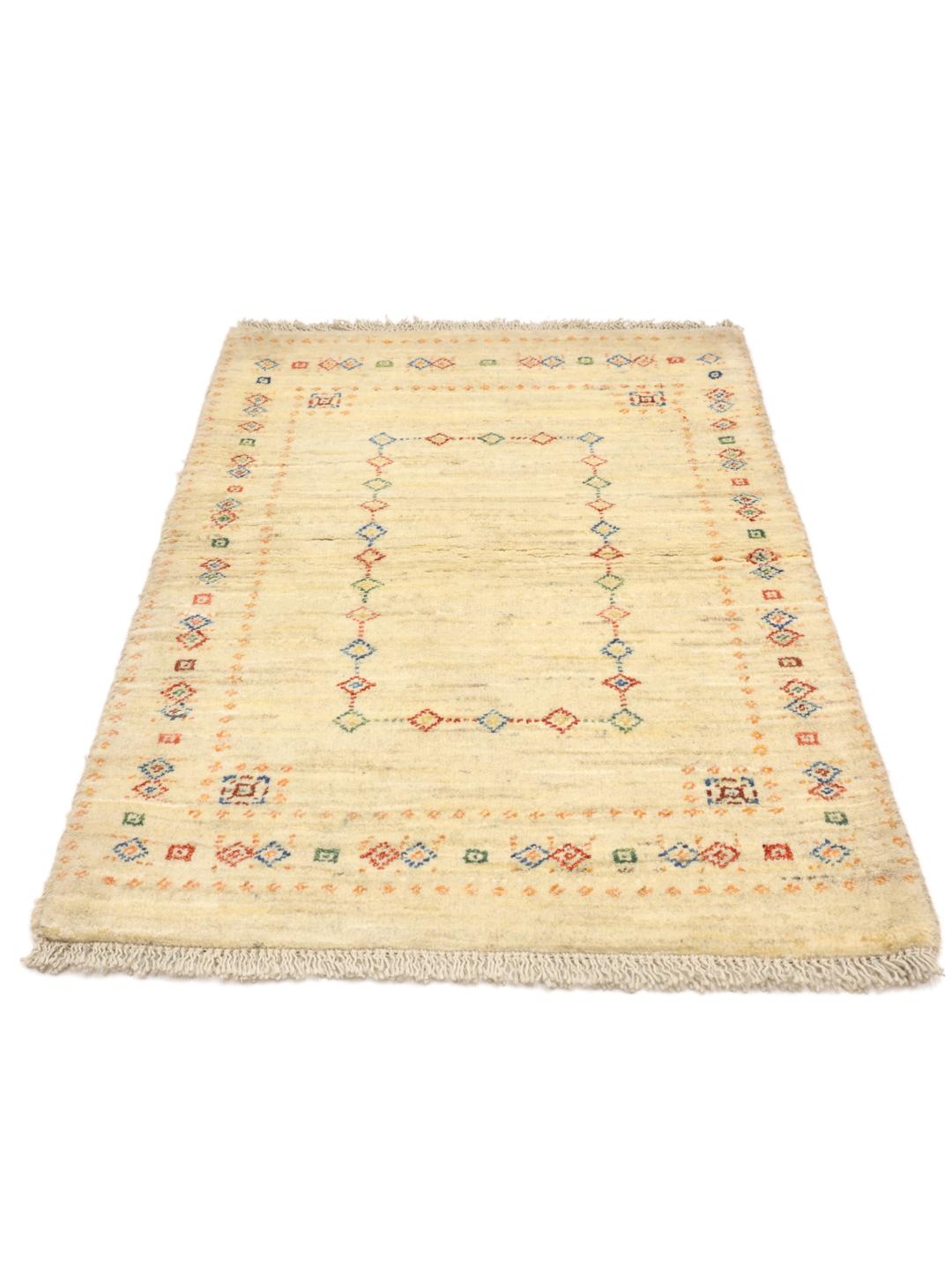
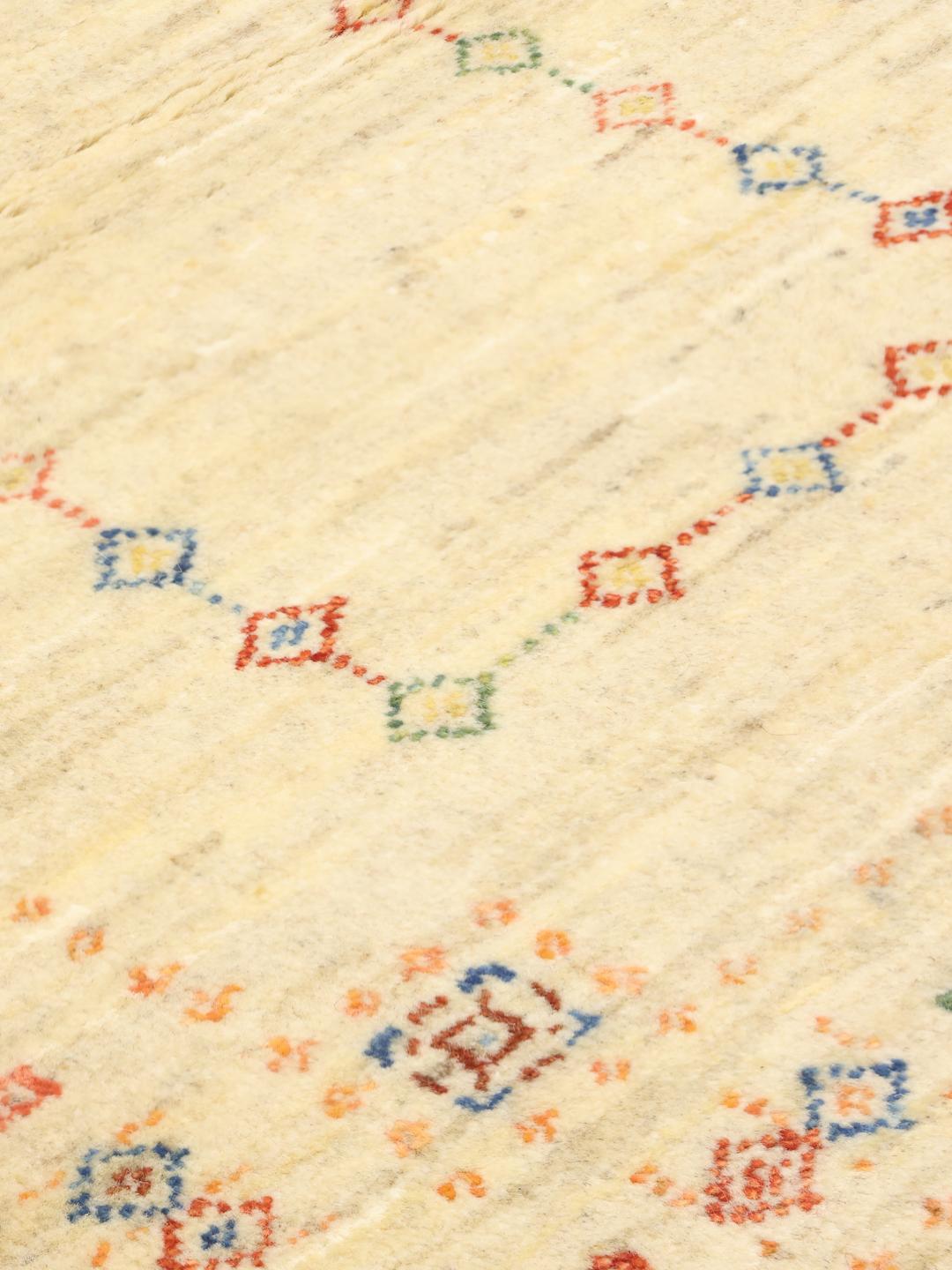
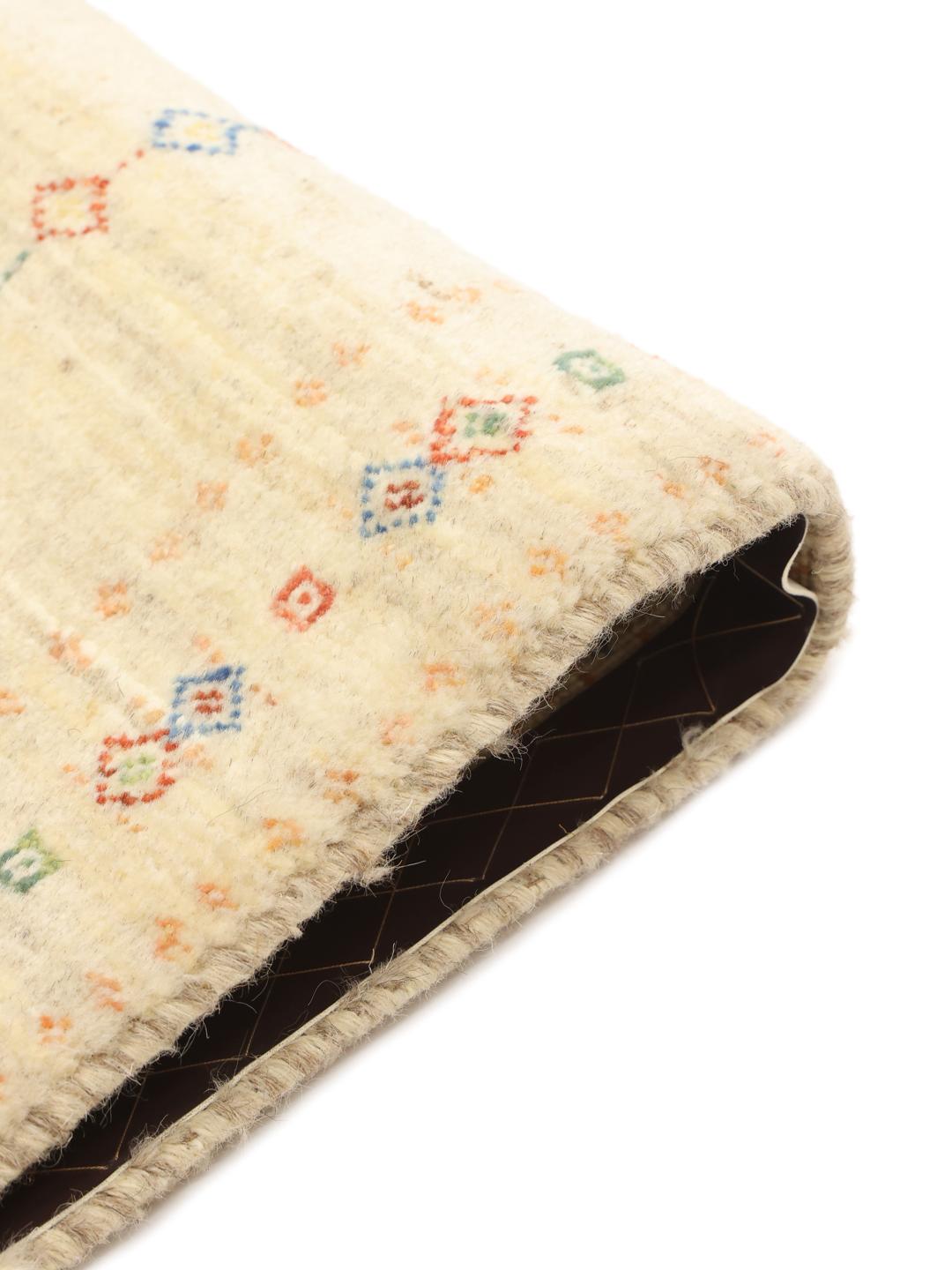
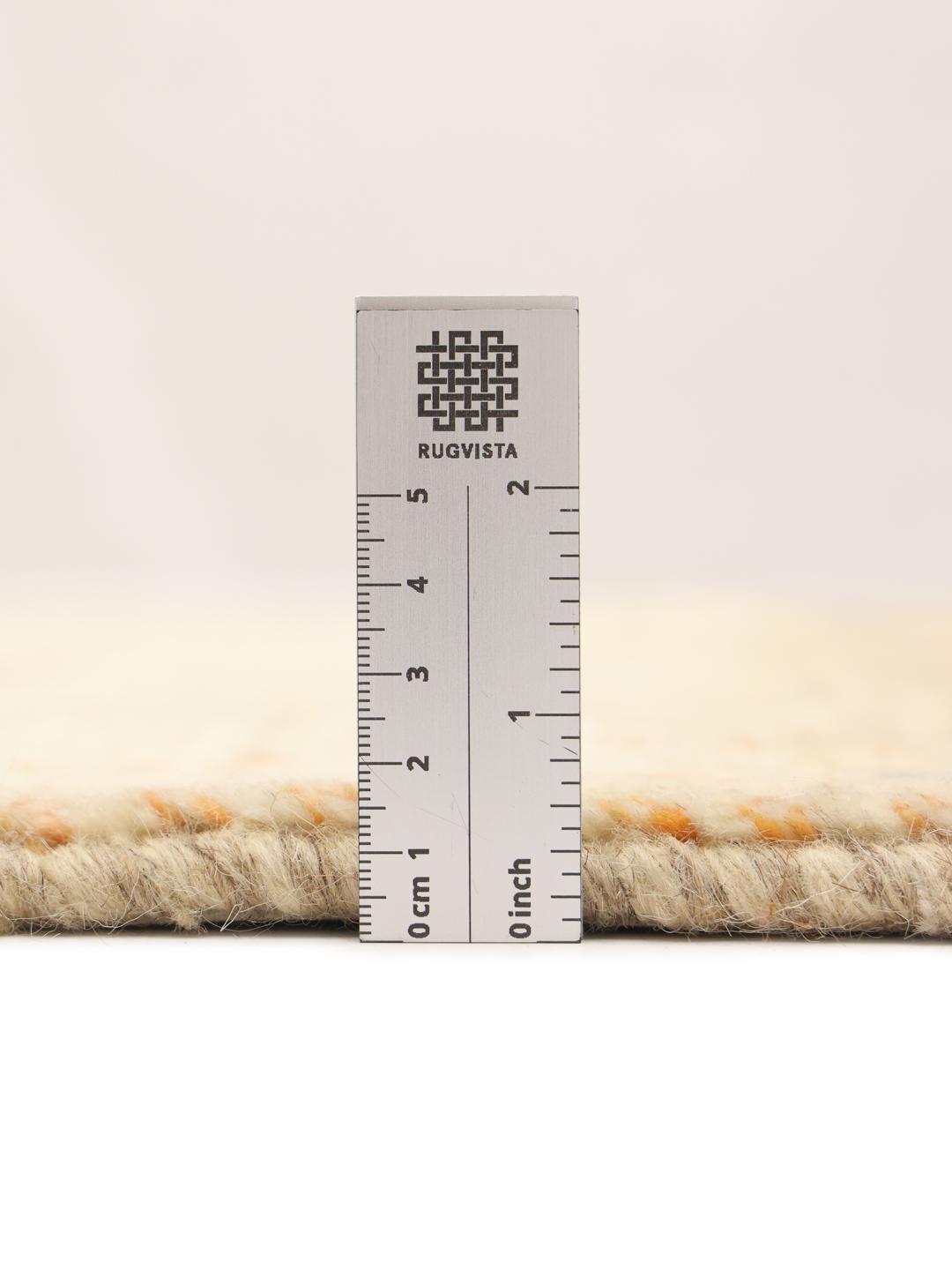
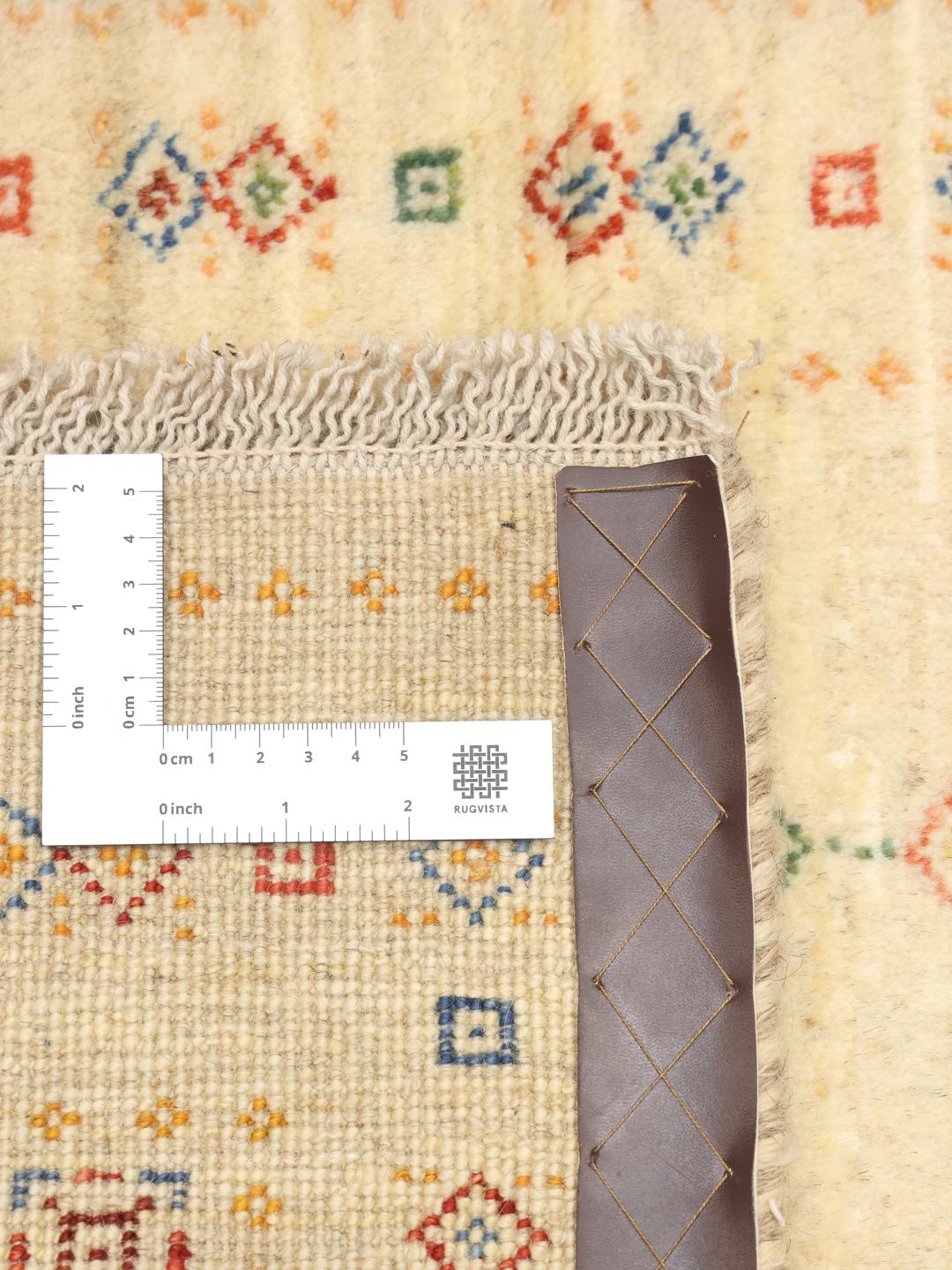
Gabbeh rugs have long been celebrated for their artistic freedom and connection to the nomadic life of the Middle East. Traditionally woven by tribal groups, these rugs were originally crafted for personal use, serving as warm bedding and floor coverings within tents, which is why their pile remains so famously soft and thick.
The term Gabbeh itself refers to a rug that is natural, raw, or unclipped. Unlike more formal, city-made rugs that follow strict, symmetrical patterns, the Gabbeh style is defined by its expressive, often minimalist aesthetic. It prioritises the feel of the wool and the depth of the colour over rigid, complex motifs.
Visually, these rugs are known for their open fields and whimsical, scattered geometric symbols. These motifs often represent aspects of the weaver's daily life, environment, or personal stories, rendered in a simplified, almost abstract language. The use of natural, undyed wool combined with vibrant, hand-spun accents gives them a timeless quality.
Today, these rugs are highly valued by collectors and homeowners alike for their authenticity and the human touch they bring to a space. Owning a Gabbeh is not just about acquiring a floor covering; it is about preserving a legacy of craft where the weaver's intuition and creativity are given free rein, resulting in a piece that feels deeply personal and alive.