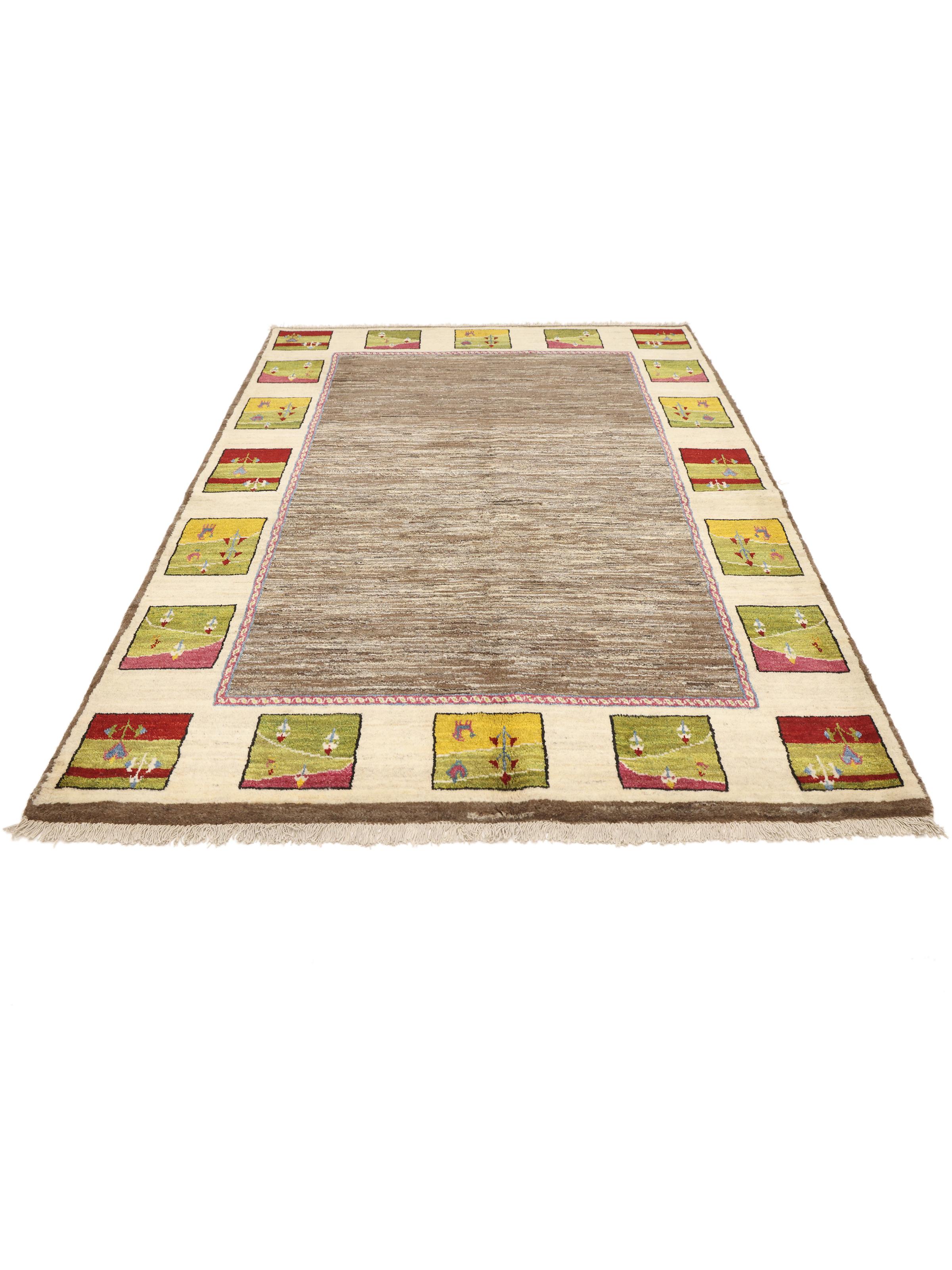
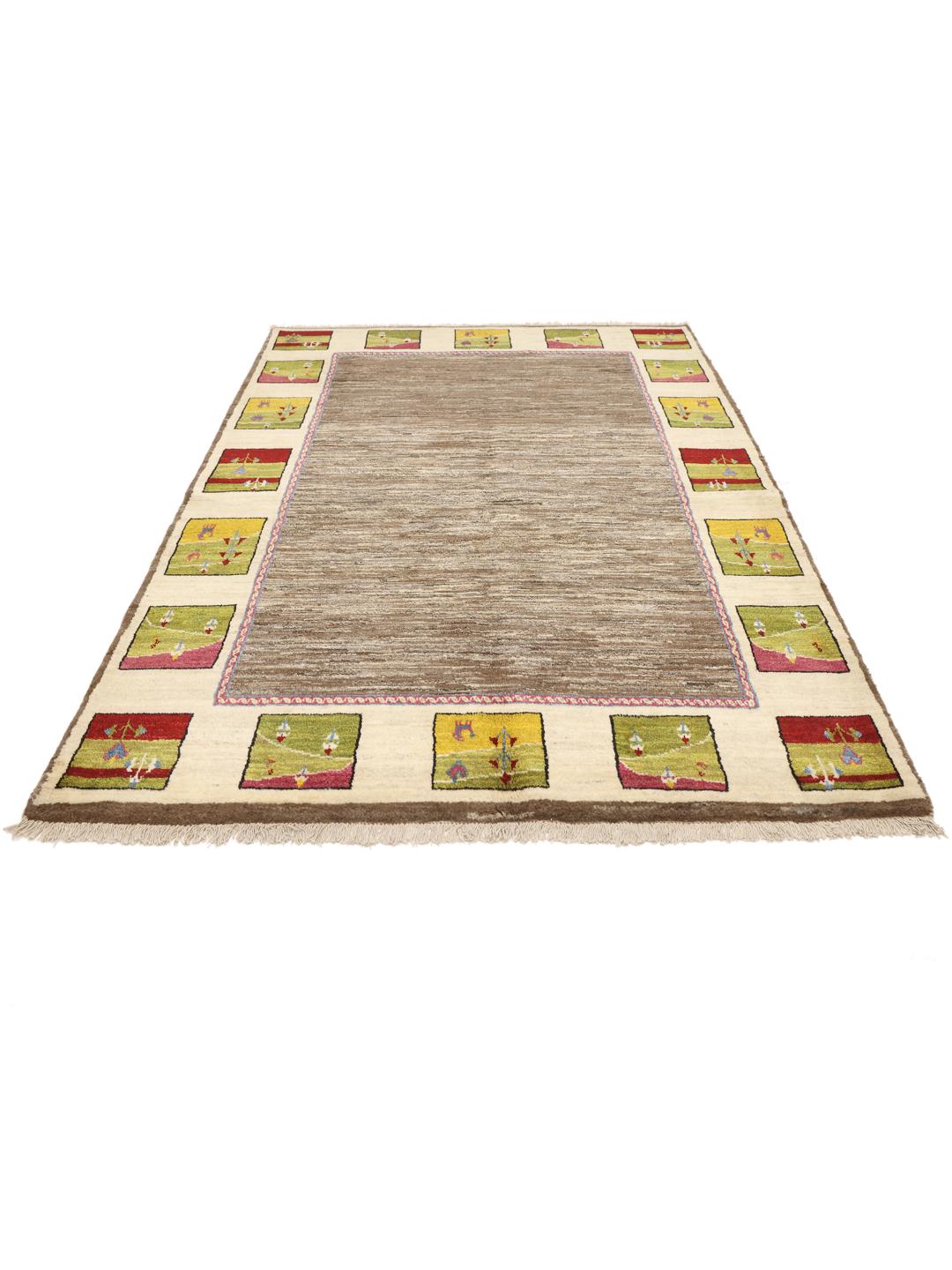
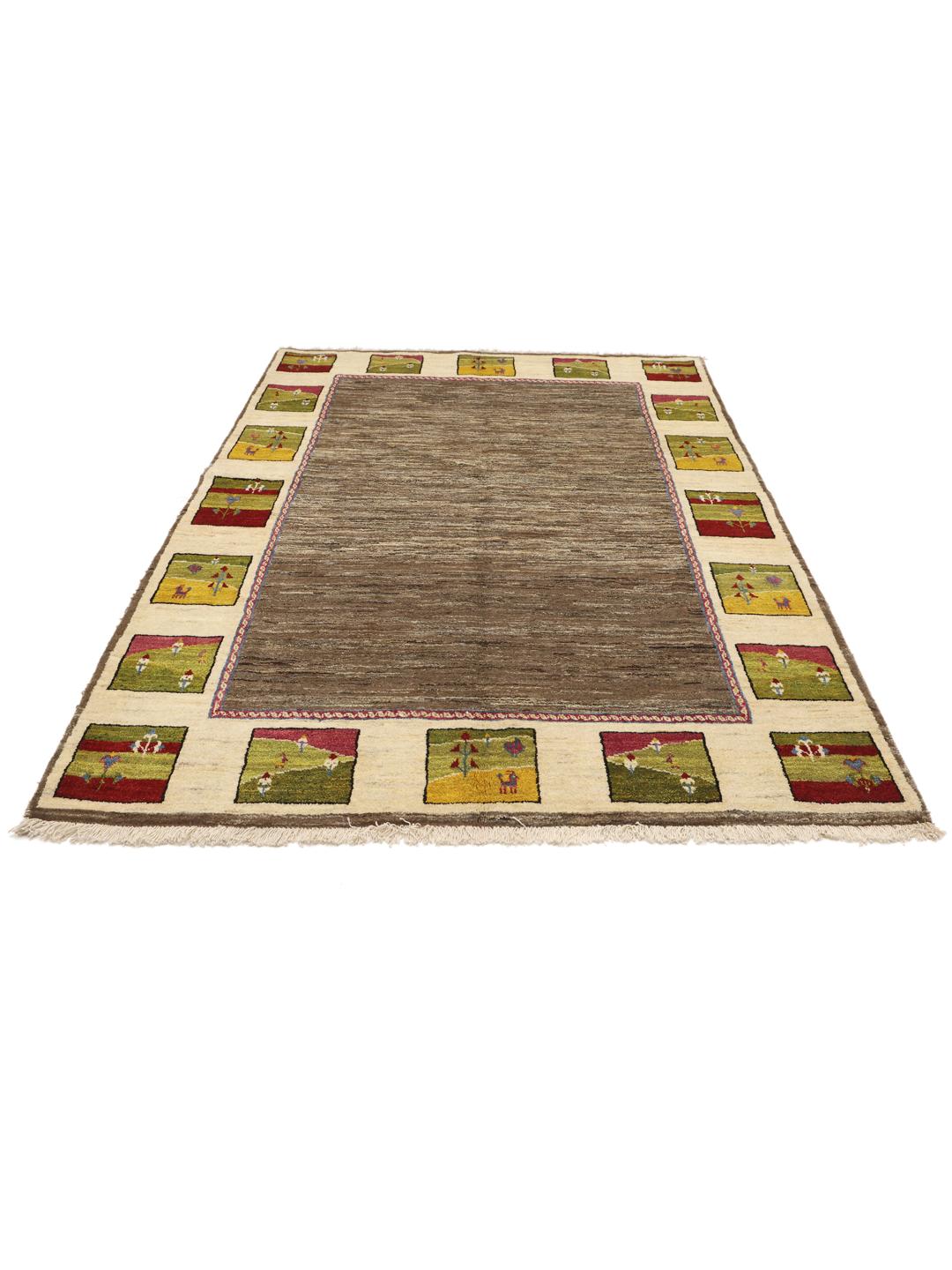
Gabbeh rugs have a long and storied history, originating from the nomadic tribes of the Middle East. Traditionally, these rugs were woven by tribal women for personal use, serving as thick, protective floor coverings for their tents. Unlike more formal urban rugs, the Gabbeh was designed for utility and comfort, often featuring simple, bold designs that were deeply personal to the weaver.
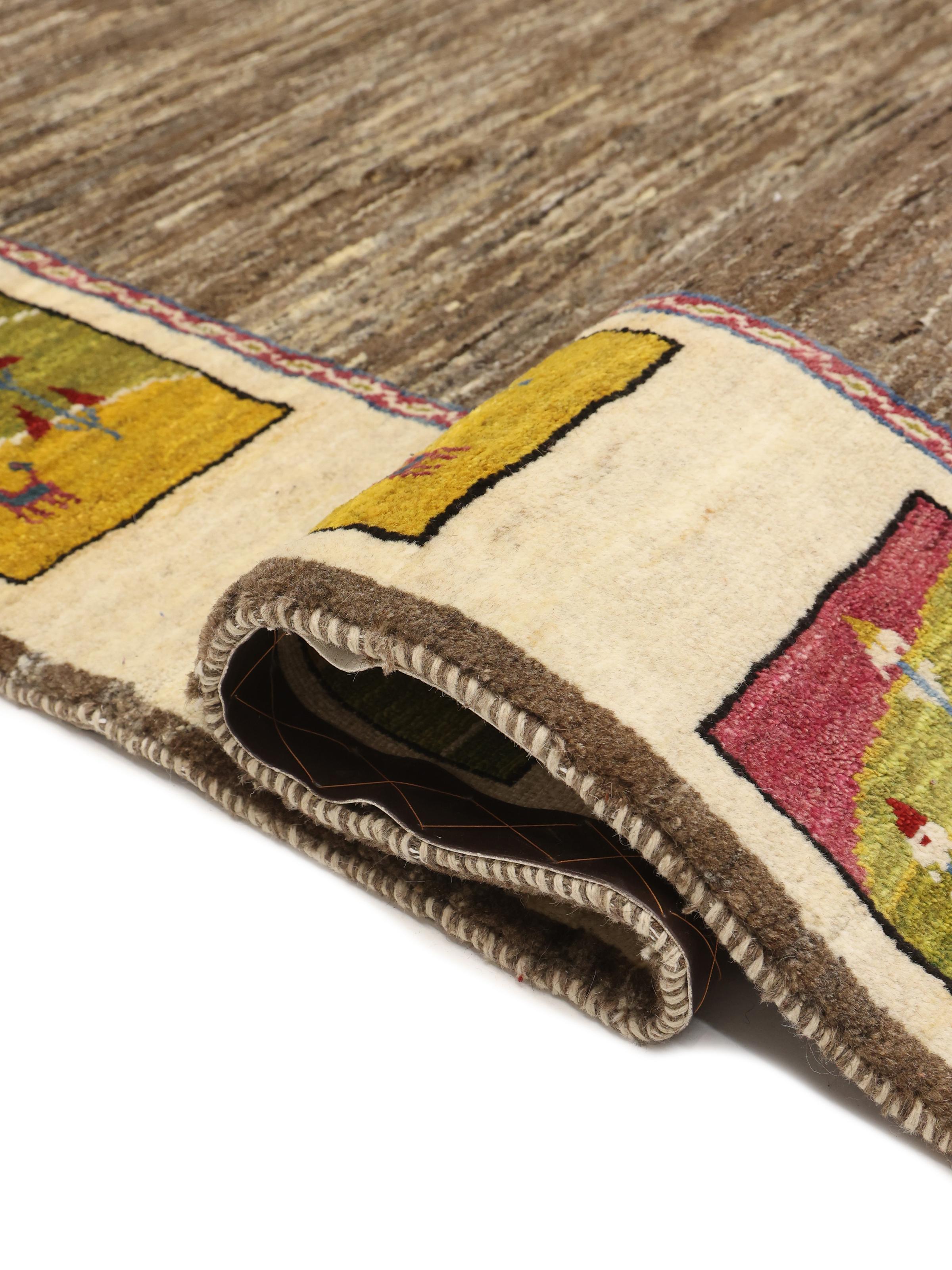
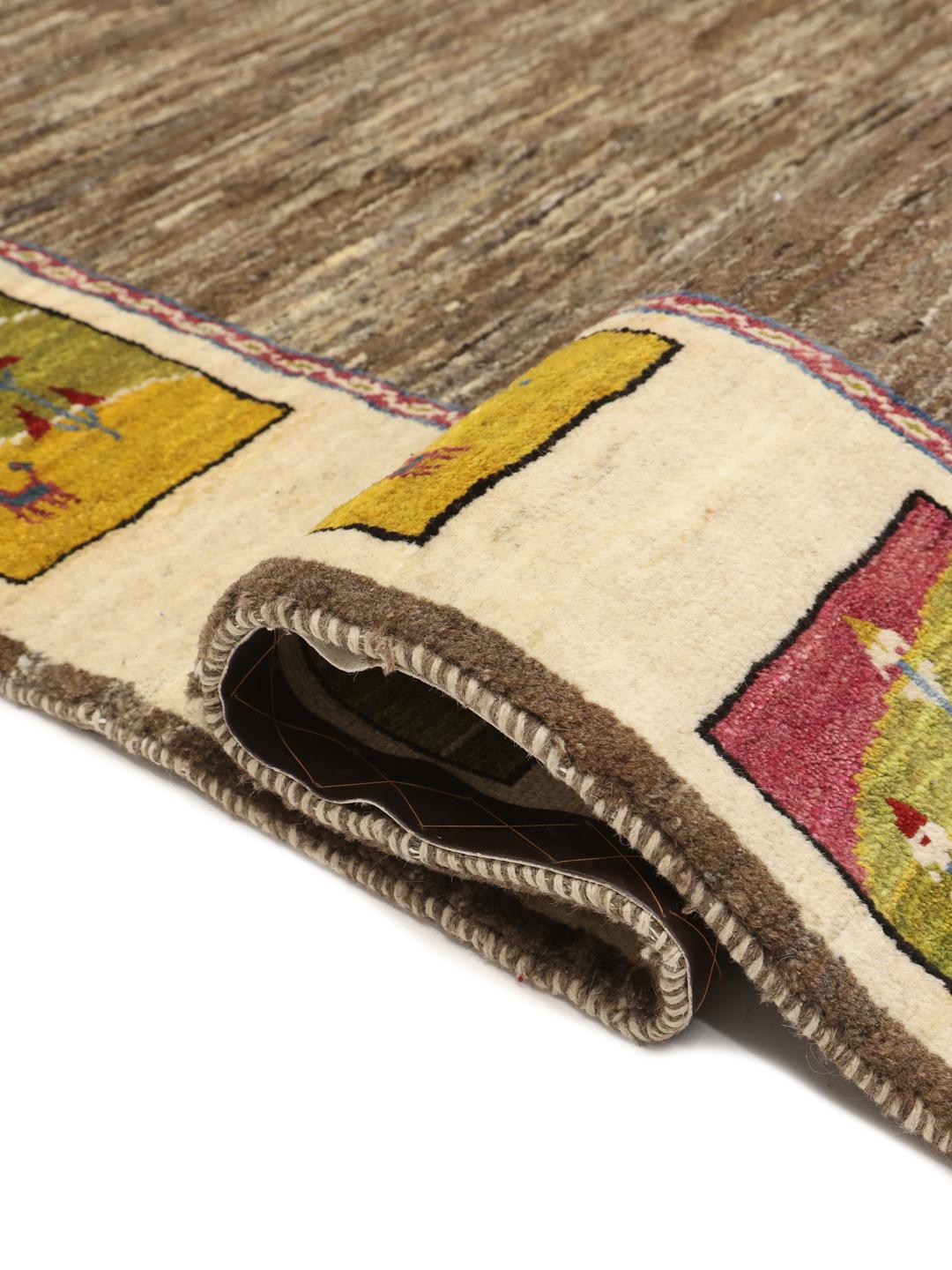
The term Gabbeh itself means raw, natural, or unclipped, which speaks to the rug's primitive and authentic roots. These pieces are known for their thicker pile and broader, more simplified patterns. Over time, the style has evolved from purely utilitarian objects into highly sought-after collector pieces that celebrate the beauty of imperfection and the creative freedom of the weaver.
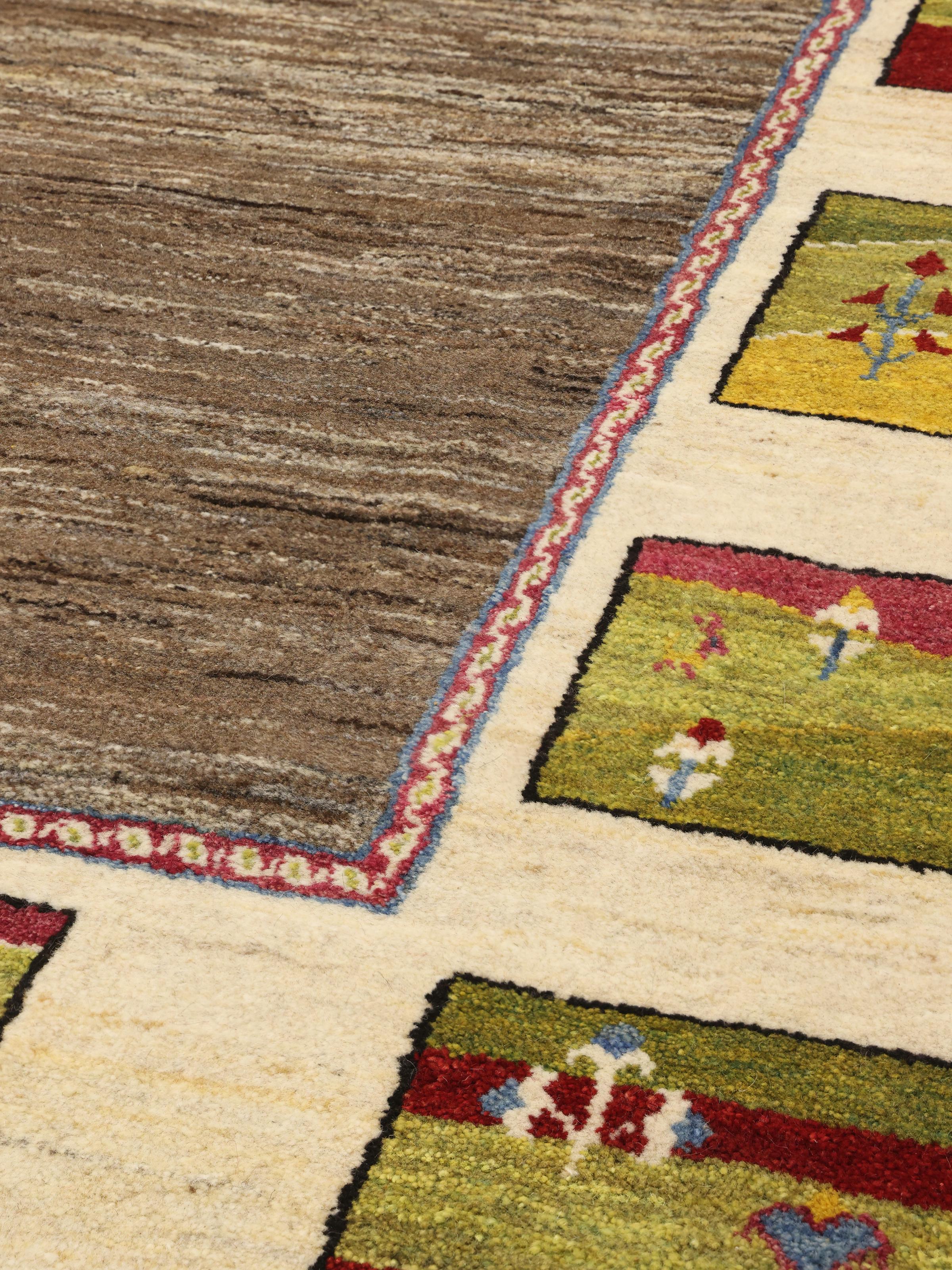
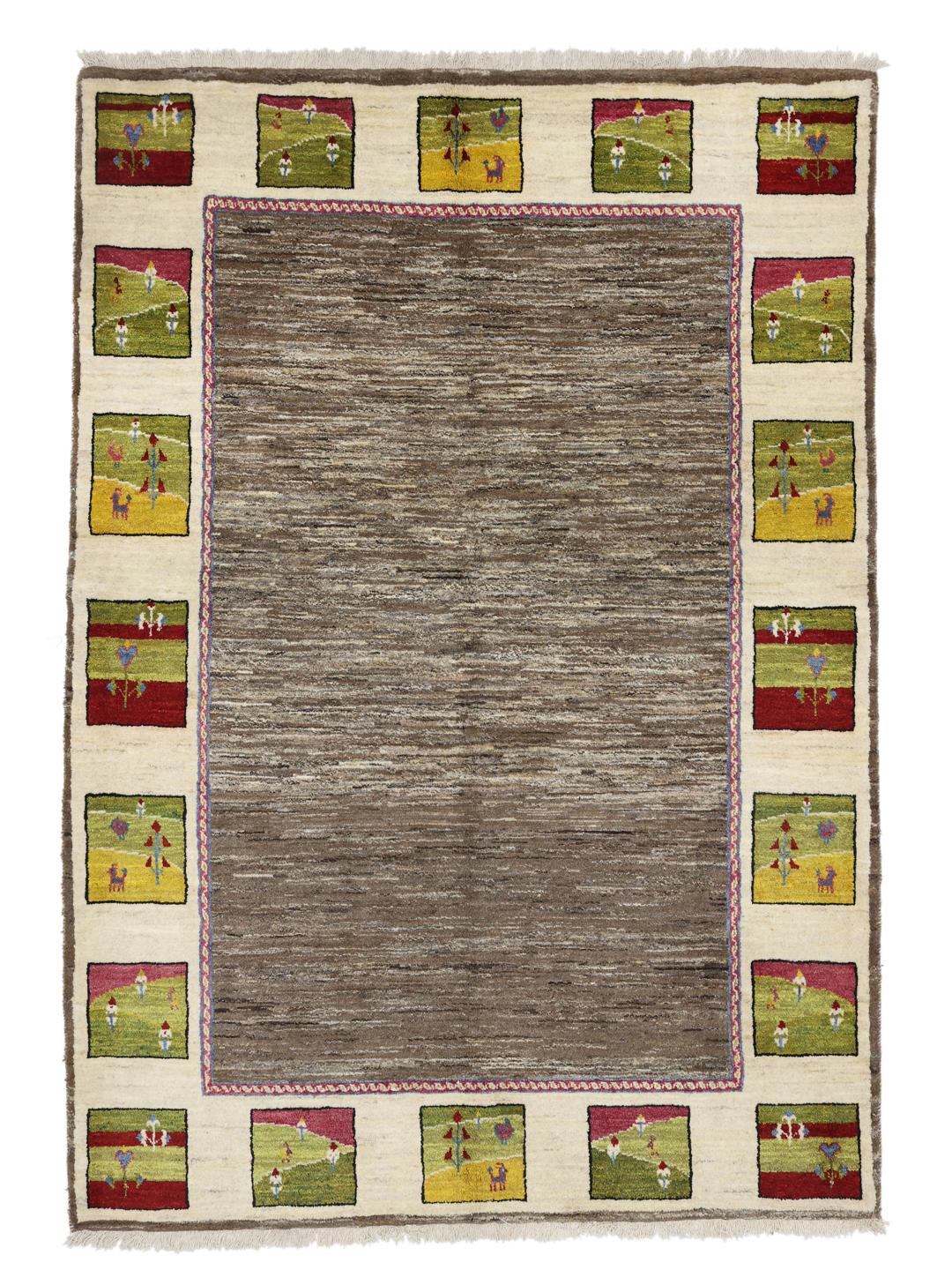
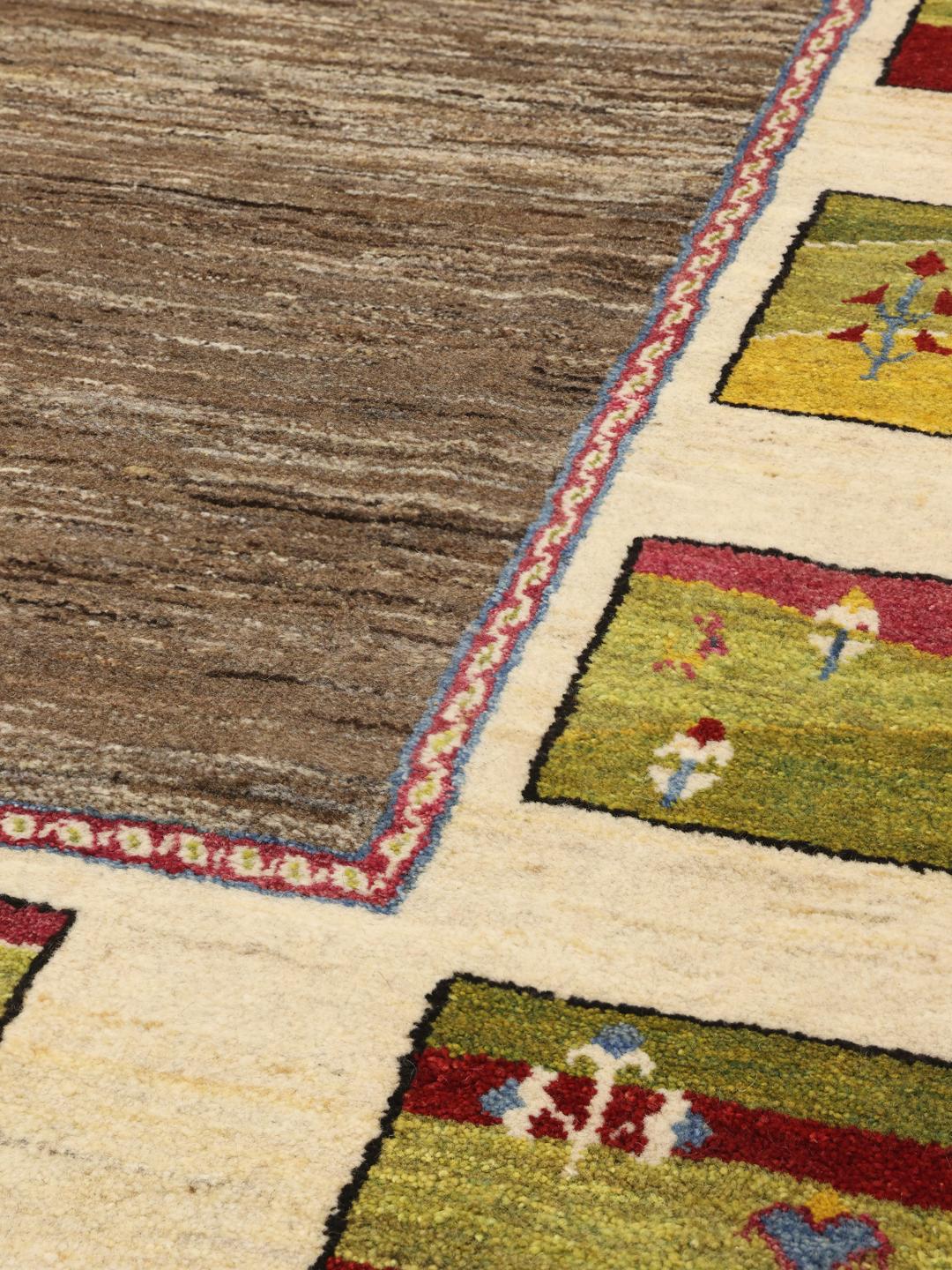
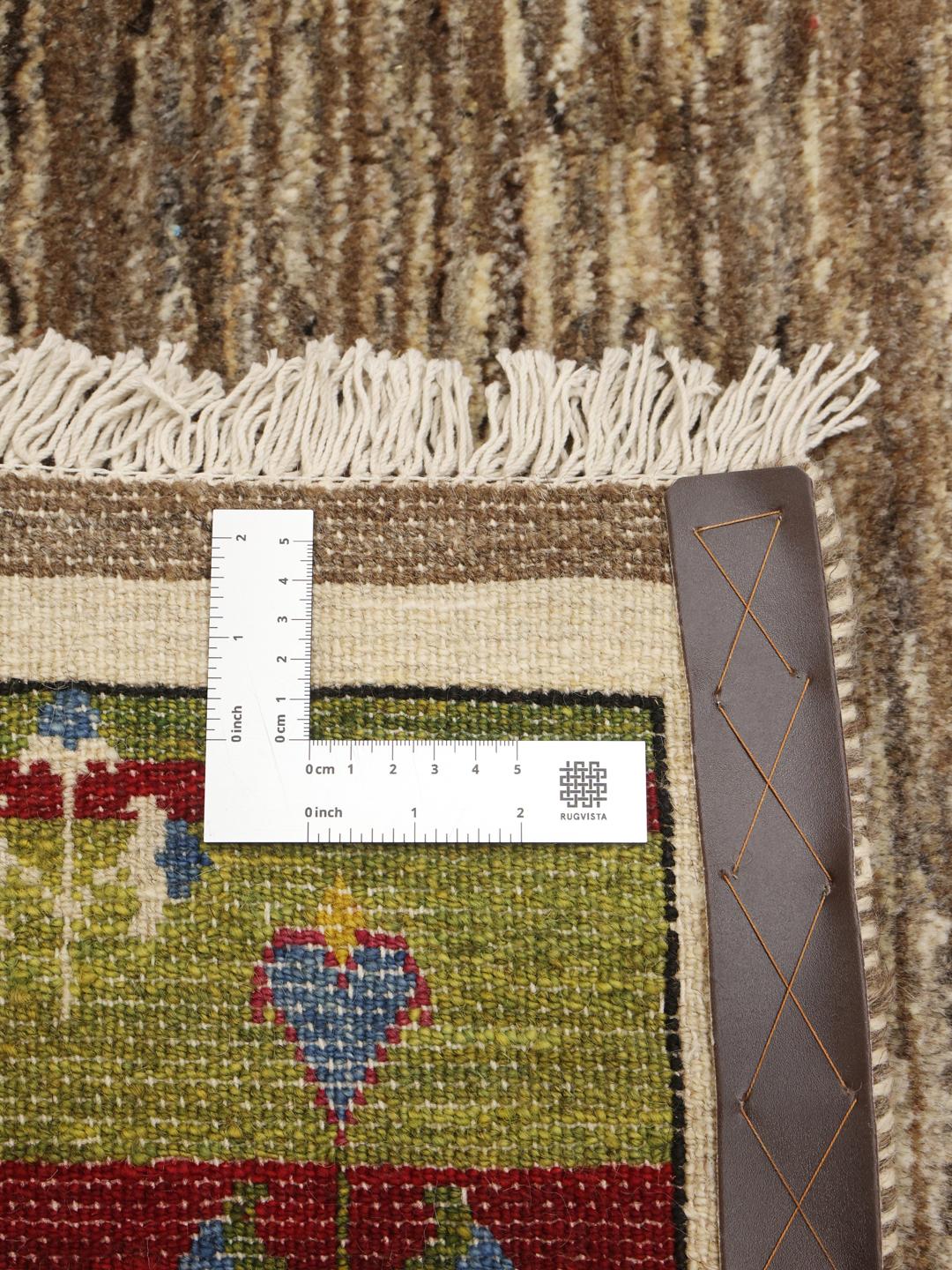
The visual language of this tradition is often abstract or pictorial, frequently incorporating simplified motifs of animals, plants, or daily life. In this particular piece, the inclusion of a decorative border with distinct scenes is a nod to that storytelling tradition, contrasting the minimalist, solid-coloured field with artistic vignettes that capture the spirit of its region of origin.
Today, owning a Gabbeh is about embracing a heritage of human expression. These rugs are valued not for their adherence to rigid, symmetrical designs, but for the soul and spontaneity found within their weave. By choosing this rug, you are preserving a piece of cultural history and bringing a sense of grounded, human-centric artistry into your living space.