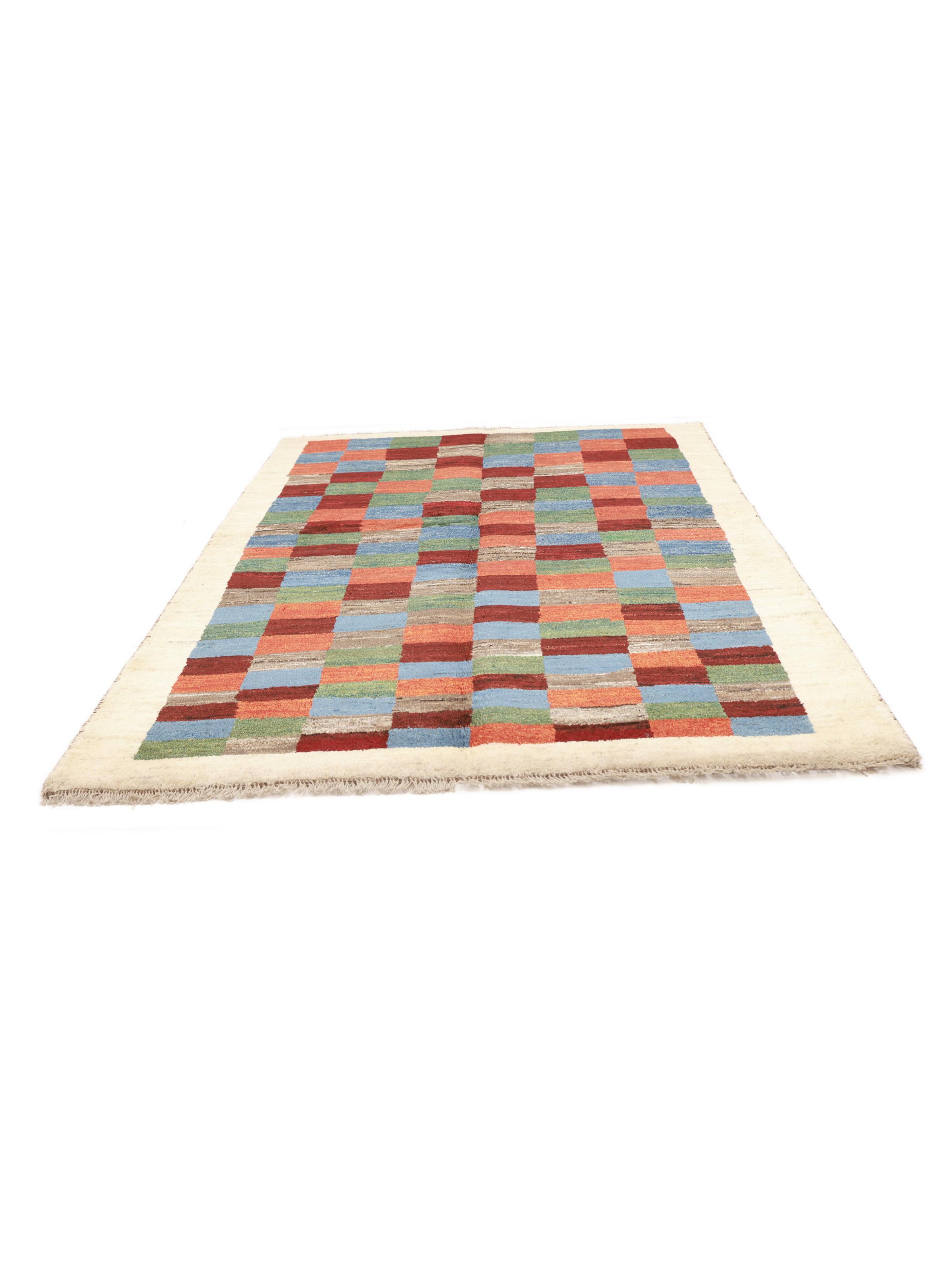
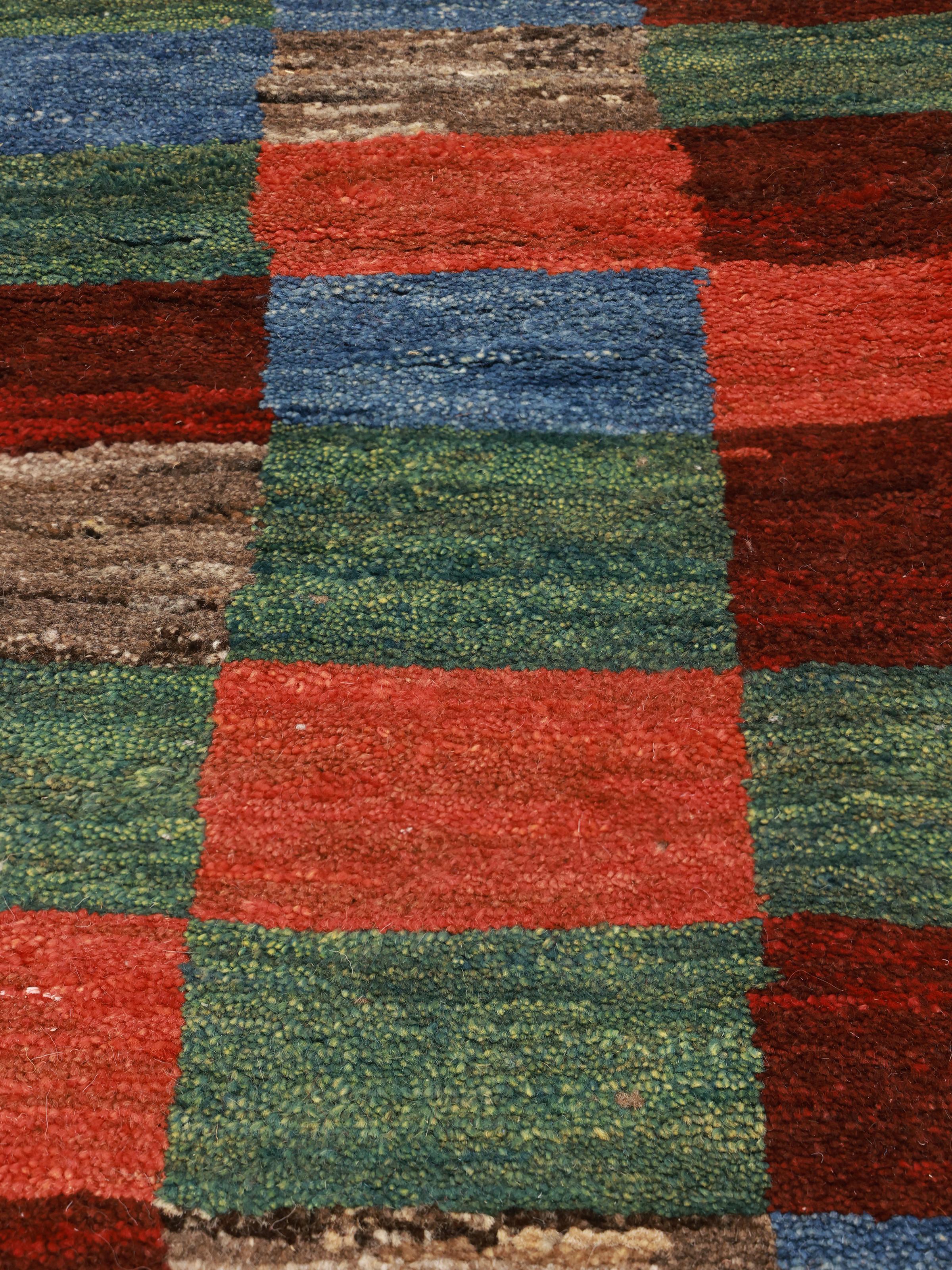
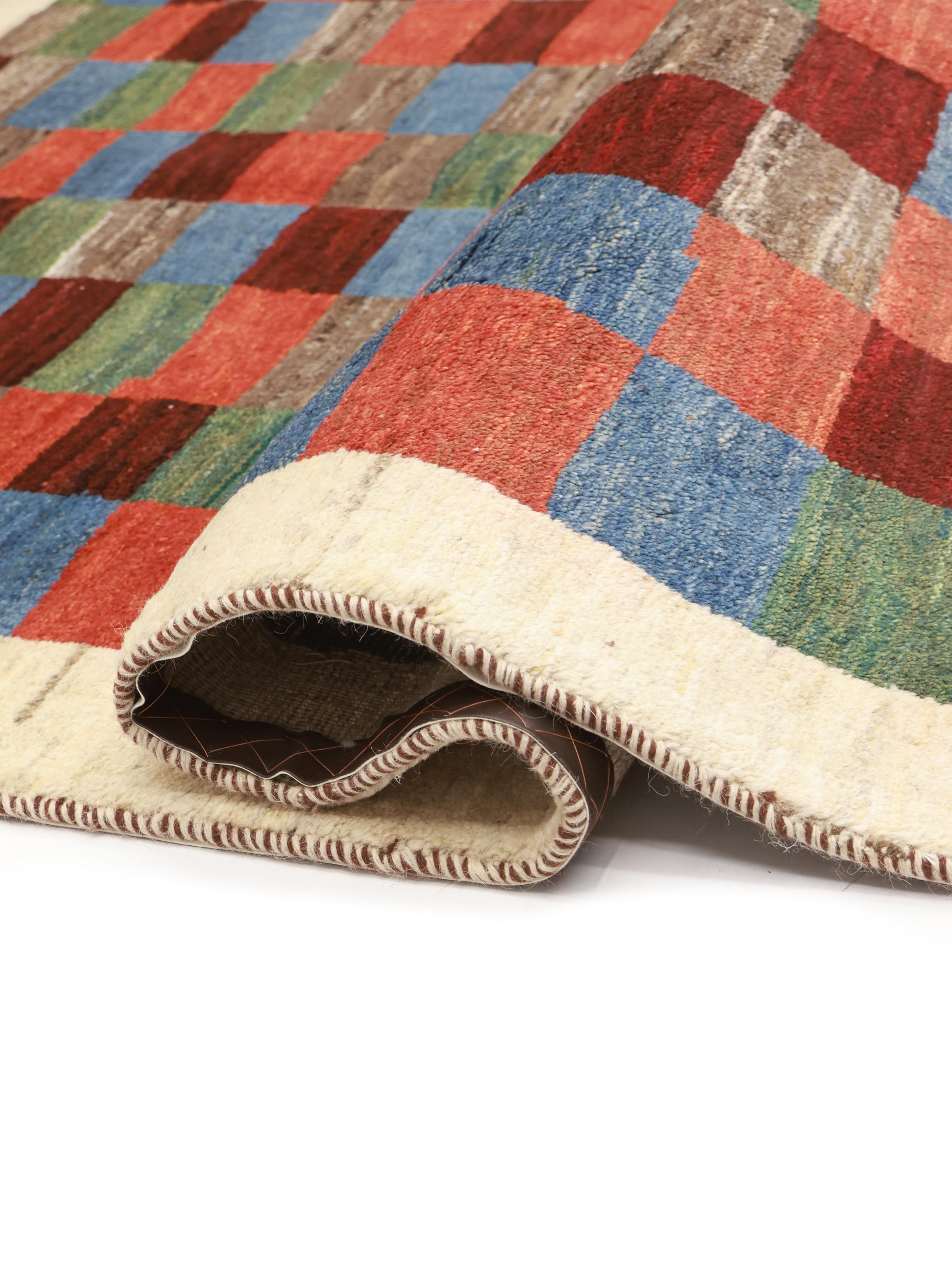
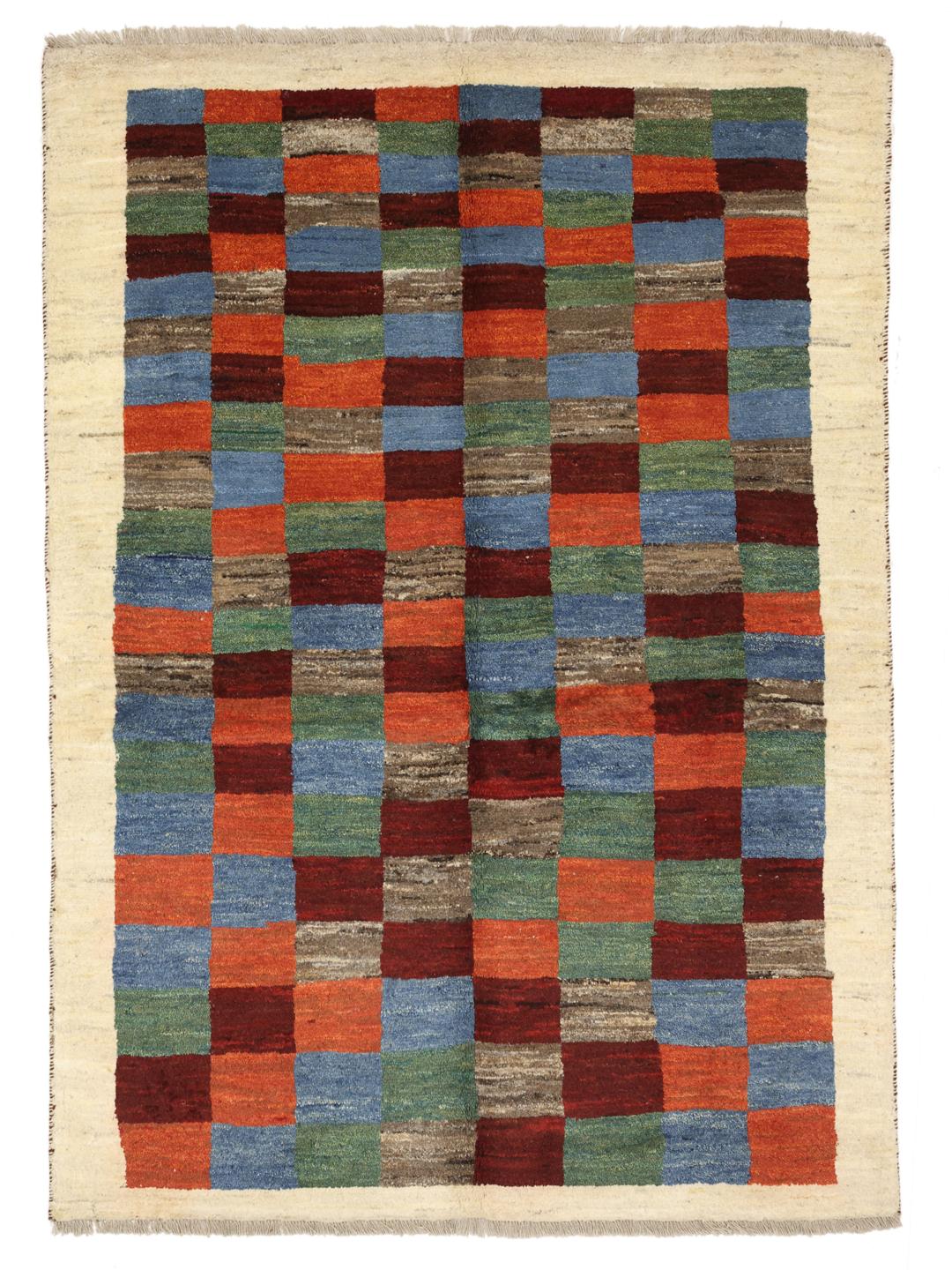
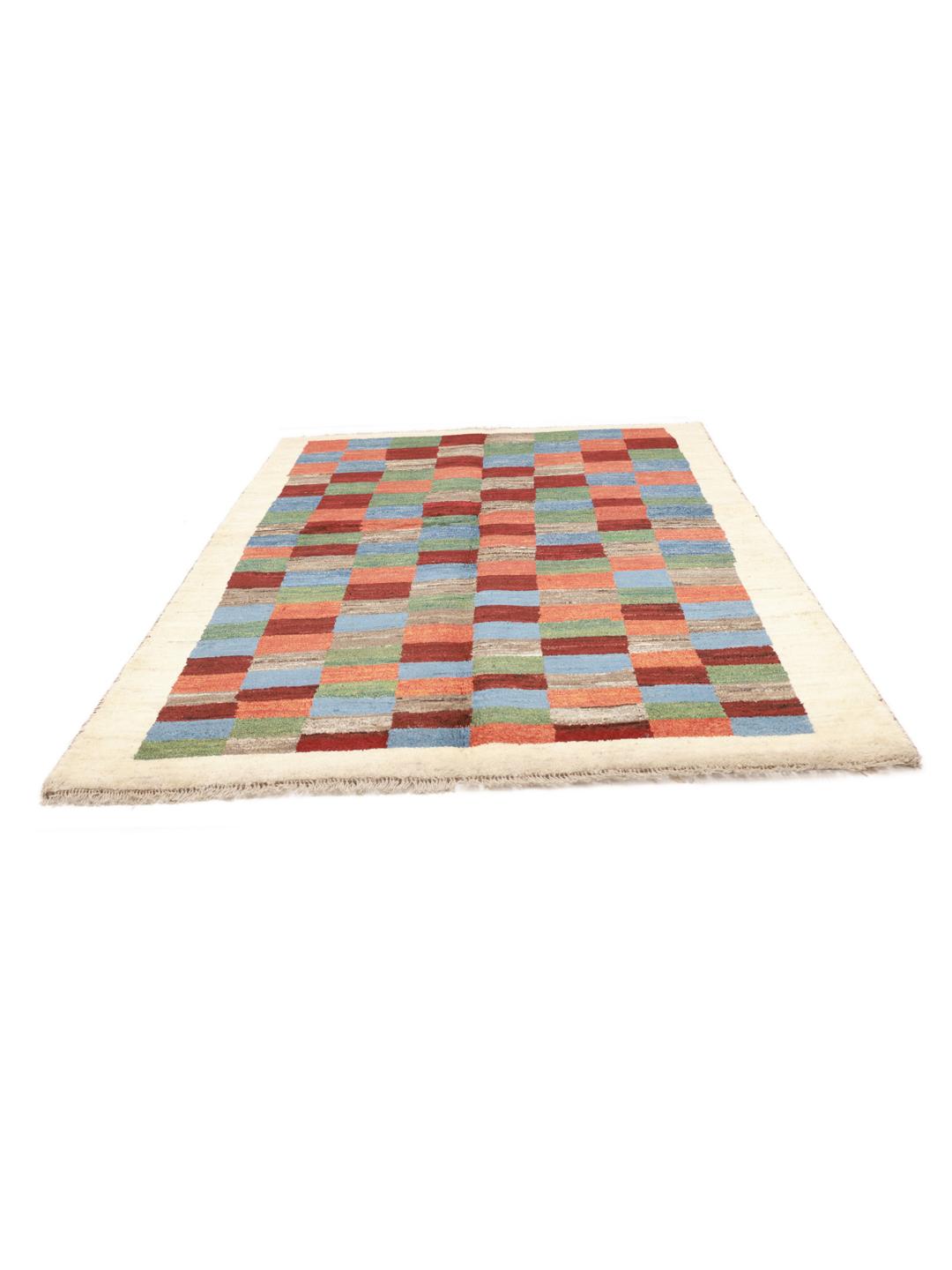
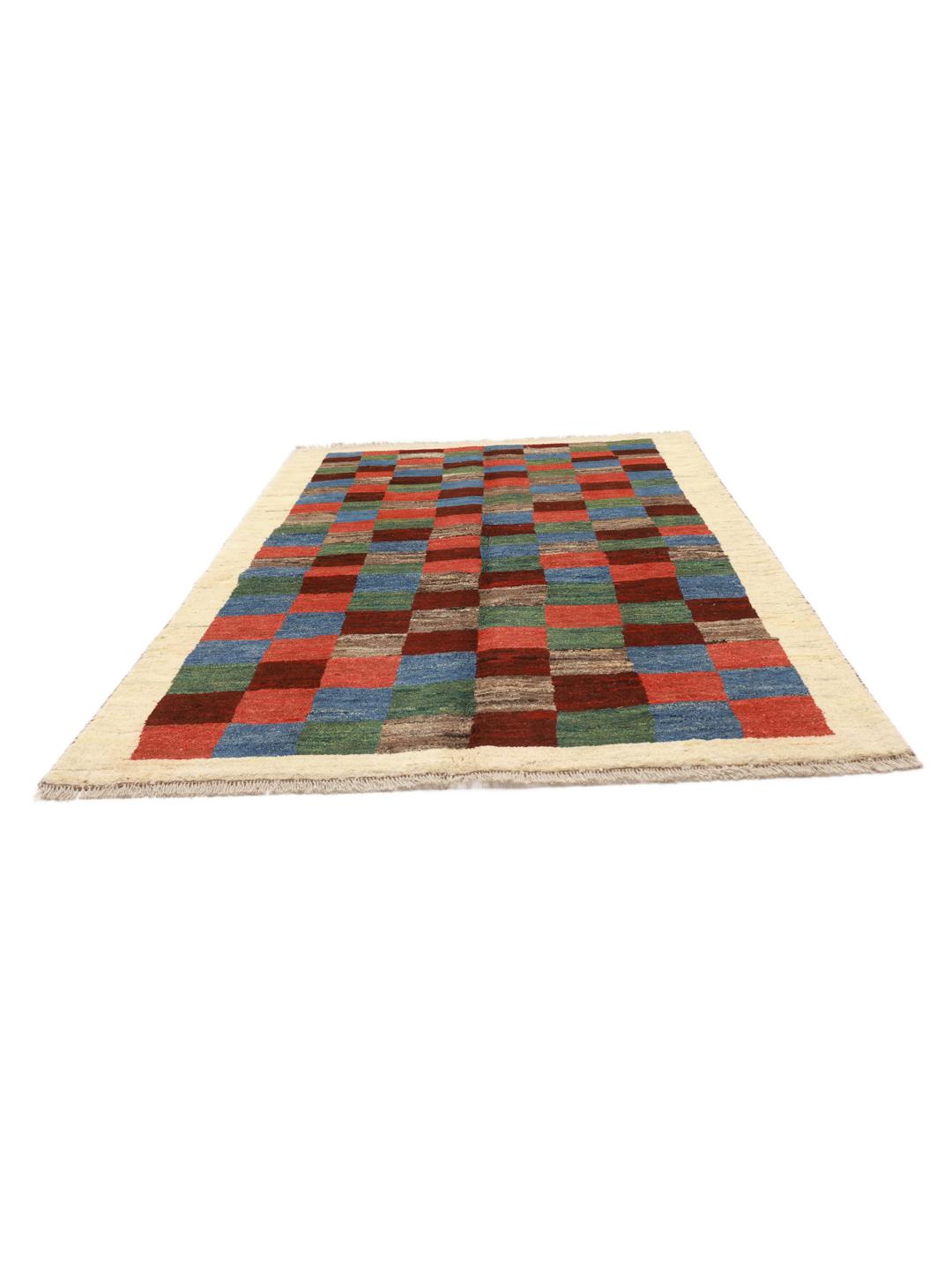
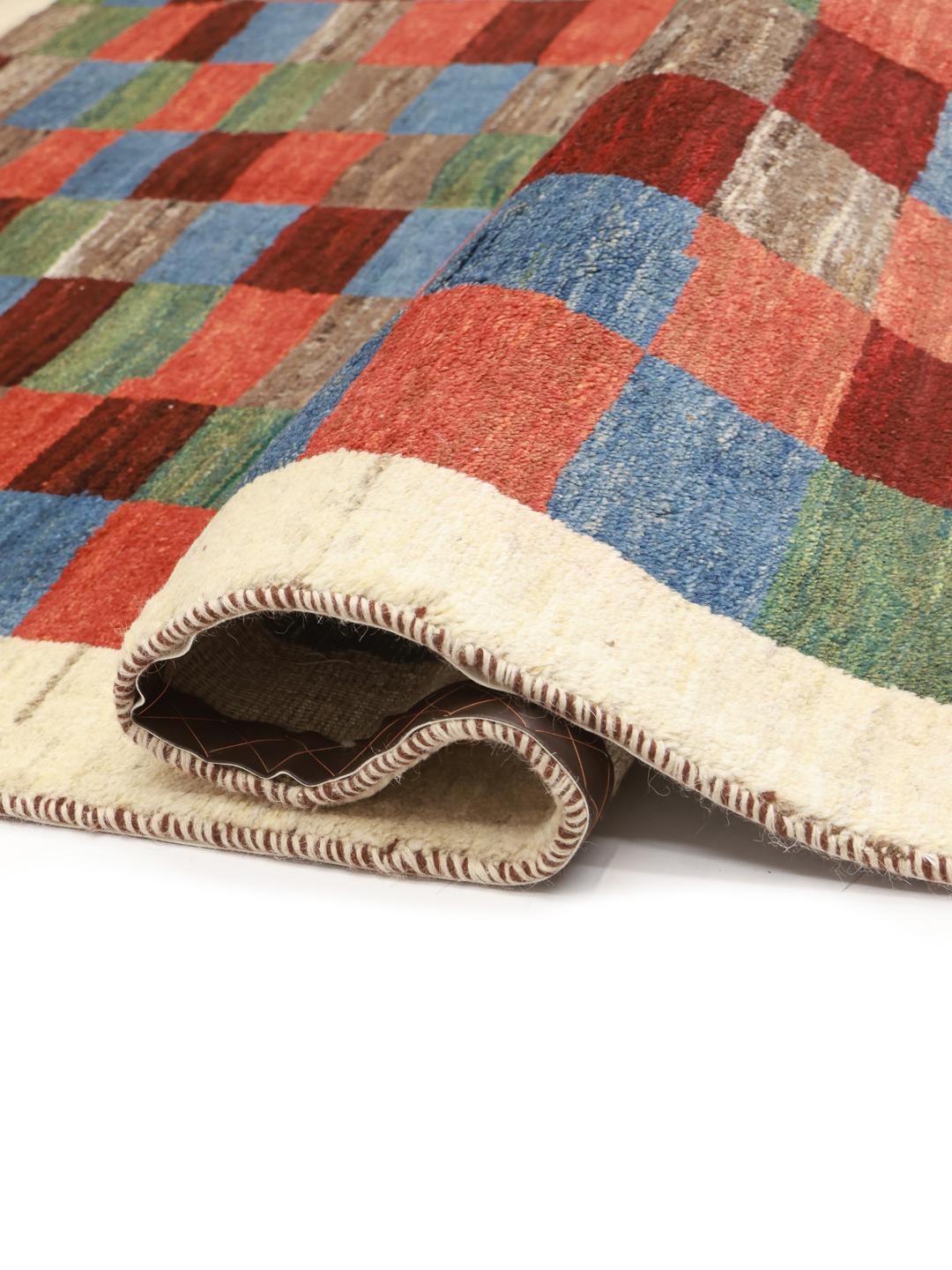
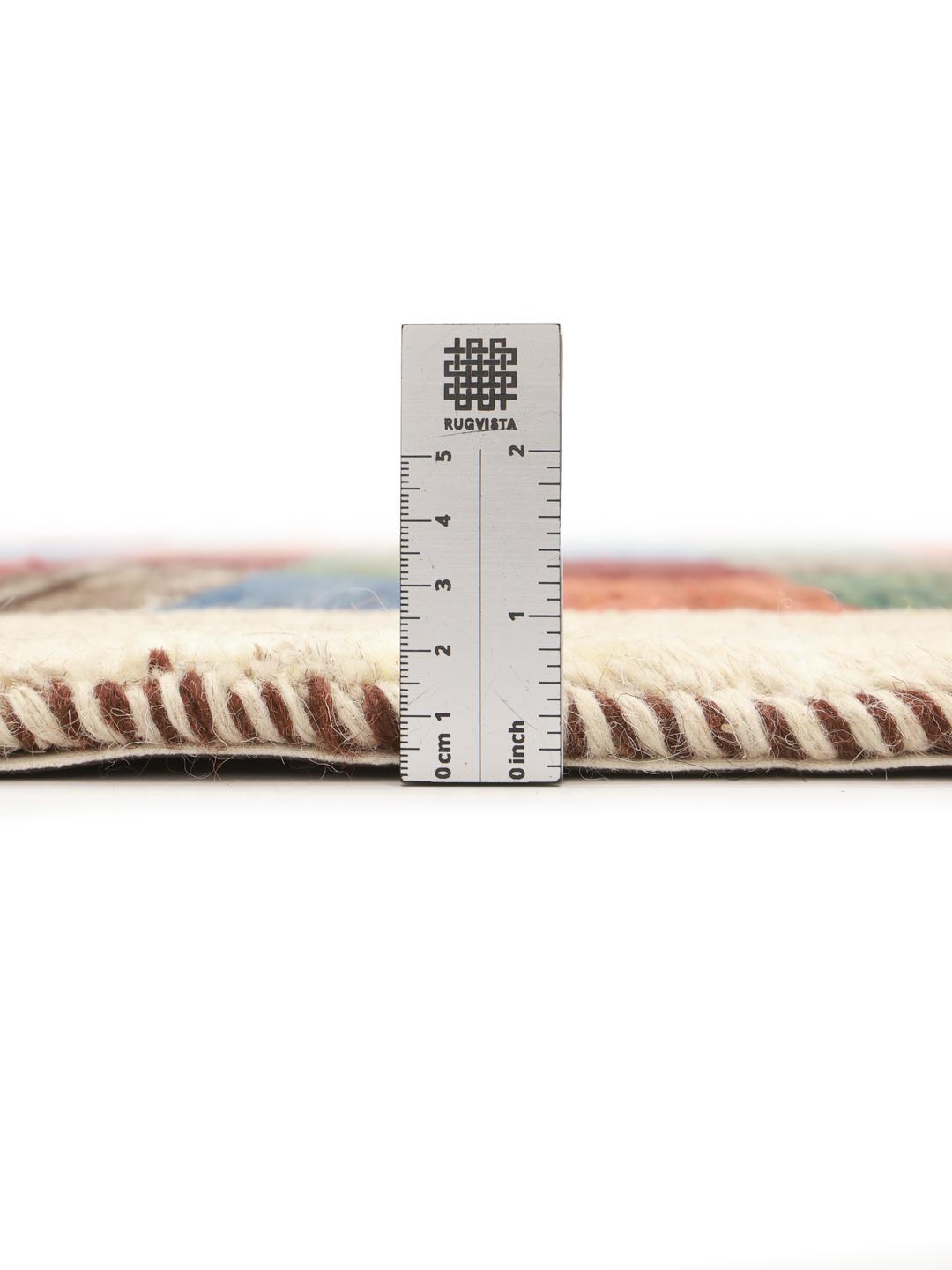
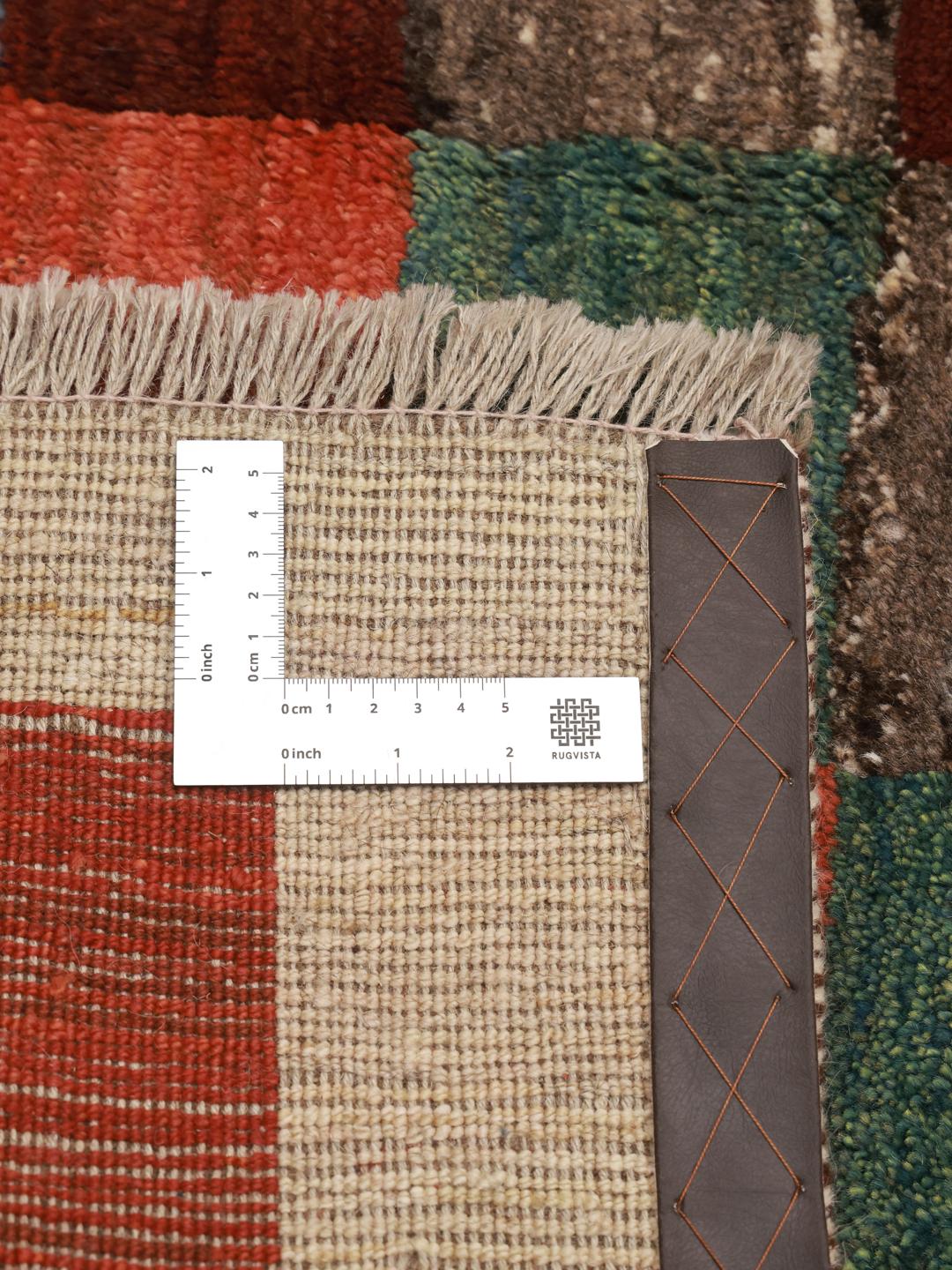
Gabbeh rugs originate from the nomadic tribes of the Middle East, primarily woven by the Ghashghai people. Traditionally, these rugs were created for personal, practical use within the home rather than for commercial sale, which explains their thick, heavy construction and remarkably simple, bold designs. They were designed to provide warmth and comfort on the cold floors of nomadic tents, serving as both bedding and floor covering.
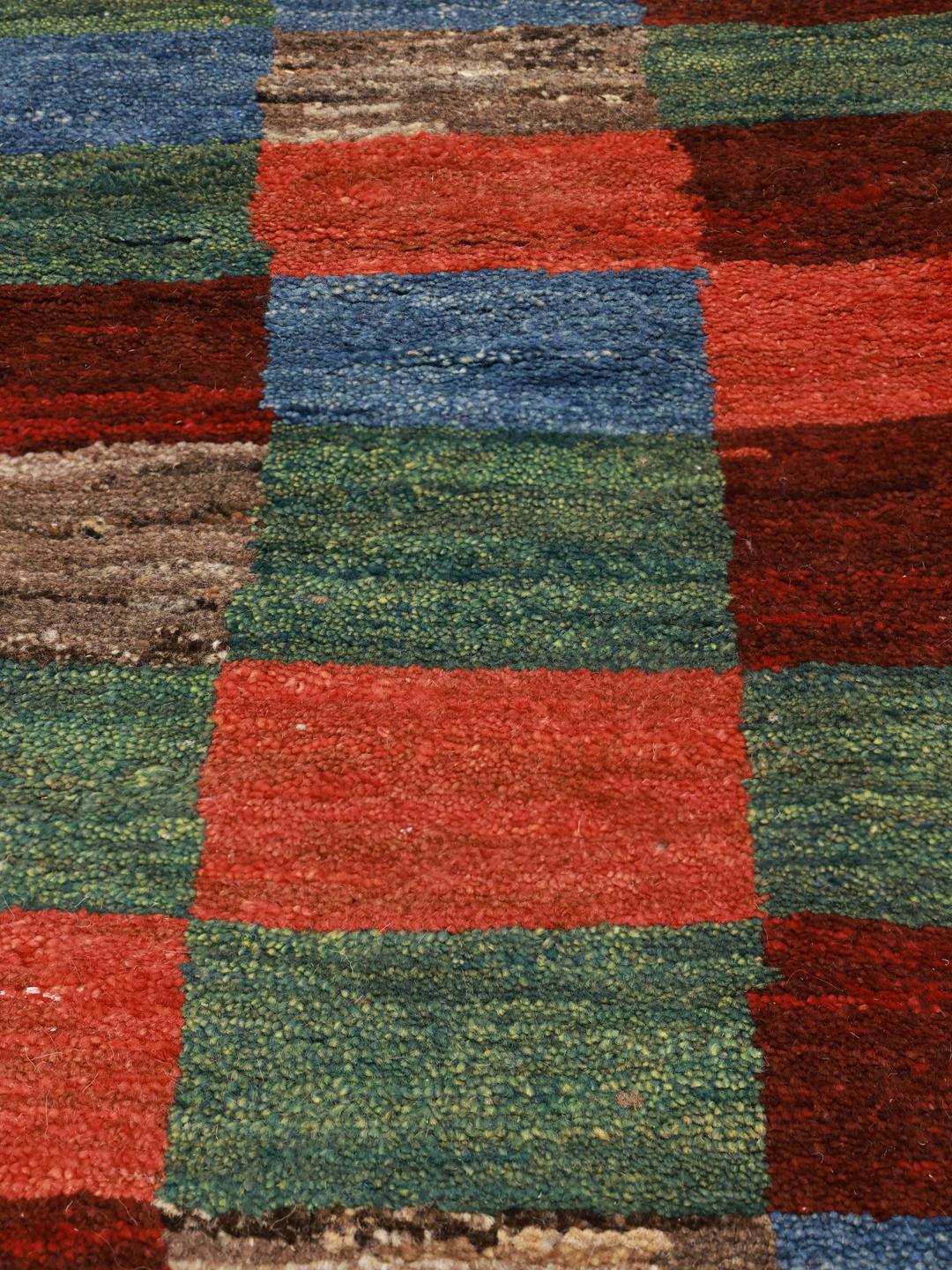
The term 'Gabbeh' itself translates to 'raw' or 'natural' in the local dialect, referring to the unrefined, primitive nature of the weave and the use of hand-spun, thick wool. This style is celebrated for its minimalist aesthetic, which contrasts sharply with the highly intricate floral patterns found in more formal city-made rugs. The focus is on the beauty of the wool and the expressive, often improvised use of colour.
Signature design elements of the Gabbeh include large, open fields of solid colour or simple geometric motifs like the checkered pattern seen here. These designs are often influenced by the weaver's surroundings, memories, or even their current mood, resulting in a highly personal narrative. The borders are typically simple or entirely absent, allowing the main field to dominate the visual space and create a strong, modern-looking graphic effect.
Today, these rugs are highly sought after by collectors and interior designers alike for their artistic spontaneity and cultural authenticity. Owning a piece like this is a testament to the skill of the weaver and the enduring appeal of nomadic art. It represents a bridge between ancient traditions and contemporary home styling, offering a piece that is both a functional utility and a soulful, storied addition to any modern living space.