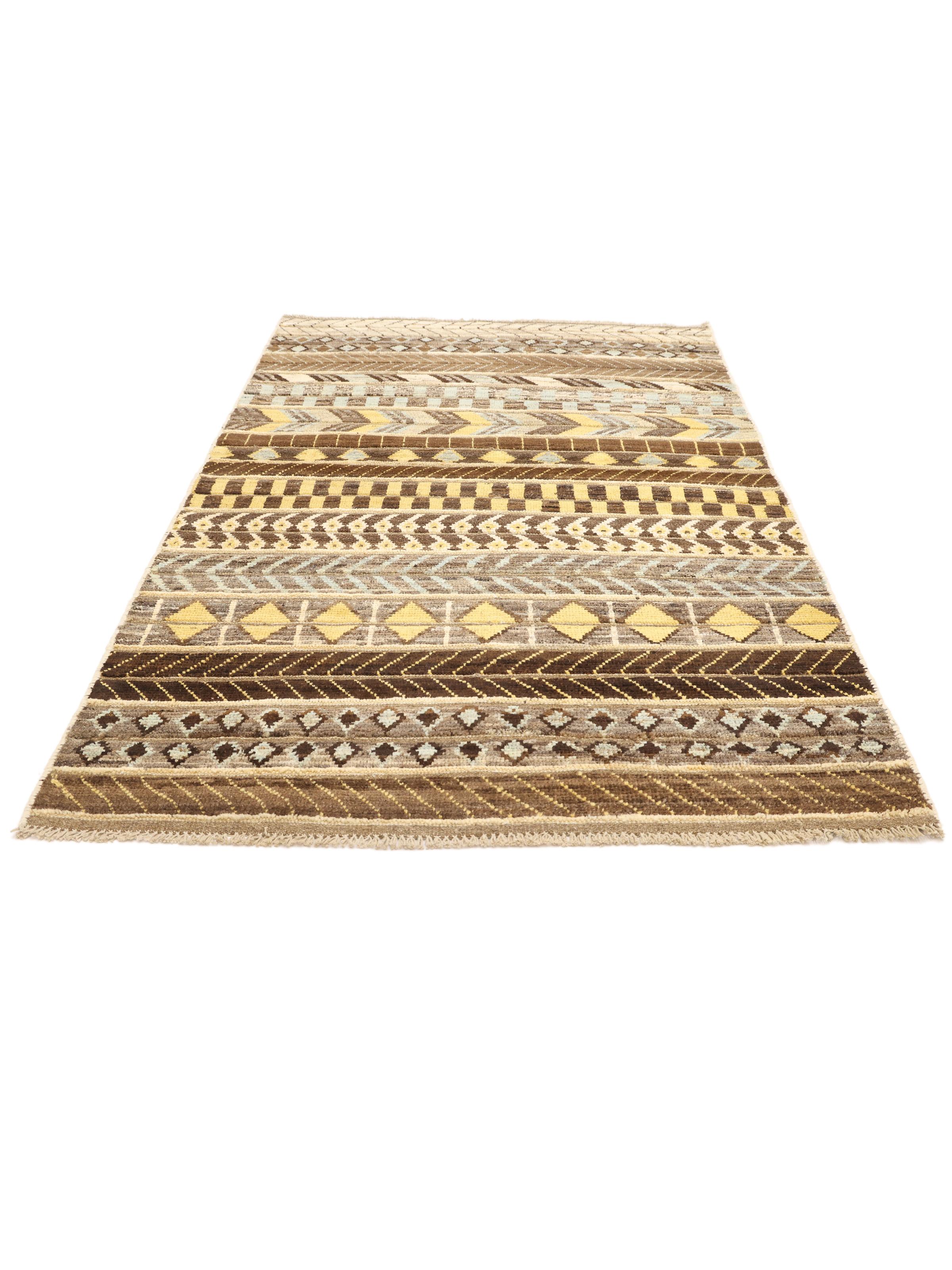
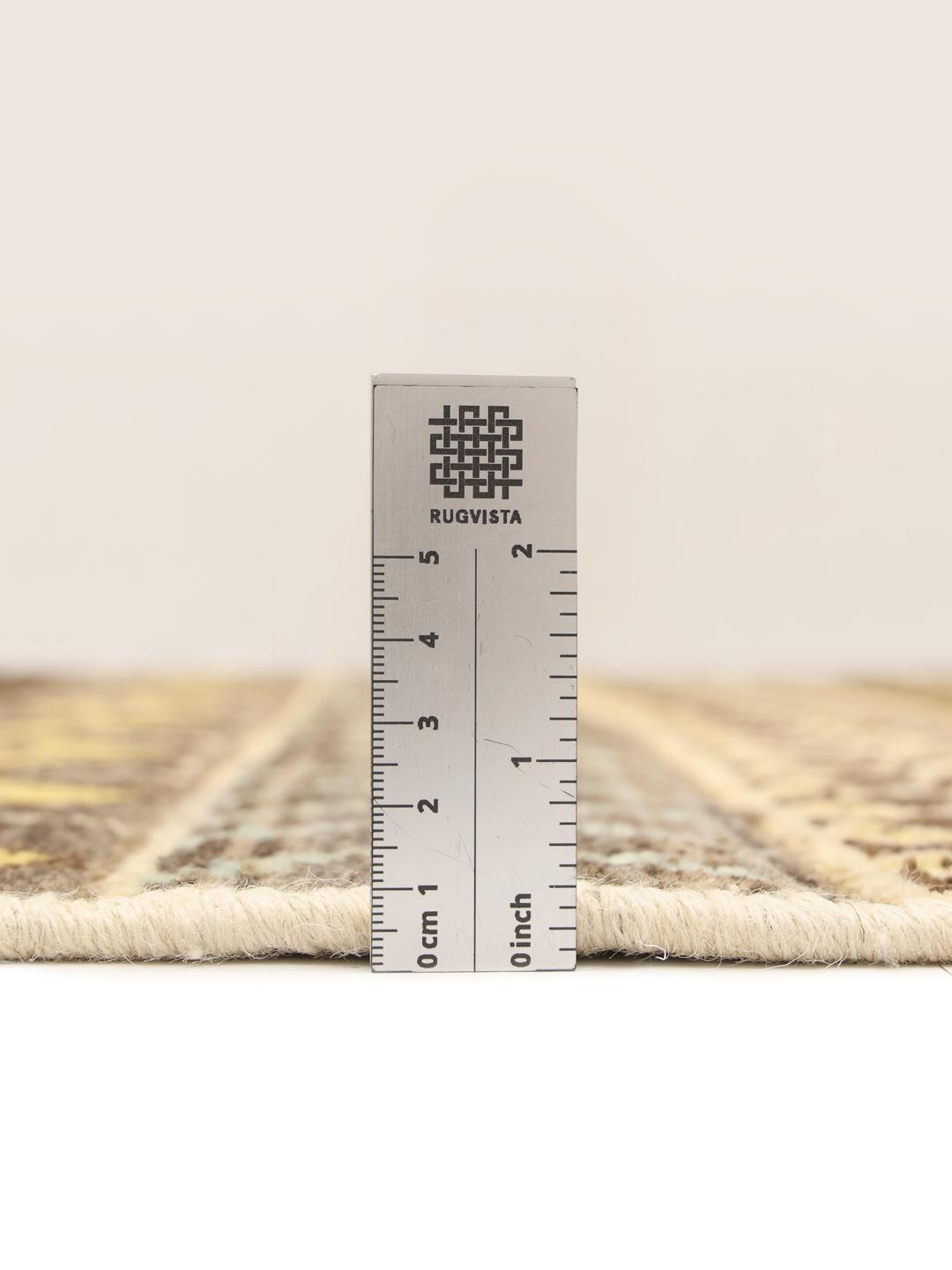
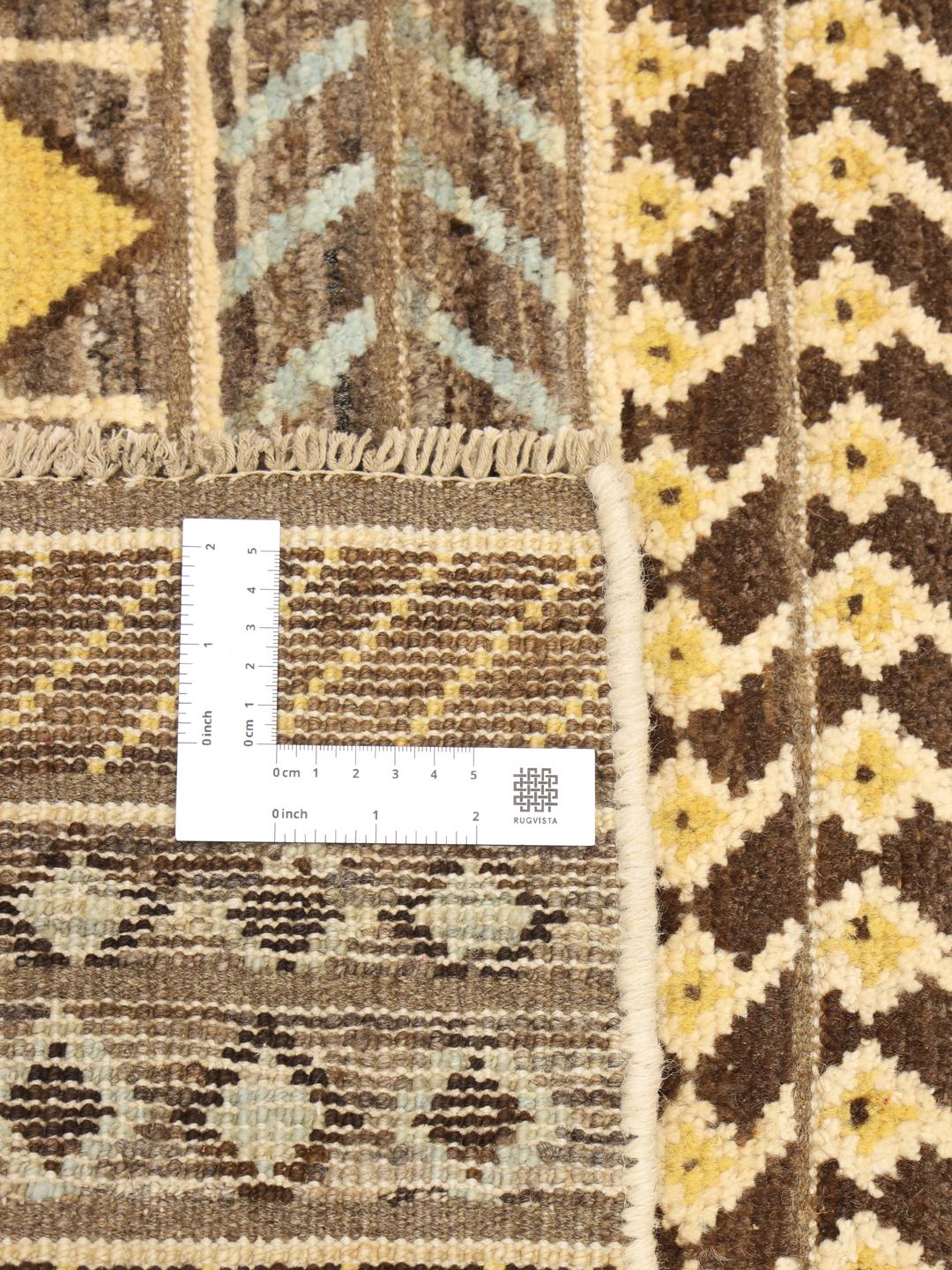
Gabbeh rugs trace their roots to the nomadic tribes of the Middle East, particularly within regions of Persia and neighbouring Afghanistan, where weavers traditionally created them for their own daily use rather than for trade. The word Gabbeh itself translates to raw, natural, or uncut, reflecting the honest and unpretentious spirit of these traditional floor coverings.
Unlike formal workshop carpets with rigid, pre-planned layouts, nomadic weavers historically composed Gabbeh designs spontaneously from memory, drawing inspiration from their surrounding landscapes, daily life, and tribal folklore. This unscripted approach results in deeply personal pieces where every band and motif carries a sense of authentic storytelling.
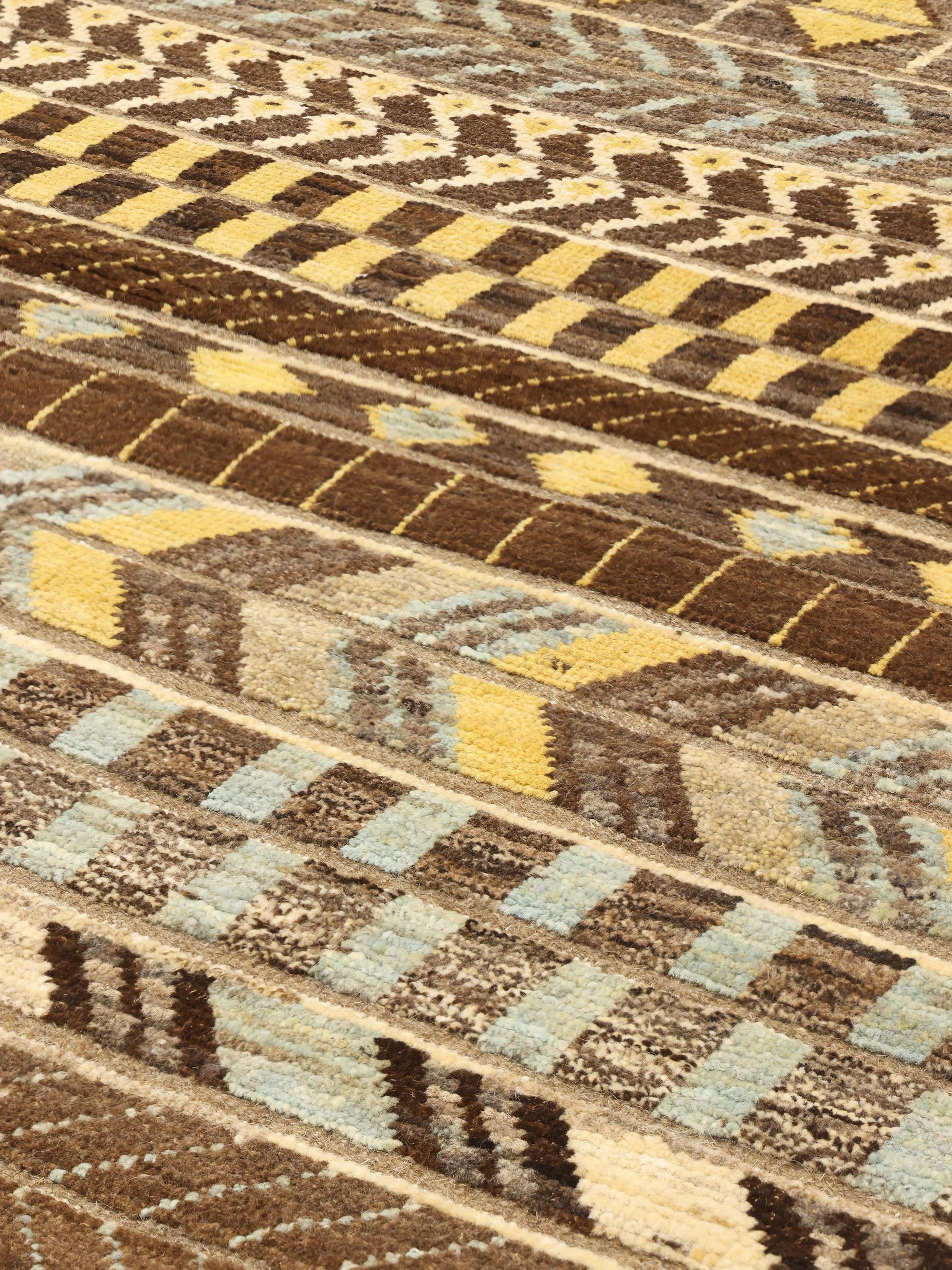
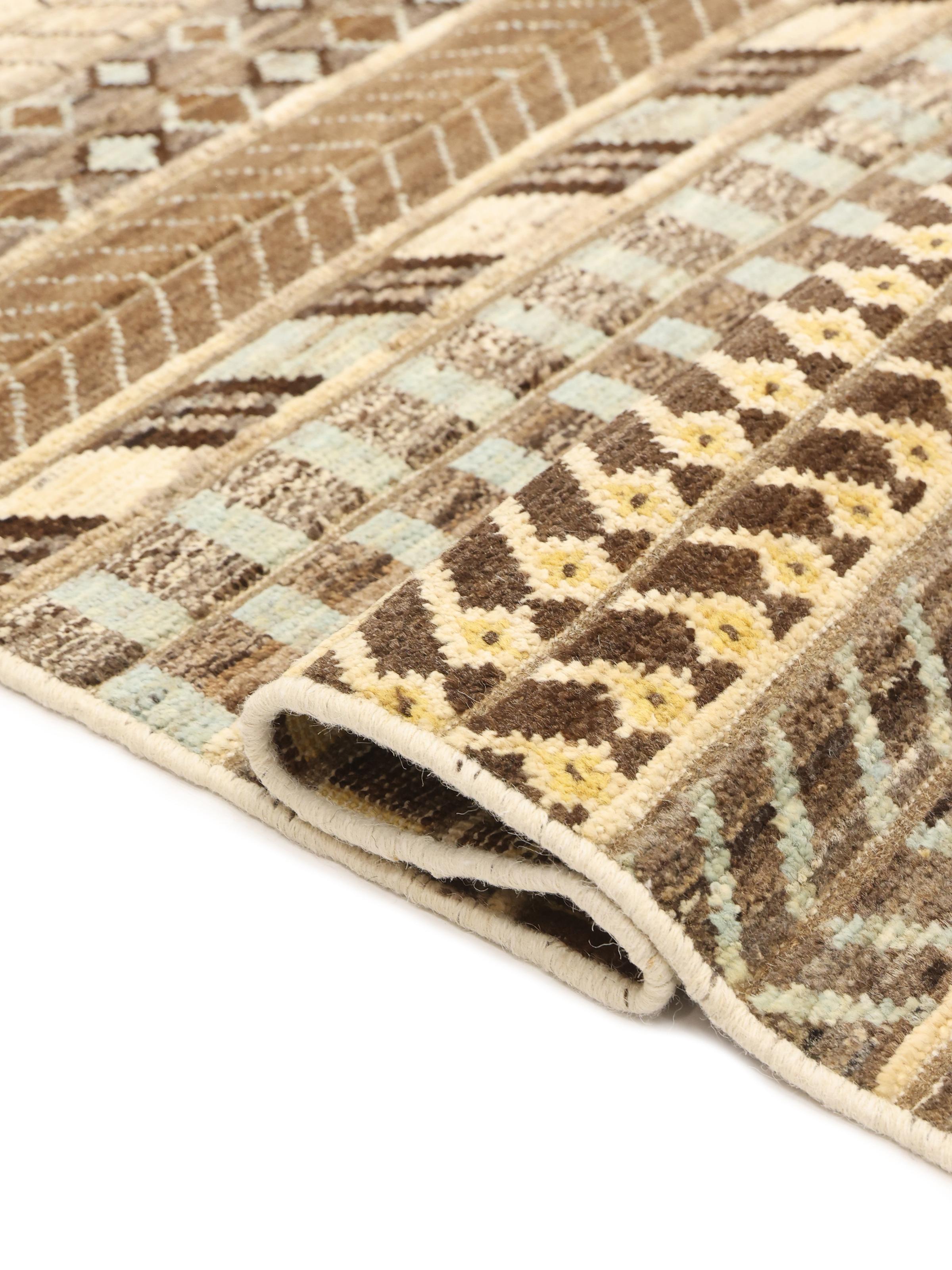
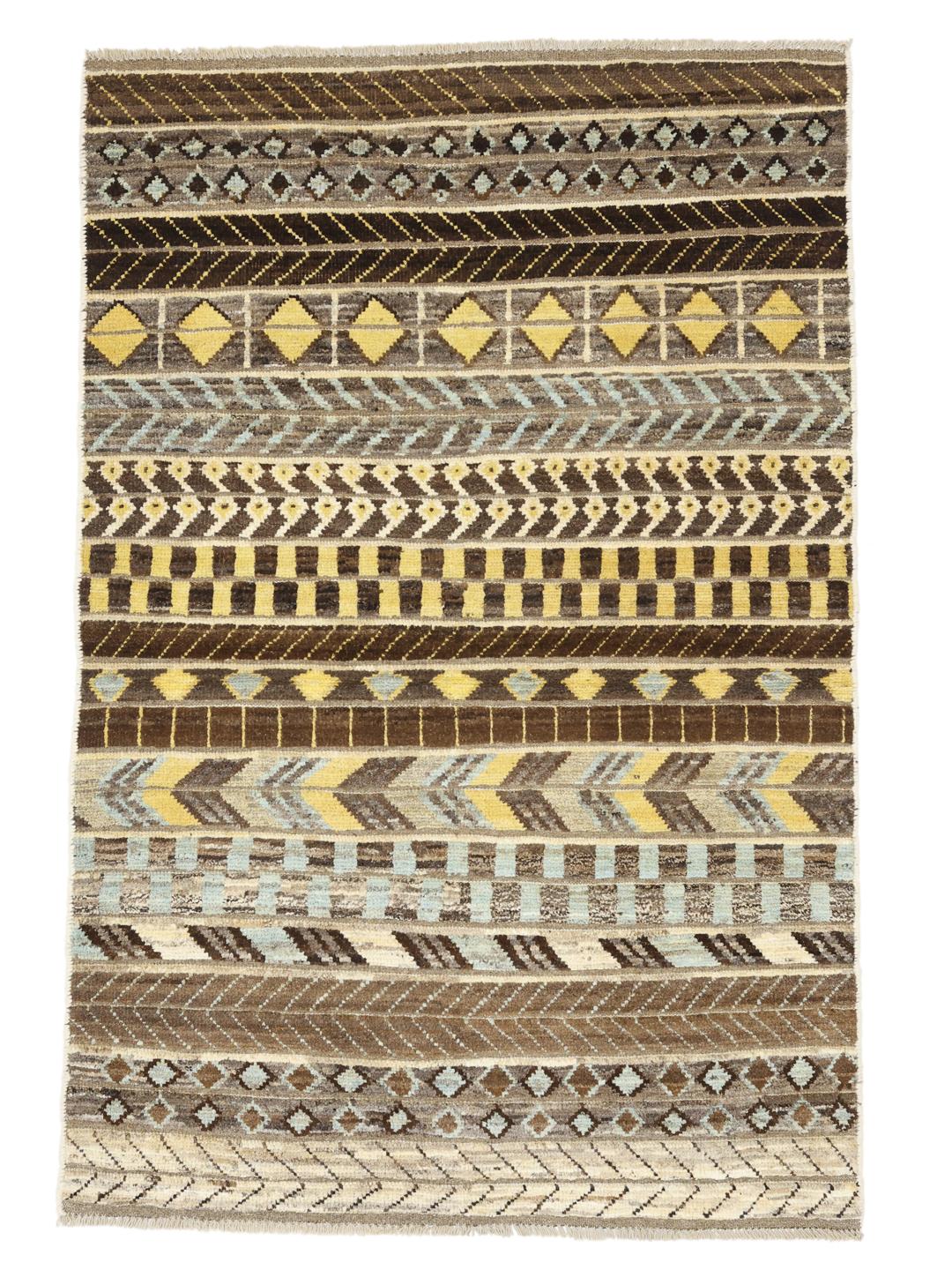
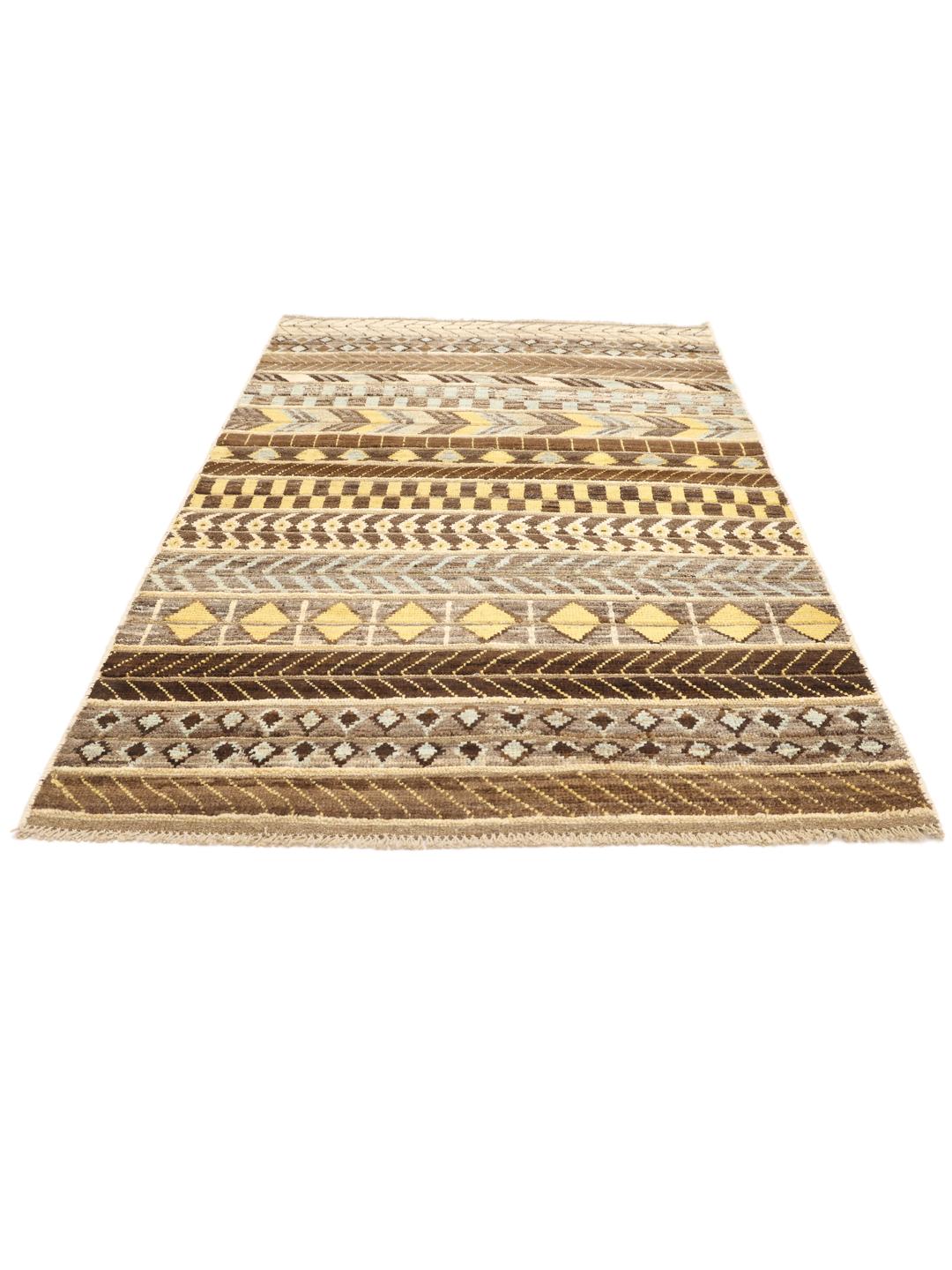
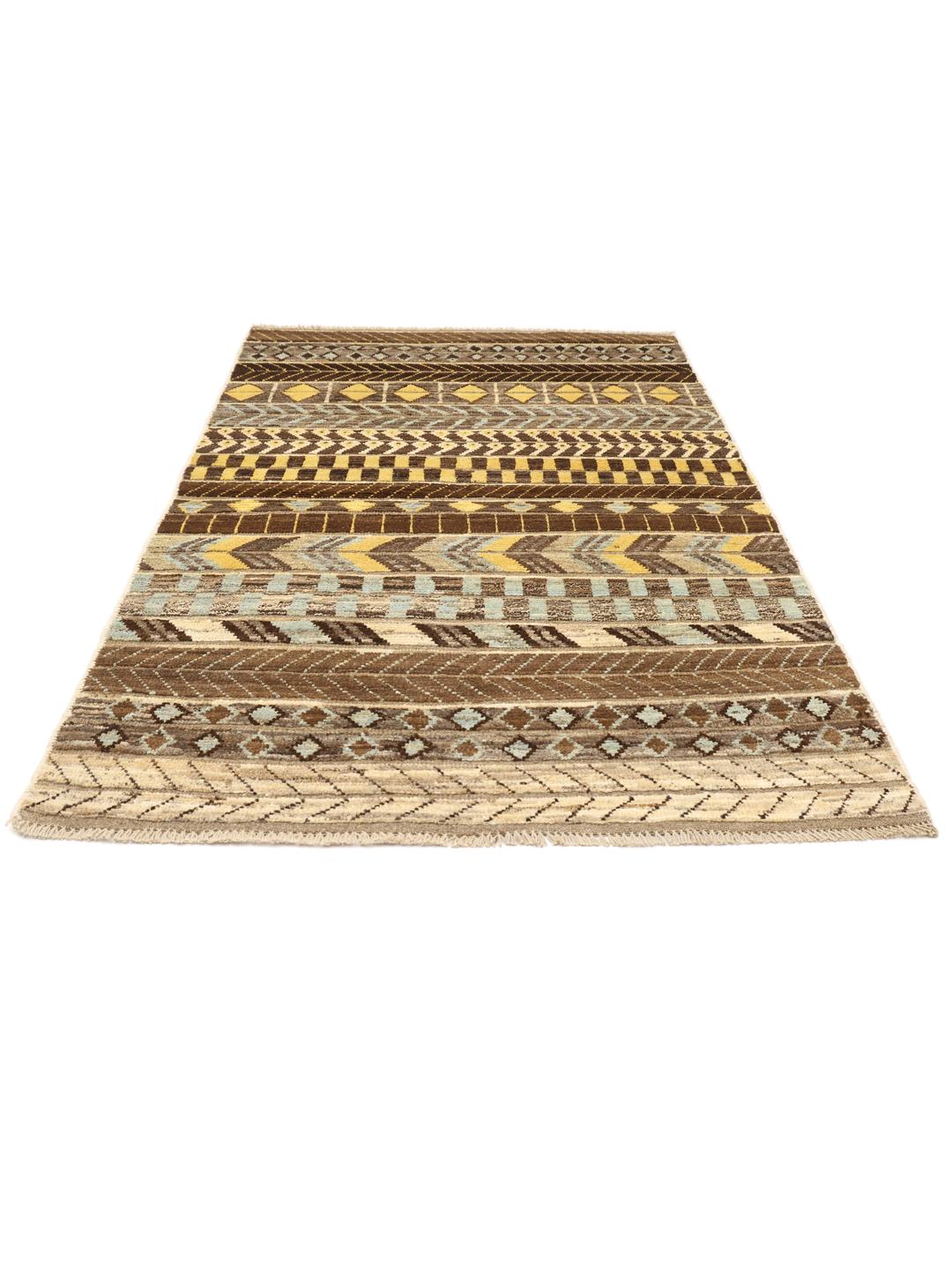
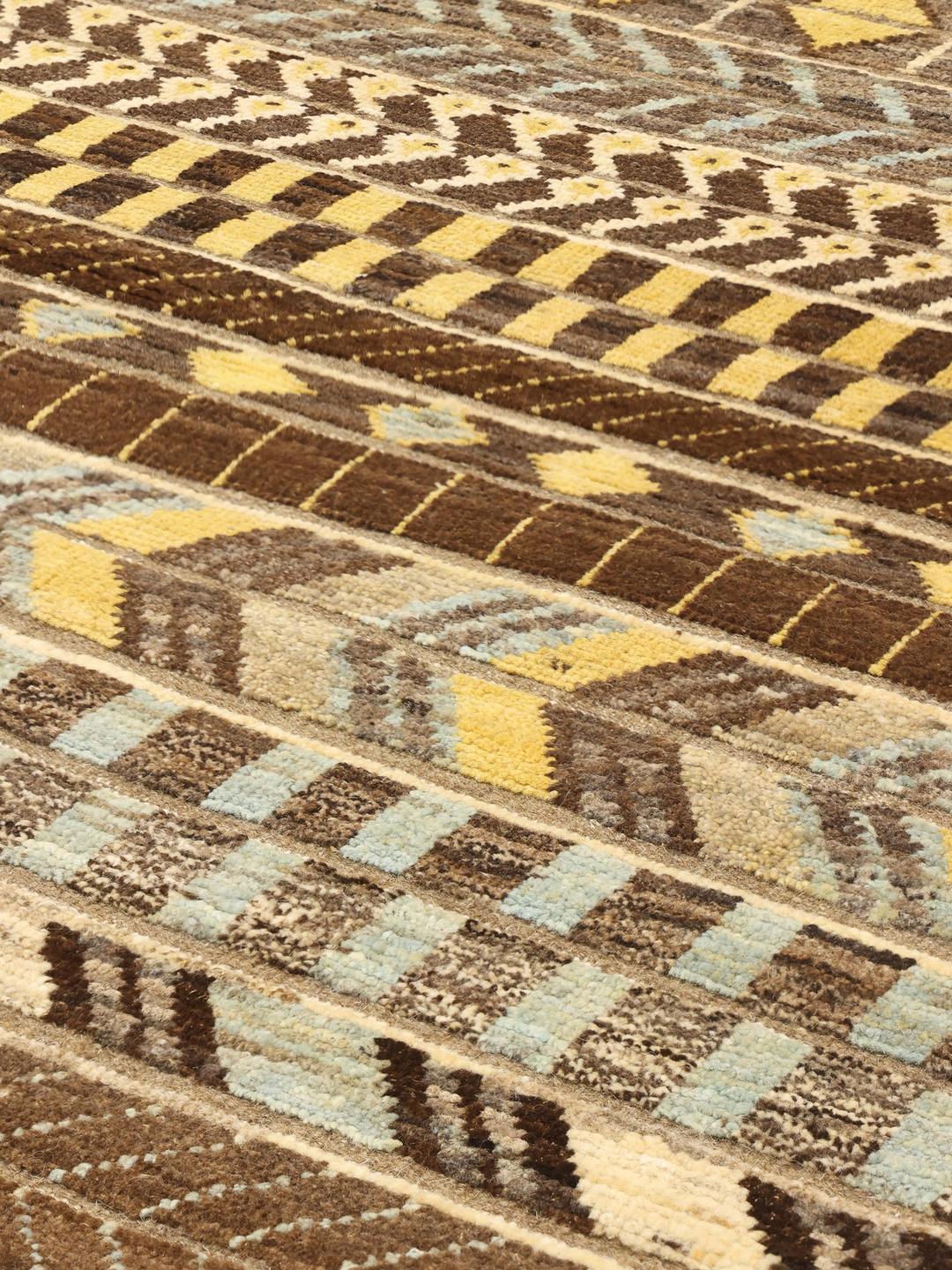
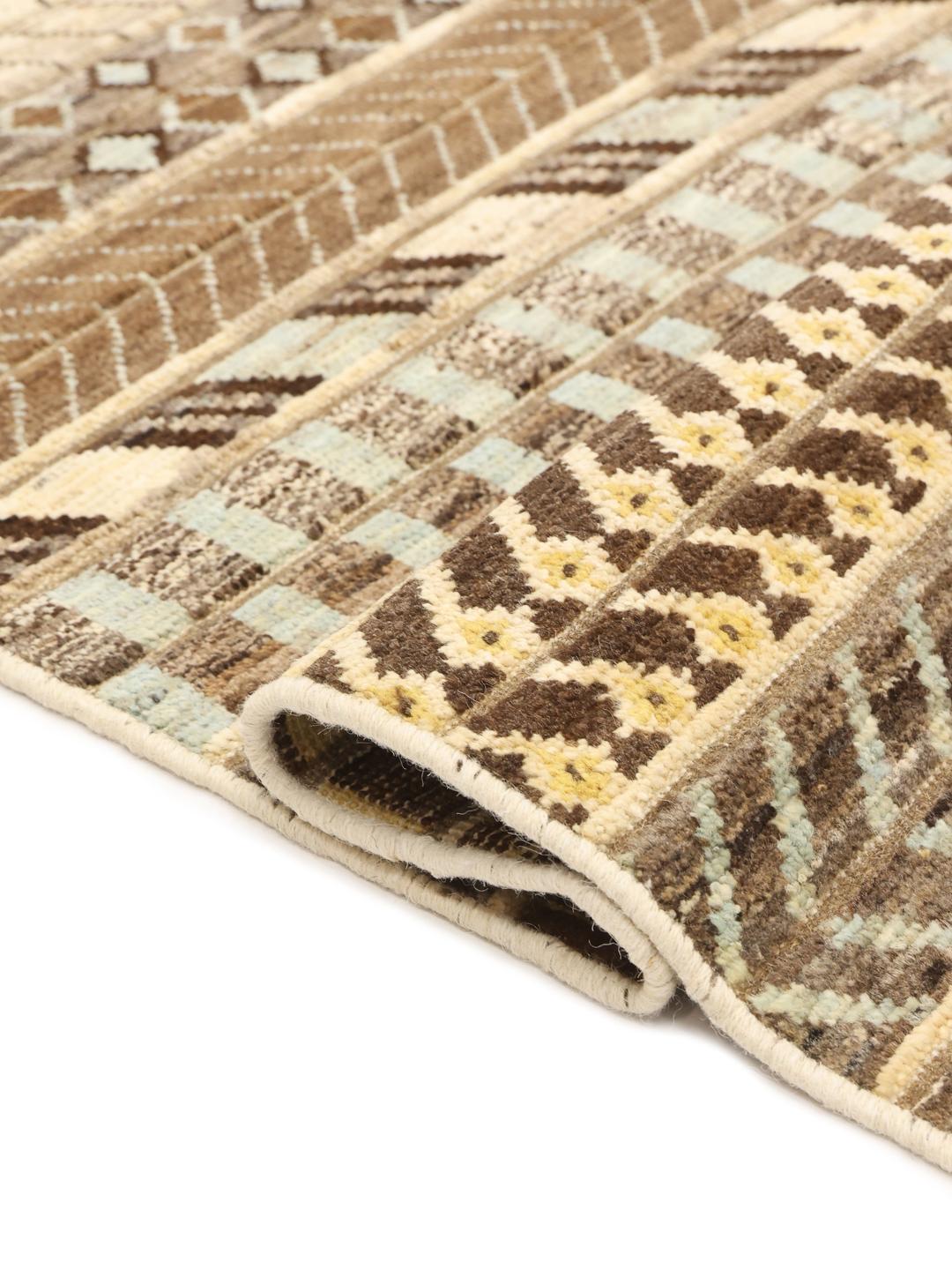
The visual language of the Gabbeh tradition typically emphasises bold horizontal rows, simplified geometric shapes, and wide fields of solid or subtly abrash colour. While traditional palettes often relied on warm earthy tones derived from local plant dyes, modern interpretations embrace contemporary sensibilities whilst maintaining the same rustic charm and heavy, protective pile designed to insulate against cold earthen floors.
Today, collecting a handmade Gabbeh means acquiring a tangible link to ancient nomadic craft traditions. The combination of simple, expressive designs and sturdy wool construction ensures these pieces remain valued by those who appreciate heritage, honest materials, and enduring handmade quality in their living spaces.