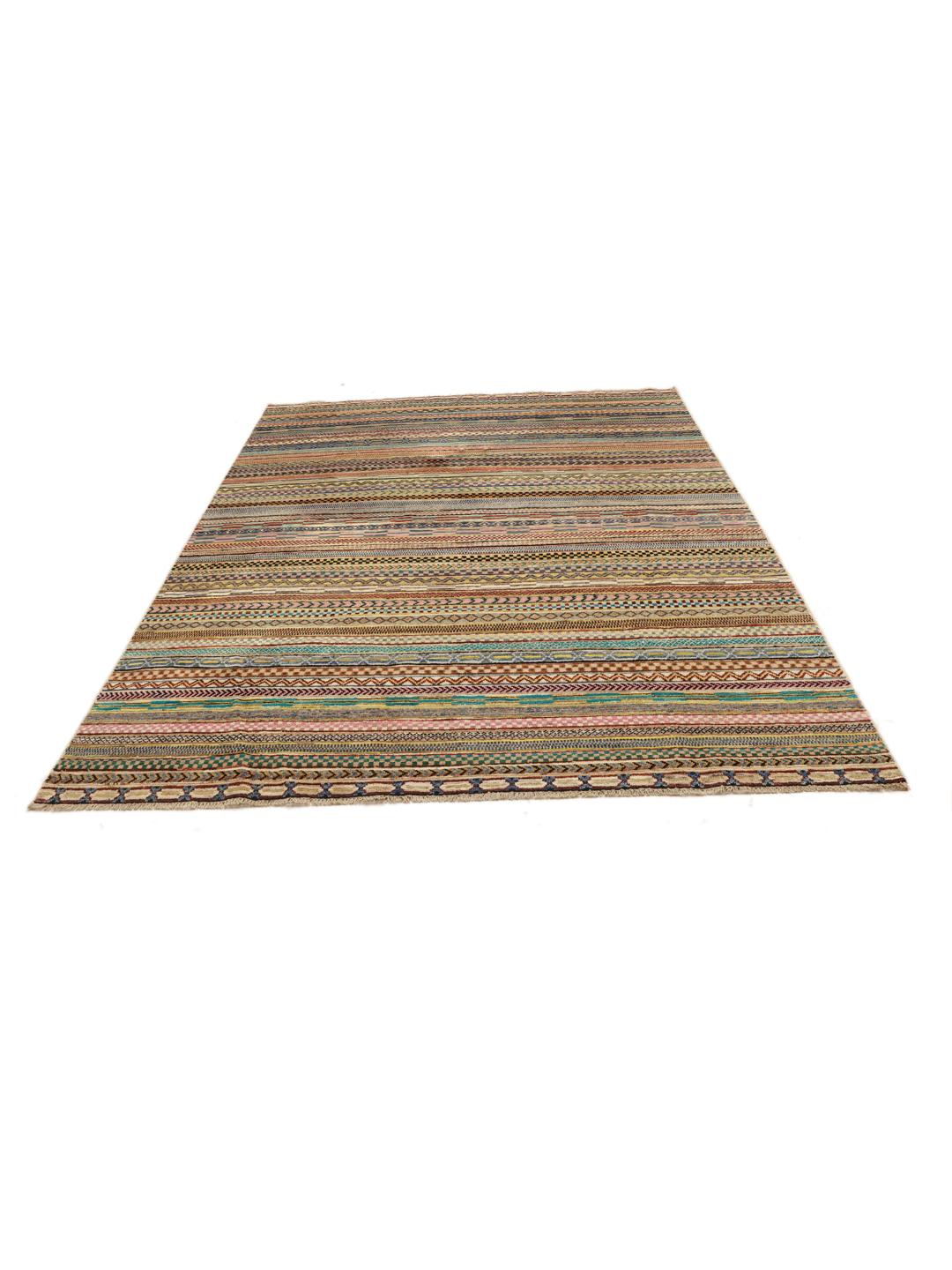
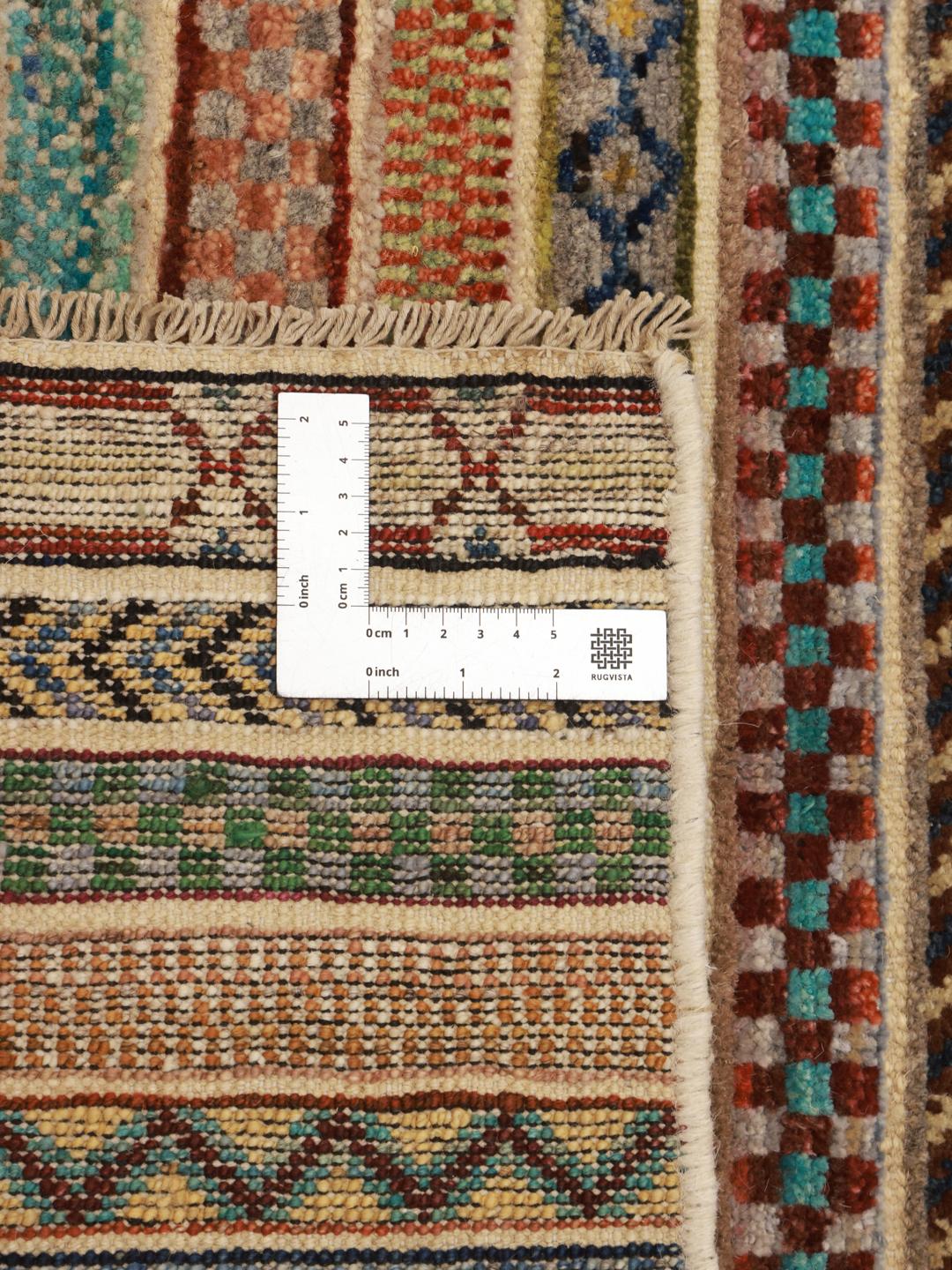
Gabbeh rugs have a long and storied history within the nomadic tribes of the Middle East, where they were originally woven for personal use rather than for trade. These rugs were traditionally designed to provide warmth and protection on the floors of tents, with weavers often incorporating personal stories and regional symbols into their work.
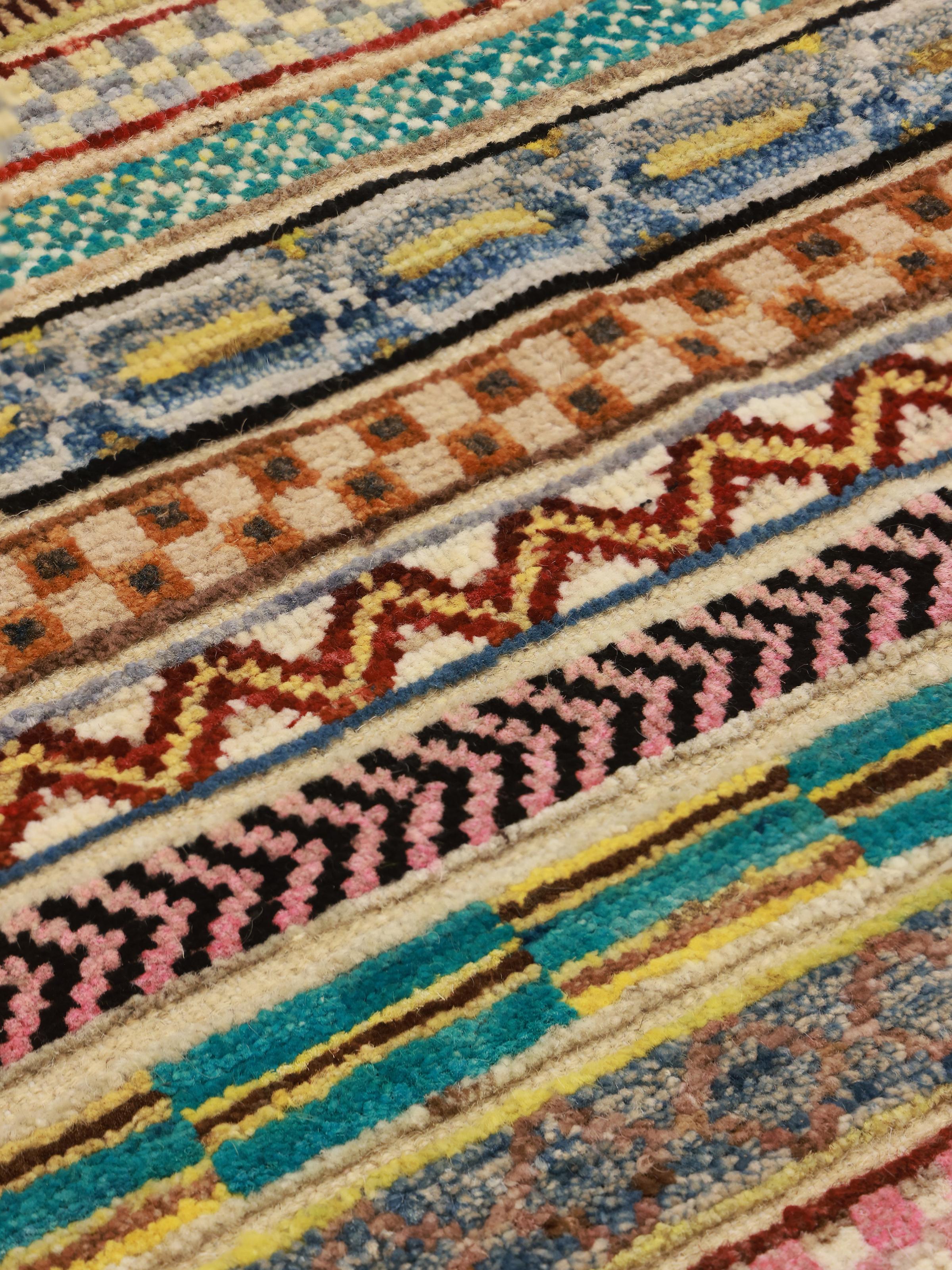
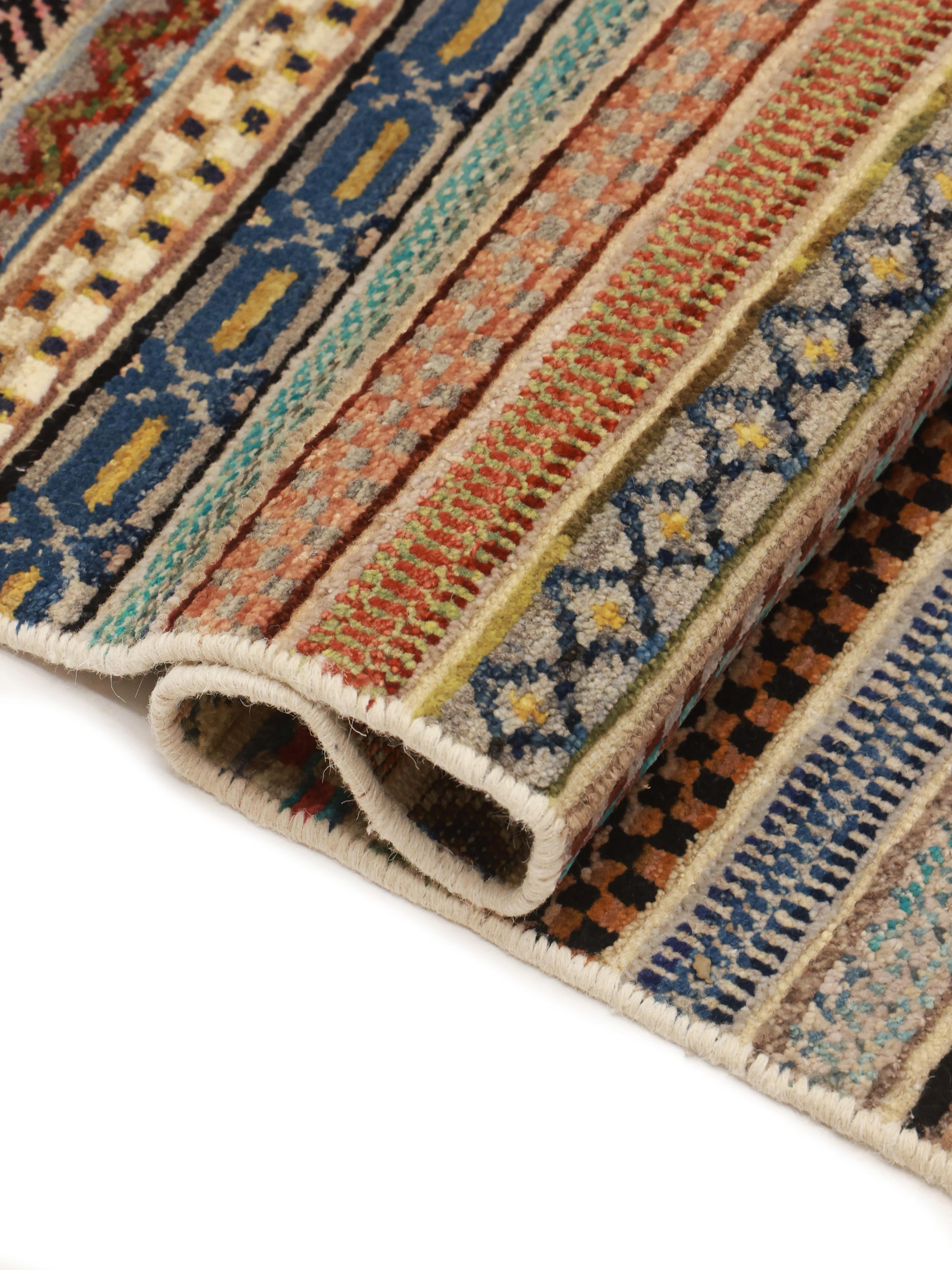
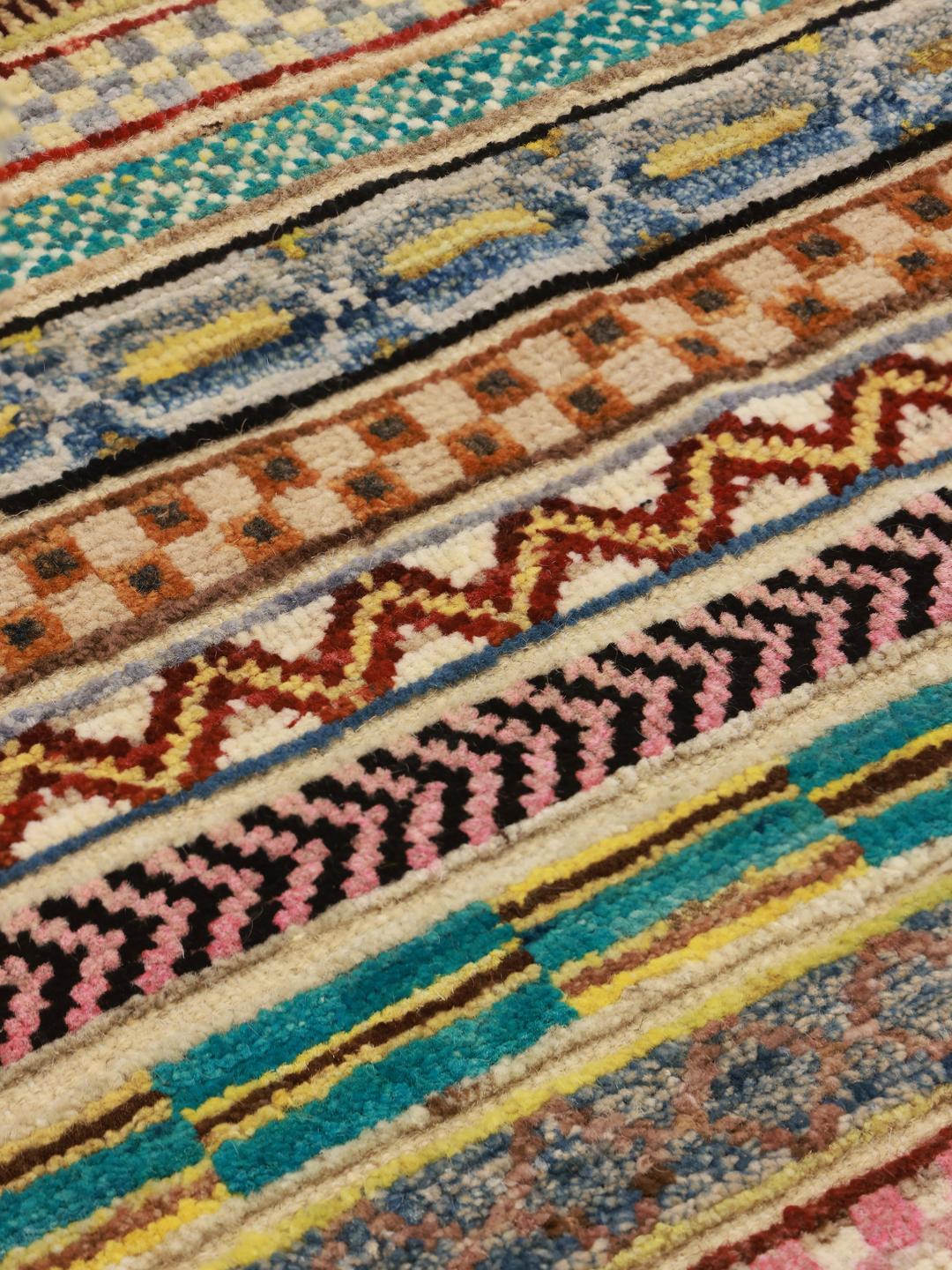
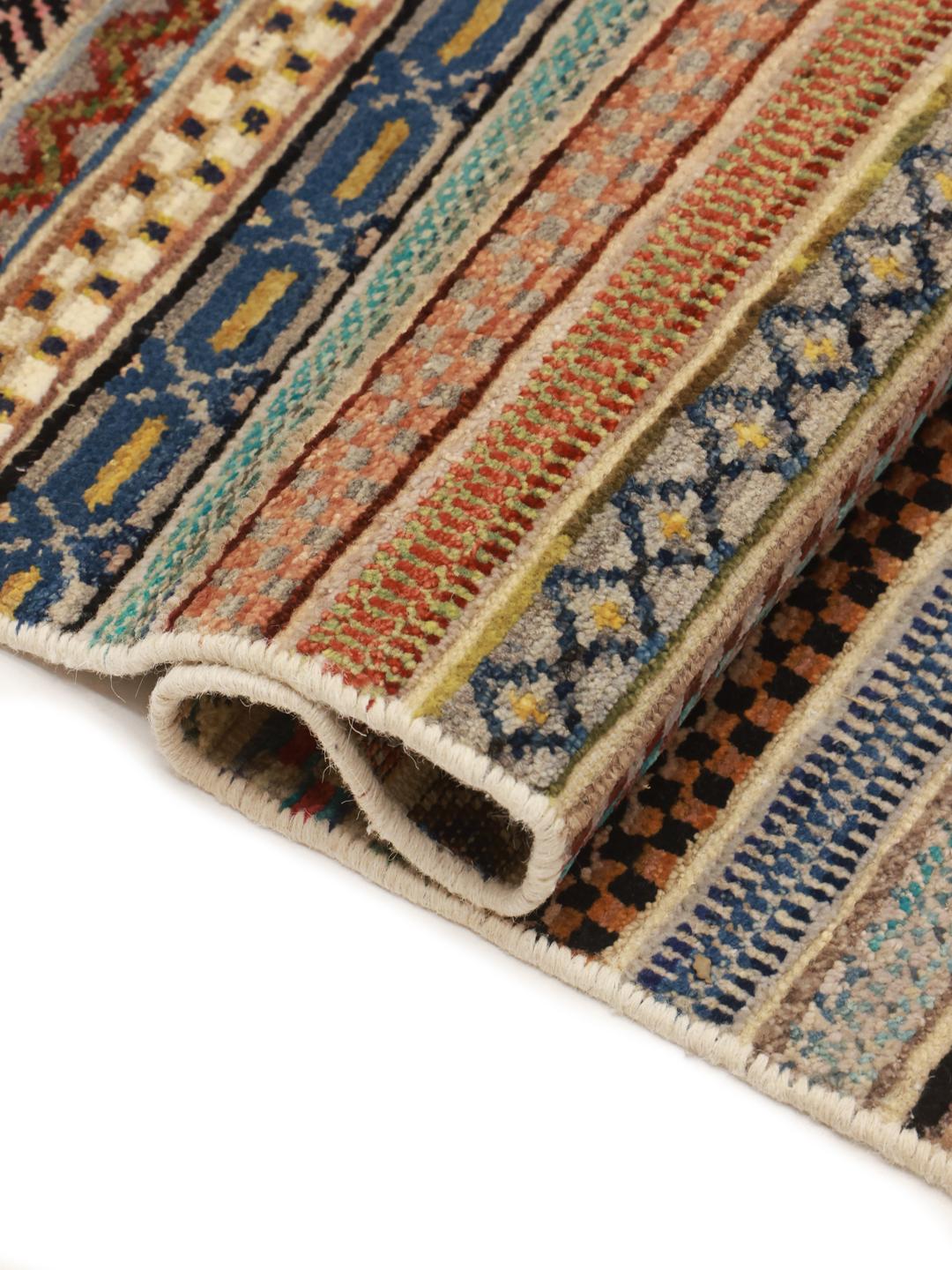
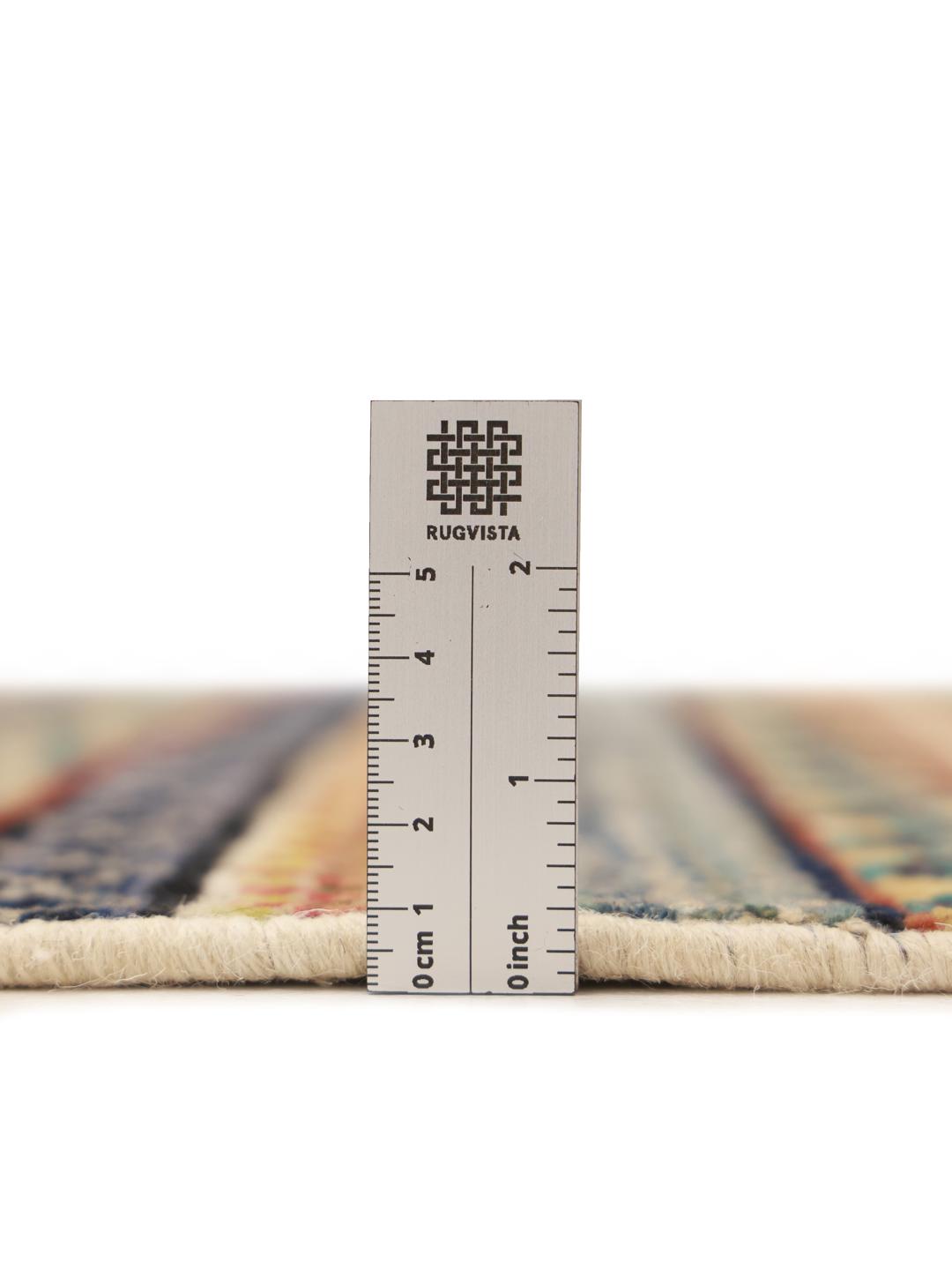
The term Gabbeh refers to a style that is typically thicker and more primitive in its construction compared to finer city-made rugs. This style prioritises the tactile experience of the Wool, resulting in a pile that is soft, dense, and deeply inviting, which has made them highly sought after by collectors who value authentic, rustic charm.
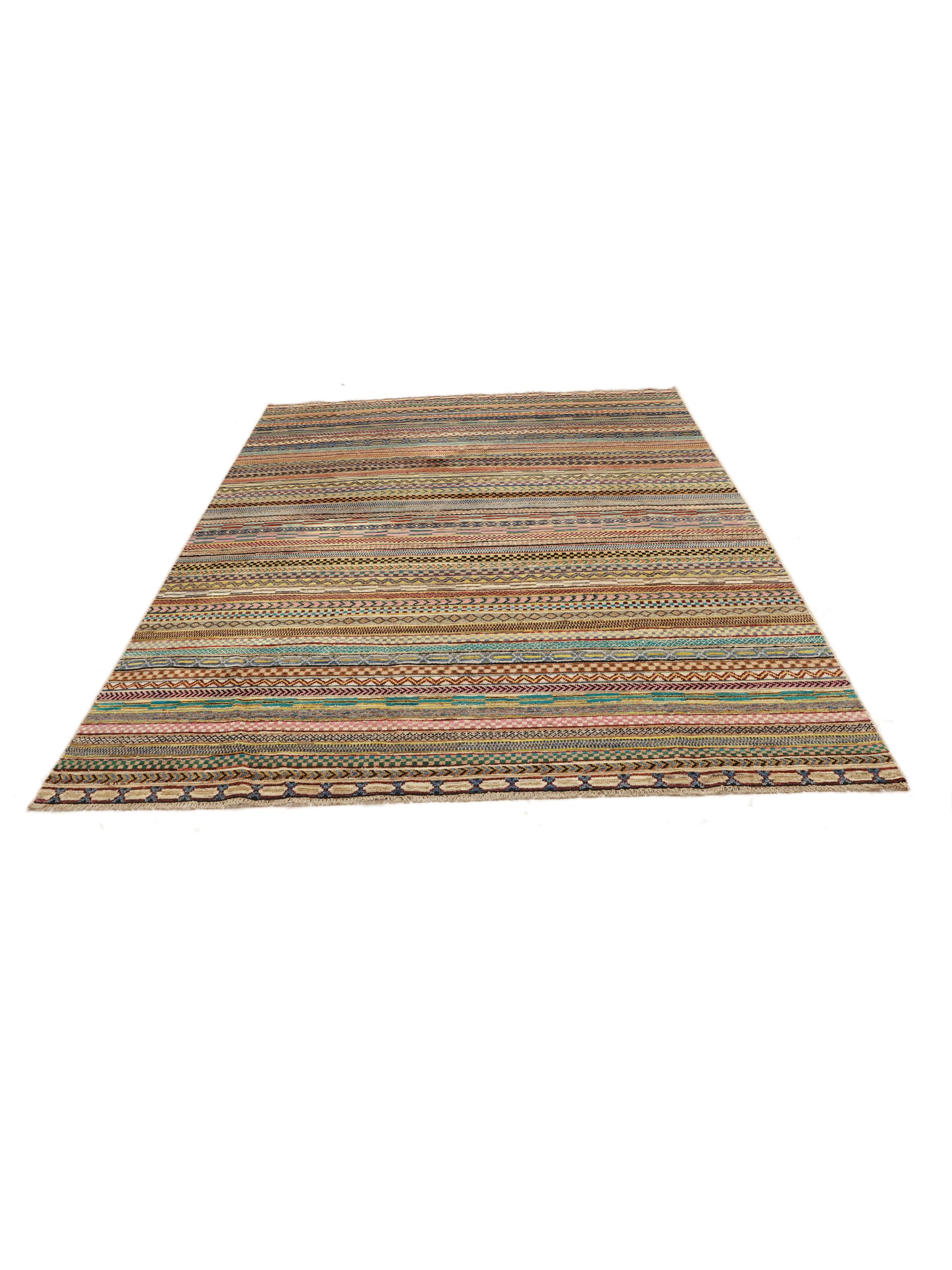
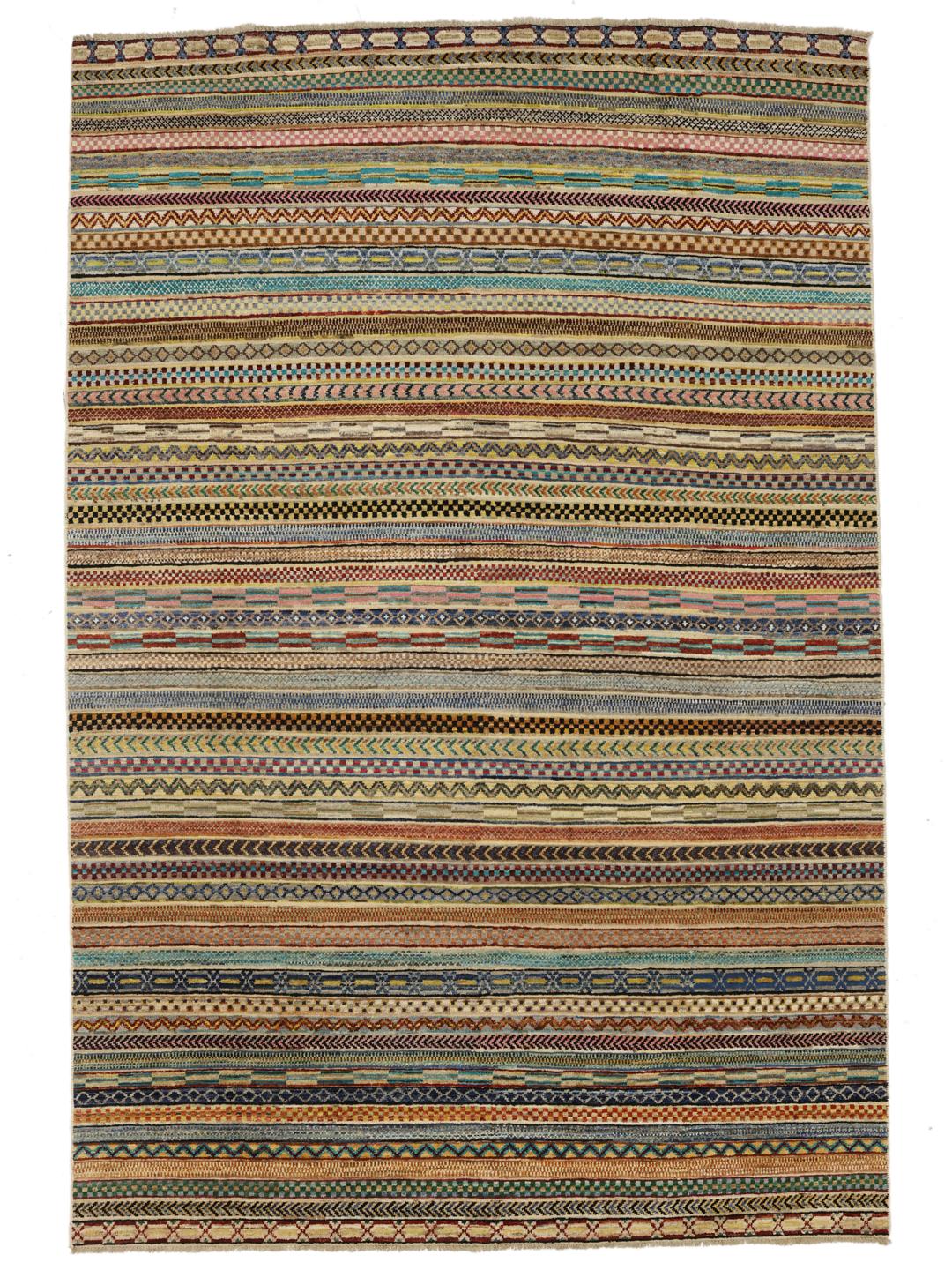
Visually, these rugs are defined by their bold and often abstract designs. While early examples were known for their minimalist, single-coloured fields, modern versions like this one have evolved to include intricate geometric motifs and complex, rhythmic borders. These bands of colour reflect the natural dyes and cultural narratives of the region, creating a visual language that is both ancient and contemporary.
Today, Gabbeh rugs are celebrated for their artistic freedom and the skill required to produce them without the use of pre-drawn patterns. Owning one is an investment in a living tradition, representing a bridge between the nomadic past and the modern home. Each piece serves as a testament to the artisan's individual vision and the enduring quality of hand-knotted craft.