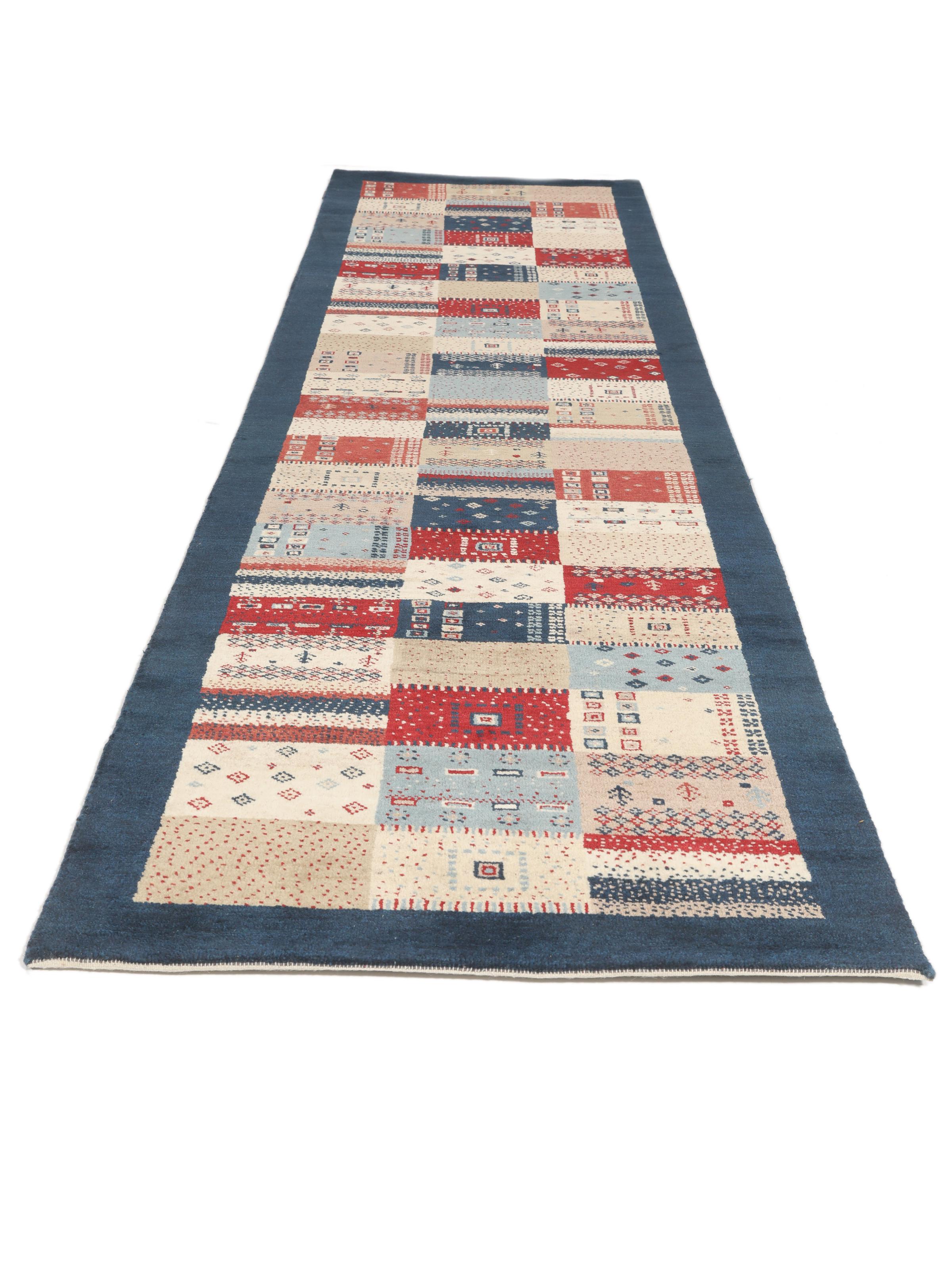
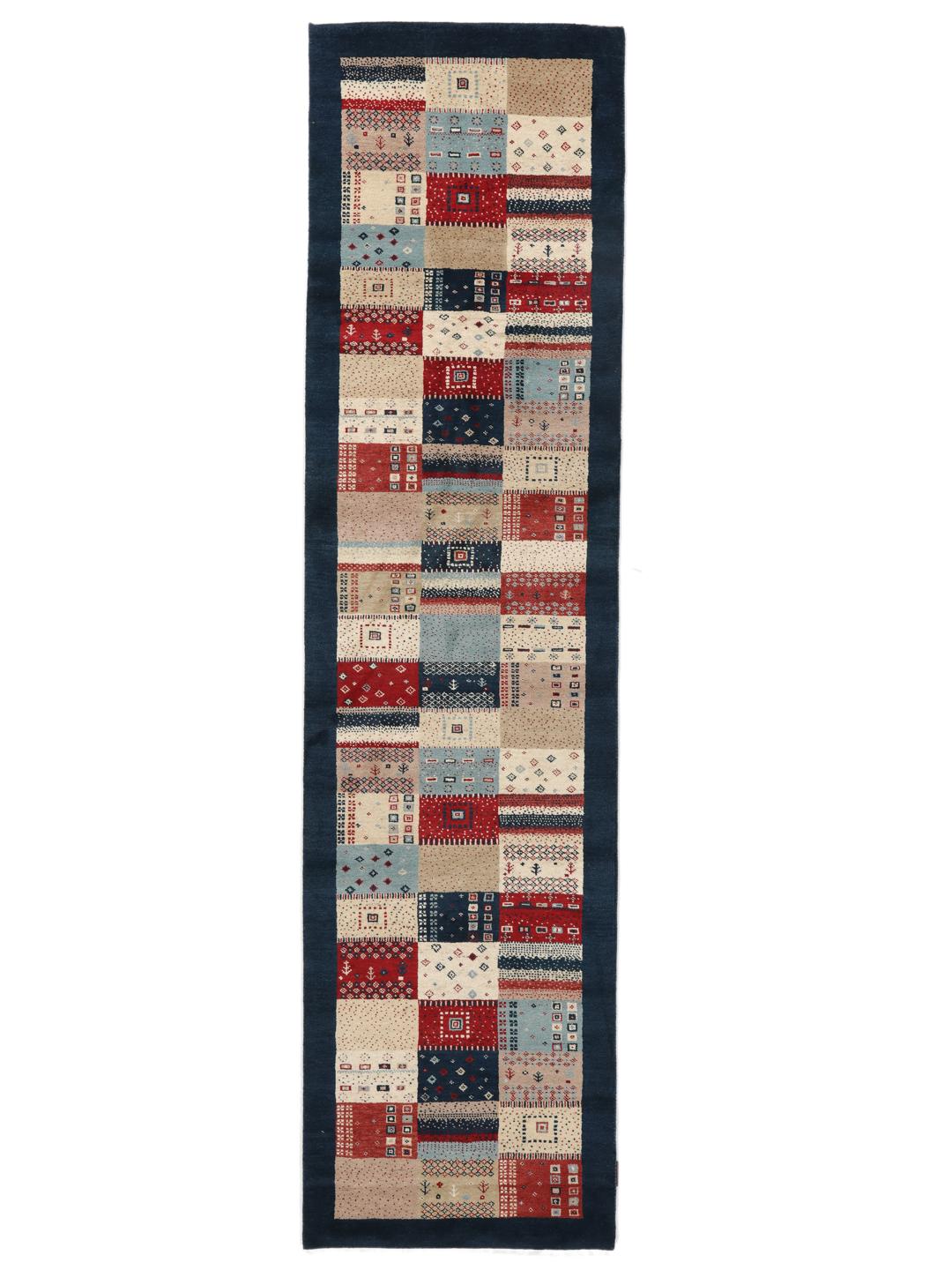
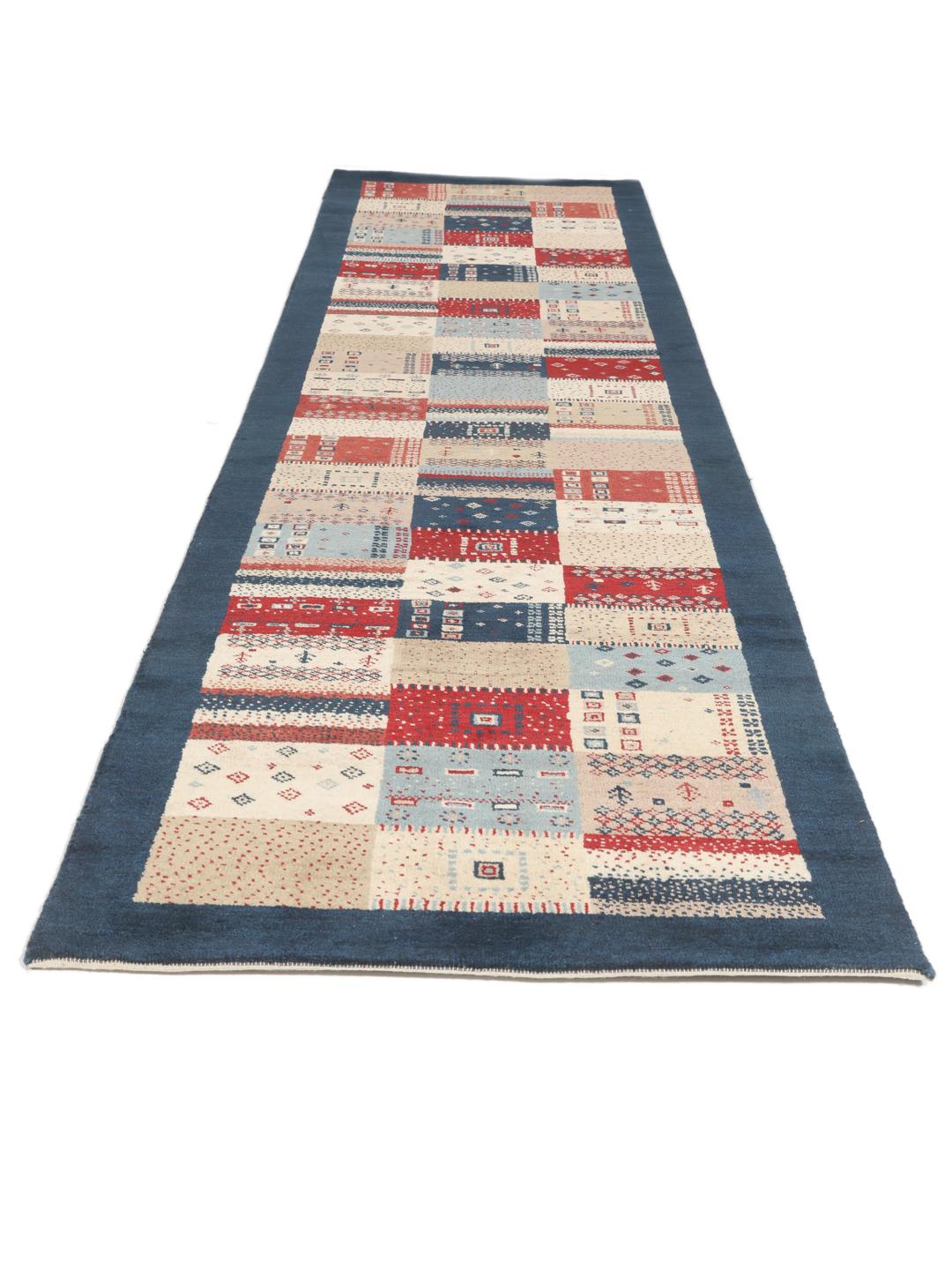
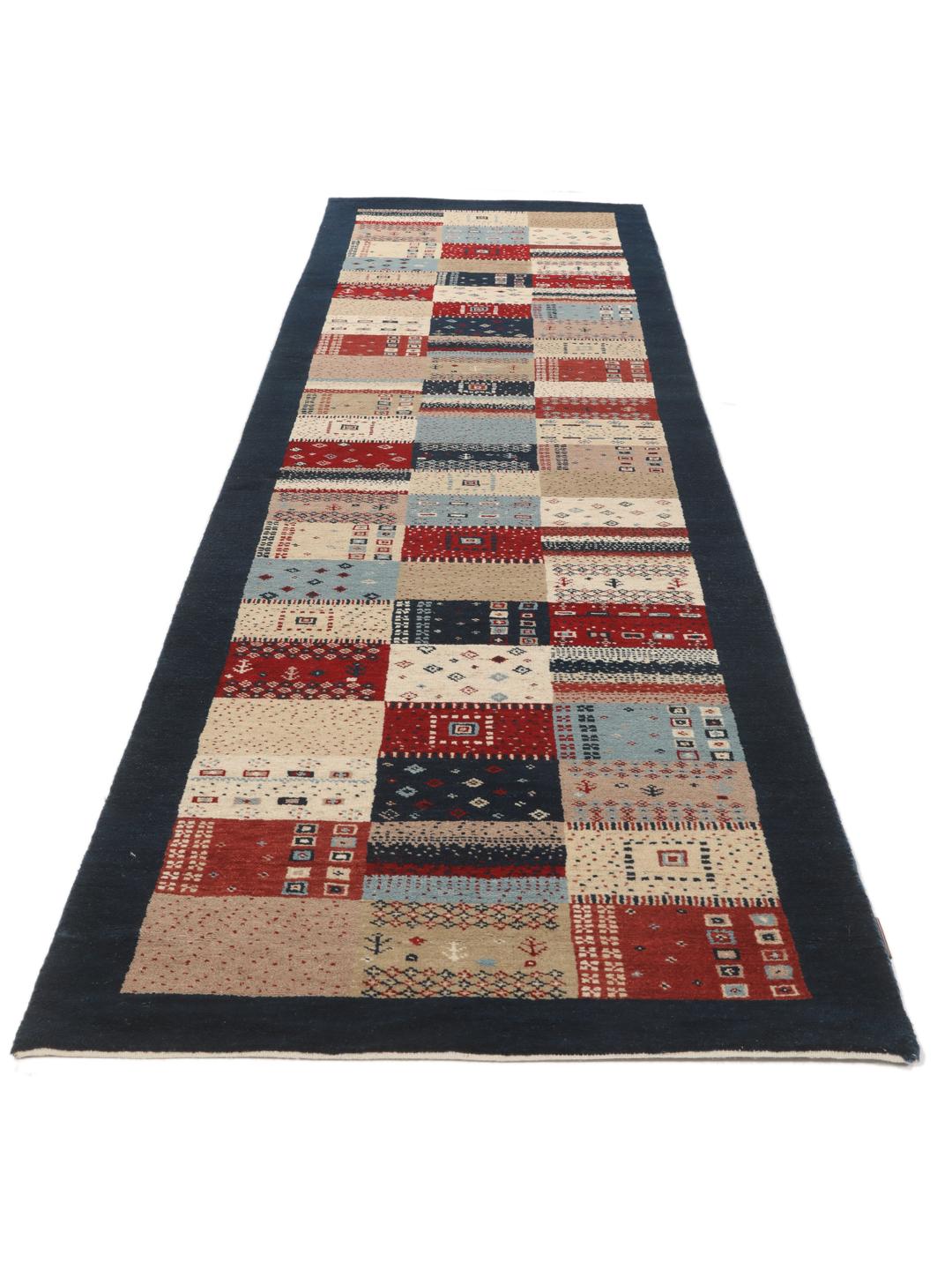
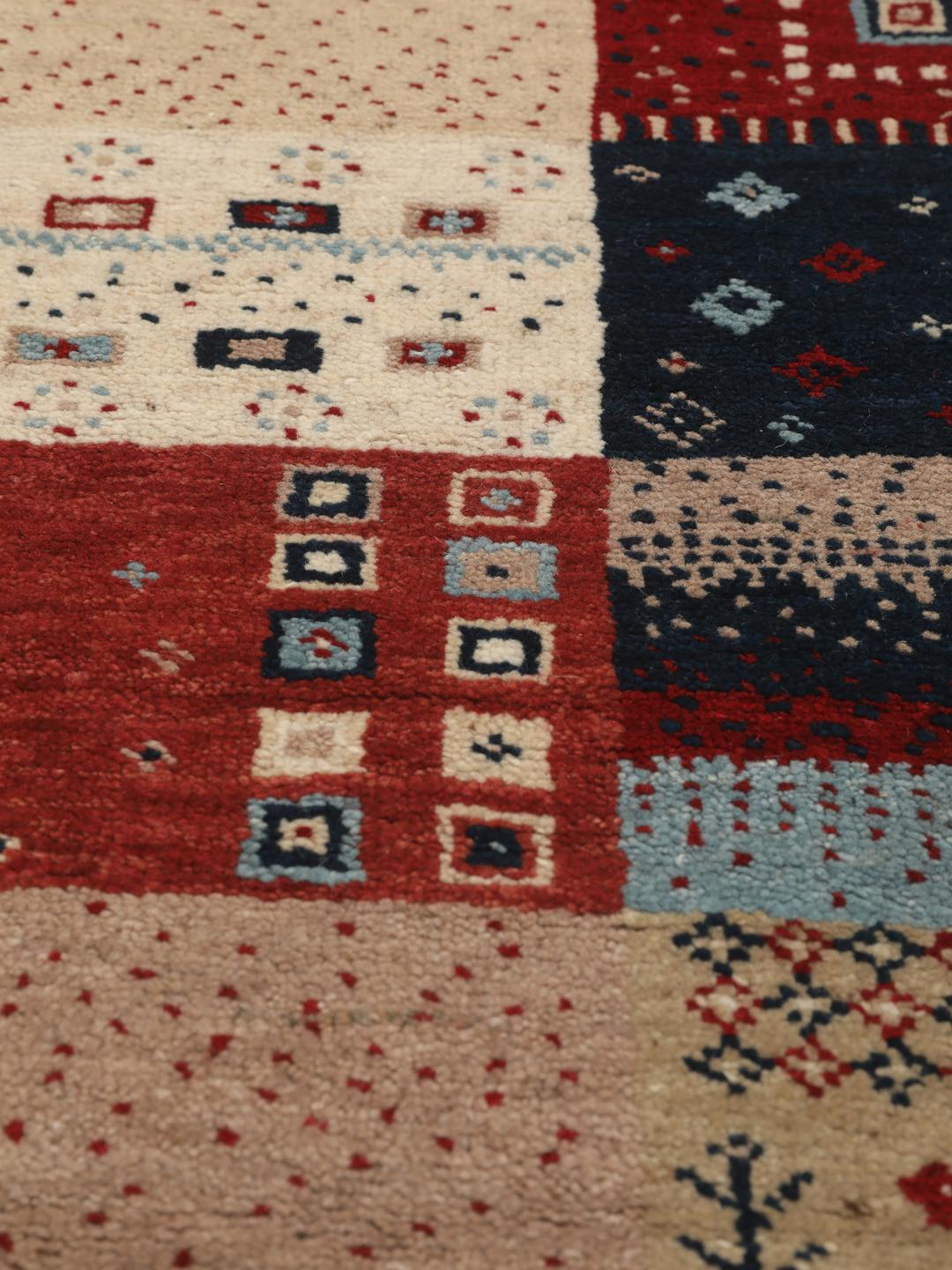
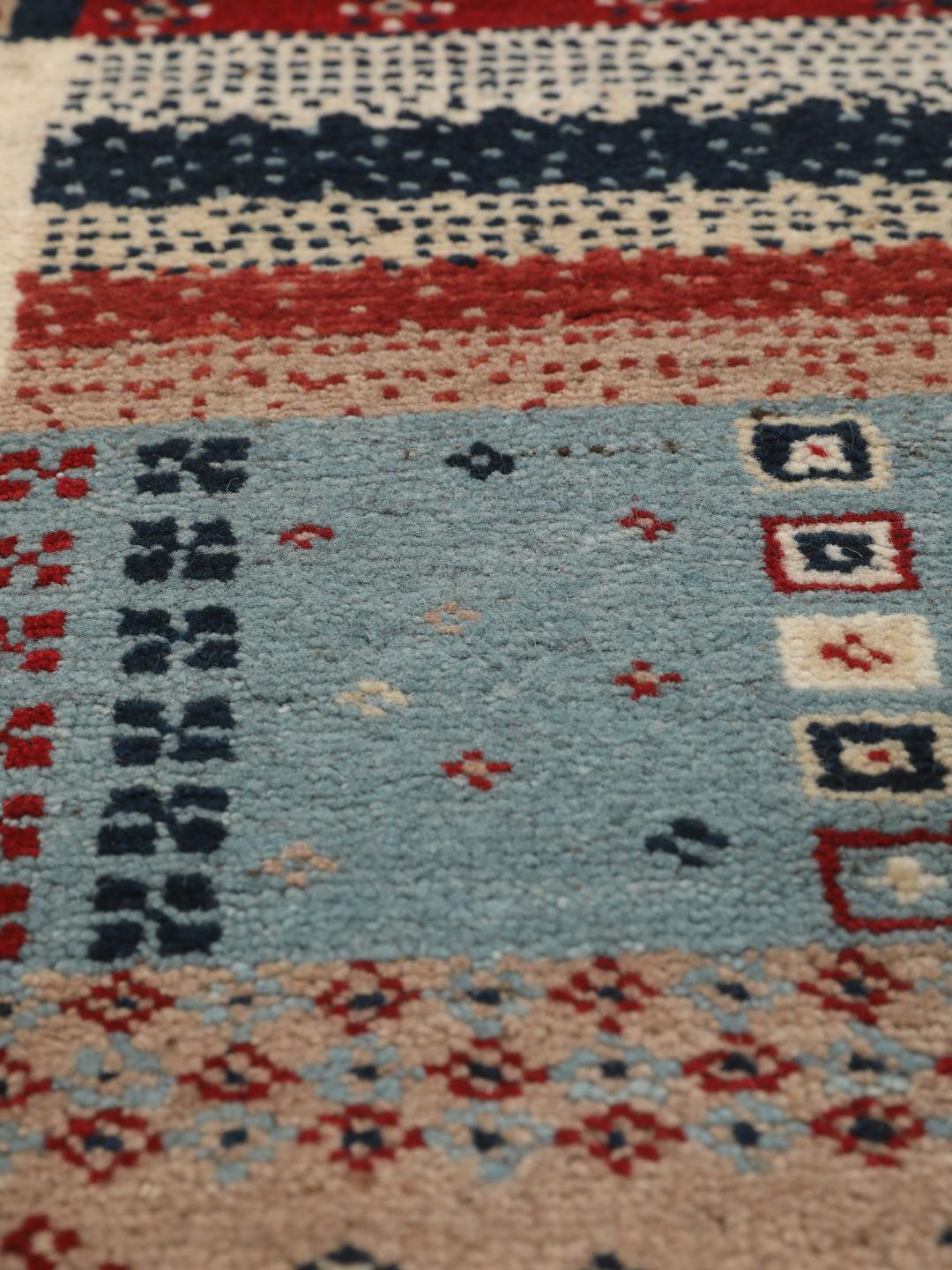
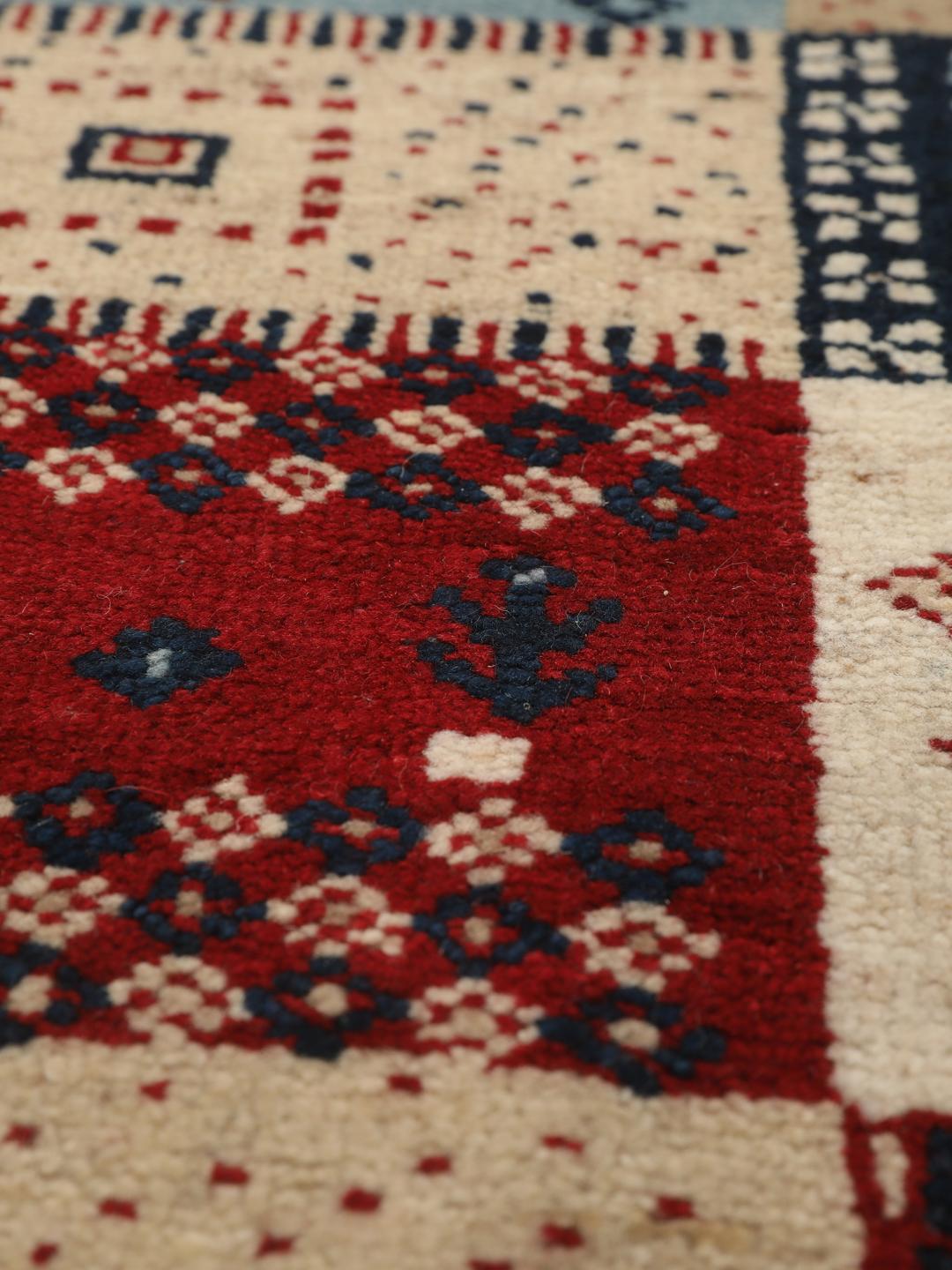
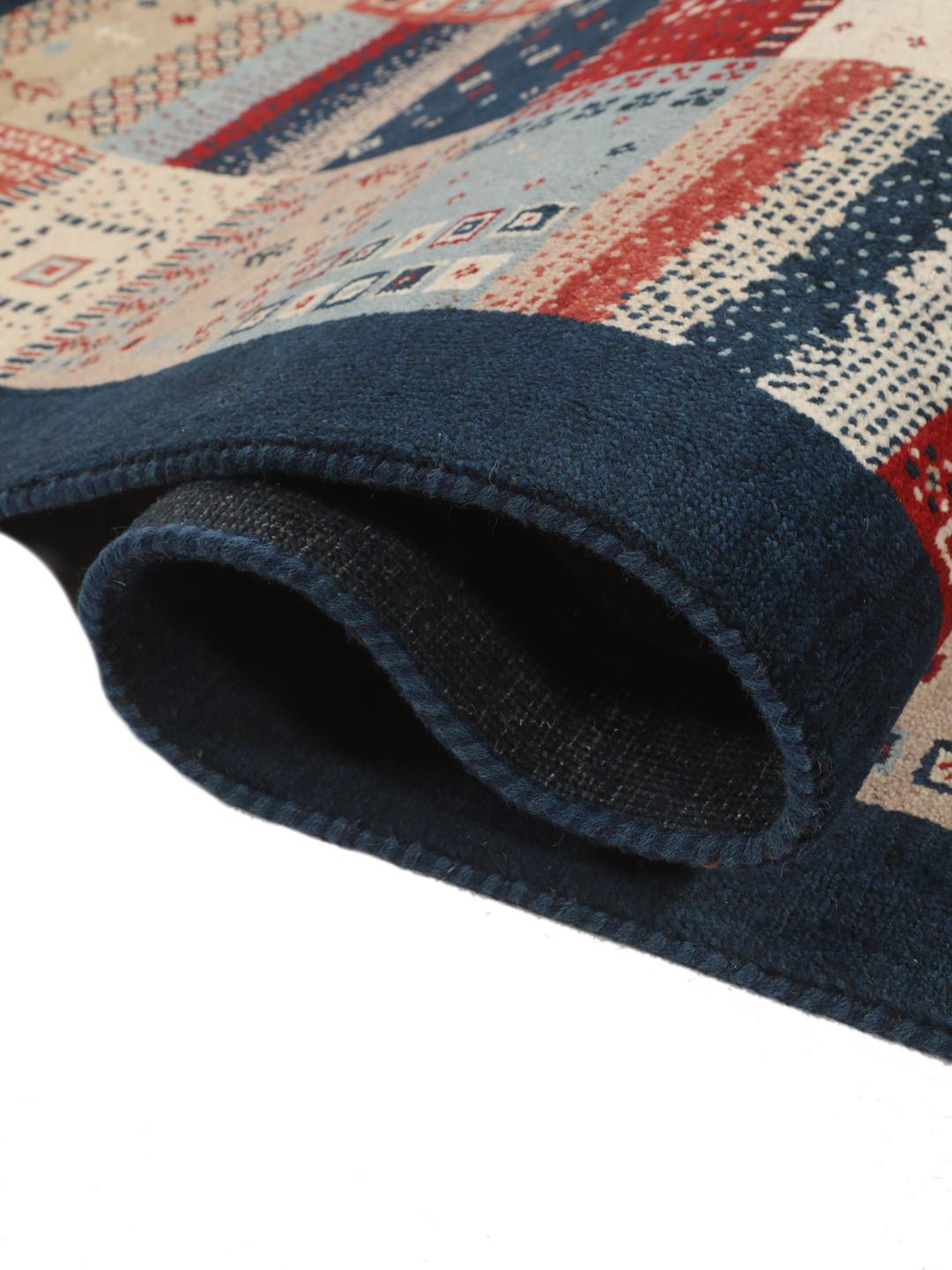
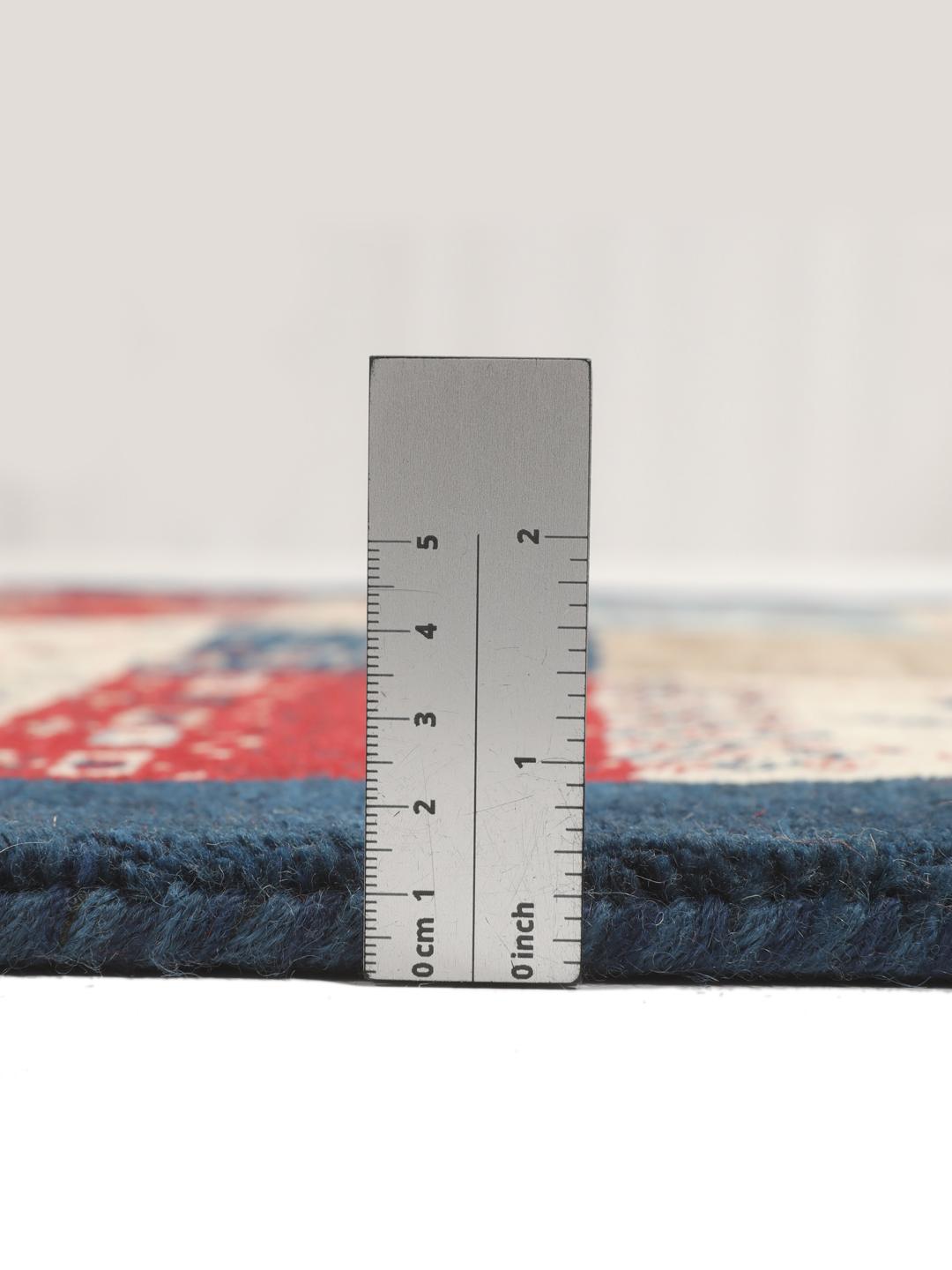
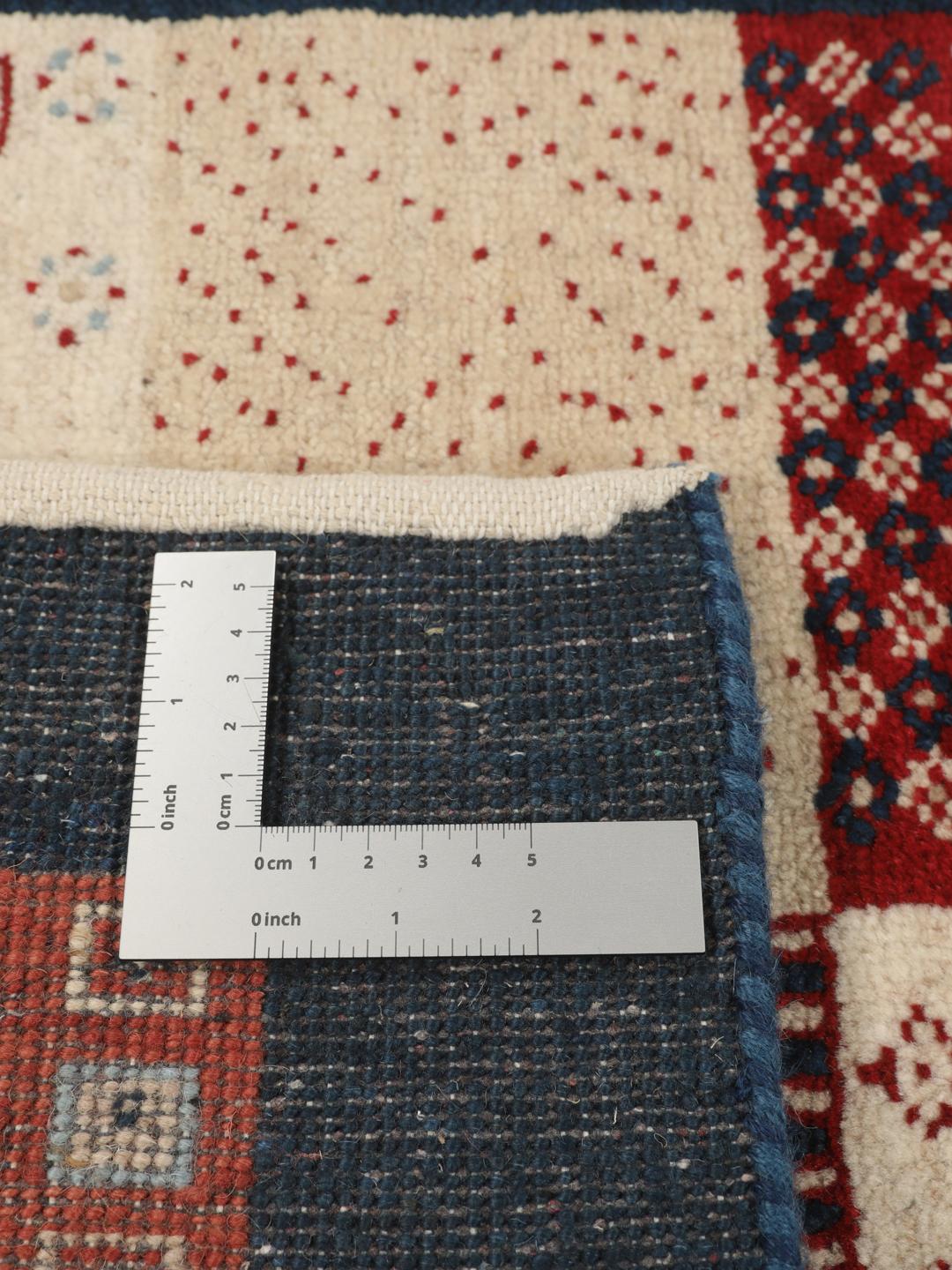
Gabbeh rugs have long been celebrated for their artistic freedom and connection to the nomadic traditions of the Middle East. While they were originally created for daily, practical use by tribal weavers, they eventually evolved into a distinct art form known for their bold colours and simplified, abstract geometric patterns.
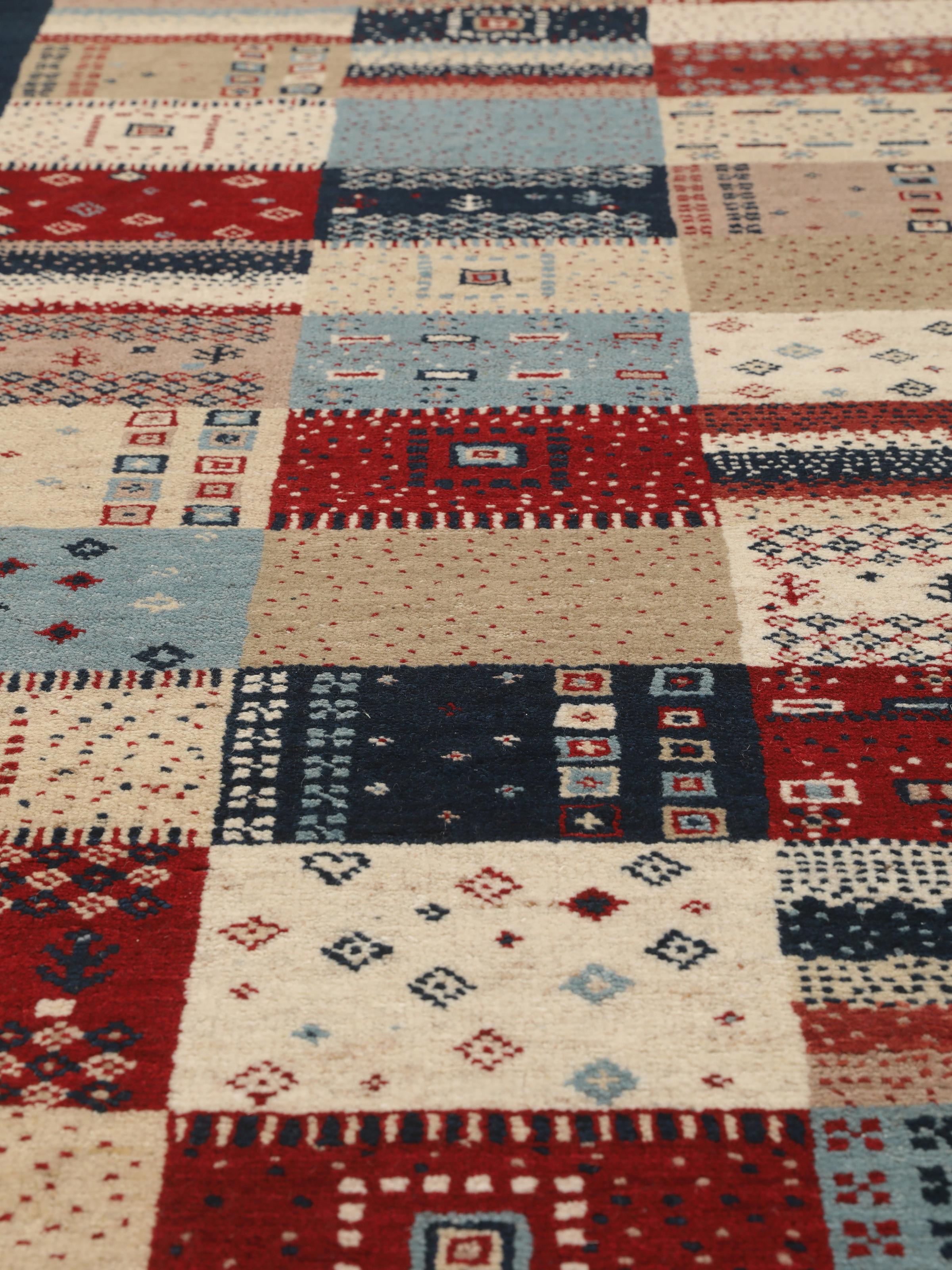
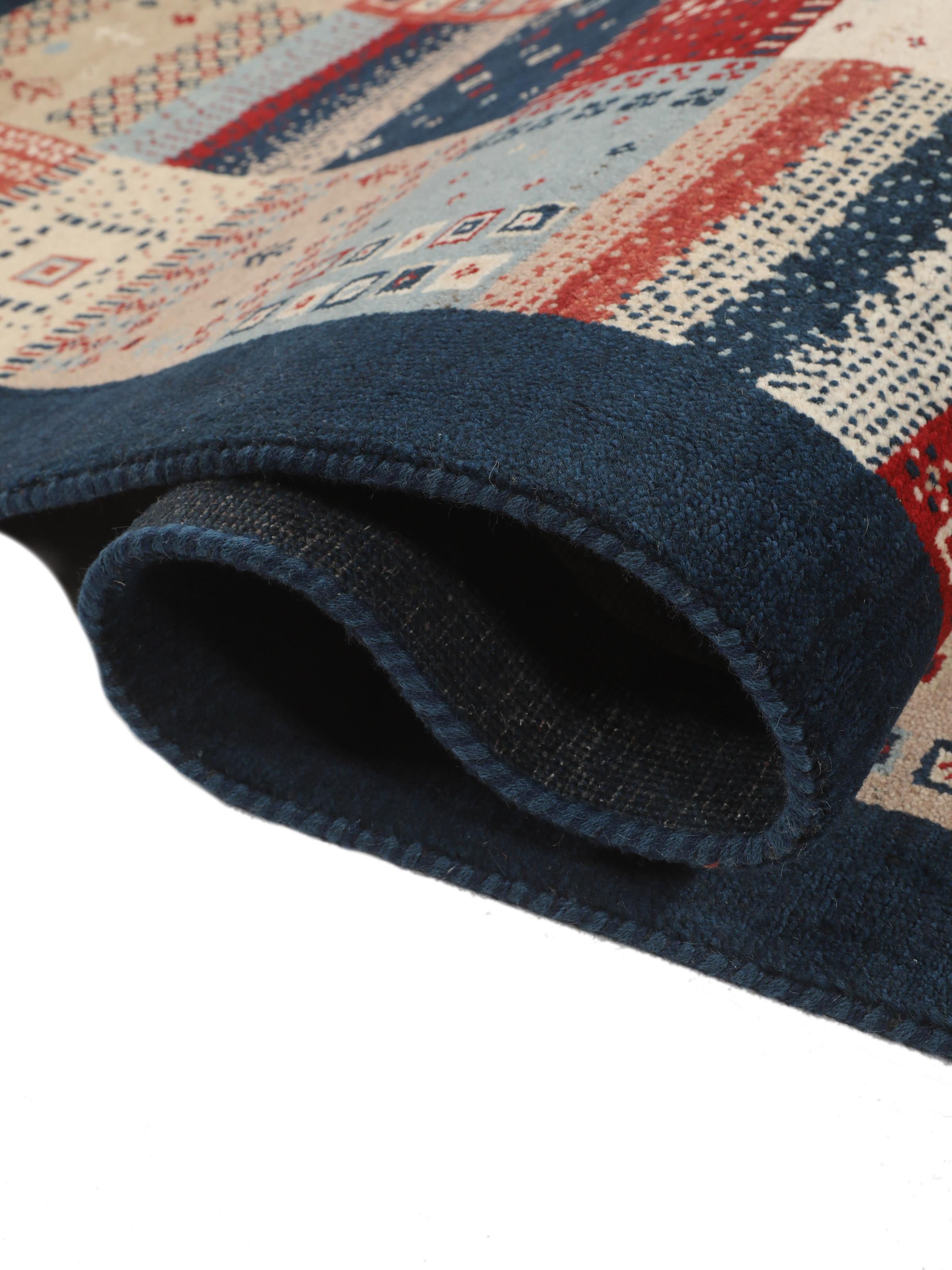
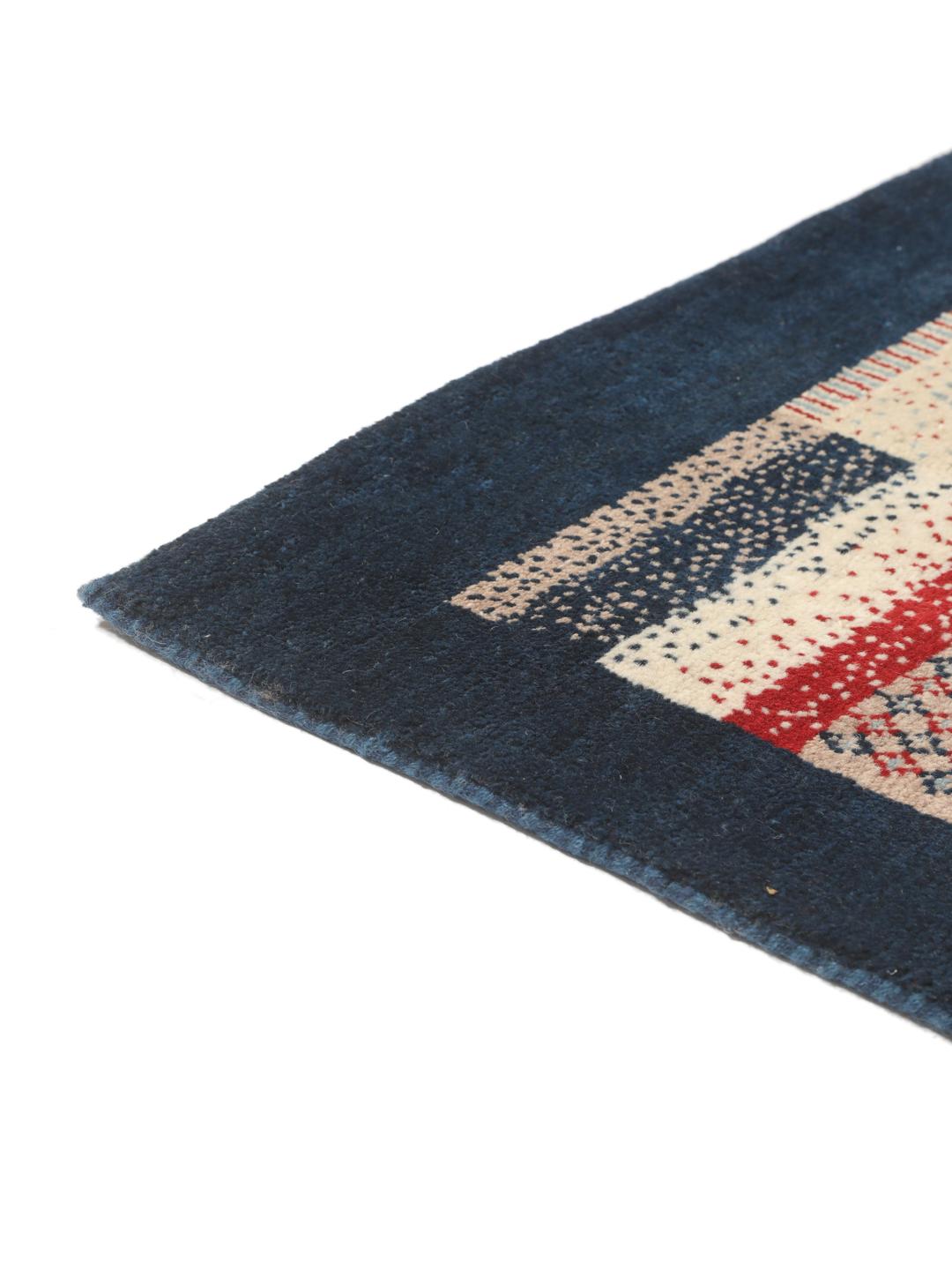
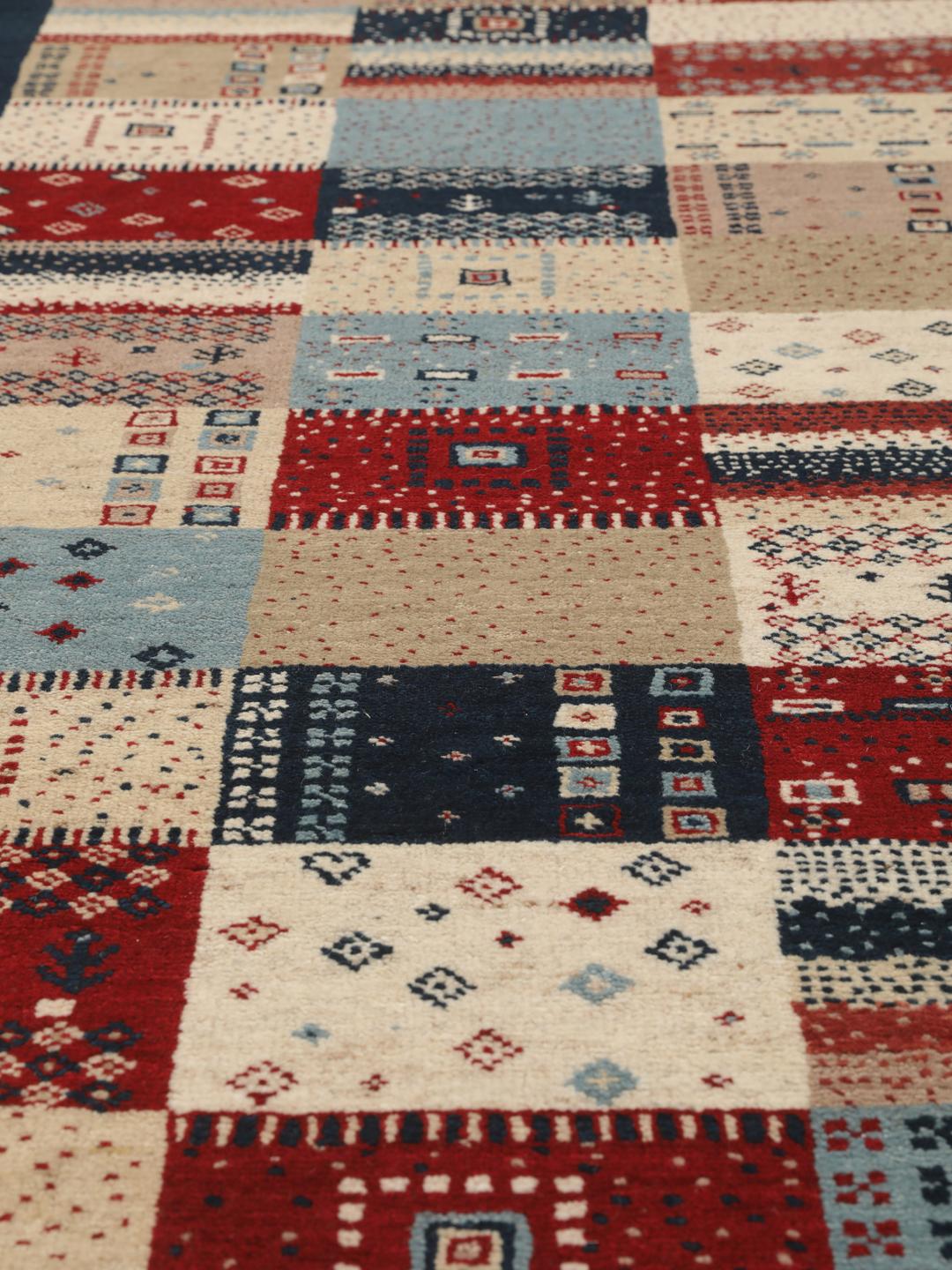
The Loribaft style represents a more refined interpretation of these traditional designs. Characterised by a higher knot density and a more deliberate approach to pattern, Loribaft rugs bridge the gap between rustic tribal aesthetics and contemporary interior design, offering a smoother, more polished finish compared to traditional, shaggy Gabbehs.
The visual language of this rug is deeply rooted in symbolic storytelling. Each small square in the patchwork often contains motifs inspired by nature, local landscapes, or tribal heritage. By arranging these different patterns together, the weaver creates a mosaic of cultural history, making the rug feel more like an evolving narrative than a static floor covering.
Owning a piece from this tradition is an investment in human skill and cultural continuity. These rugs are highly valued by collectors not just for their aesthetic beauty, but for the history they represent. By choosing a handmade piece, you are supporting a legacy of weaving that prizes individual expression and the slow, deliberate craft of the artisan.