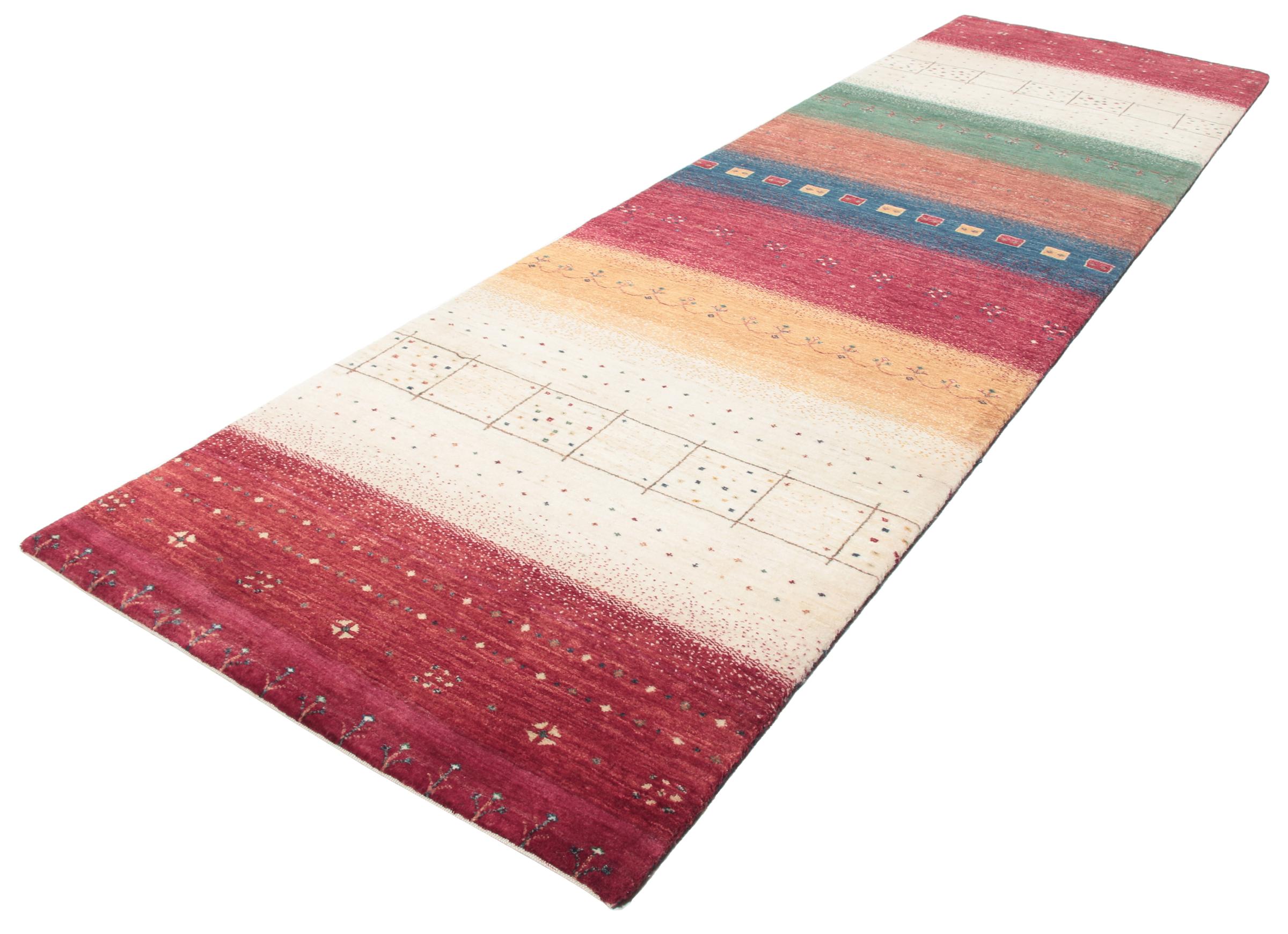
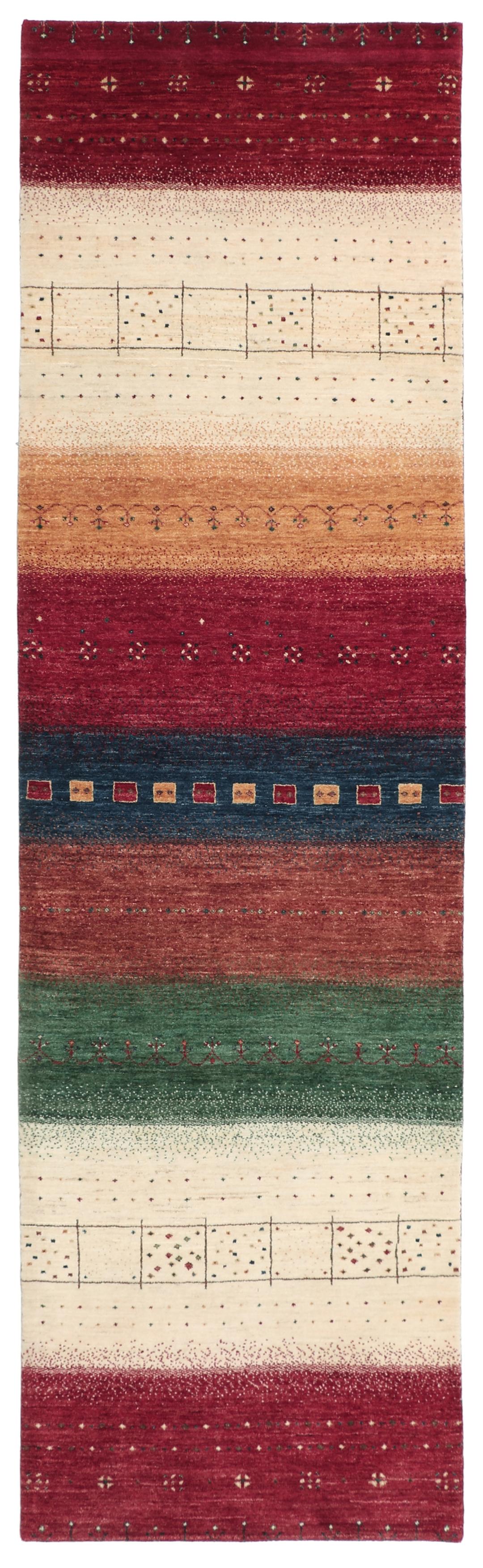
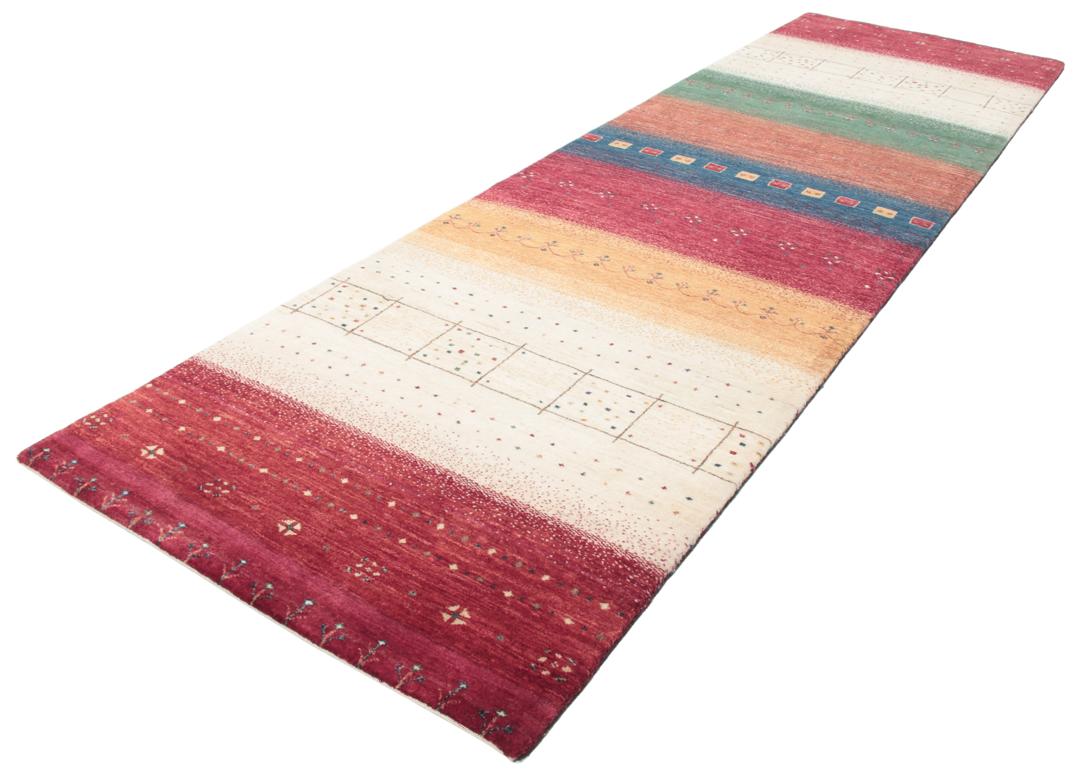
The Gabbeh tradition originates from the nomadic tribes of the Middle East, who developed these rugs as functional, cosy floor coverings for their tents. Unlike more formal, city-made rugs, Gabbeh designs were deeply personal, often reflecting the weaver's own experiences, surroundings, and emotions through simplified, abstract motifs.
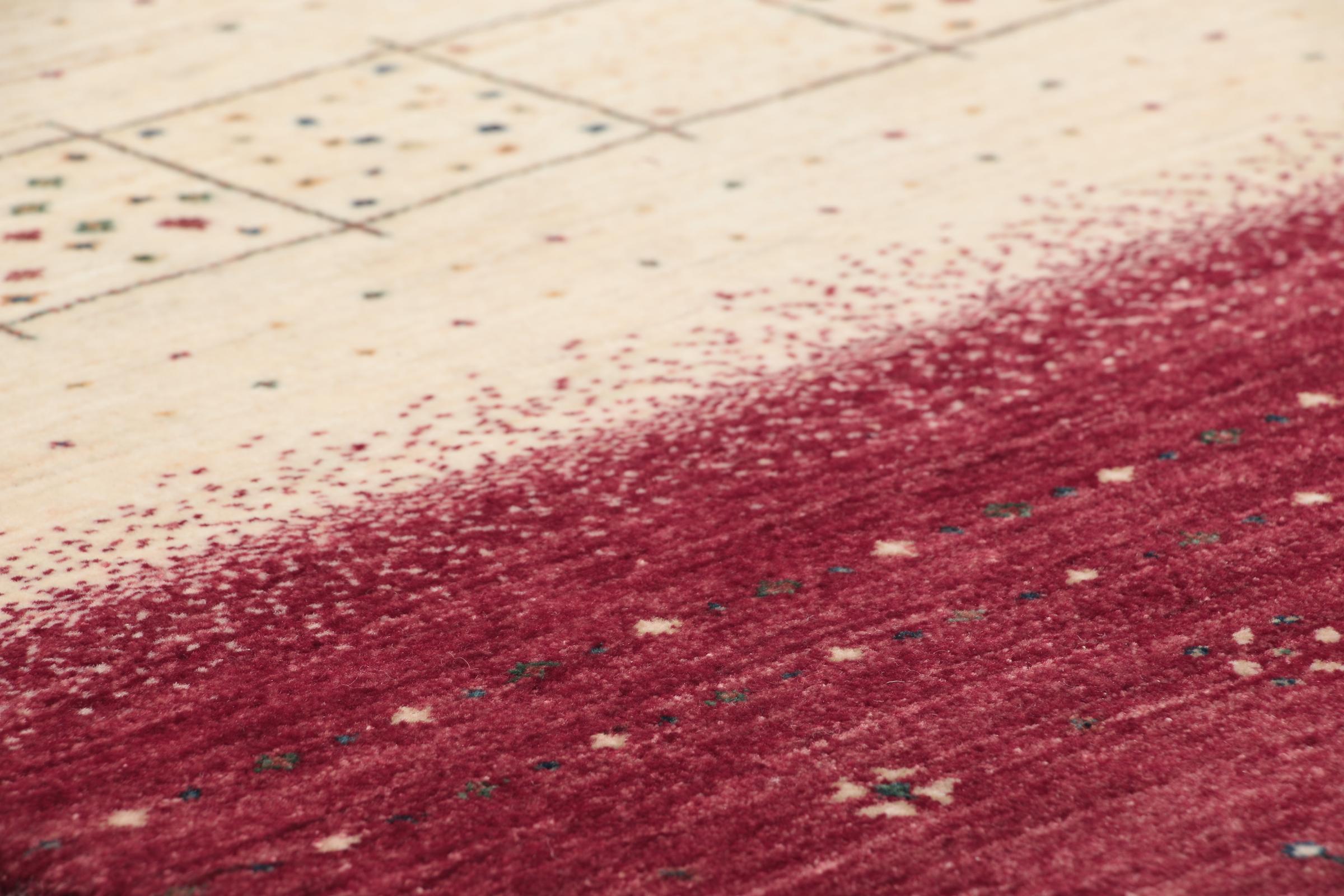
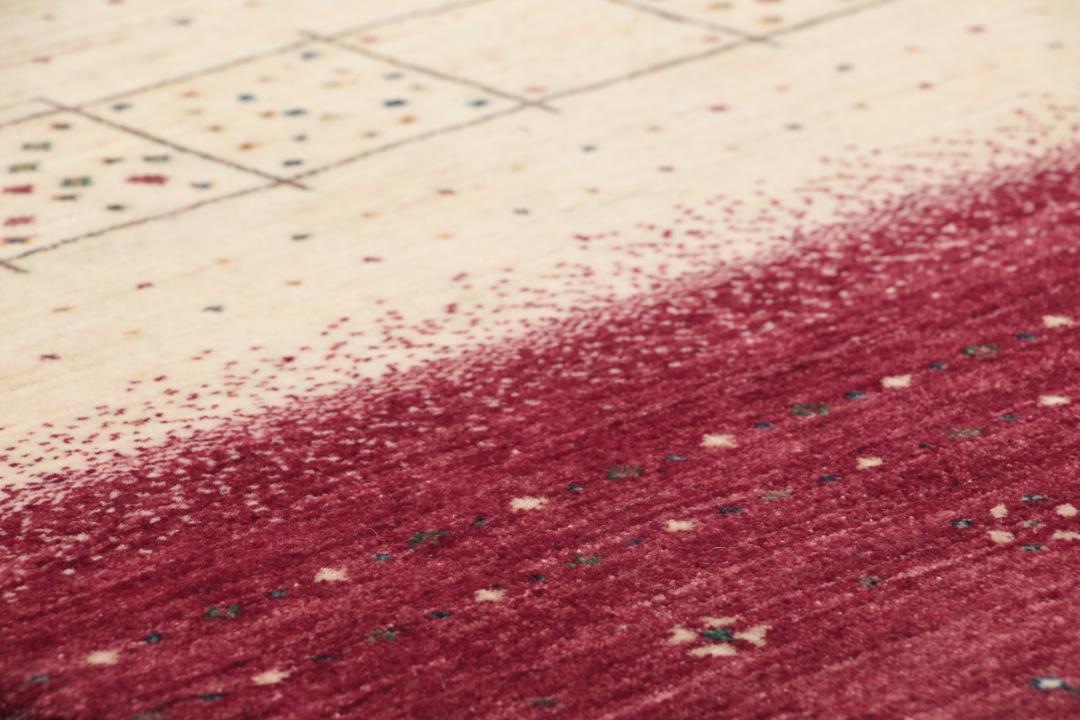
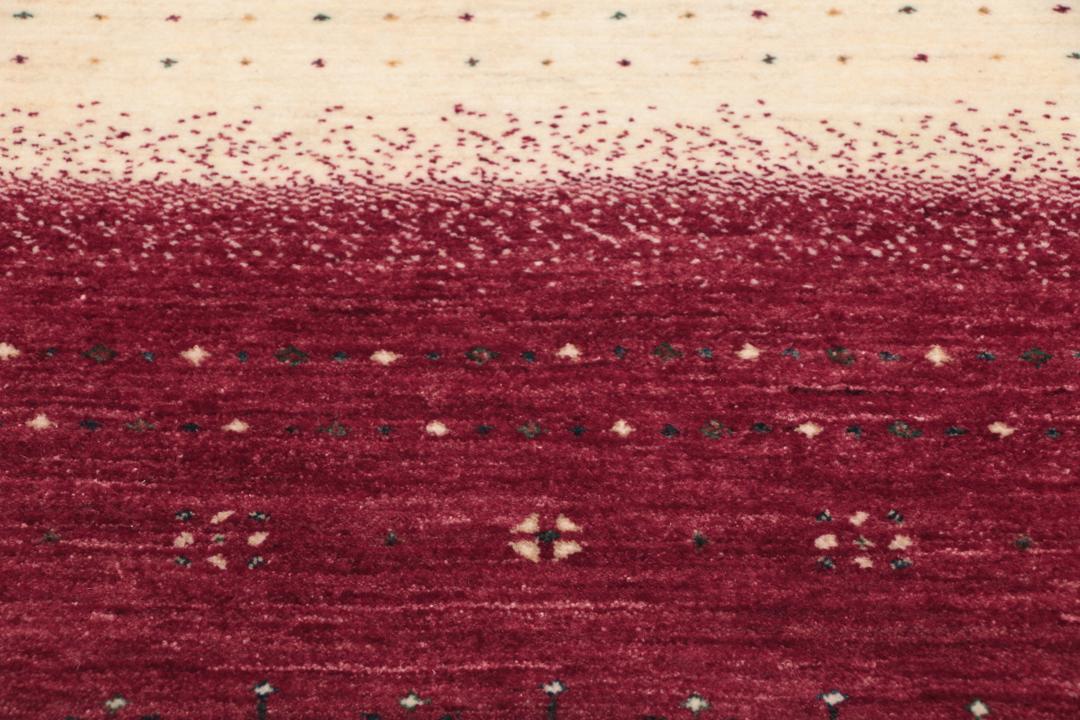
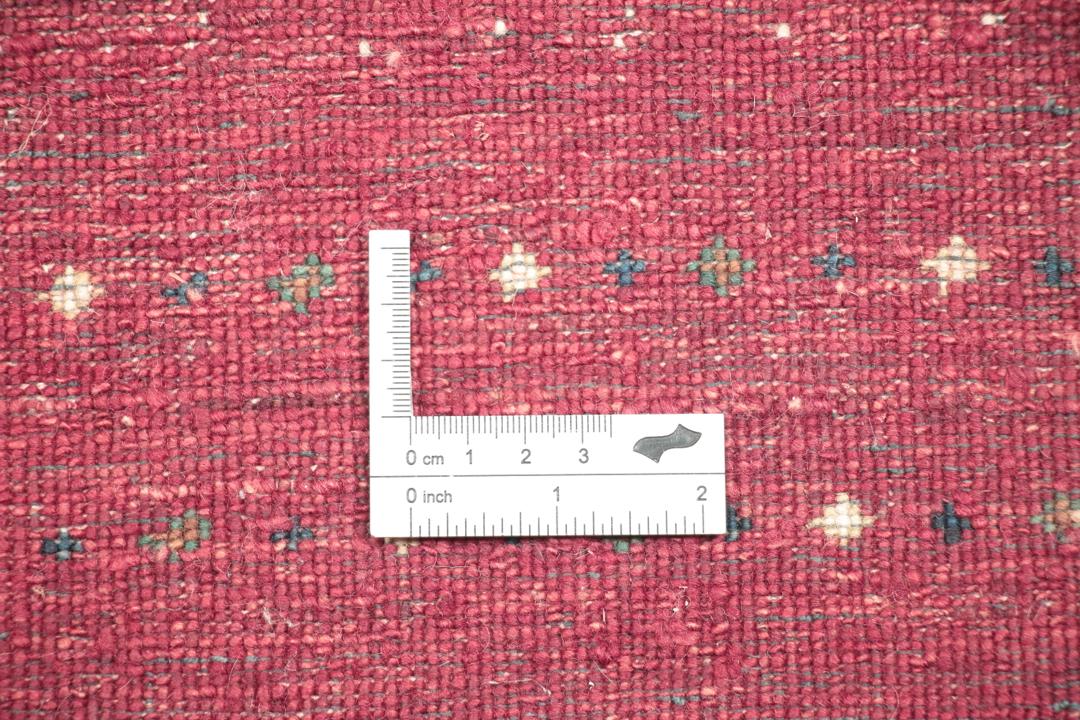
The term 'Loribaft' refers to a specific, finer grade of these traditional rugs, often associated with the Luri people. While traditional Gabbehs are known for their thicker, coarser weave, the Loribaft style elevates the craft by incorporating a higher knot density, resulting in a more refined finish while maintaining the iconic, soulful character of the original nomadic style.
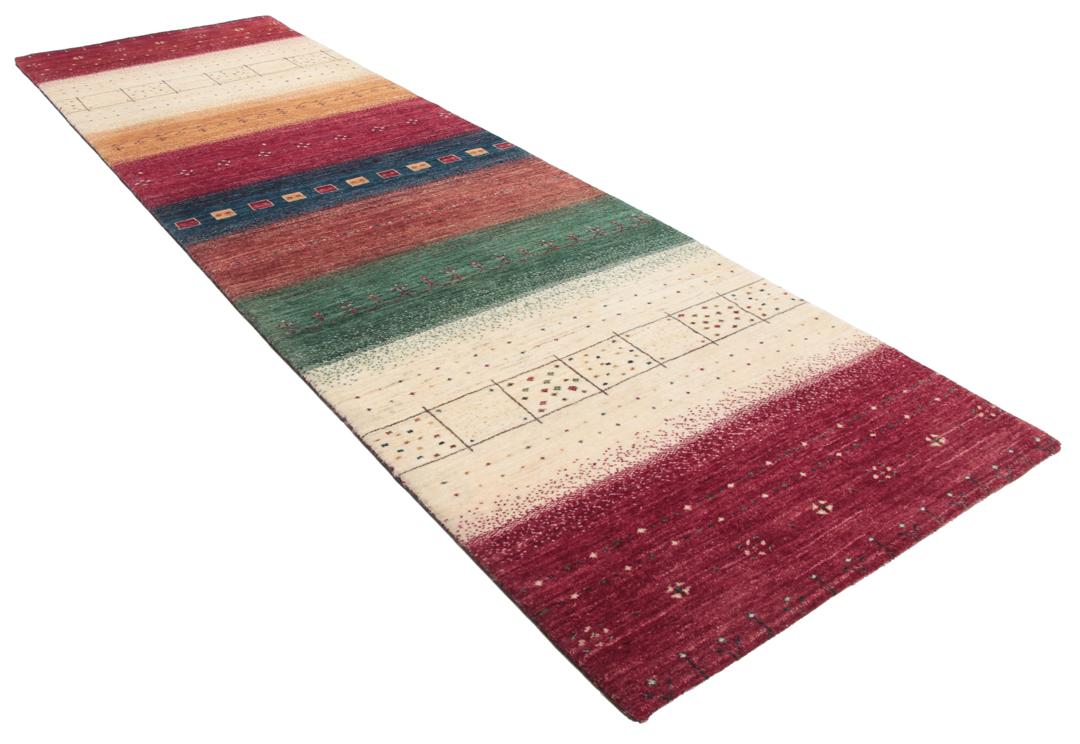
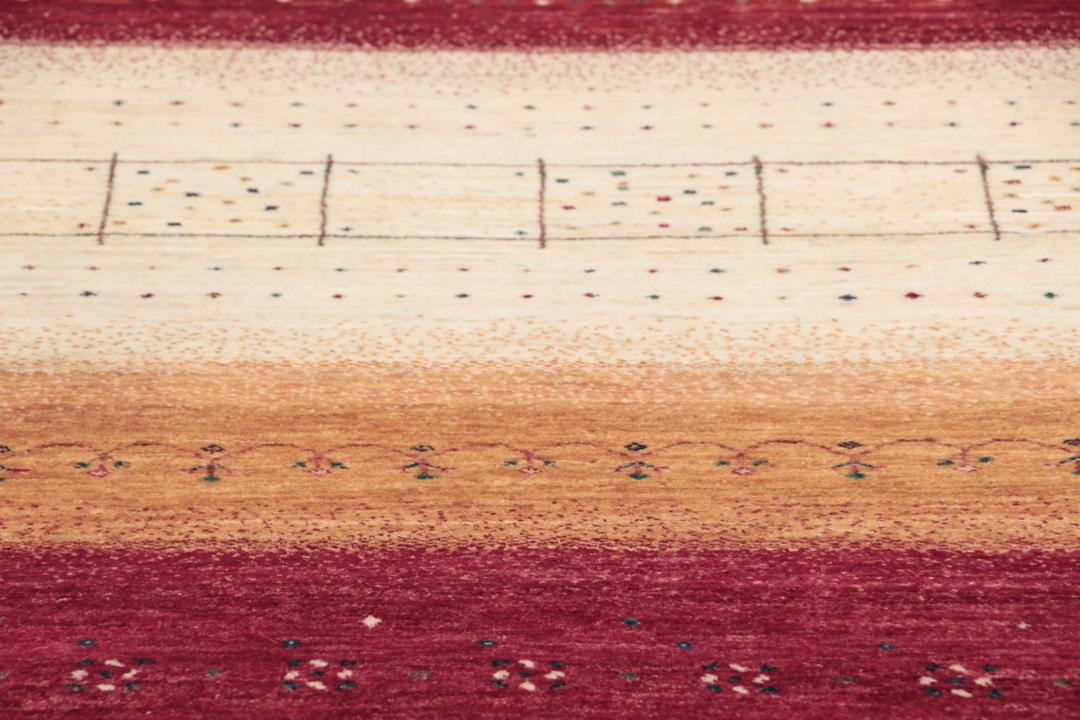
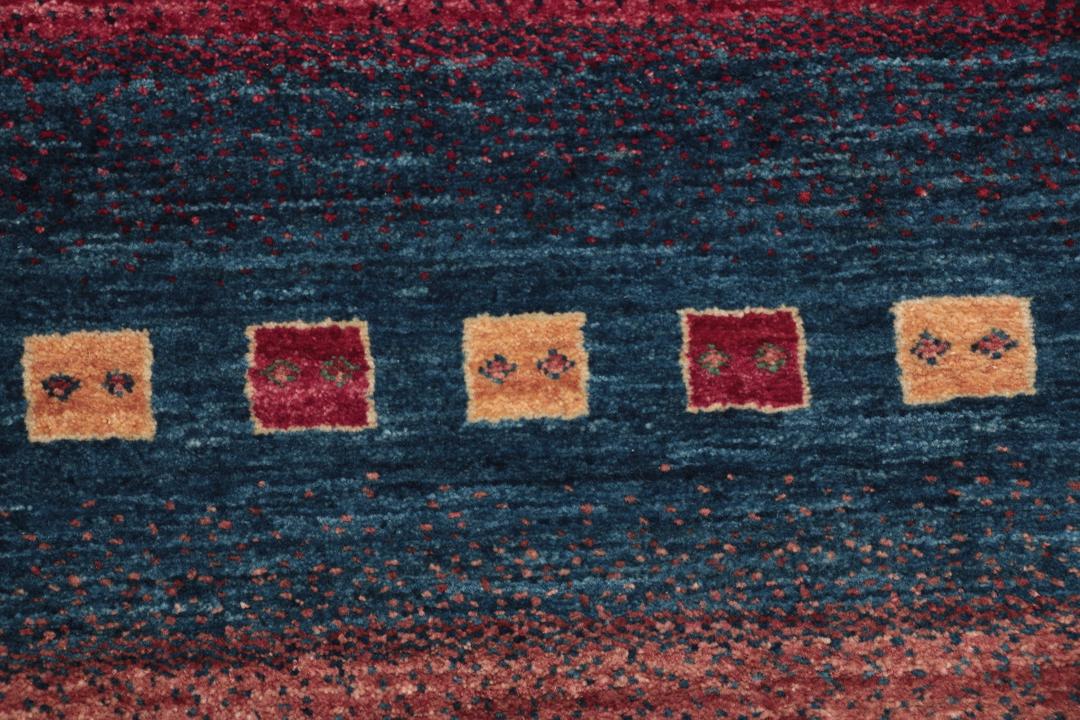
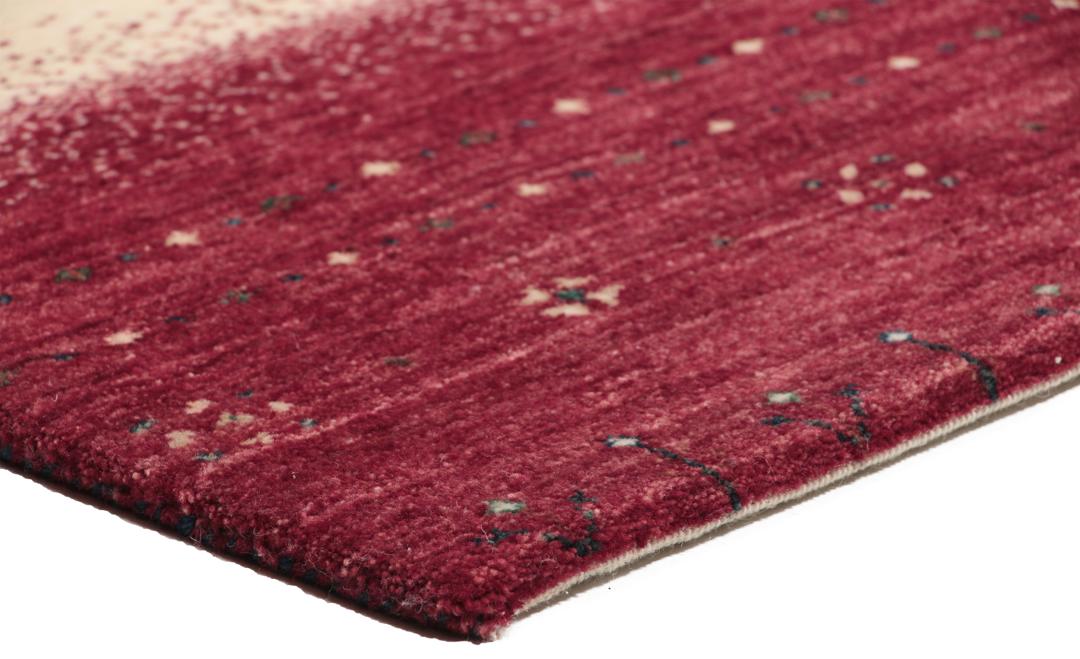
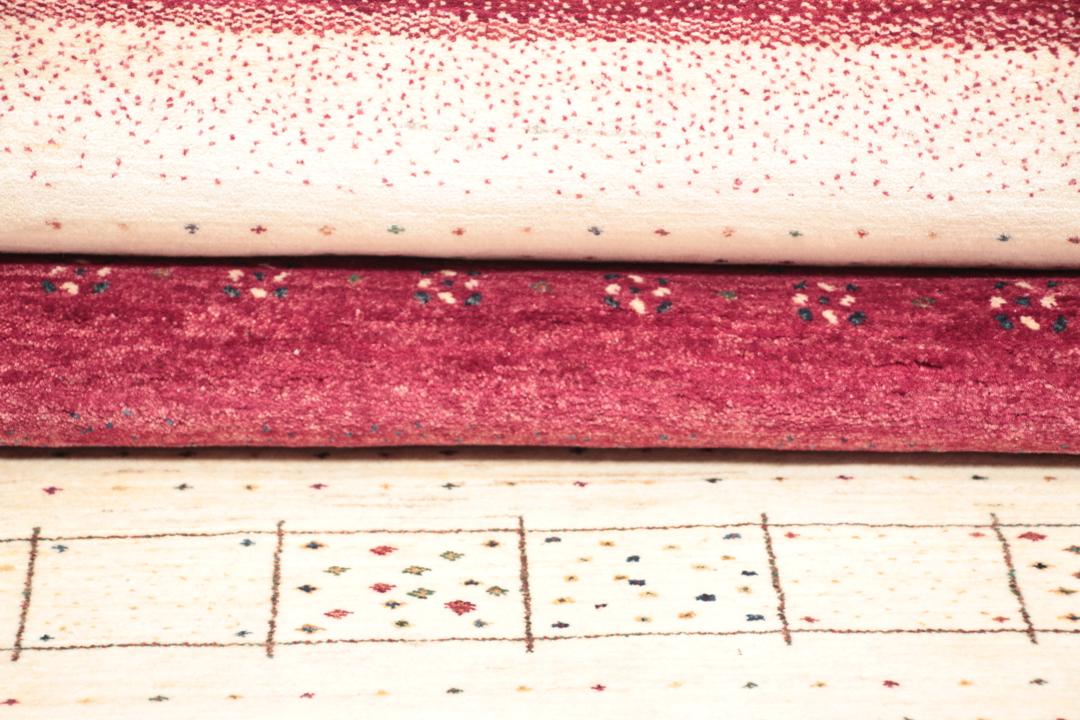
Visually, these rugs are characterised by their bold, open fields and playful use of colour. You will often see geometric shapes, stylised animals, or simple line work that tells a story of the landscape. The colour traditions are rooted in the natural dyes historically available to weavers, resulting in the warm, saturated earth tones that define this classic look.
Owning a Loribaft runner is more than just a decor choice; it is an appreciation of a heritage that values human touch over mass production. These pieces are highly prized by collectors for their authenticity and the way they bridge the gap between ancient tribal traditions and modern interior design needs.