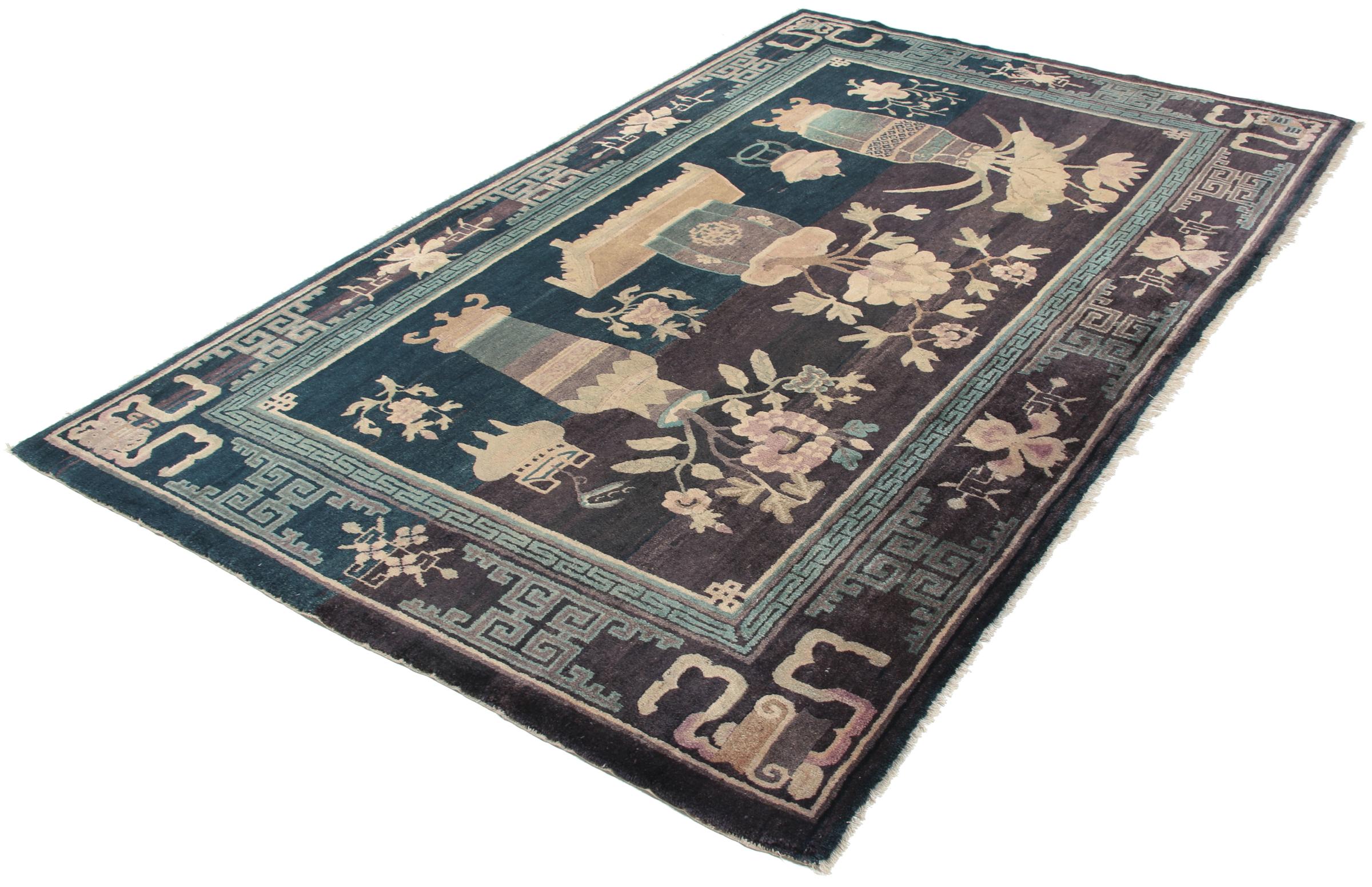
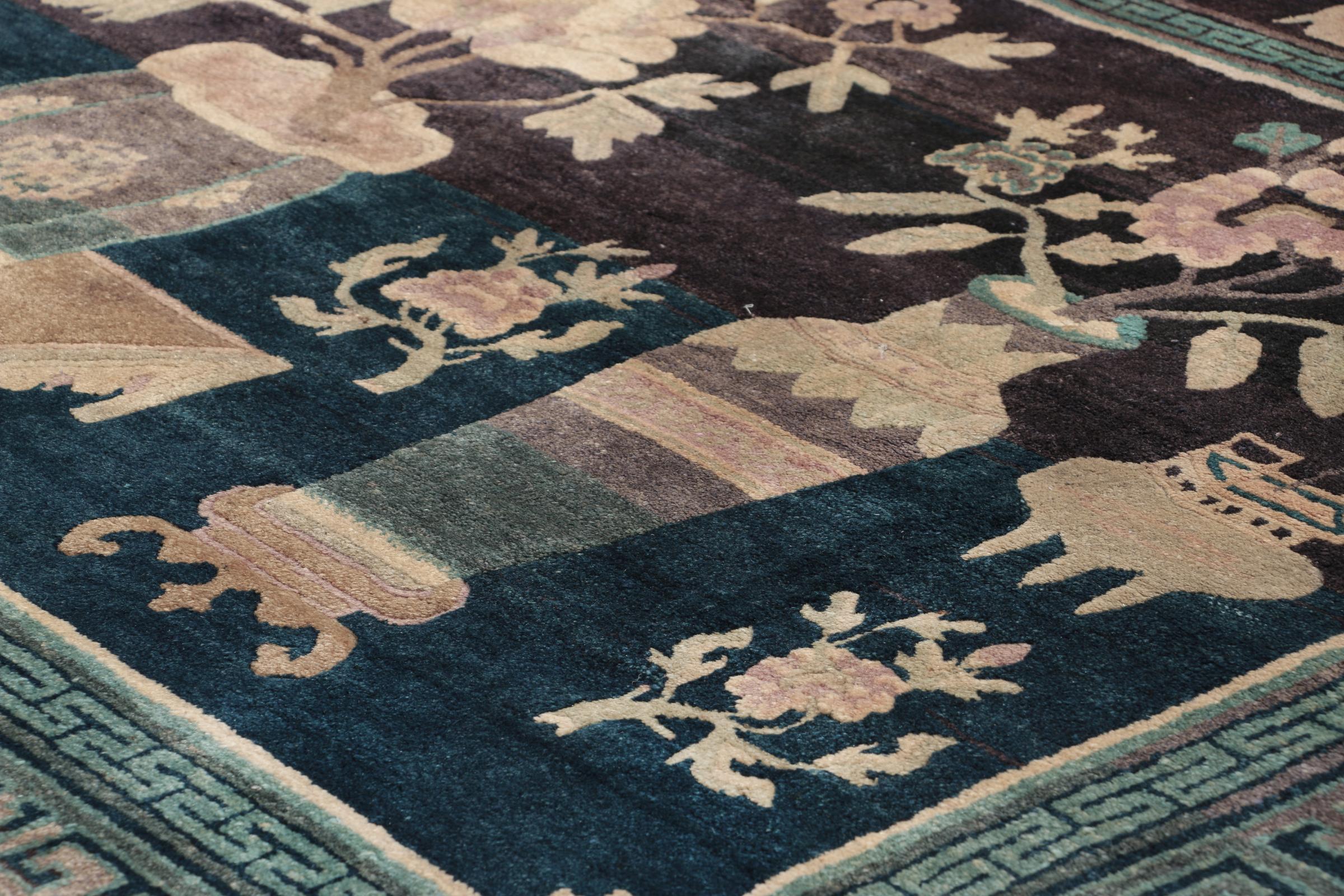
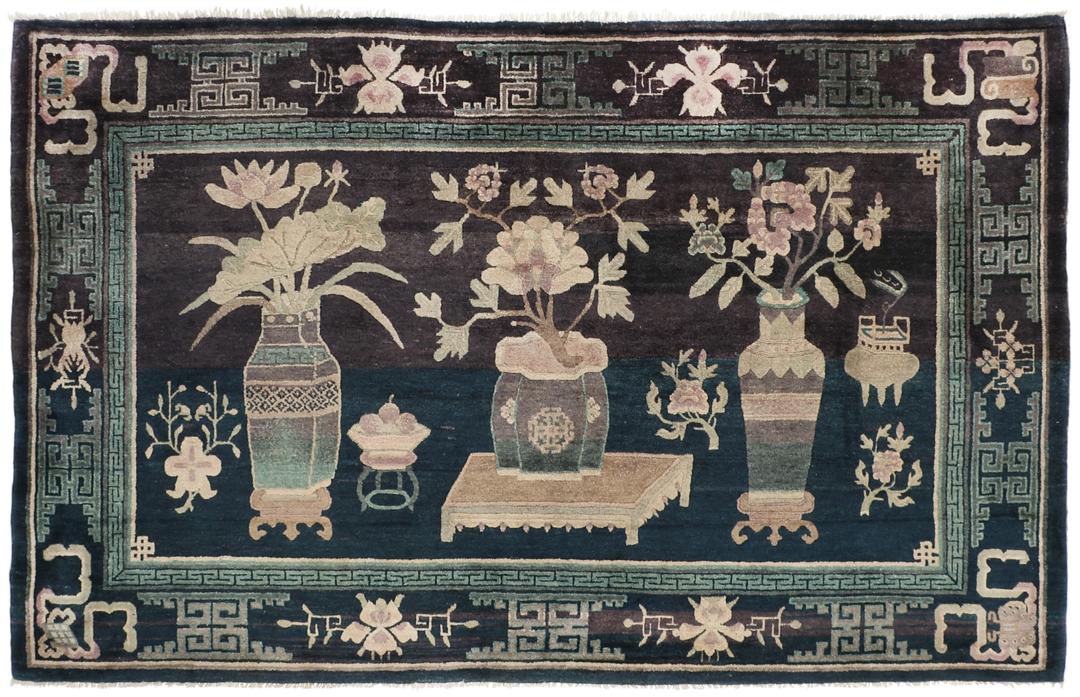
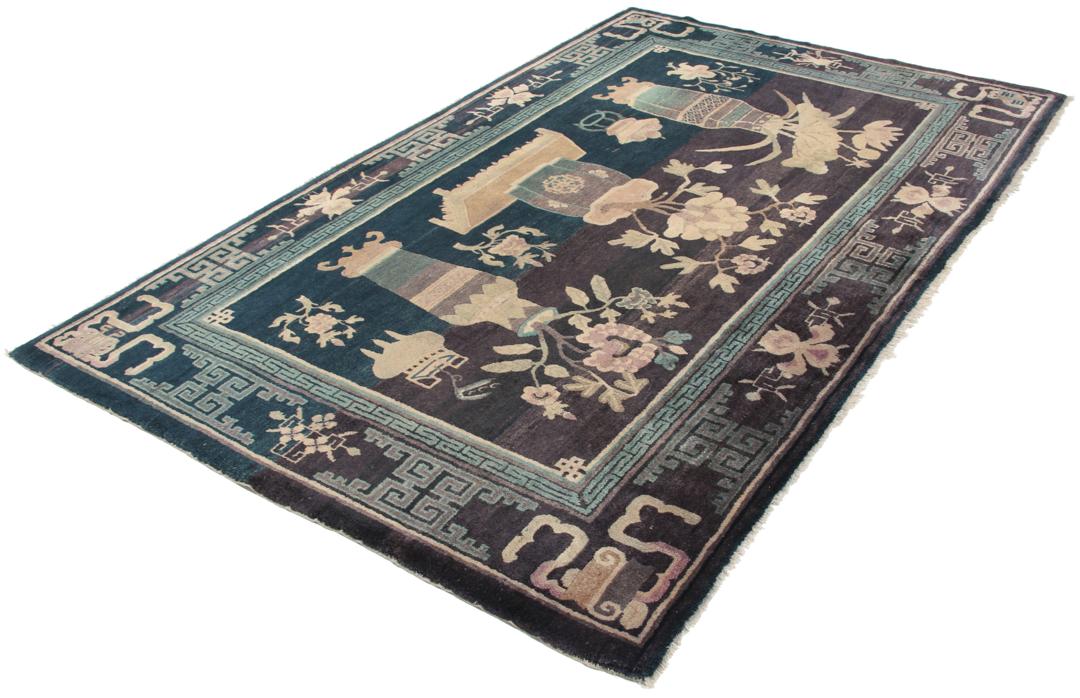
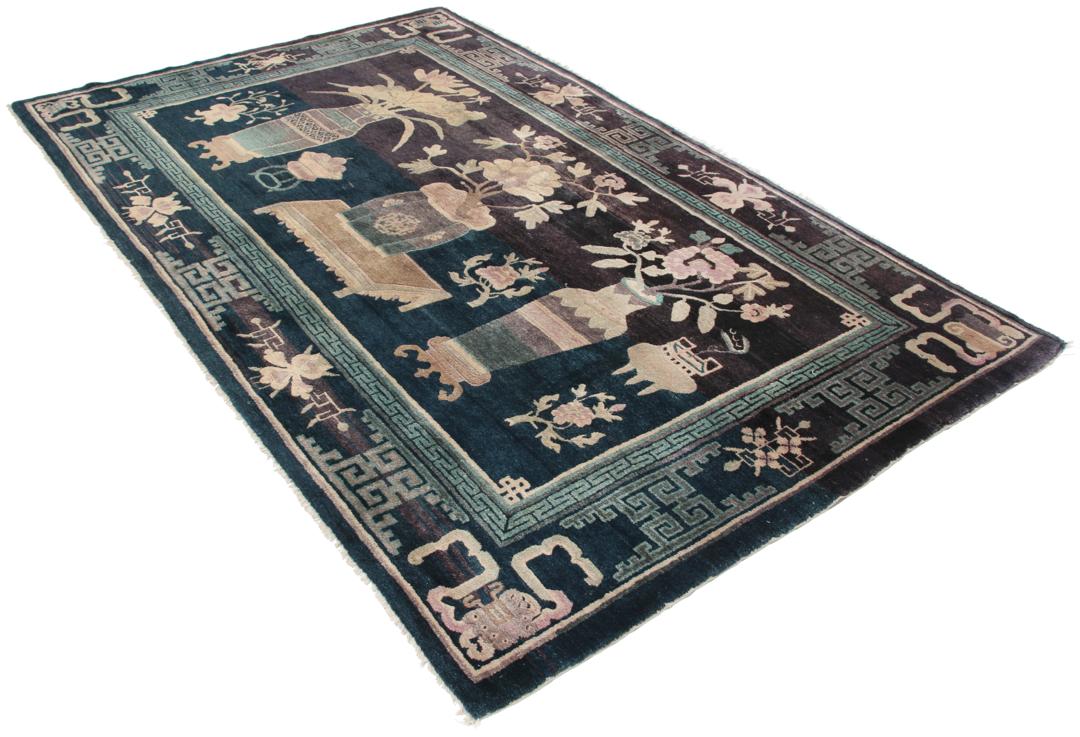
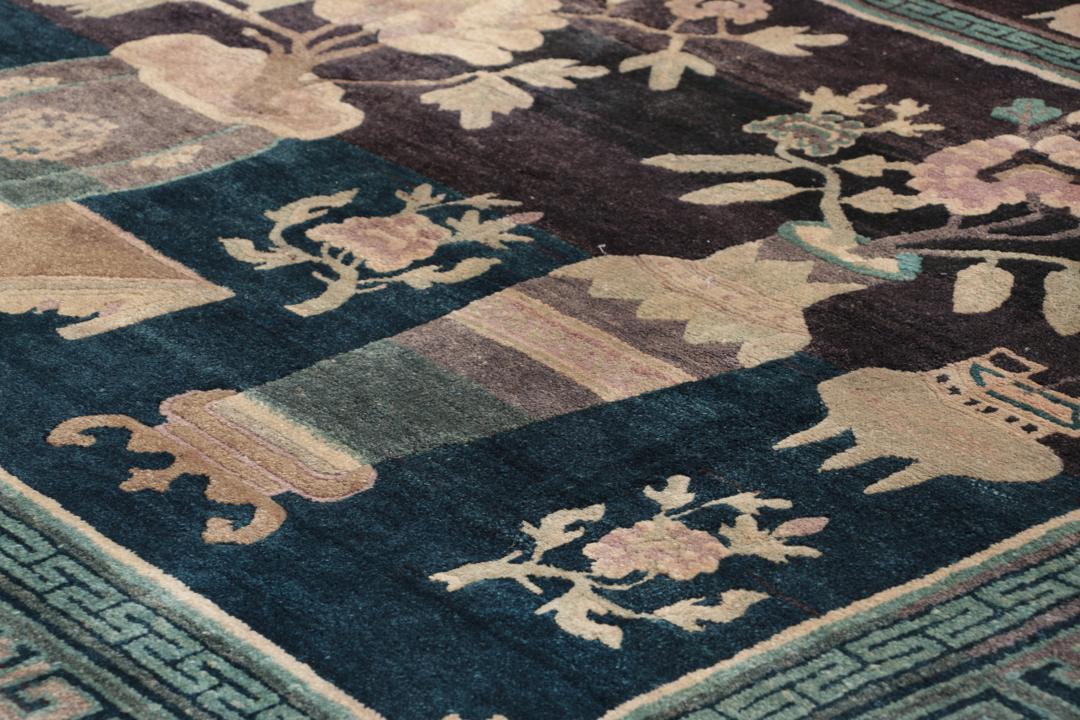
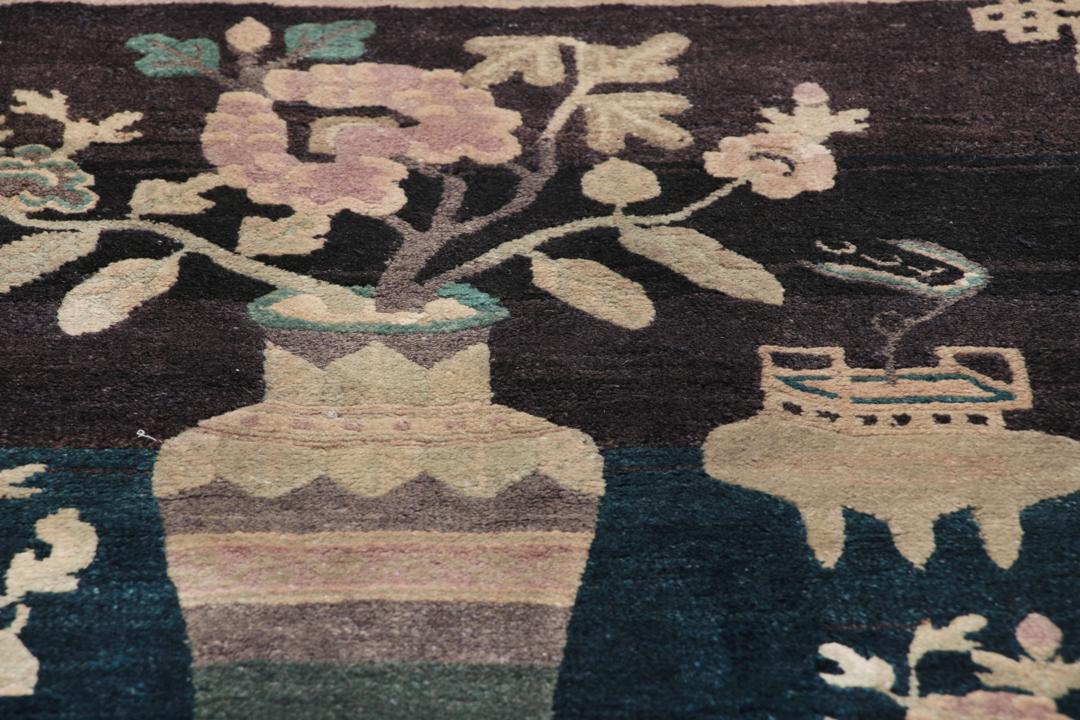
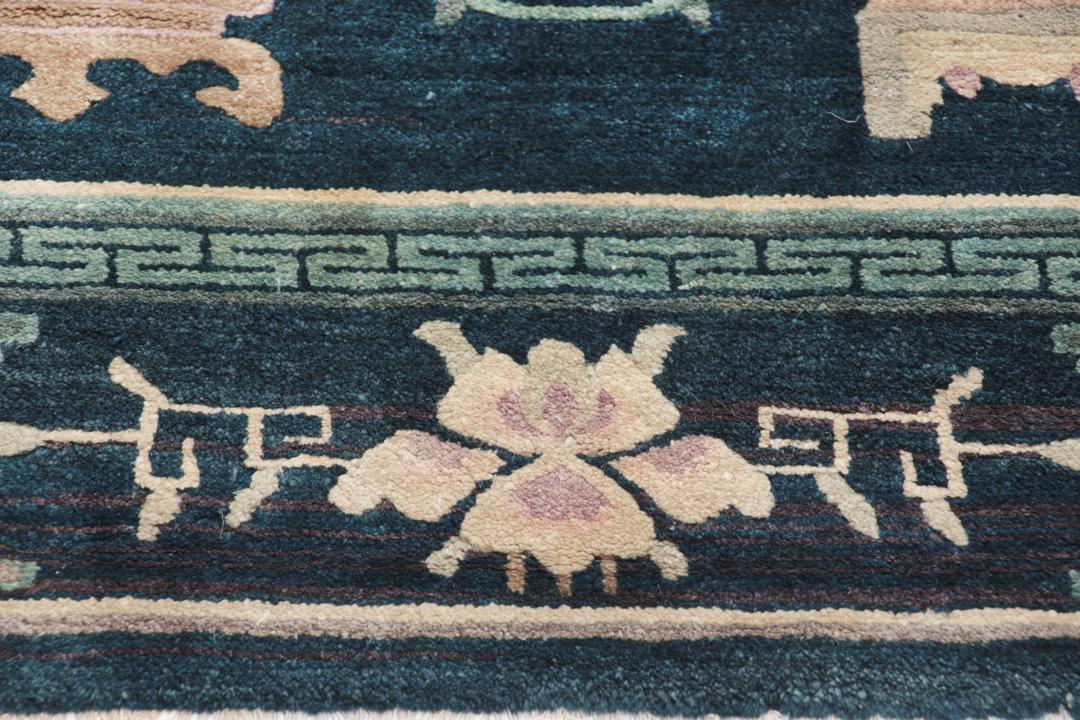
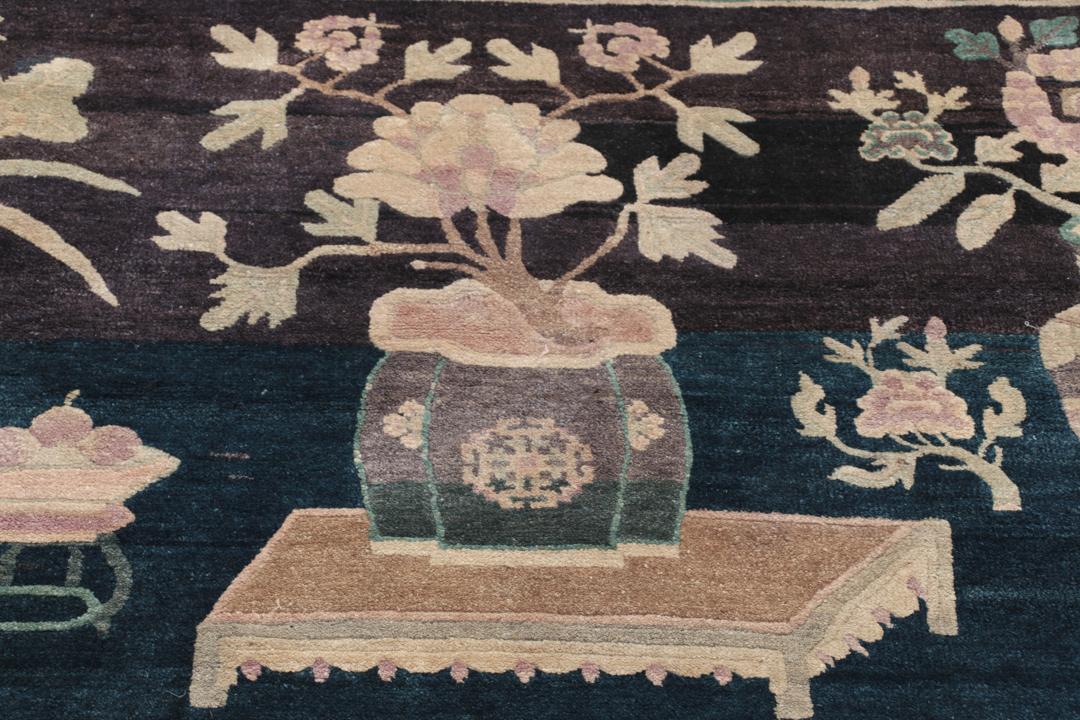
Chinese rugs have long been celebrated for their distinct aesthetic, which often draws from a deep well of symbolic and artistic traditions. Originating from a region where textile production was a highly respected craft, these rugs often incorporate motifs rooted in Buddhist and Taoist philosophies, such as the lotus flower and ornate vases, which are prominently displayed in this piece.
The 1920s marked a fascinating period for Chinese carpet production, as traditional designs began to harmonize with the burgeoning Art Deco movement. This era saw a shift in color palettes and motif scaling, leading to the creation of rugs that felt both ancient and modern. The term 'antique' here refers not just to the age of the piece, but to the specific stylistic evolution that occurred during this transformative decade in Chinese craftsmanship.
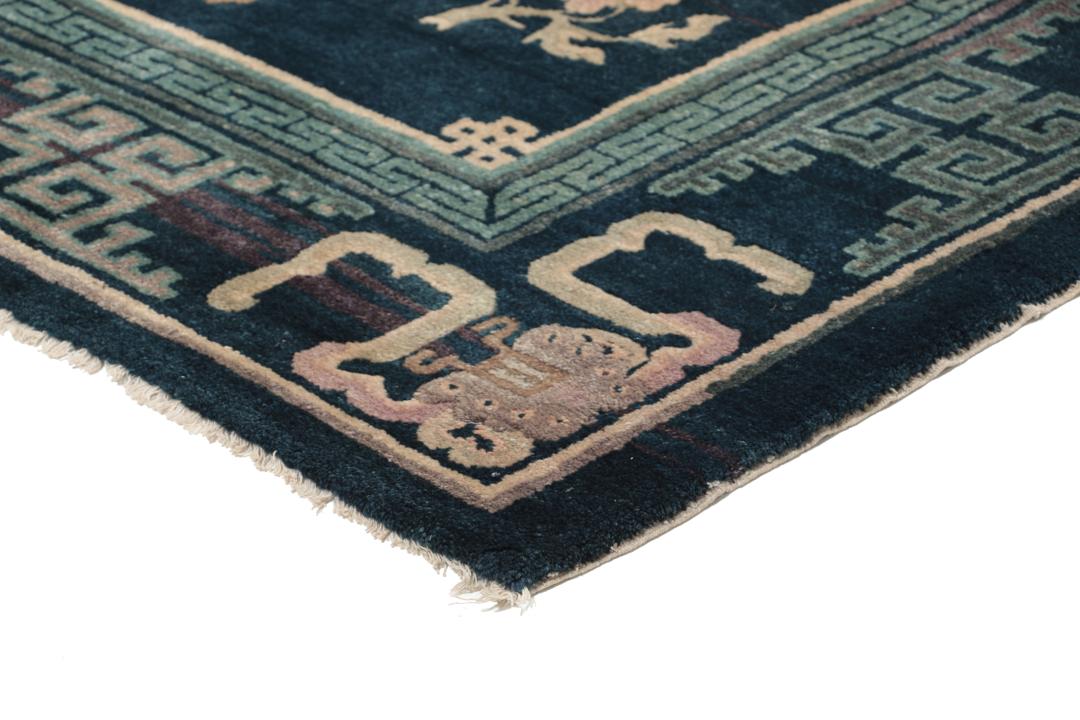
The design of this rug showcases signature elements like the decorative border and the open, uncluttered field that allows the central floral arrangements to breathe. This aesthetic choice is a hallmark of the period, emphasizing balance and harmony. The inclusion of vases and ceremonial vessels as central themes speaks to the cultural appreciation for beauty and order, motifs that were popular among both domestic patrons and the international market of the time.
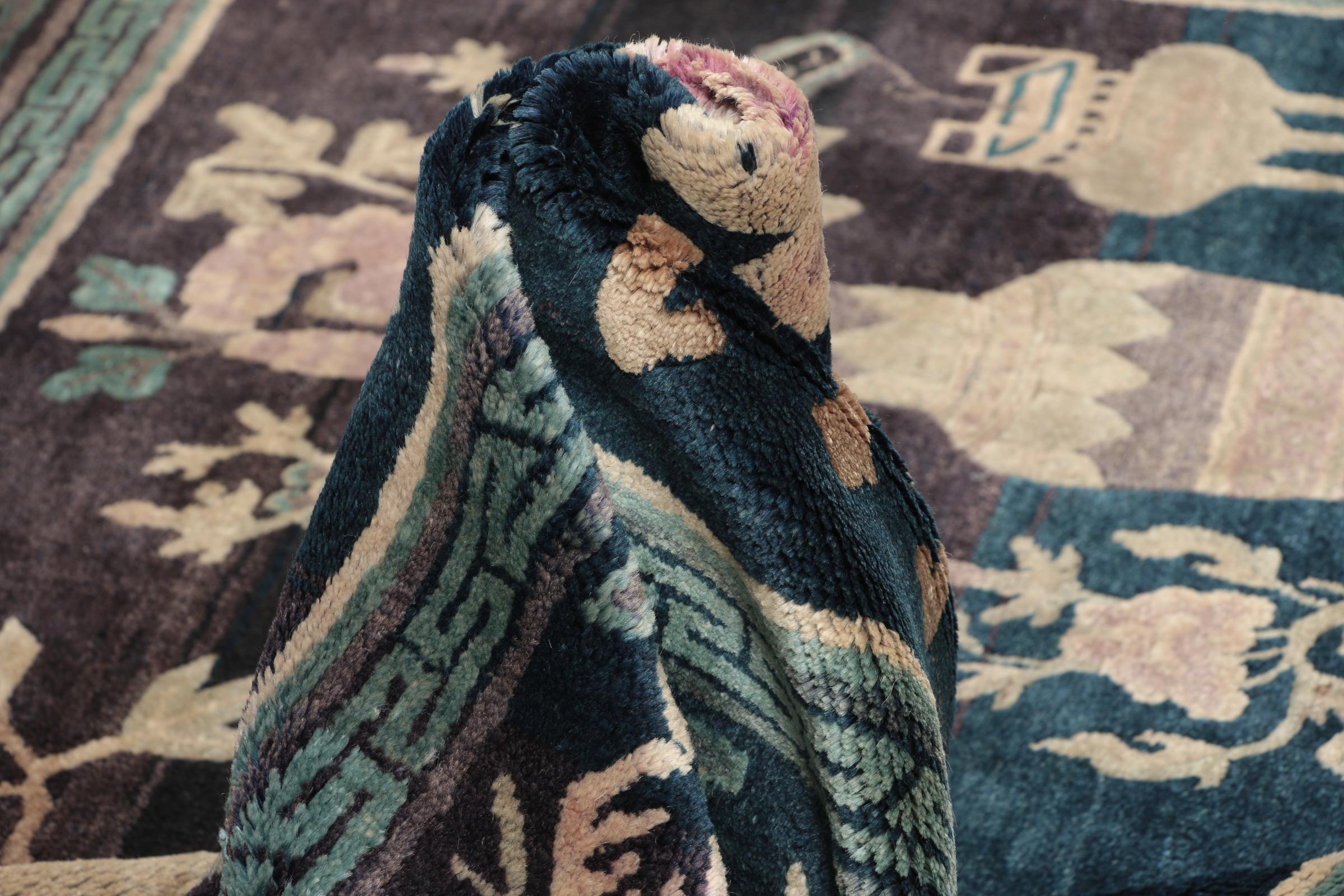
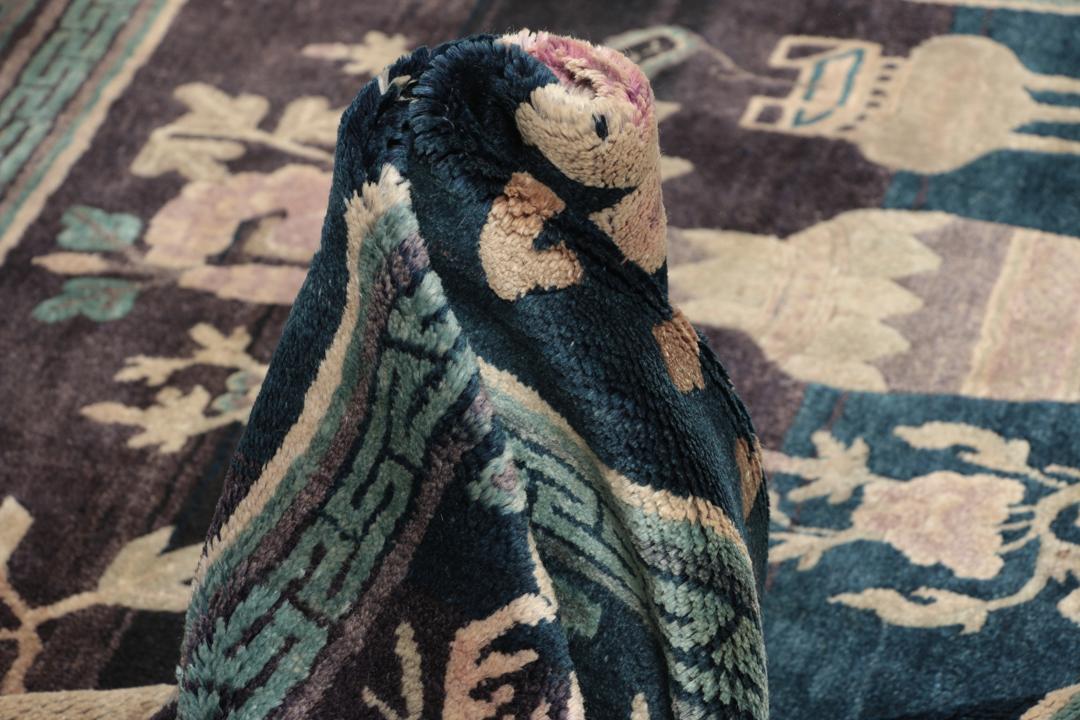
Collecting antique rugs from this era is a way of honoring the immense skill of the weavers who worked before the advent of industrial machinery. Each rug acts as a historical record, reflecting the materials, dyes, and artistic sensibilities of the time. Owning such a piece is an opportunity to connect with a rich, cross-cultural heritage, bringing a sense of depth and authentic narrative to the modern home.