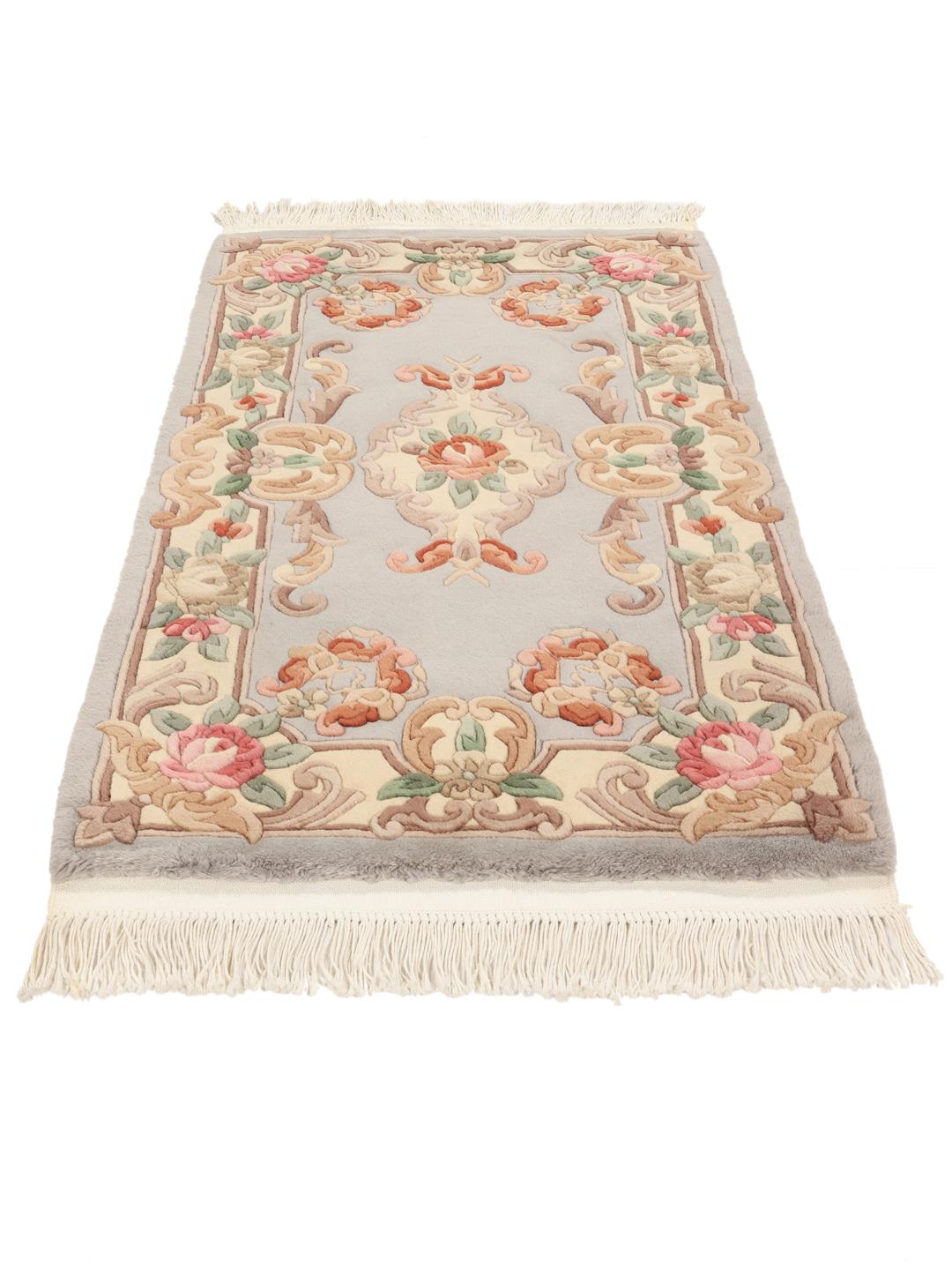
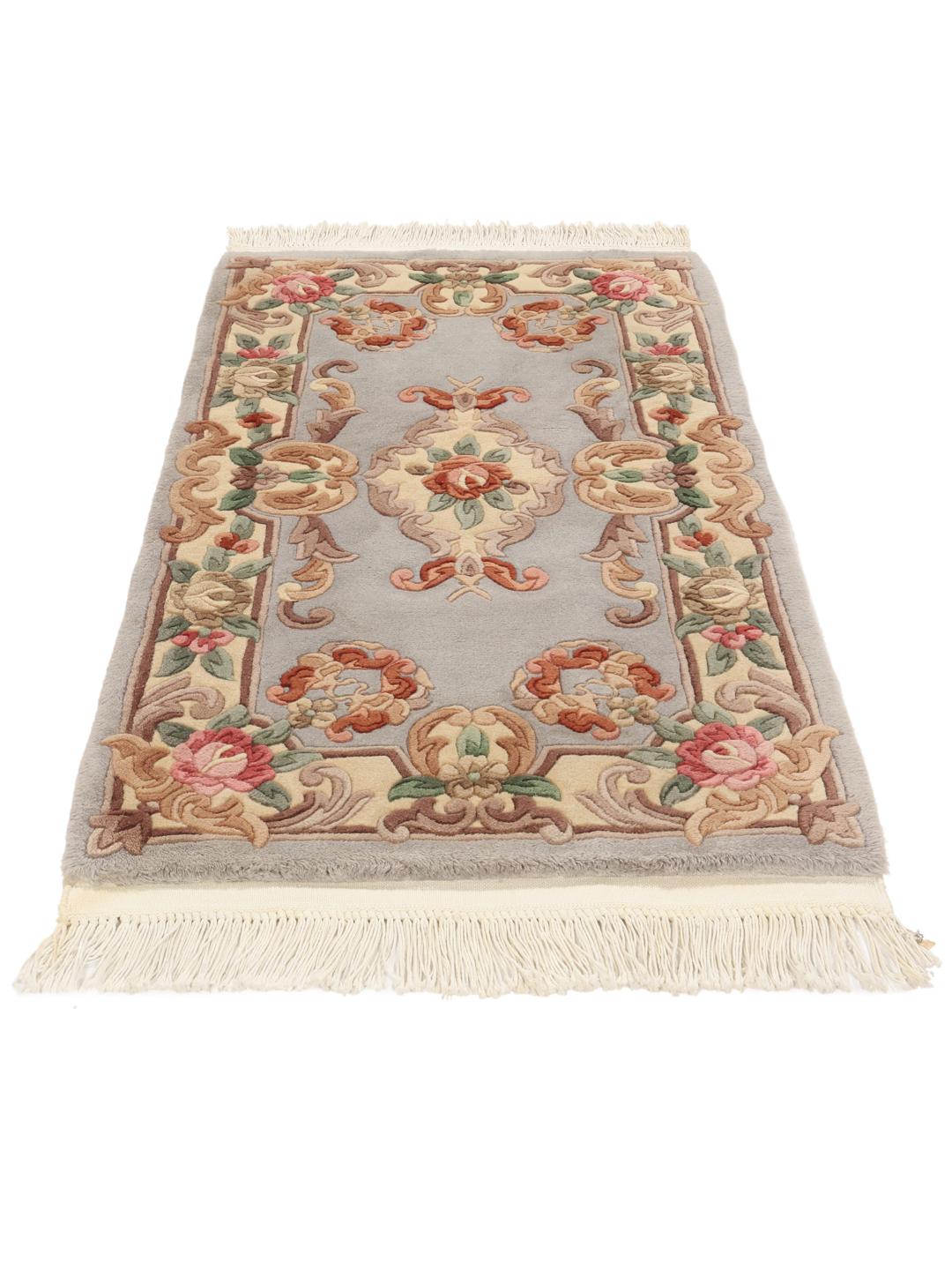
Chinese rug weaving has a storied past that spans centuries, evolving from functional floor coverings into expressions of artistic mastery. Historically, these rugs were highly valued for their balanced compositions and symbolic motifs, often drawing inspiration from nature, architecture, and traditional embroidery.
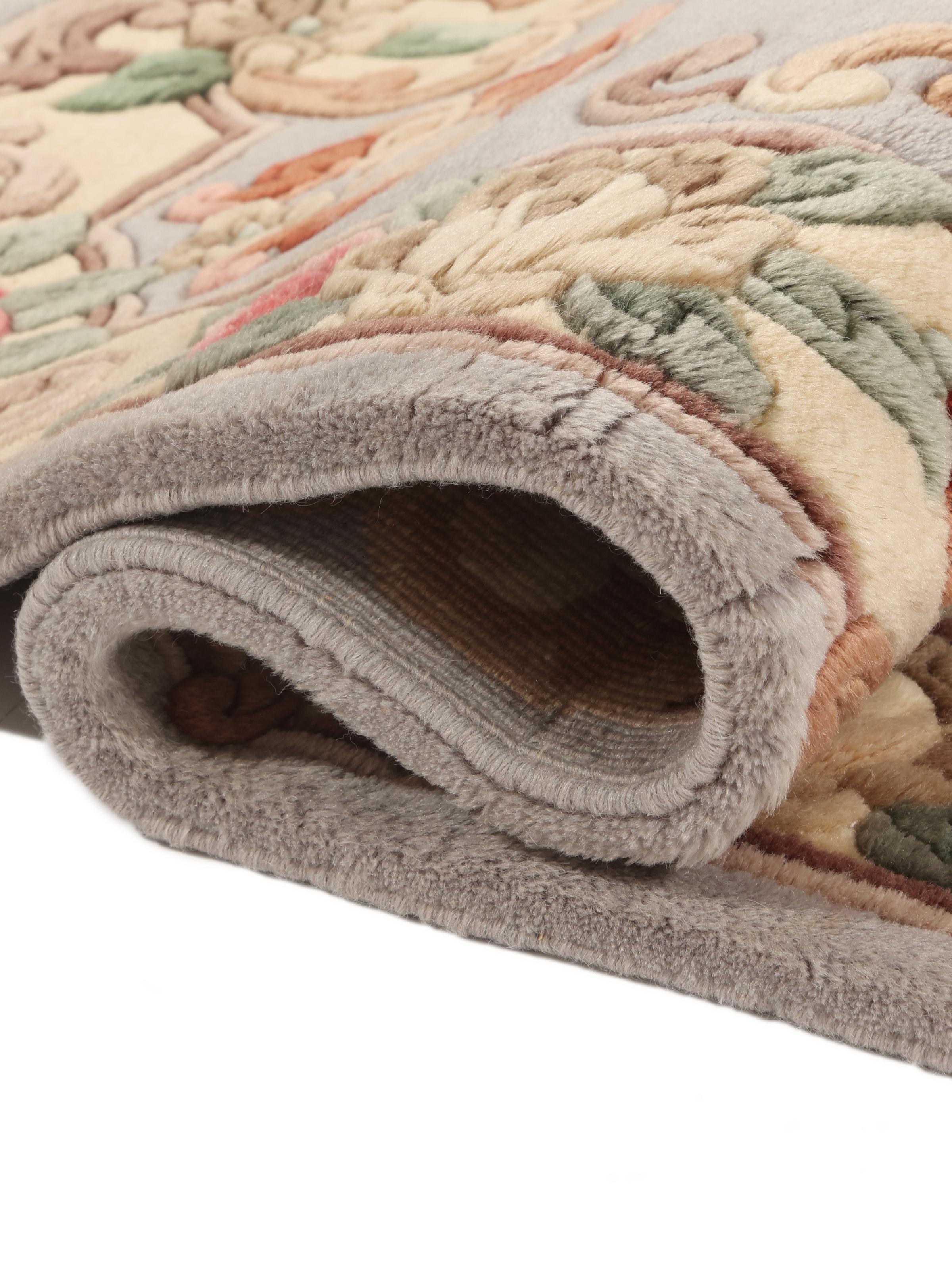
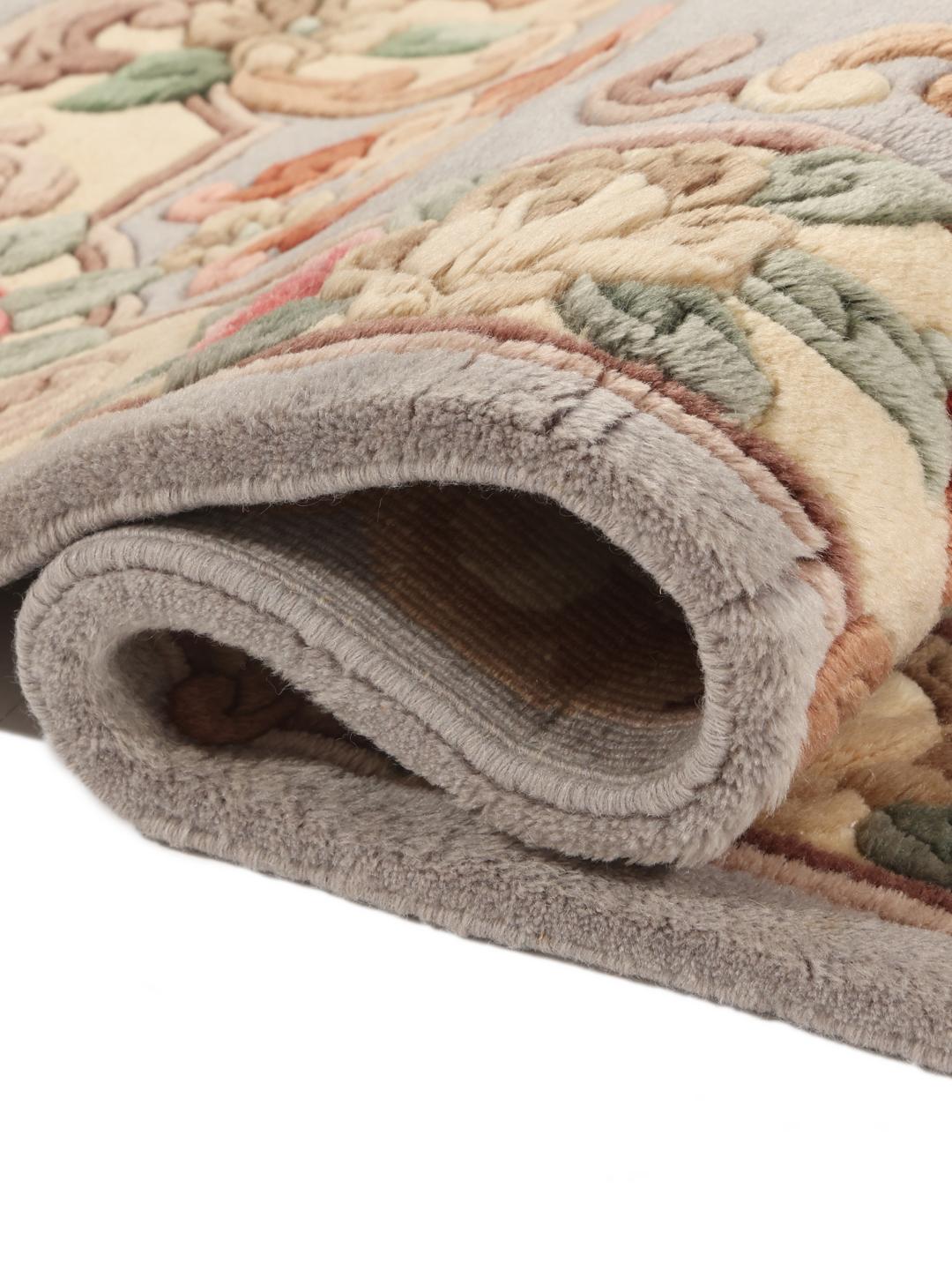
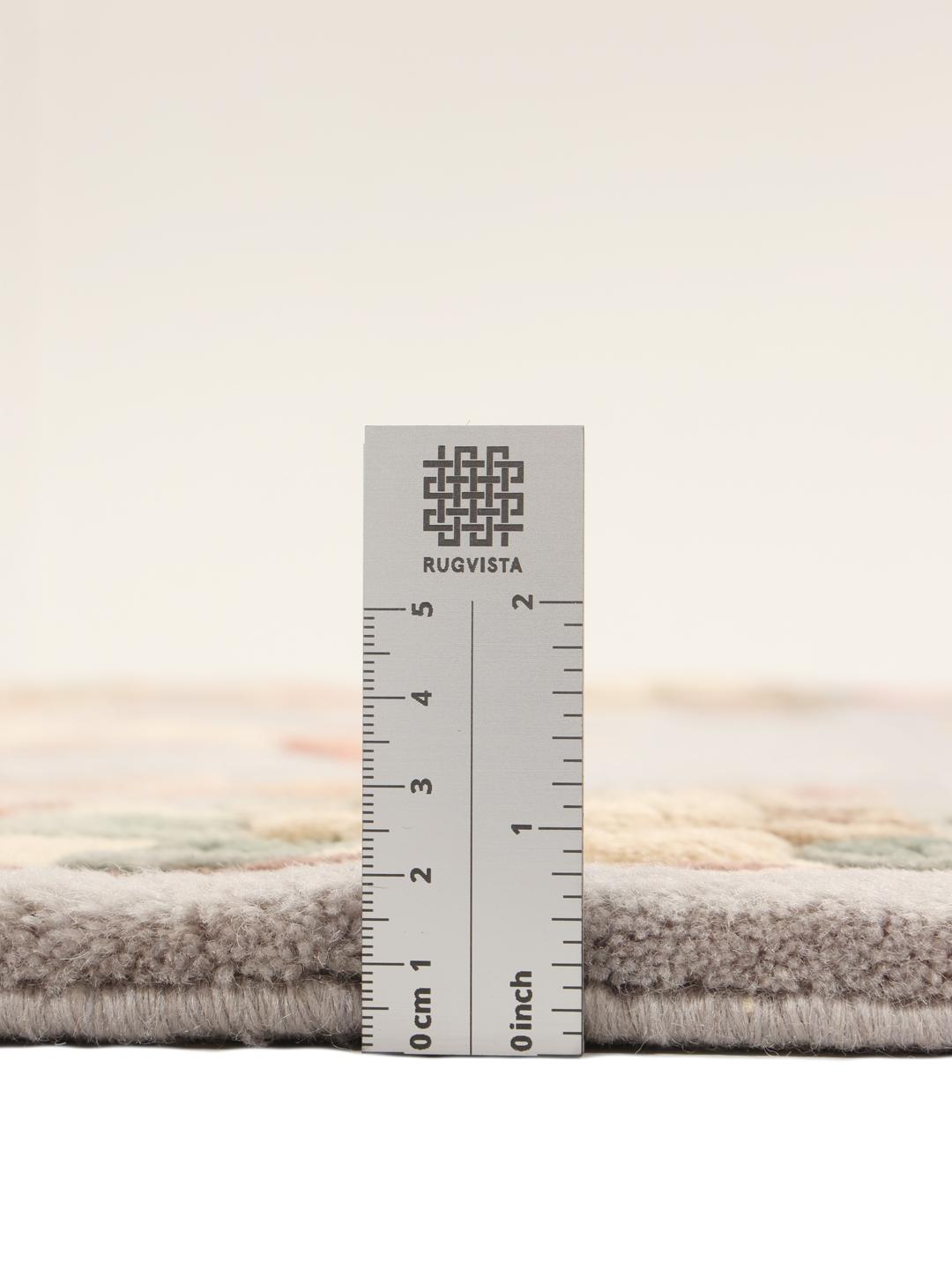
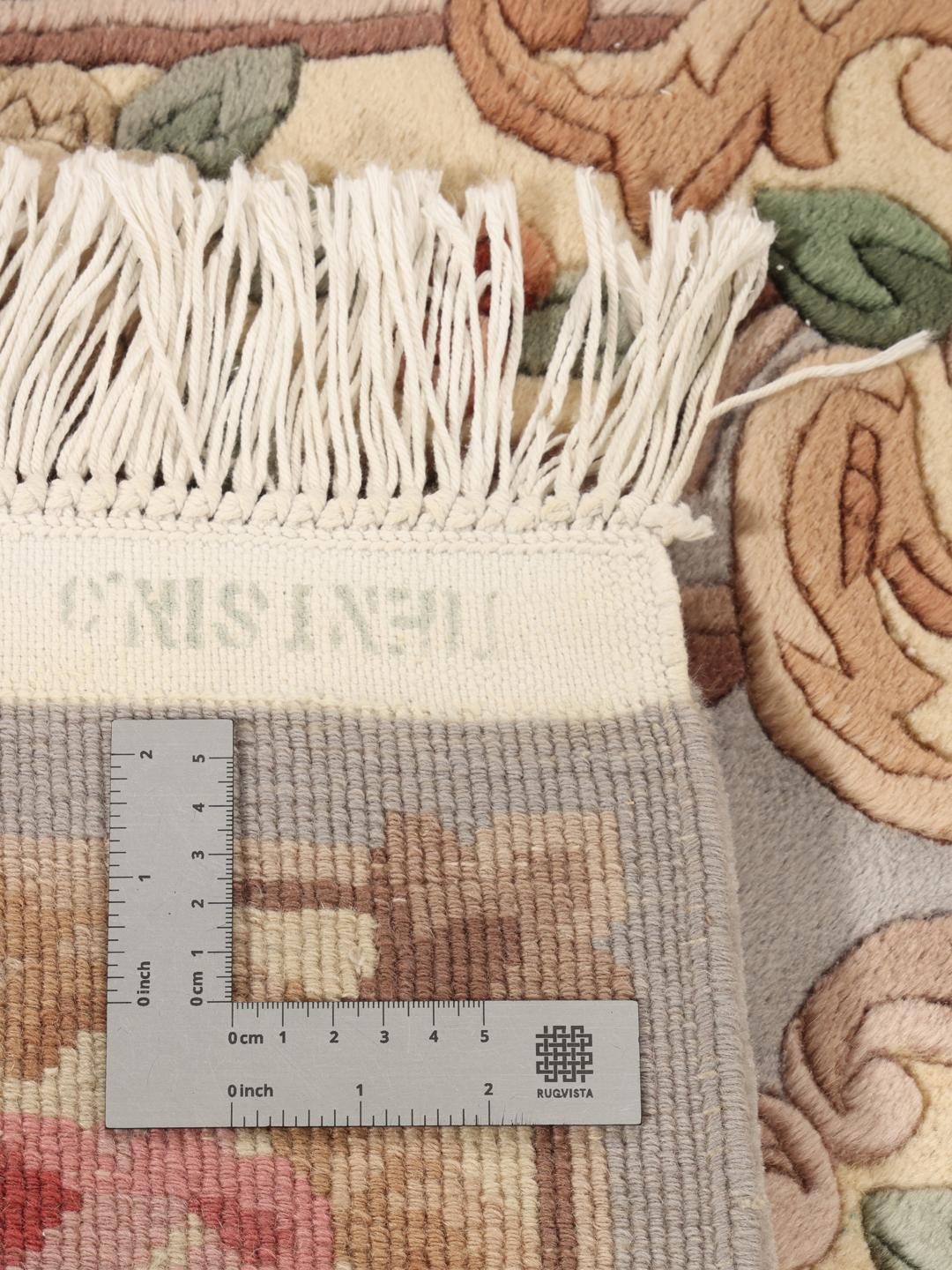
The term '90 line' refers to a traditional counting method used in Chinese rug production to describe the density of the weave. This technical standard has long been used by masters to ensure a consistent and high-quality pile, balancing the necessity for intricate pattern detail with a soft, durable surface that feels luxurious and substantial underfoot.
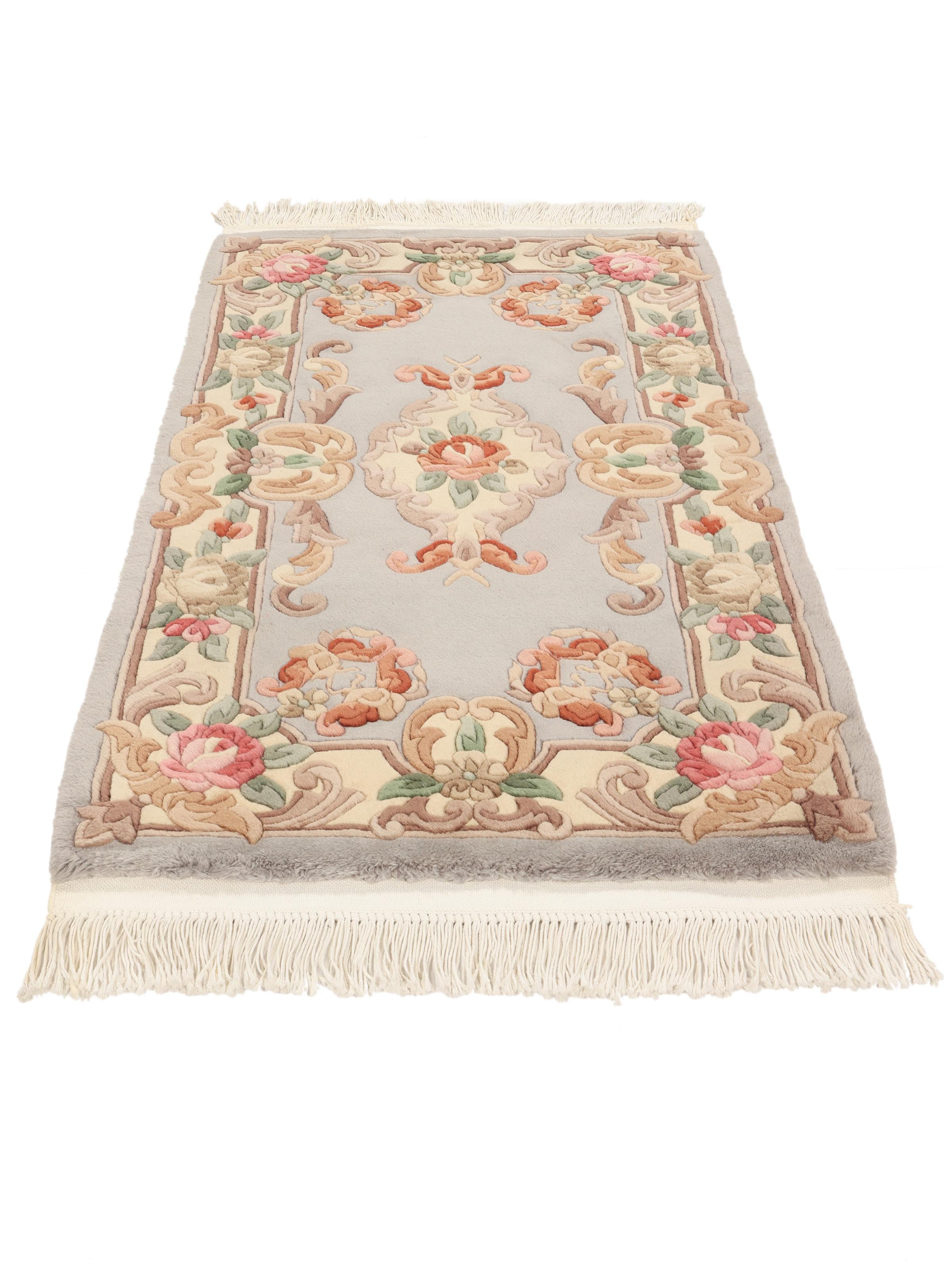
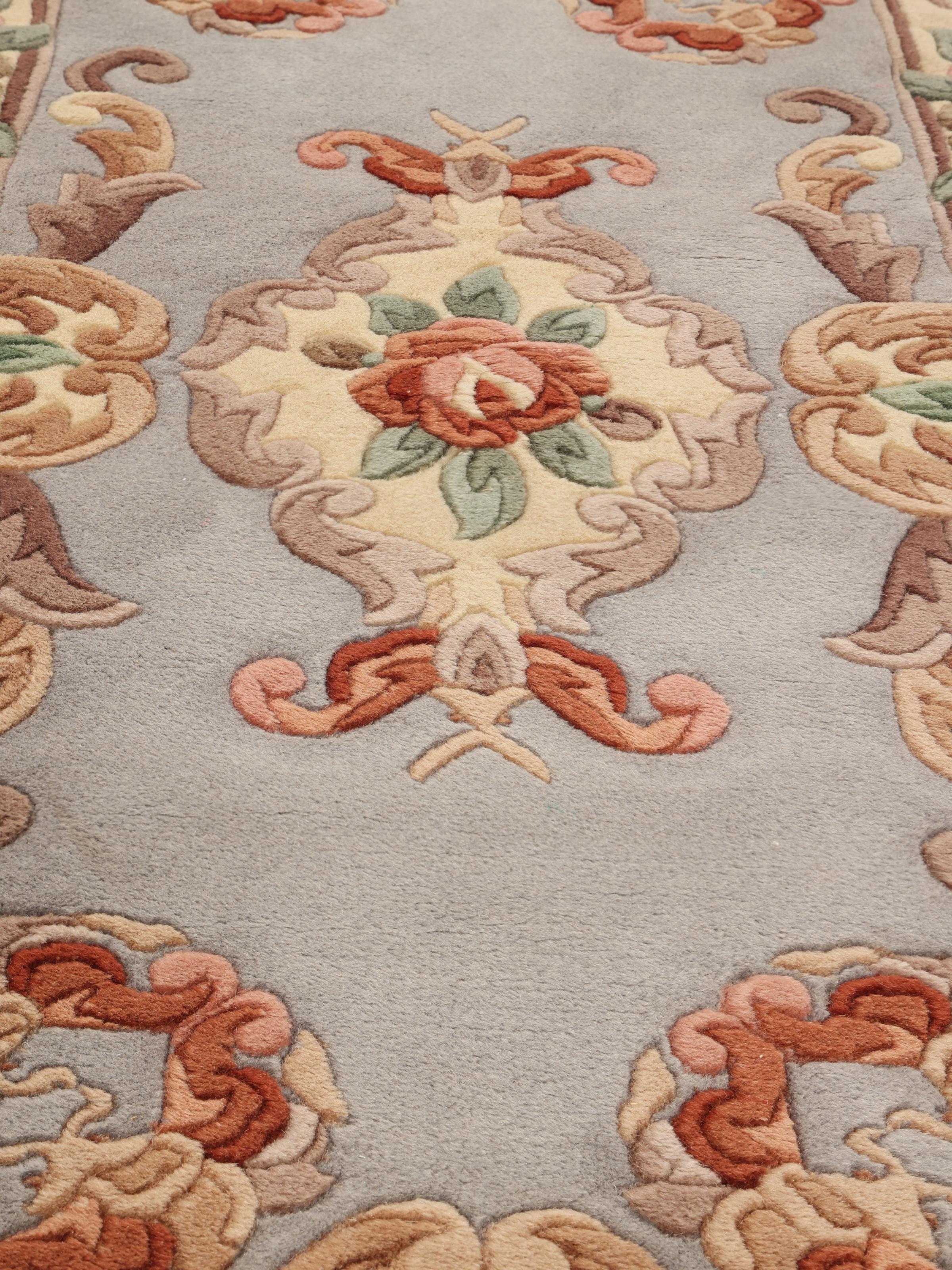
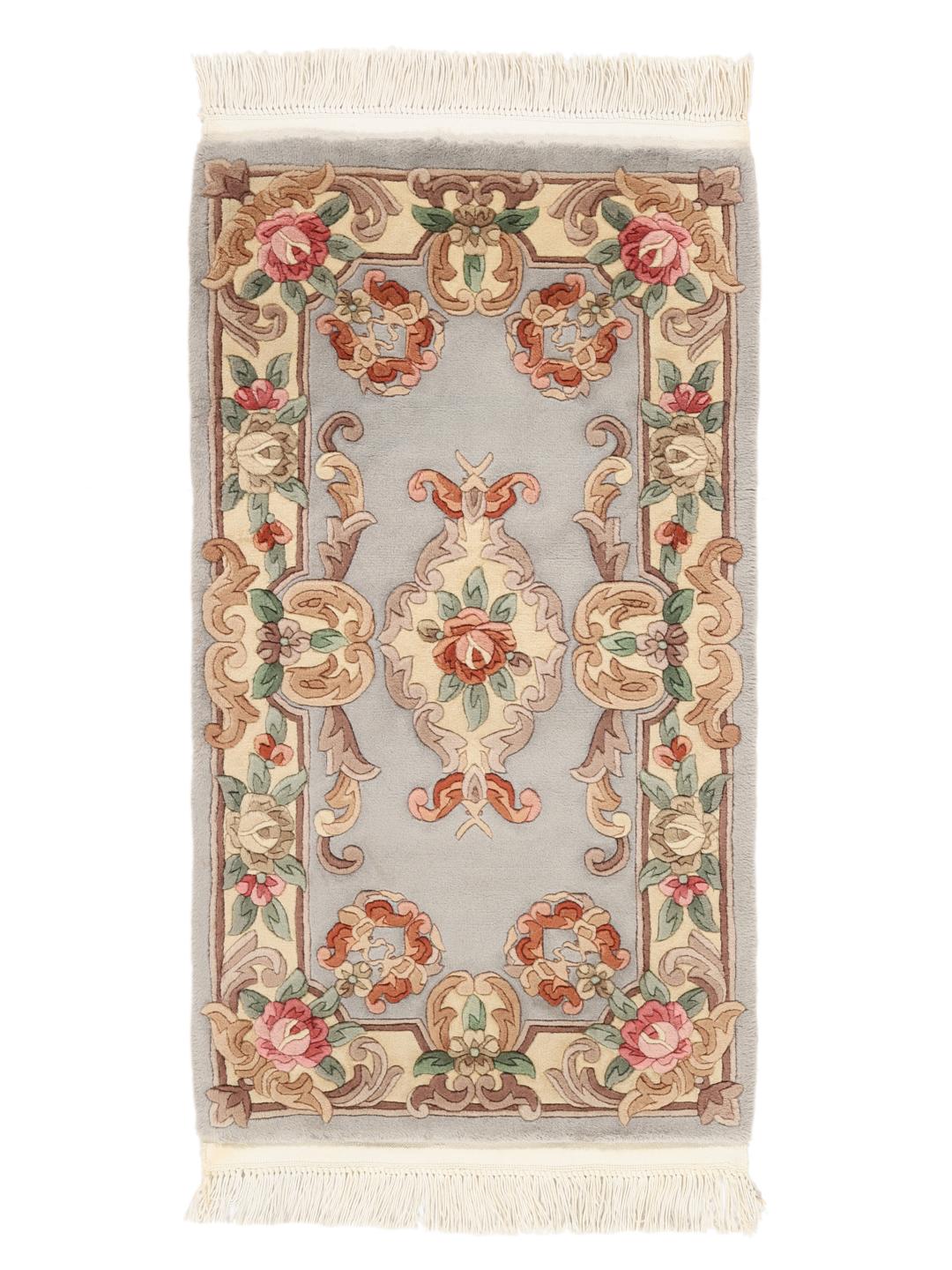
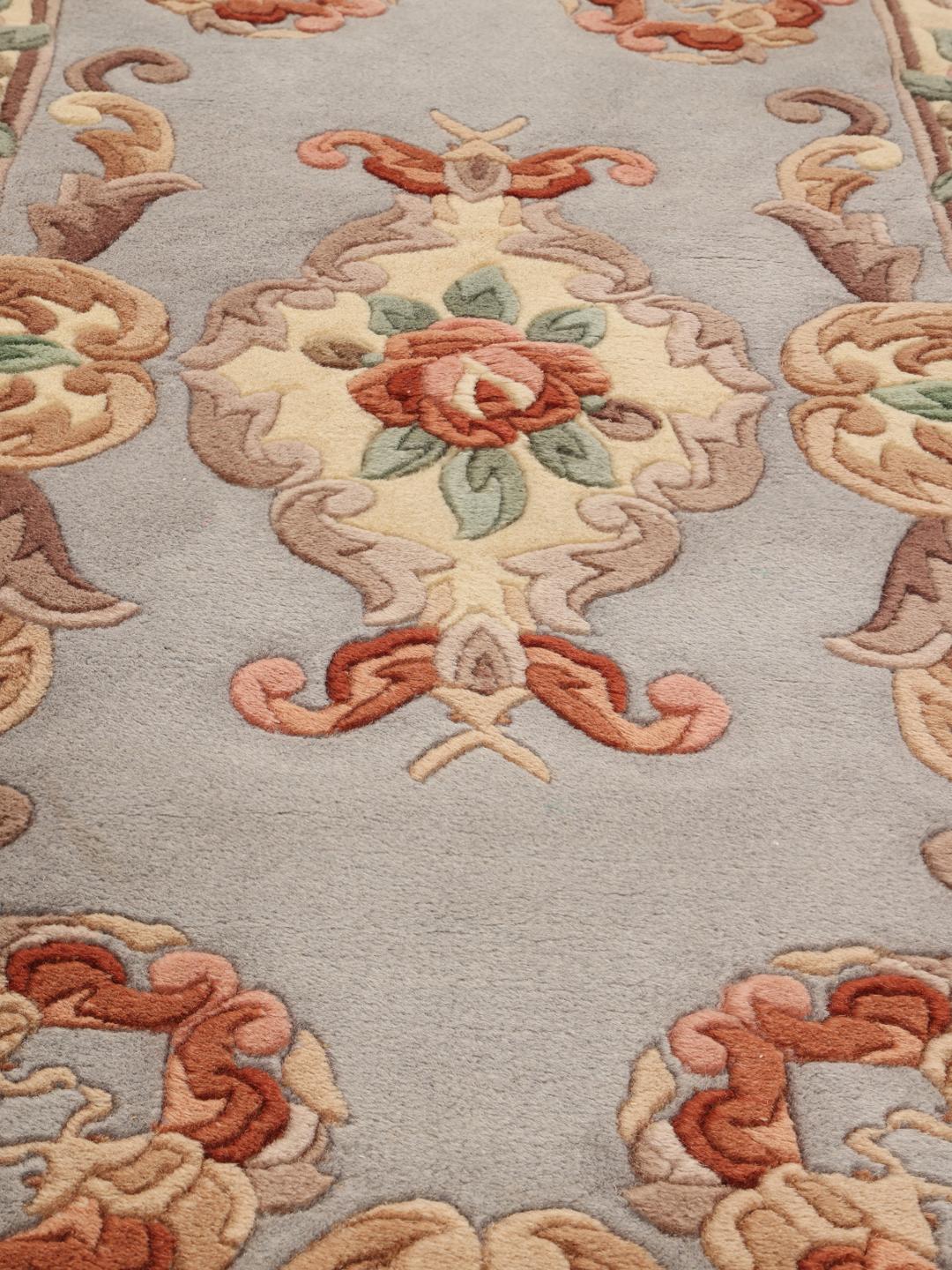
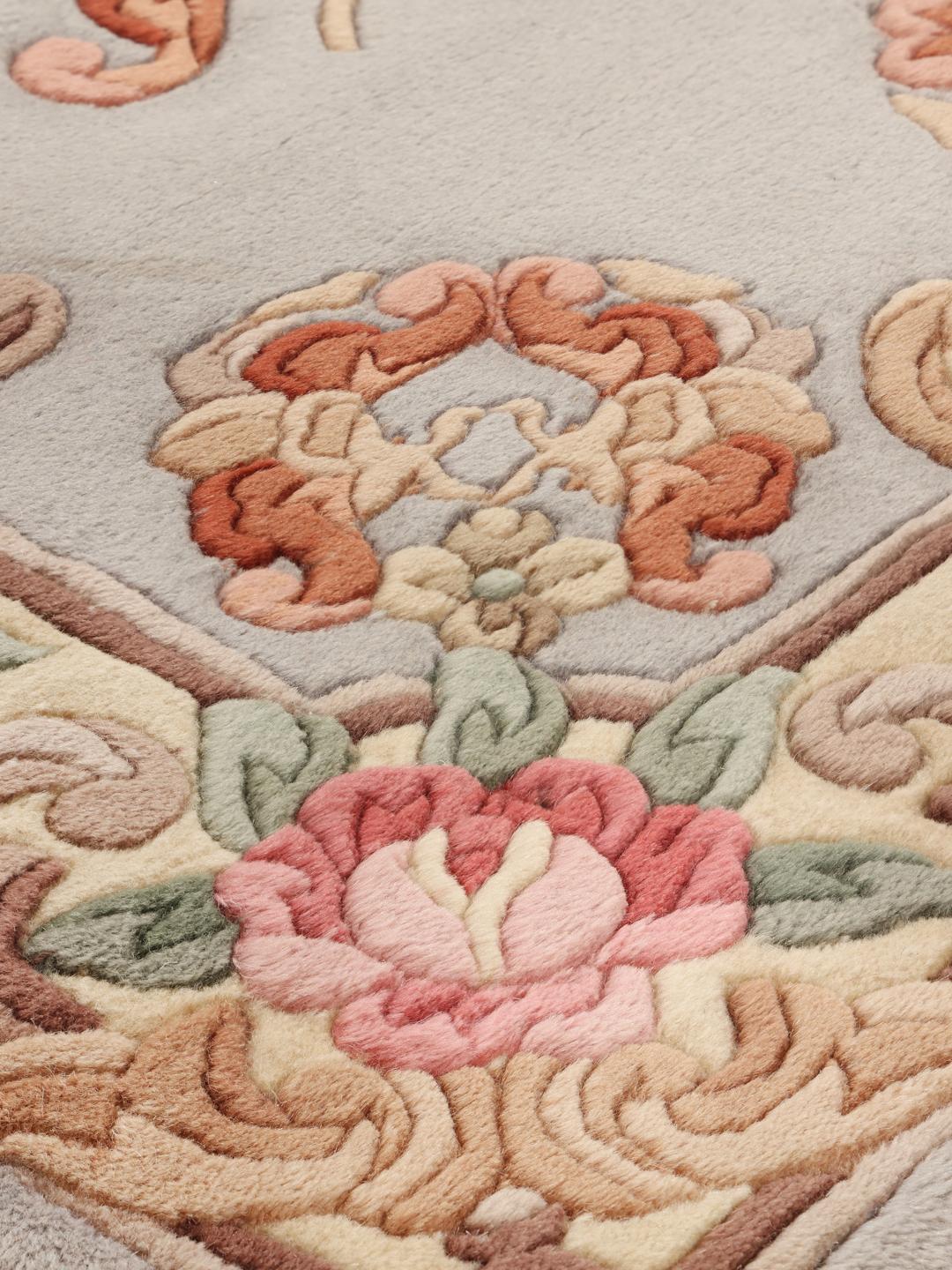
The visual language of this tradition is immediately recognisable through its use of graceful borders and central medallions. Floral elements, such as the roses seen here, are rendered with a focus on harmony and flowing lines, reflecting a cultural appreciation for the beauty of the natural world. This style is designed to create a sense of calm and order, which has made it a preferred choice for refined interiors.
Collecting a piece from this tradition means connecting with a deep history of craftsmanship. These rugs are highly regarded not just for their beauty, but for the human dedication required to bring such complex designs to life. Owning one is an investment in cultural heritage, offering a piece that balances history with a timeless, welcoming presence in the modern home.