Chinese rugs carry a legacy that stretches back through centuries, evolving from functional floor coverings into celebrated forms of artistic expression. Historically, these rugs were highly influenced by the aesthetics of the imperial court, often incorporating motifs derived from classical silk paintings, porcelain designs, and traditional botanical imagery. Today, the craft continues to thrive in China, where modern weavers honour these historic design languages while adapting them for contemporary homes.
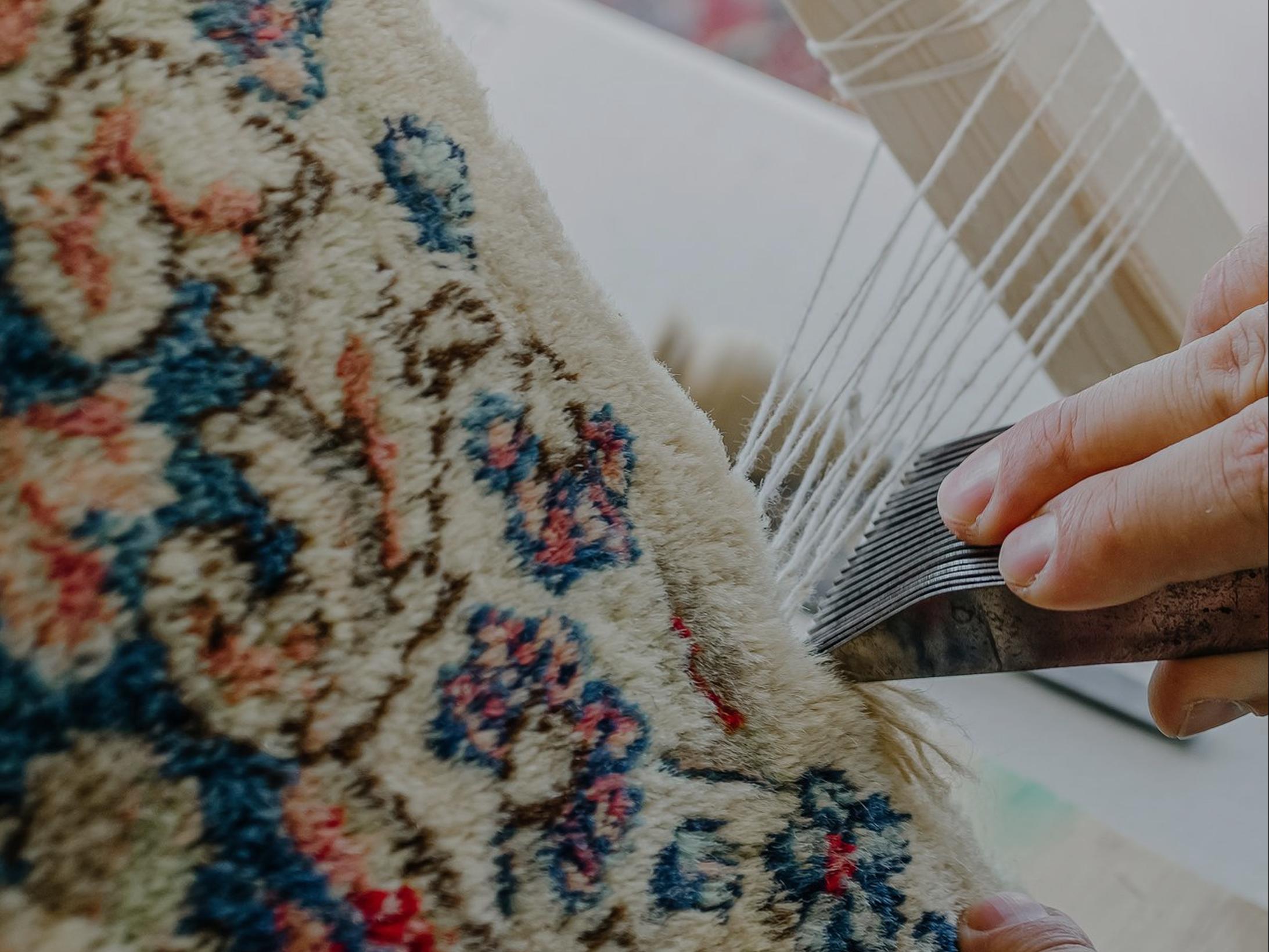
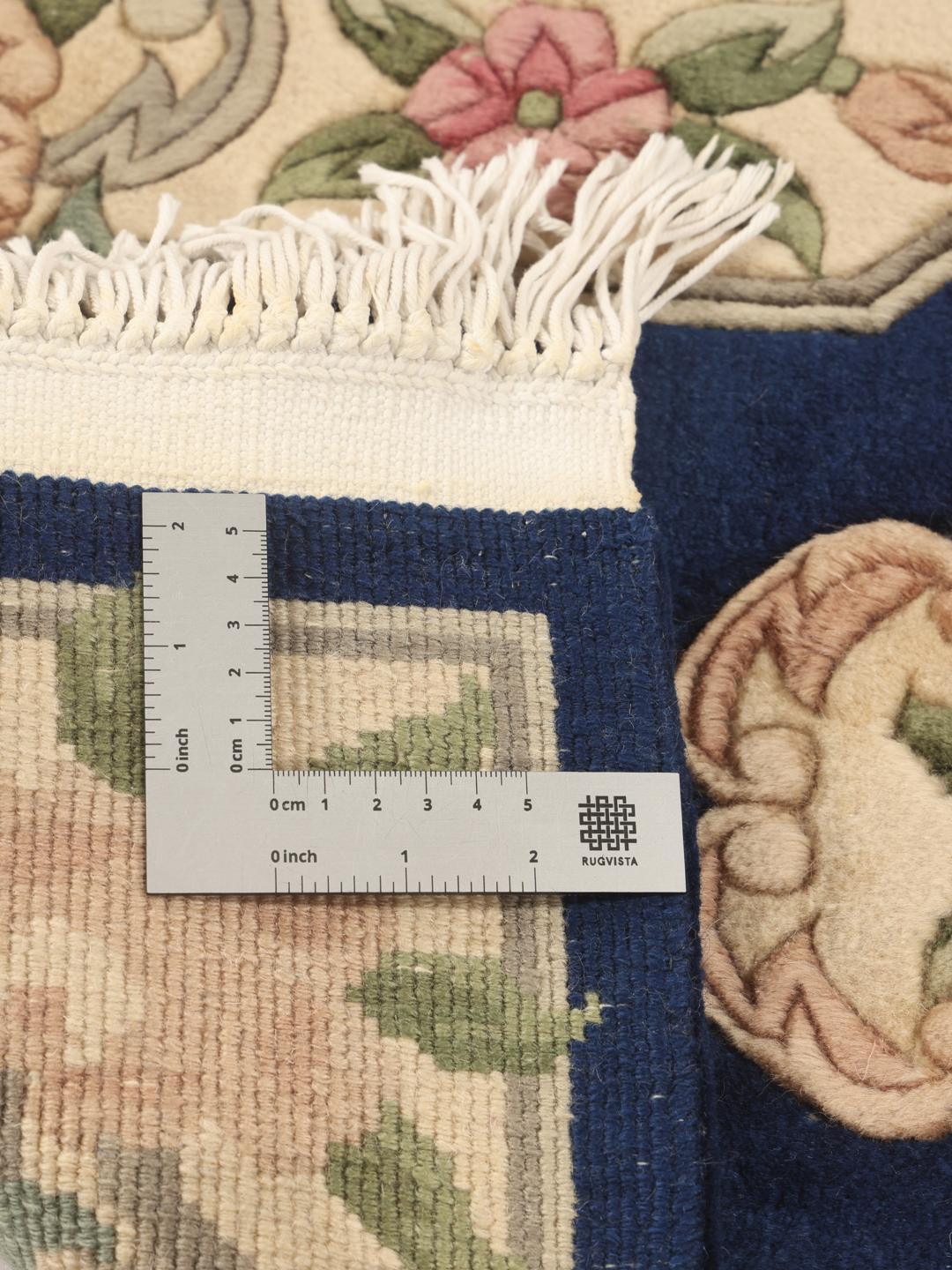
The term 90-line is a traditional measurement system used in Chinese rug making, referring to the number of knots across a specific width. This standardised approach to density ensures that the floral motifs remain sharp and the pile stays dense. By controlling the knot density, weavers are able to achieve the signature plush feel that defines Chinese rugs, creating a surface that is both soft to the touch and remarkably durable for everyday life.
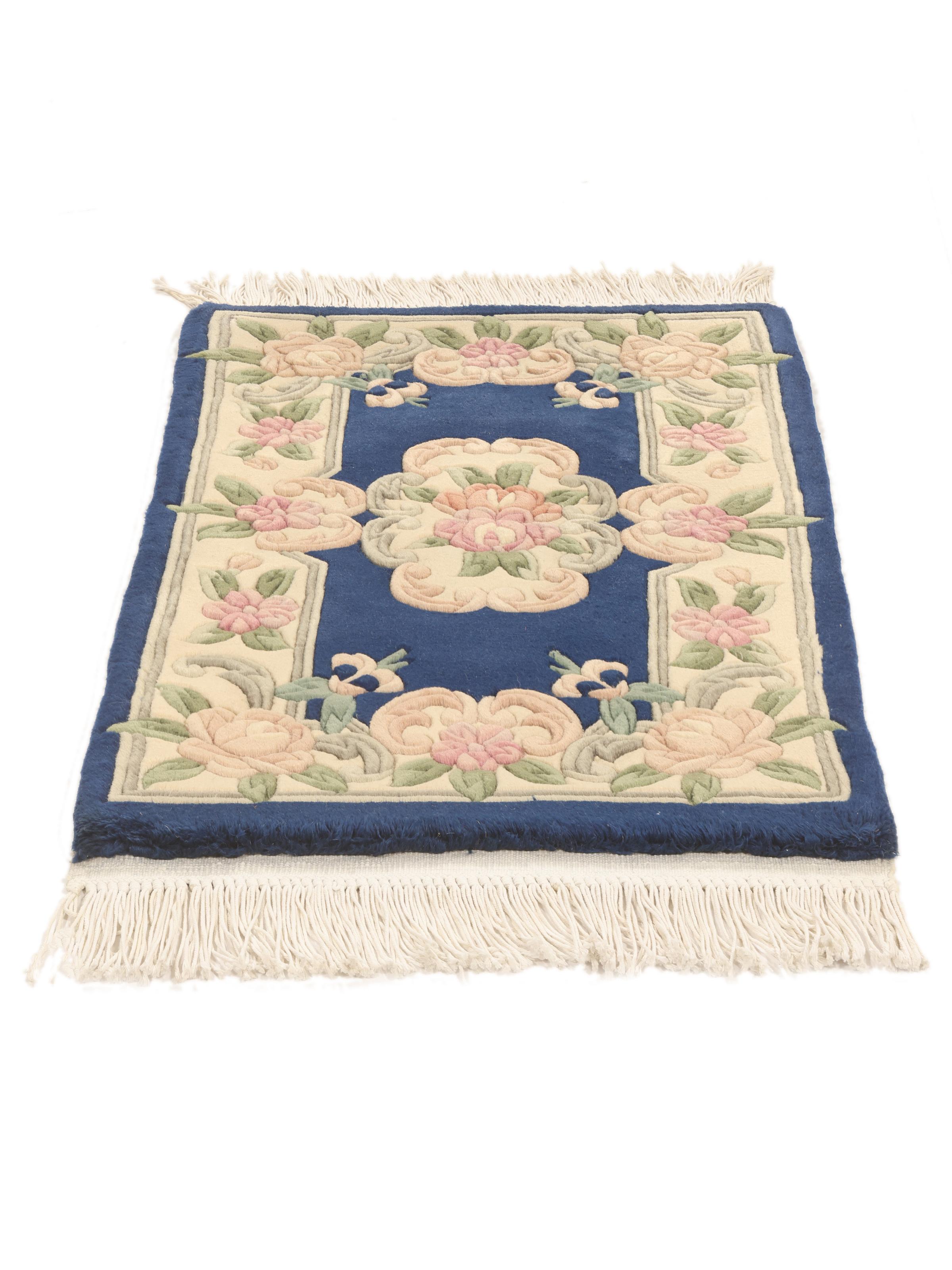
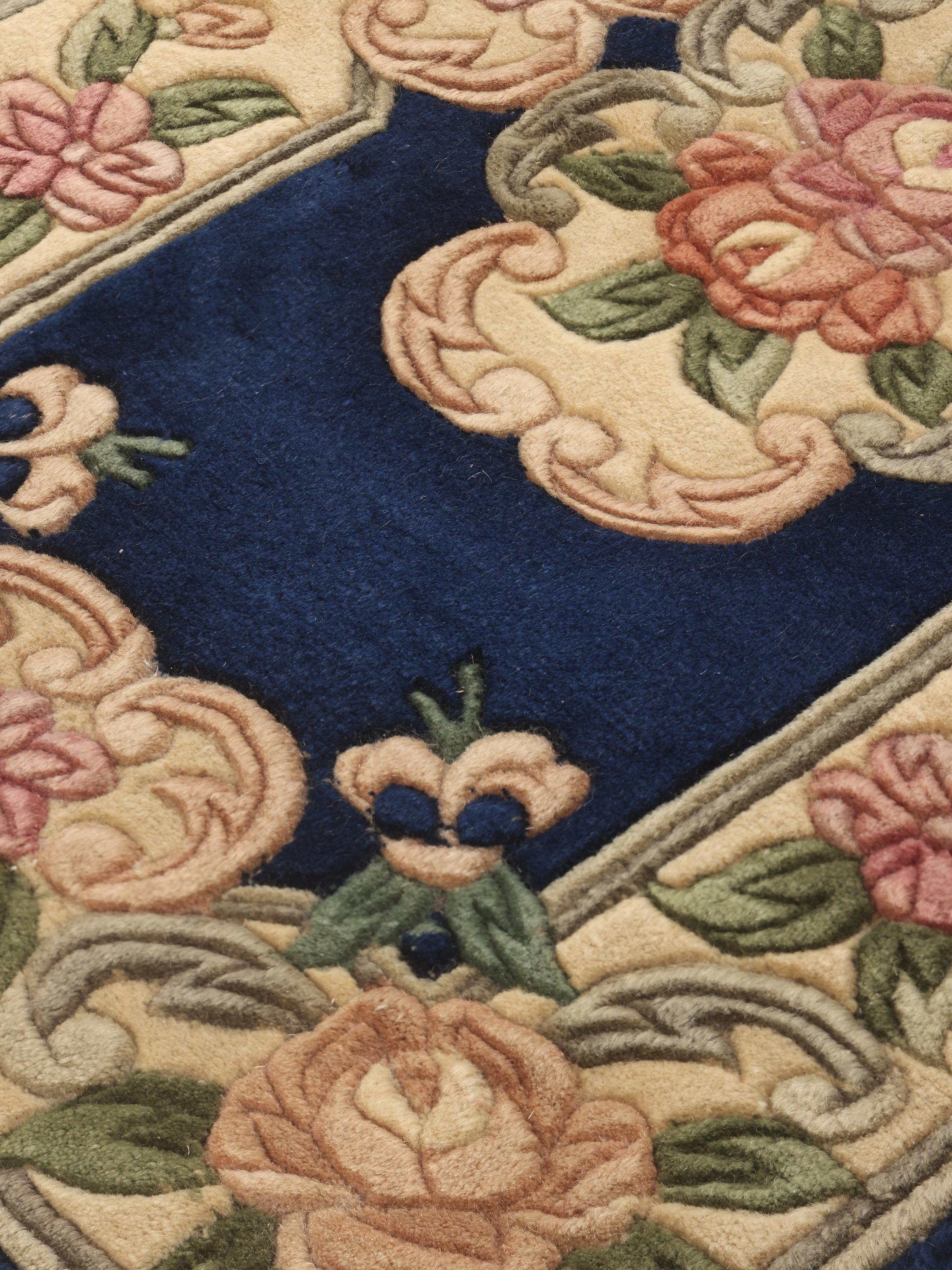
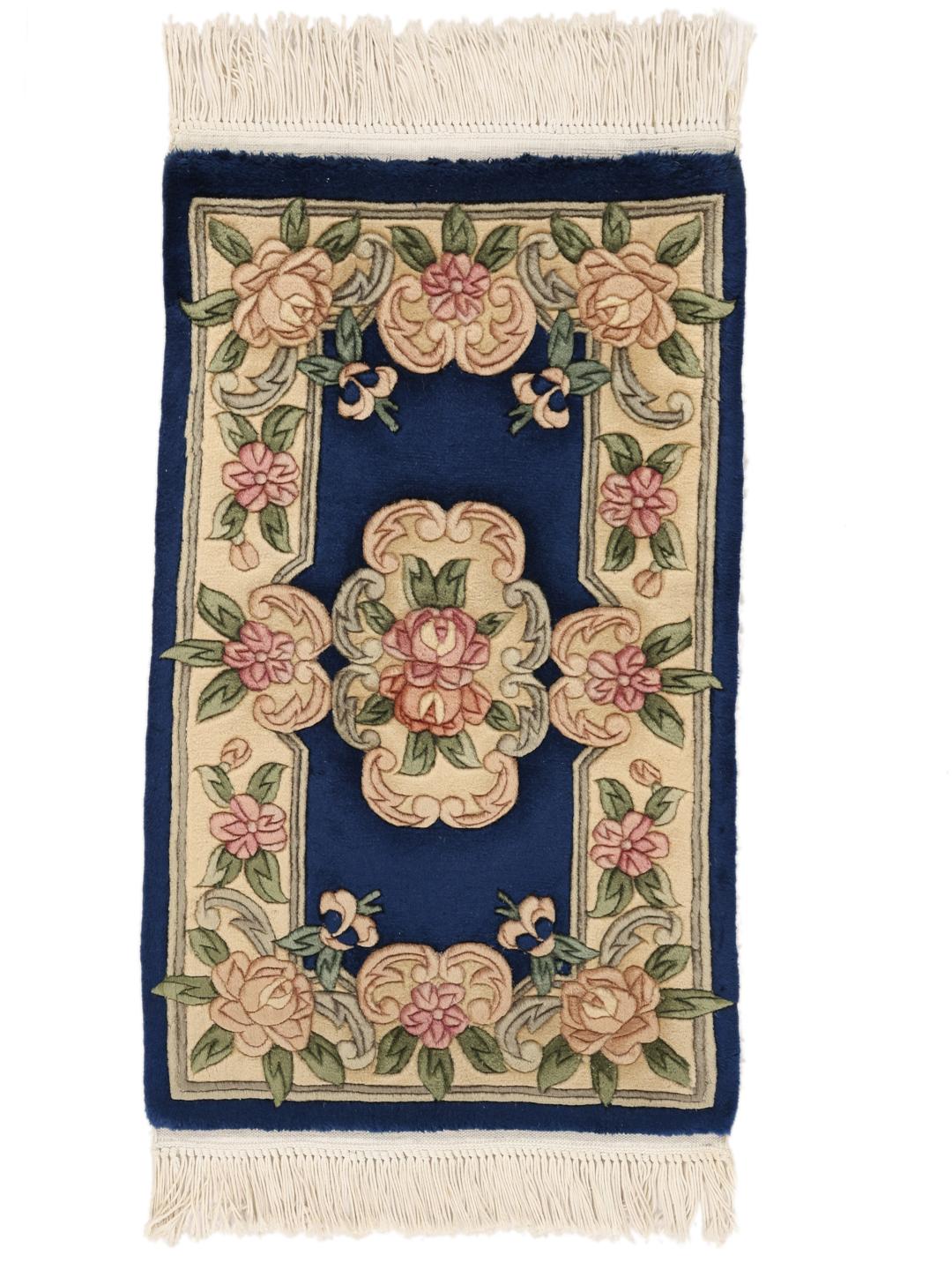
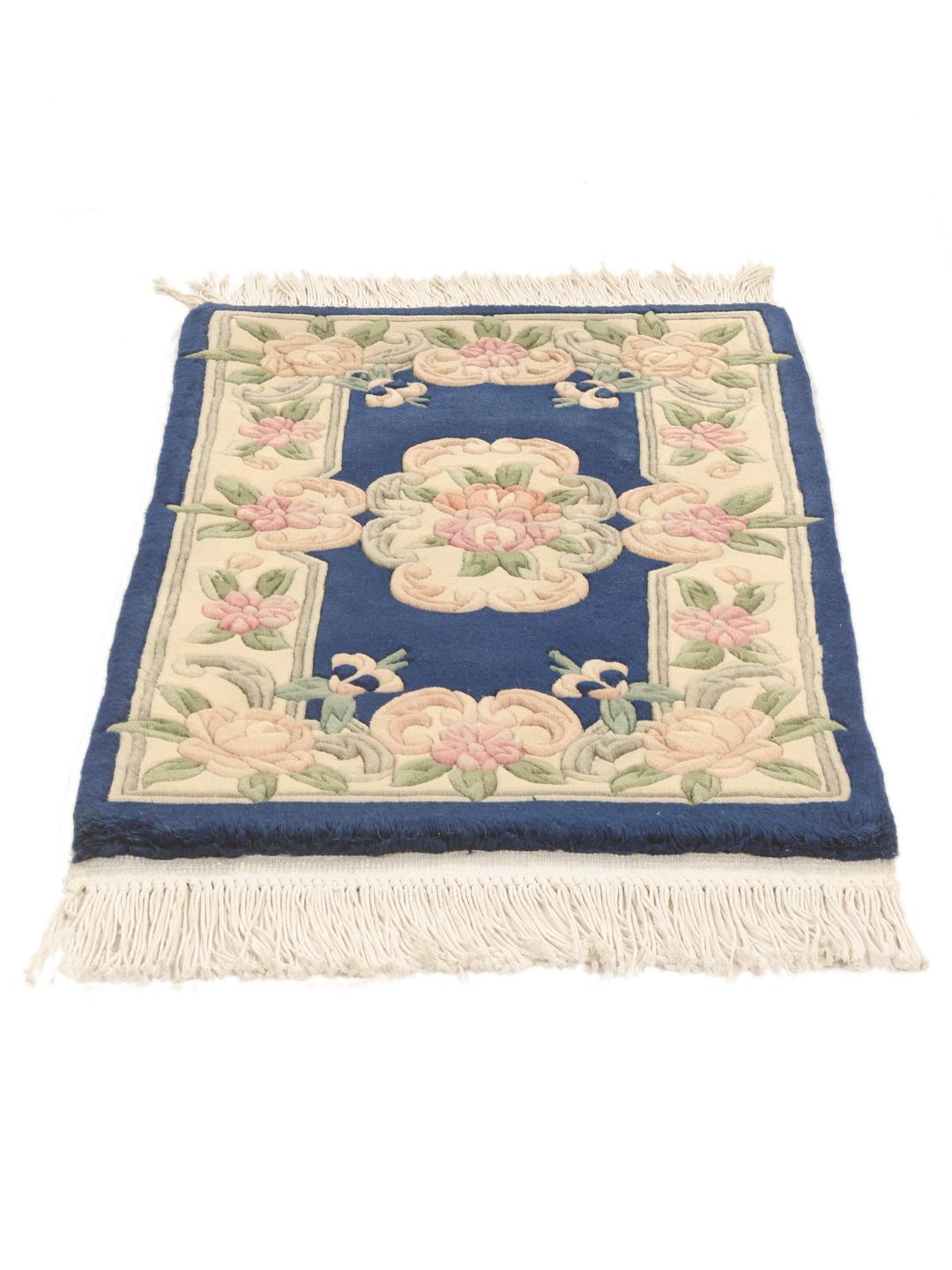
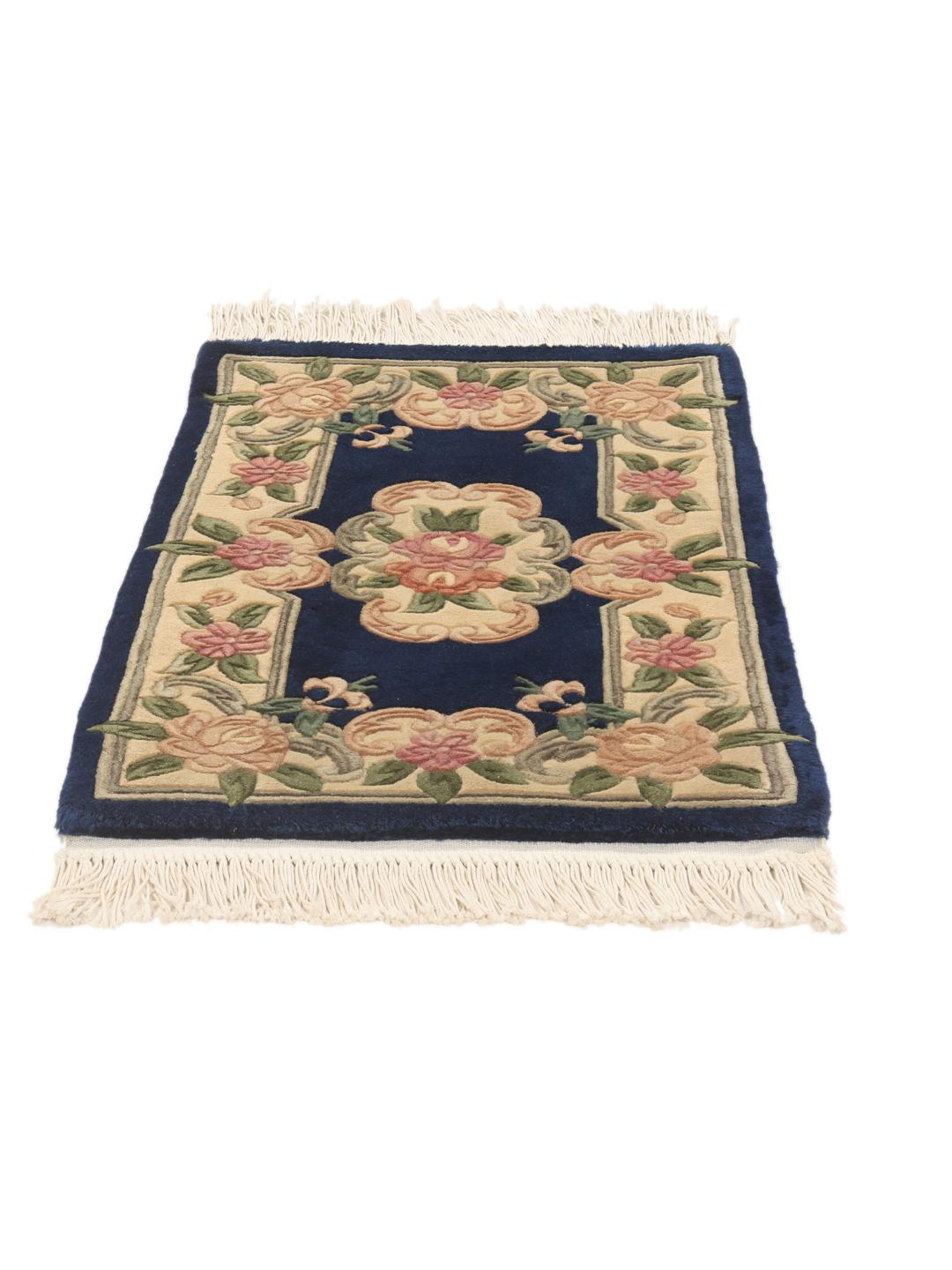
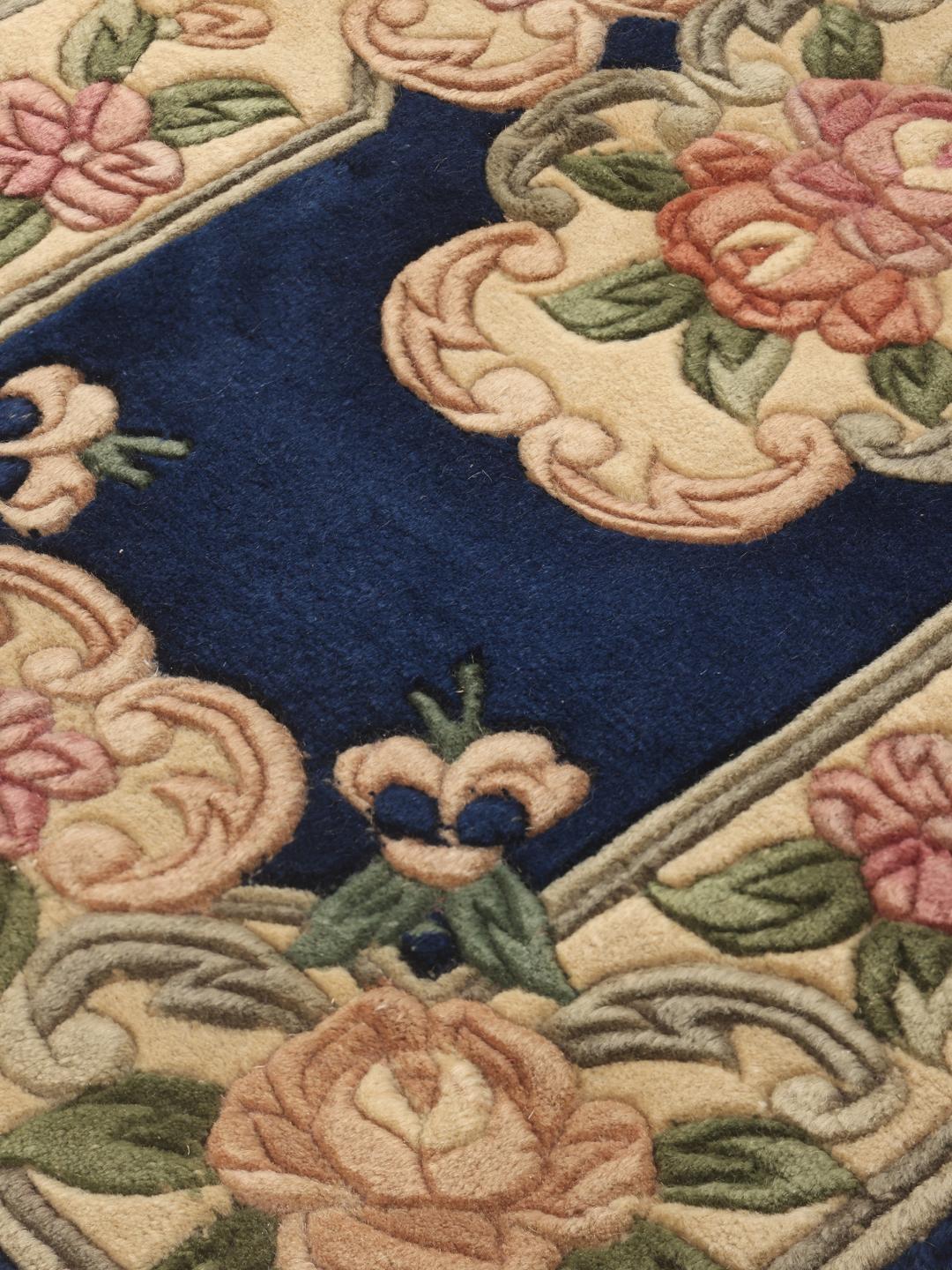
Visually, these rugs are defined by their use of negative space and sculptural relief. The floral motifs are often set against a solid field, a technique that draws the eye to the elegance of the design. The interplay between the deep blue field and the lighter floral borders is a hallmark of this style, reflecting a balance of colour that has been favoured for generations. These rugs are not merely decorative but are carefully composed to bring harmony to a room.
Owning a hand-knotted rug from this tradition is an investment in cultural heritage and skilled labour. Because each rug is individually crafted, they are prized by collectors who value the subtle variations that distinguish a handmade piece from mass-produced alternatives. Choosing this rug connects your home to a long-standing tradition of beauty, skill, and dedication to craft.