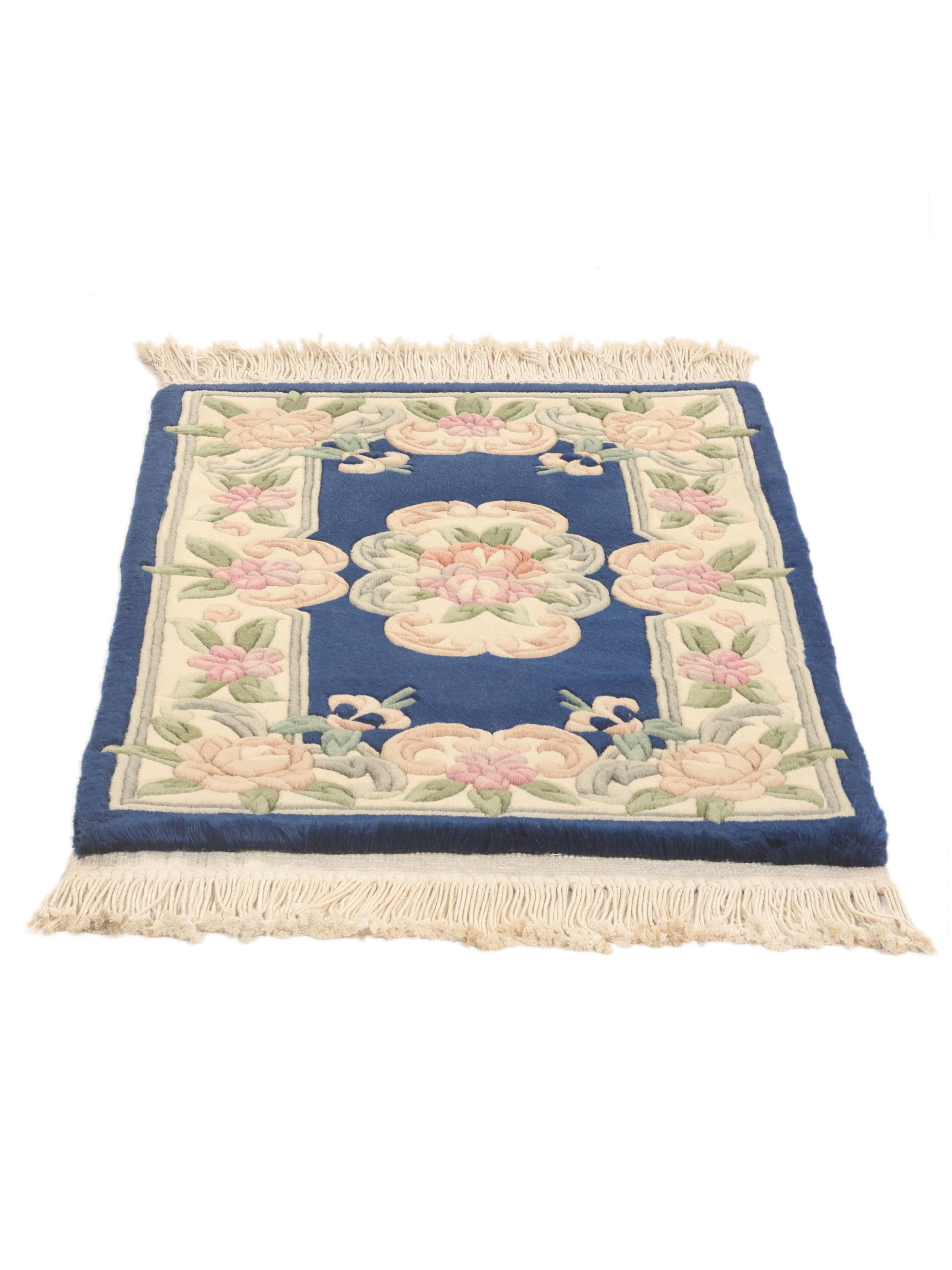
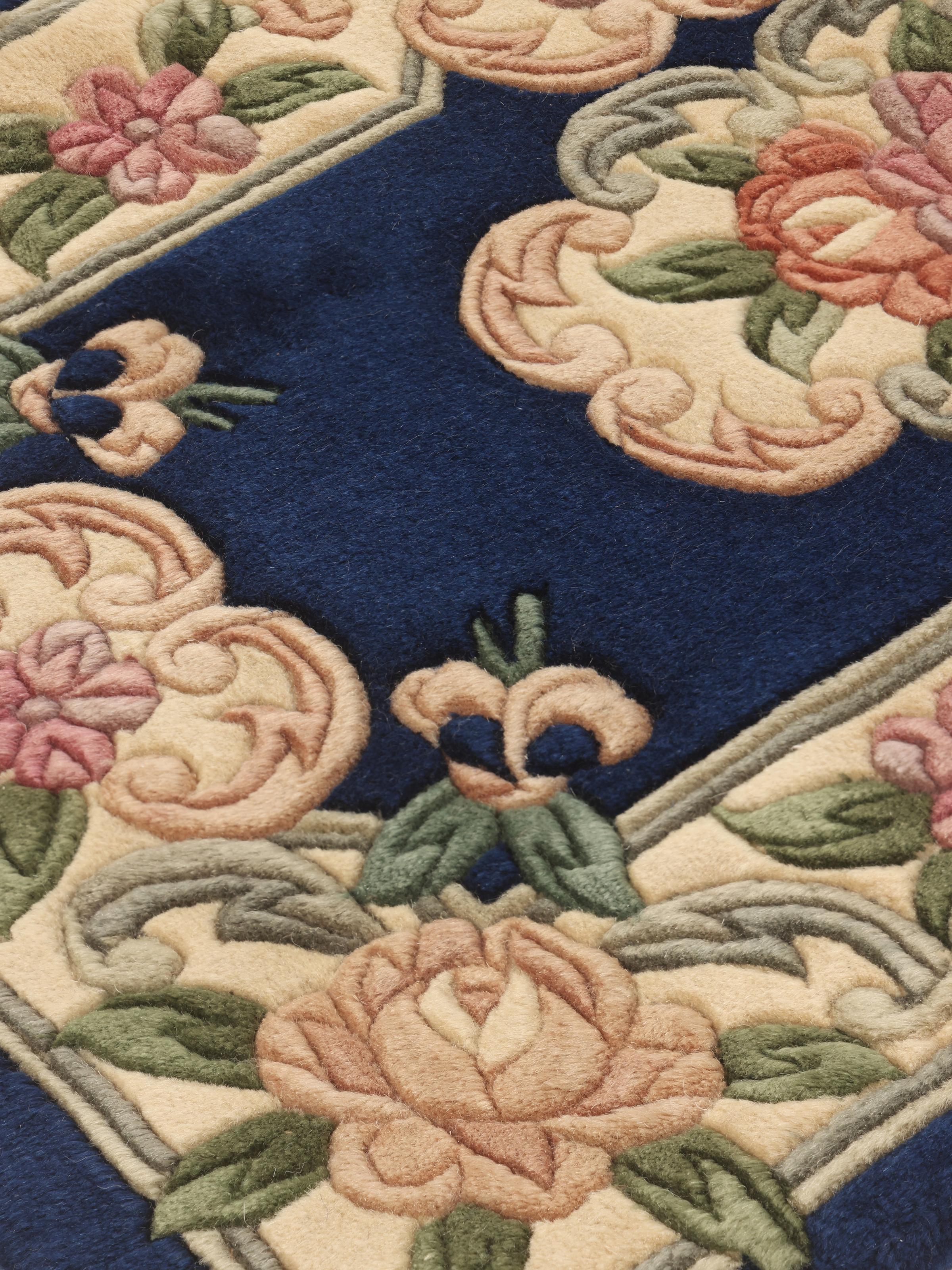
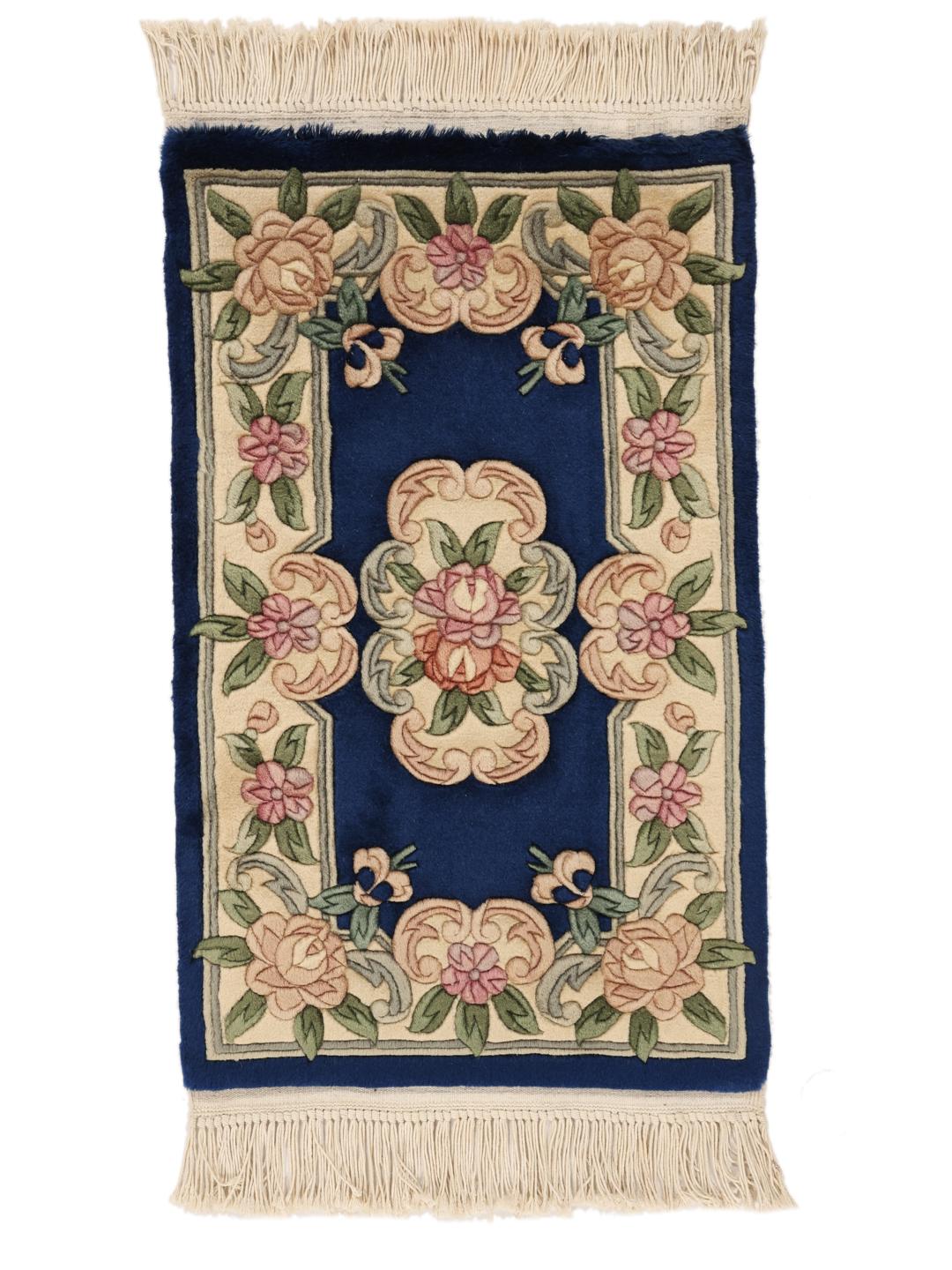
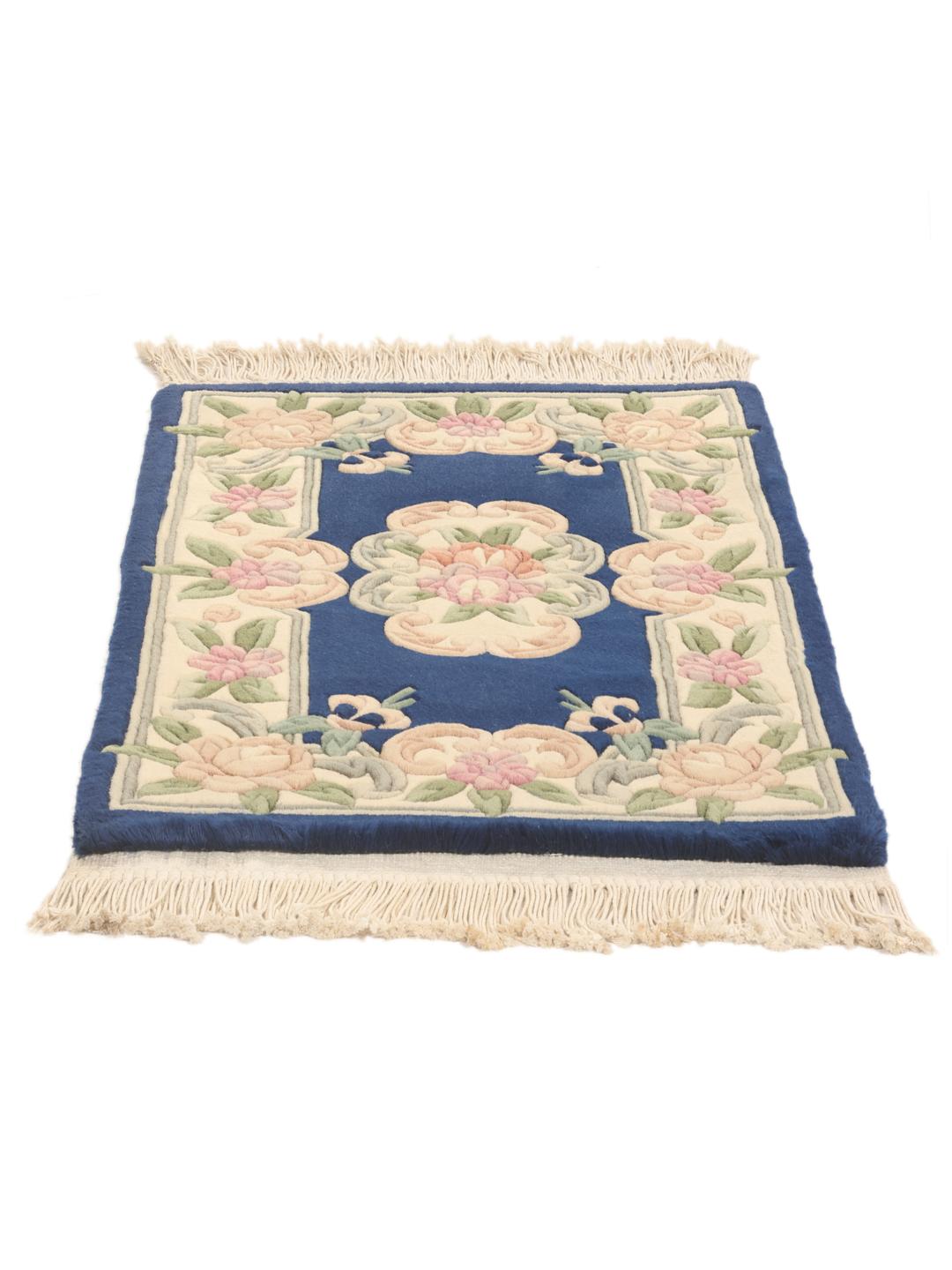
The tradition of rug weaving in China is deeply rooted in centuries of artistic development, often drawing inspiration from silk textiles and imperial court aesthetics. While many regions in the Middle East focused on geometric tribal patterns, Chinese weaving historically emphasised naturalistic, flowing designs that reflect a deep appreciation for flora and fauna.
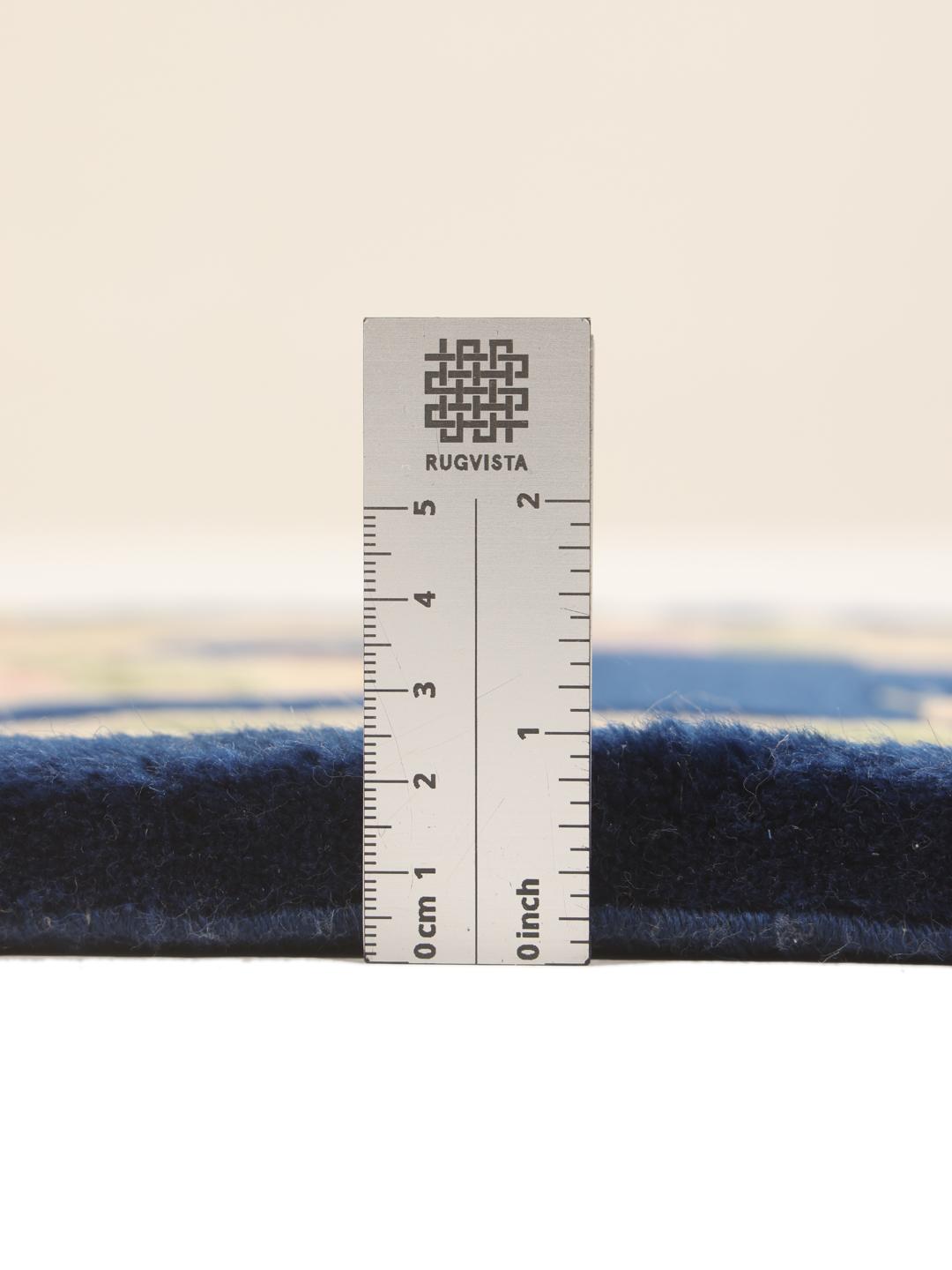
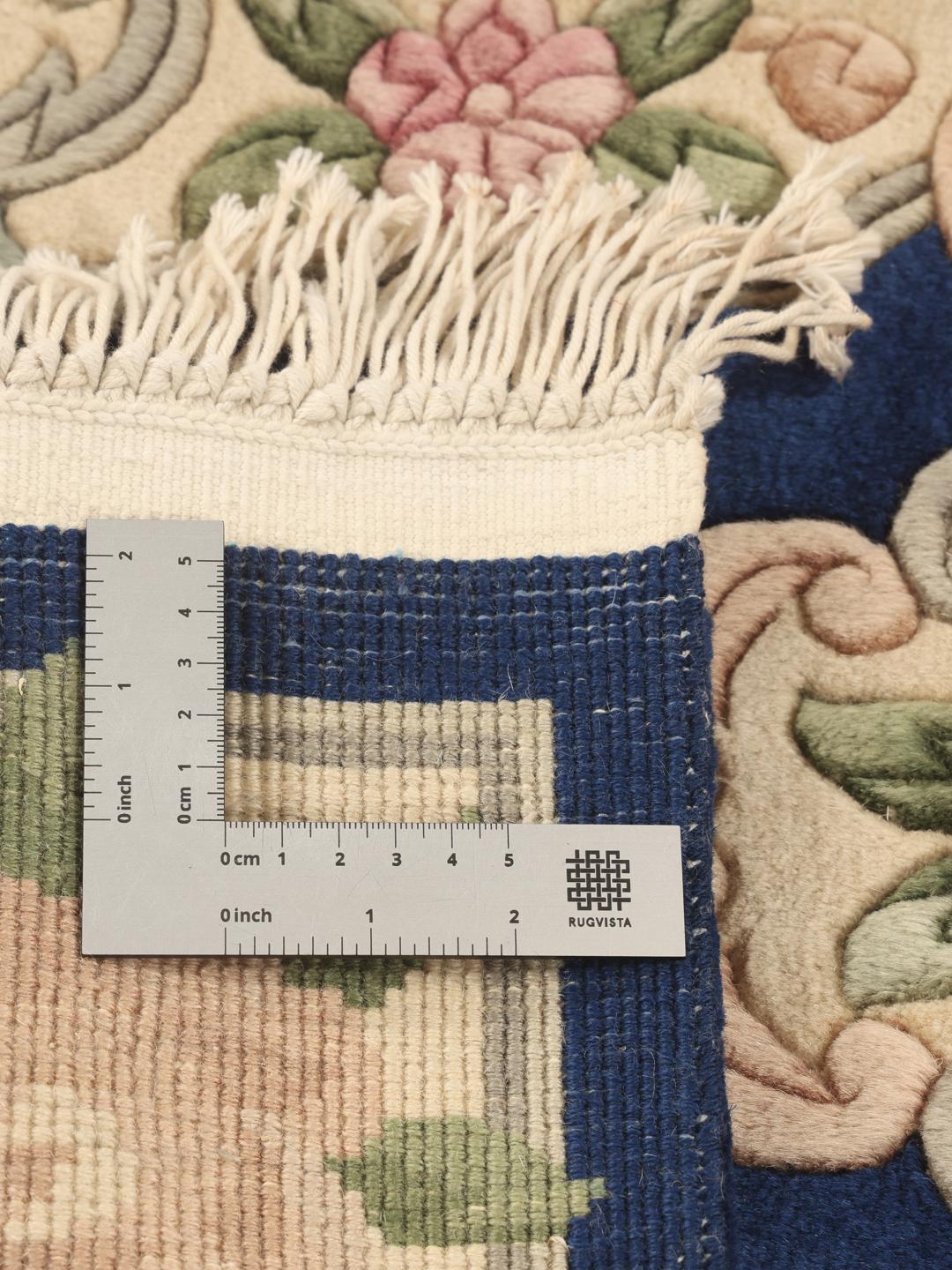
The term '90 Line' refers to the traditional method of measuring the density of the knots in Chinese rugs, which is based on the number of knots per linear foot. This specific classification represents a standard that balances fine detail with a durable, comfortable pile, ensuring that the rug is both a visual delight and a practical addition to a functional living space.
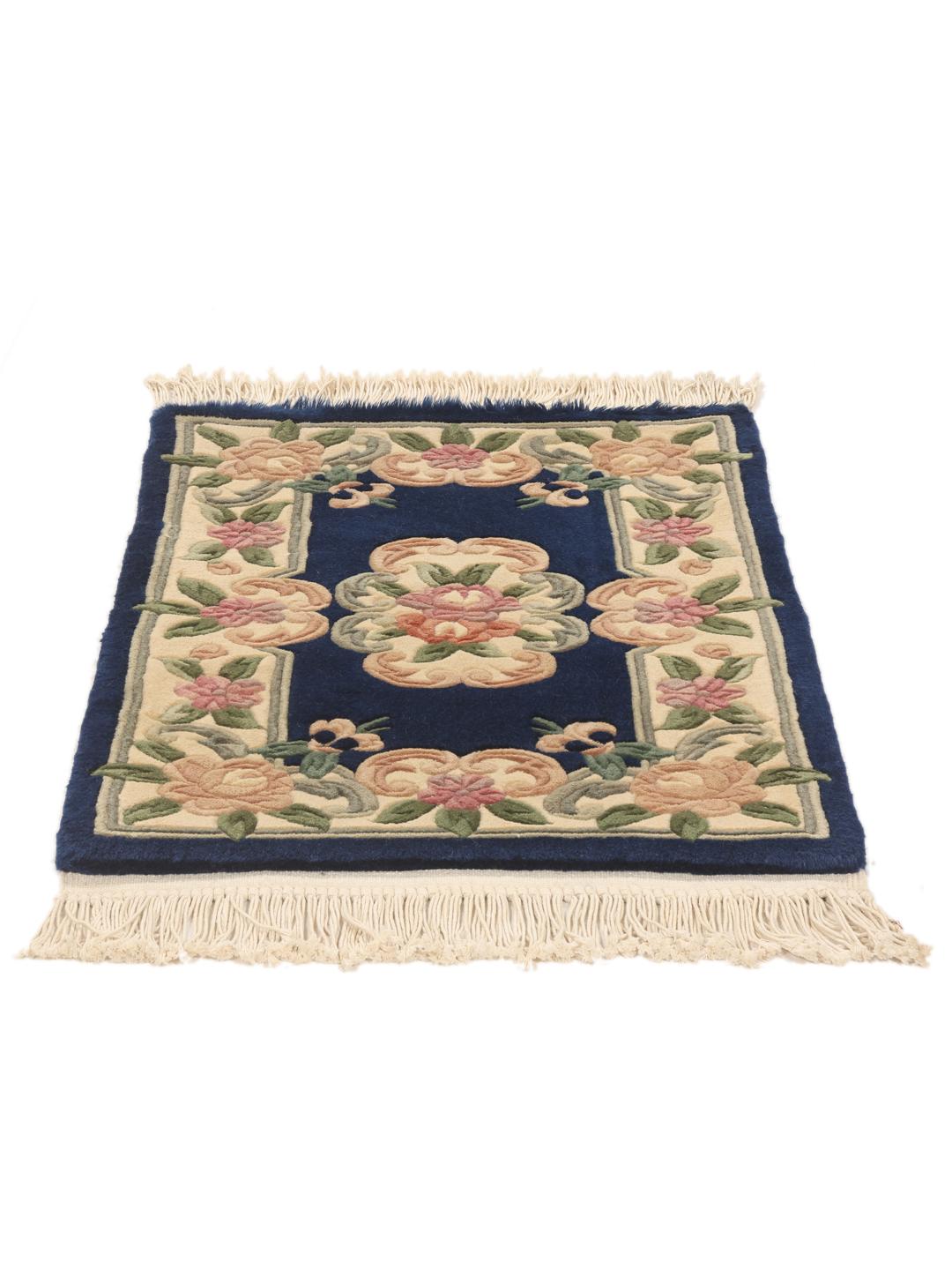
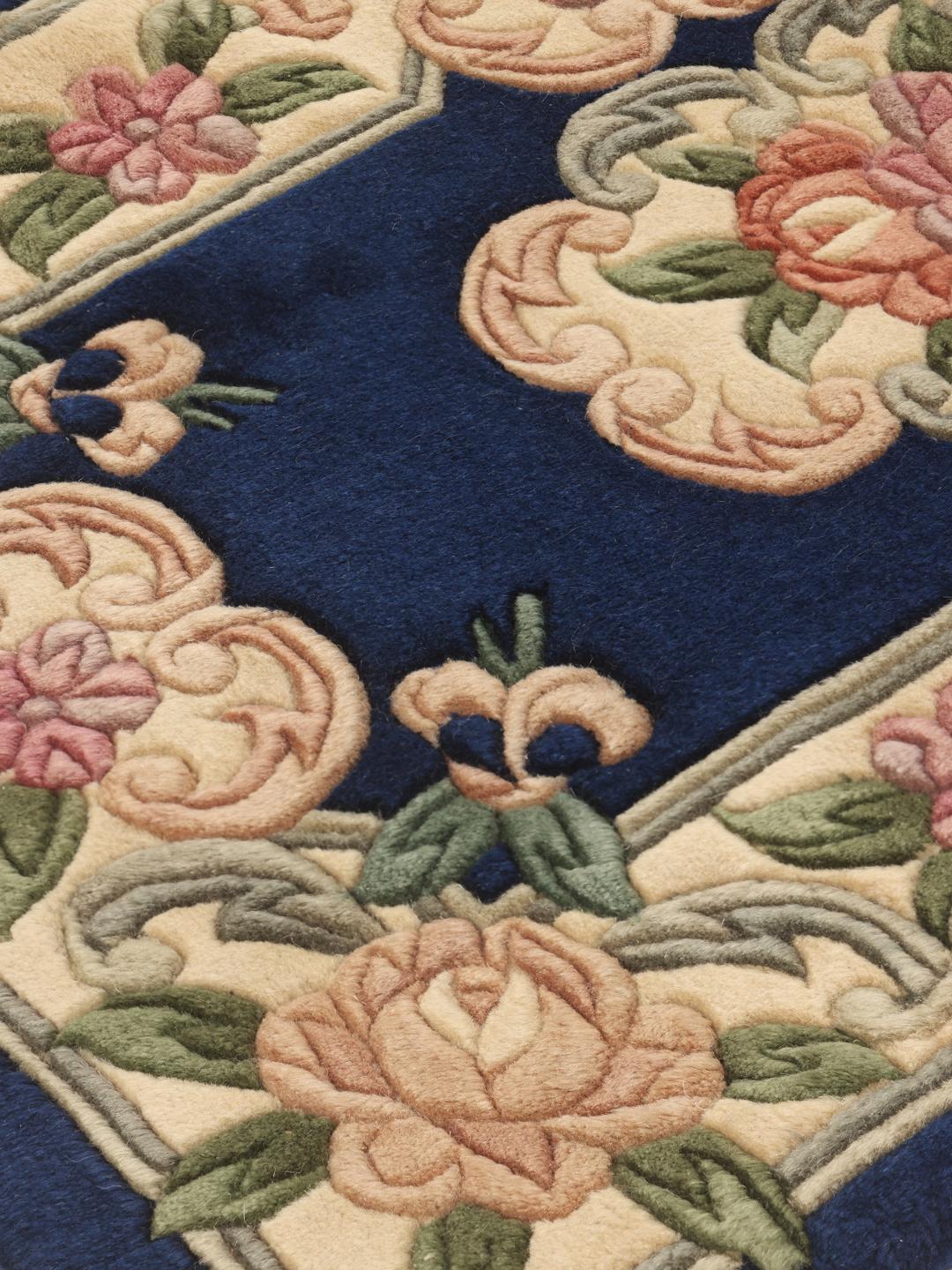
Signature elements of this style include sophisticated floral arrangements and central medallions, often rendered in soft, harmonious colours. The use of blue as a primary field colour, as seen here, is a classic choice that draws on the long-standing Chinese tradition of porcelain-inspired palettes, offering a serene and grounding effect to any interior.
Owning a hand-knotted rug from this tradition is an investment in cultural heritage and human skill. These pieces are valued for their ability to bridge the gap between traditional craft and contemporary interior design, providing a sense of history and warmth that mass-produced items cannot replicate.