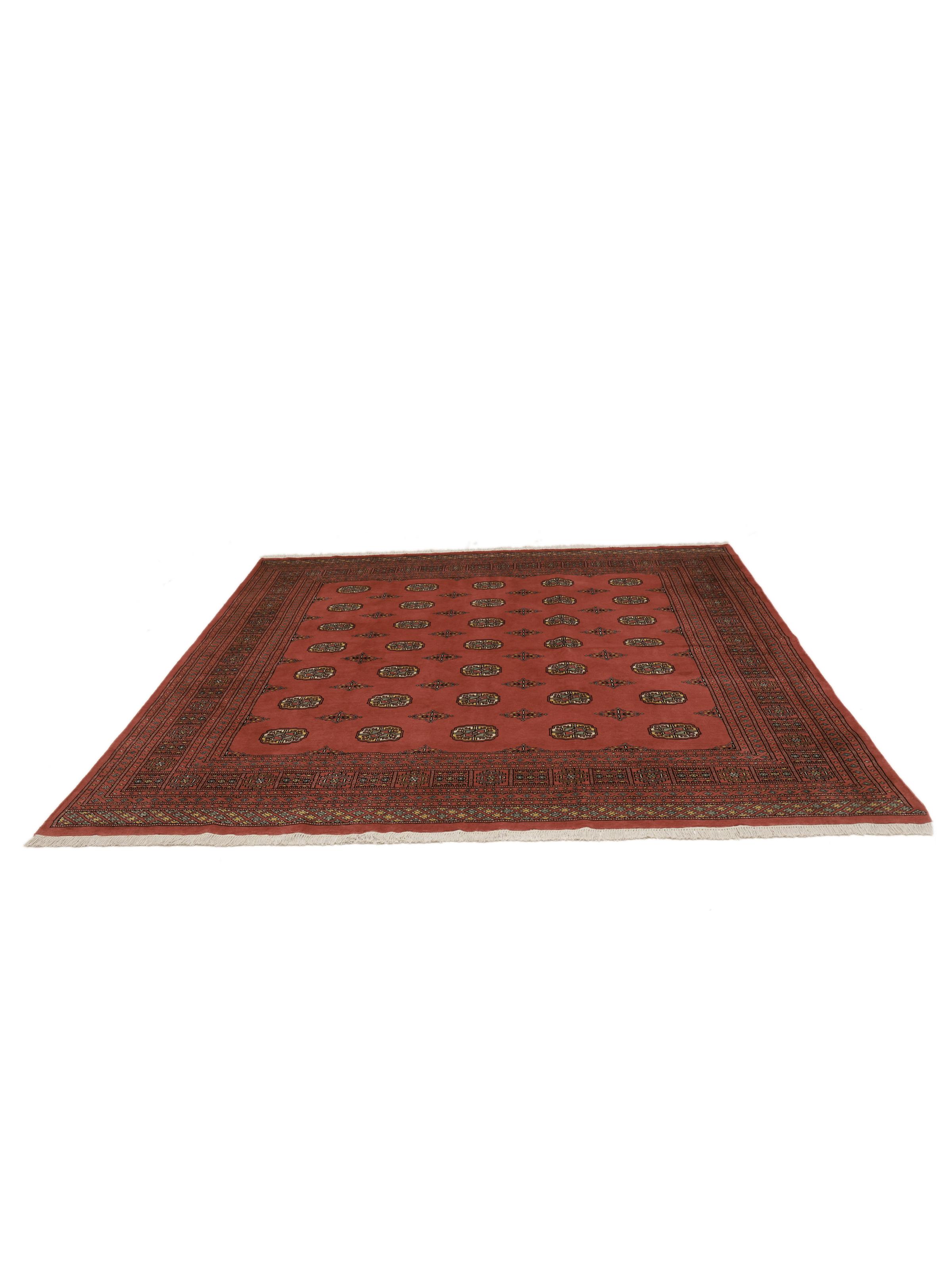
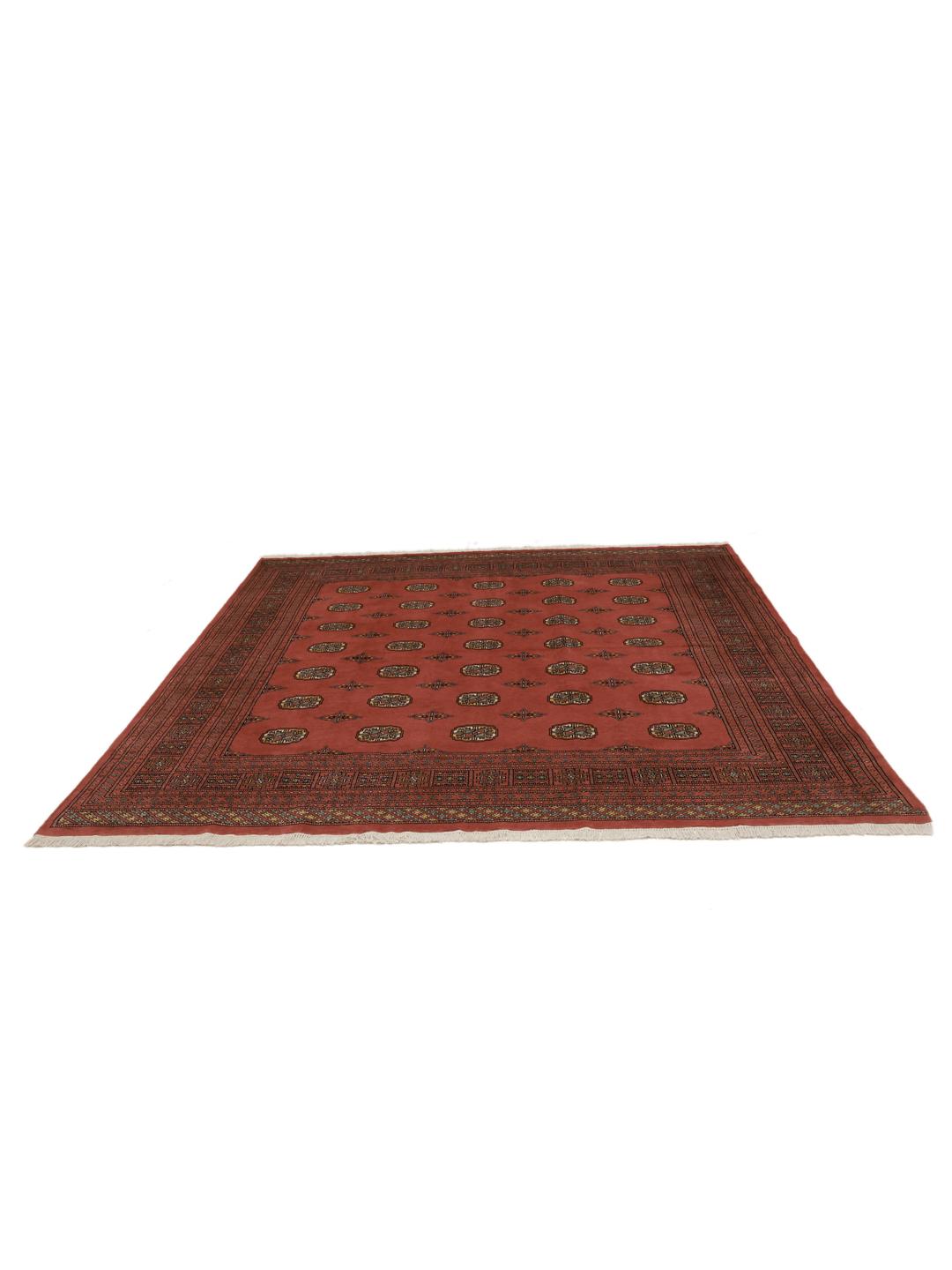
Bokhara rugs take their name from the legendary Silk Road city of Bukhara in Central Asia, a historical hub for trade and craftsmanship. While the design lineage traces back to these ancient nomadic roots, the finest examples today are primarily woven in Pakistan. This evolution reflects the migration of master weavers who brought their traditional techniques across borders, refining them over generations.
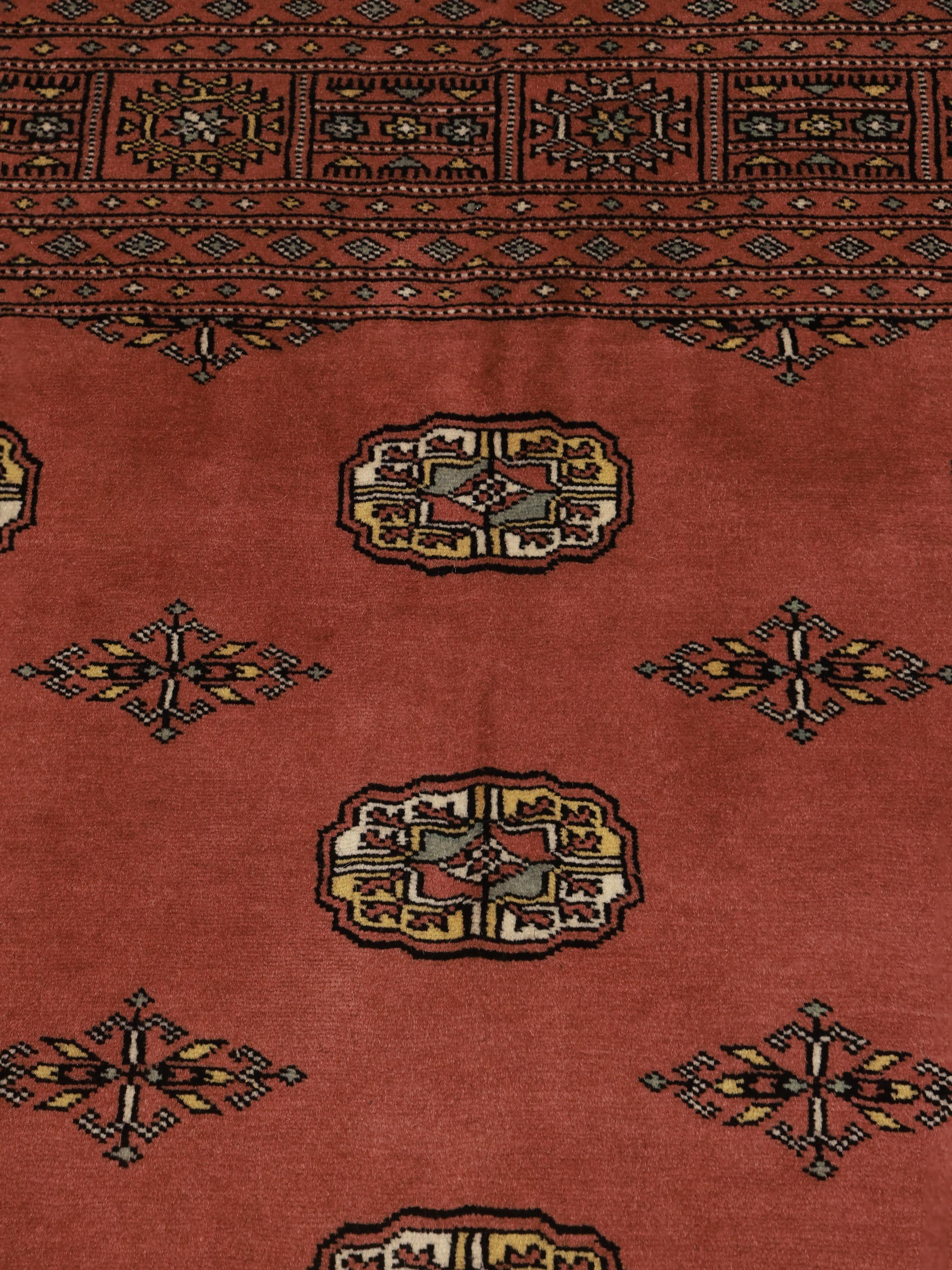
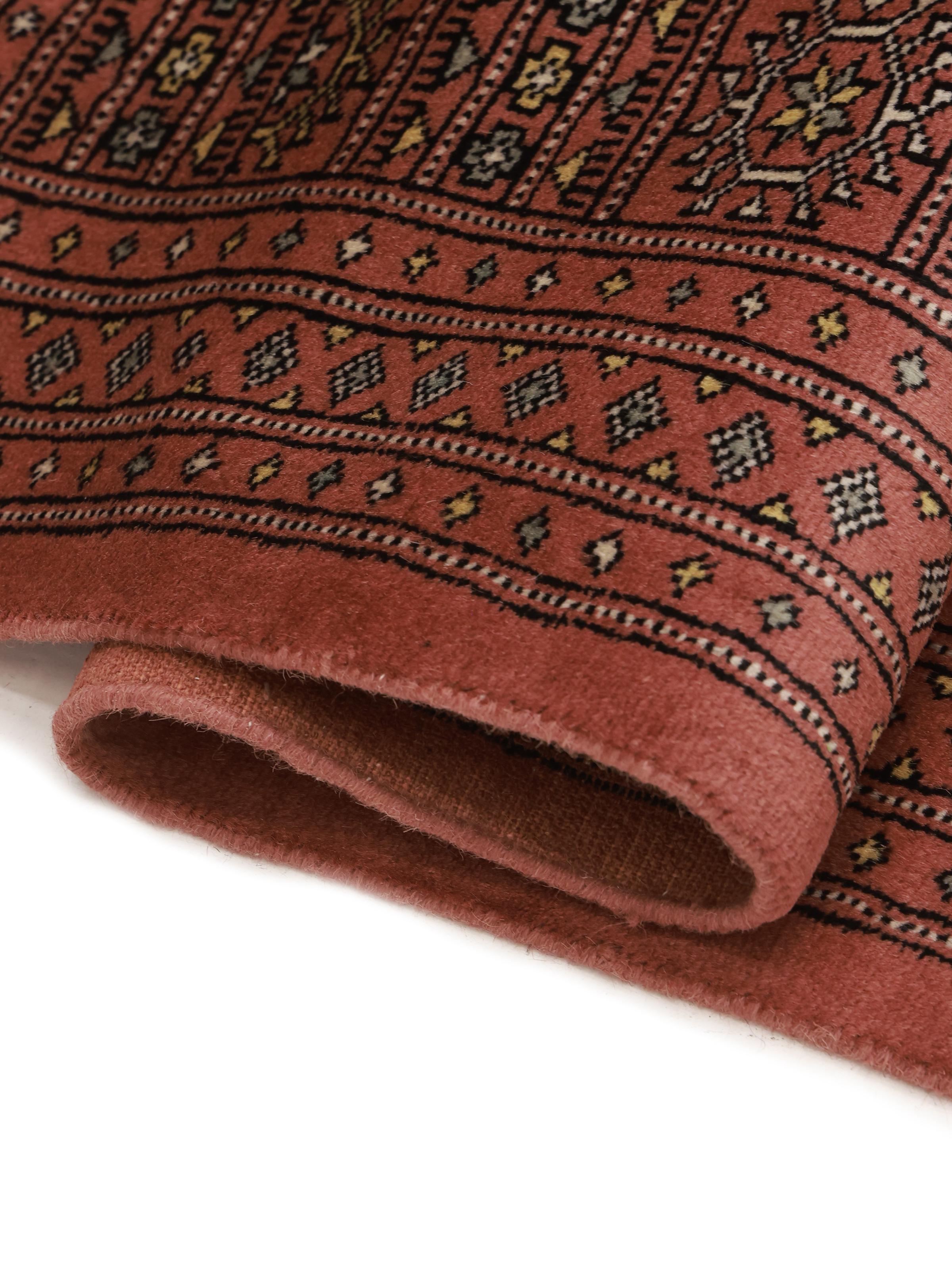
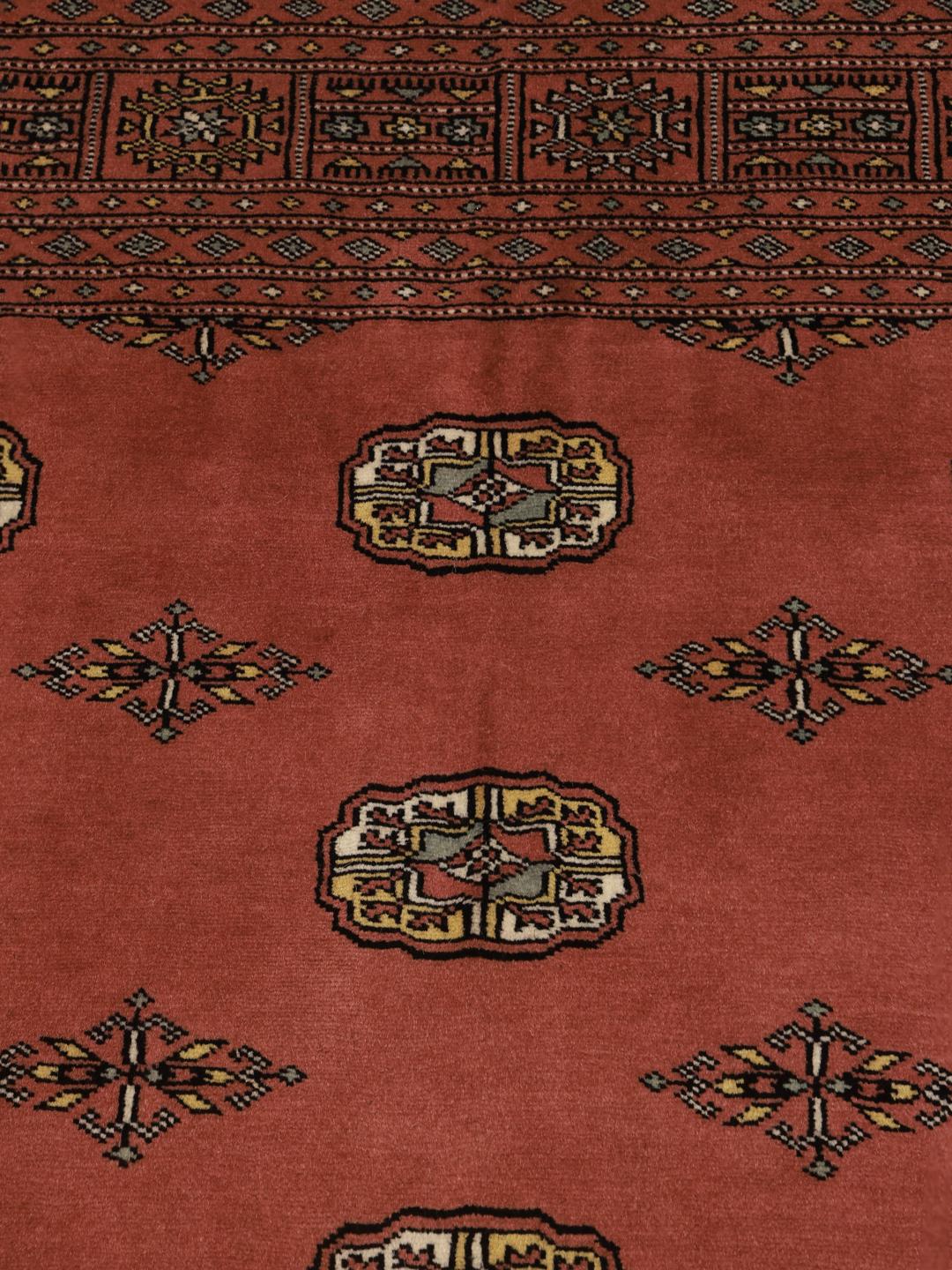
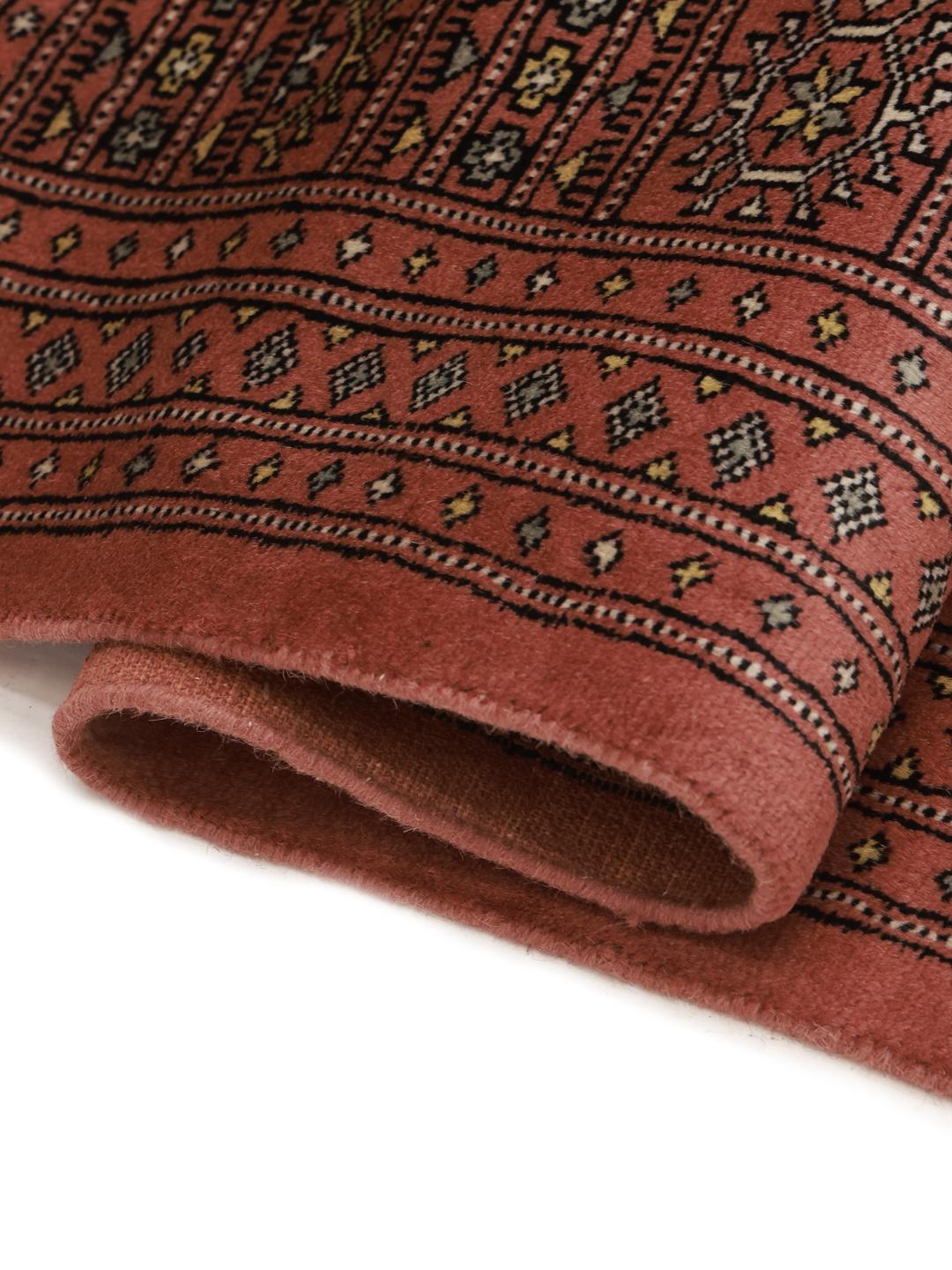
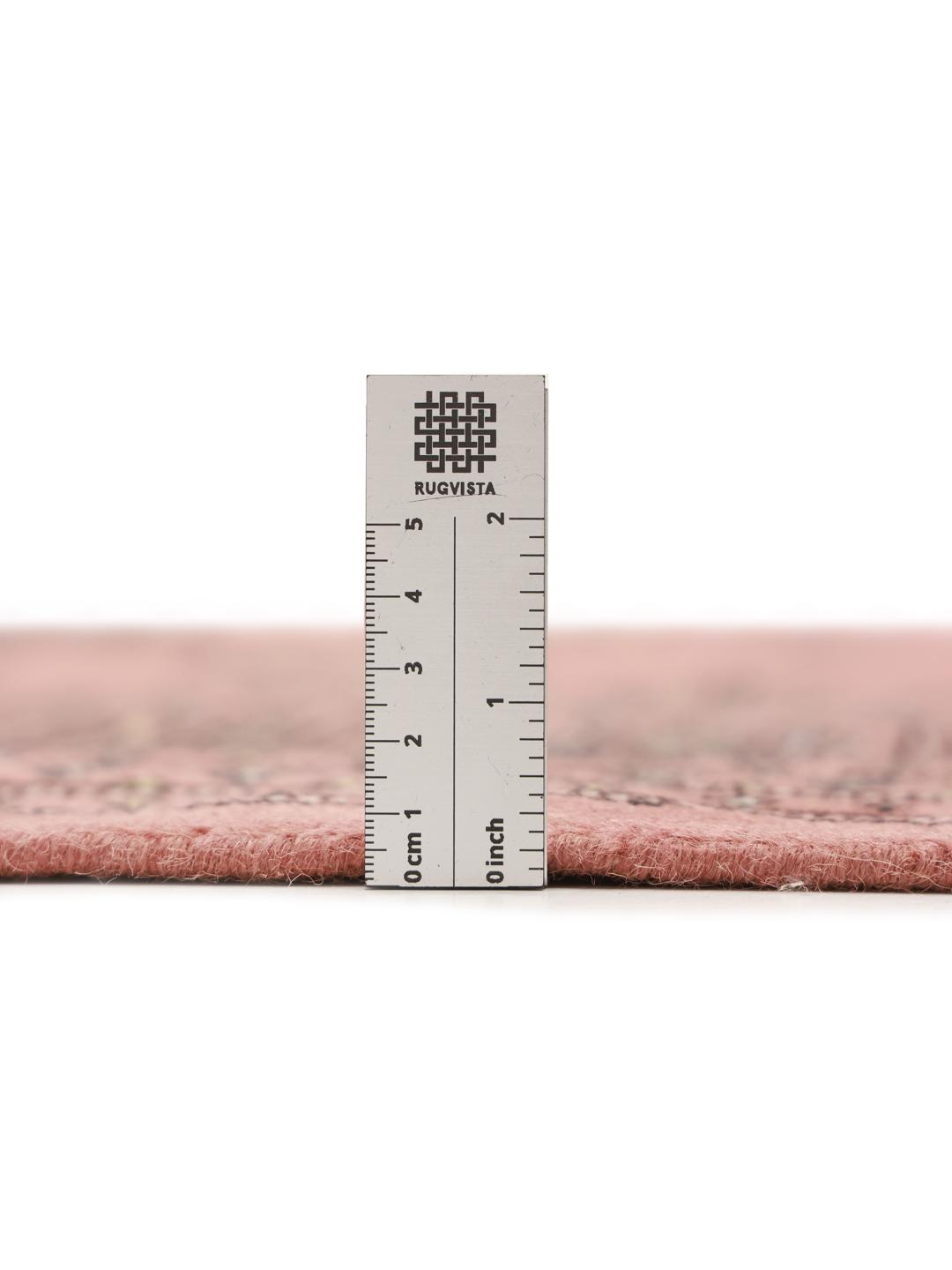
The term 2ply refers to the construction of the pile, where two strands of wool are twisted together before being knotted. This method is significant because it creates a thicker, more durable, and more lustrous pile than single-ply alternatives. For the owner, this means a rug that is not only softer and more luxurious to the touch but also better equipped to retain its rich colour and structural integrity over decades of use.
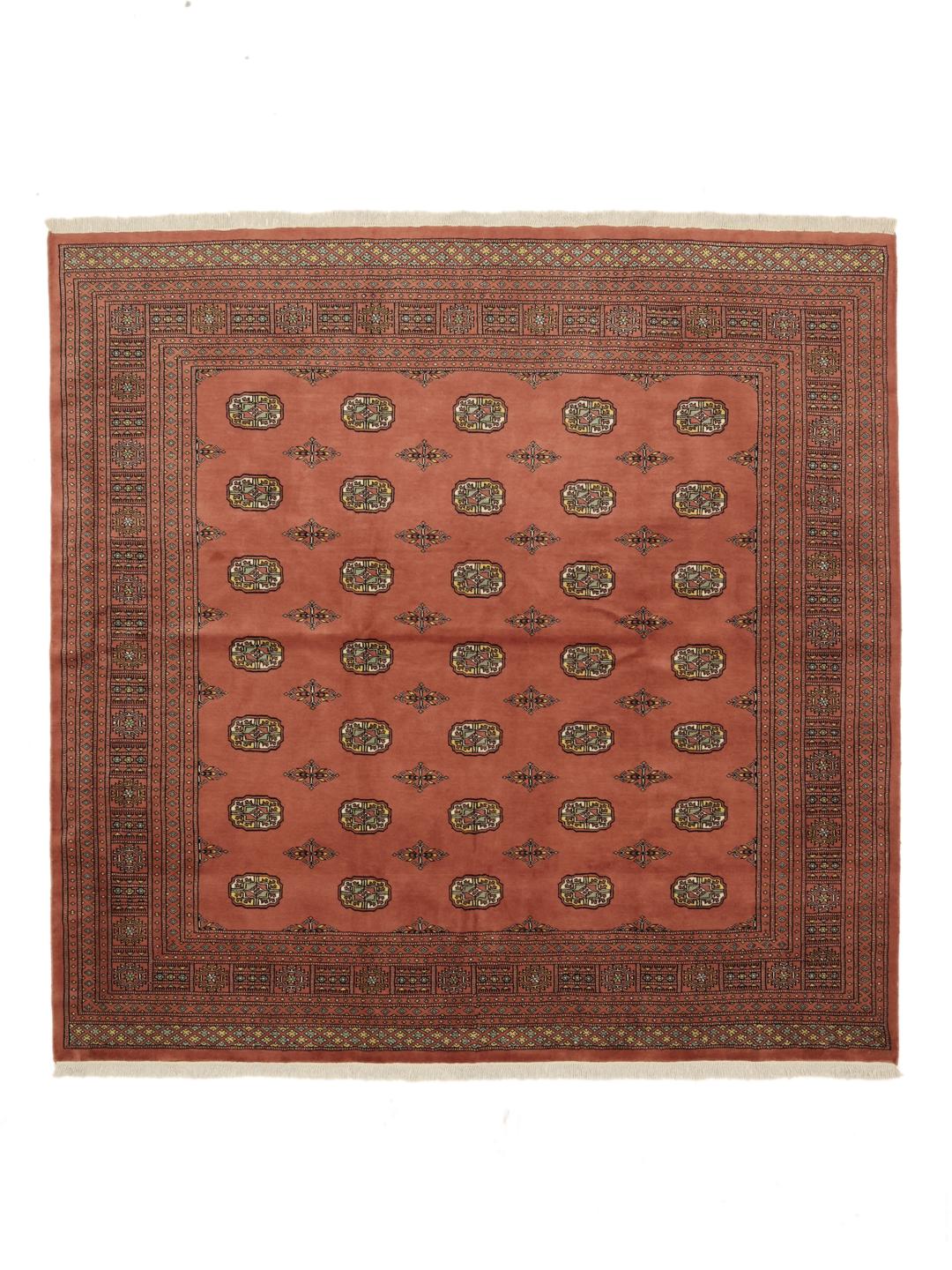
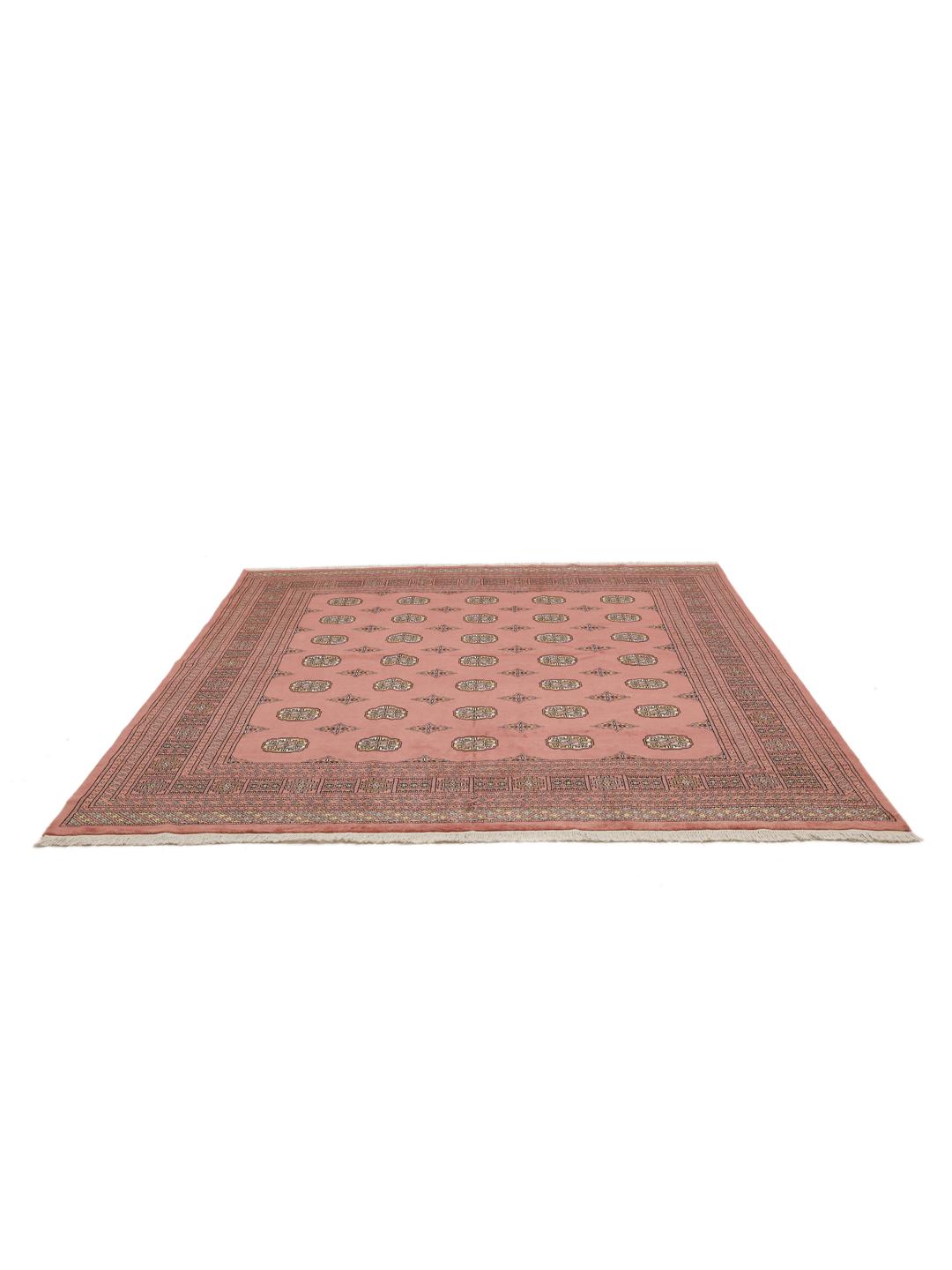
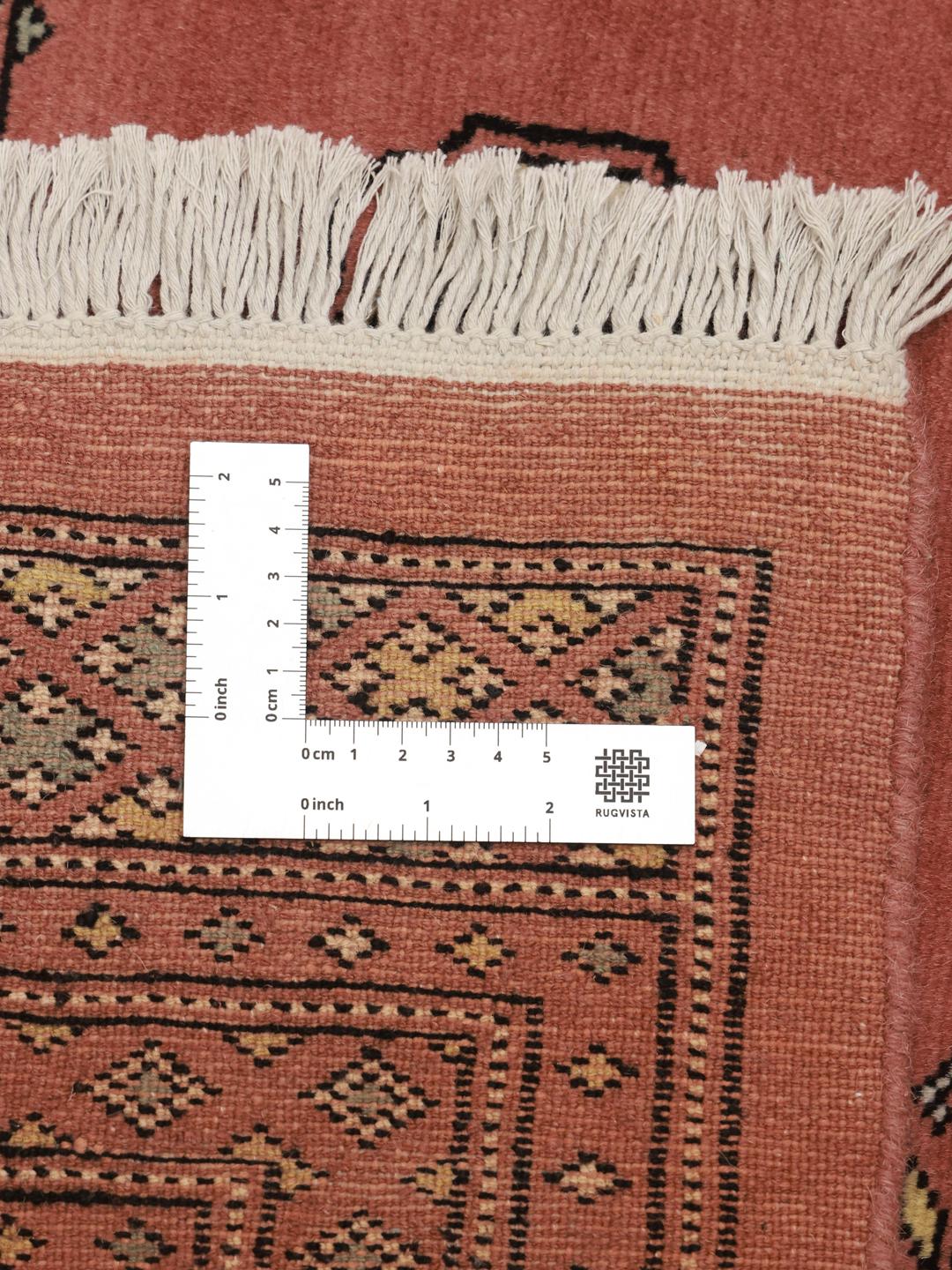
The signature design of this tradition is defined by the repeating gul motif, which are octagonal or elephant-foot shaped medallions arranged in precise rows across the field. These motifs are traditionally enclosed by complex, geometric borders that frame the central design. The dark-red field seen here is a classic choice, chosen for its warmth and its ability to act as a sophisticated, neutral-adjacent base for various interior palettes.
These rugs are highly valued by collectors because they represent a living bridge between nomadic heritage and modern home comfort. Owning a piece from this tradition is an investment in human skill, as each rug carries the signature of the artisan who created it. It is this combination of historical design, material quality, and the dedication of the maker that makes these rugs a lasting addition to any collection.