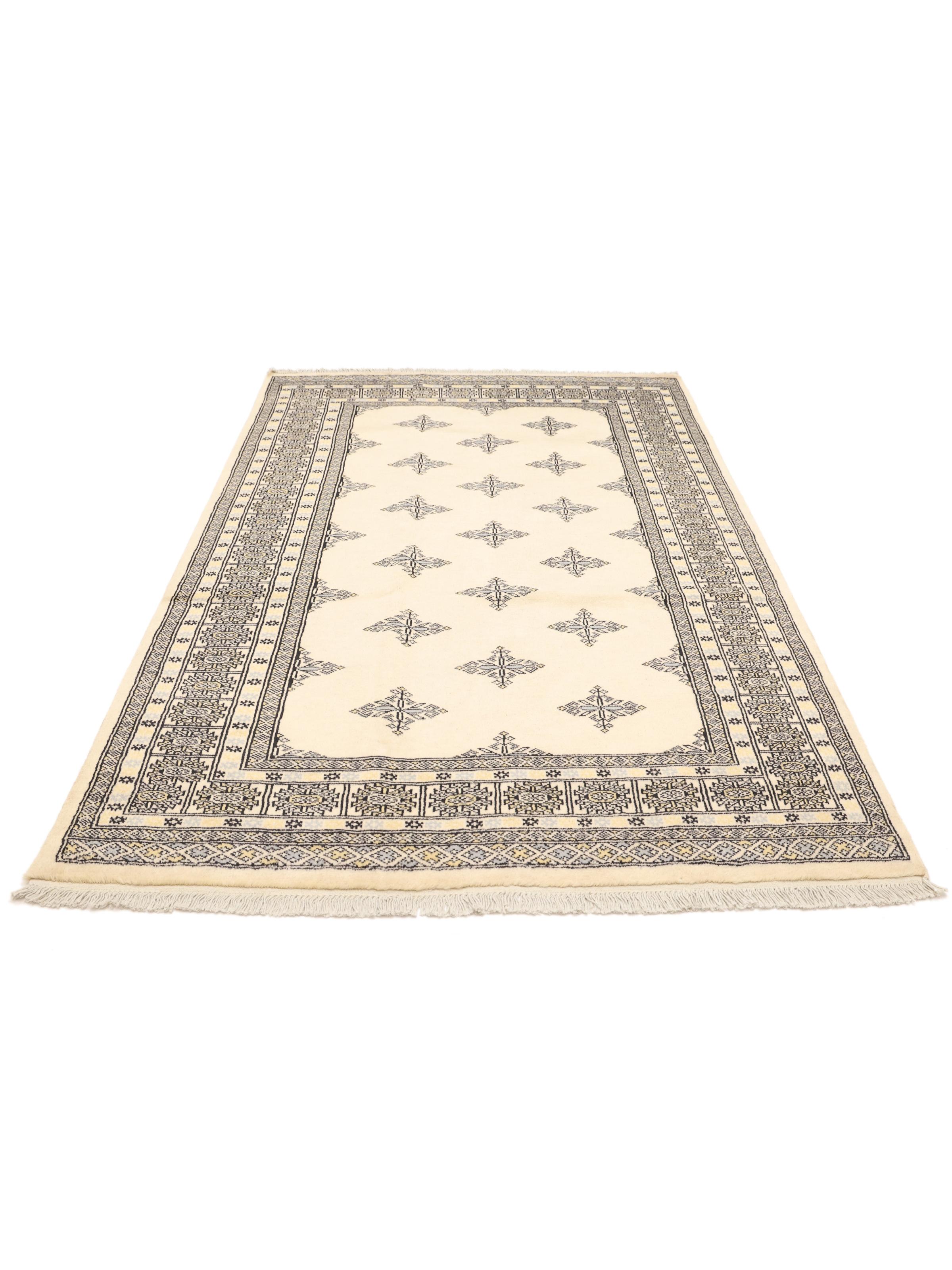
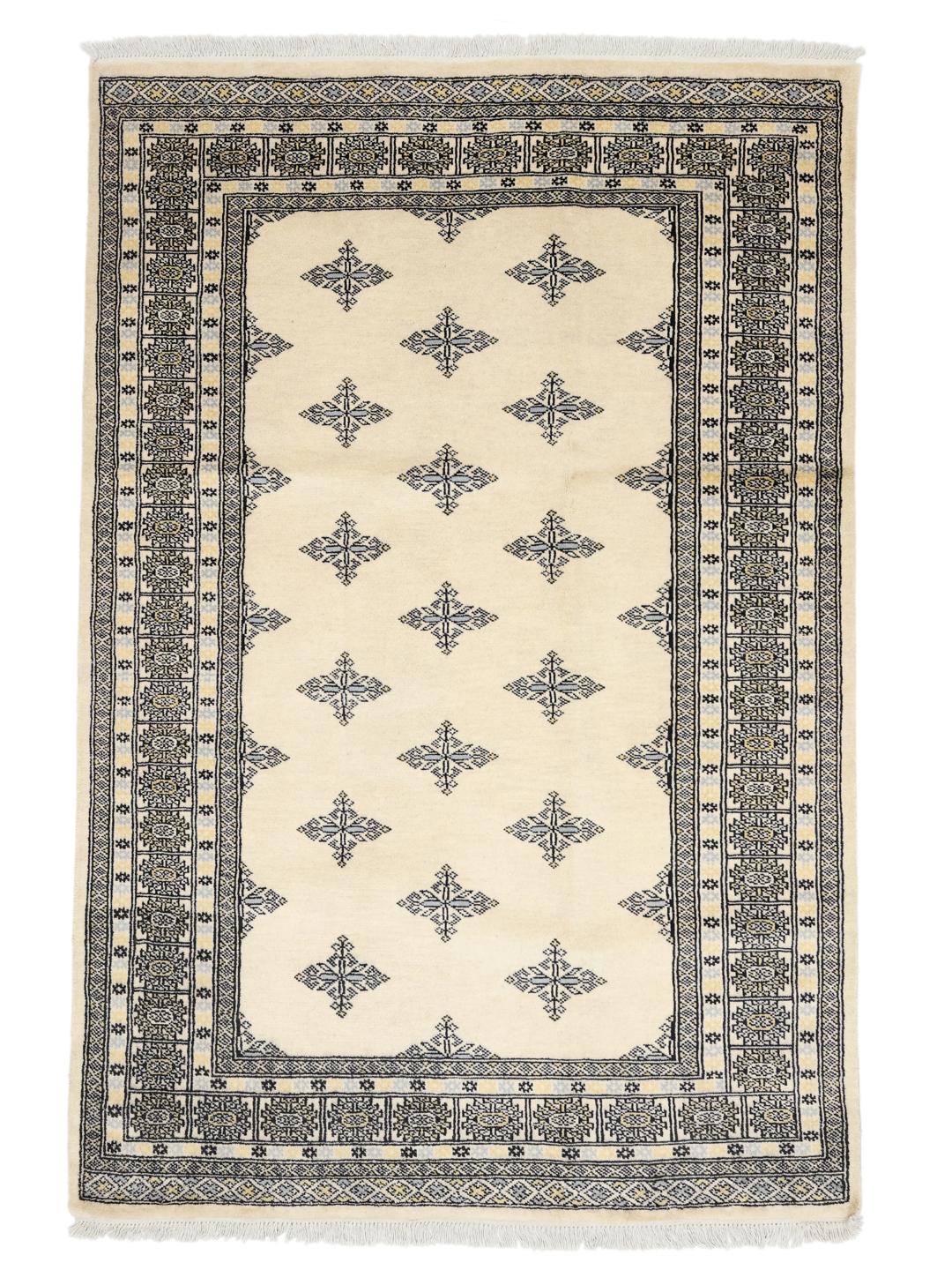
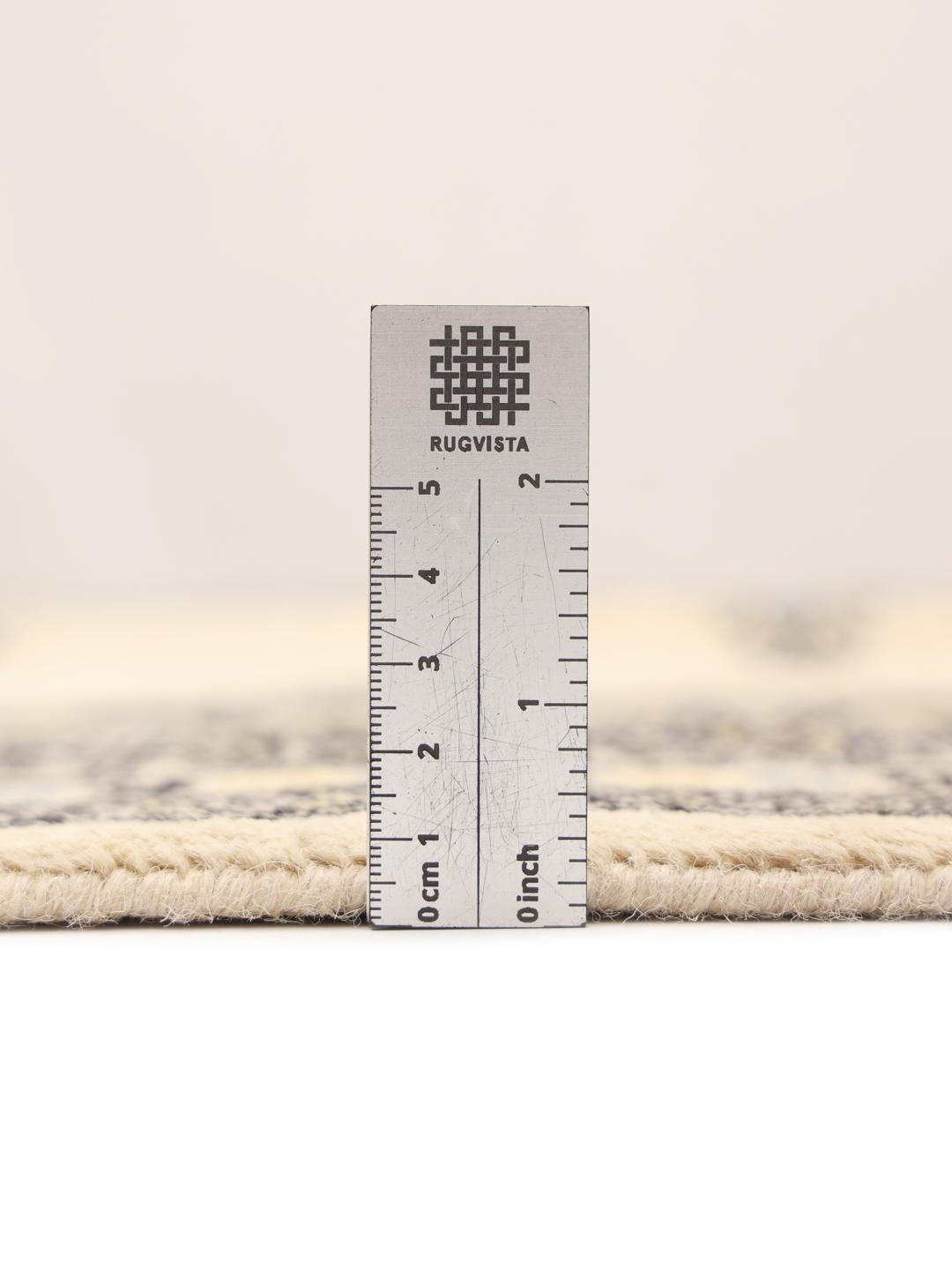
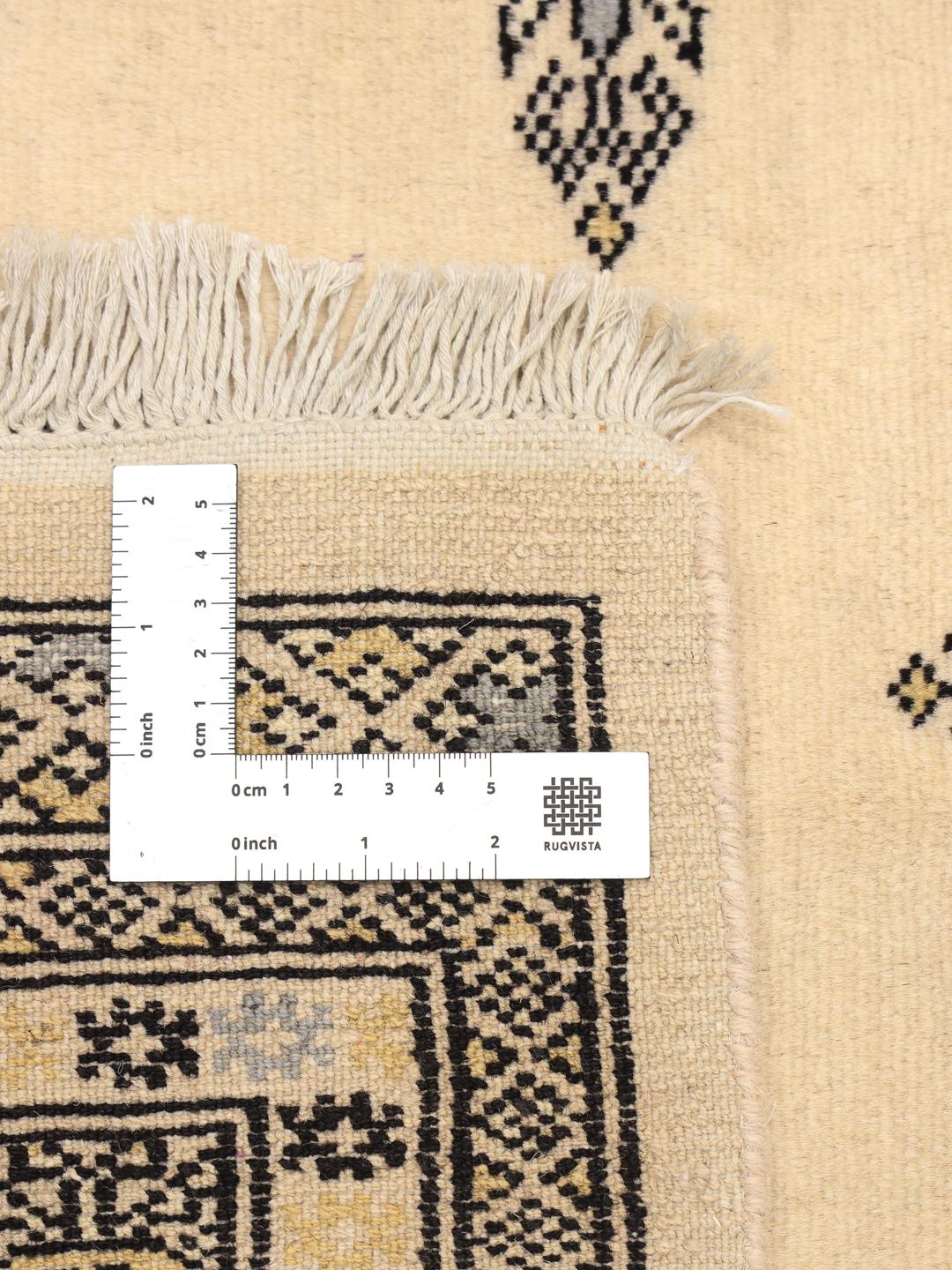
Bokhara rugs are deeply rooted in the ancient traditions of Central Asia, taking their name from the legendary Silk Road city of Bukhara. While they originated in the nomadic cultures of the steppes, the most refined examples today are masterfully created in Pakistan. This evolution reflects the migration of weaving knowledge across borders, where artisans have honed their skills to produce rugs that are celebrated worldwide for their consistency and grace.
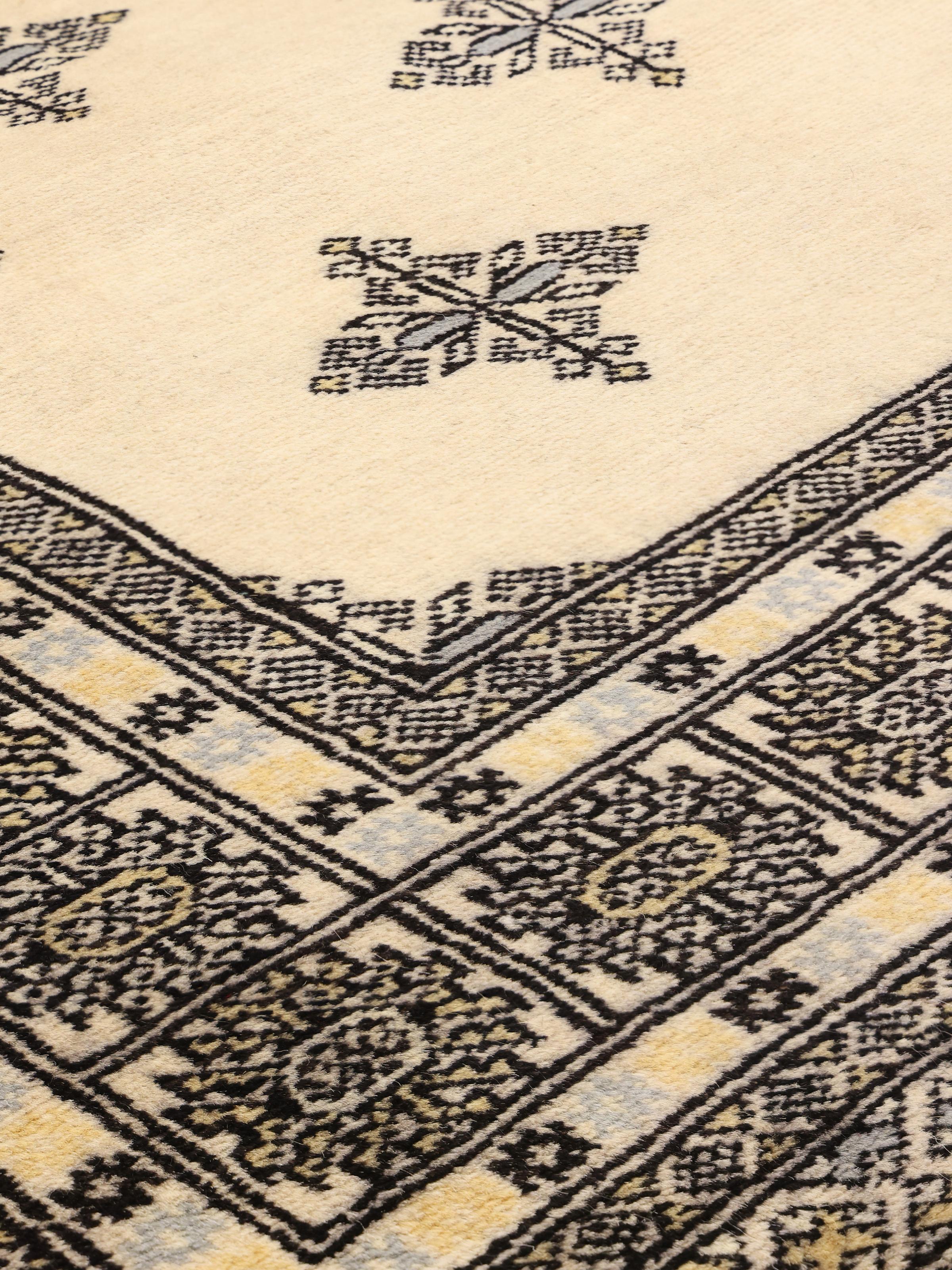
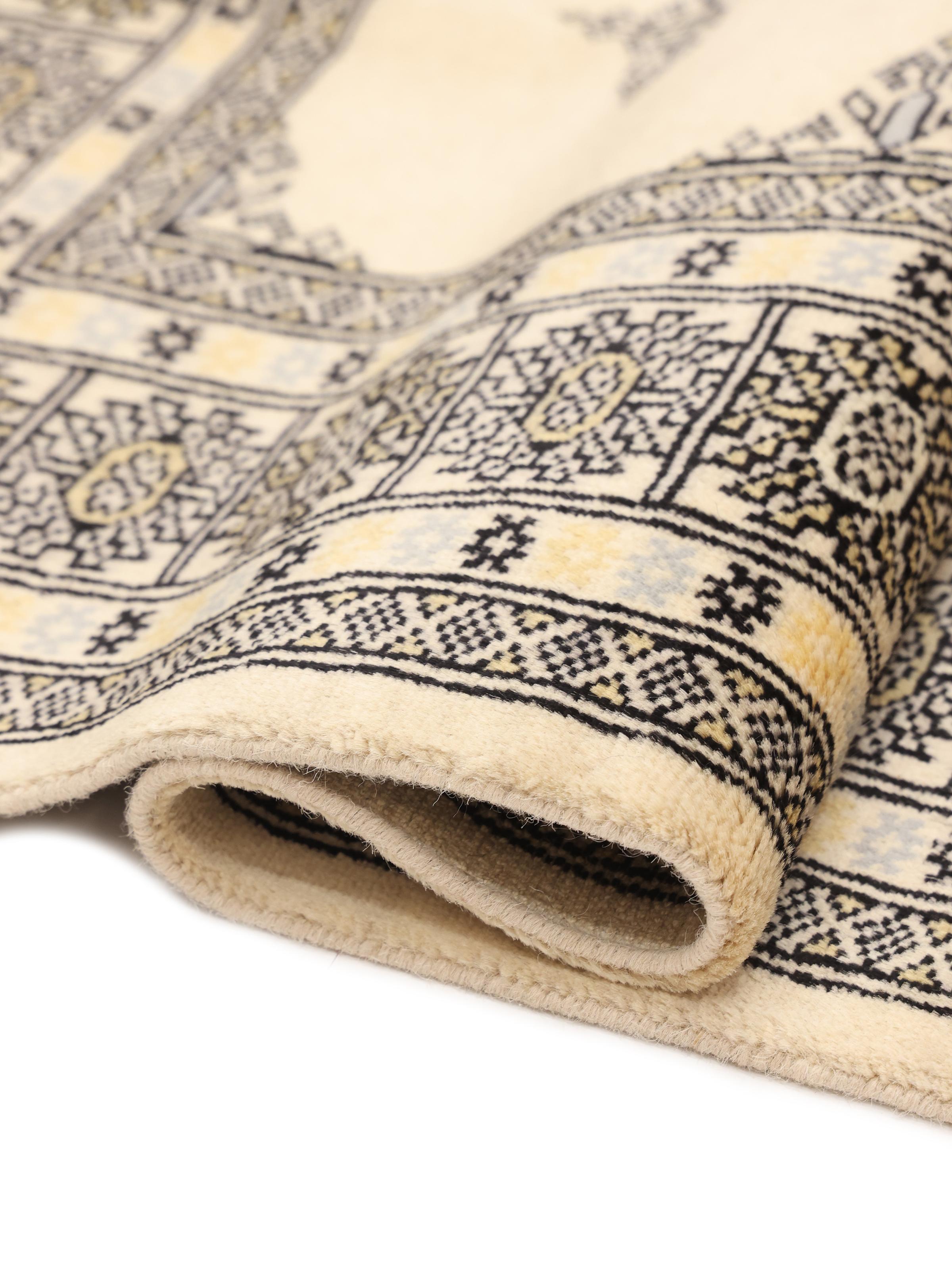
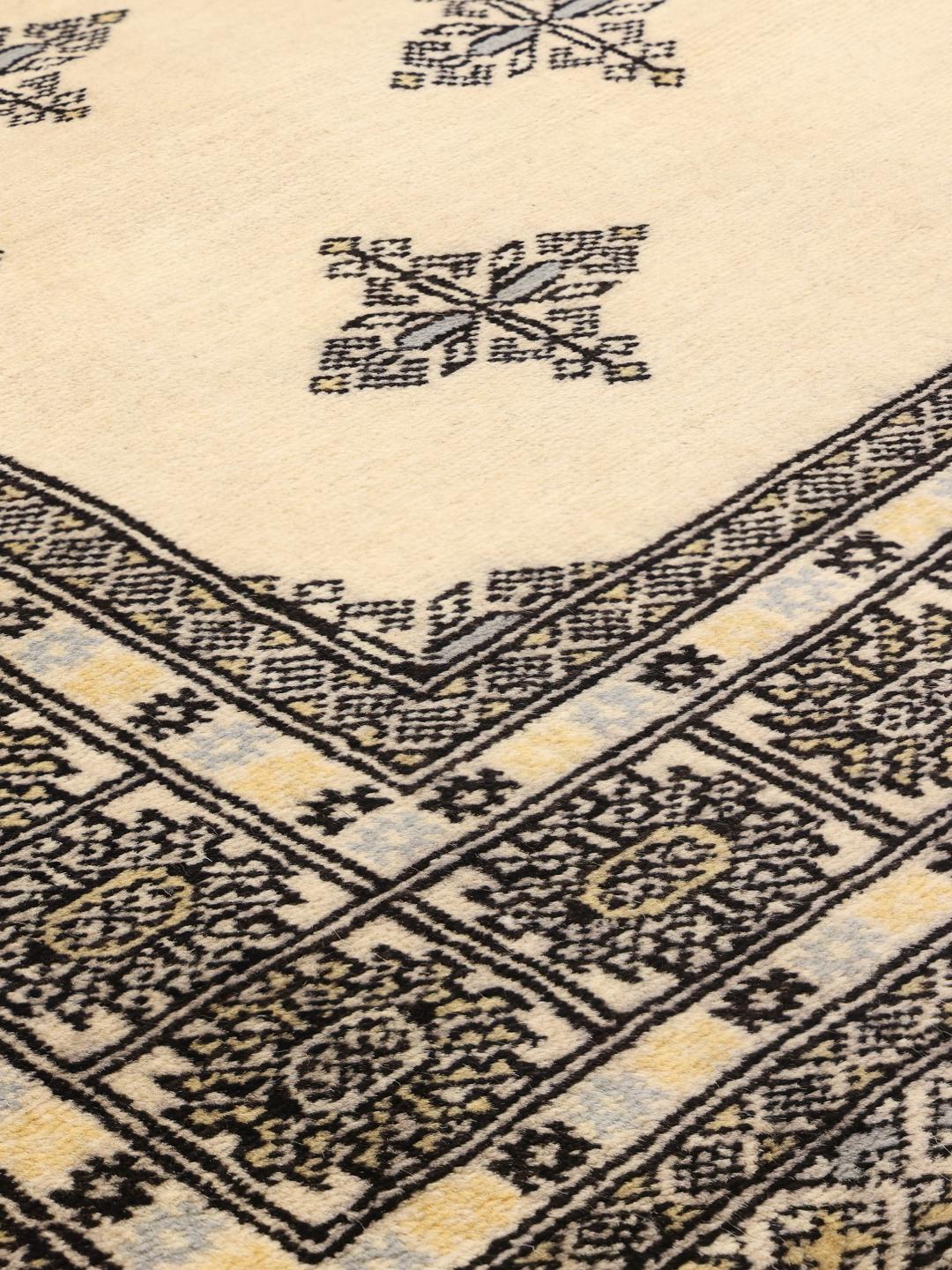
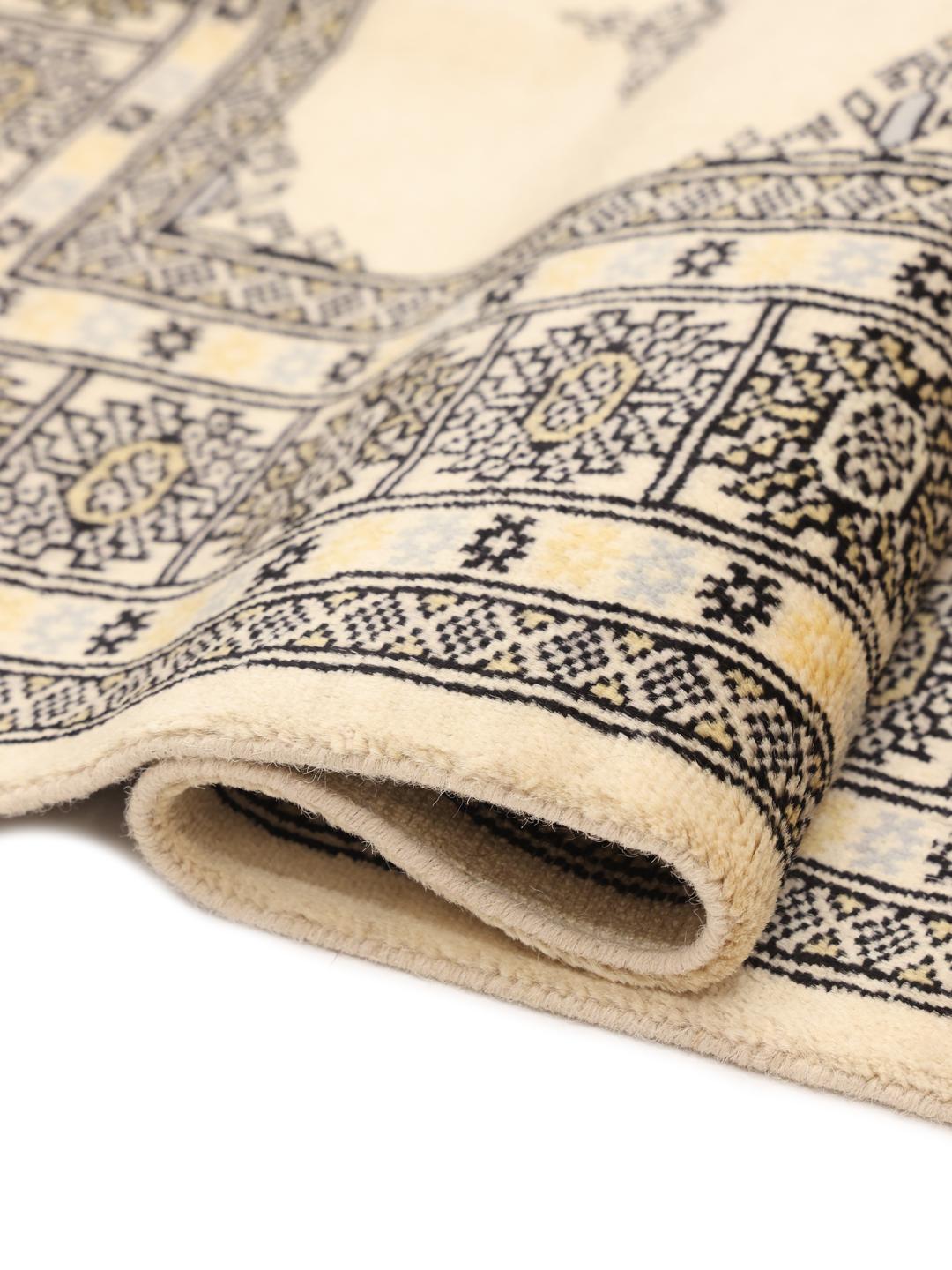
The term 2ply refers to the construction of the pile, where two strands of wool are twisted together before being knotted. This technique is significant because it creates a denser, more lustrous, and more durable surface compared to single-ply yarns. For the owner, this means a rug that not only feels exceptionally soft and thick but also stands up better to the rigours of daily life, keeping its appearance for many years.
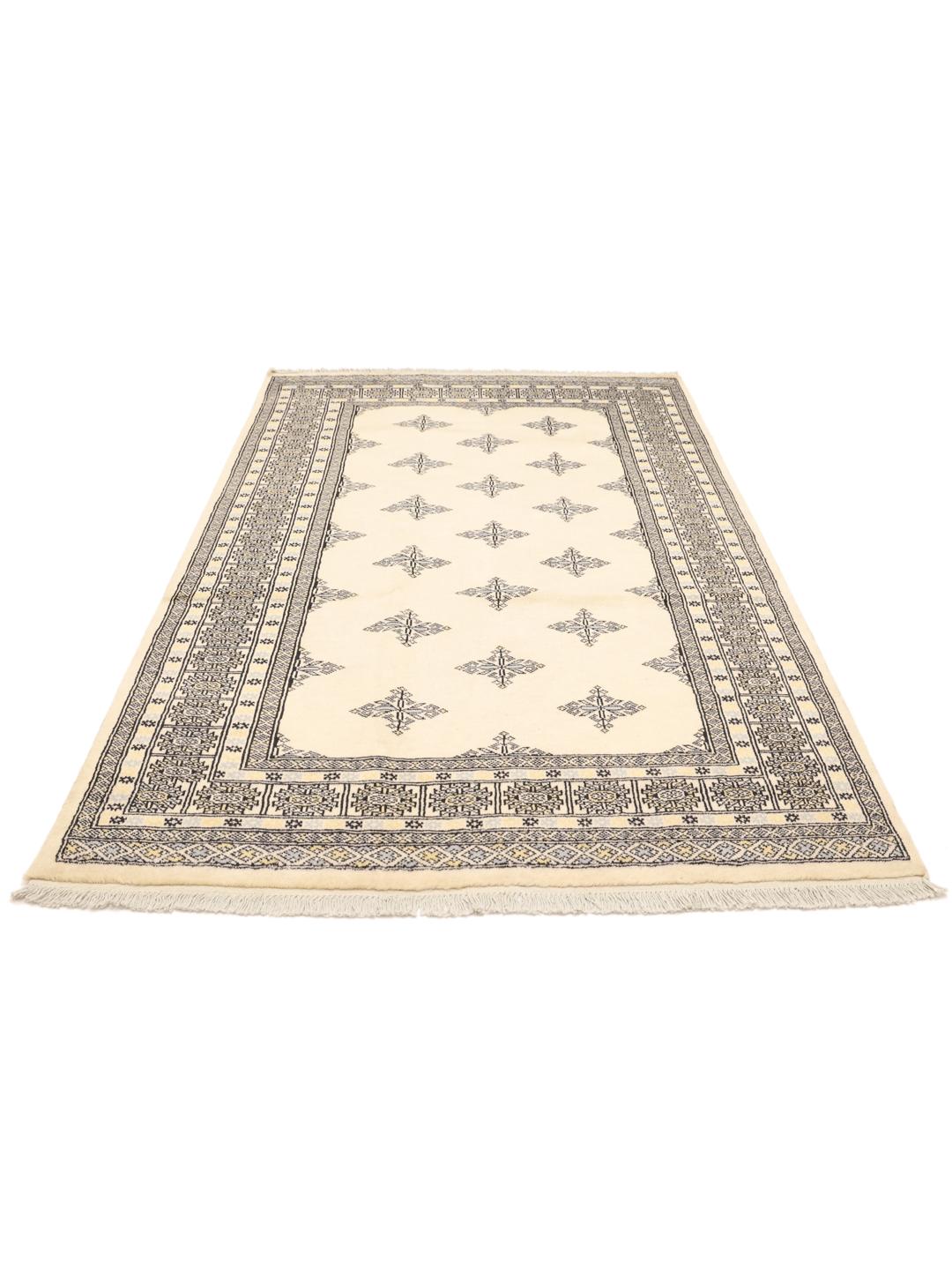
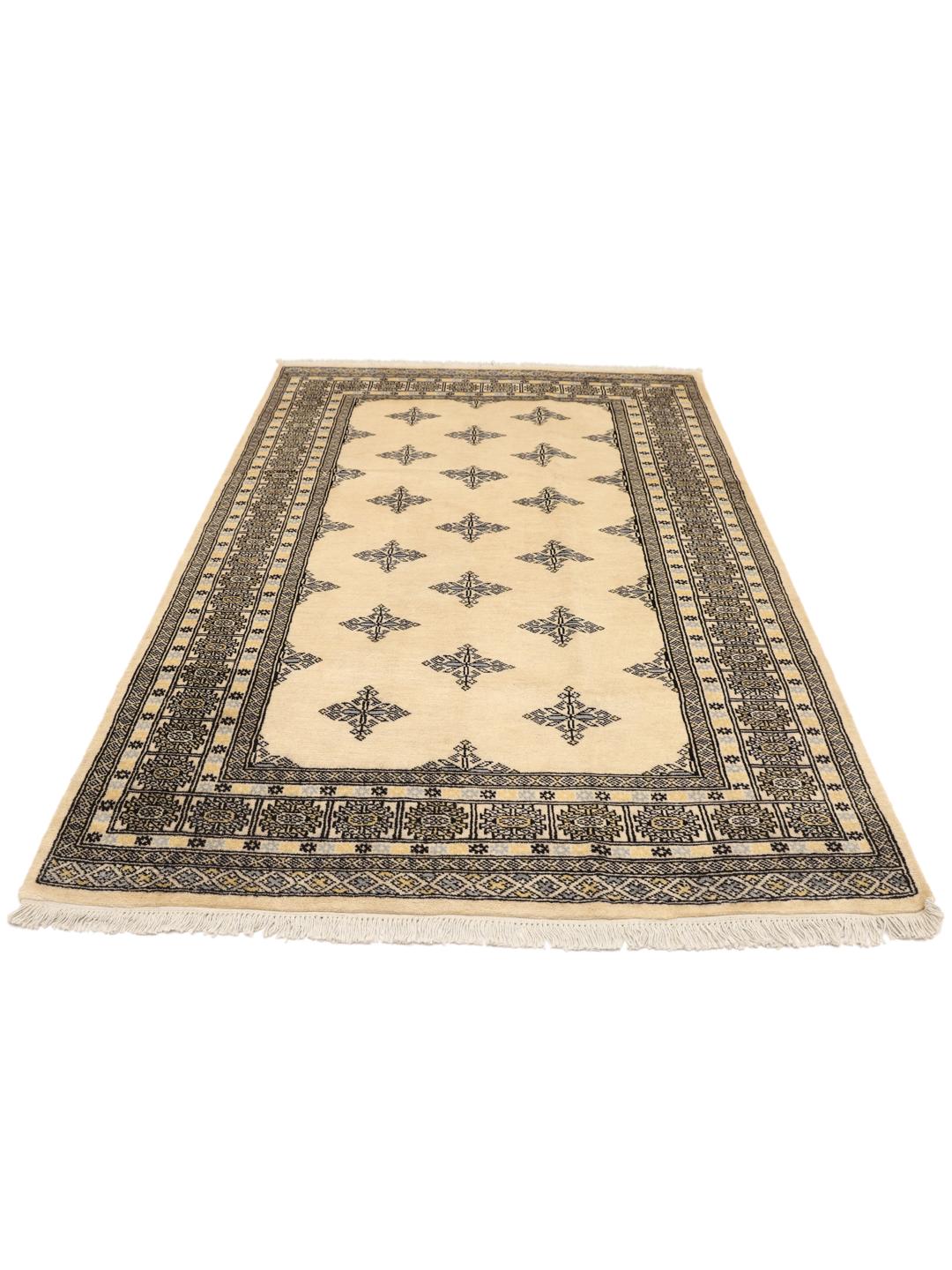
The signature aesthetic of these rugs is defined by the repeating gul motif, which are typically octagonal or elephant-foot shapes arranged in orderly rows. These geometric patterns are often balanced by intricate, formal borders that frame the field, creating a sense of harmony and proportion. This particular piece showcases these traditional elements with a clean, light colour palette that highlights the precision of the knotting.
Owning a hand-knotted rug from this tradition is an act of preserving cultural heritage. These pieces are highly valued by collectors and interior designers alike for their combination of technical skill and historic design language. By bringing one into your home, you are not just choosing a floor covering, but a piece of functional art that carries the weight of generations of weaving history.