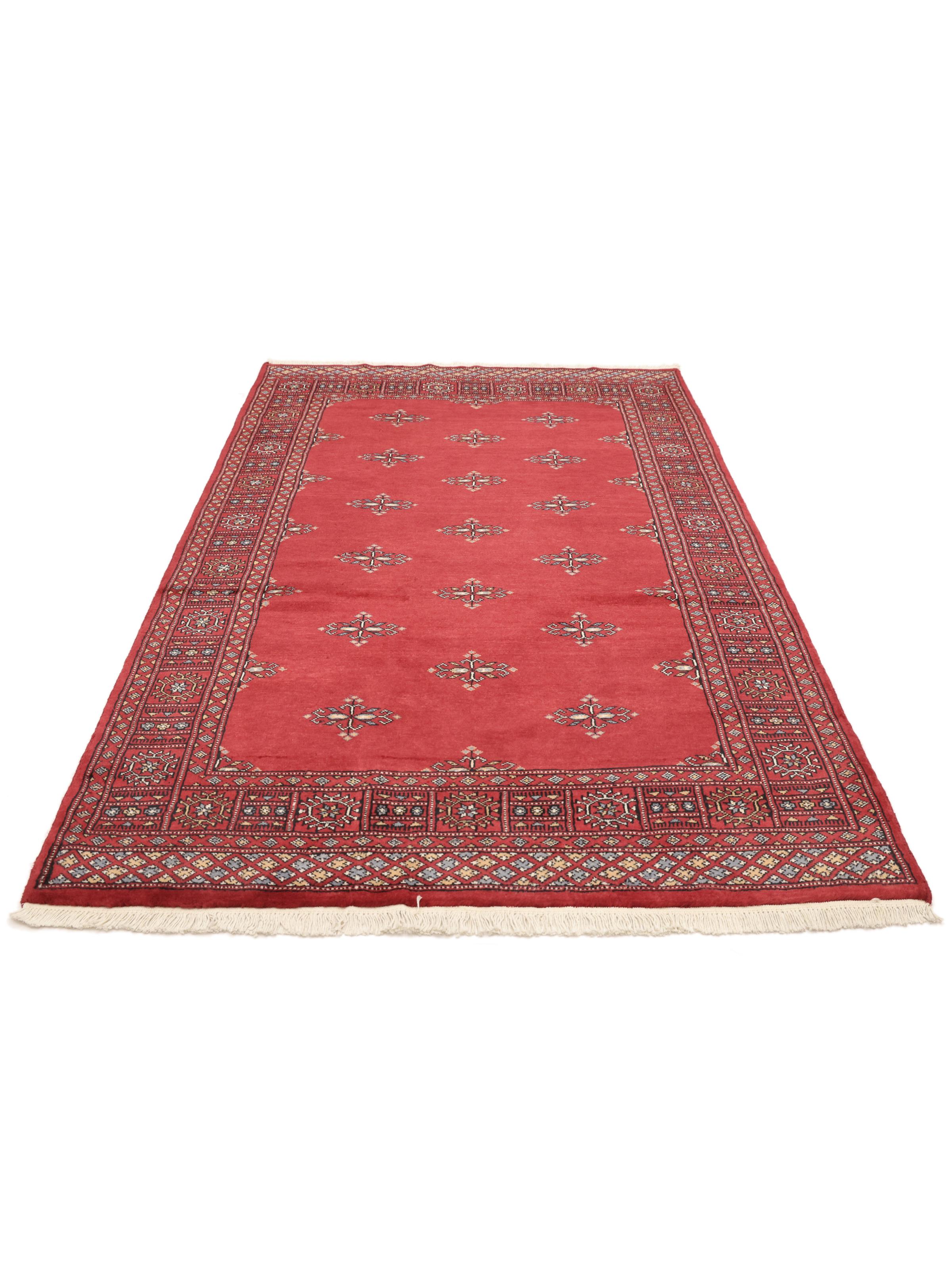
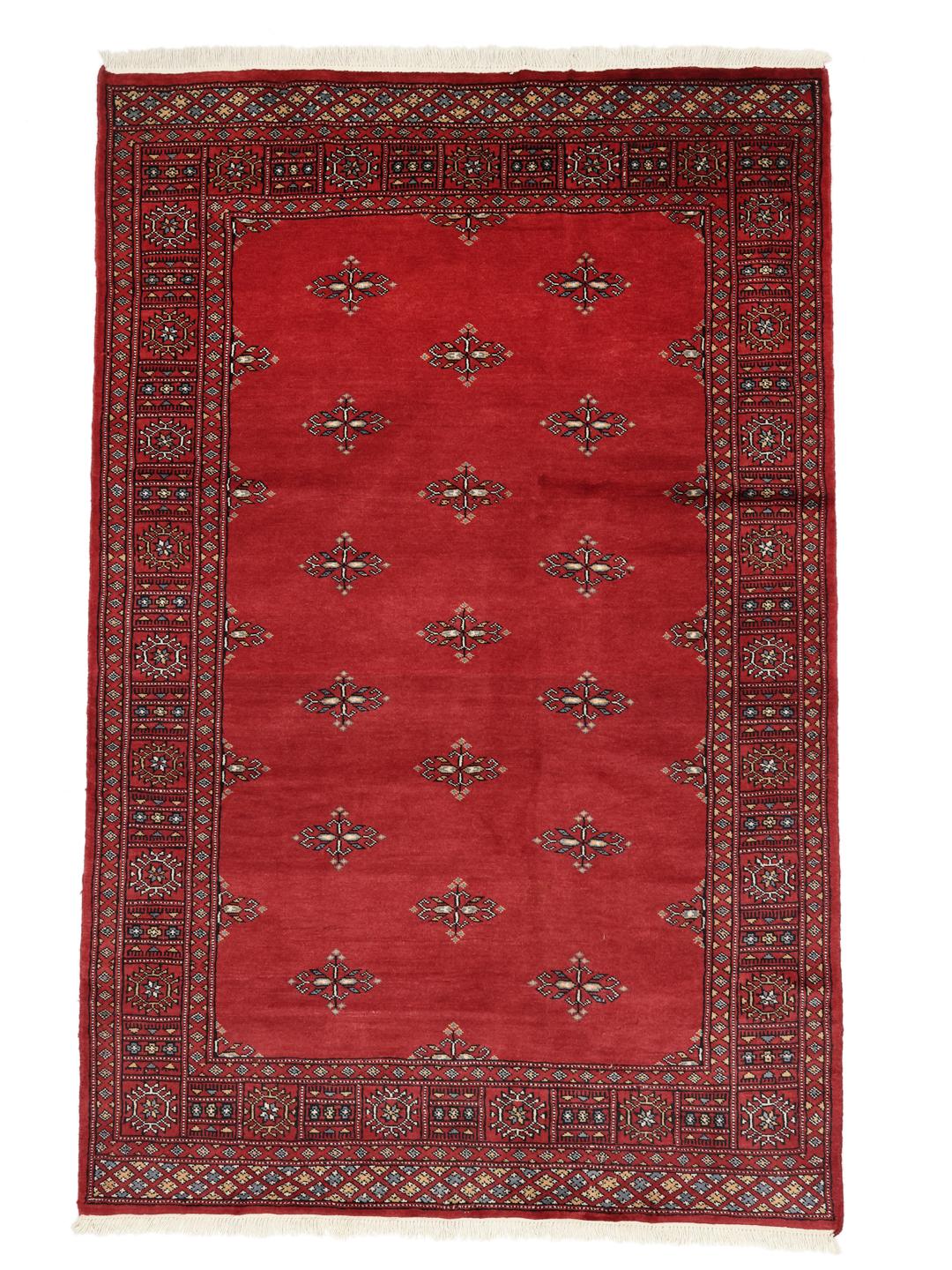
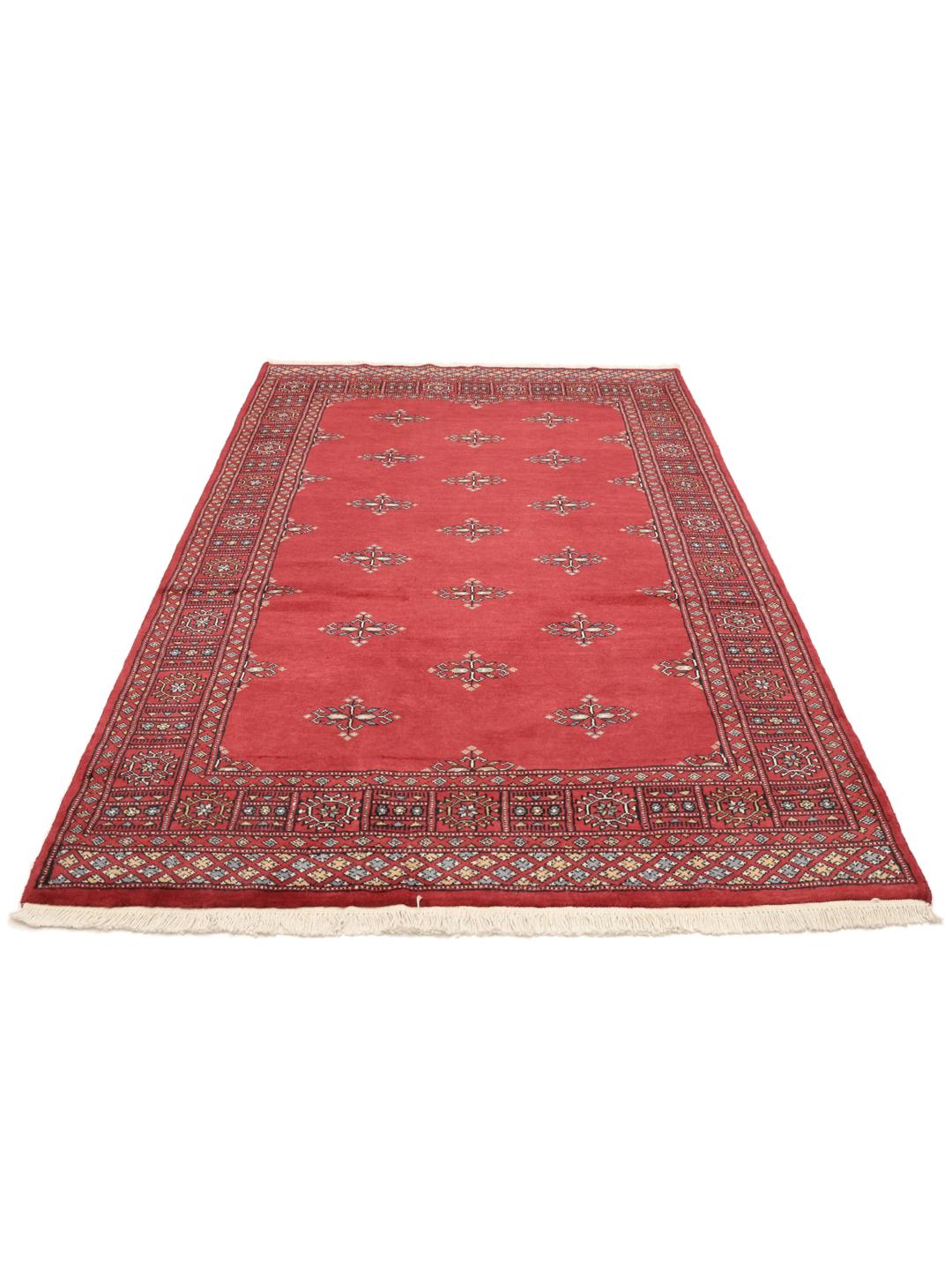
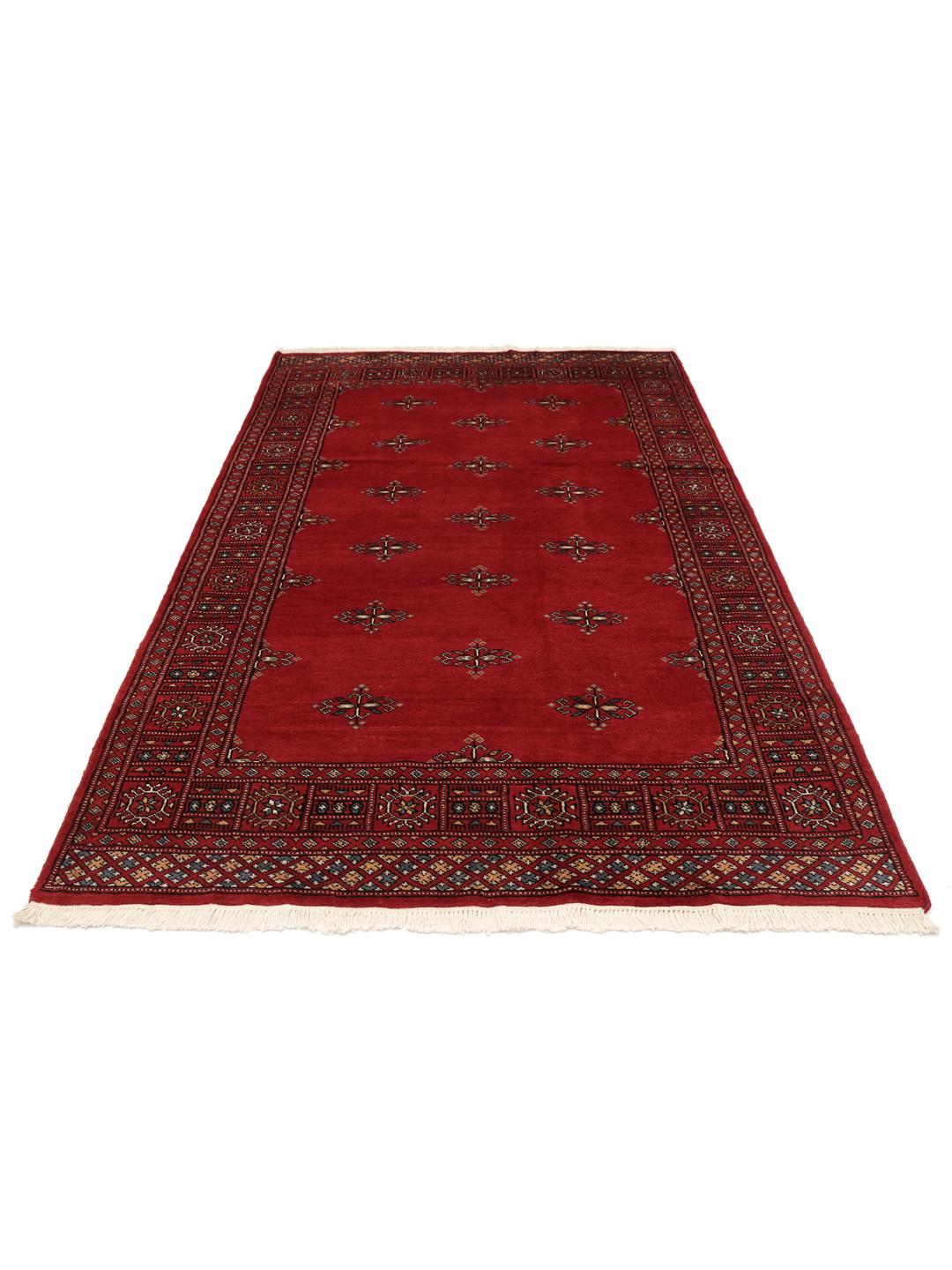
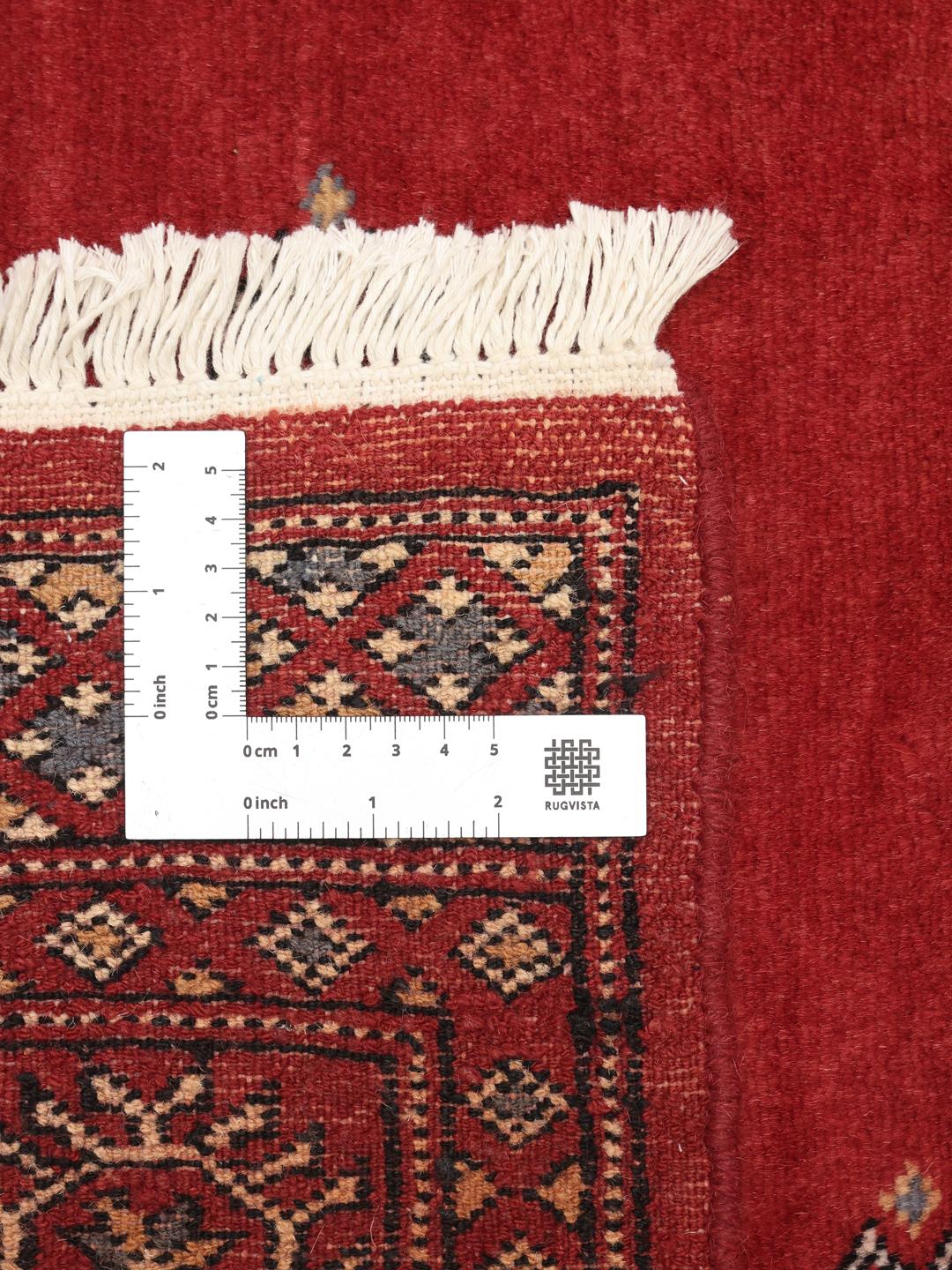
Bokhara rugs take their name from the ancient Silk Road city of Bukhara in Central Asia, a historical hub for textile trade and artistry. While the design traditions originated among nomadic tribes in the region, the finest contemporary examples are expertly woven in Pakistan, where artisans have perfected these classic patterns over generations.
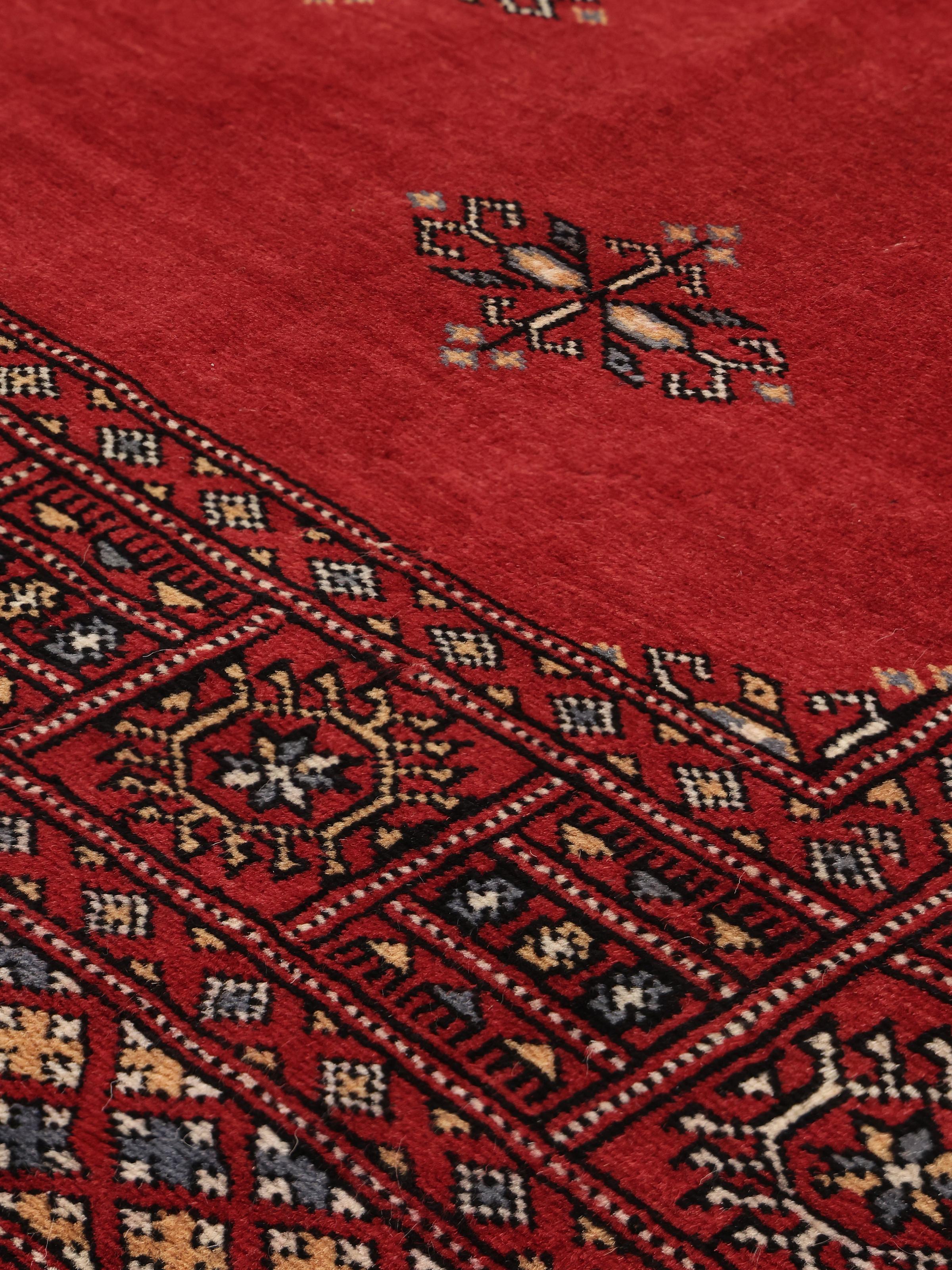
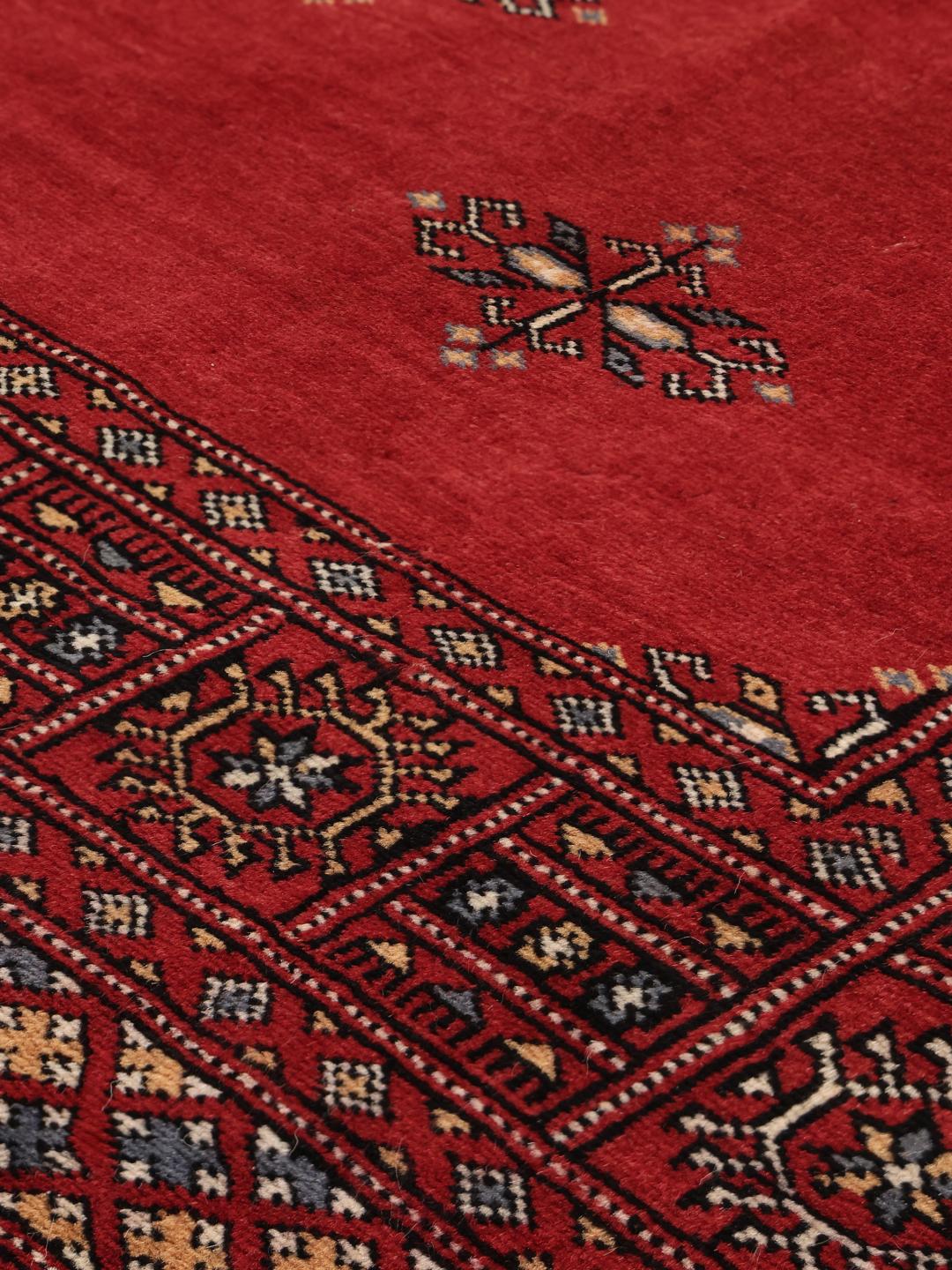
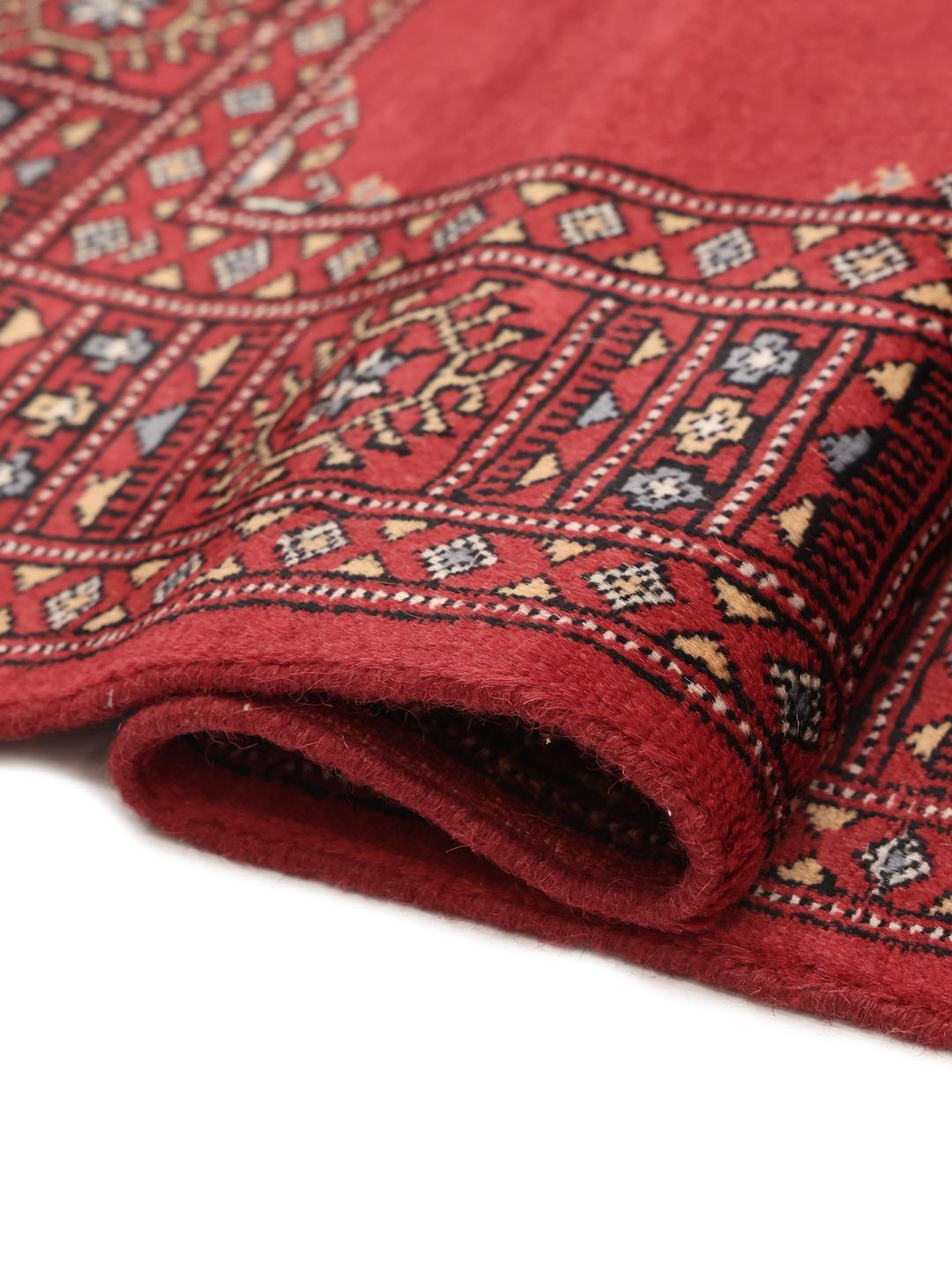
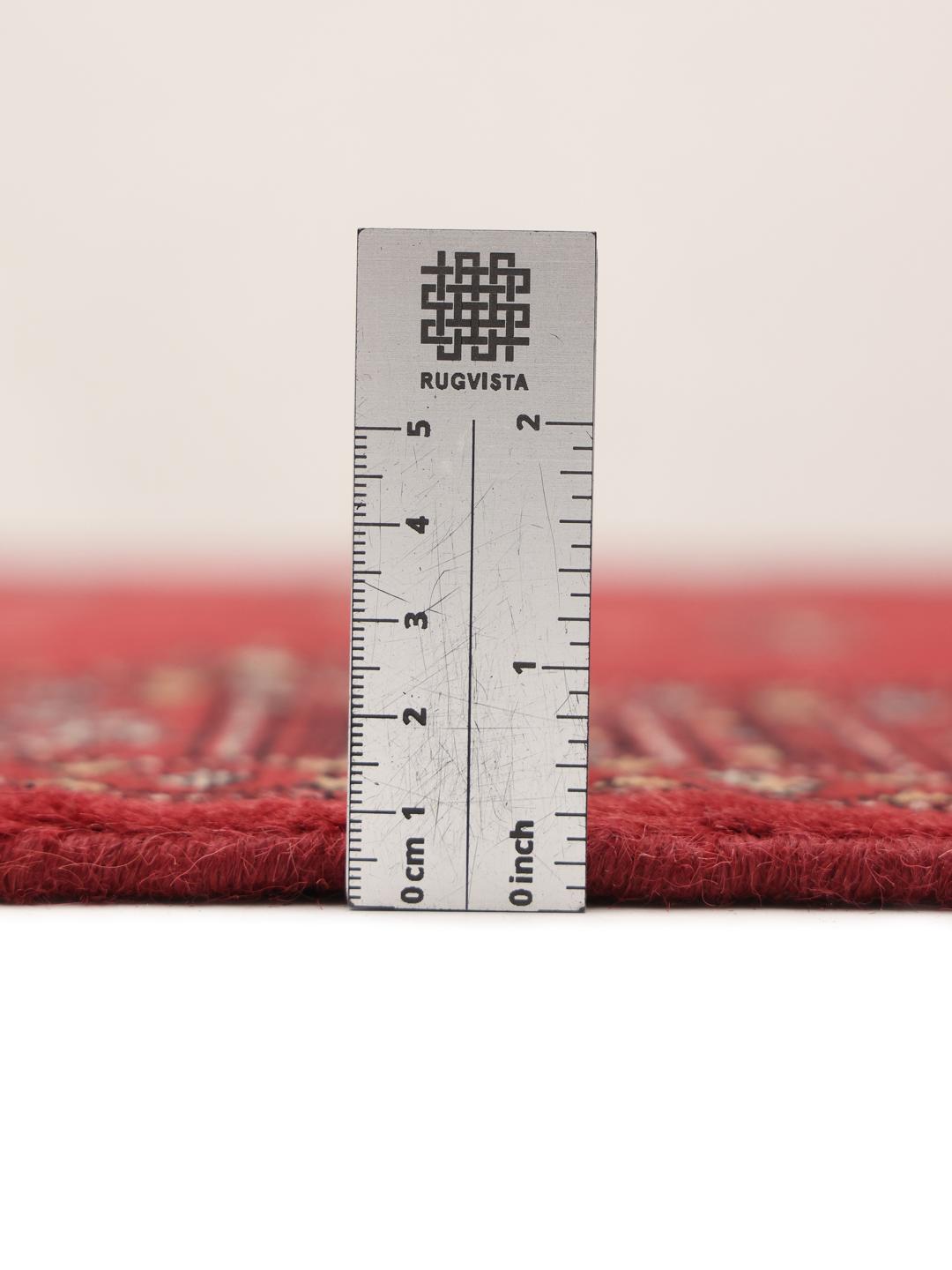
The '2ply' designation refers to the construction of the pile, where two strands of Wool are twisted together before being knotted. This technique is significant because it creates a more lustrous, resilient, and dense pile compared to single-ply alternatives, ensuring the rug holds up beautifully against daily use while offering a soft, luxurious texture.
The visual language of this tradition is defined by the repeating 'gul' motifs, which are stylised, octagonal medallions arranged in structured rows. These are typically framed by elaborate, multi-layered borders that reflect a formal design sensibility, balanced here by the warmth of the deep red field that serves as the hallmark of the style.
Collecting a rug from this tradition is an investment in cultural heritage and long-term craftsmanship. These pieces are valued not only for their aesthetic consistency but for the deep-rooted skill required to create them, making them prized additions for anyone who appreciates the history and human dedication woven into their home decor.