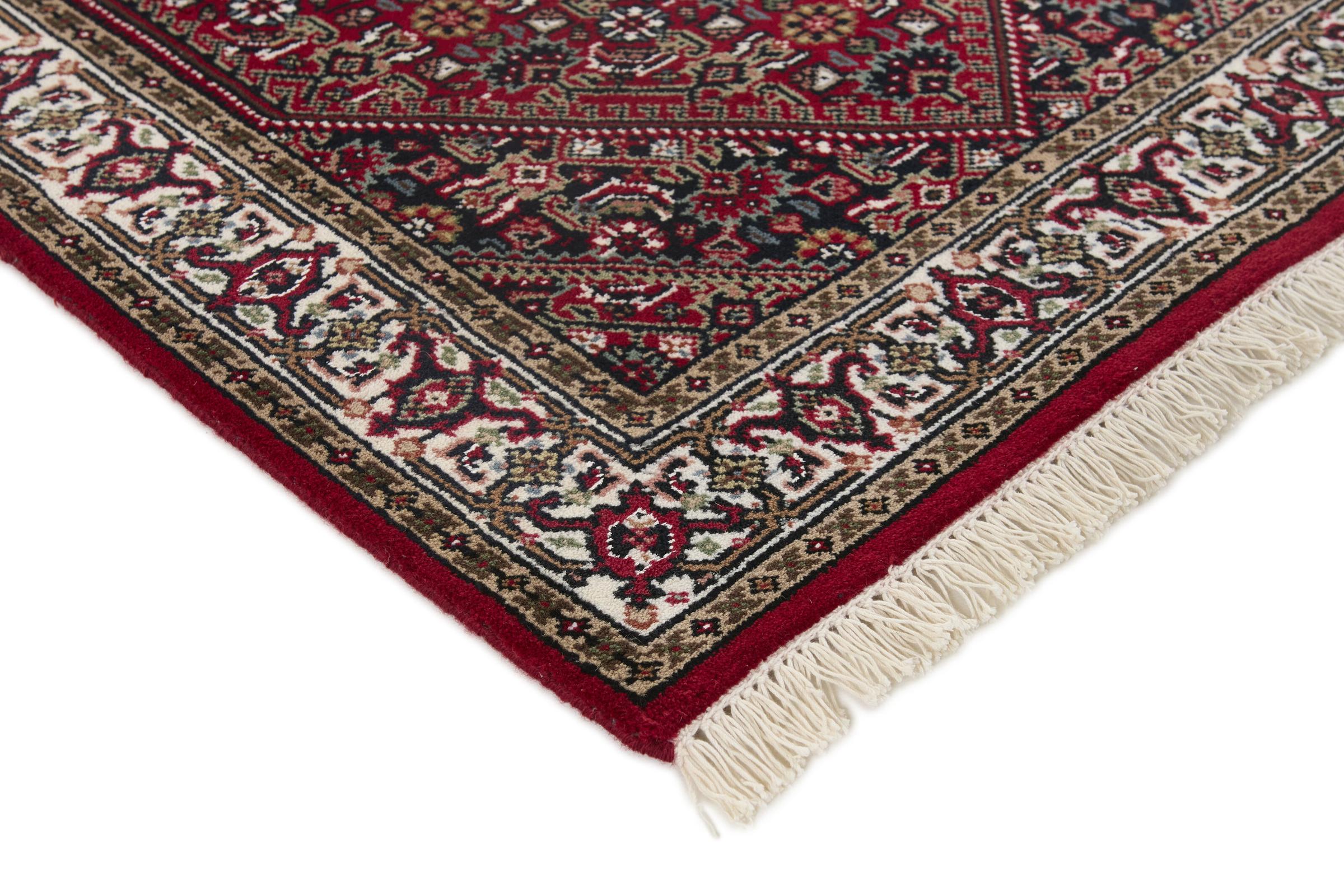
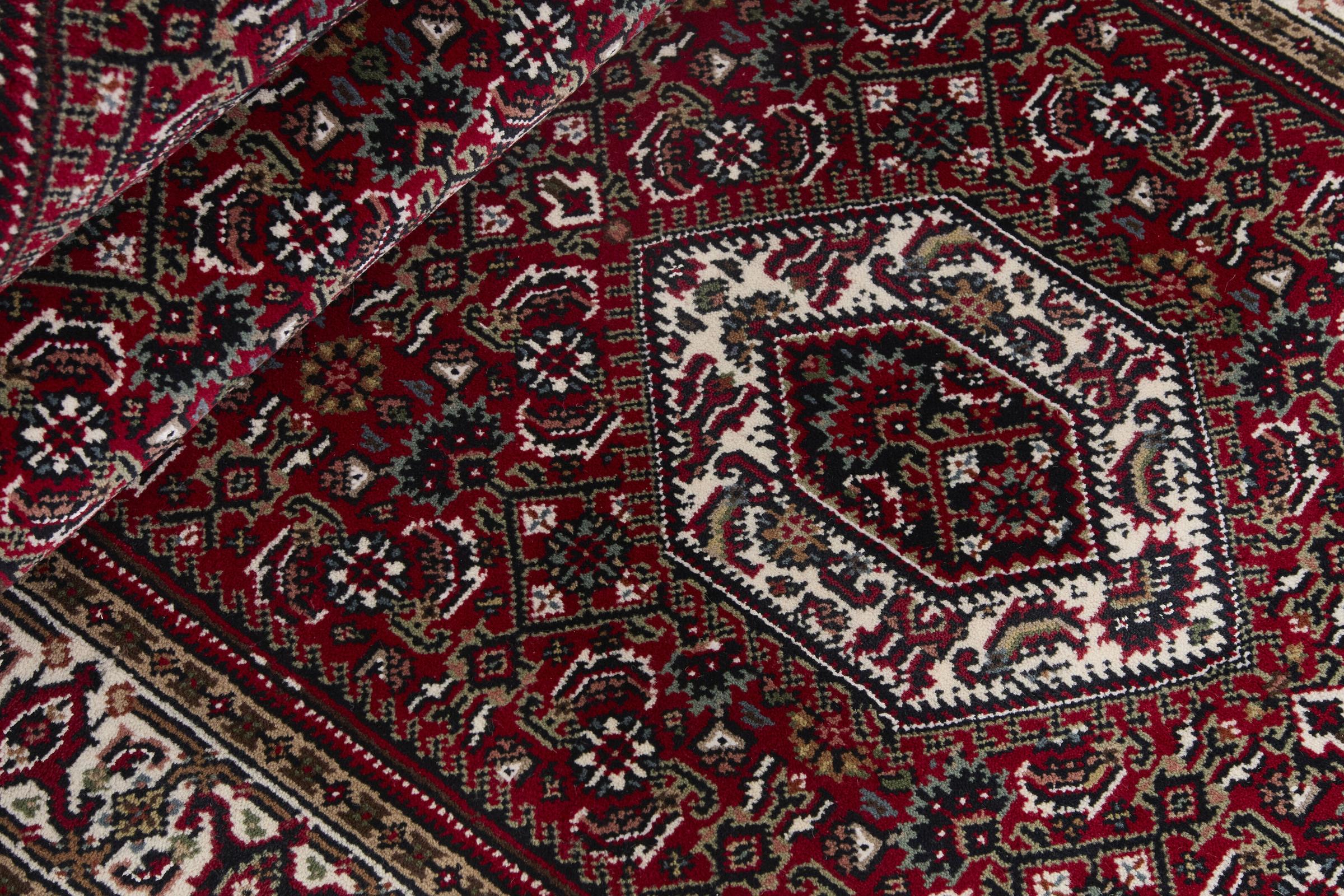
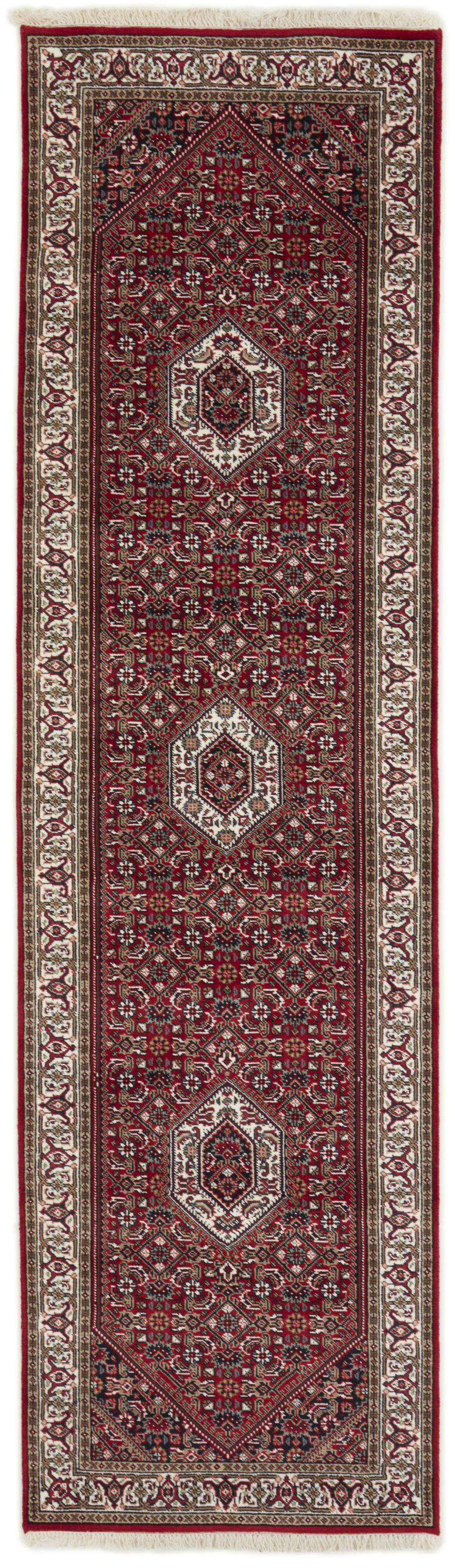
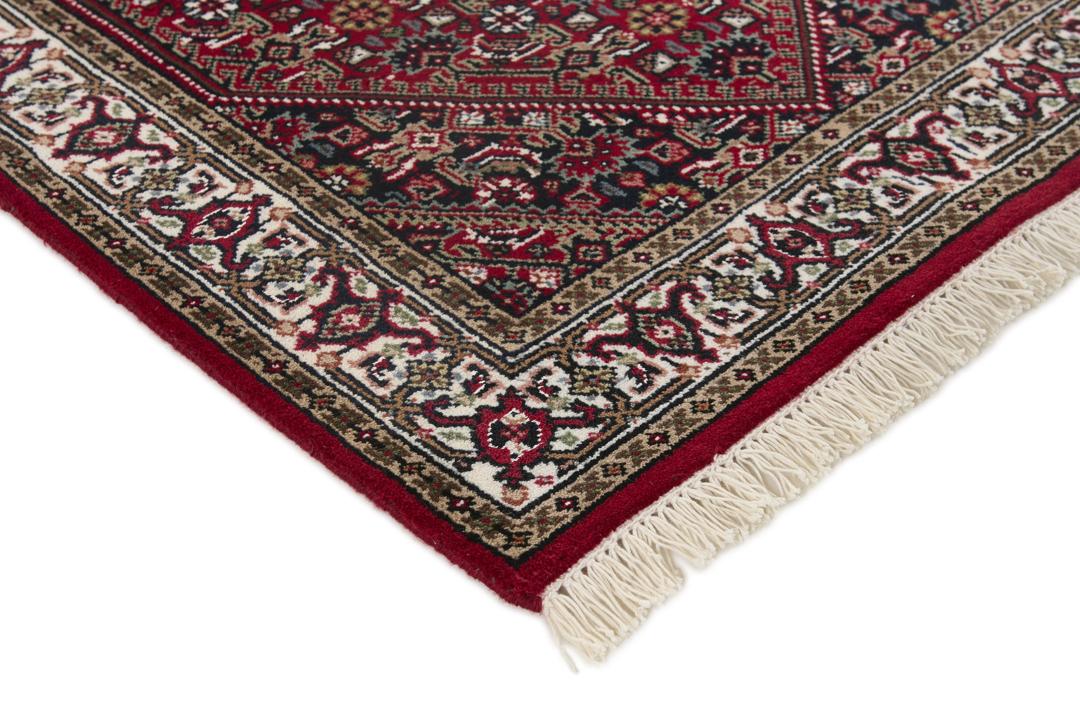
Bidjar rugs originate from the Kurdish region of the Middle East, specifically from the town of Bijar. Historically, these rugs have gained a legendary reputation for their incredible durability and strength, often earning them the nickname 'the iron rugs of the Middle East.' While the tradition began in the mountainous Kurdish areas, the influence of these designs has spread globally, leading to the creation of fine pieces in places like India where weavers continue to honour these time-honoured techniques.
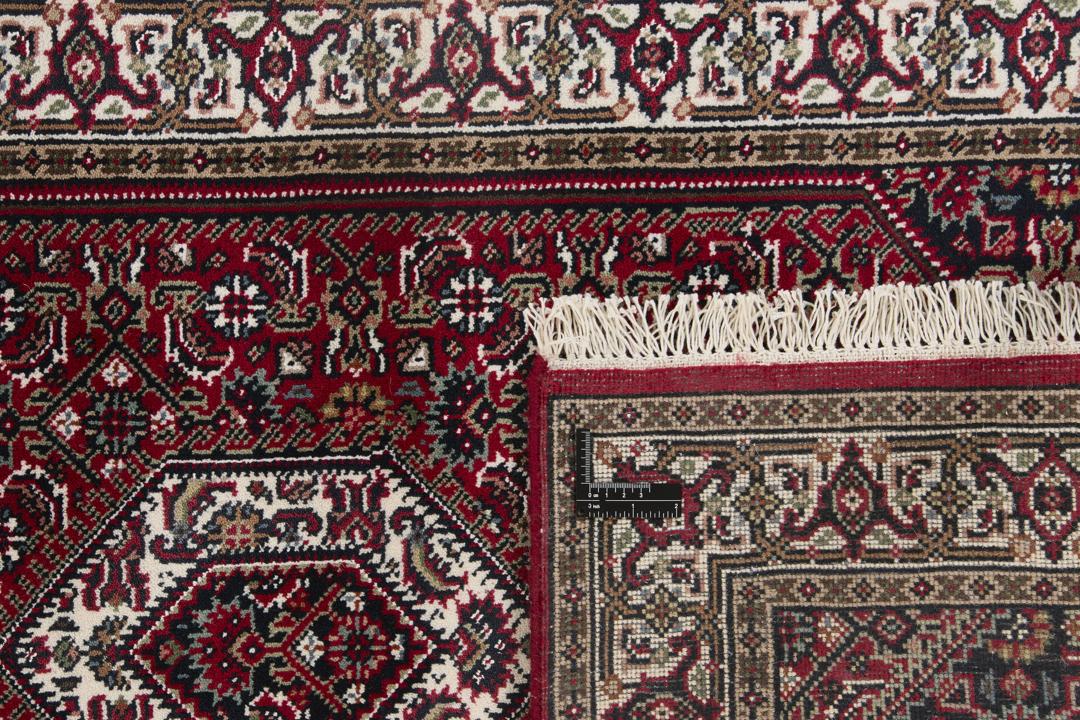
The term 'Bidjar' refers to a specific style of construction that emphasises a firm, heavy foundation. This style is characterised by the use of a unique weaving technique where the weft threads are beaten down with extreme force, creating a very dense, stiff, and heavy pile. This construction method is what gives the rugs their renowned longevity, ensuring they can withstand decades of use without losing their structural integrity.
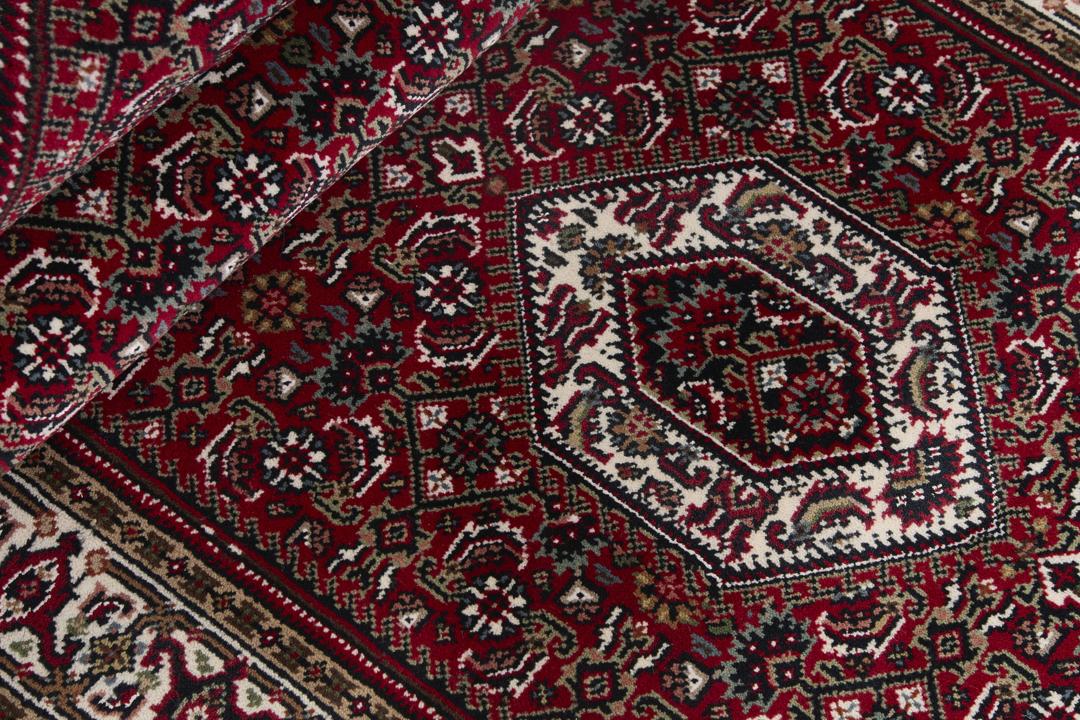
Visually, Bidjar rugs are known for their sophisticated and often intricate designs. The field is frequently adorned with a mix of floral patterns, such as the classic Herati motif or large, bold medallions that command attention. The colour palettes are typically rich and deep, often featuring strong reds, blues, and earth tones that reflect the natural dyes traditionally used in the region.
Owning a piece from this tradition is about more than just aesthetics; it is about acquiring a legacy of skill. These rugs are highly valued by collectors and homeowners alike for their ability to balance robust construction with delicate, artistic beauty. When you bring a rug of this lineage into your home, you are connecting with a centuries-old craft that continues to be celebrated for its resilience and cultural depth.