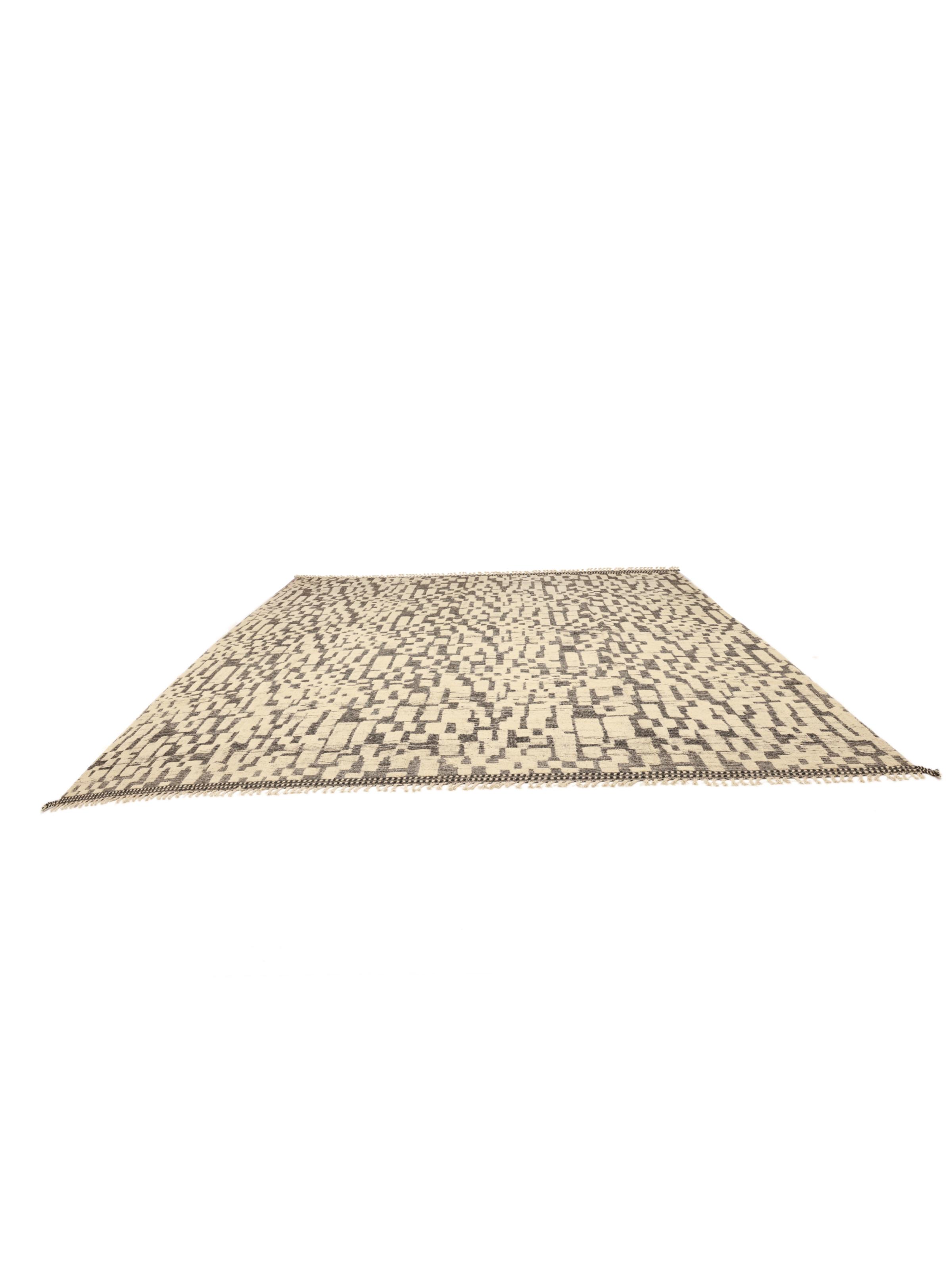
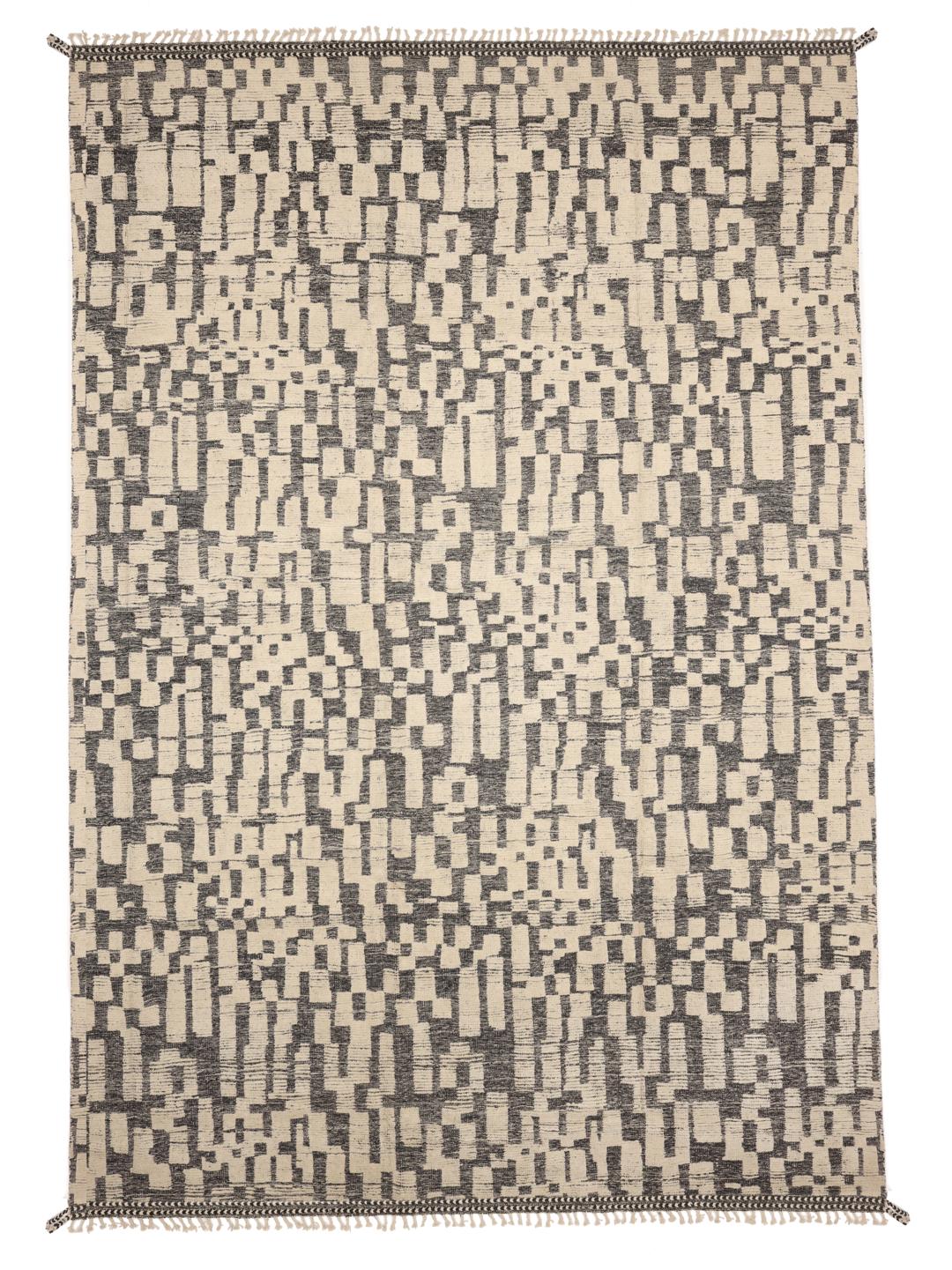
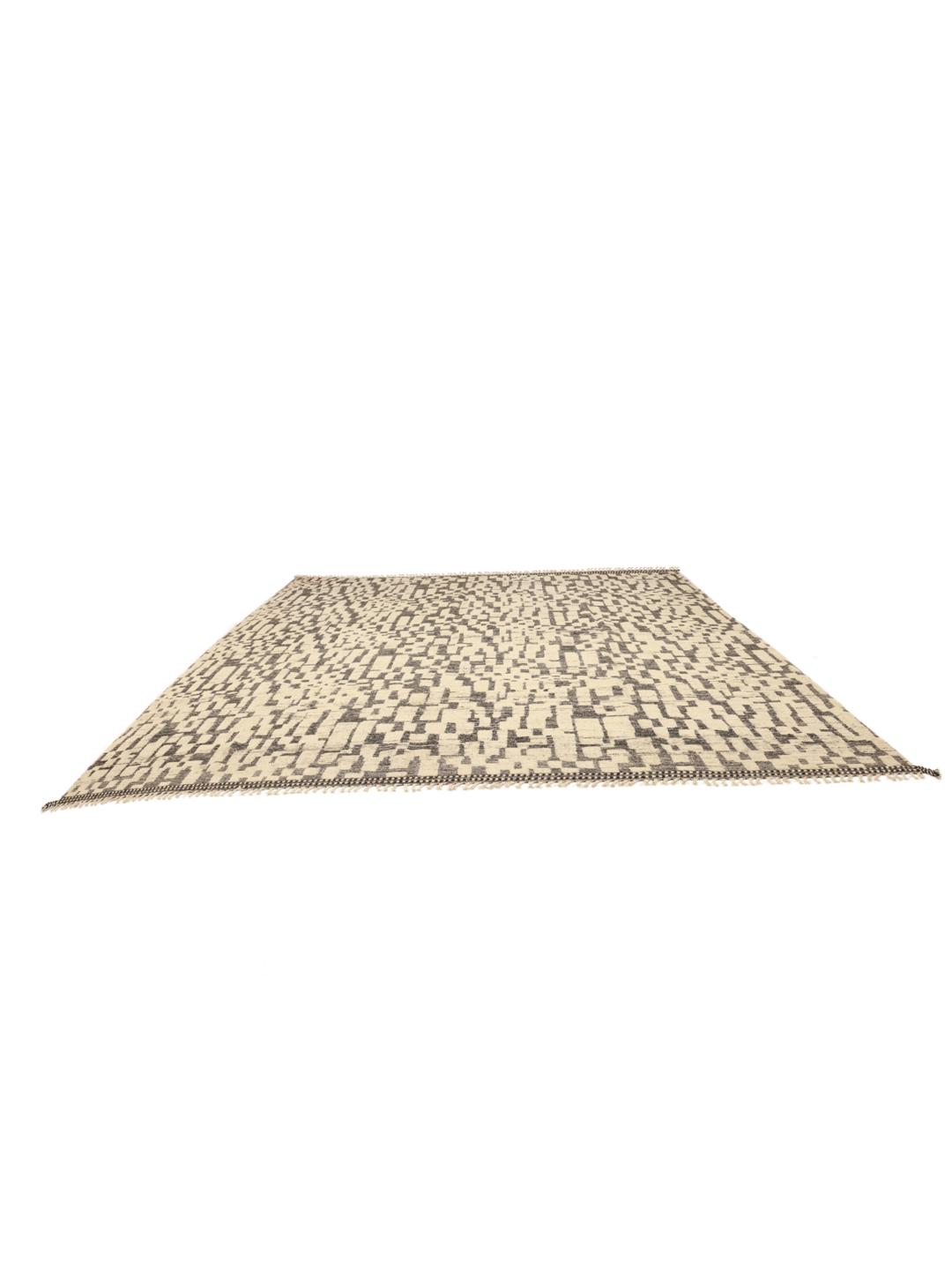
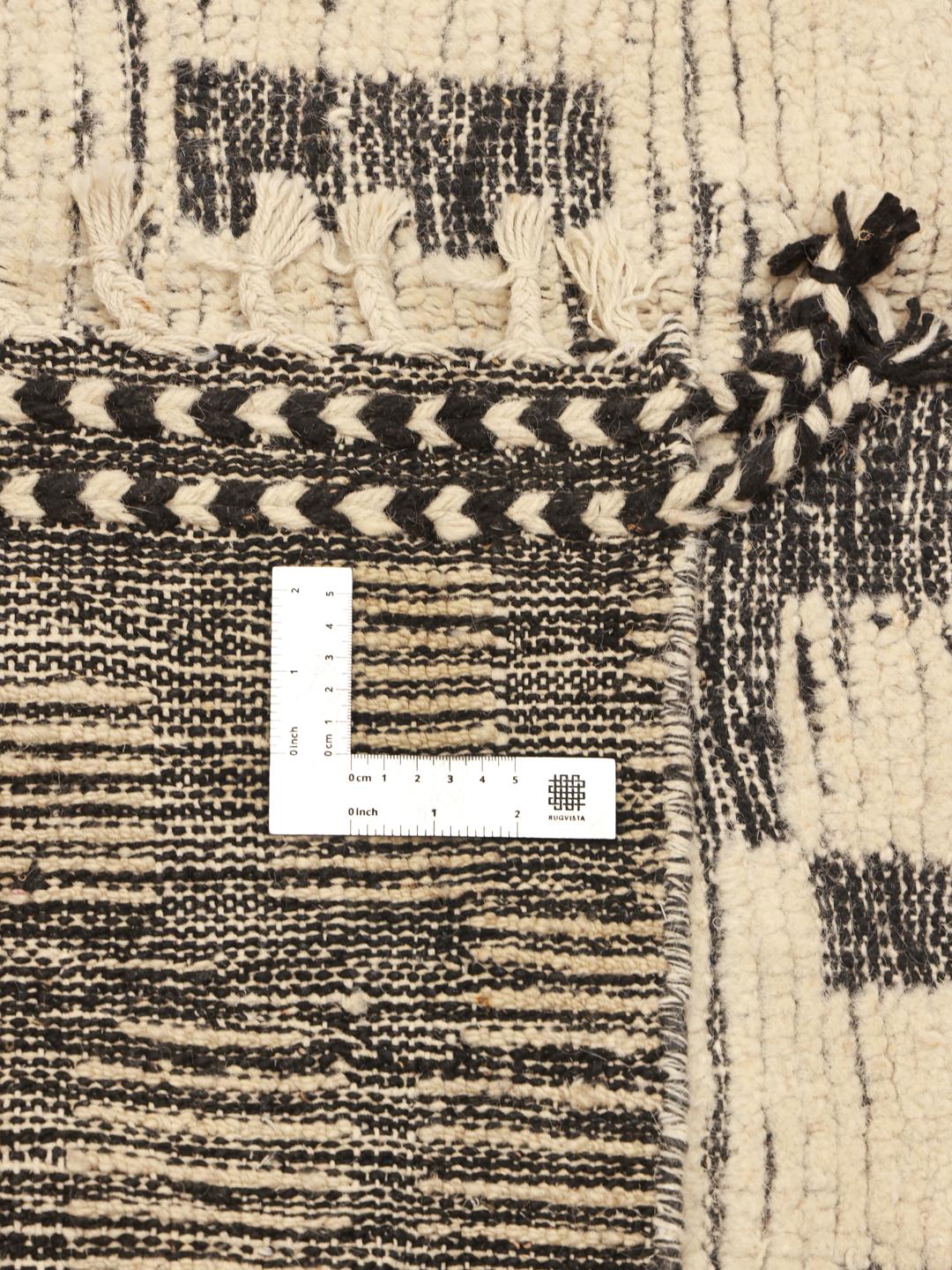
The Berber tradition has long influenced interior design, originating from the nomadic tribes of North Africa, yet its aesthetic has been adapted and reinterpreted by master weavers across the Middle East. Rugs from this tradition are celebrated for their focus on natural materials and symbolic, often abstract, geometric motifs.
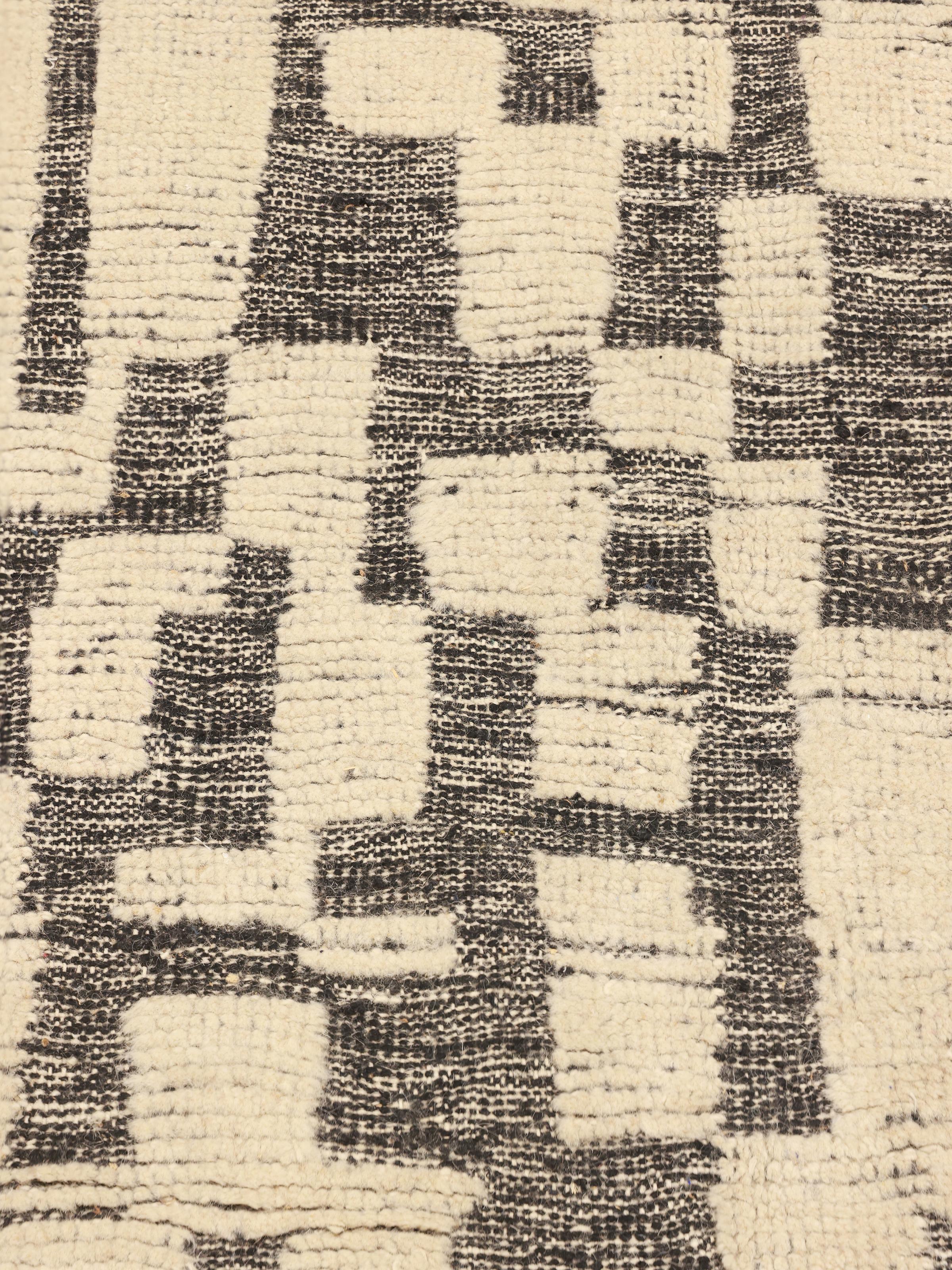
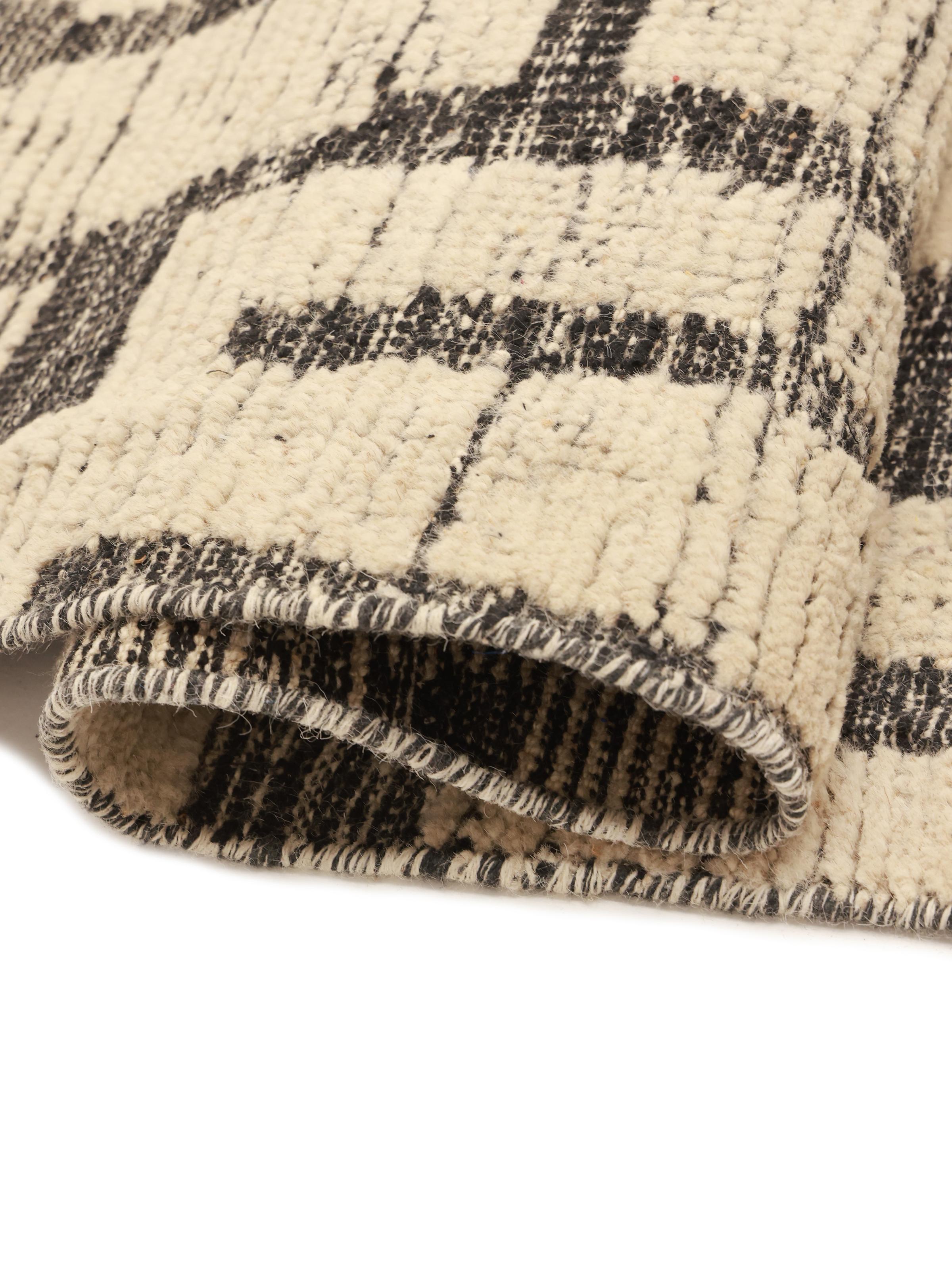
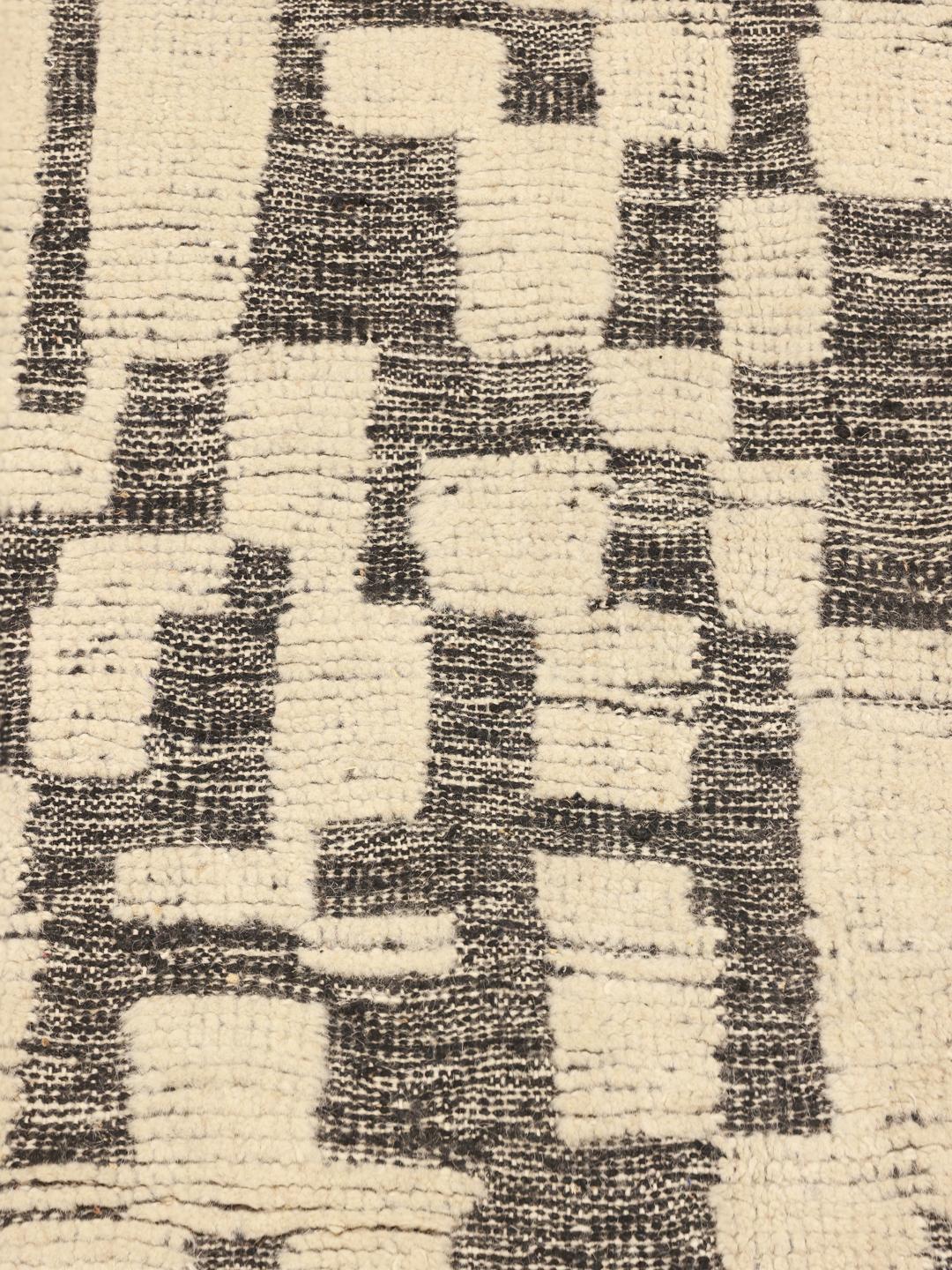
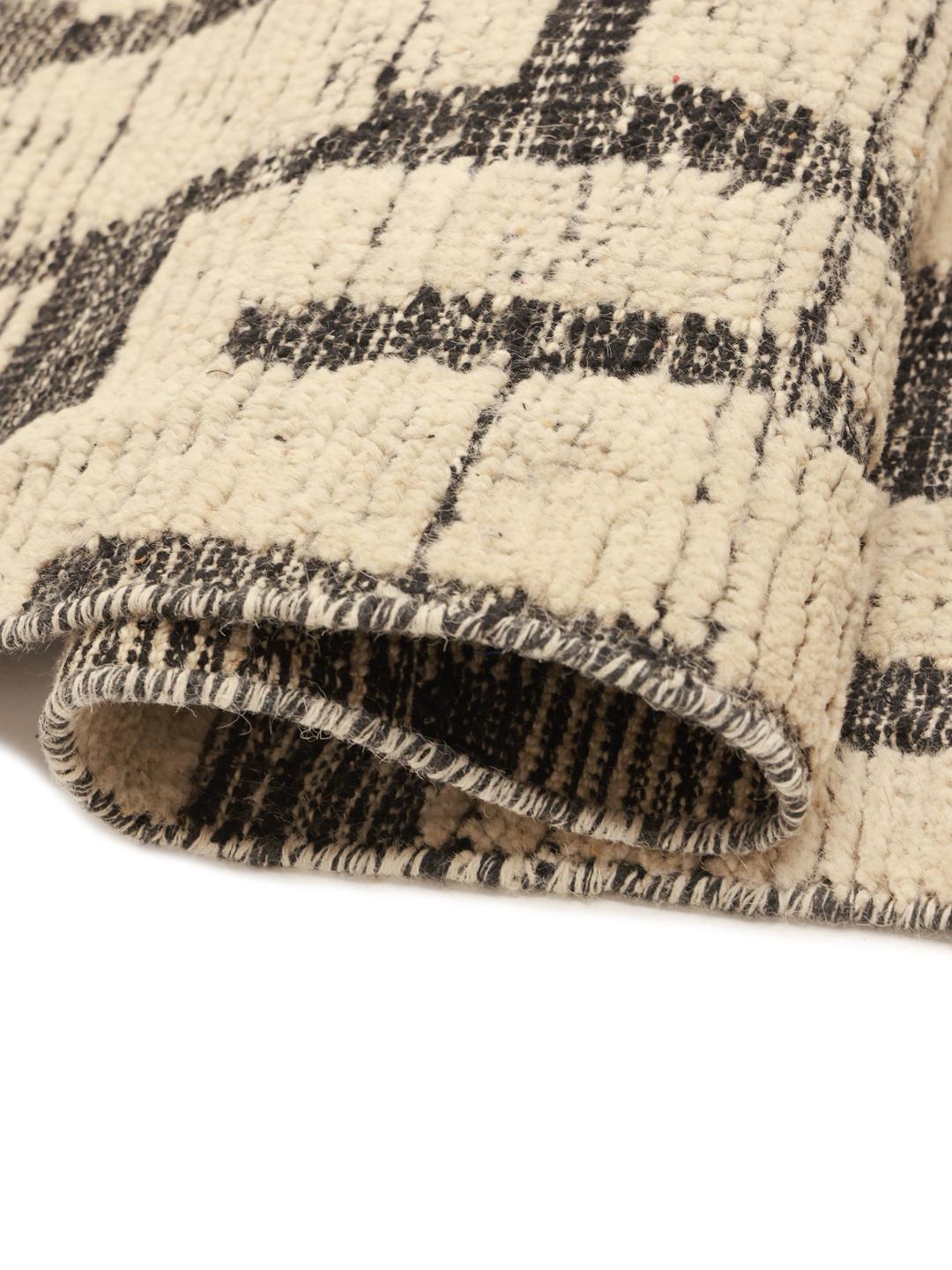
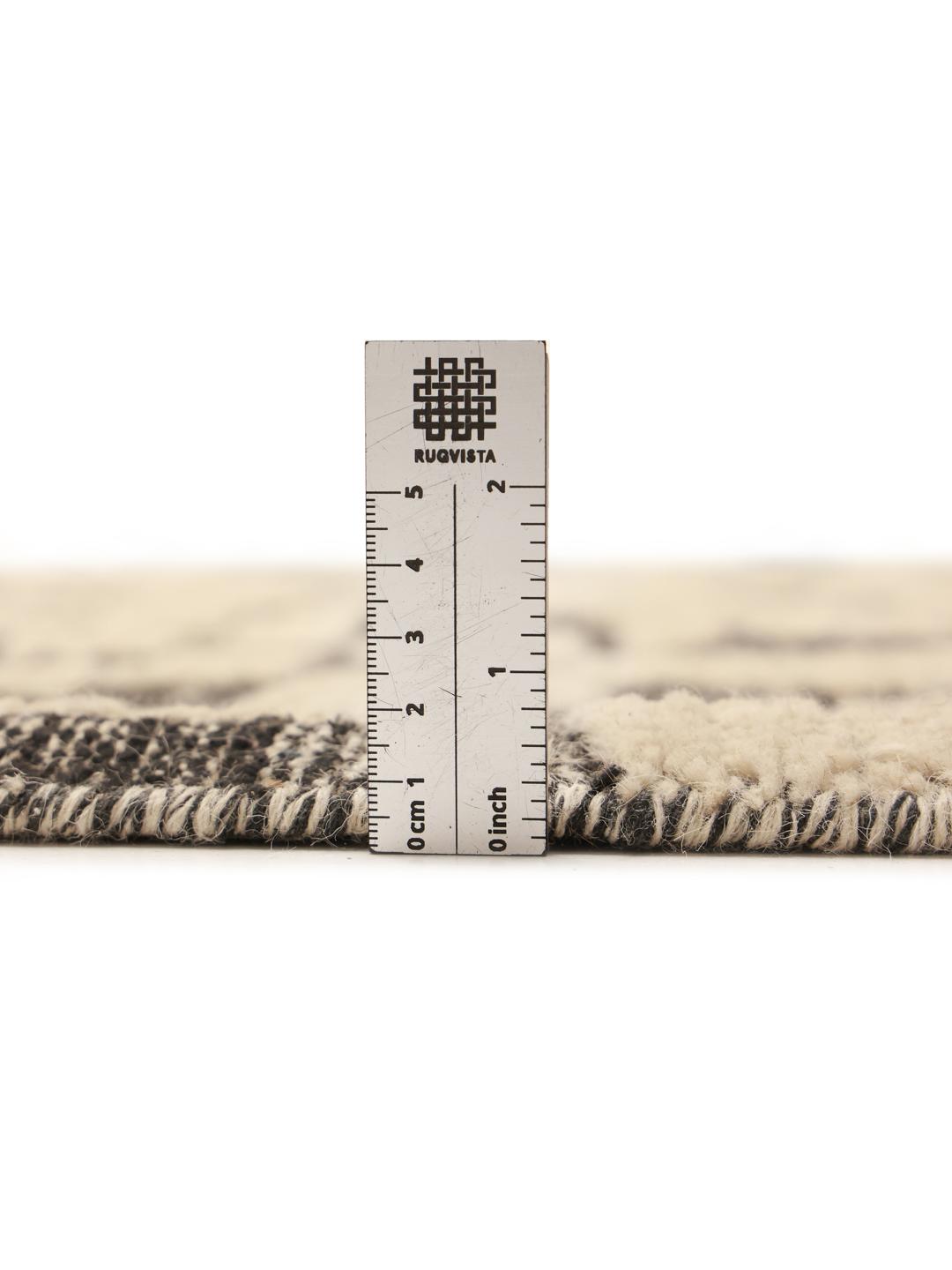
When weaving techniques migrate, they often integrate local influences, resulting in the distinct Afghan interpretation seen here. These rugs are known for their thick, plush pile, which was historically designed to provide insulation against the cold floors of traditional dwellings, a functional benefit that remains highly valued in contemporary homes today.
The design language of these rugs often features bold, repeating geometric forms or simplified motifs that carry deep cultural significance. In this particular piece, the interplay of shapes creates a rhythmic, visual balance that feels both ancient and contemporary, showcasing the weaver's ability to blend heritage designs with modern sensibilities.
Collectors value these pieces not only for their visual impact but for the skill and heritage they represent. Acquiring such a rug is an investment in human artistry, preserving the legacy of traditional weaving methods while bringing a sense of history and warmth into the modern home.