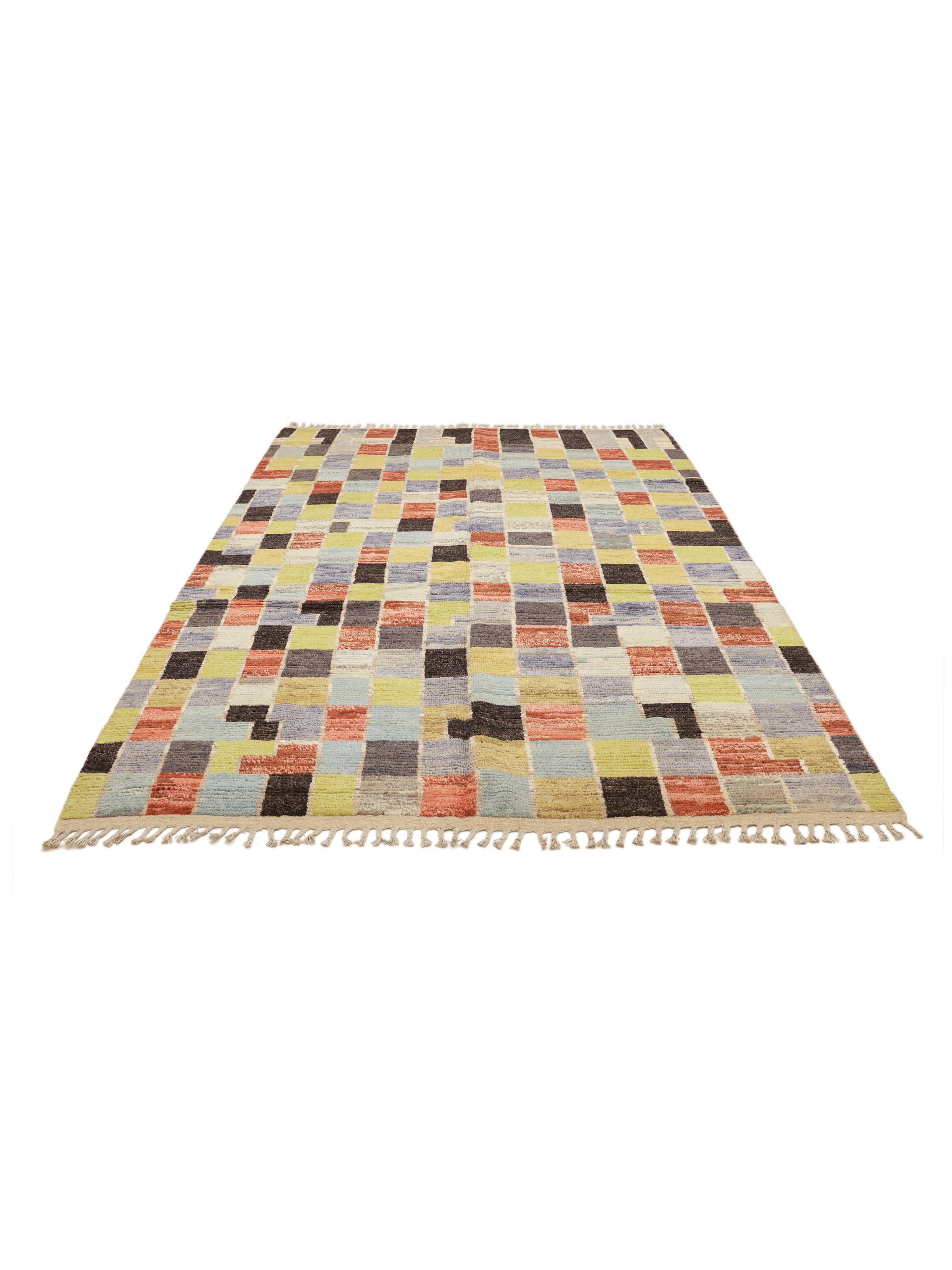
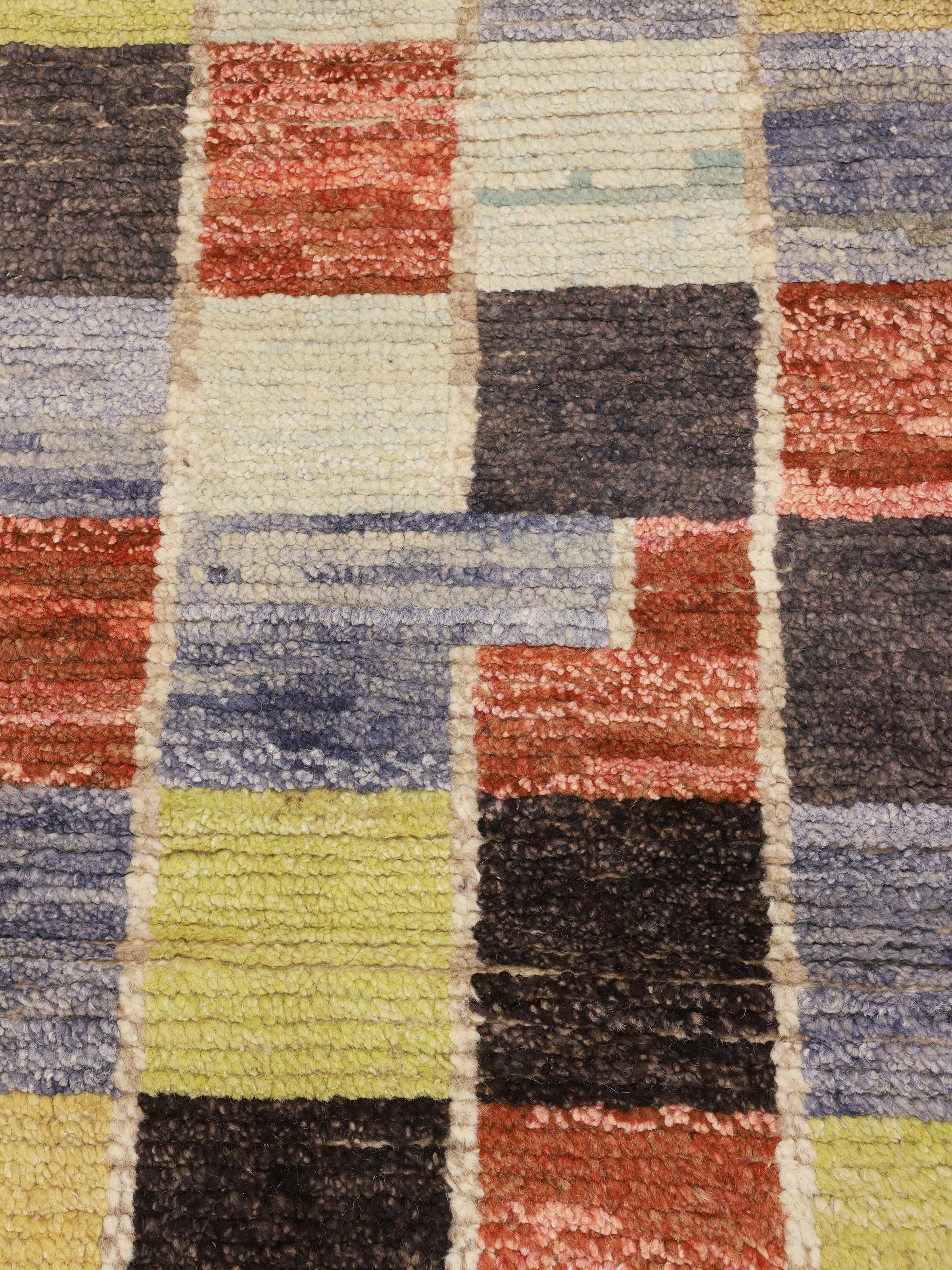
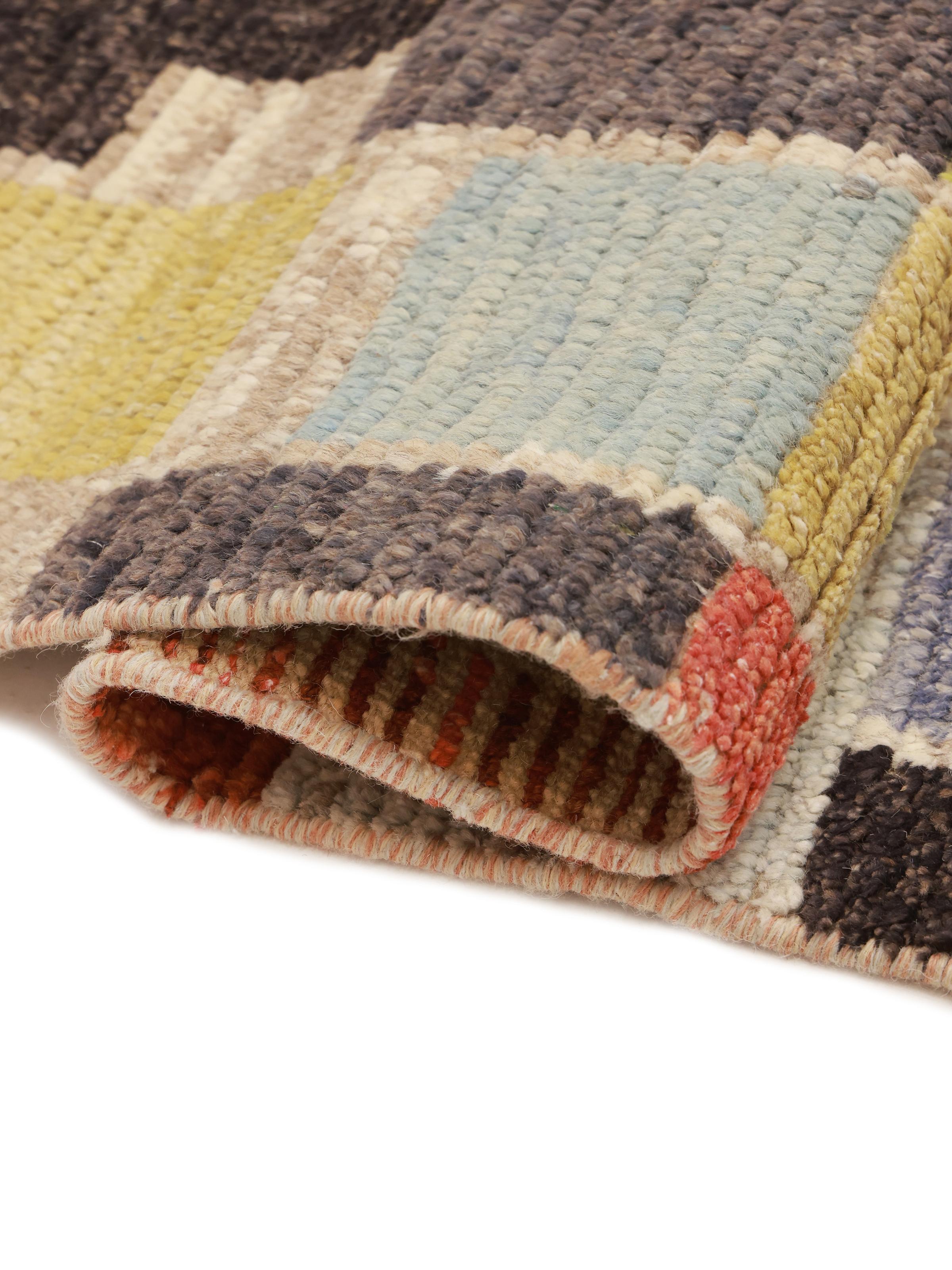
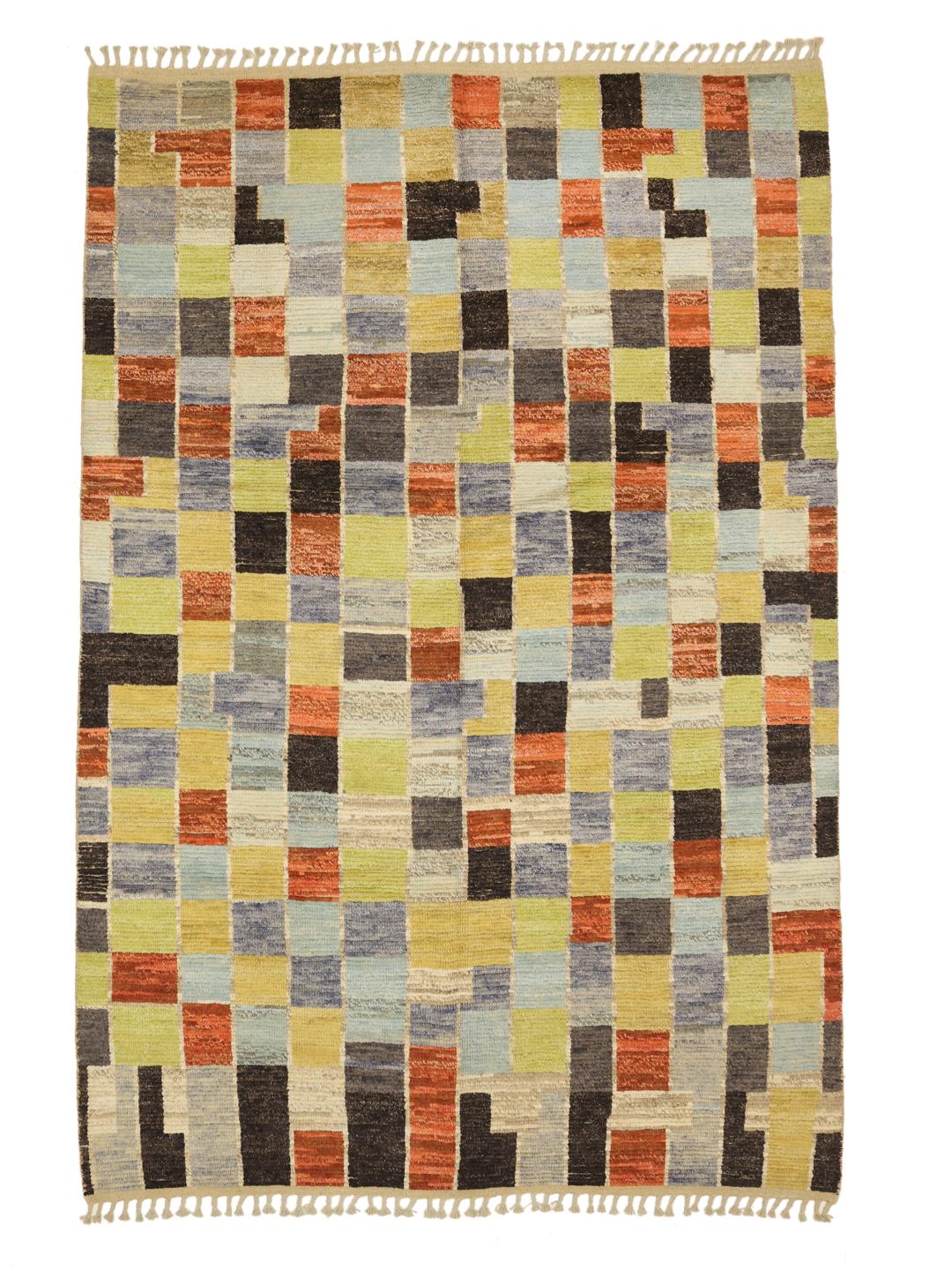
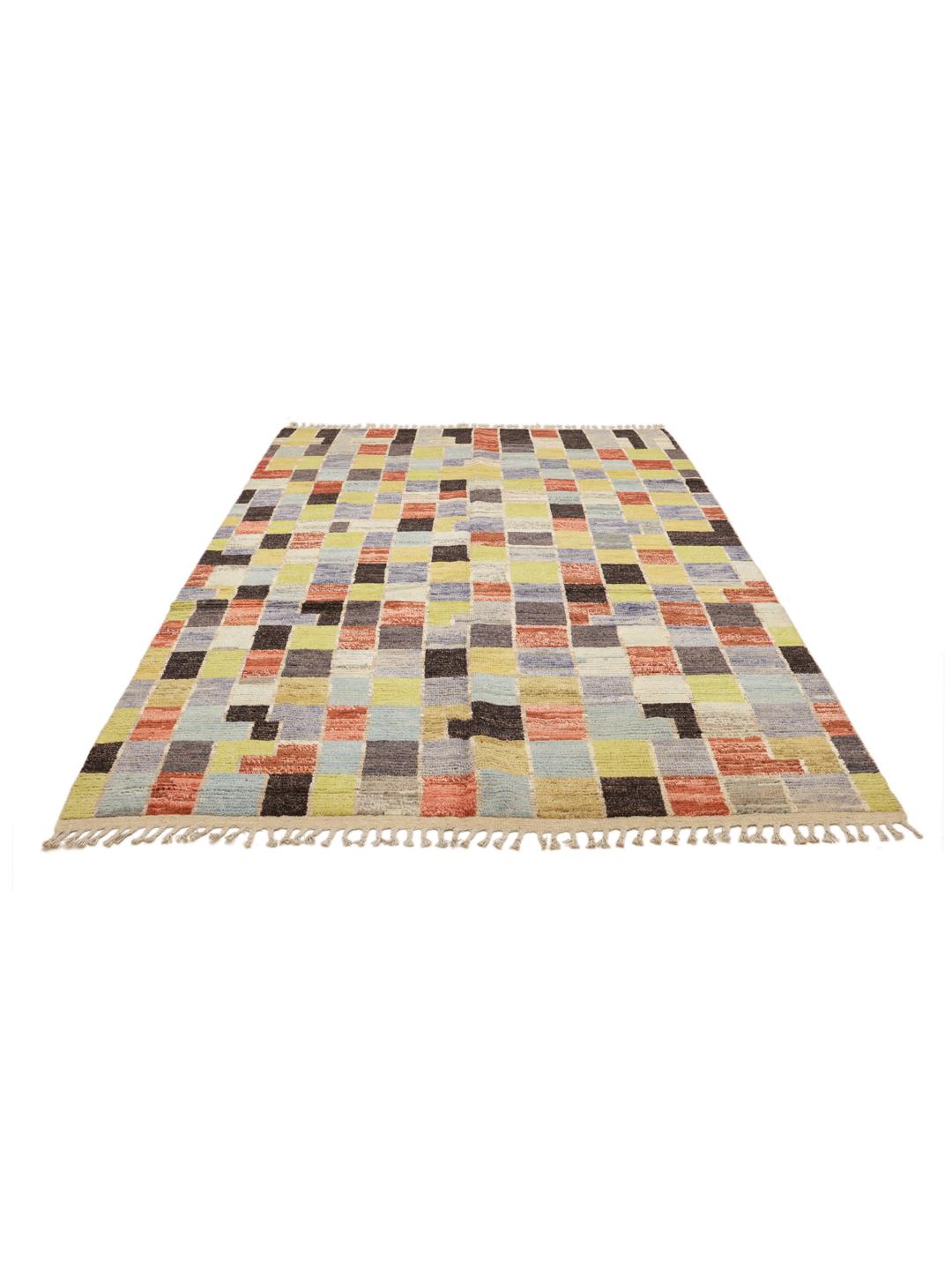
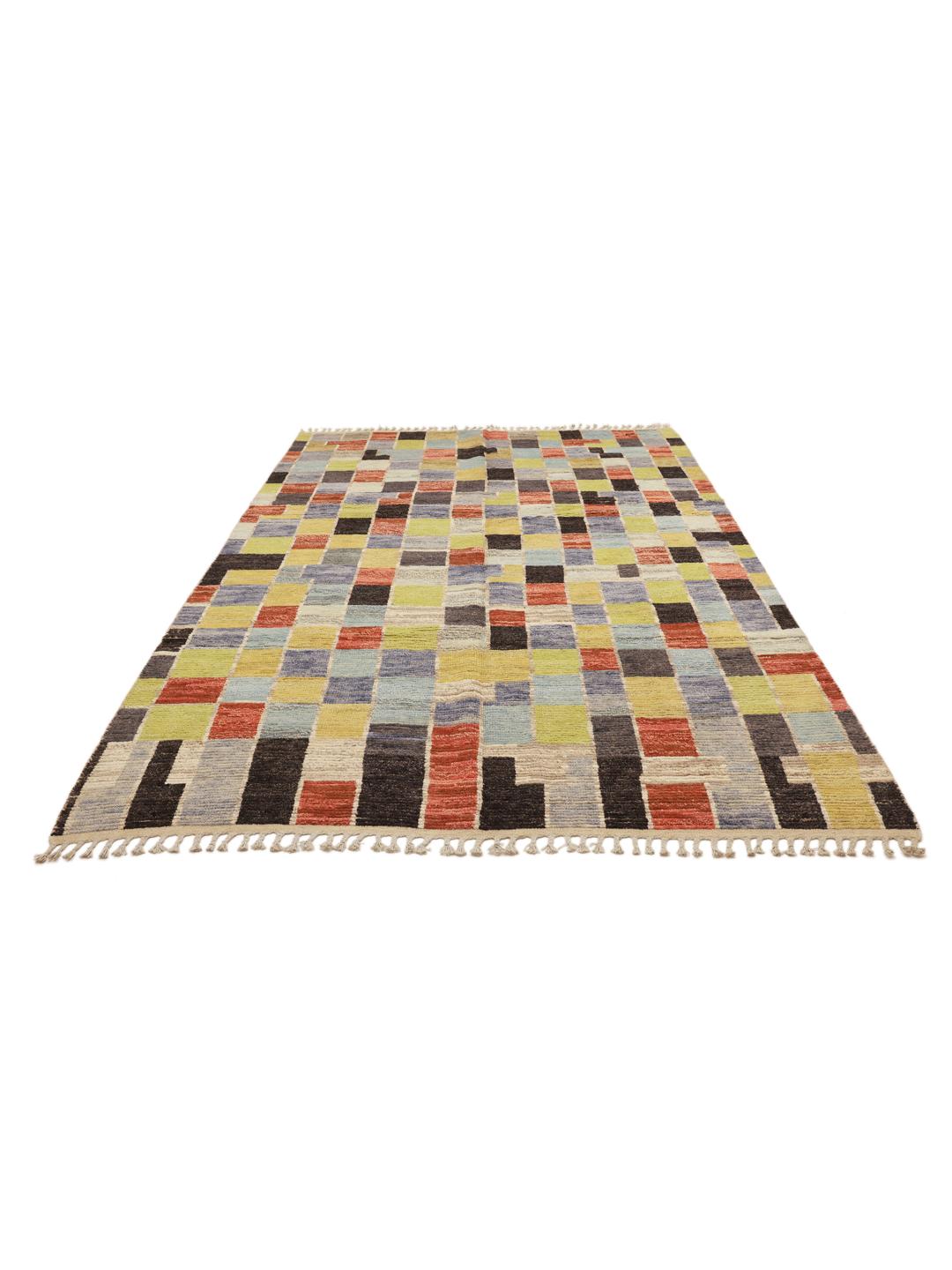
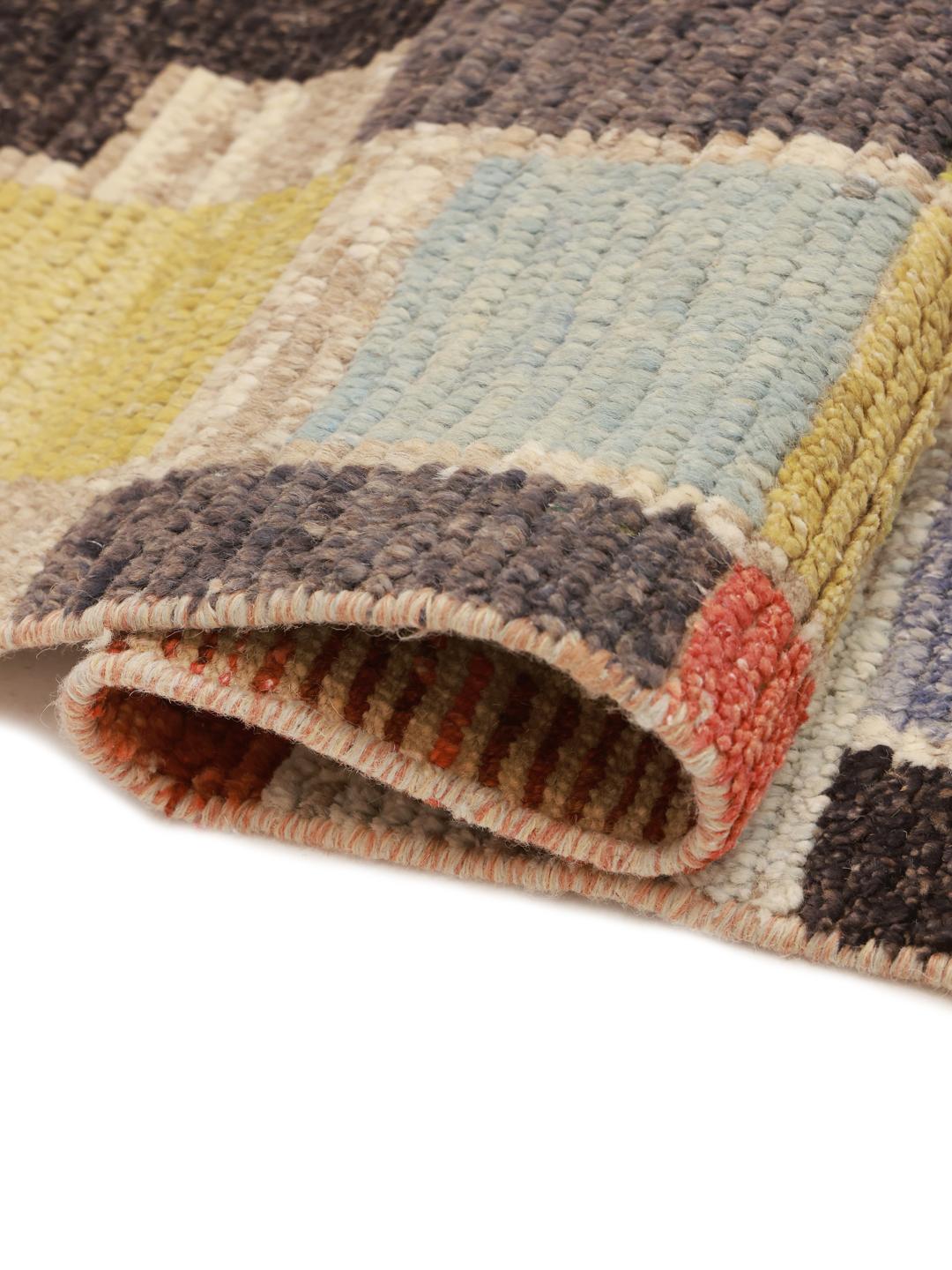
Berber-inspired rugs trace their origins back to the tribal weaving traditions of North Africa, where they were traditionally crafted by indigenous communities for both functional and spiritual purposes. These rugs were prized for their thick, warm pile and were often used as blankets or floor coverings in harsh climates.
Over the decades, the aesthetic of these rugs has travelled far beyond their original geography, influencing weaving traditions in other regions, including Afghanistan. Today, Afghan artisans have adopted and reinterpreted these traditional designs, blending their own local techniques with the iconic, minimalist, and geometric spirit of the original Berber style.
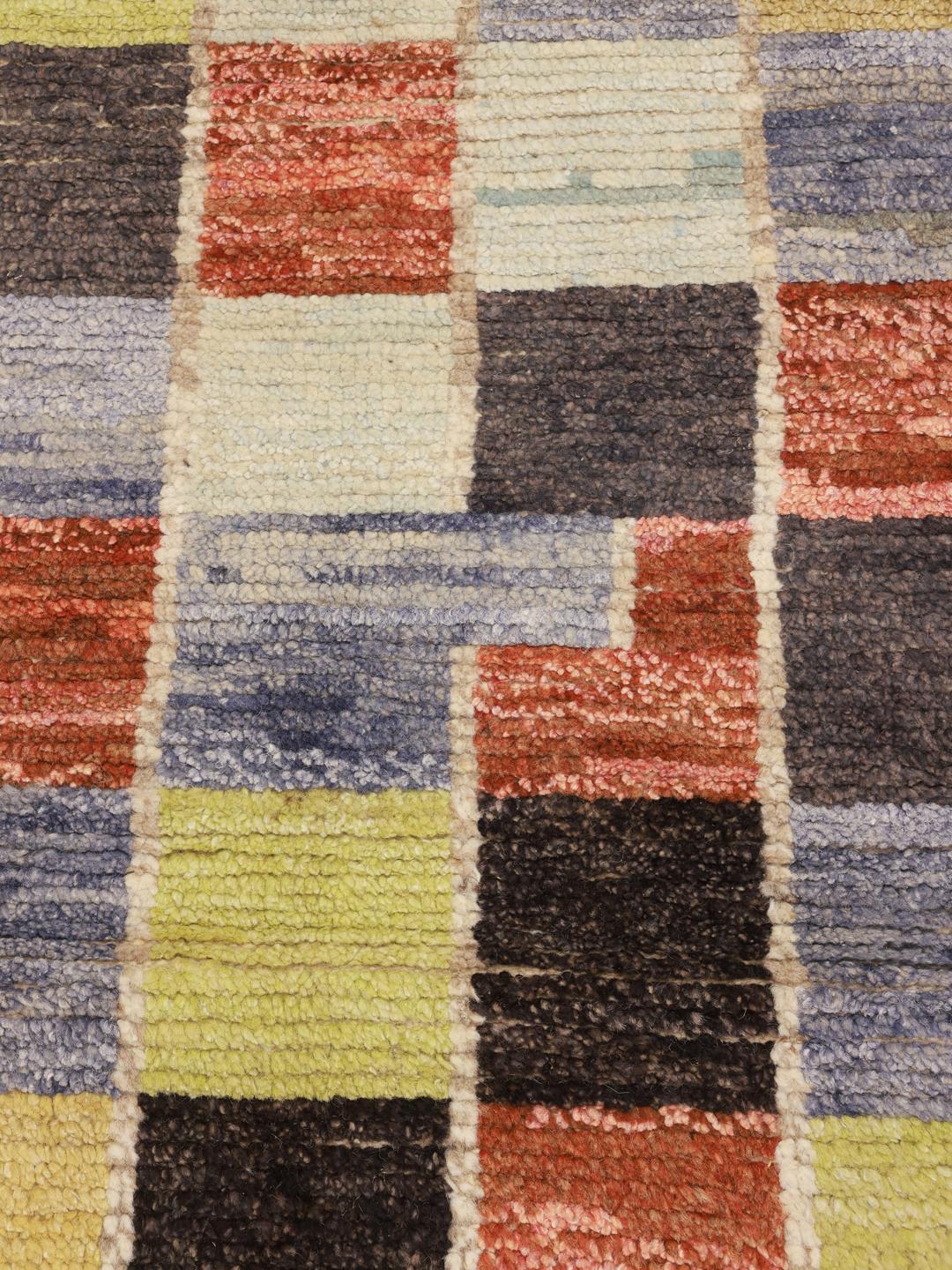
The signature design language of these rugs is defined by a focus on geometric motifs and an emphasis on texture over overly complex imagery. While traditional Berber rugs often featured monochromatic or neutral palettes, contemporary versions from Afghanistan often introduce vibrant, varied colours that modernise the traditional look, making them highly versatile for modern interiors.
Owning a hand-knotted rug from this tradition is an investment in cultural heritage and skilled craftsmanship. These rugs are not merely decorative but are valued as durable, lasting pieces that tell a story of regional adaptation and artistic evolution, offering collectors a chance to enjoy a unique intersection of history and modern design.