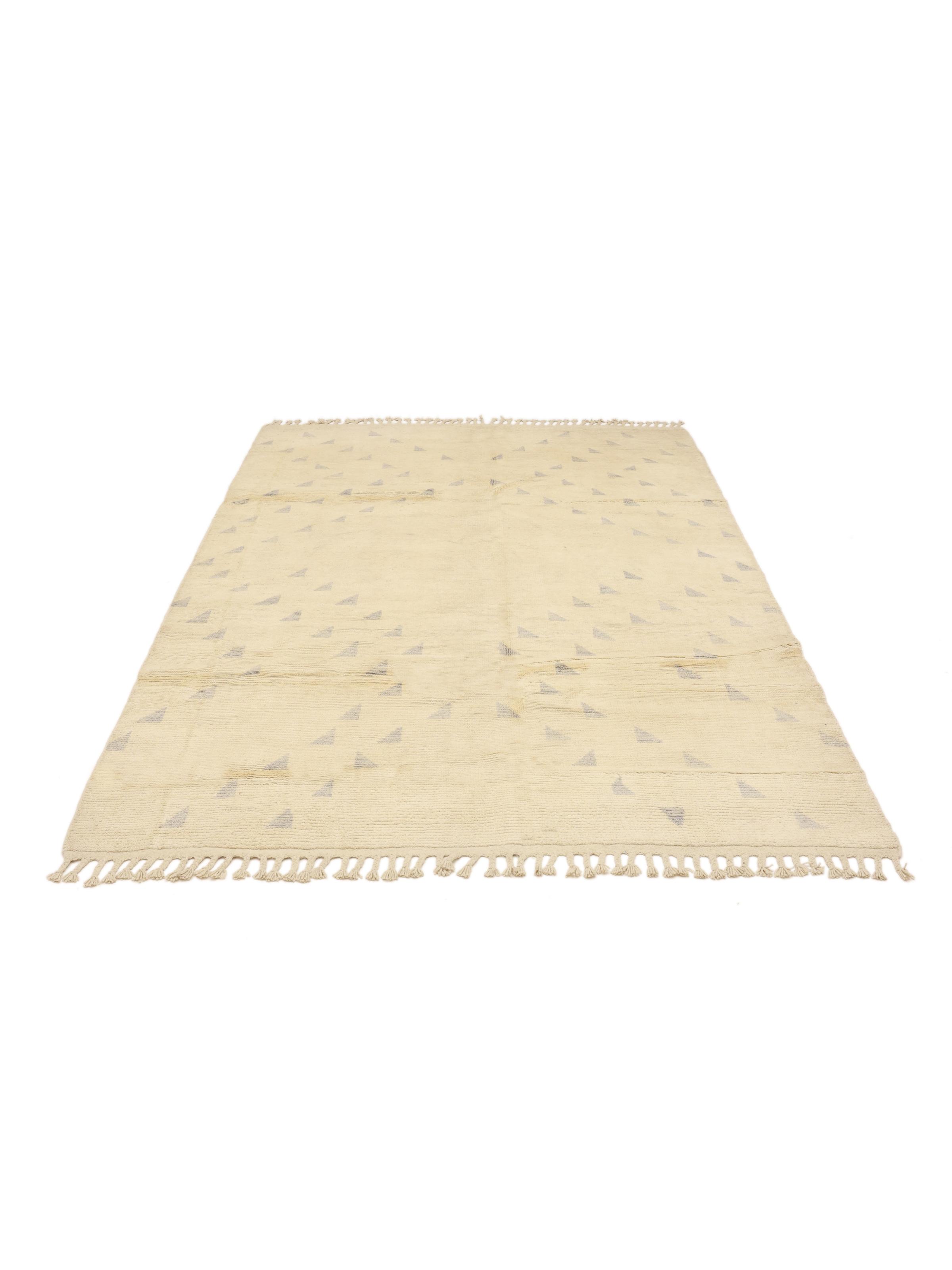
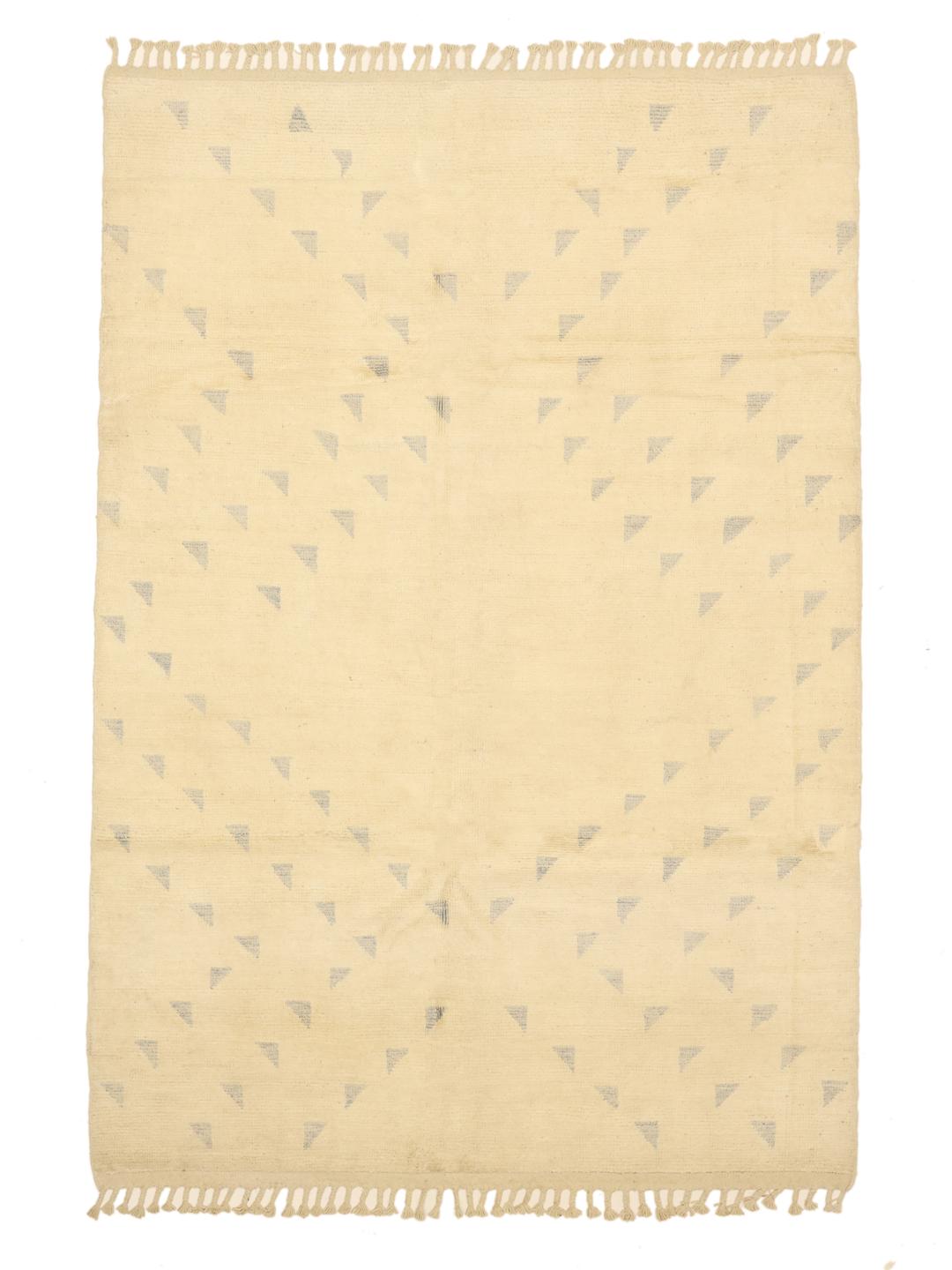
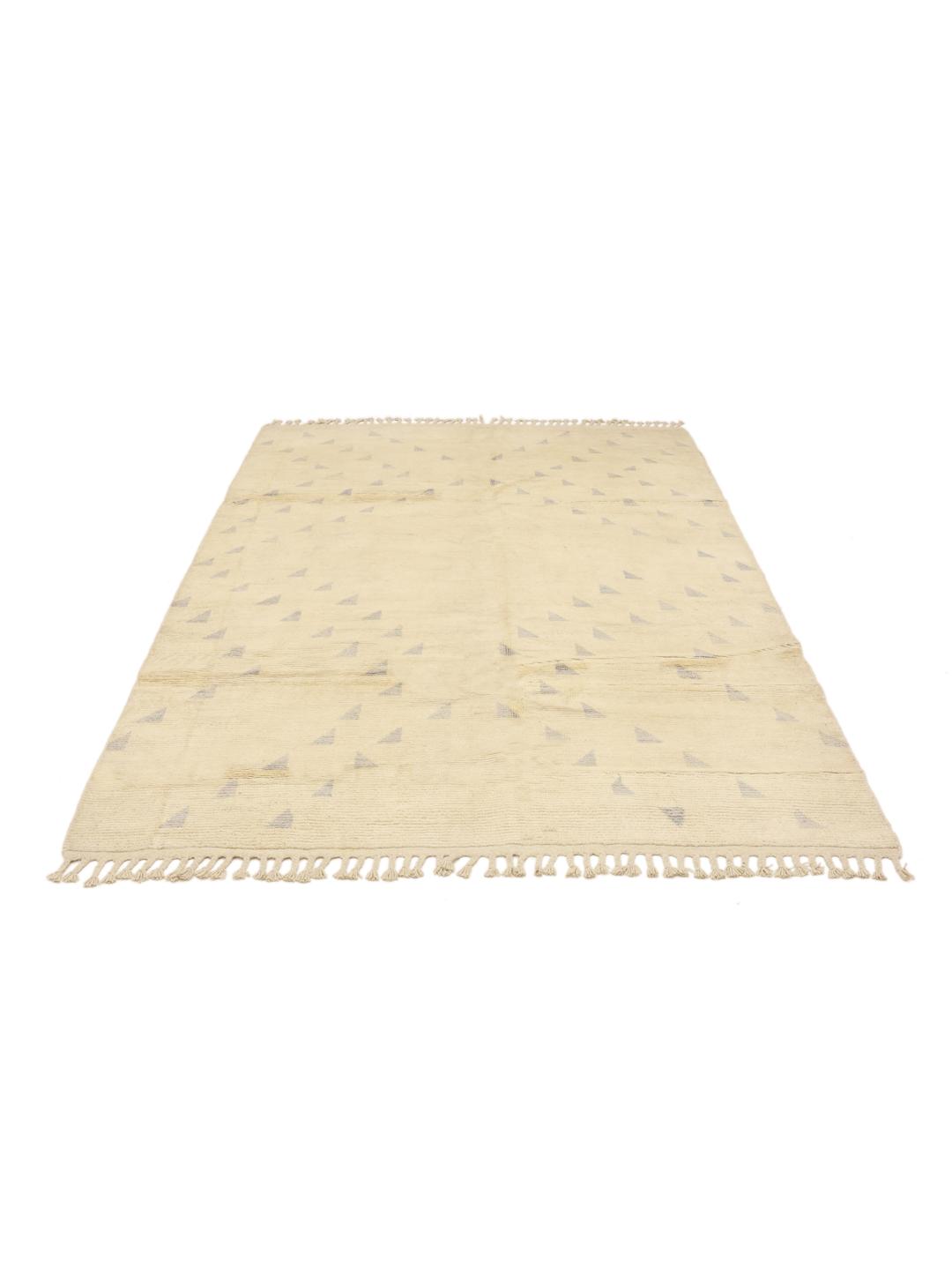
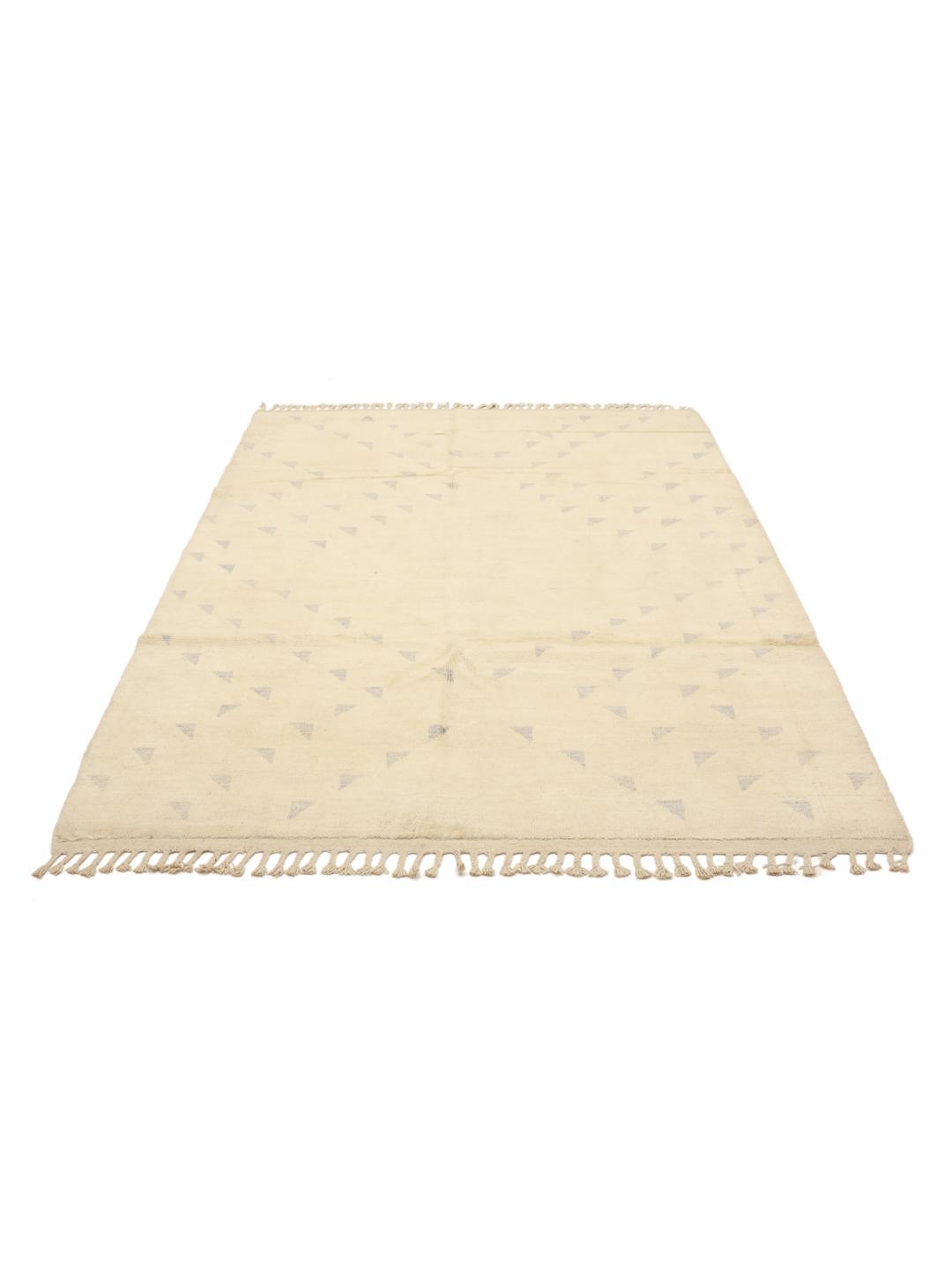
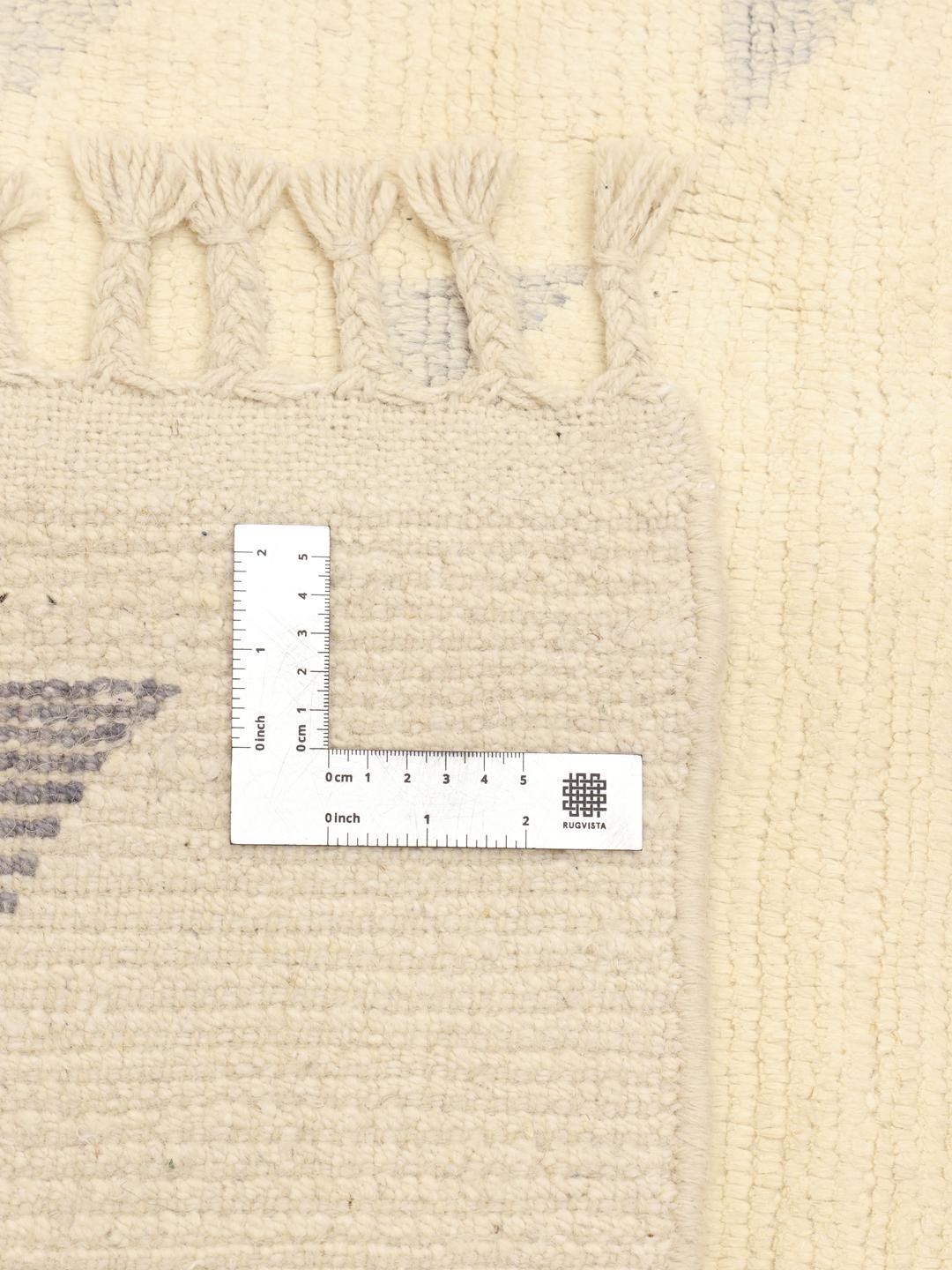
Berber-style rugs are inspired by the ancient weaving traditions of the indigenous people of North Africa, who have crafted textiles for centuries using methods passed down through generations. While rooted in these historic origins, the style has evolved and been embraced by weavers in regions like the Middle East, where local artisans have adapted the aesthetic to reflect their own regional expertise and materials.
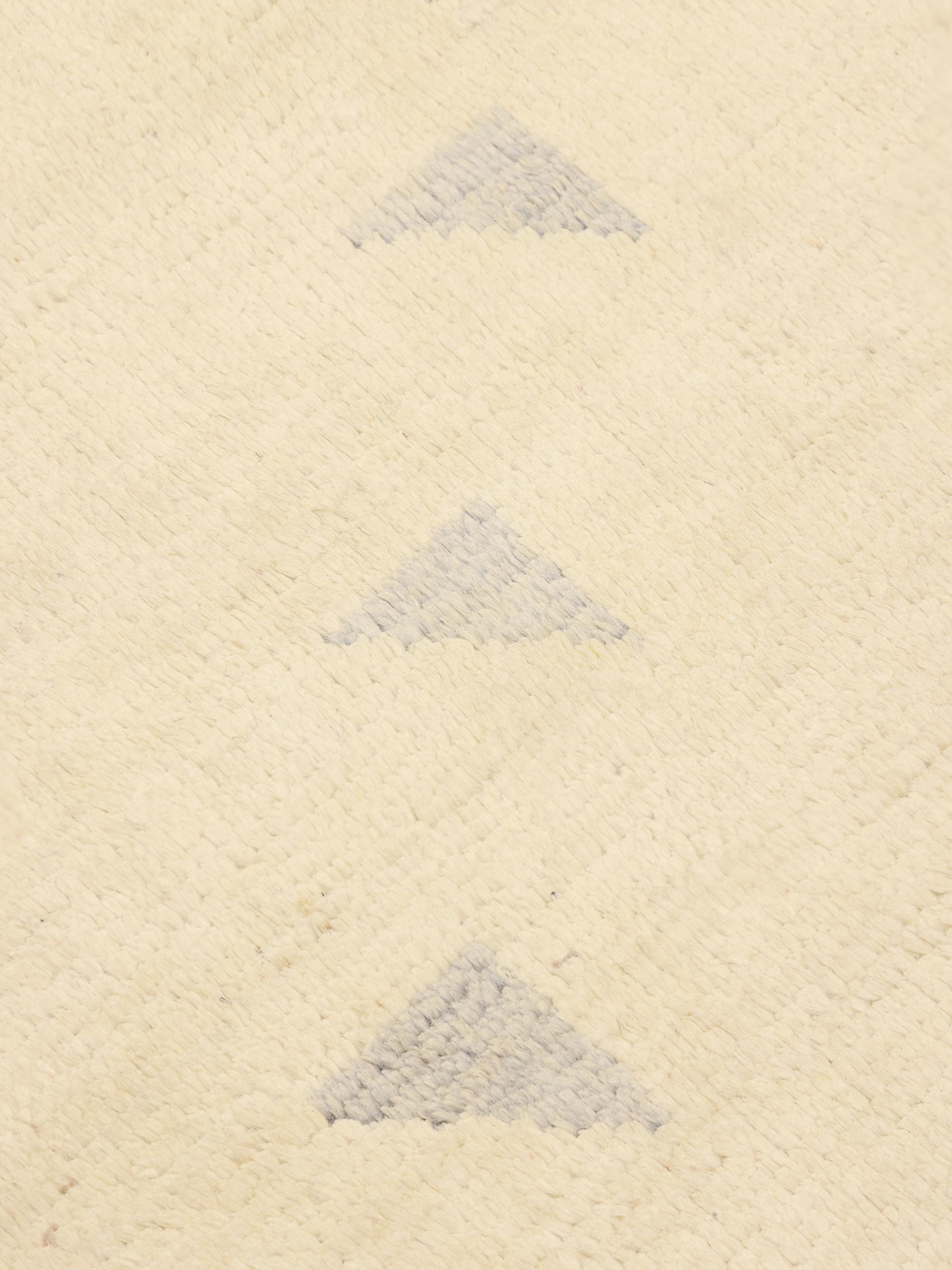
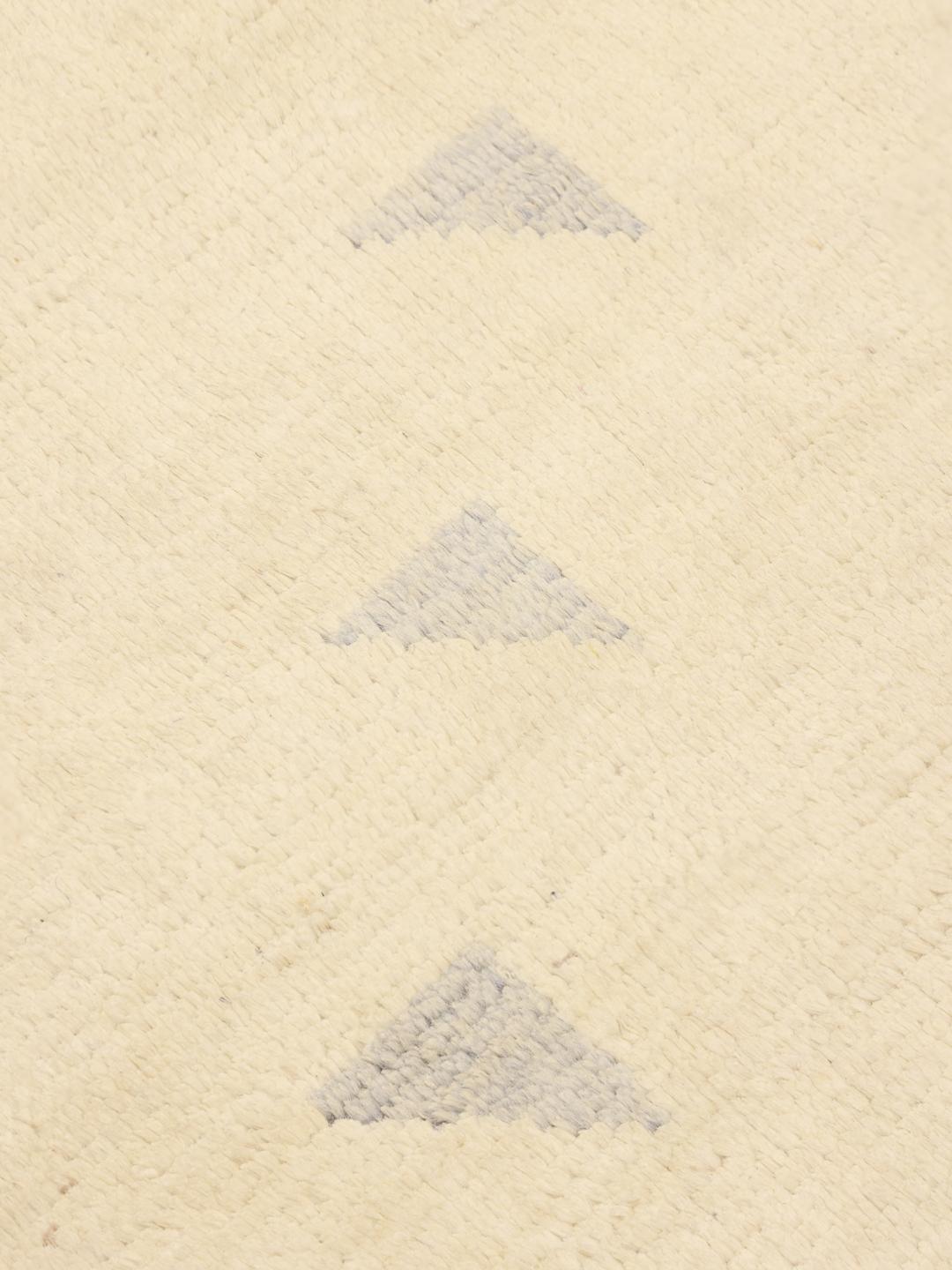
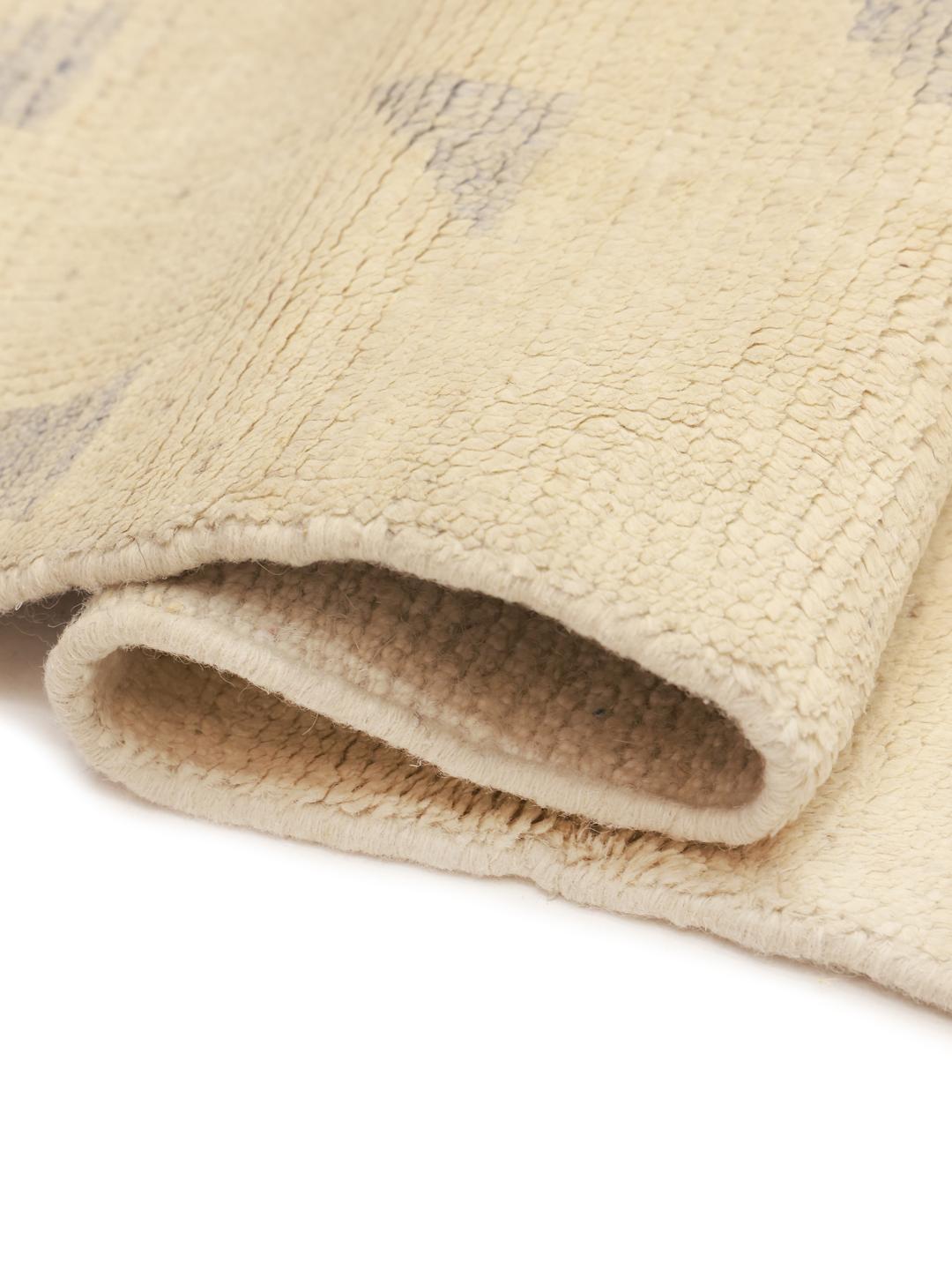
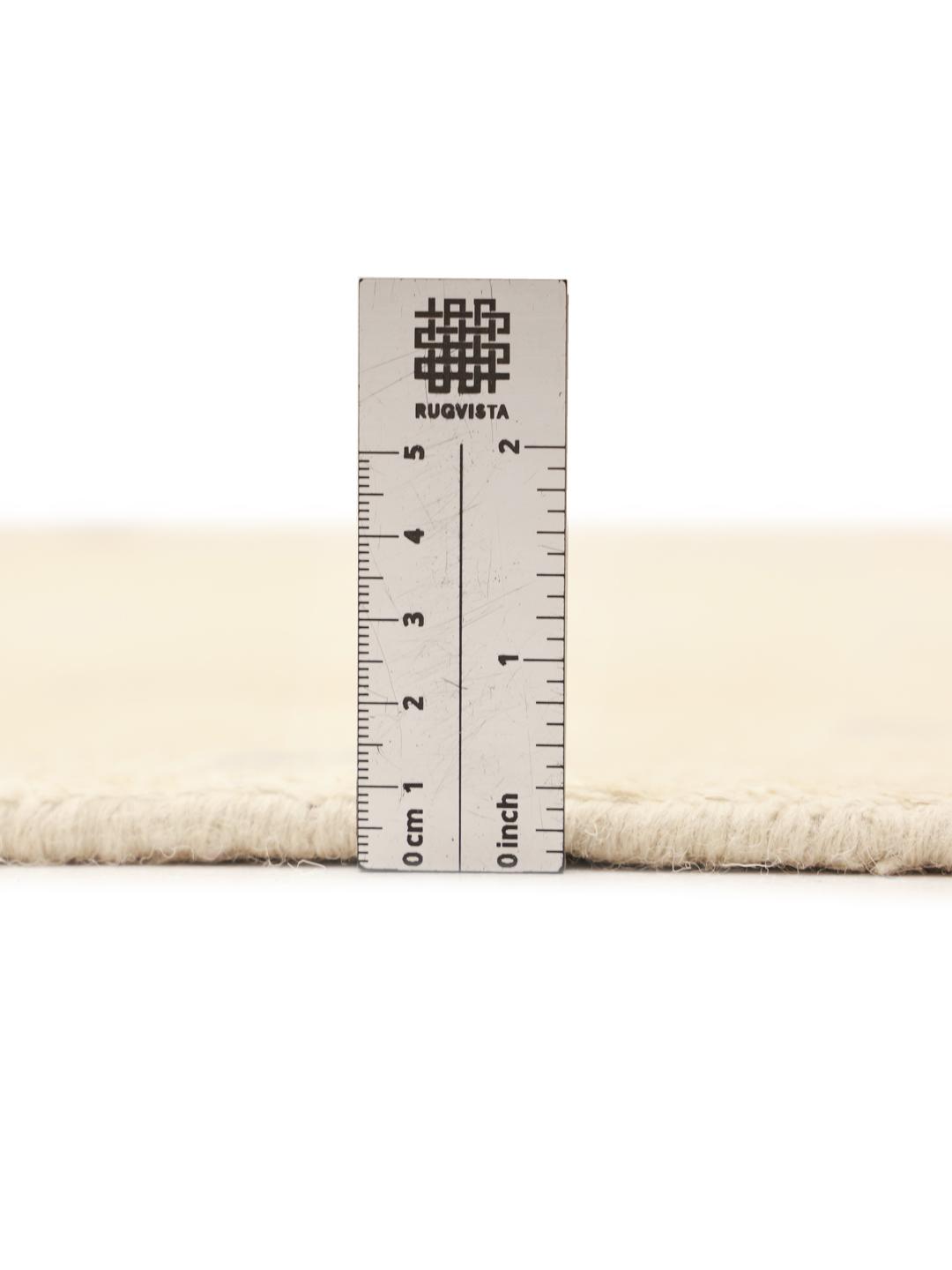
The term hand-knotted refers to a traditional technique where individual strands of wool are tied onto the foundation of the rug. This method is highly prized because it produces a dense, durable pile that is far more resilient than machine-made alternatives, allowing the rug to withstand years of heavy use while maintaining its texture.
Visually, these rugs are often defined by their minimalist approach to design. The use of simple, geometric motifs like the triangles seen here is a hallmark of the style, typically arranged in an open, airy field that allows the natural beauty of the wool to take centre stage. This focus on simplicity creates a clean, uncluttered look that is both timeless and modern.
Owning a hand-knotted rug from this tradition is an investment in human skill and cultural heritage. These pieces are collected for their ability to bring a sense of organic, lived-in warmth to a home, bridging the gap between historical craftsmanship and contemporary interior needs.