The Beni Ourain rugs are deeply rooted in the traditions of the Berber tribes inhabiting the Middle Atlas Mountains of Morocco. For generations, these rugs were not merely decorative items but essential household tools, used as bedding, blankets, and floor coverings to protect against the harsh mountain winters. The nomadic and semi-nomadic lifestyle of these tribes influenced the design, leading to the creation of durable, thick-piled rugs that could withstand the elements.
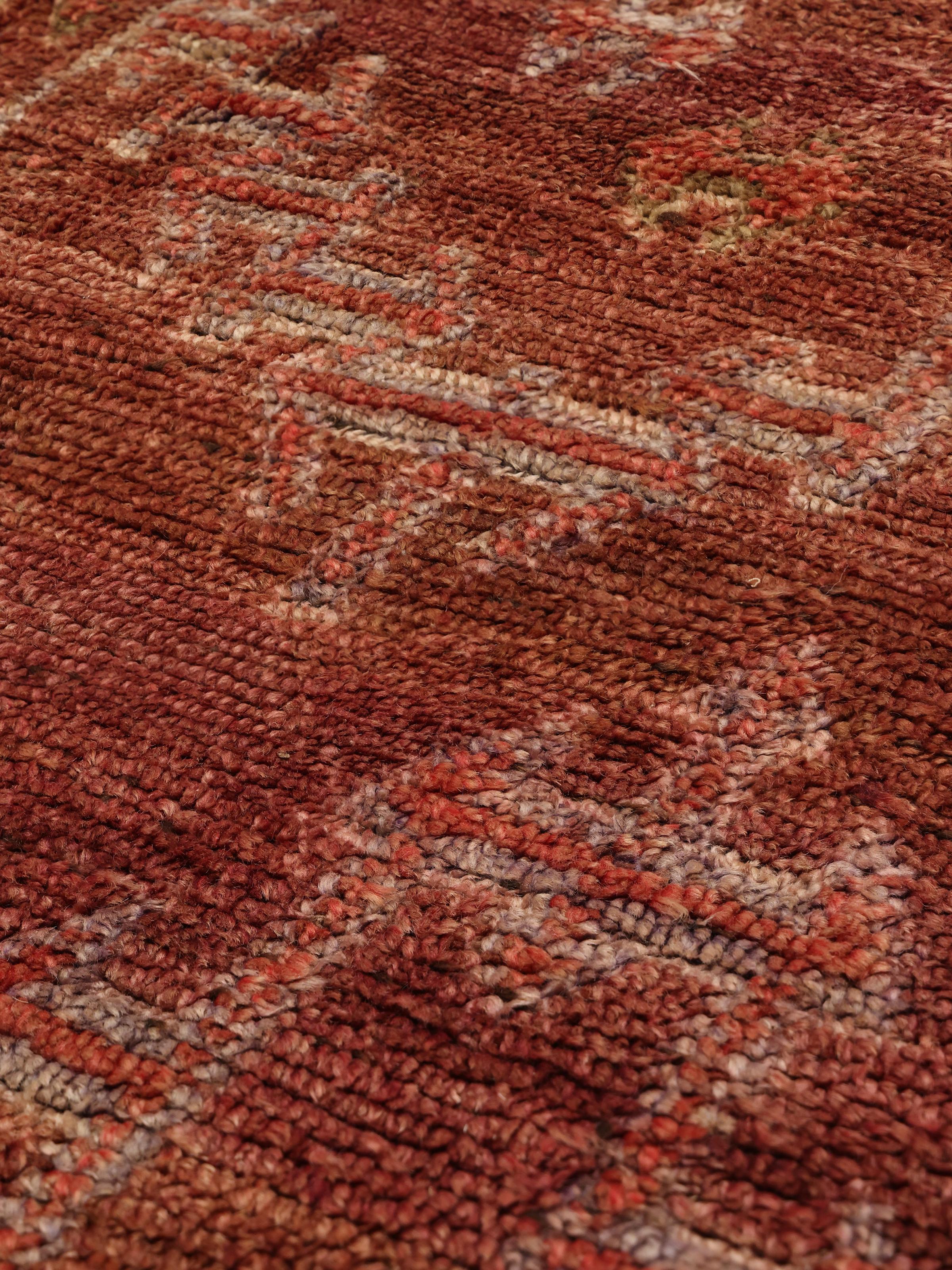
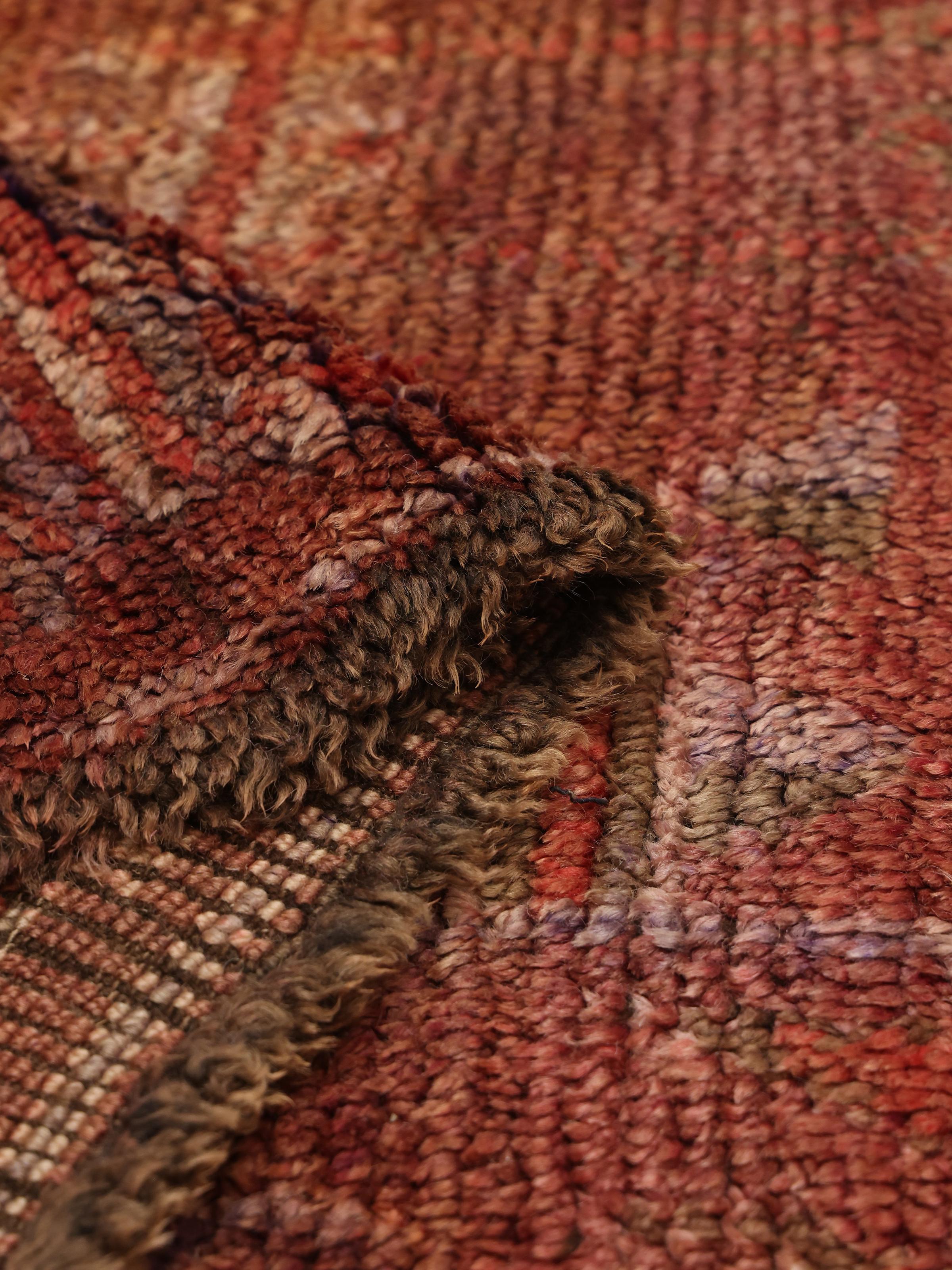
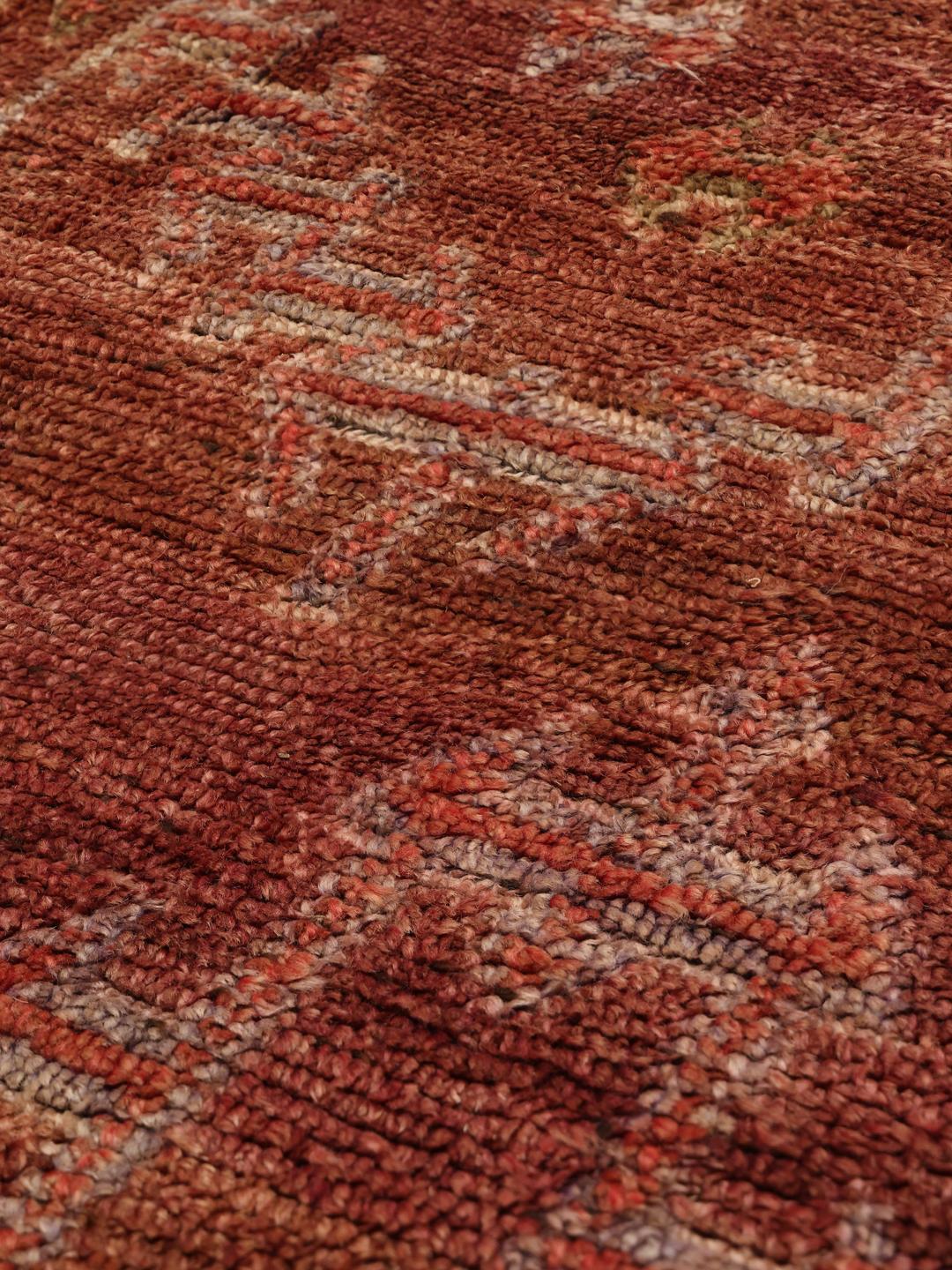
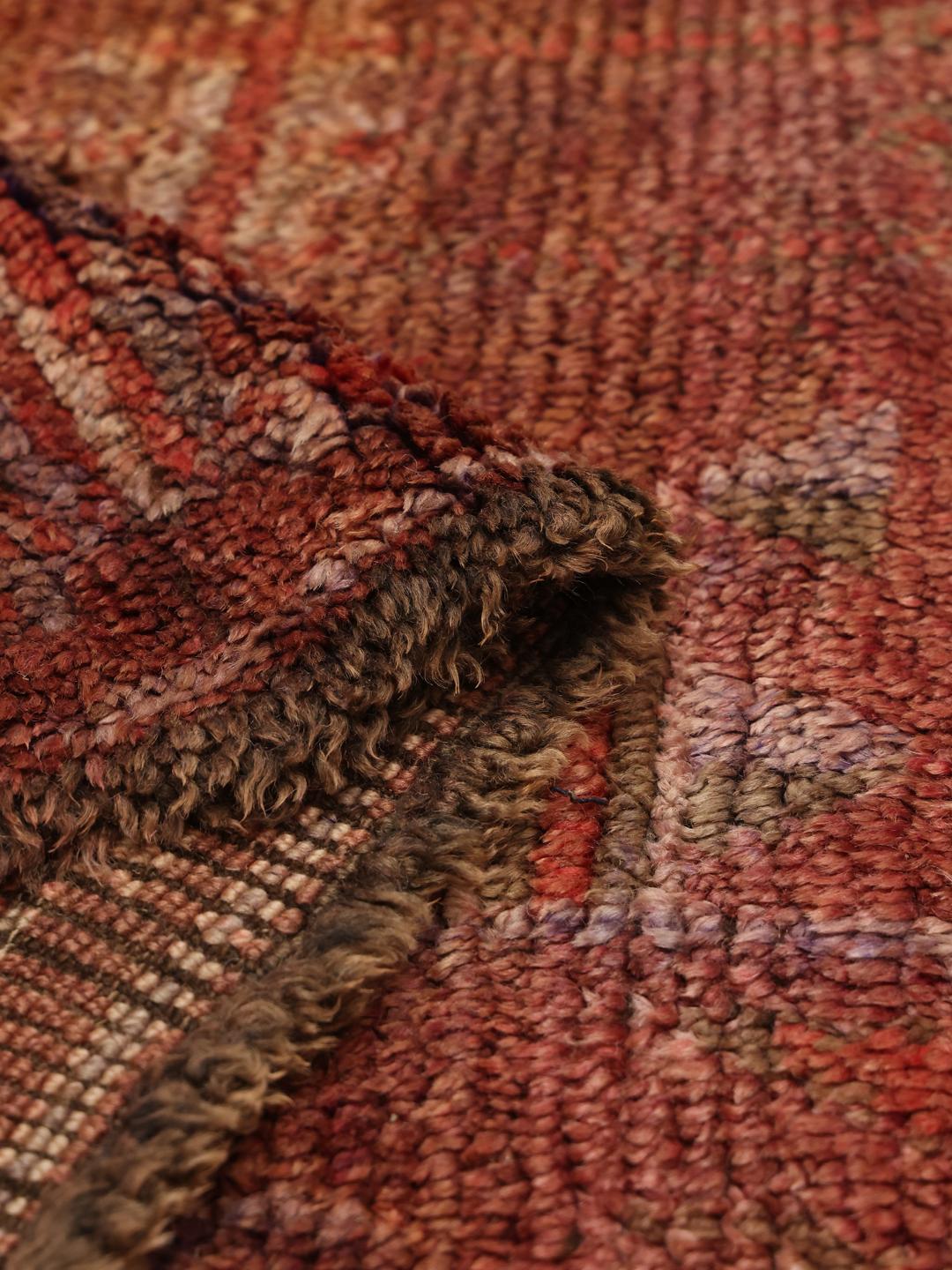
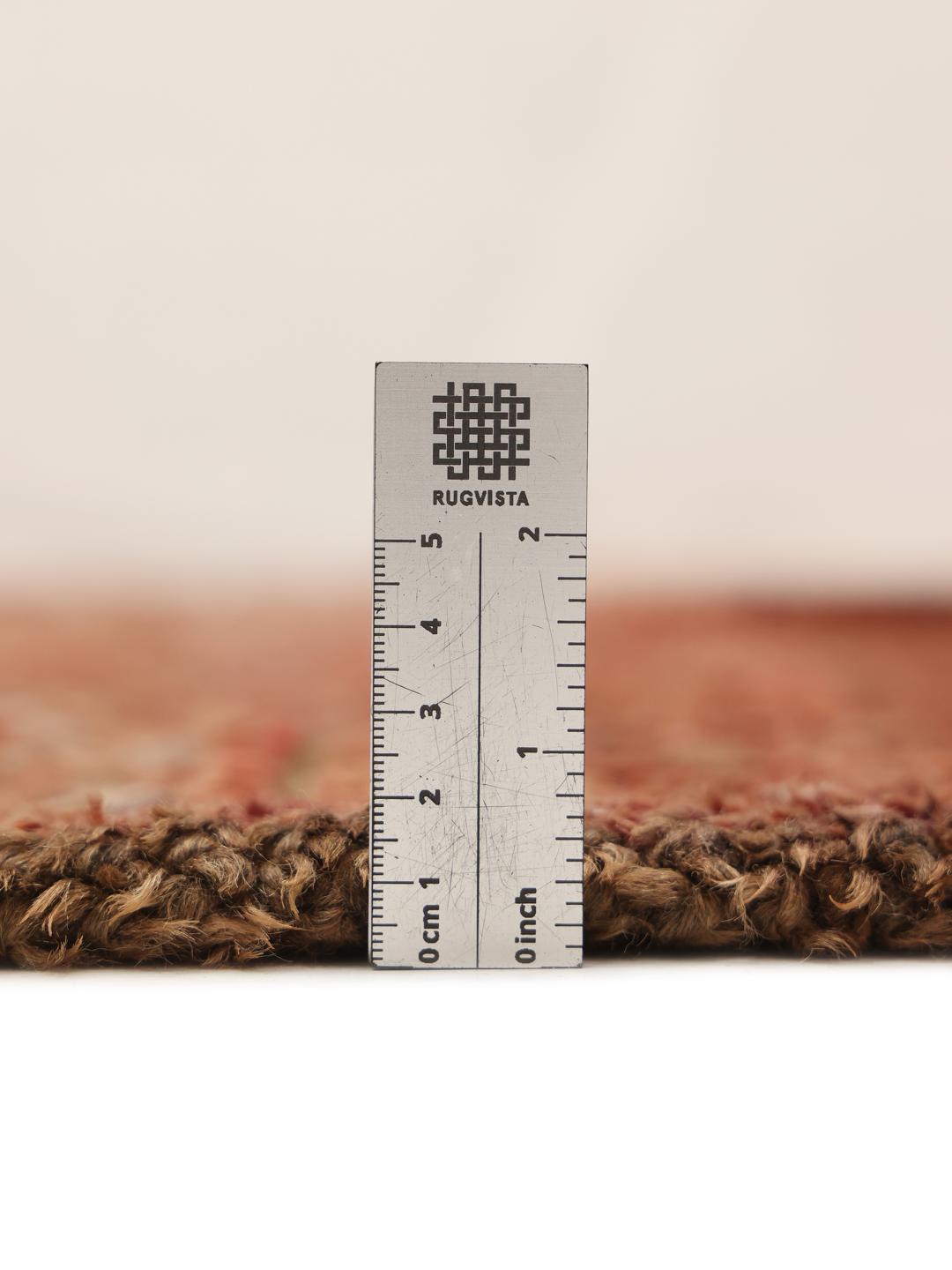
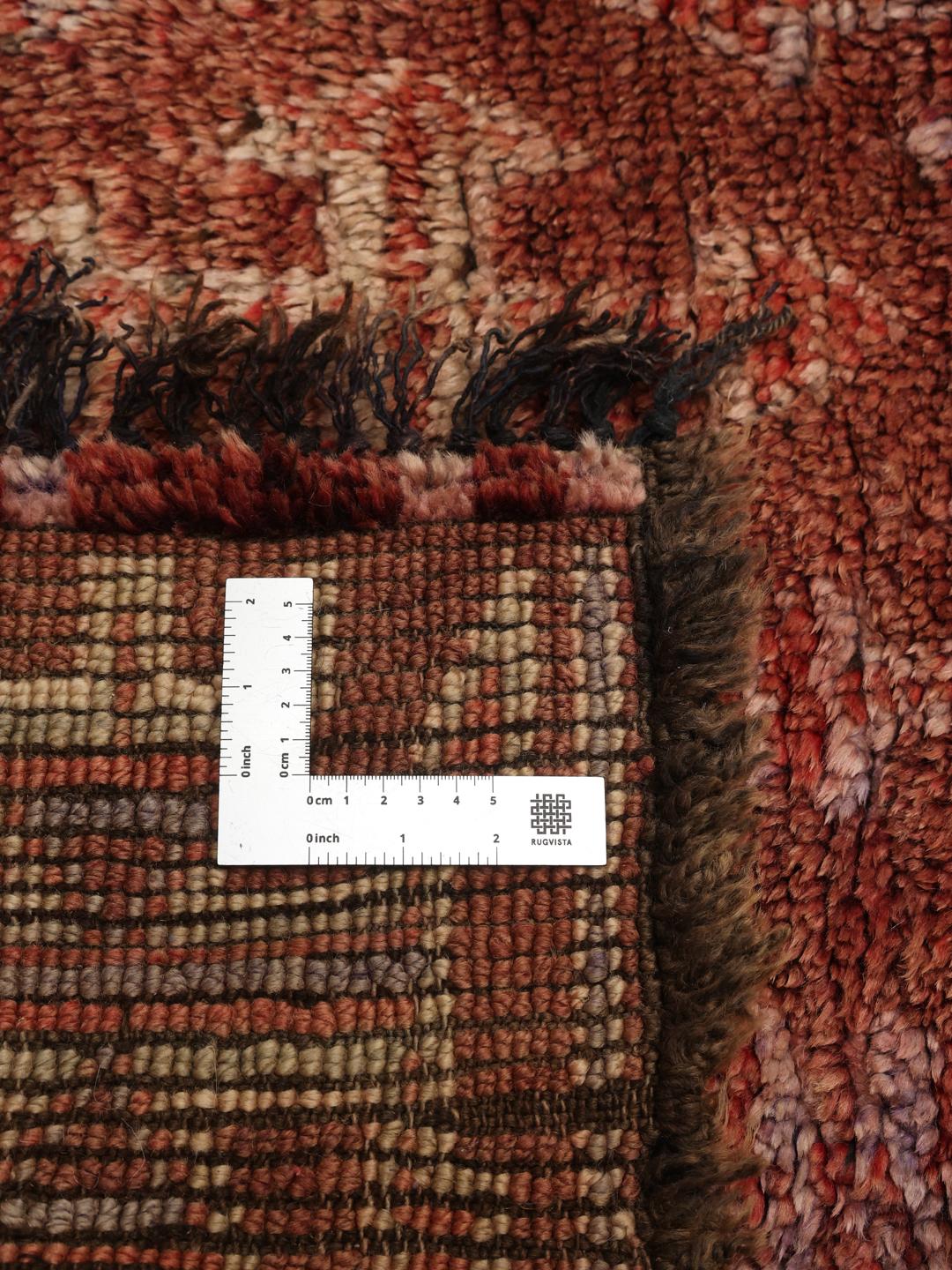
The term 'Beni Ourain' refers to the confederation of tribes who have perfected this style of weaving. The technical quality is defined by the use of high-grade wool, which is known for its natural lanolin content, providing a soft, resilient, and water-repellent finish. The construction is typically characterised by a high-pile knotting technique, which creates the thick, luxurious texture that collectors and designers prize today for its warmth and acoustic benefits.
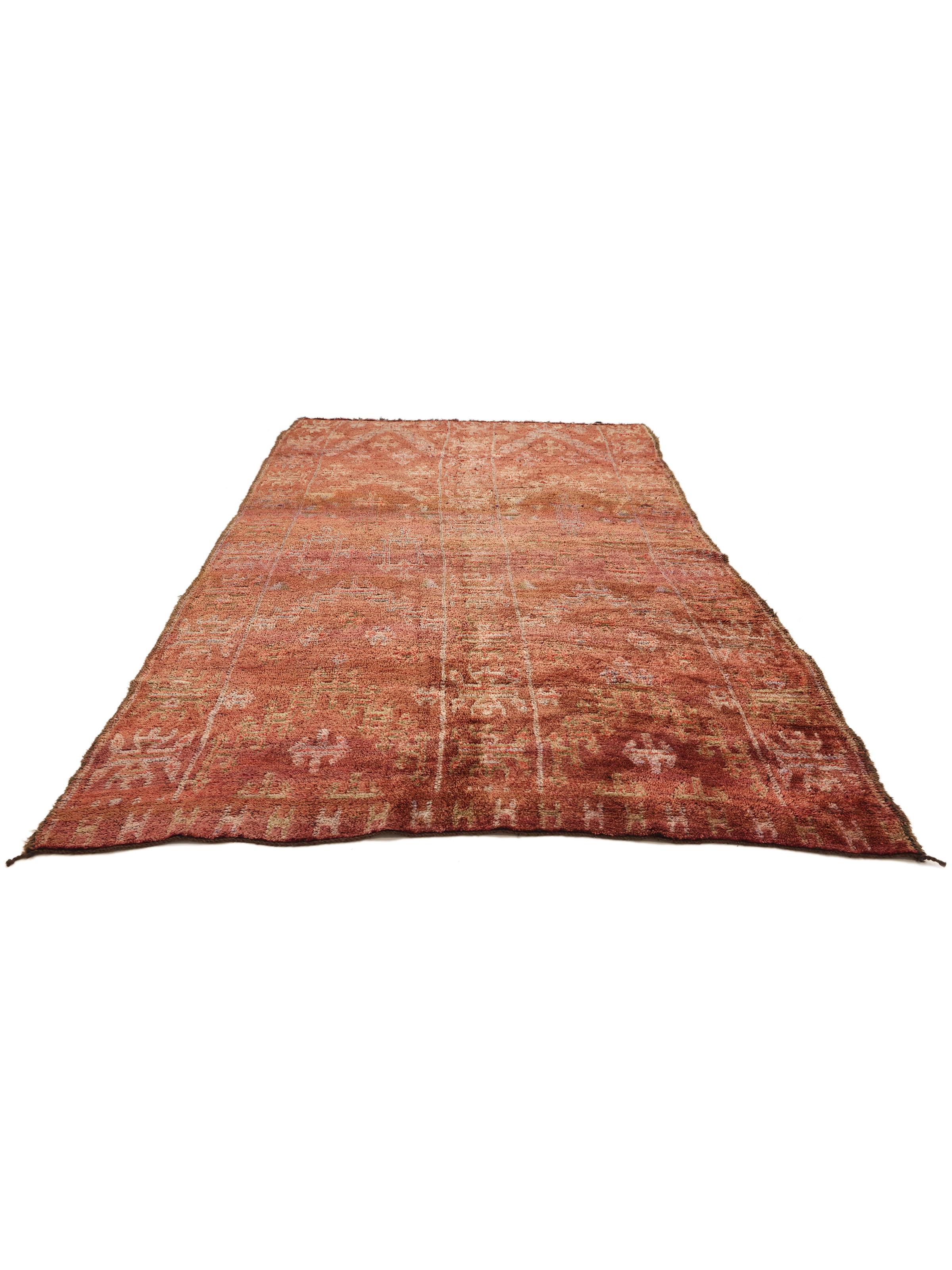
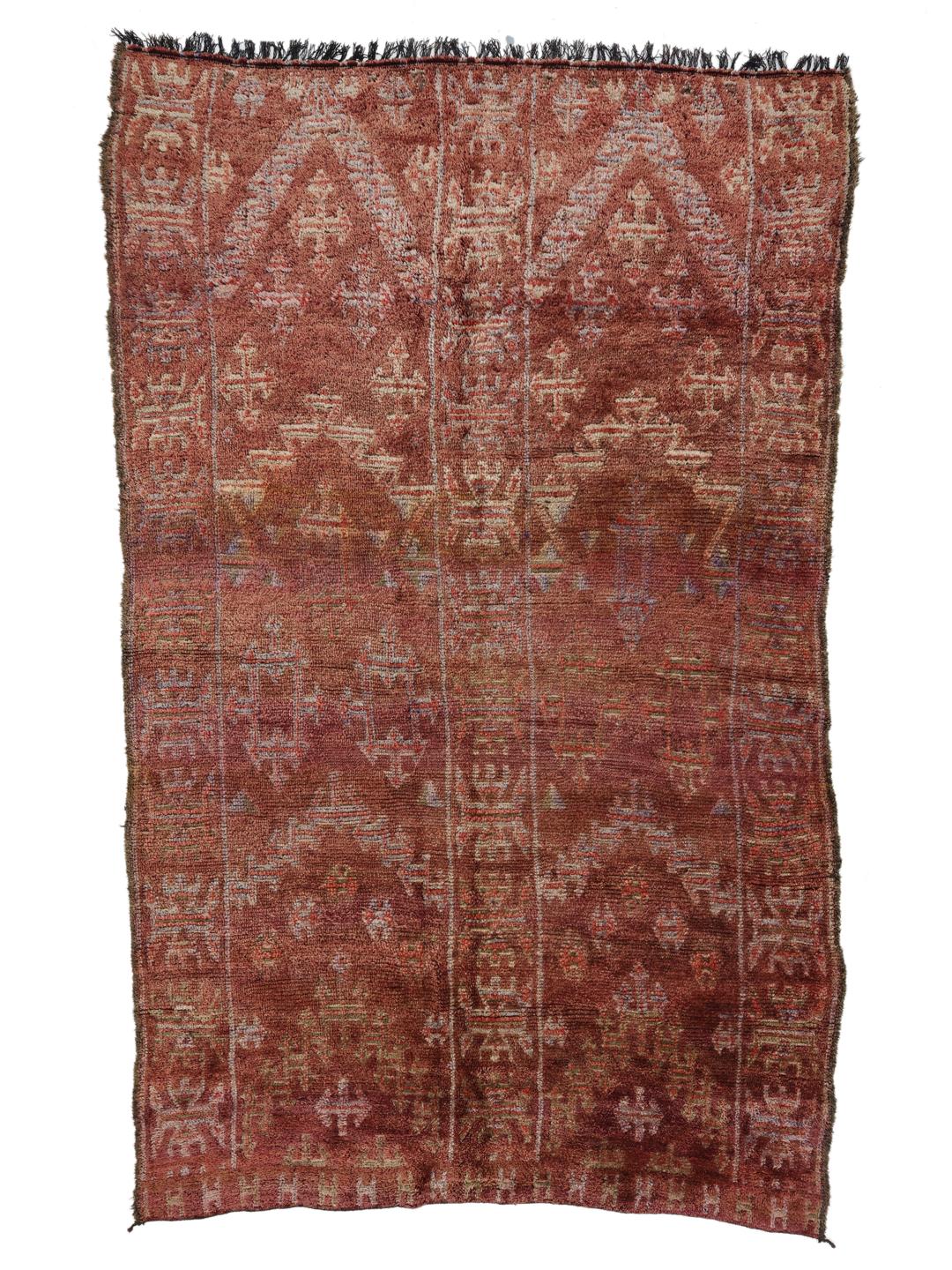
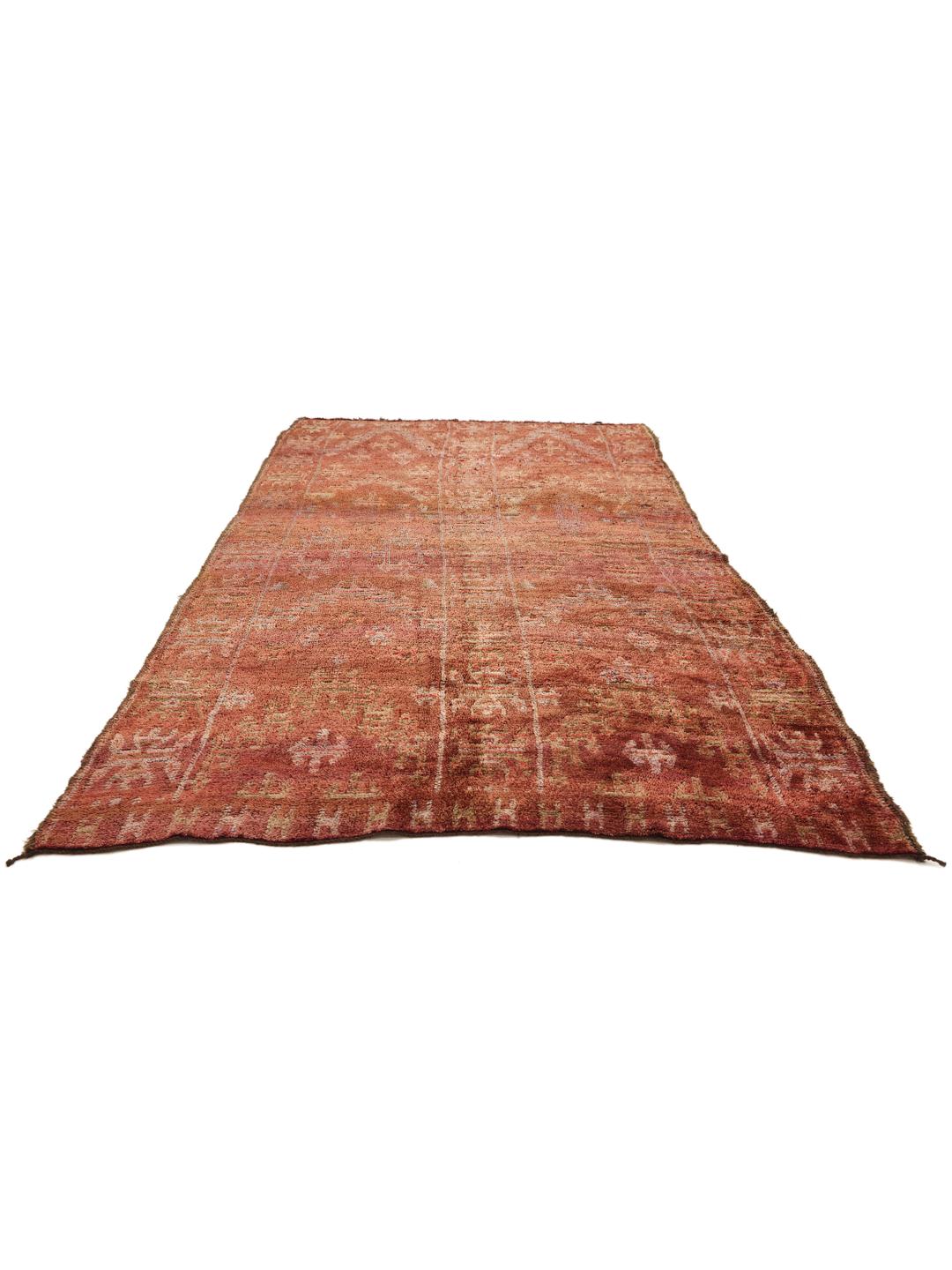
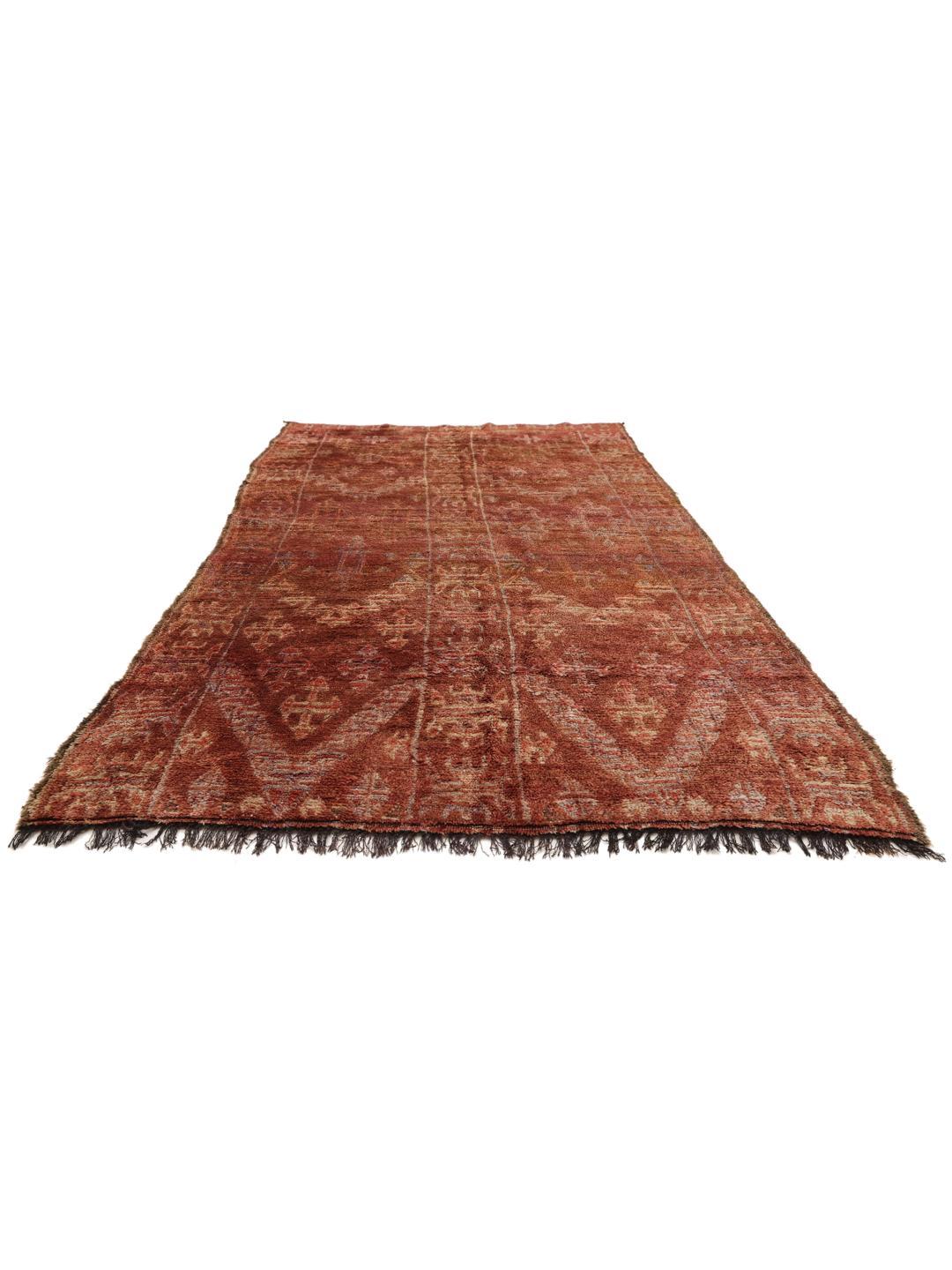
Visually, these rugs are celebrated for their authentic, often minimalist, geometric motifs. While some feature bold, dark lines on a natural background, others like this vintage piece display complex, rhythmic patterns that reflect the weaver's personal expression and tribal identity. The use of deep, earthy reds often stems from traditional natural dyes, which develop a unique, muted patina over time, making each vintage rug a distinct historical document of its era.
Collecting a vintage Beni Ourain is an act of preserving cultural heritage. These pieces are valued for their authenticity and the human story embedded in every row of knots. Unlike contemporary reproductions, a true vintage rug carries the spirit of its origin, offering a level of character and depth that connects the modern home to the ancient, resilient traditions of the Atlas Mountains.