The tradition of rug weaving in the Middle Atlas mountains of Morocco is deeply rooted in the cultural identity of the Berber tribes. These rugs have historically served both functional and artistic purposes, acting as essential insulators against the cold mountain winters and as canvases for storytelling. Each design is a reflection of the weaver's life, environment, and personal history, passed down through generations of women who maintain these ancient techniques.
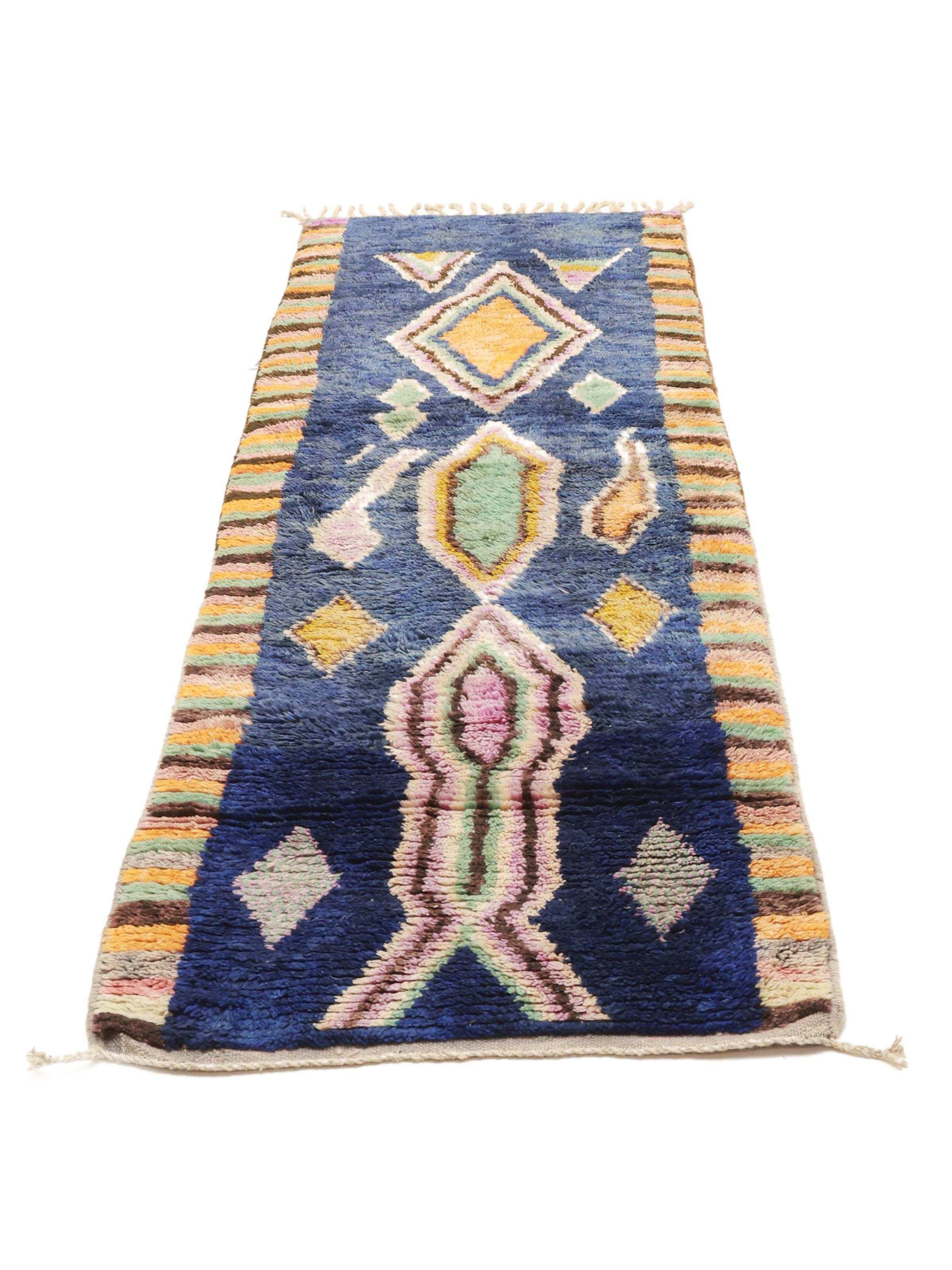
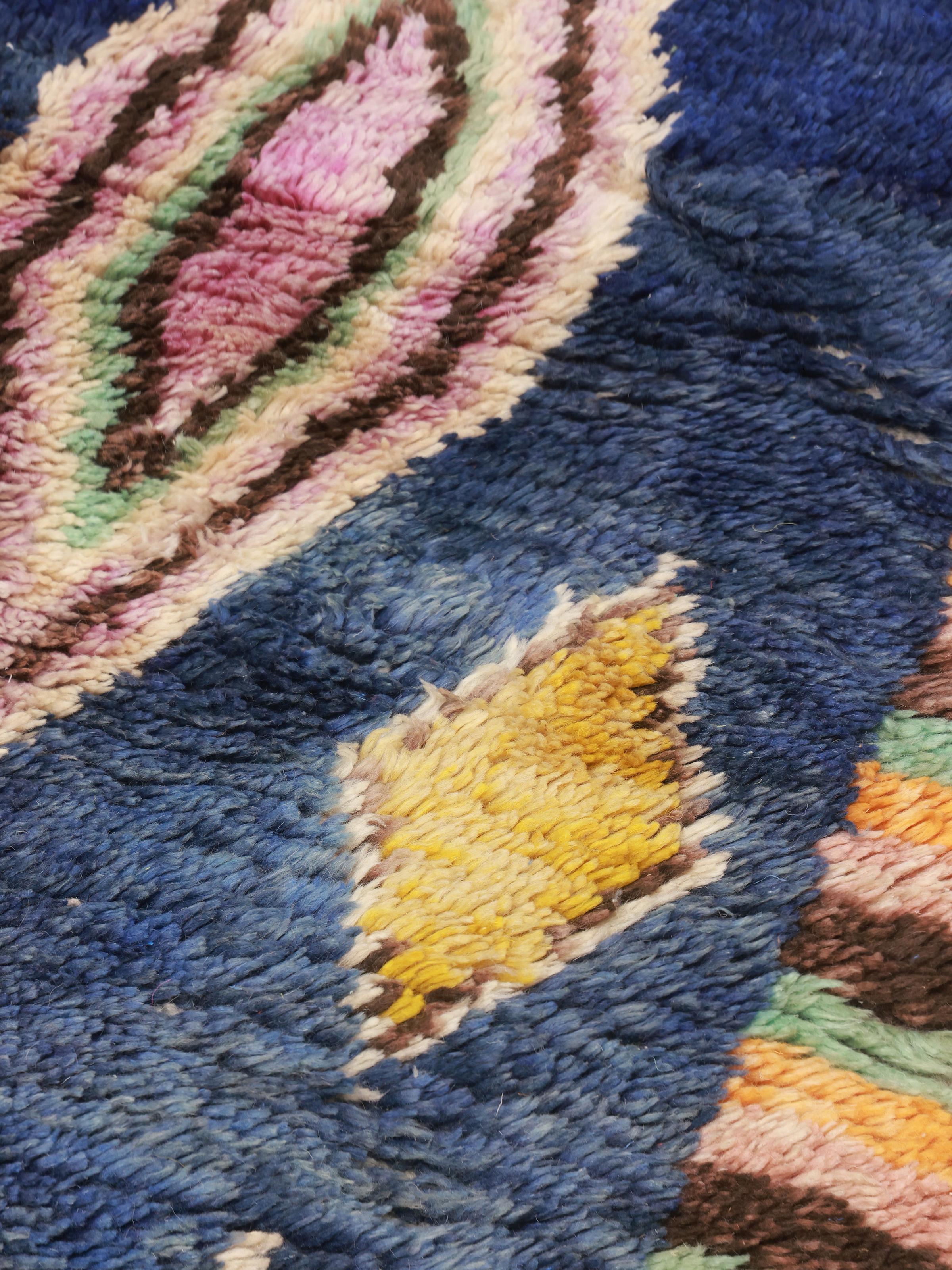
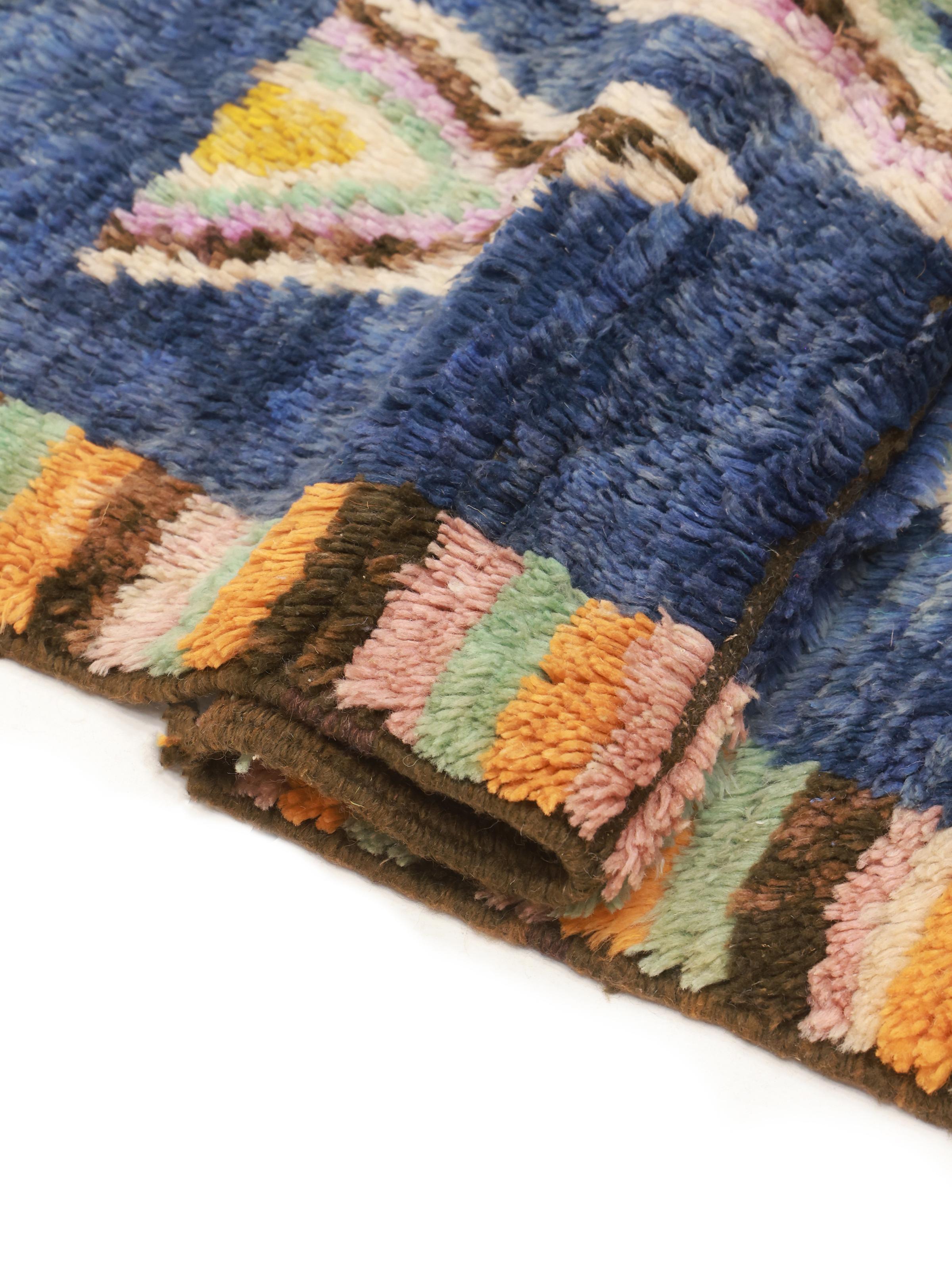
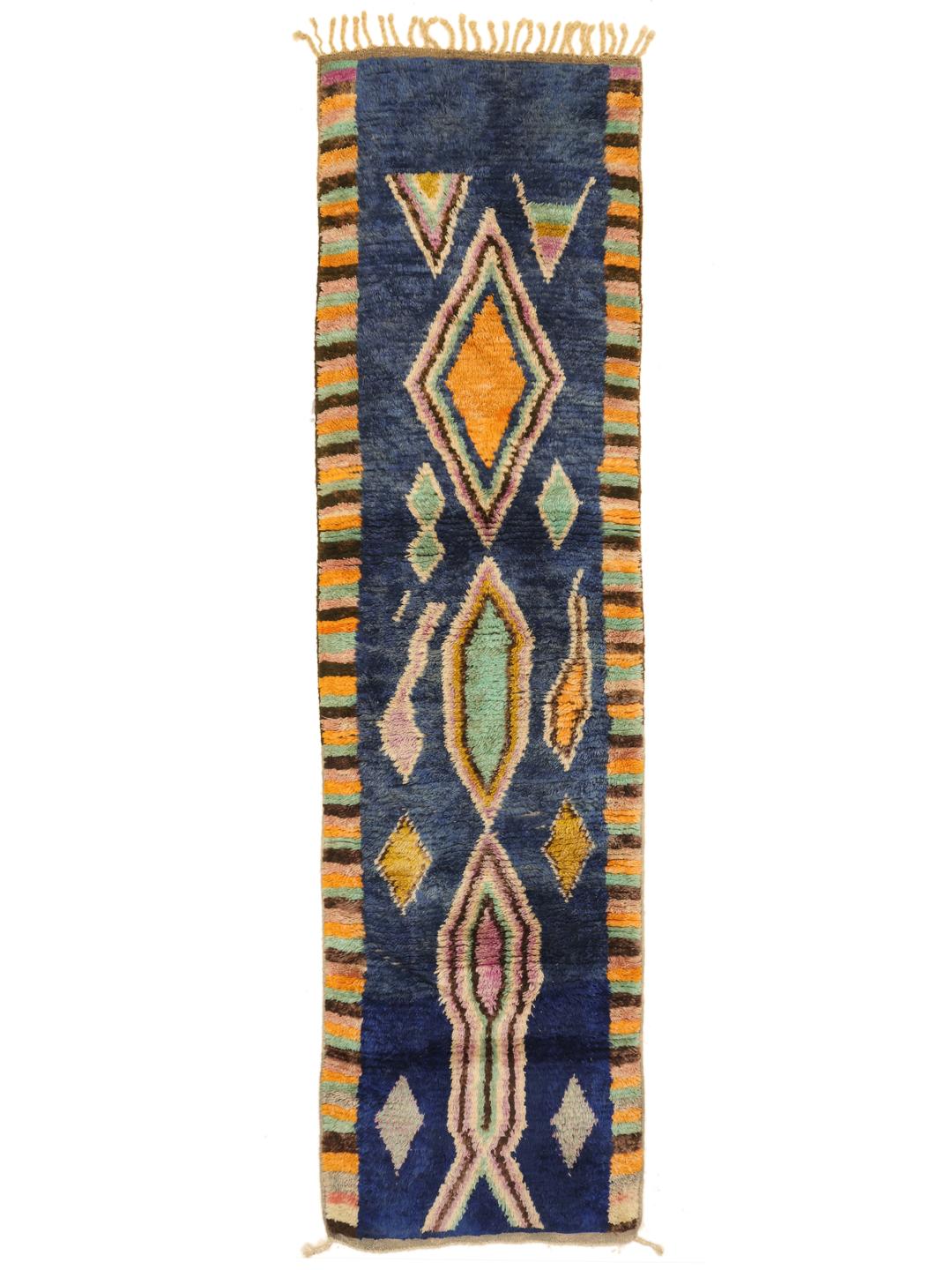
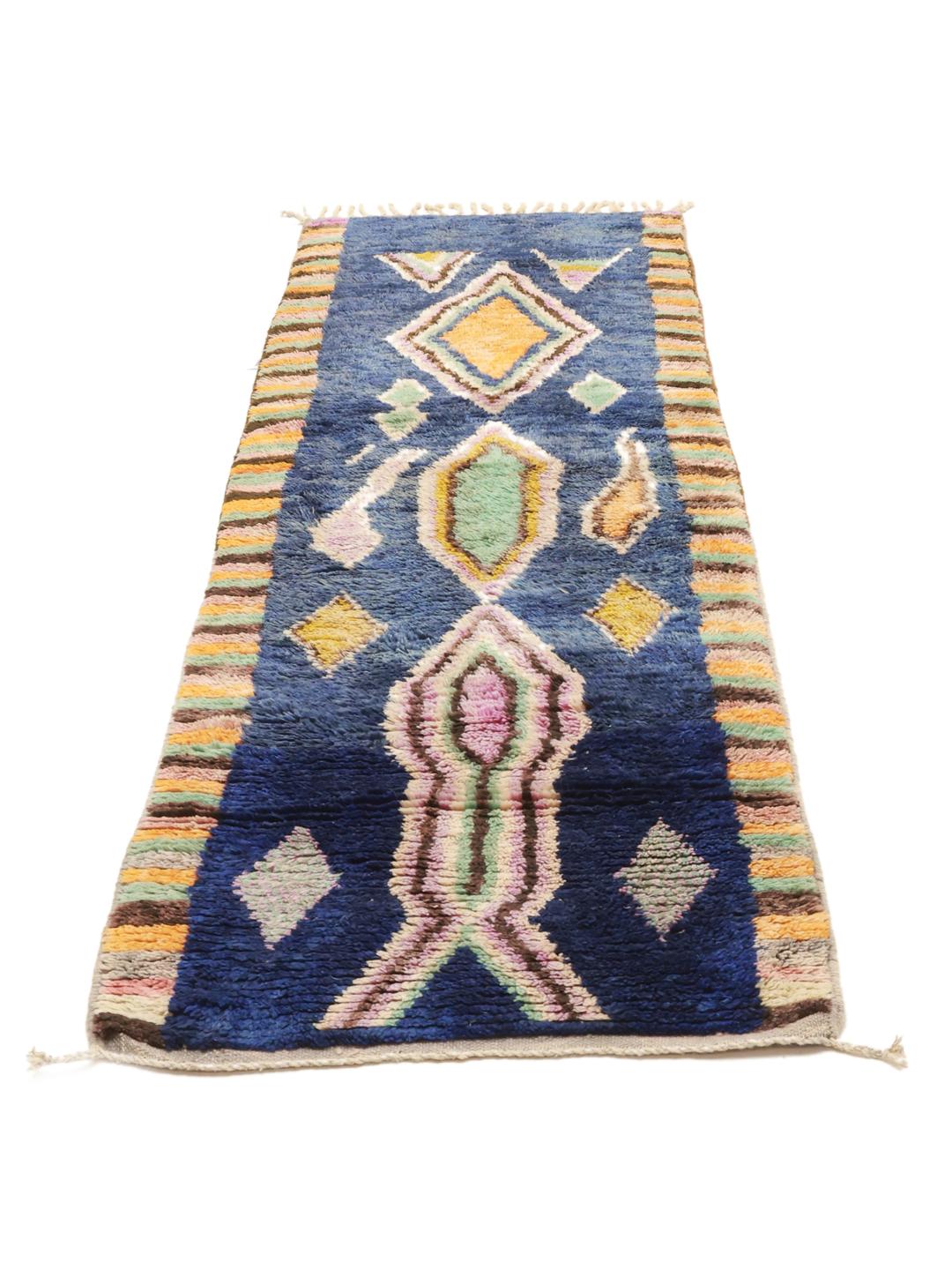
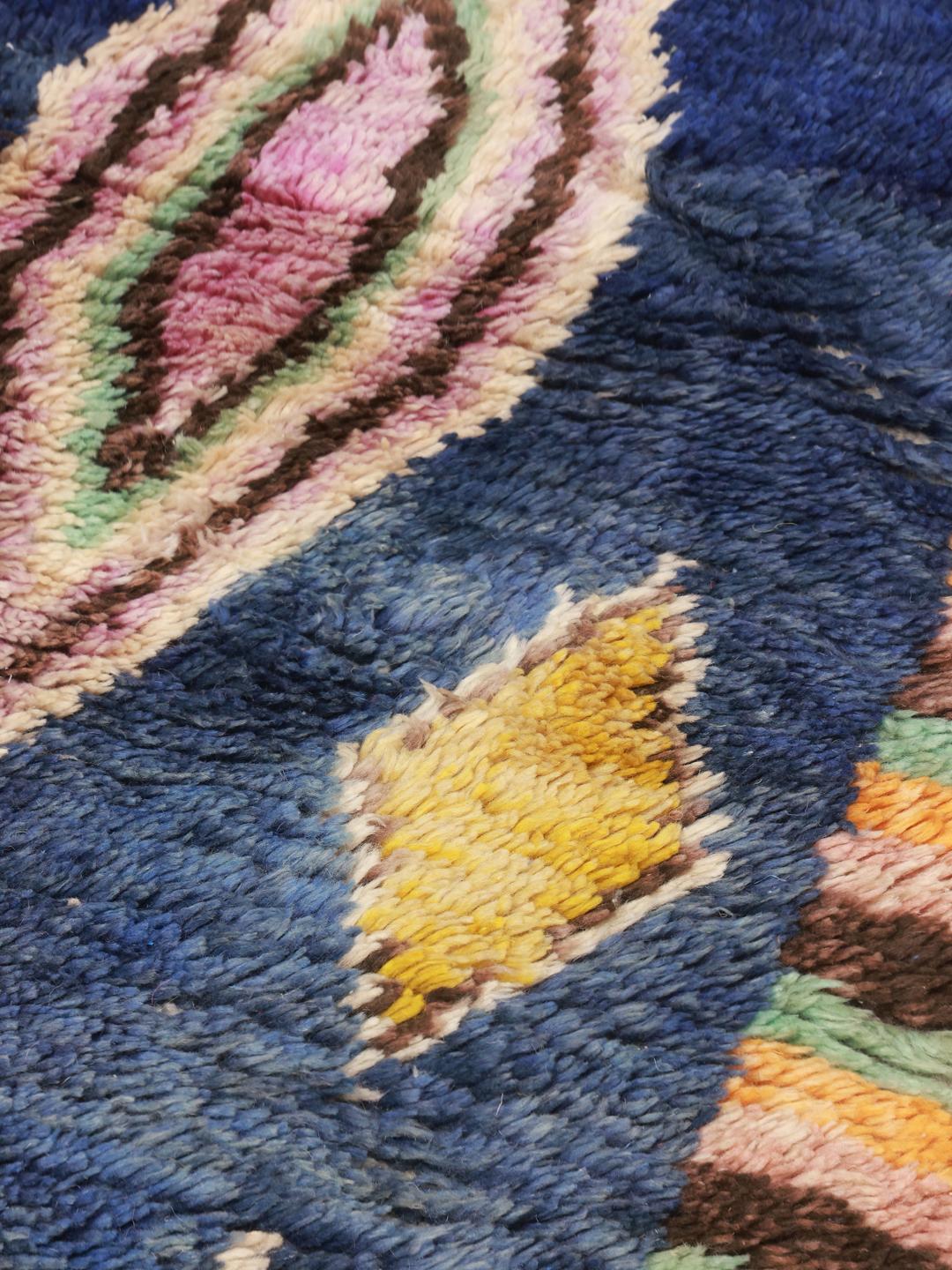
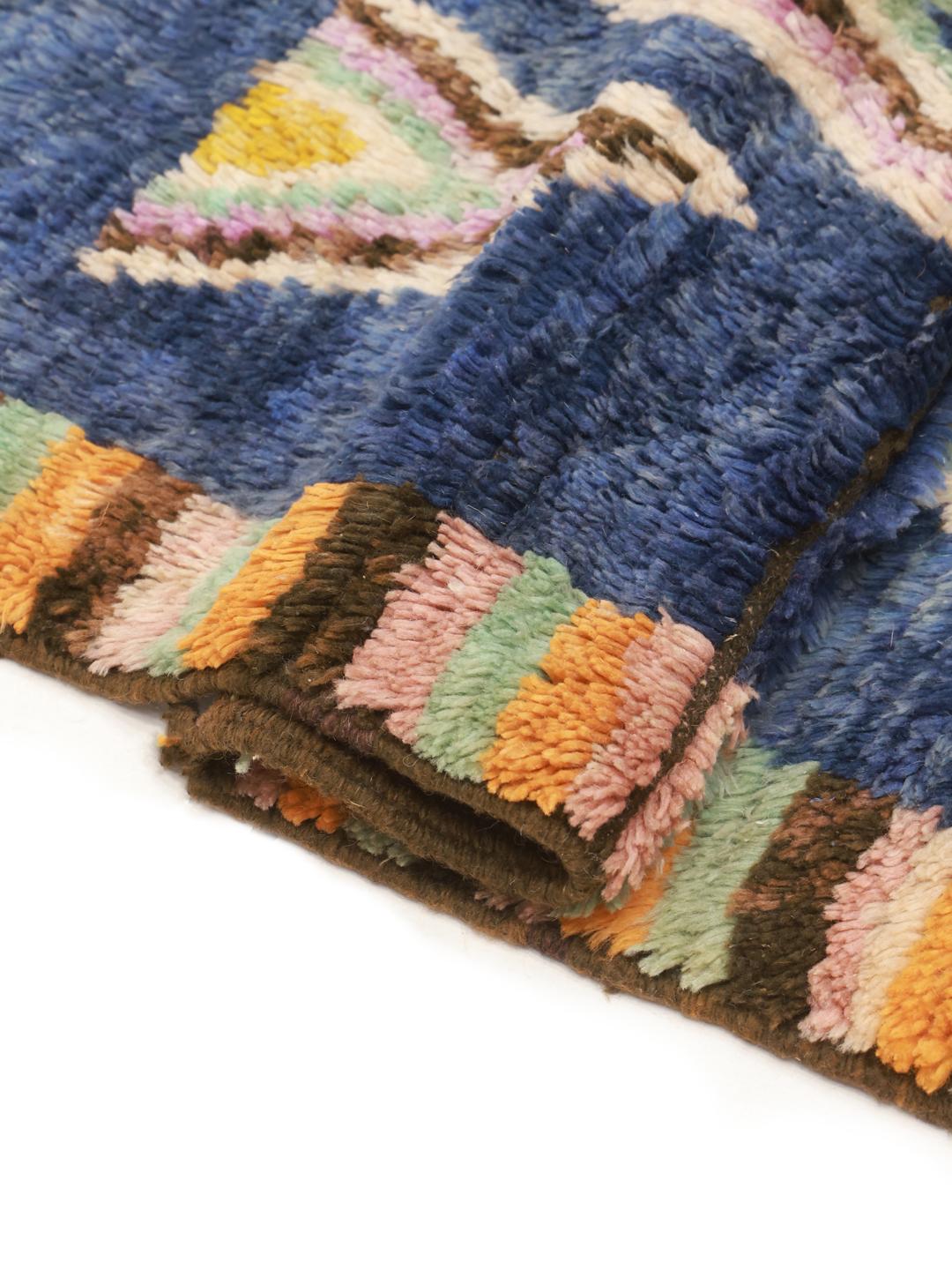
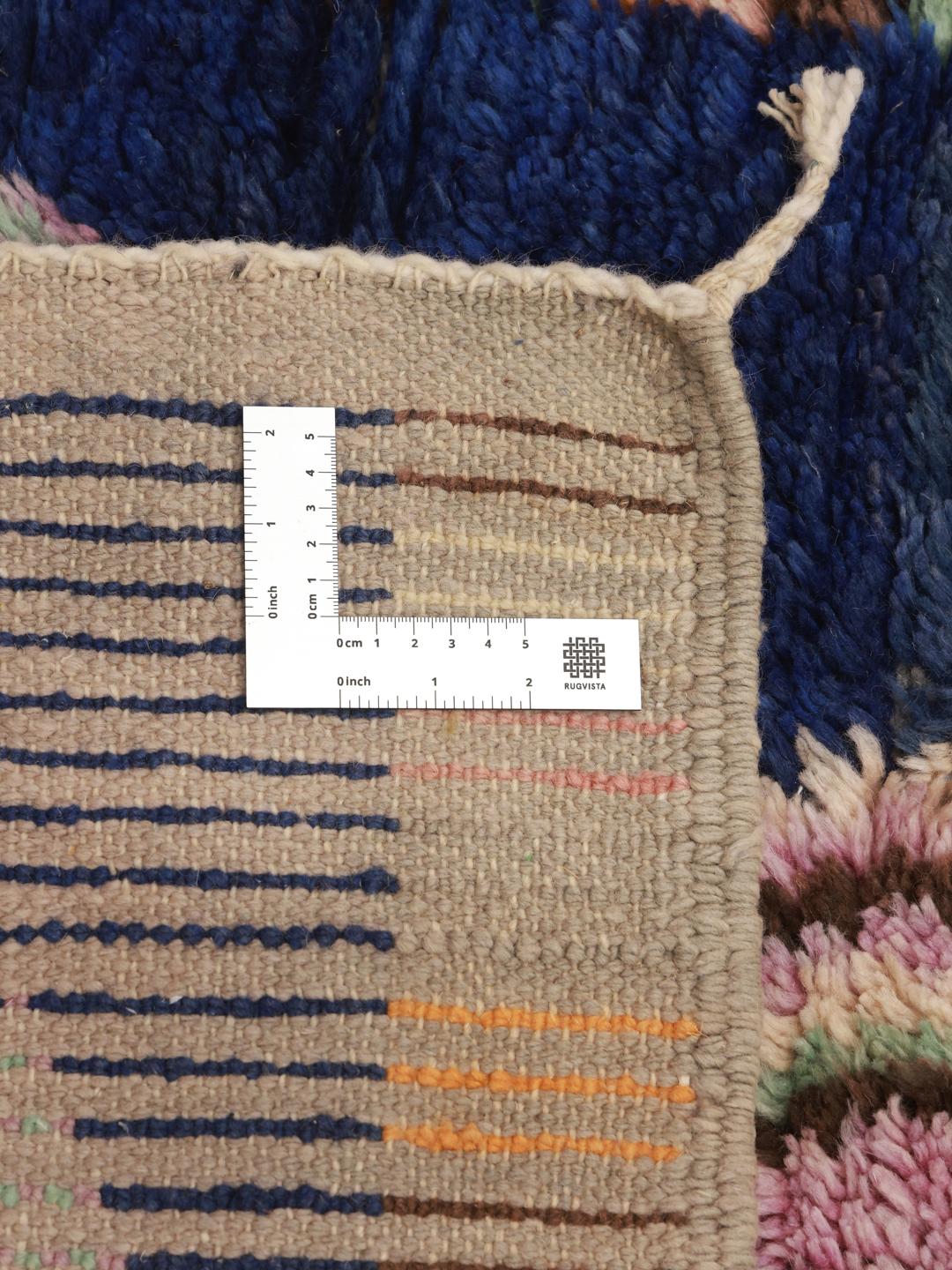
The term Beni Ourain refers to a specific, highly regarded style of weaving historically produced by the Berber tribes of the region. Known for their use of natural, undyed wool and bold, dark geometric lines, these rugs have evolved to include more vibrant, artistic expressions like this runner. The craft is defined by the use of a traditional vertical loom, where the weaver creates the pile knot by knot, a rhythm that has remained largely unchanged for centuries.
Signature design elements in these rugs often include abstract or geometric motifs, such as diamonds, triangles, and lines. These patterns are not merely decorative but are deeply symbolic, often representing fertility, protection, or the natural world. The use of vibrant, contrasting colours against a dark, saturated blue field is a bold departure from the classic cream-and-black style, highlighting the artistic freedom and creative evolution present in contemporary Moroccan weaving.
Owning a piece from this region is a testament to the appreciation of slow, intentional craftsmanship. Collectors and enthusiasts value these rugs not only for their aesthetic appeal but for the cultural narrative they carry. By choosing this piece, you are supporting a legacy of skill that prioritises human expression and natural materials, ensuring that this tradition continues to thrive in modern homes around the globe.