Berber rugs originate from the indigenous tribes of the Atlas Mountains in Morocco, where they have been woven for centuries. These rugs were traditionally created not just as floor coverings, but as essential household items, serving as blankets, sleeping mats, and protective wall hangings against the cold mountain winters.
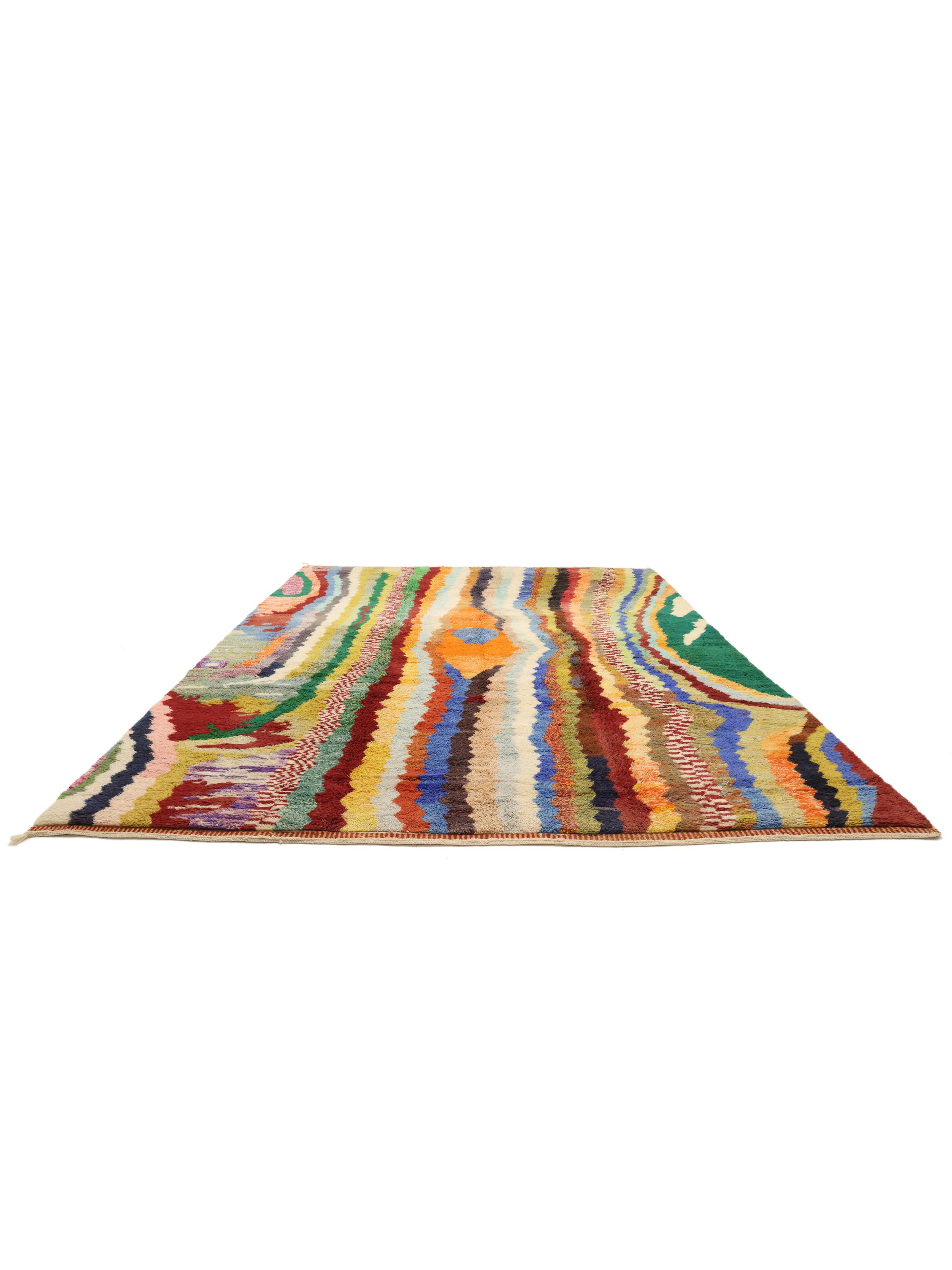
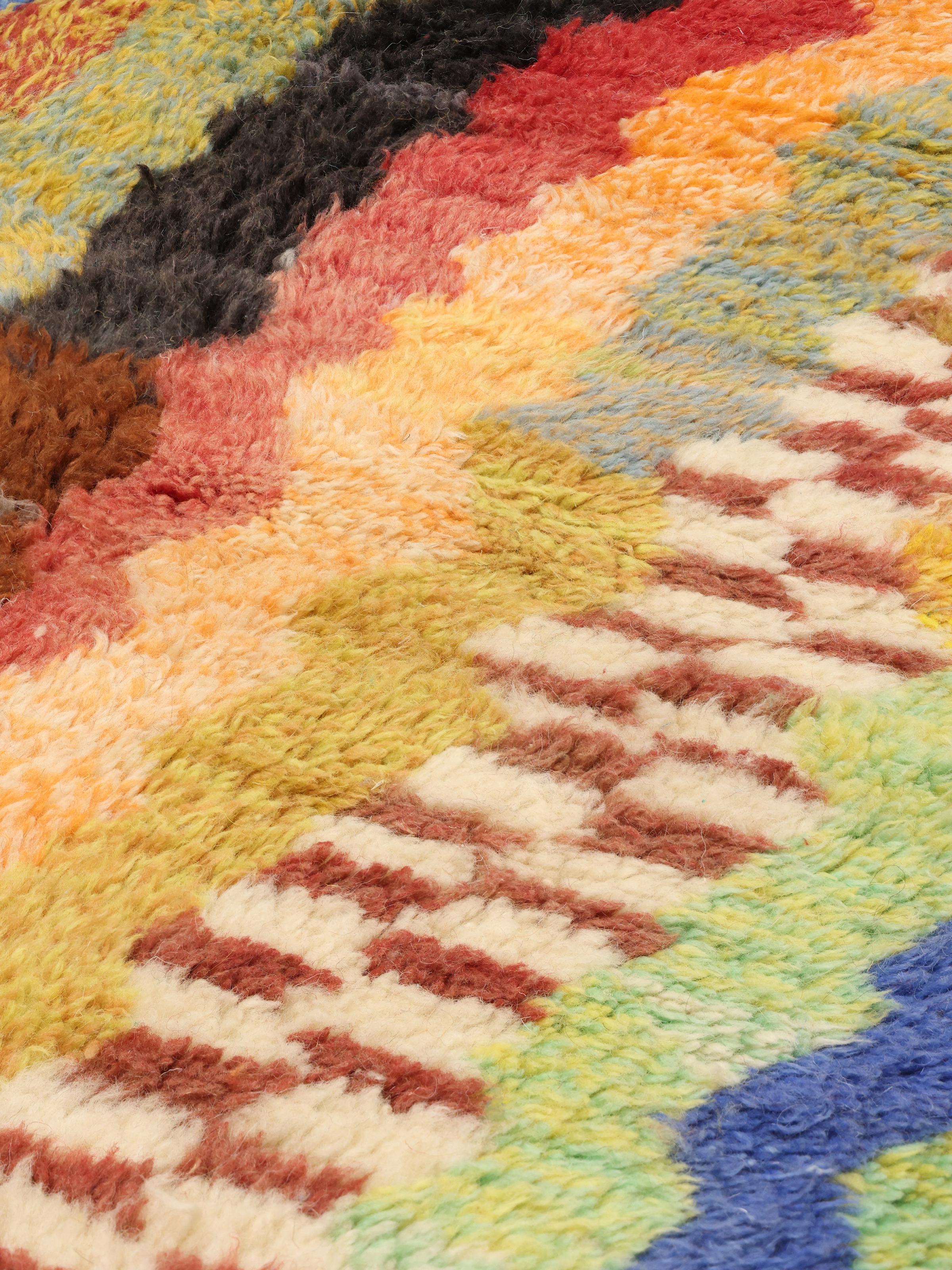
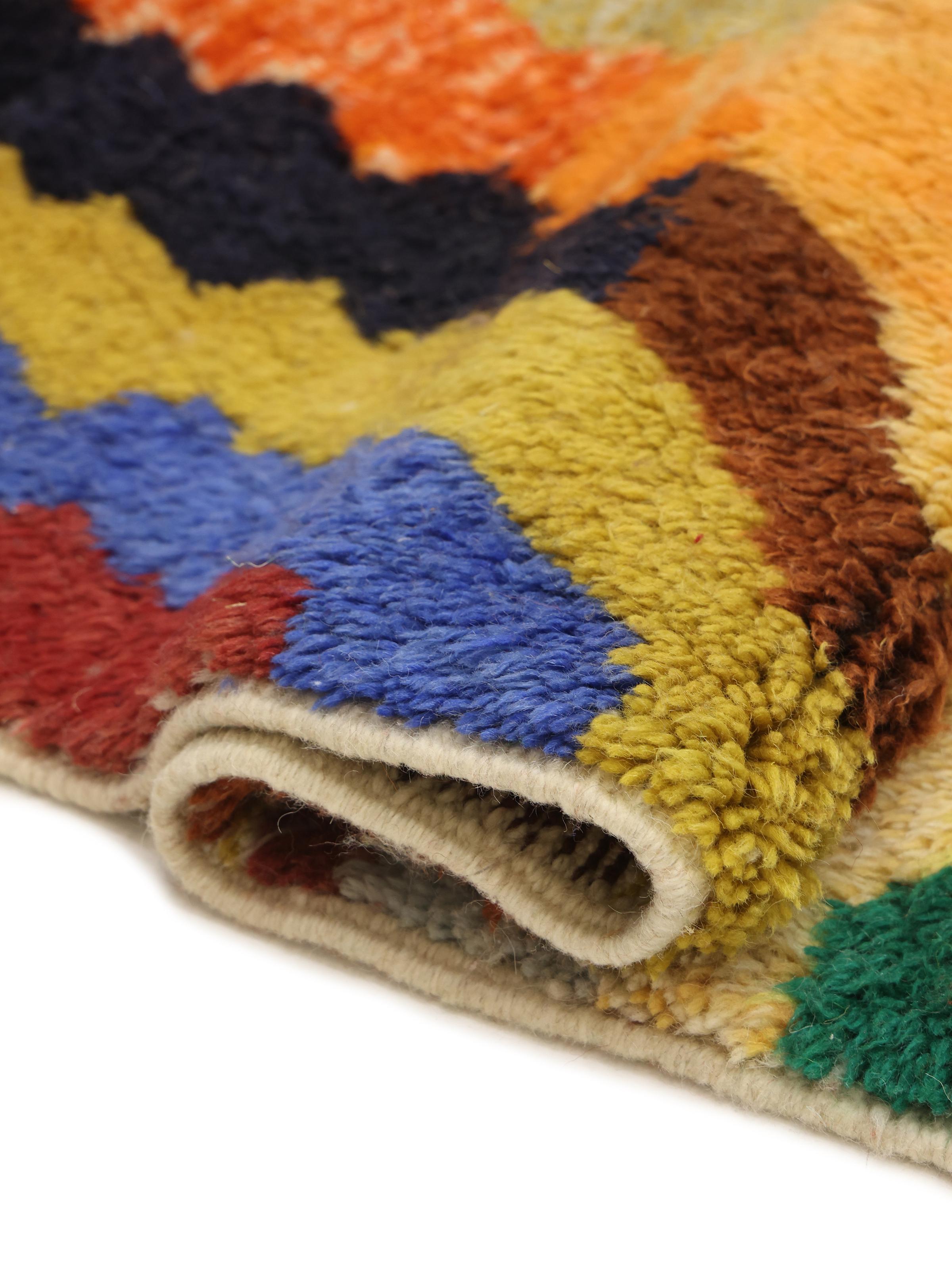
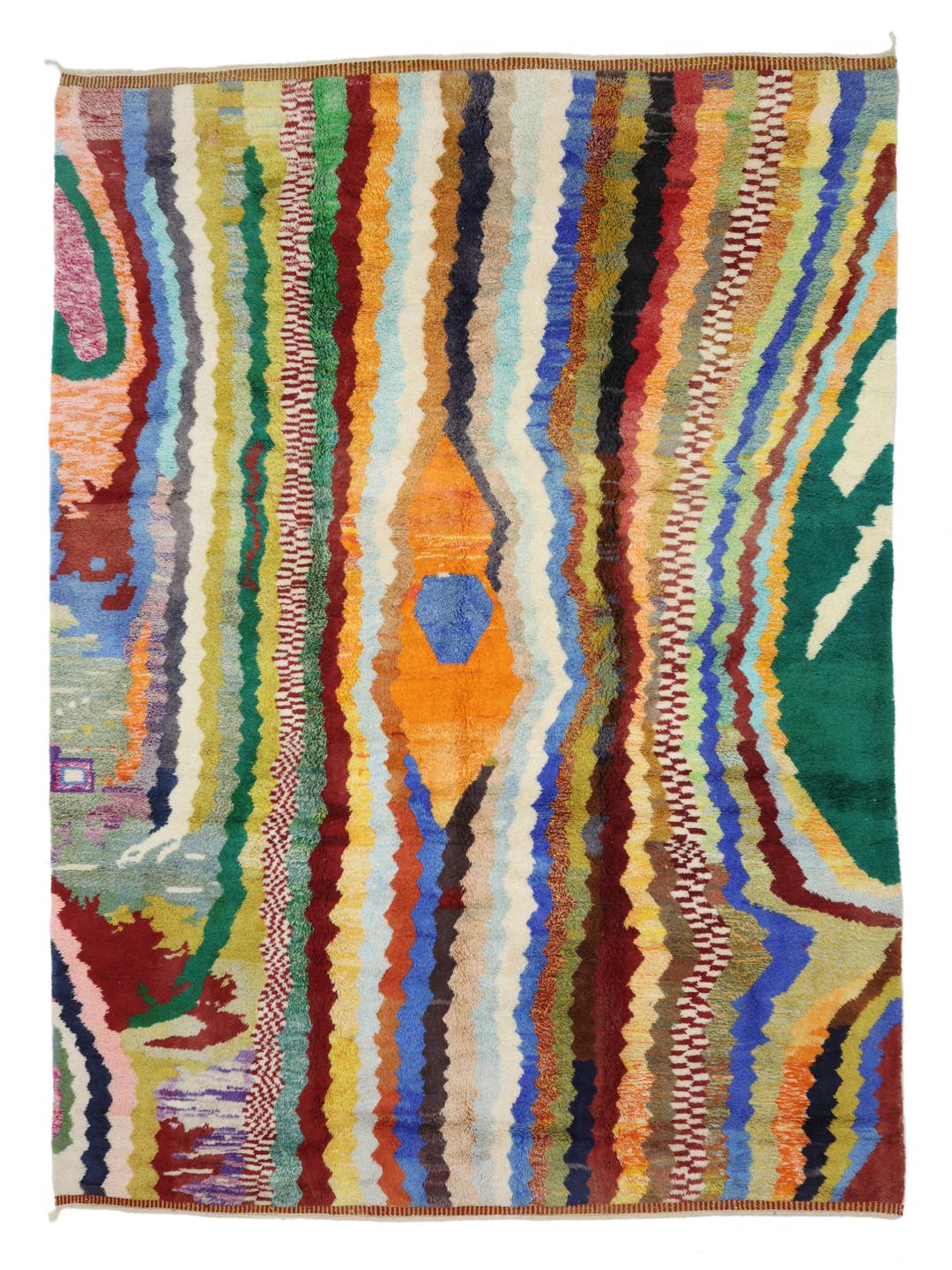
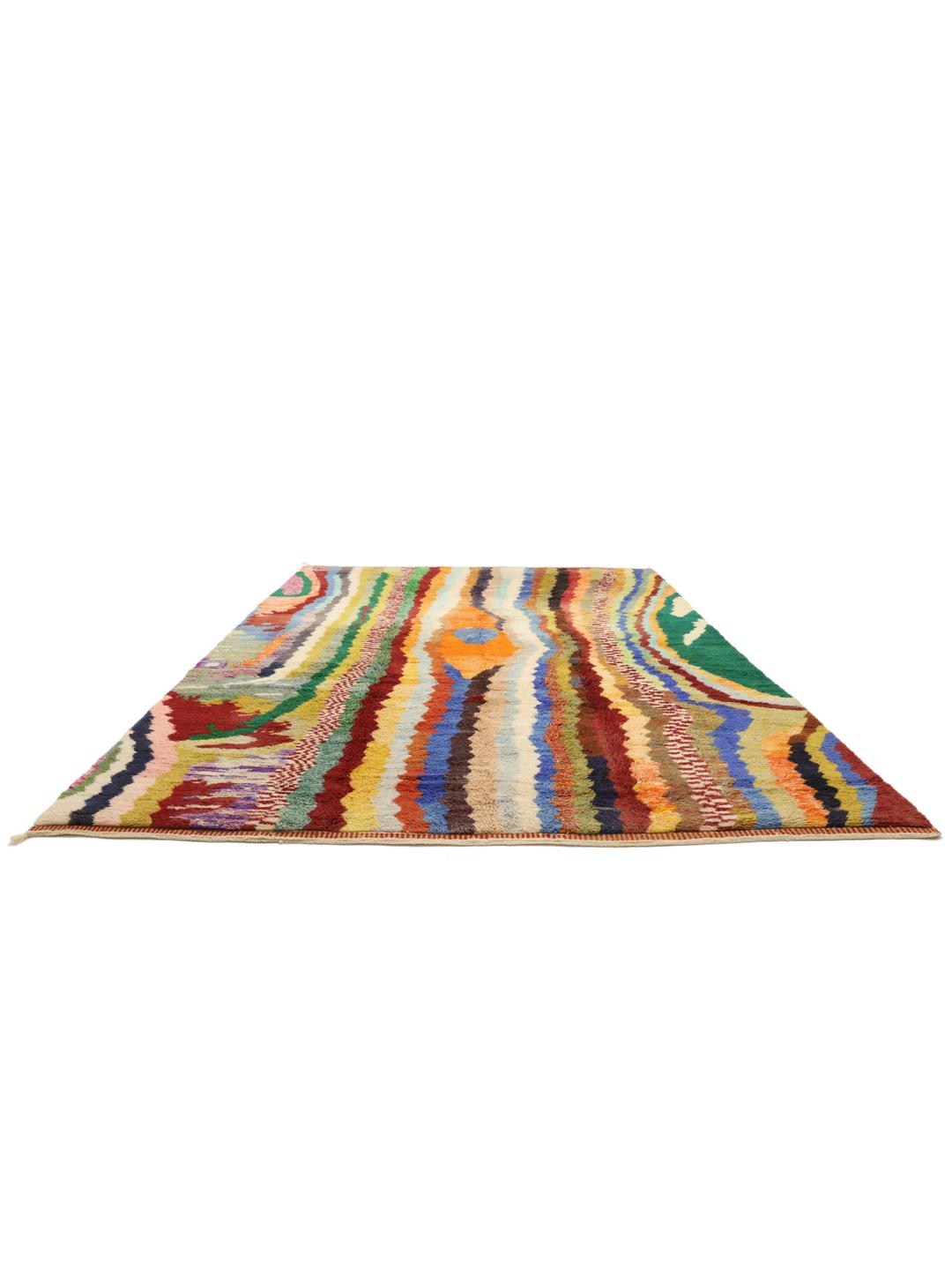
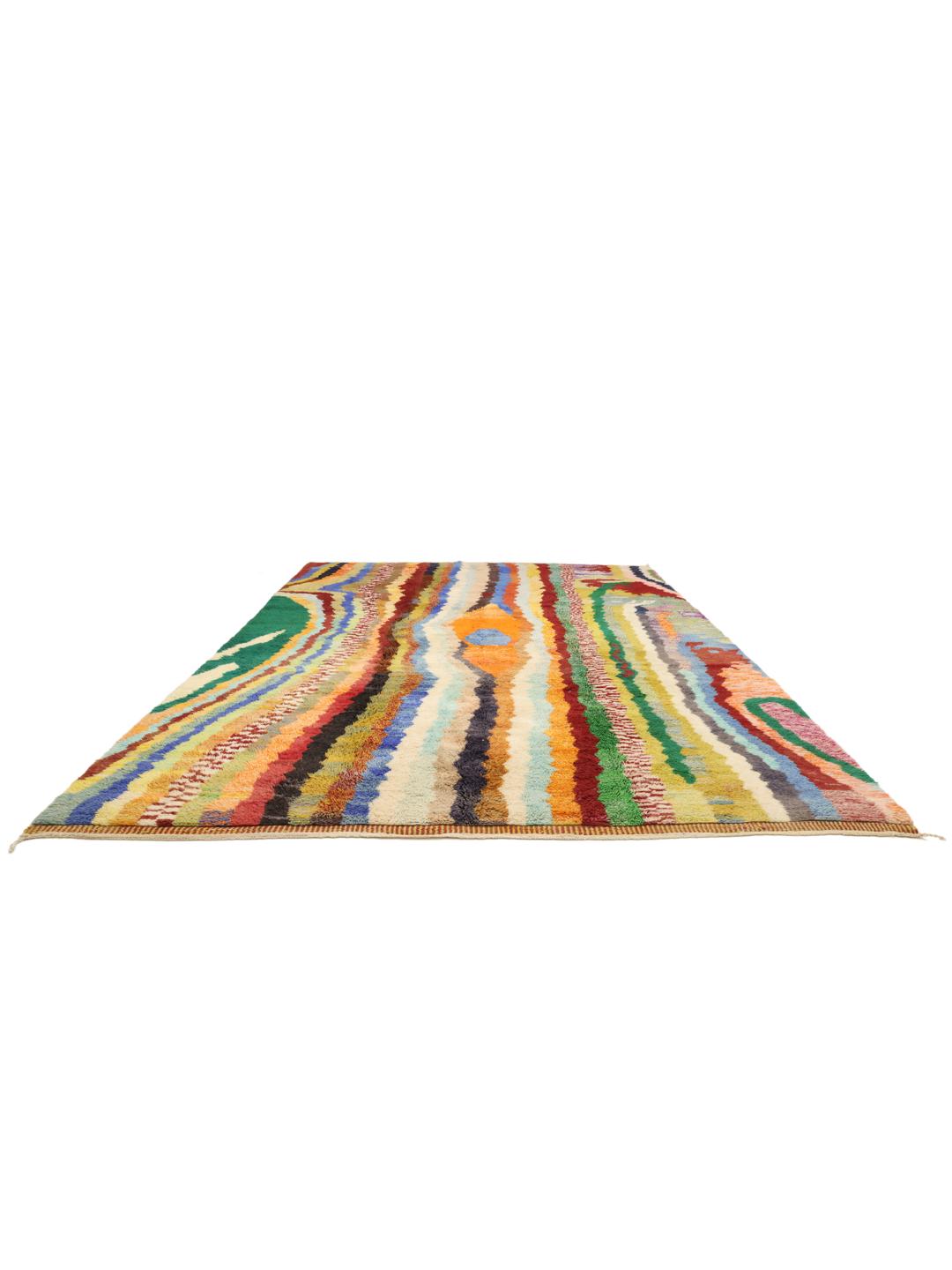
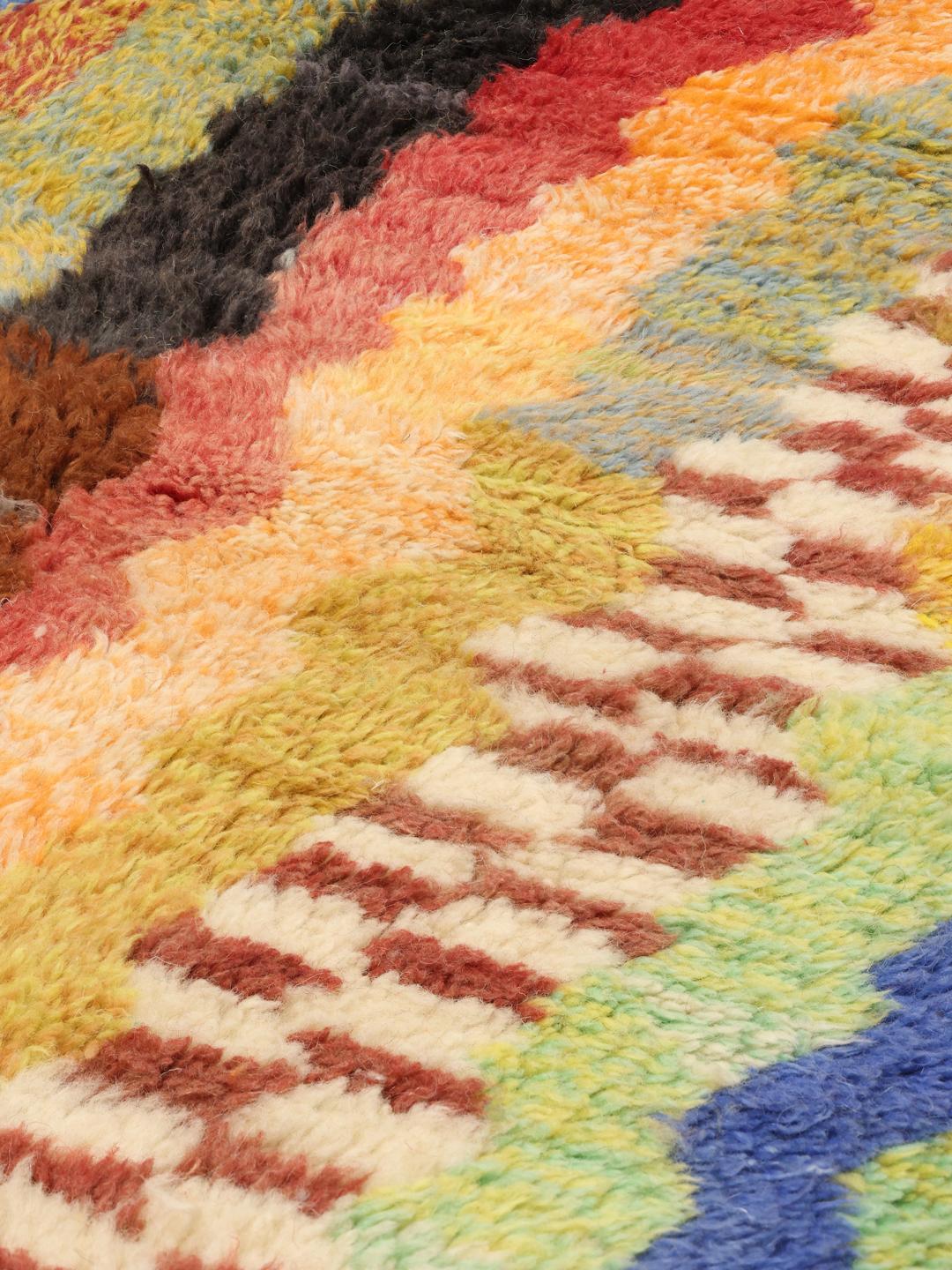
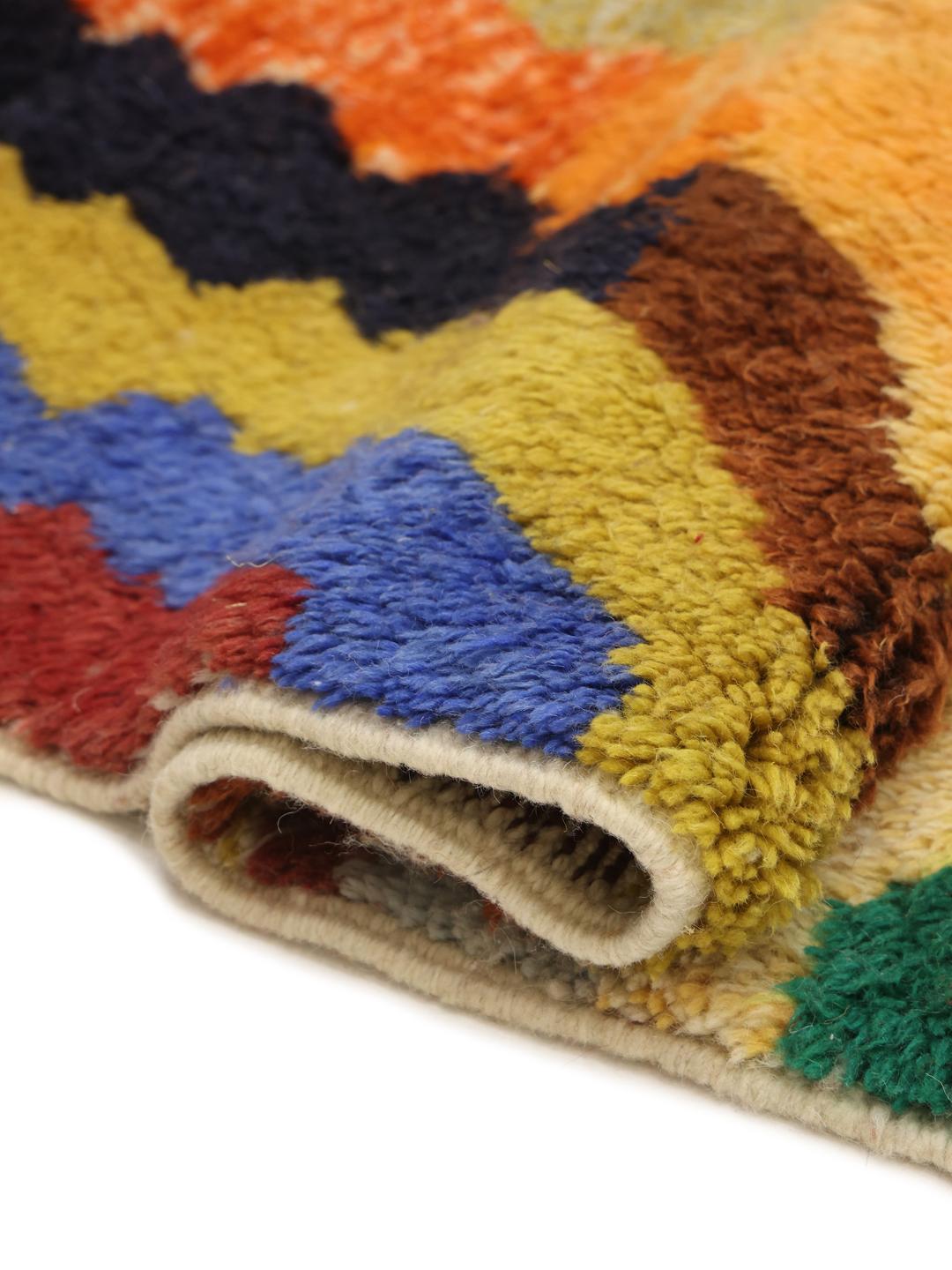
The term Beni Ourain refers to the specific tribal groups known for their exceptional Wool and distinctive, often minimalist, aesthetic. While historically these rugs were celebrated for their natural, undyed Wool patterns, modern expressions like this one showcase a bold evolution, incorporating vibrant pigments that celebrate the creative spirit of the weavers.
Signature elements of these rugs include the use of geometric motifs such as diamonds, zig-zags, and vertical stripes. These patterns are often symbolic, reflecting the weaver's personal stories, their environment, or their hopes for the future. The irregular, free-hand nature of the lines is intentional, distinguishing these pieces from mass-produced imitations.
Collecting these rugs is an investment in cultural heritage. They represent a bridge between ancient nomadic traditions and modern interior design. By bringing one into your home, you are continuing a long-standing tradition of craftsmanship and supporting the preservation of a unique art form that remains deeply connected to its Moroccan roots.