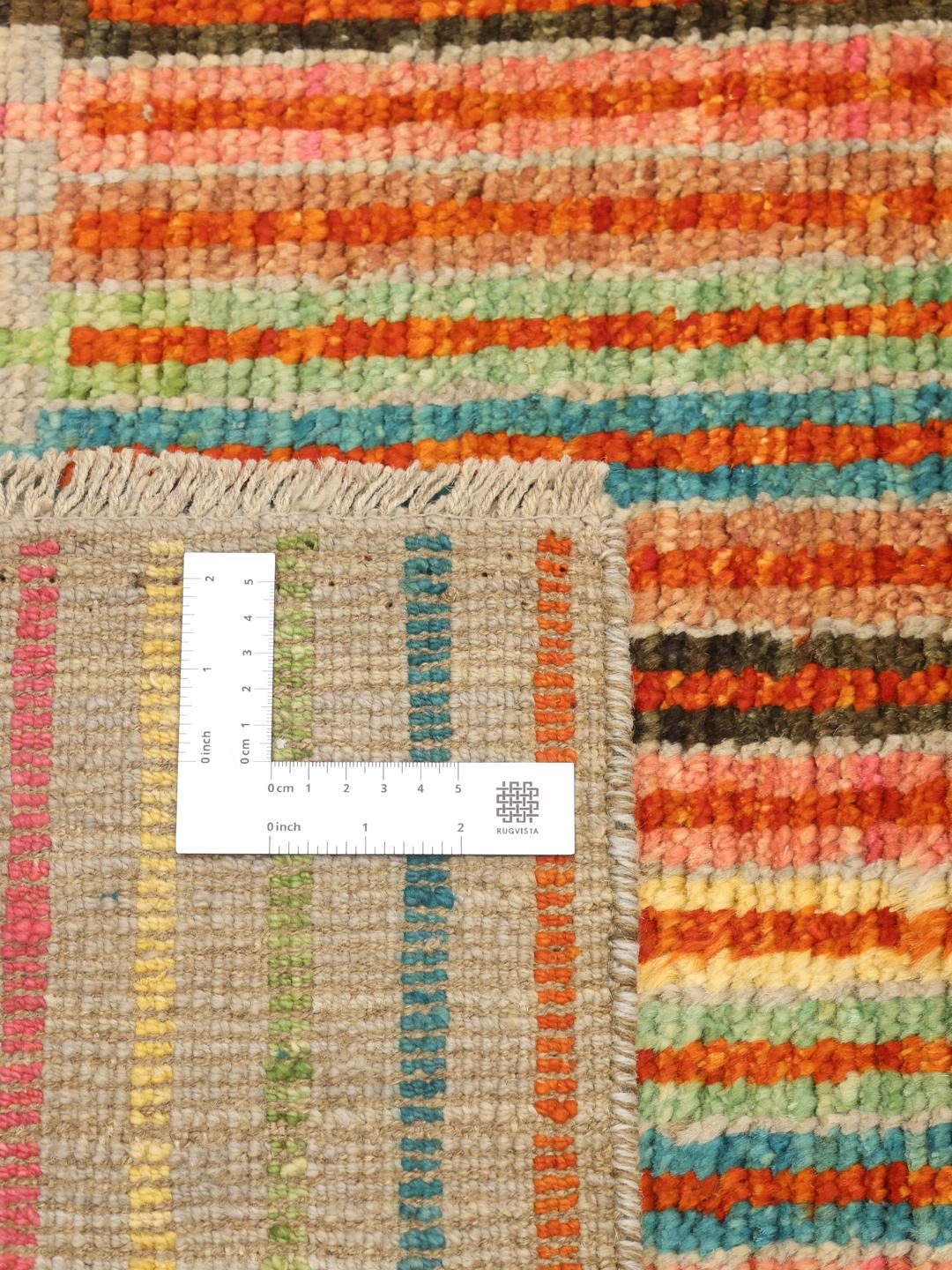
The tradition of rug weaving in Afghanistan is deeply rooted in the cultural fabric of the Middle East, drawing on centuries of nomadic and settled craft practices. These rugs are renowned for their strength and the use of high-quality local wool, which has long been prized for its natural sheen and durability.
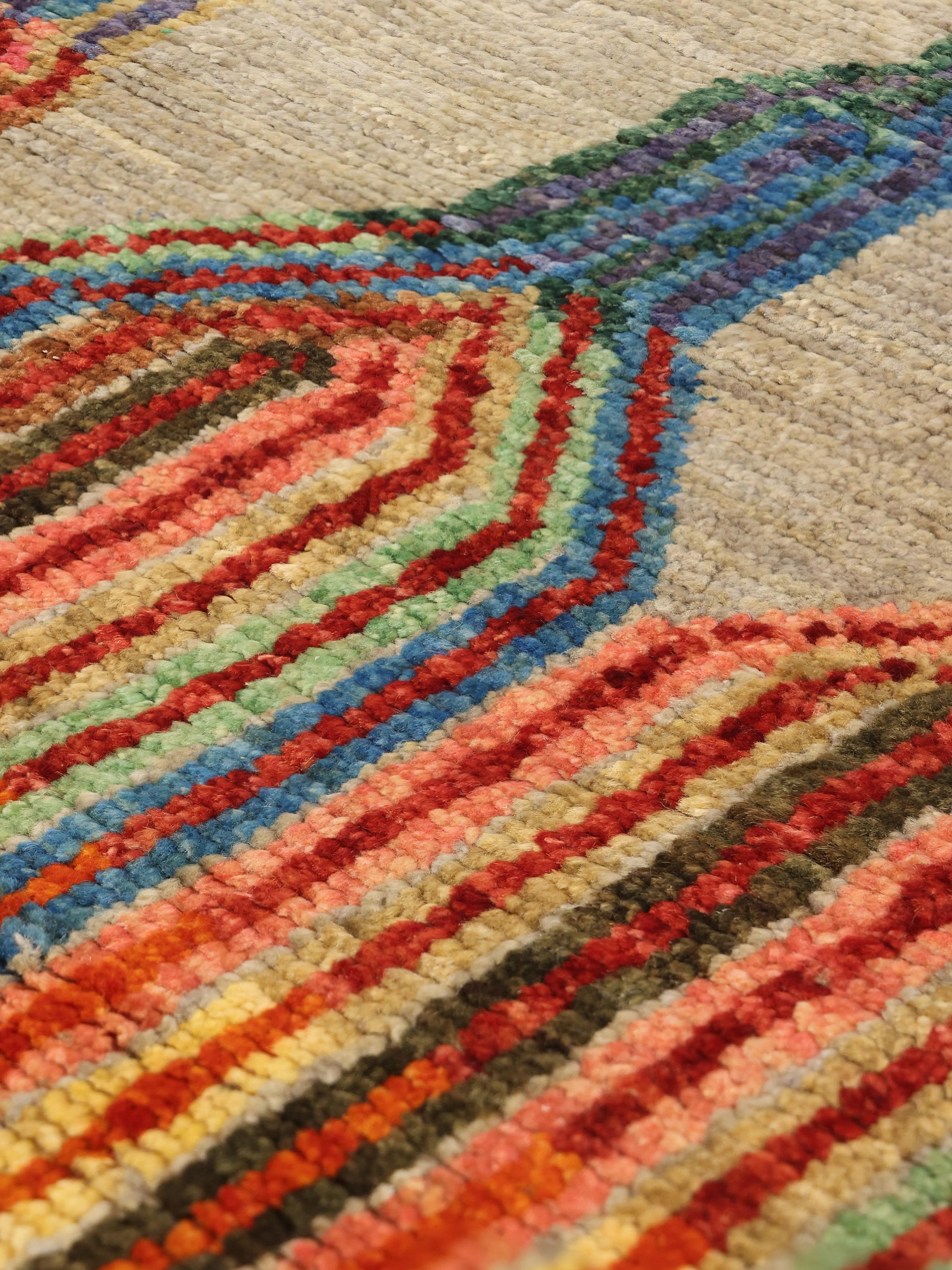
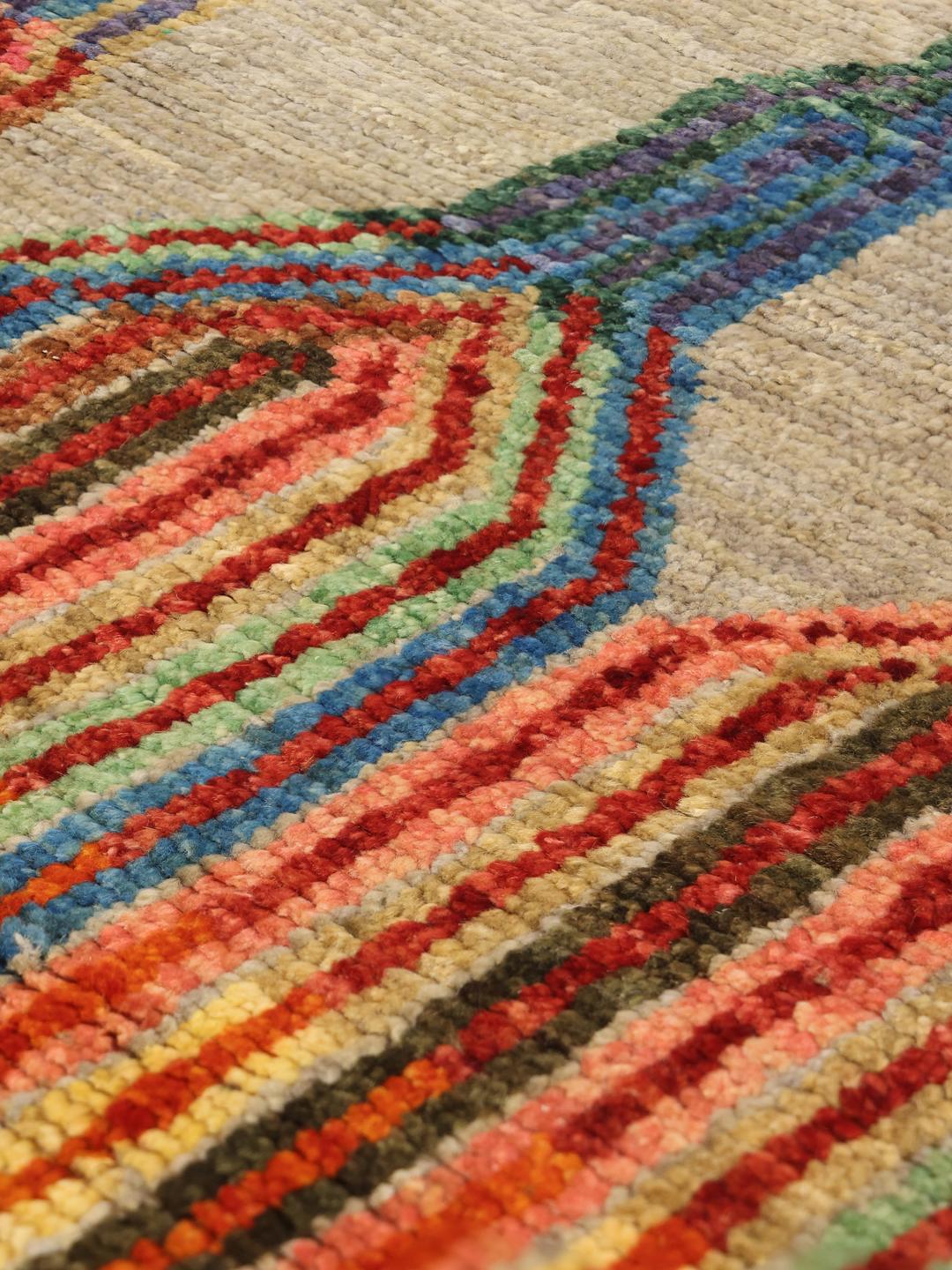
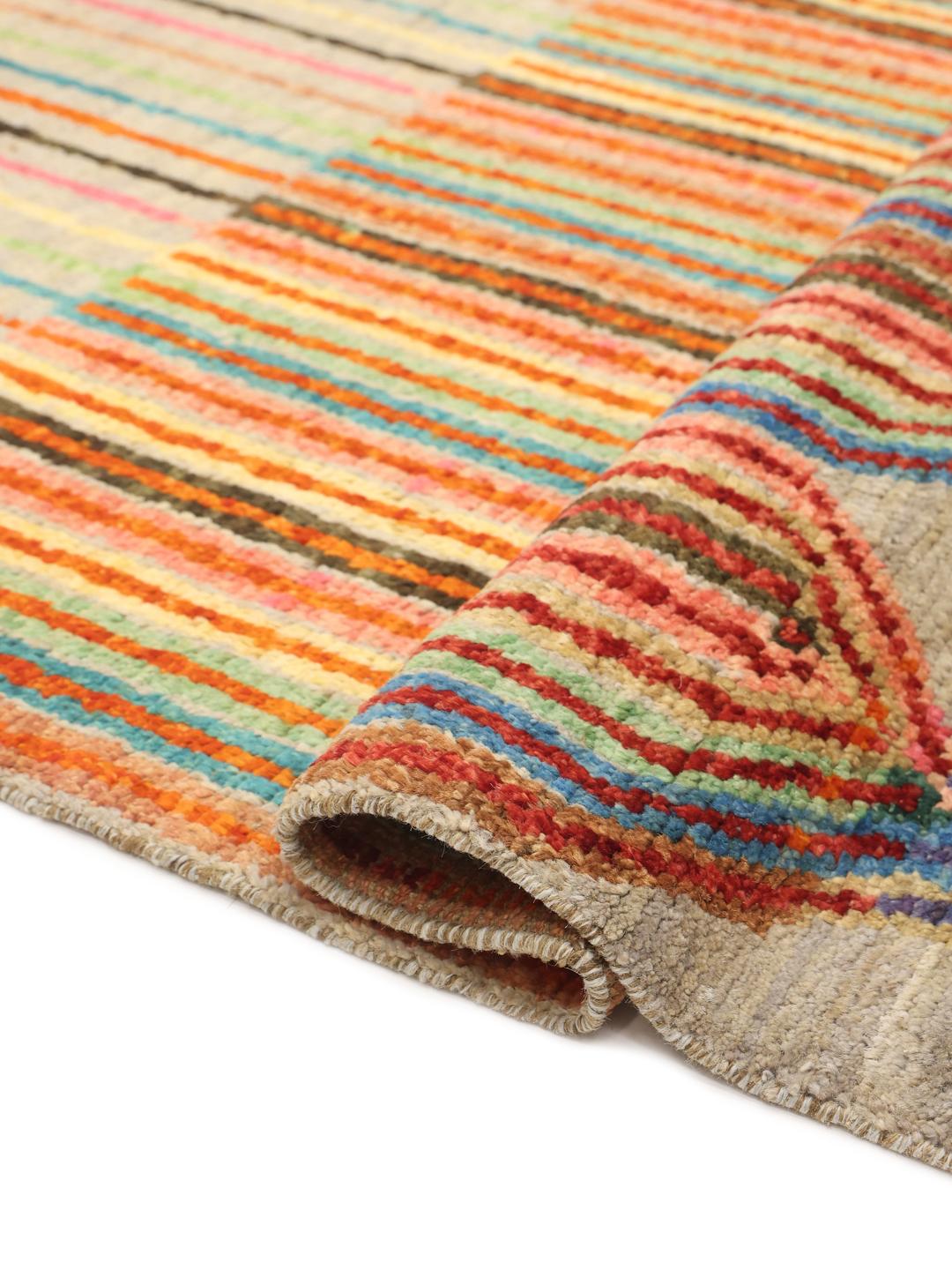
Hand-knotted rugs are defined by their construction, where individual loops of yarn are tied around the warp and weft threads of the foundation. This laborious process is what gives the rug its weight, texture, and lasting value. The more knots per square metre, the more refined the design details and the more robust the final product.
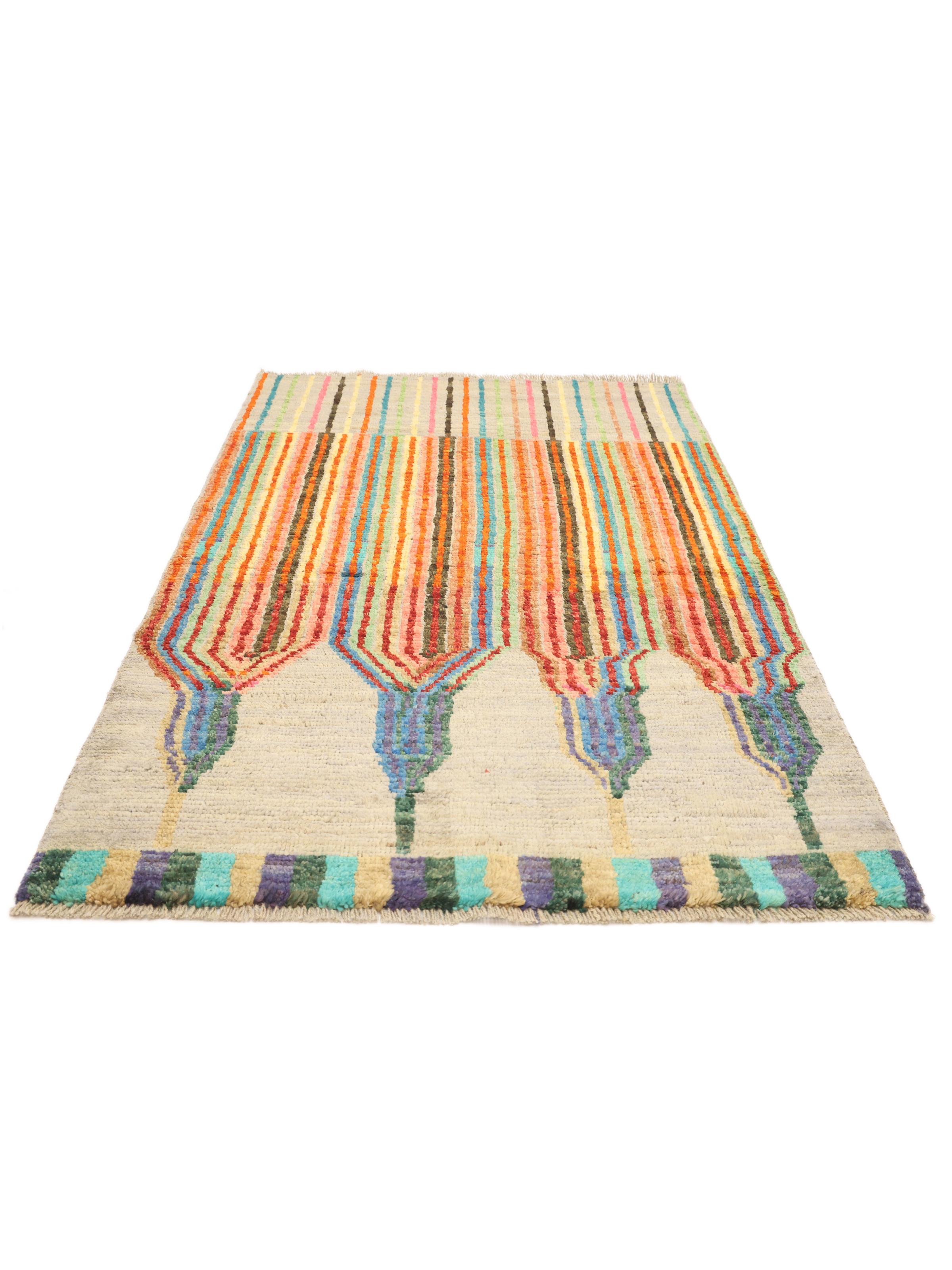
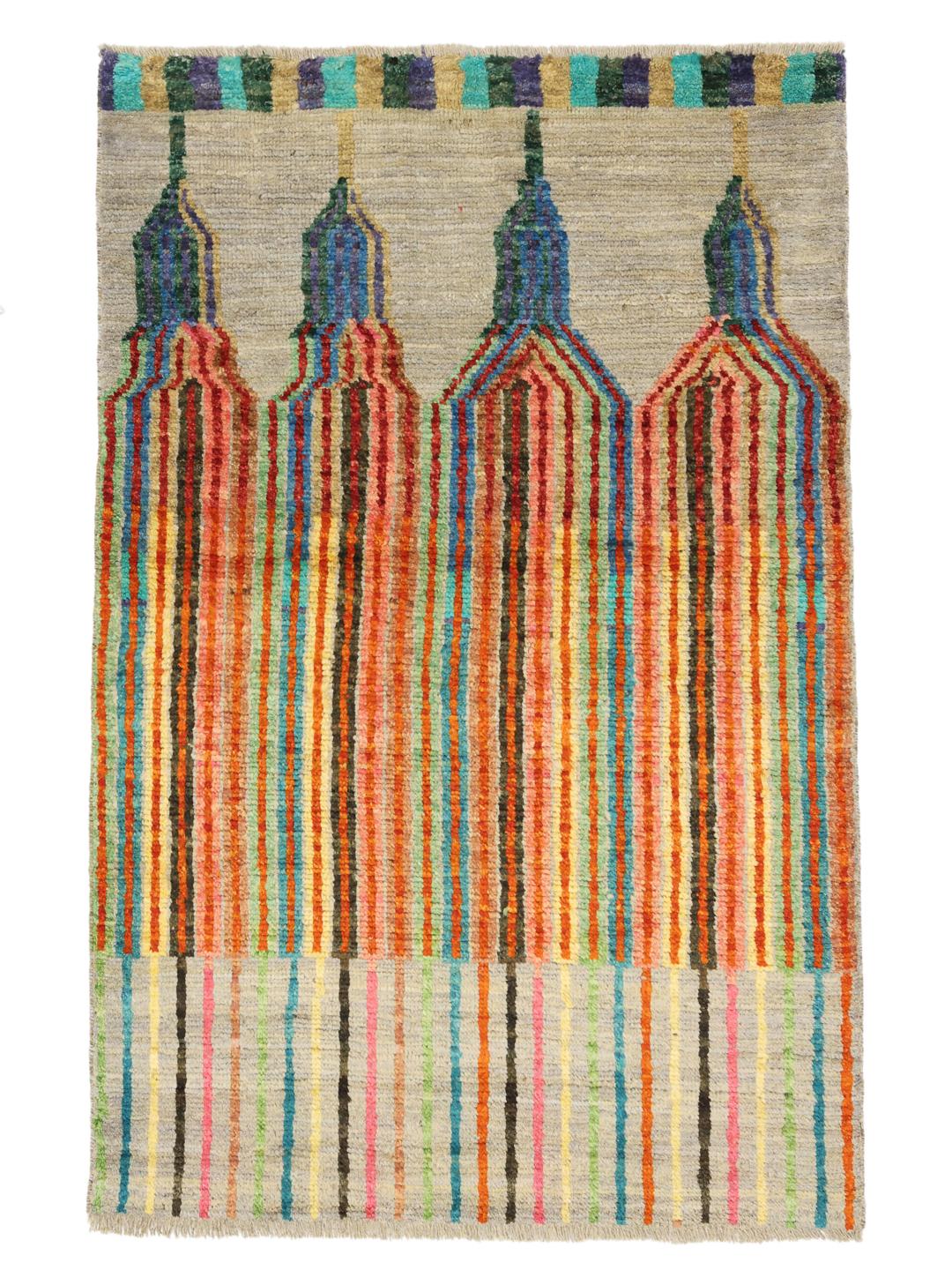
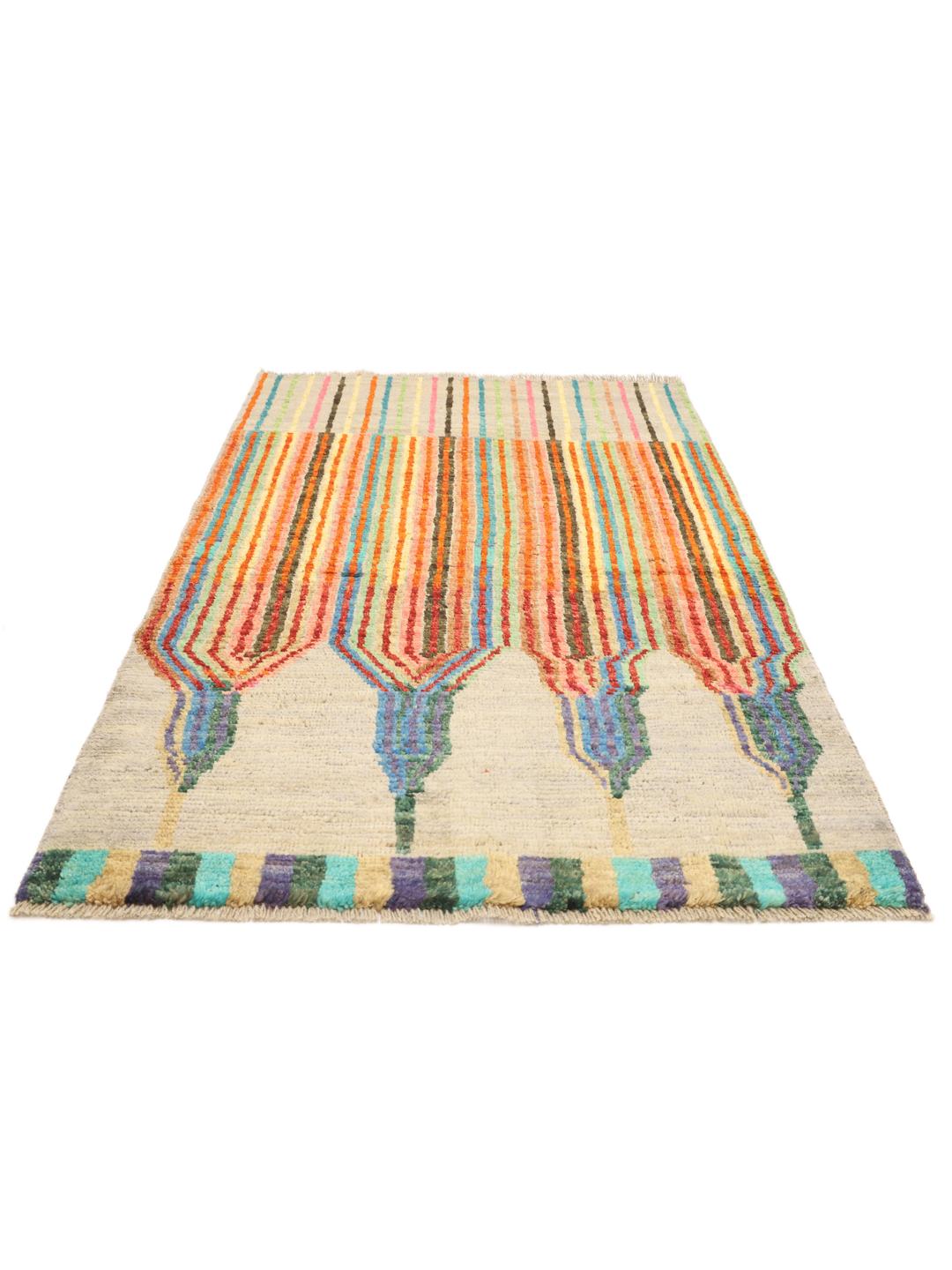
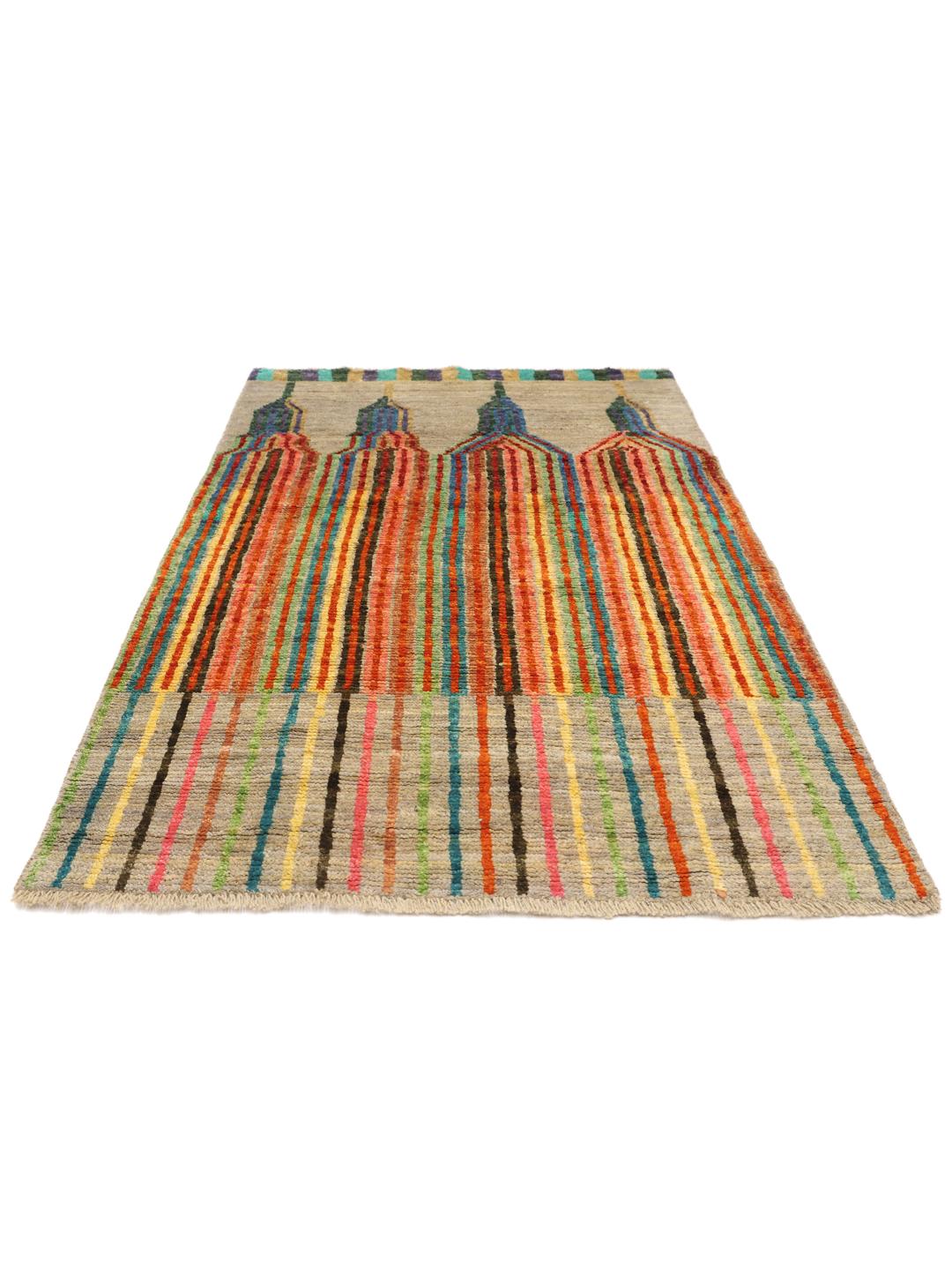
Design traditions in this region often blend geometric motifs with symbolic patterns passed down through generations. While traditional styles might follow strict symmetry, modern interpretations often introduce artistic, abstract elements that allow for more creative expression, as seen in the bold lines and shapes of this specific piece.
Owning a hand-knotted rug from this region is about more than just floor covering; it is an investment in human skill and cultural heritage. Collectors value these rugs for their authenticity, the unique character of the hand-spun wool, and the clear evidence of the artisan's hand in every thread.