The Berber rug tradition originates from the indigenous tribal communities of North Africa, yet the techniques and design spirit have travelled and taken root across various regions including Afghanistan.
Artisans in these areas adapt age-old storytelling methods into woven carpets, passing down pattern knowledge and spinning skills through generations of family workshops.
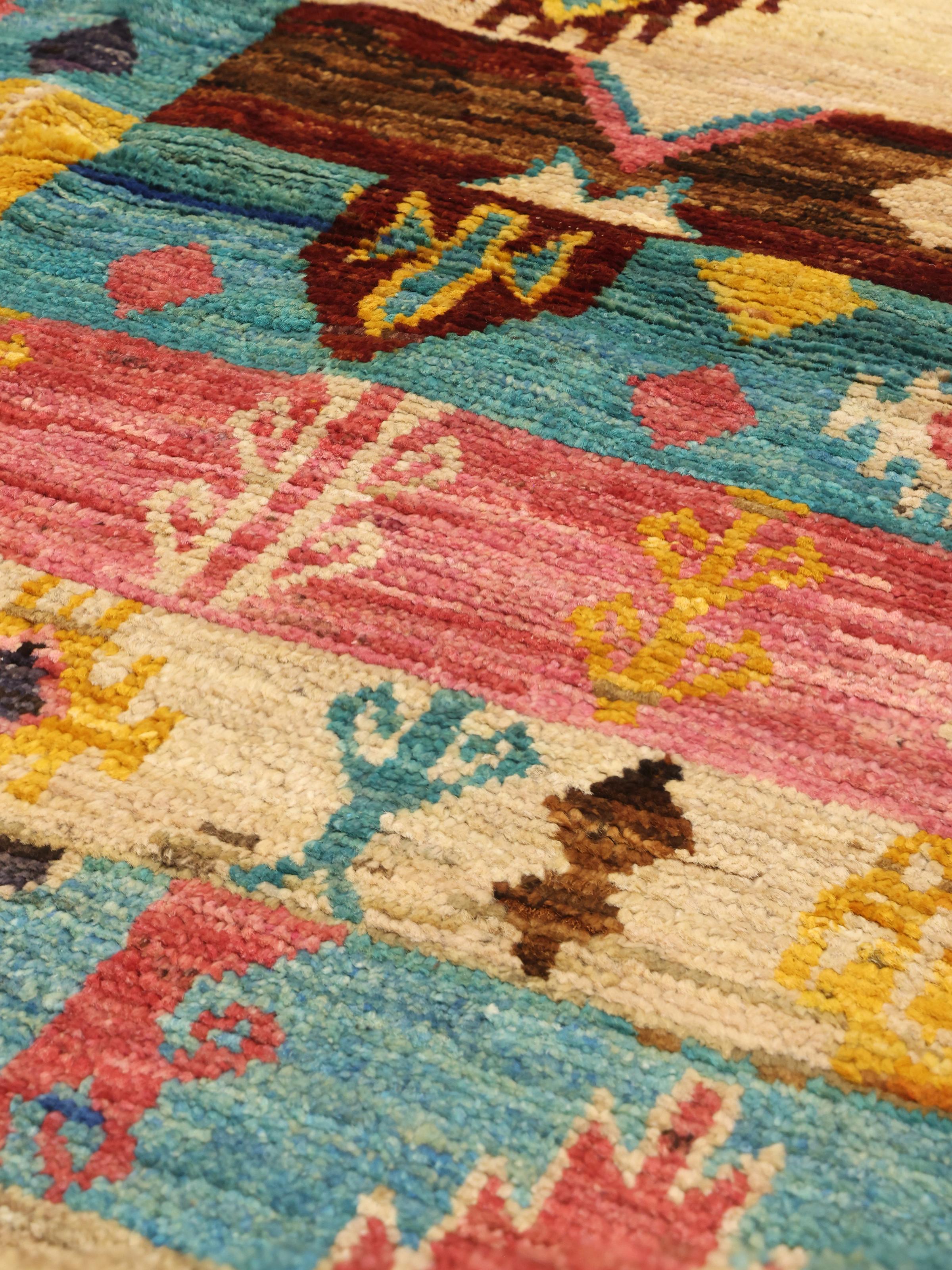
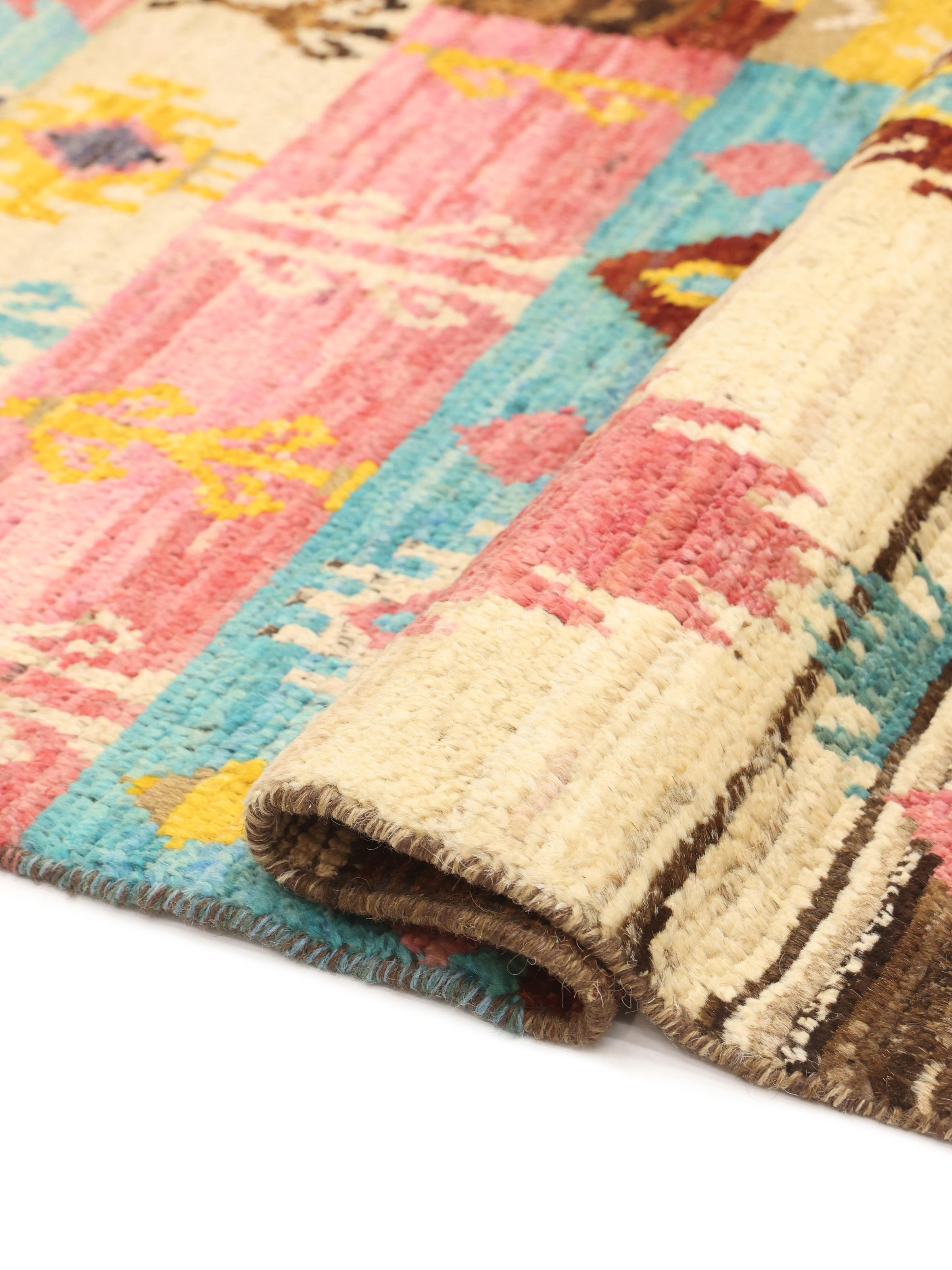
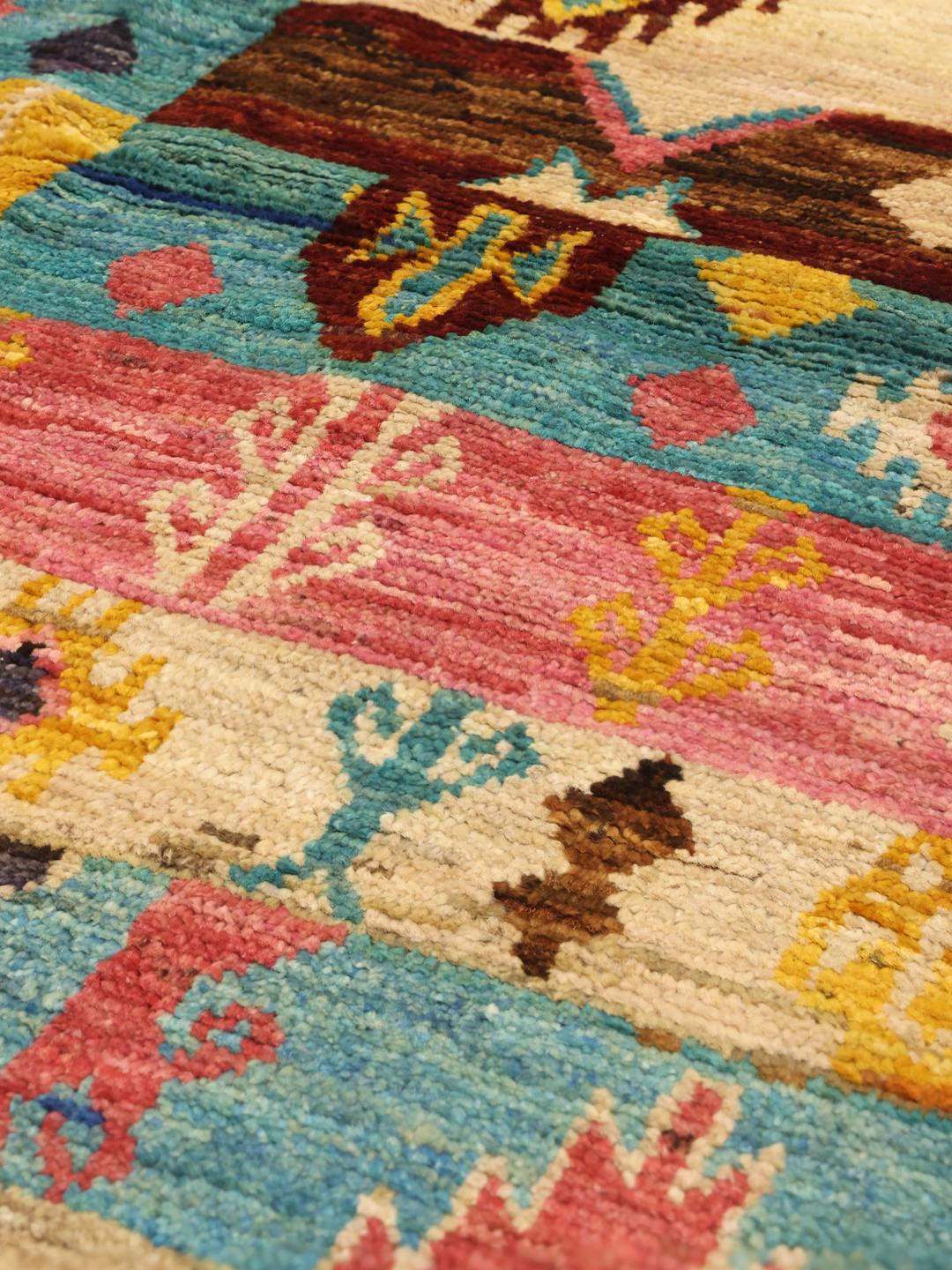
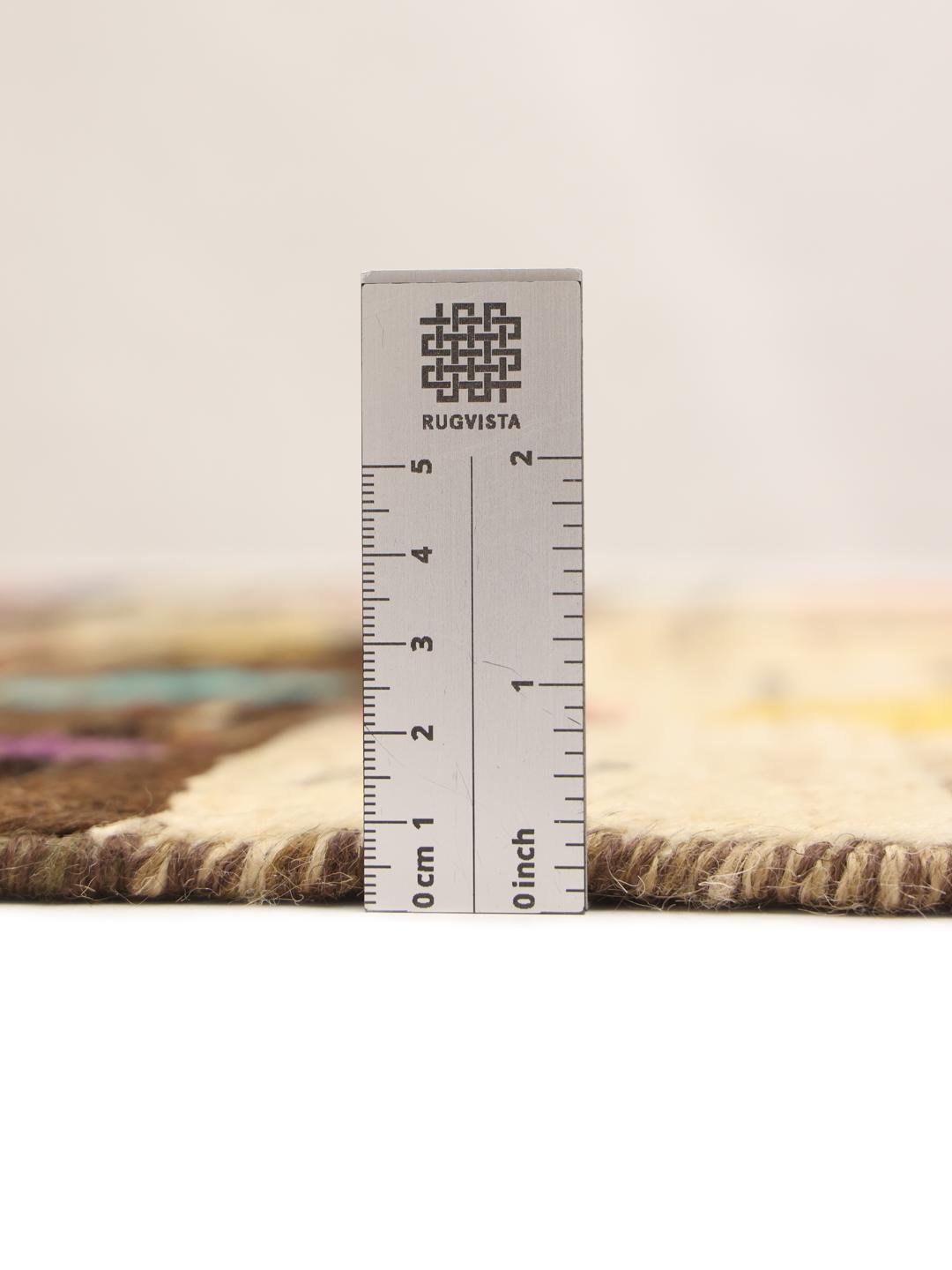
The 100% wool pile is spun to balance softness with resilience, creating a tactile surface that responds gracefully to natural light.
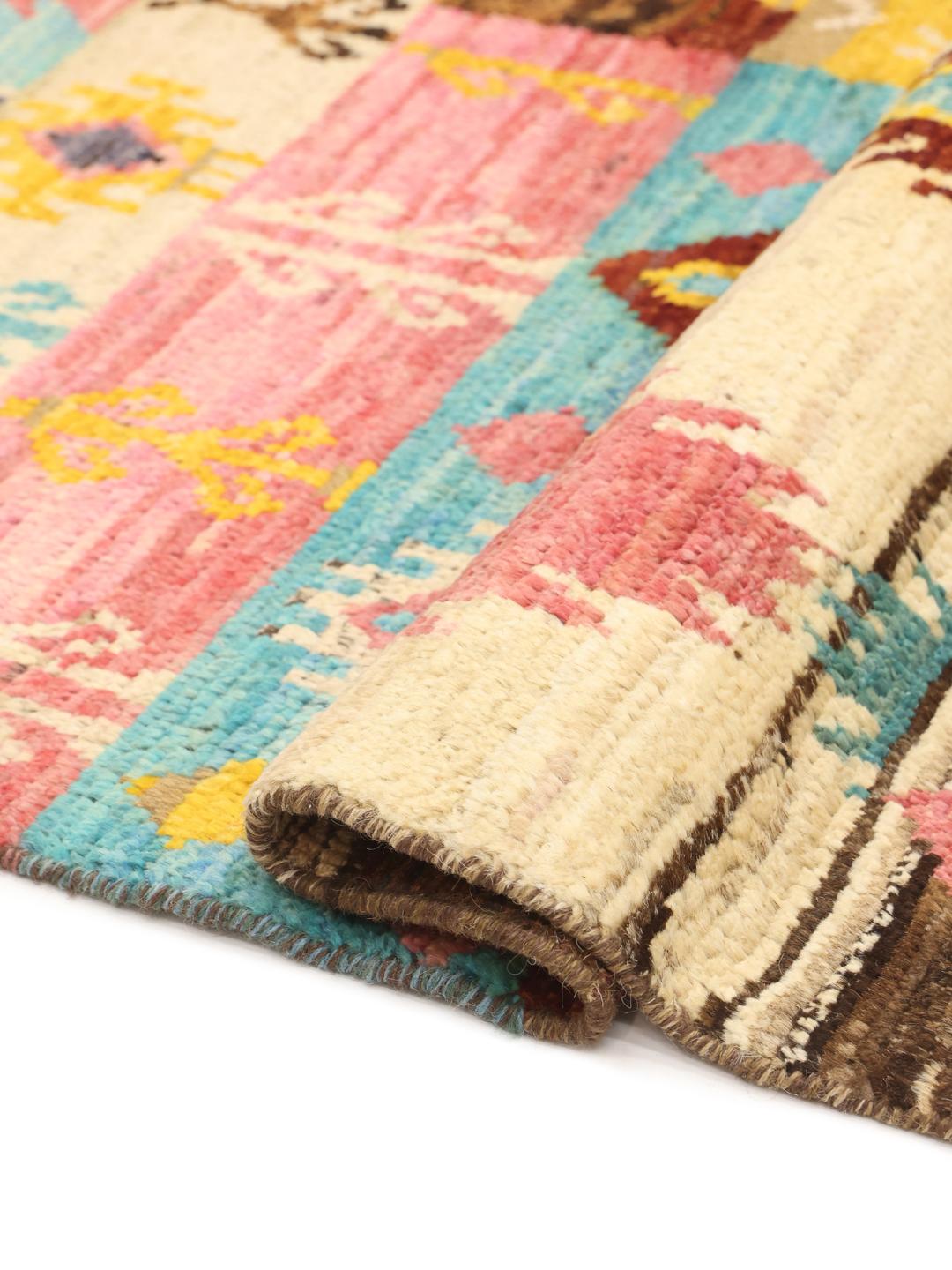
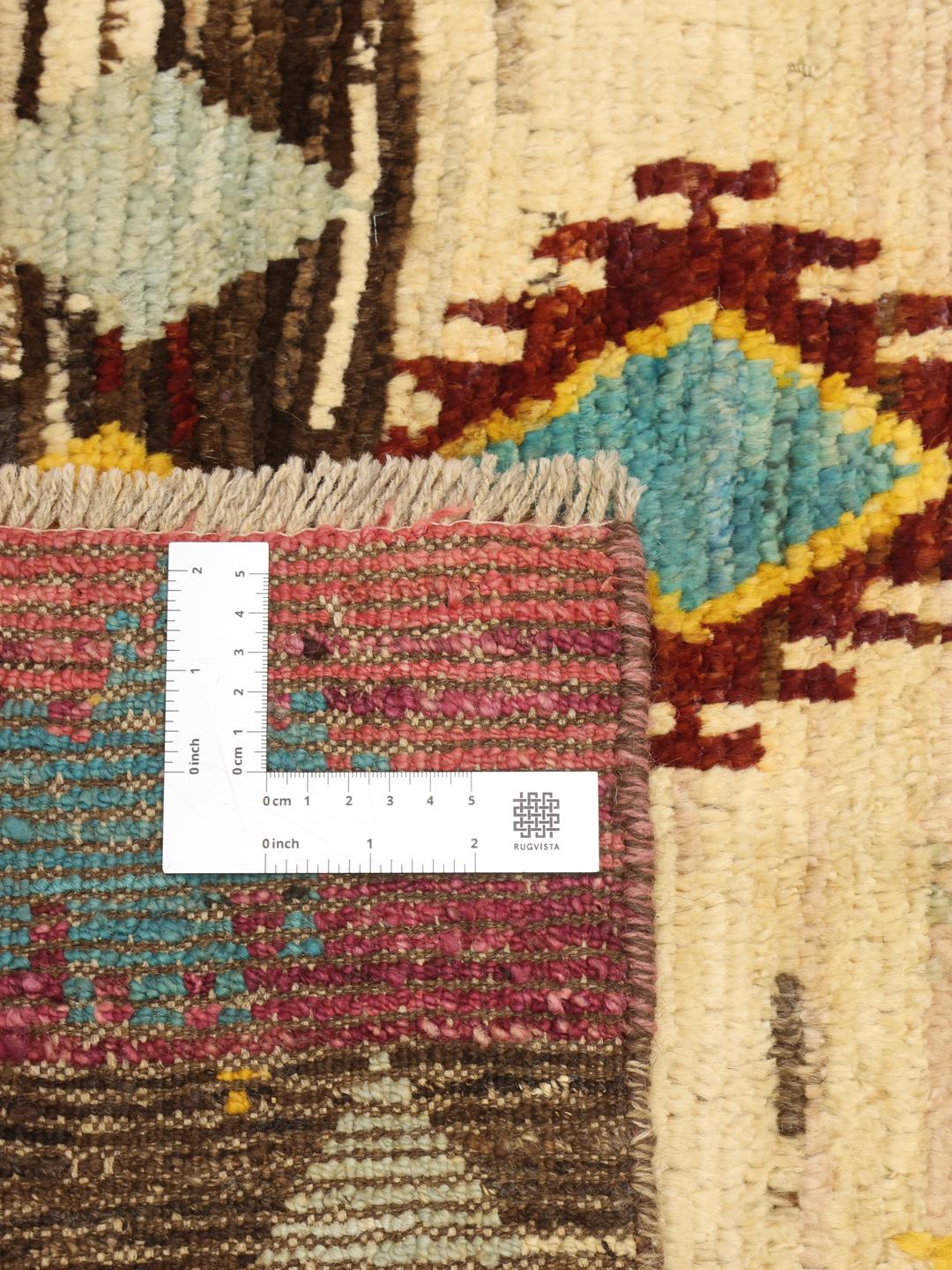
Traditional weaving methods ensure that the foundation and surface work together harmoniously, resulting in a flexible yet sturdy textile designed to lie flat and endure.
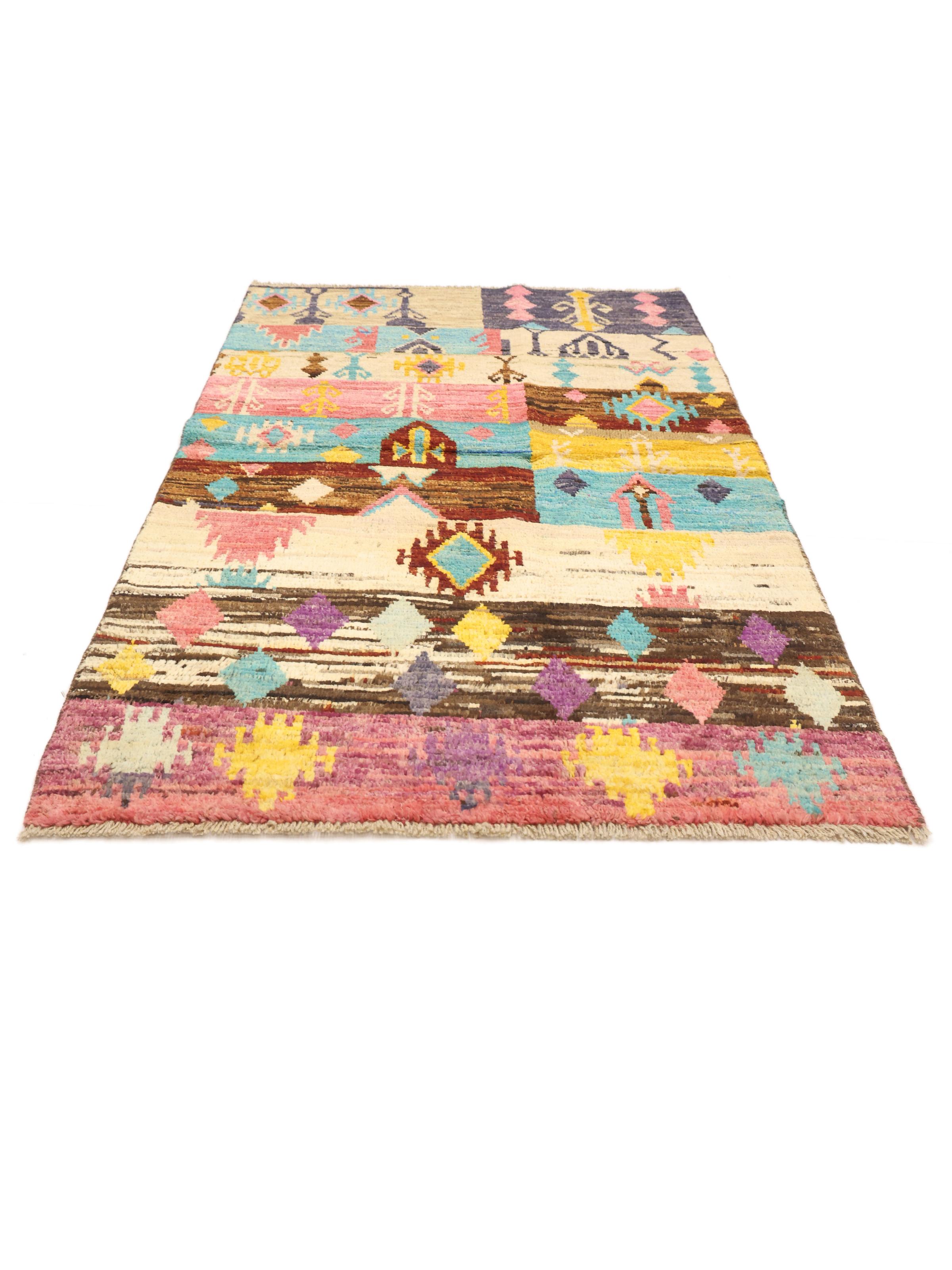
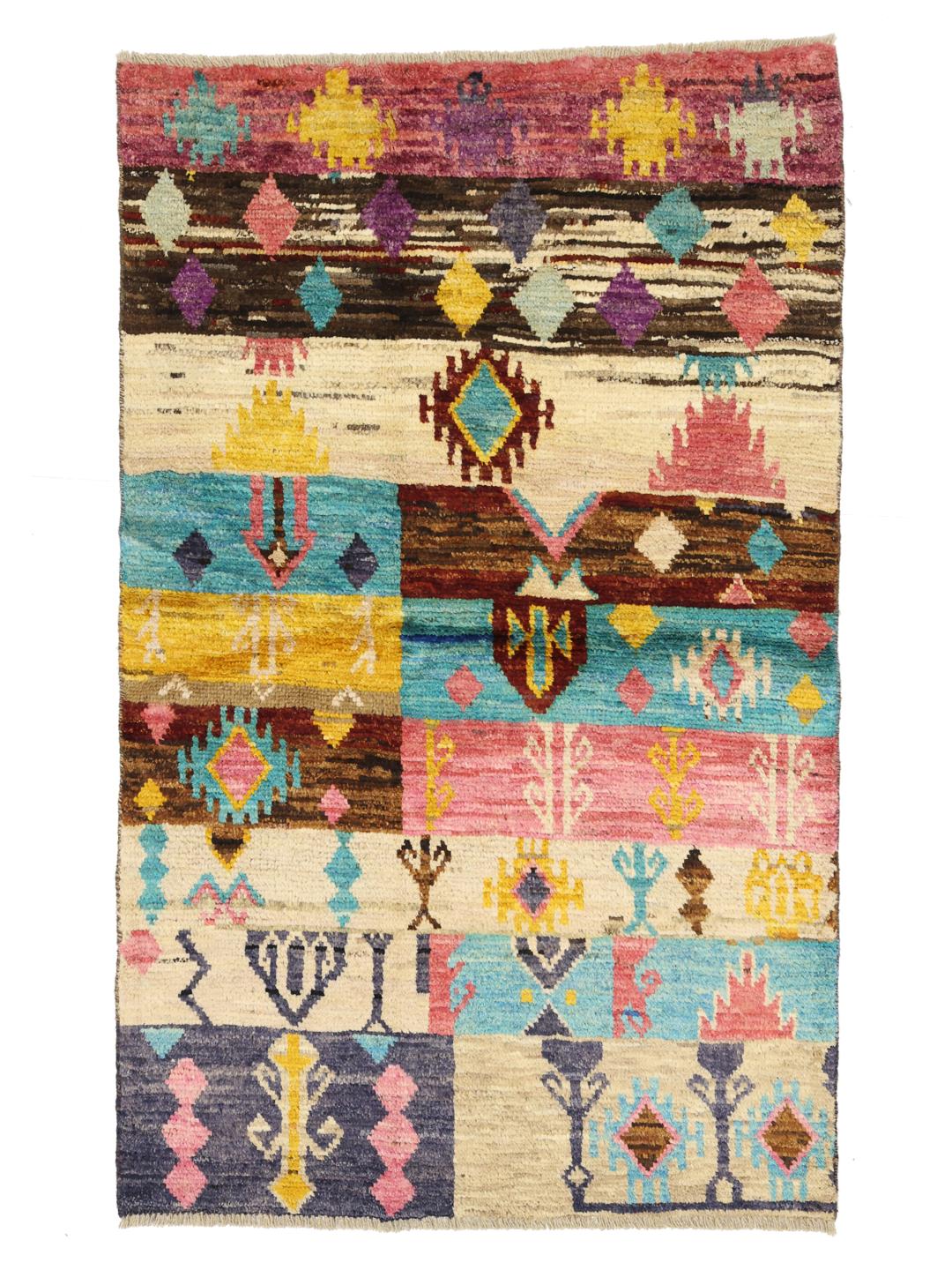
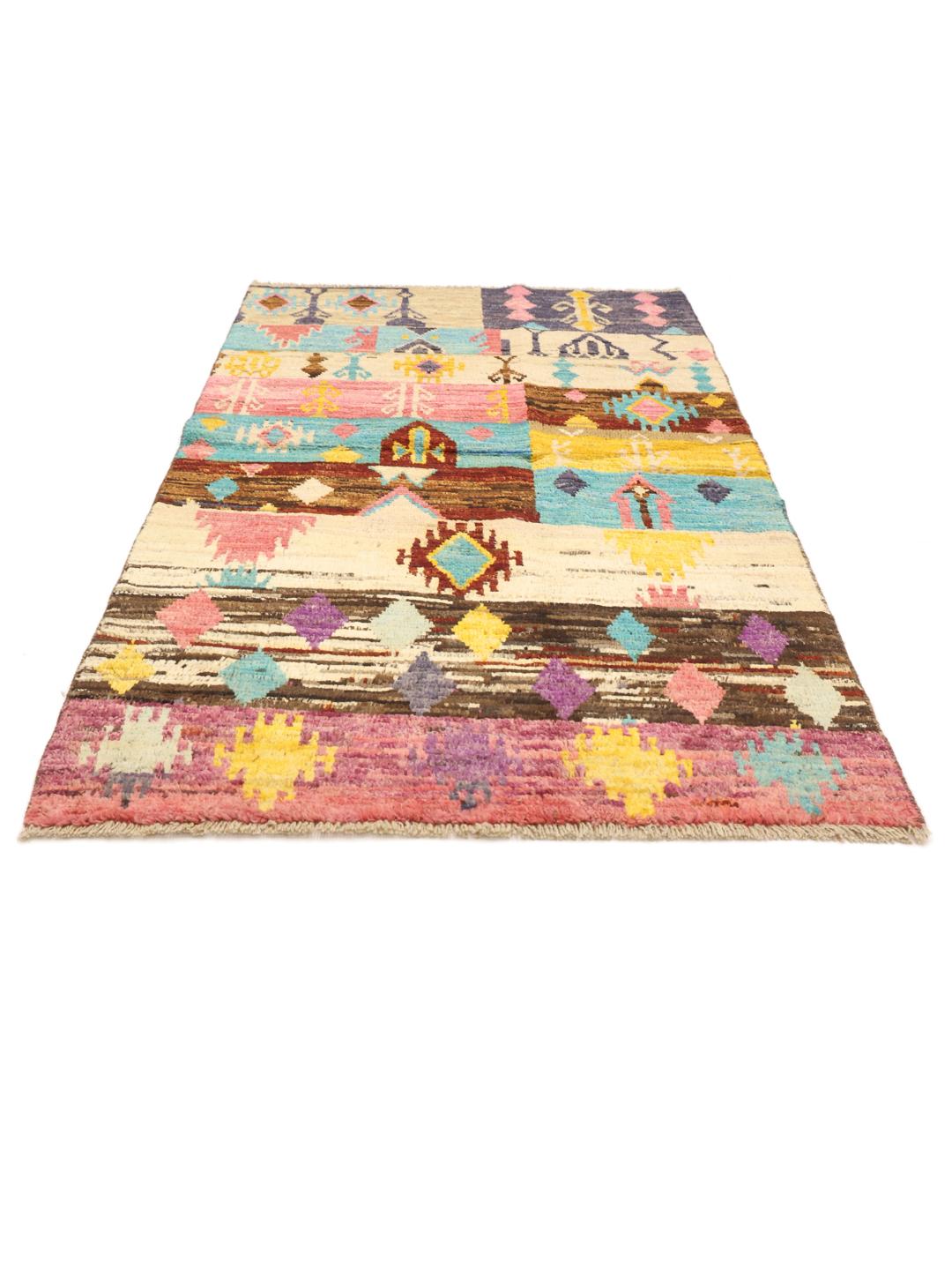
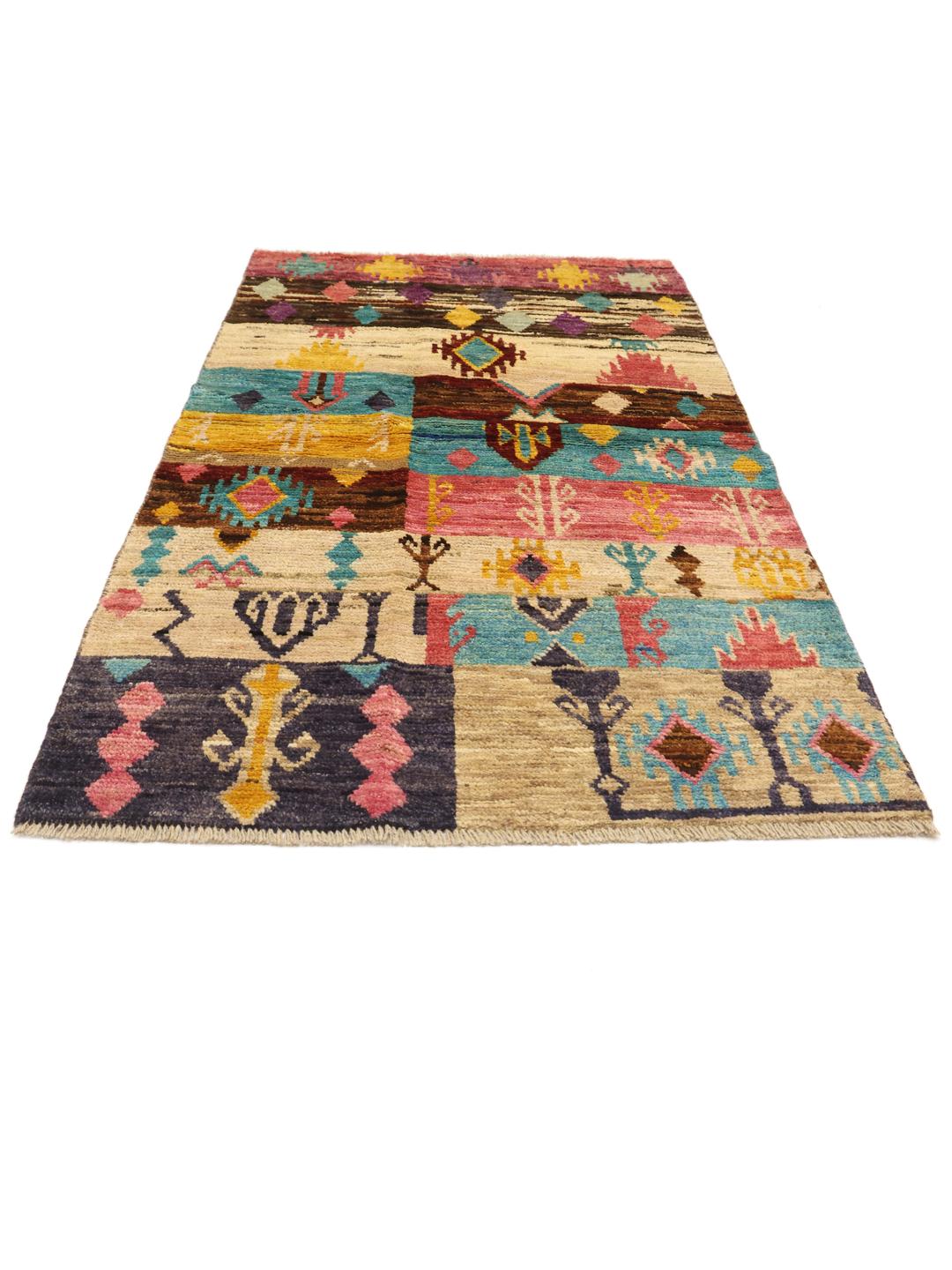
Visually, this tradition embraces expressive geometric arrangements, diamond symbols, and striking colour blocks that reflect tribal identity and local surroundings.
While traditional pieces often relied on muted earth tones, contemporary interpretations like this colourful variation introduce playful palettes while keeping the ancestral grammar of motifs intact.
Owning a hand-knotted rug from this tradition means preserving a living craft heritage that resists mass production.
Each finished piece represents an unbroken line of human skill, offering collectors and homeowners a tangible link to centuries of textile artistry.