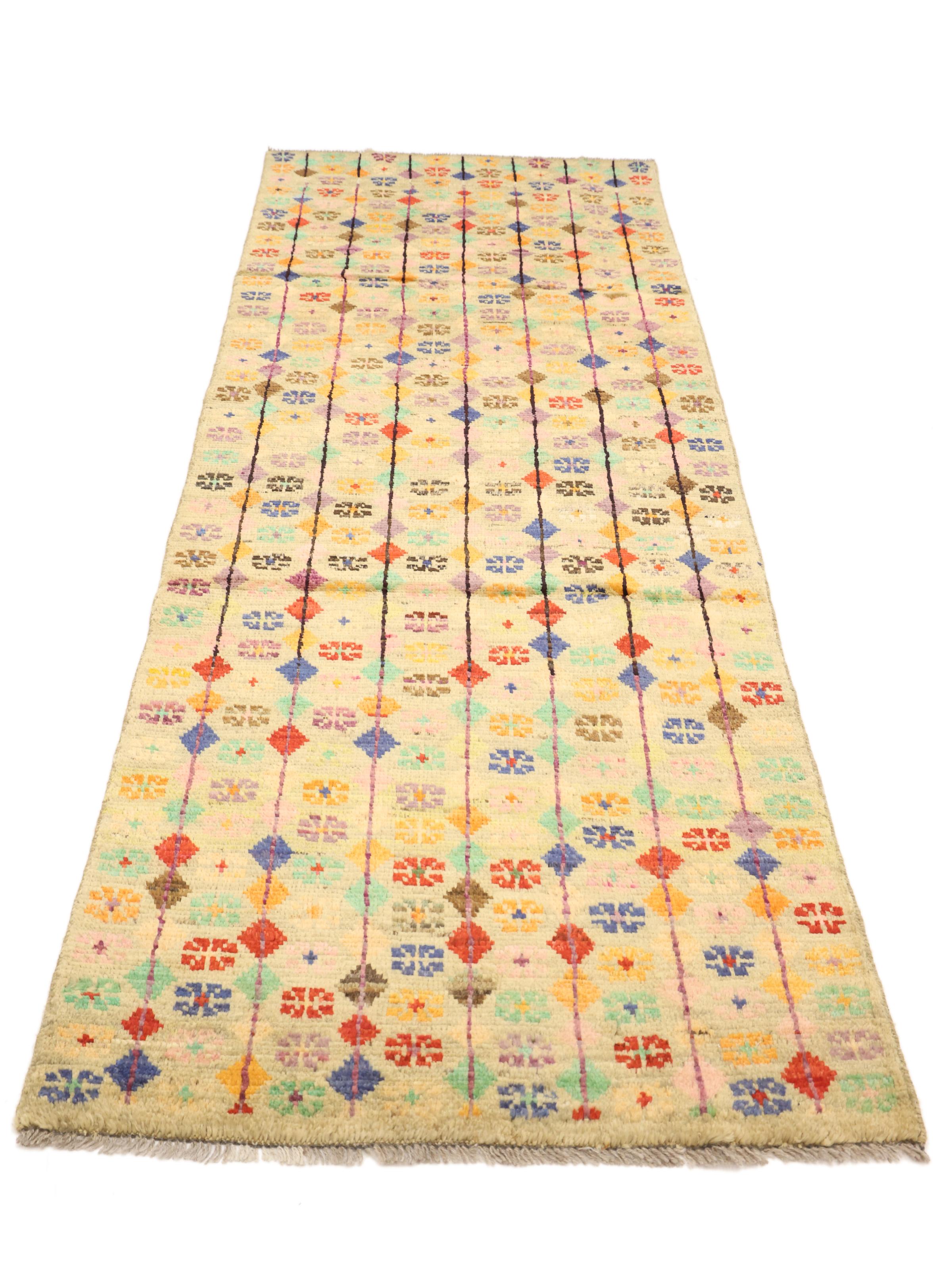
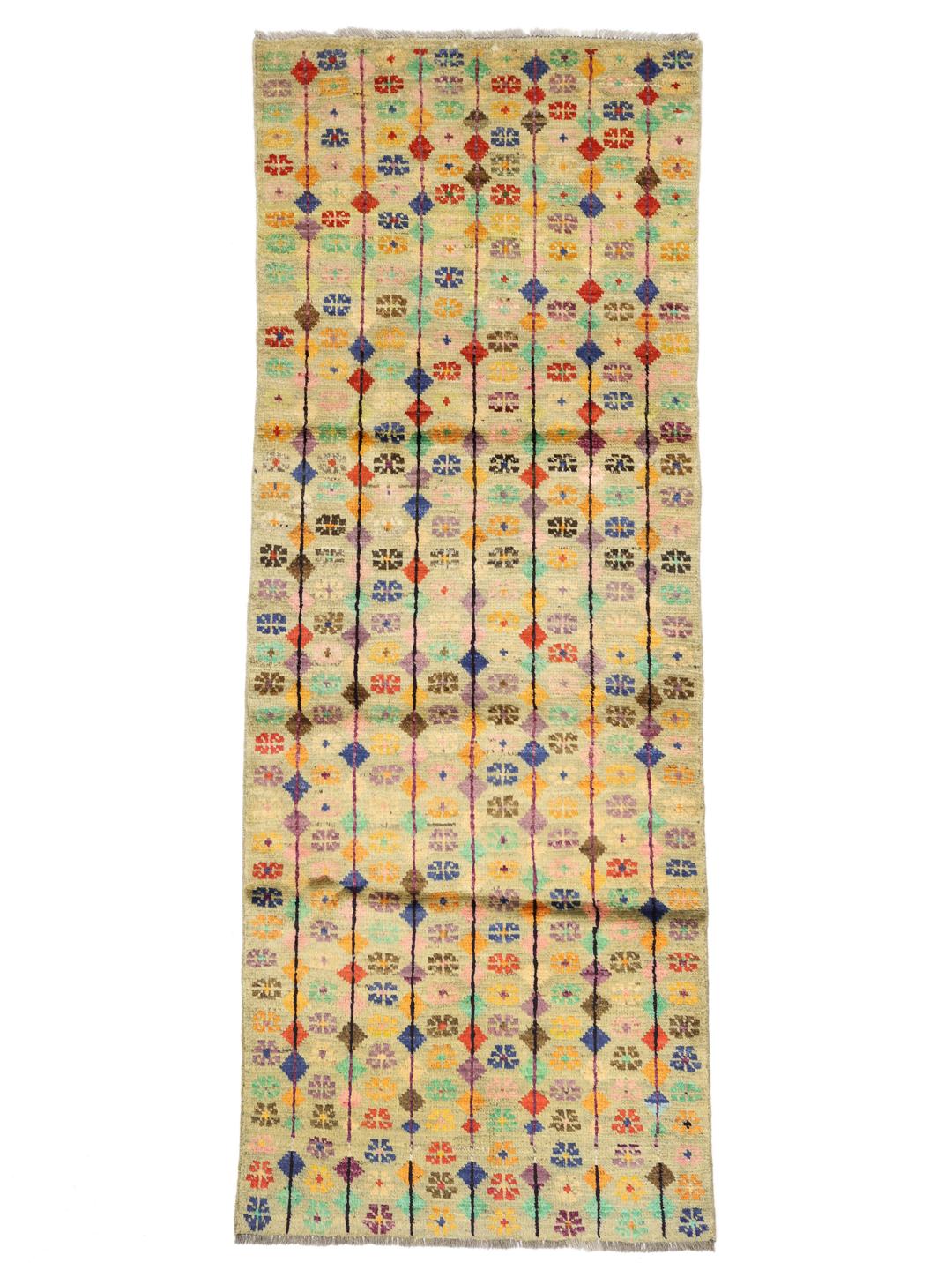
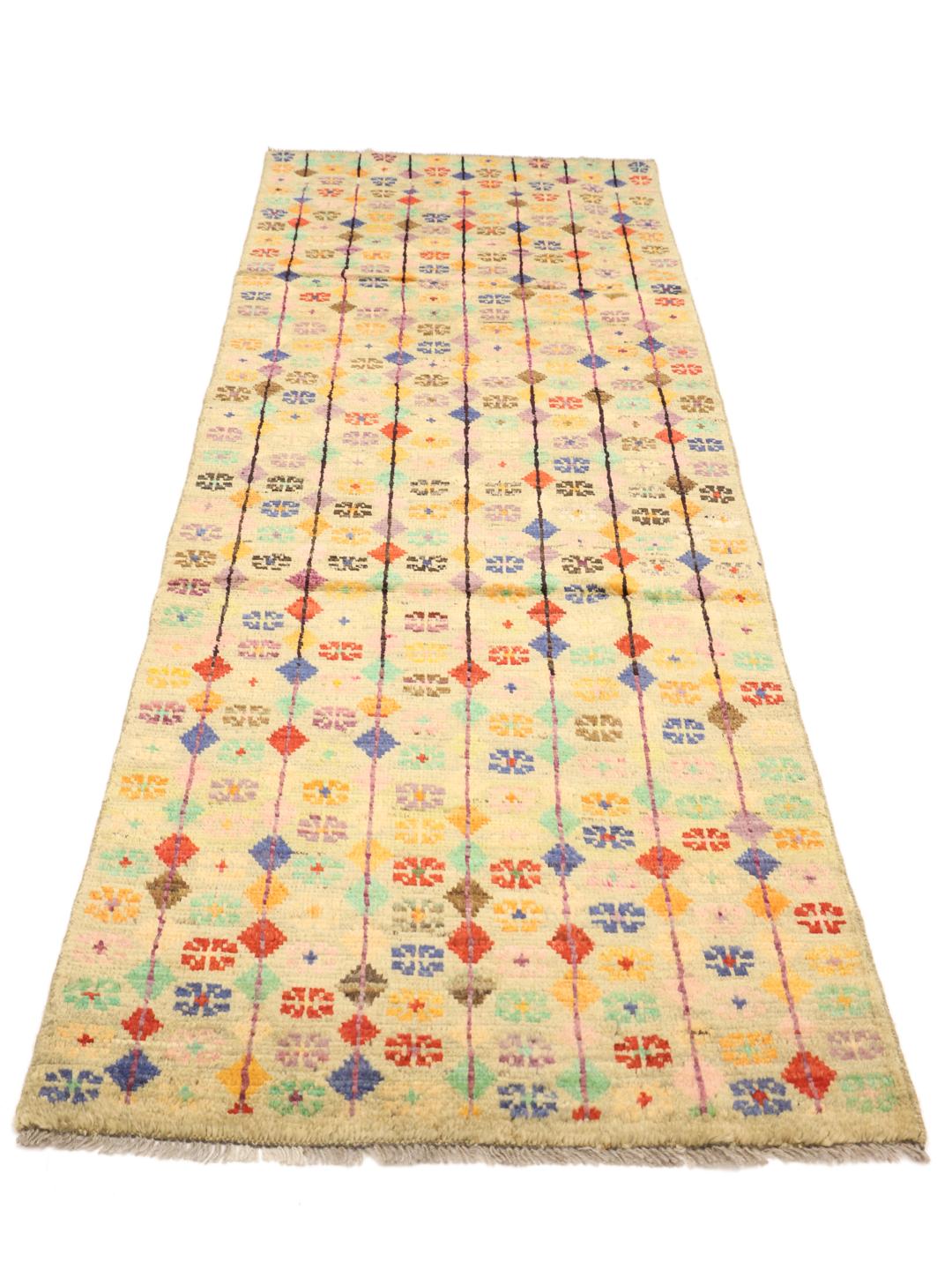
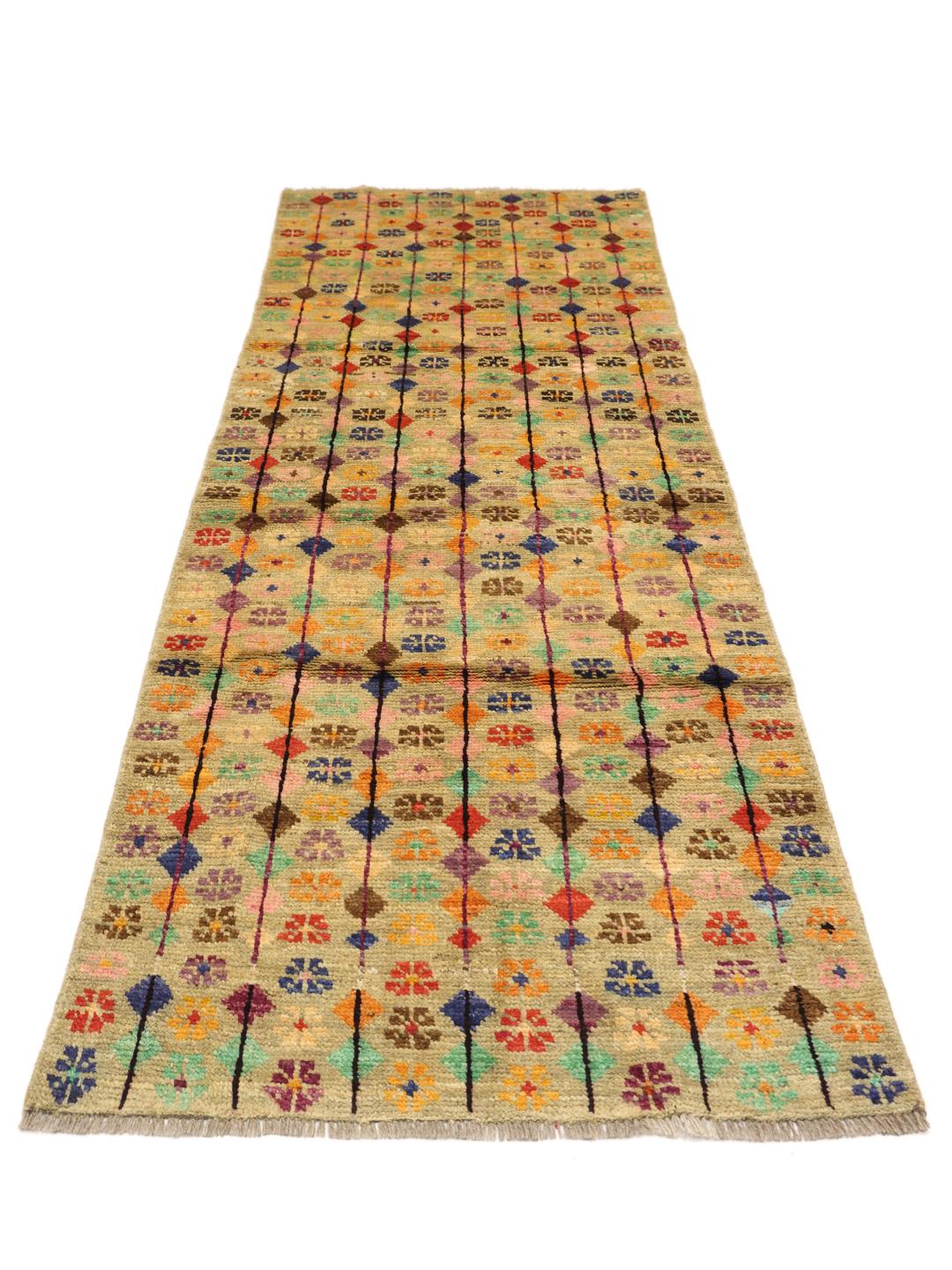
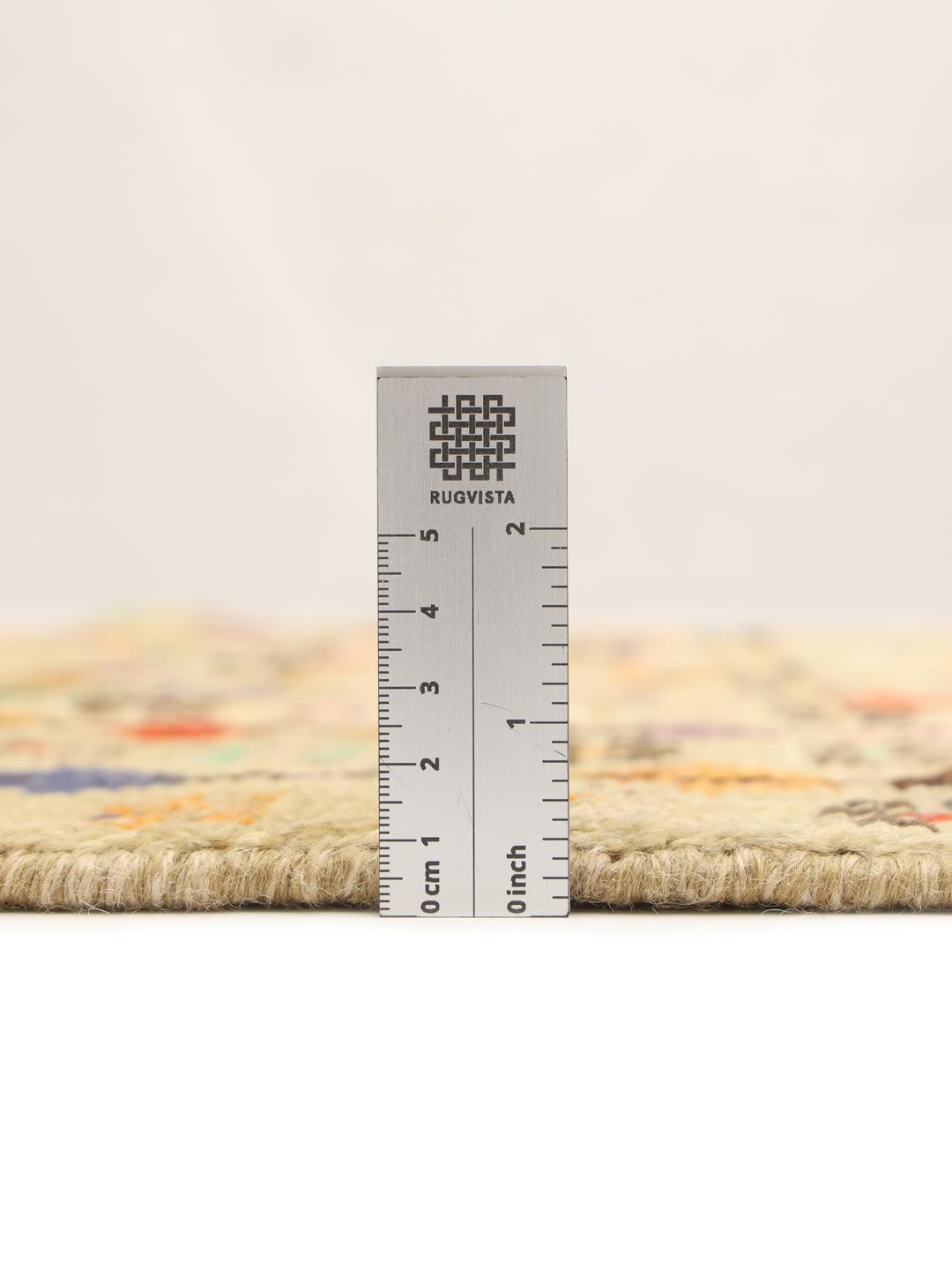
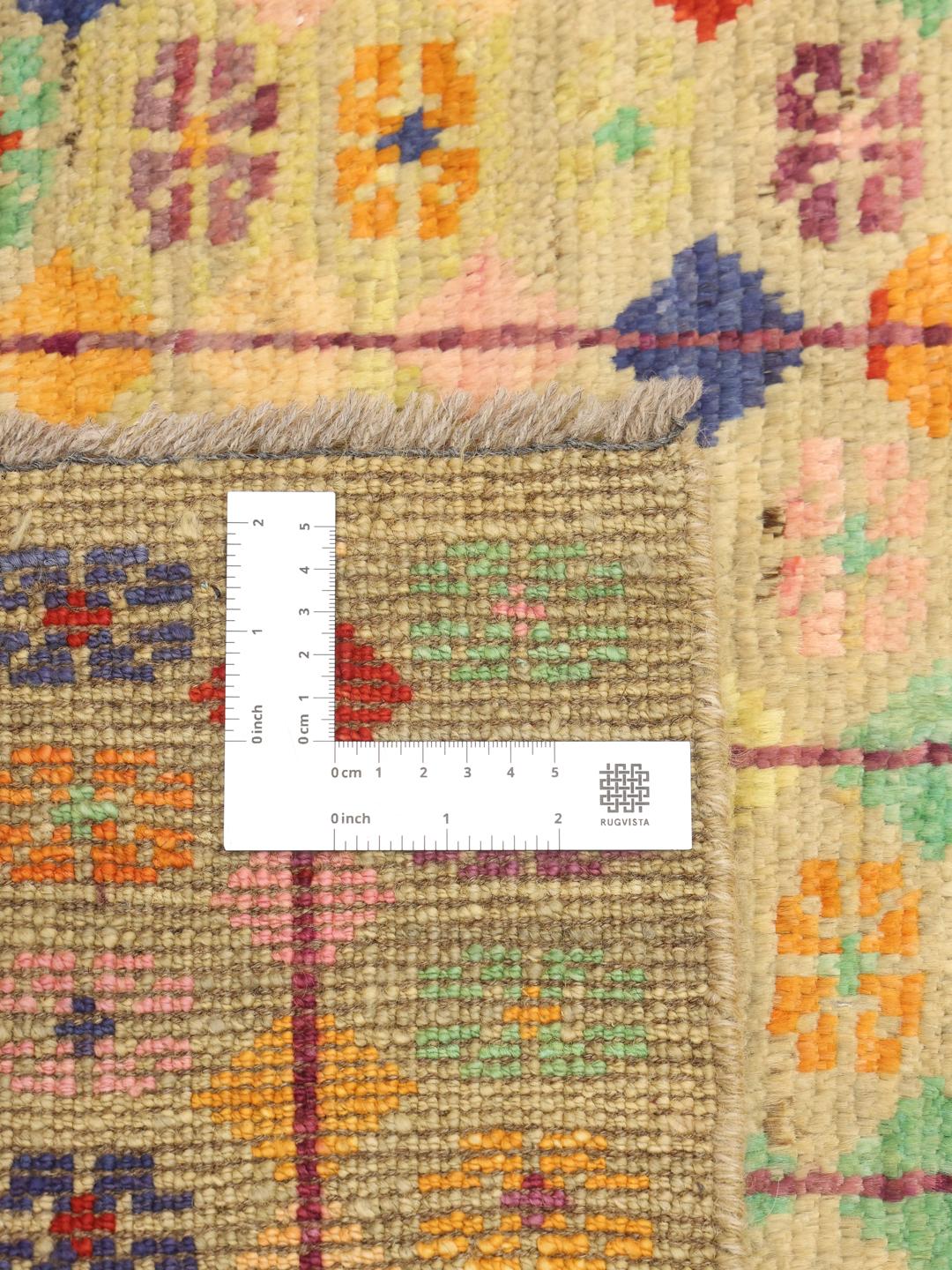
The Berber tradition is deeply rooted in the cultural history of nomadic tribes, known for creating rugs that serve as both functional floor coverings and artistic expressions of their environment. While the style takes inspiration from North African aesthetics, this specific piece is part of the rich, evolving tradition of hand-knotted rugs from Afghanistan, where weavers have adapted these iconic patterns with their own unique regional flair.
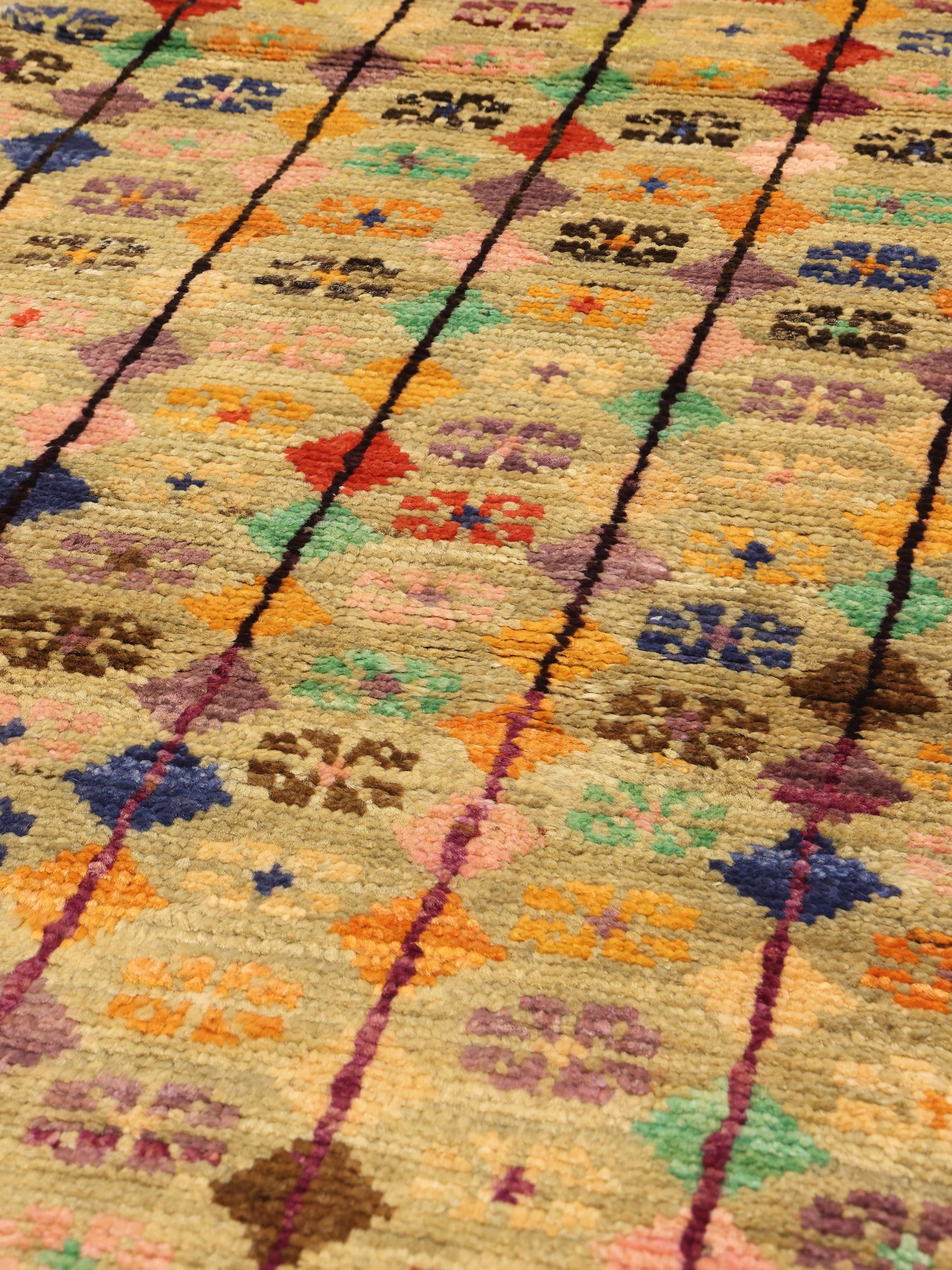
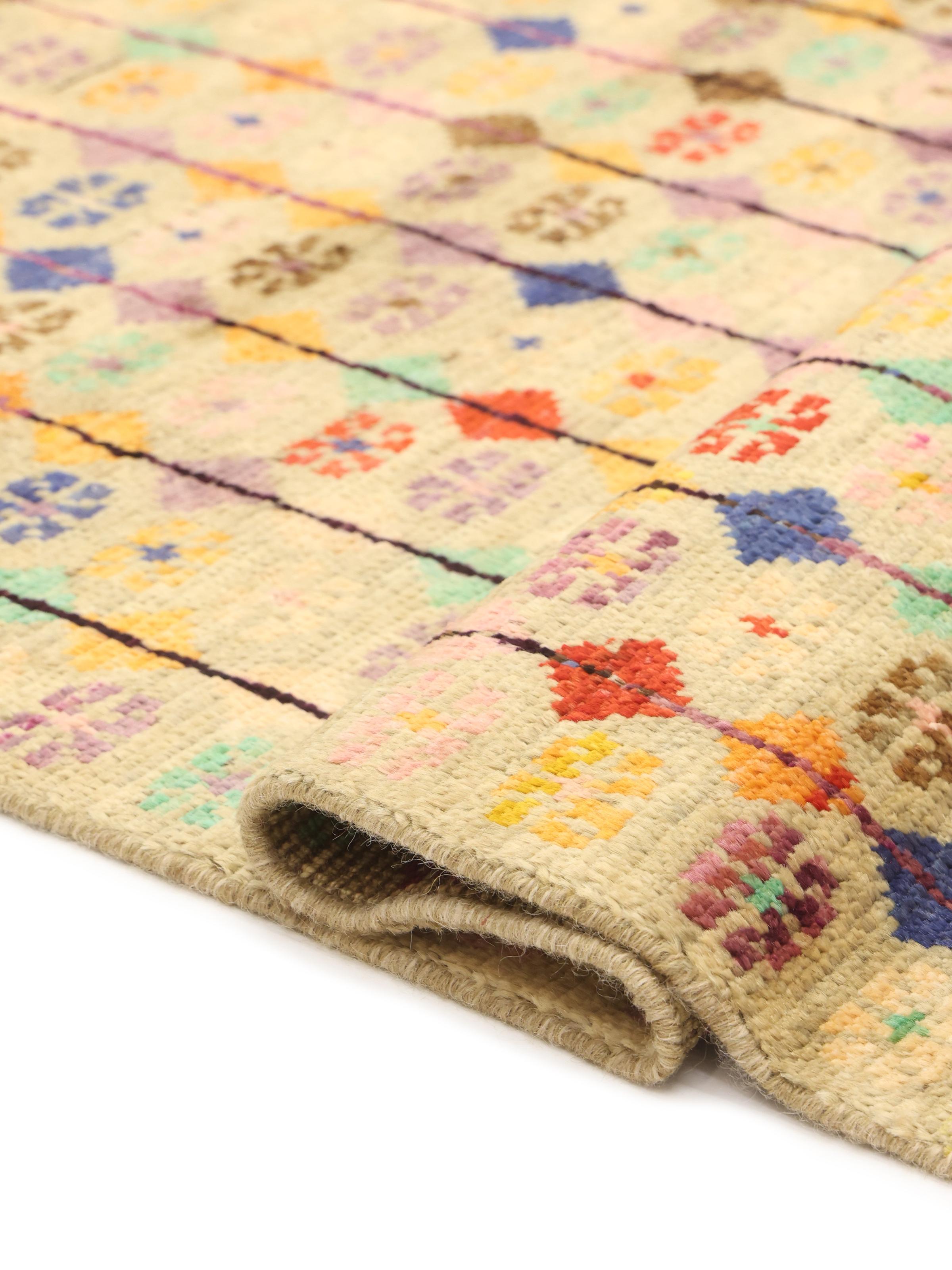
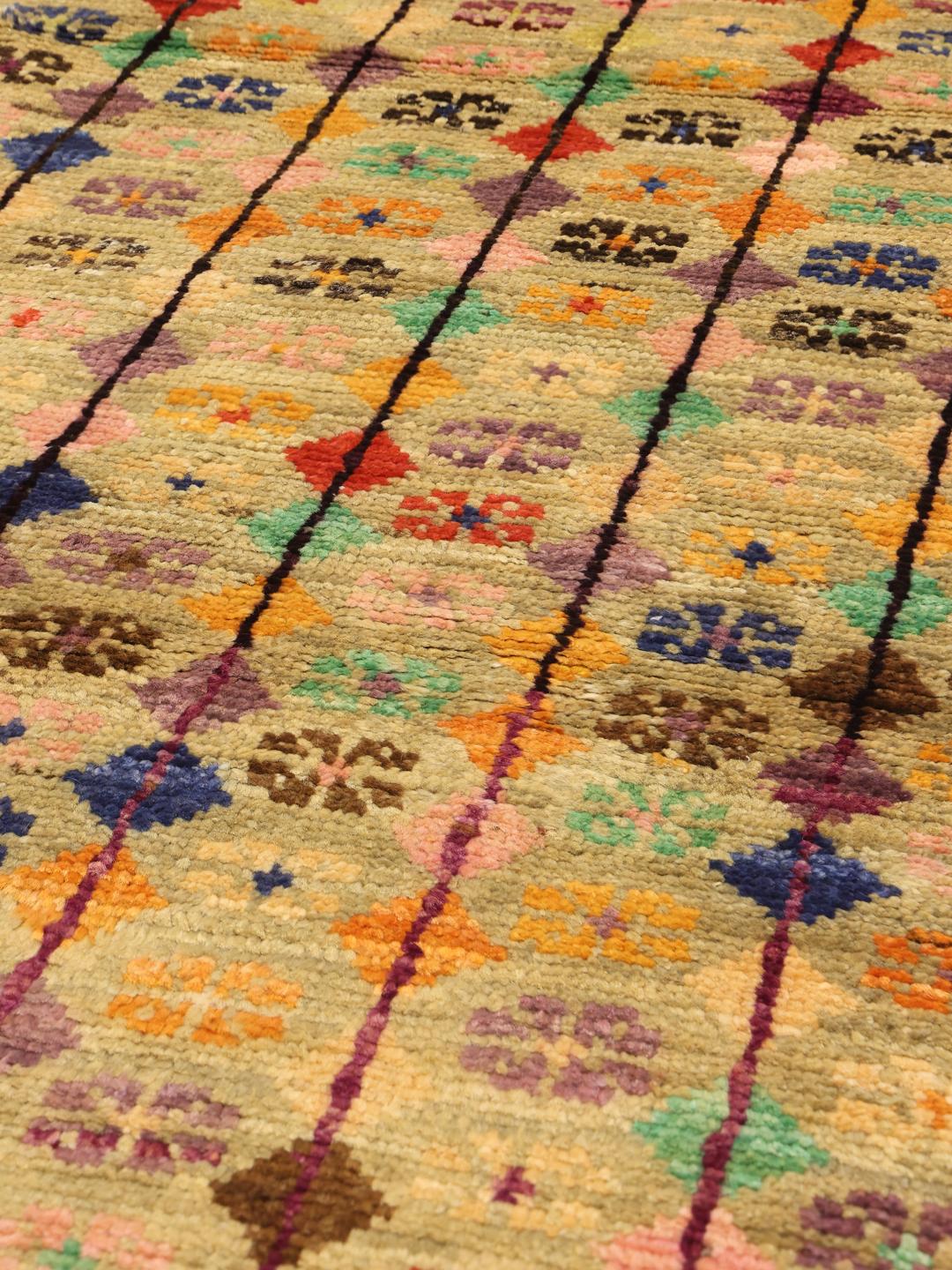
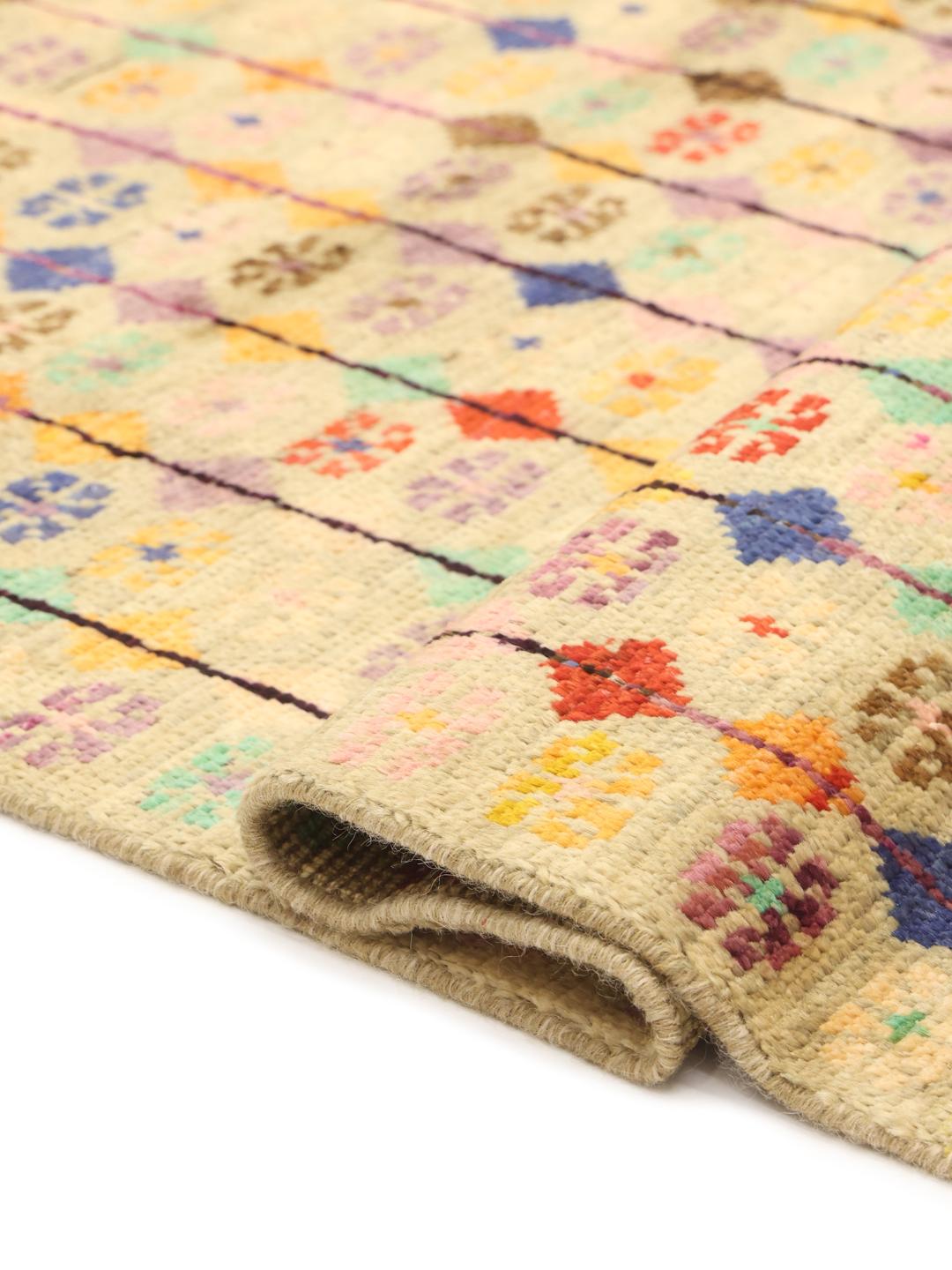
The terminology used to describe these rugs reflects a history of manual dexterity and traditional tools. The hand-knotted technique is a hallmark of quality, where the weaver builds the rug knot by knot. This slow, deliberate process allows for the creation of intricate, durable designs that are vastly superior to mass-produced items, as the integrity of each knot protects the rug from wear and tear over decades of use.
Visually, this rug is defined by its playful geometric motifs and a lively colour palette. Unlike formal, symmetrical designs, the Berber aesthetic celebrates a more organic, free-flowing arrangement of shapes. The use of vibrant, contrasting colours against a neutral base creates a rhythmic, almost musical quality to the pattern, making it a standout example of traditional artistry.
Collecting a hand-knotted rug from this tradition is an investment in cultural heritage and human skill. These pieces are valued not only for their aesthetic appeal but for the story of the artisan behind them. To own such a rug is to keep an ancient craft alive, bringing a piece of global history and genuine, heartfelt artistry into your living space.