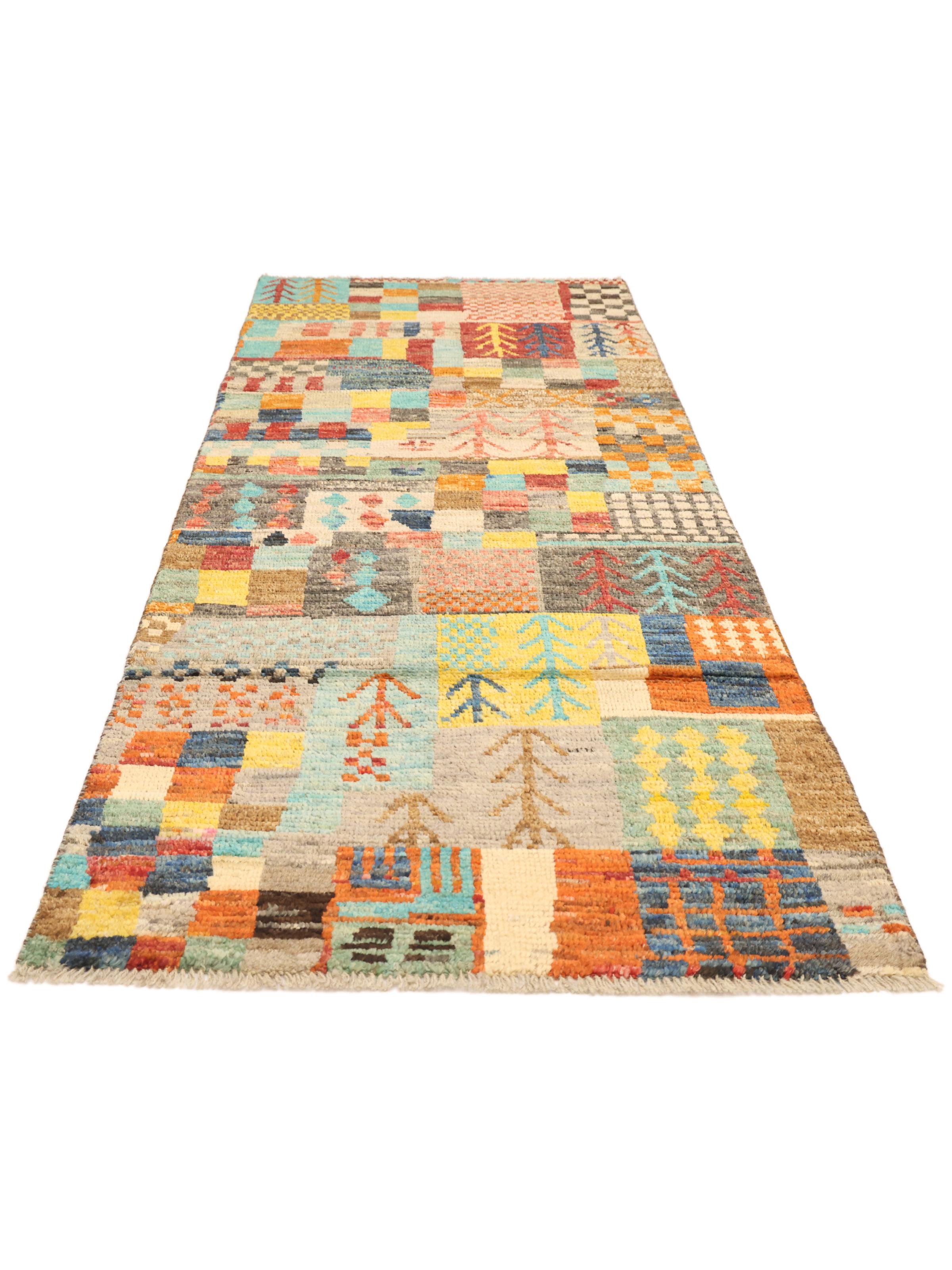
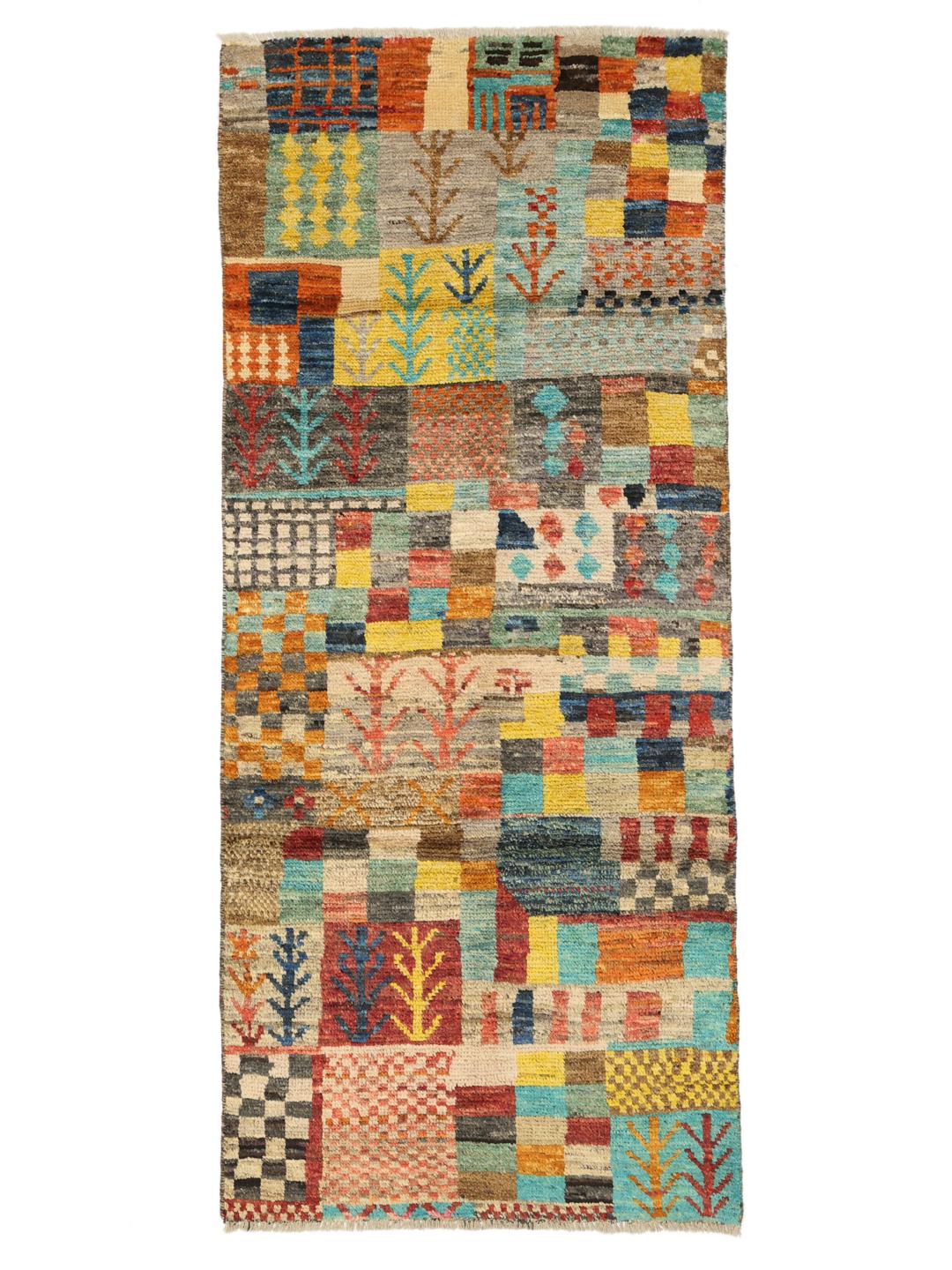
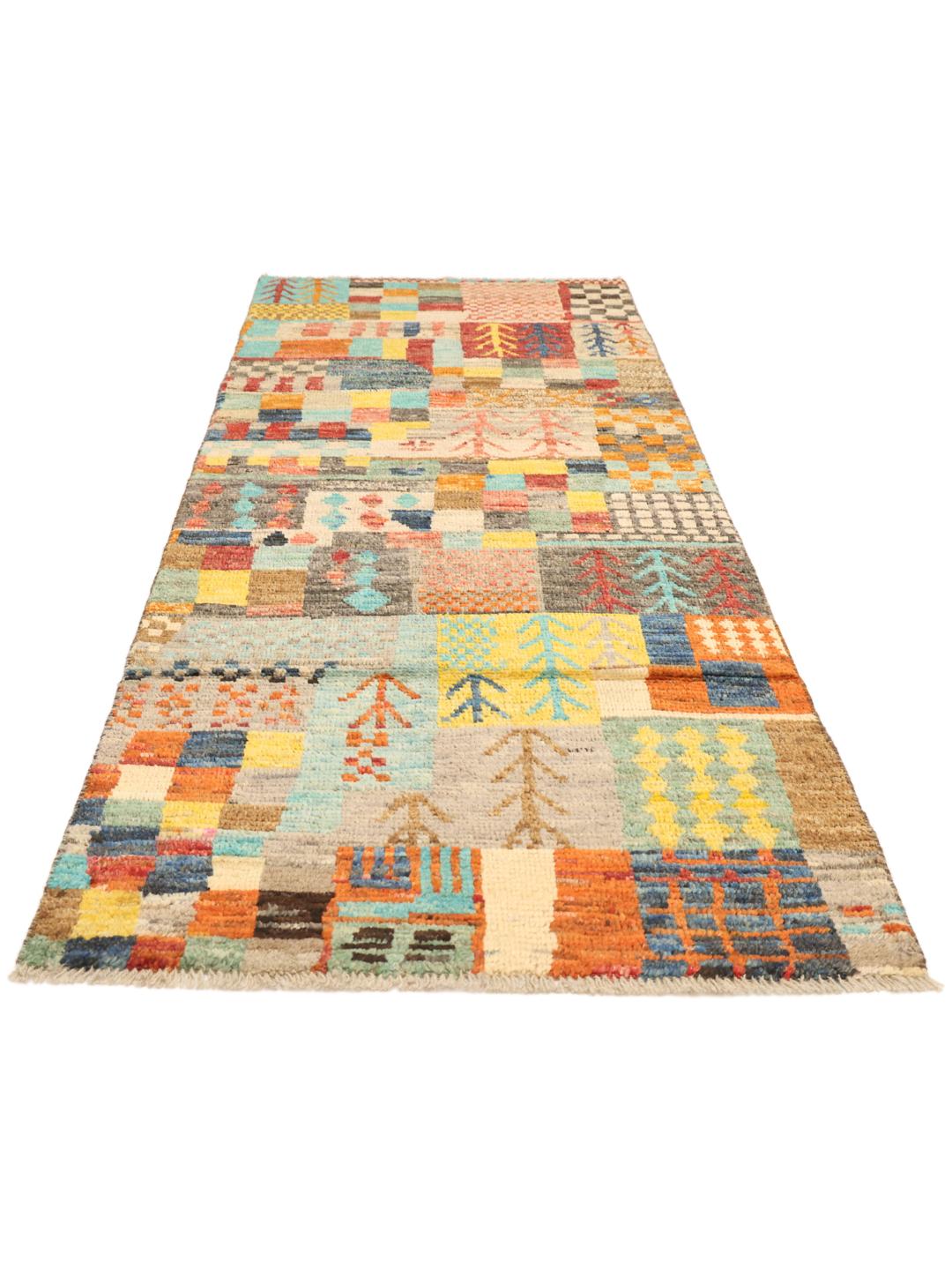
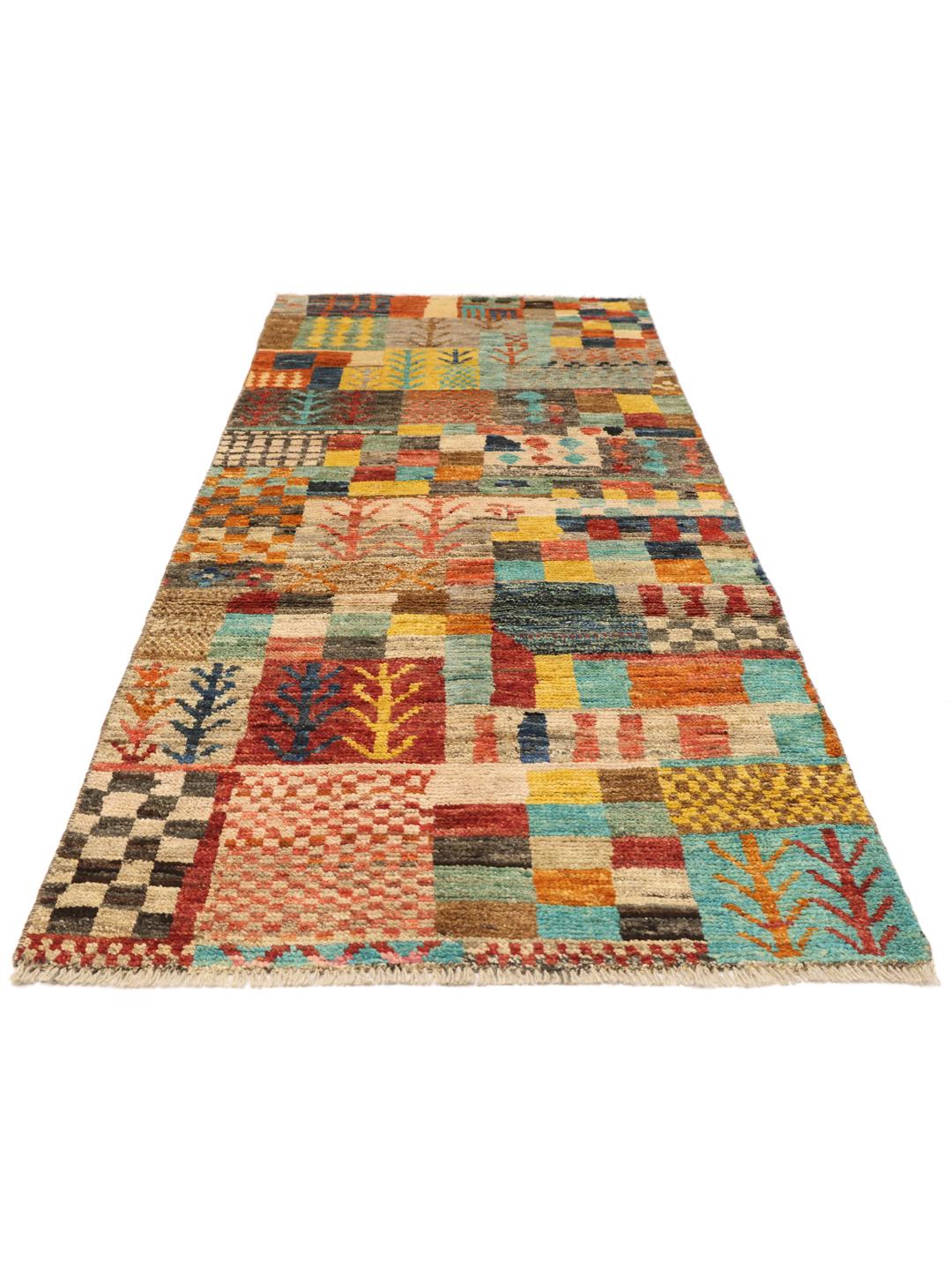
The Berber tradition is deeply rooted in the history of nomadic cultures, known for their expressive, often improvised designs. While originally associated with North African tribes, these rug-making techniques have travelled and inspired artisans across the globe, leading to the sophisticated, colourful interpretations we see in modern Afghan weaving.
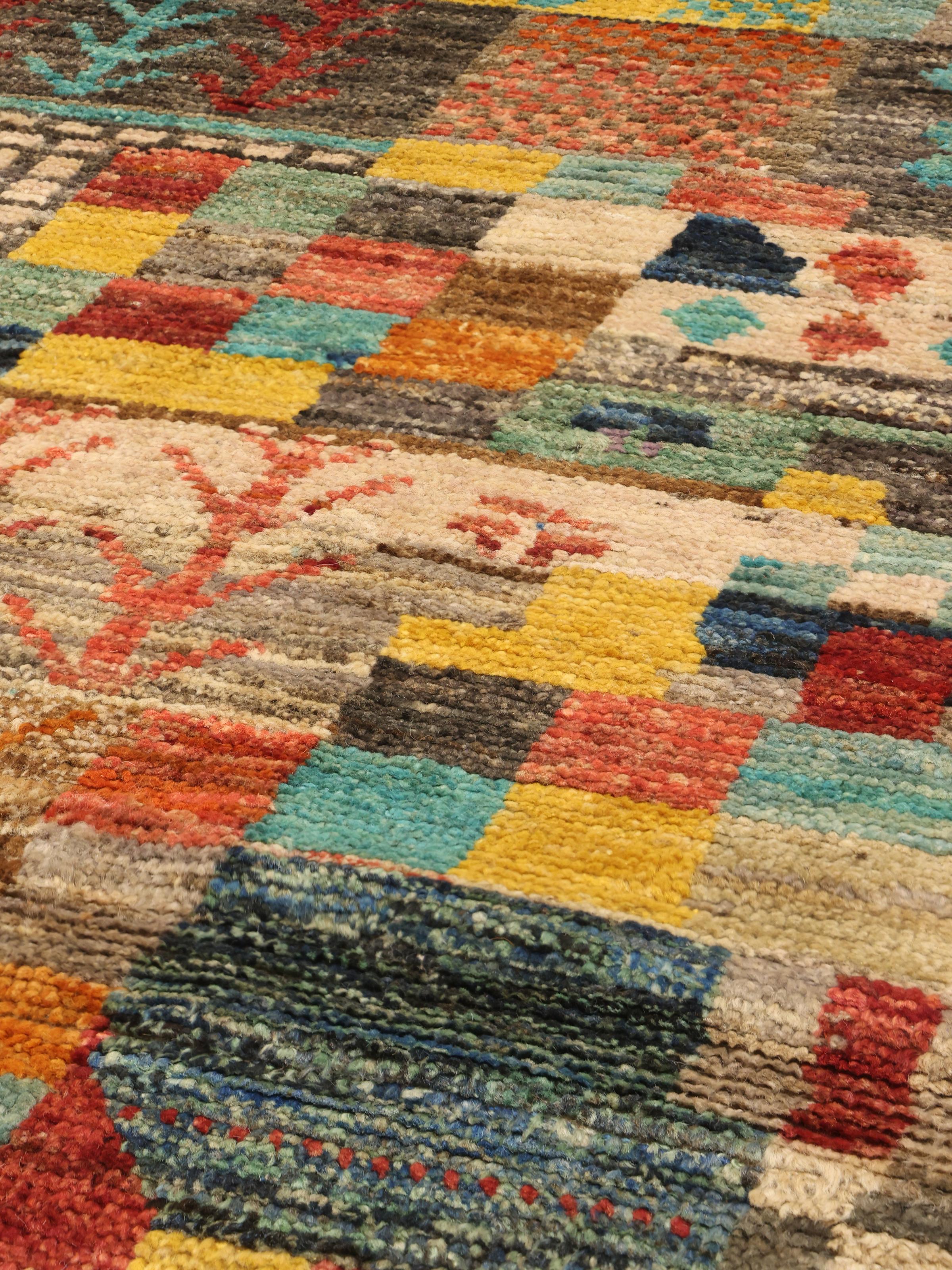
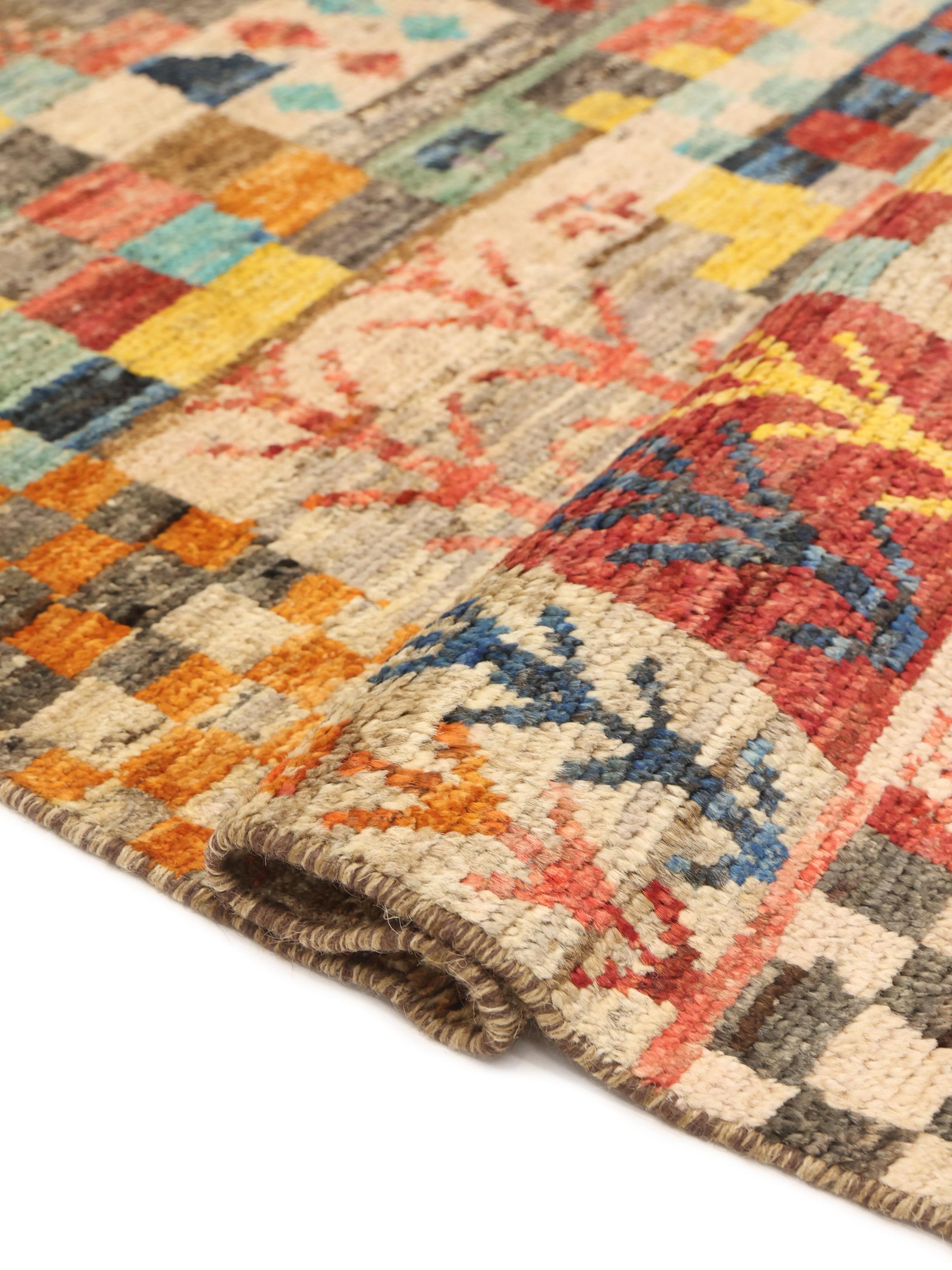
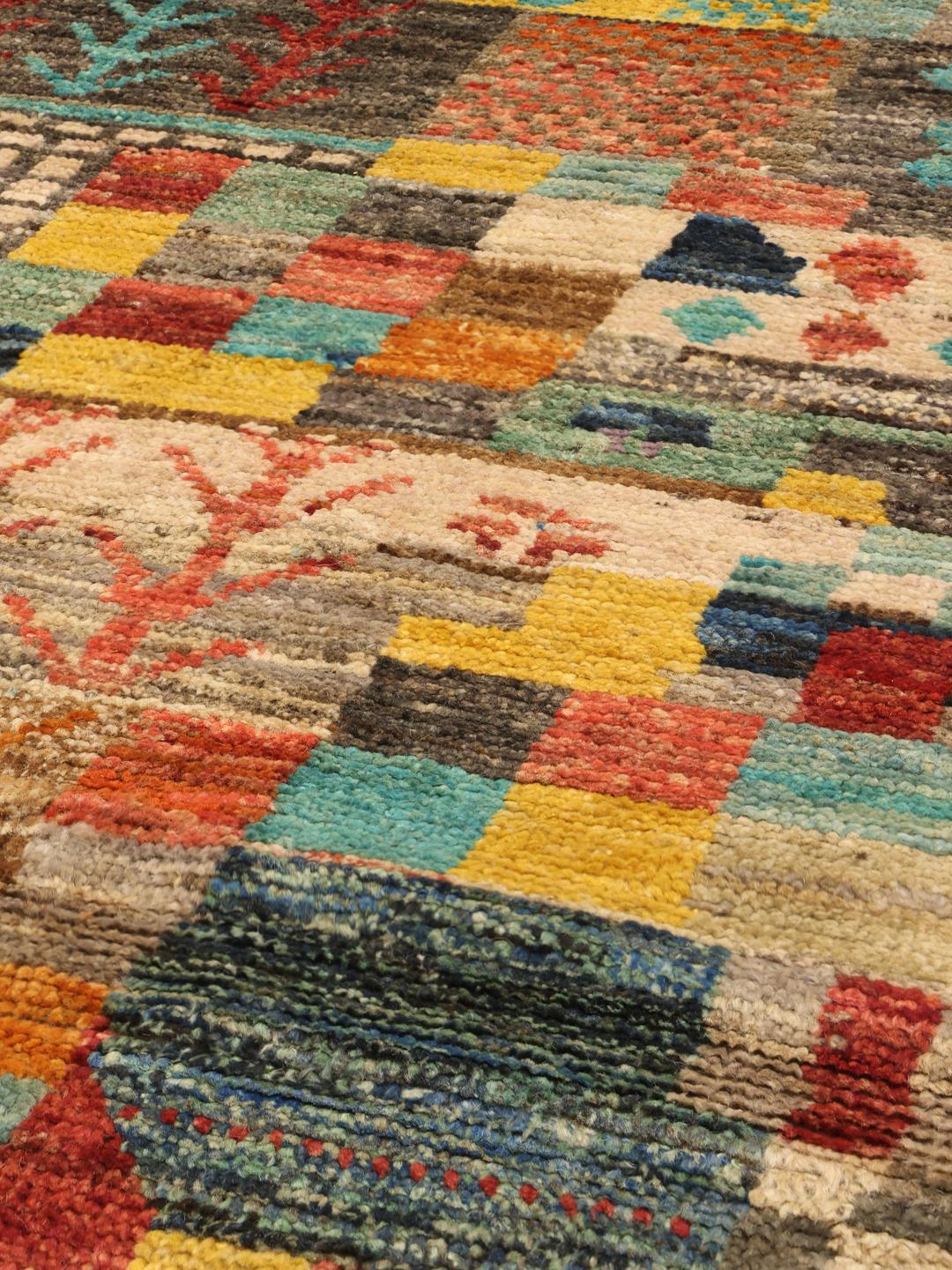
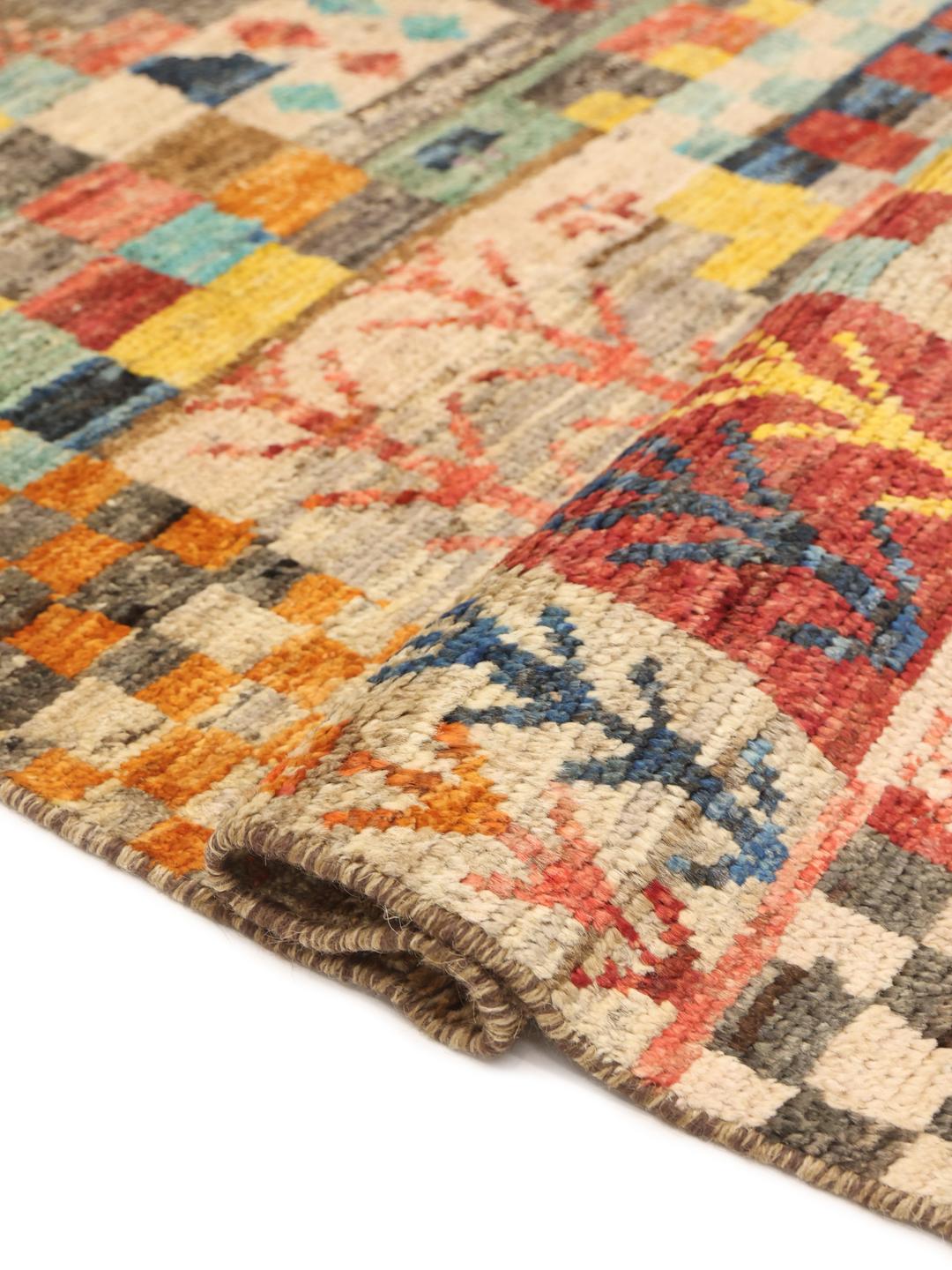
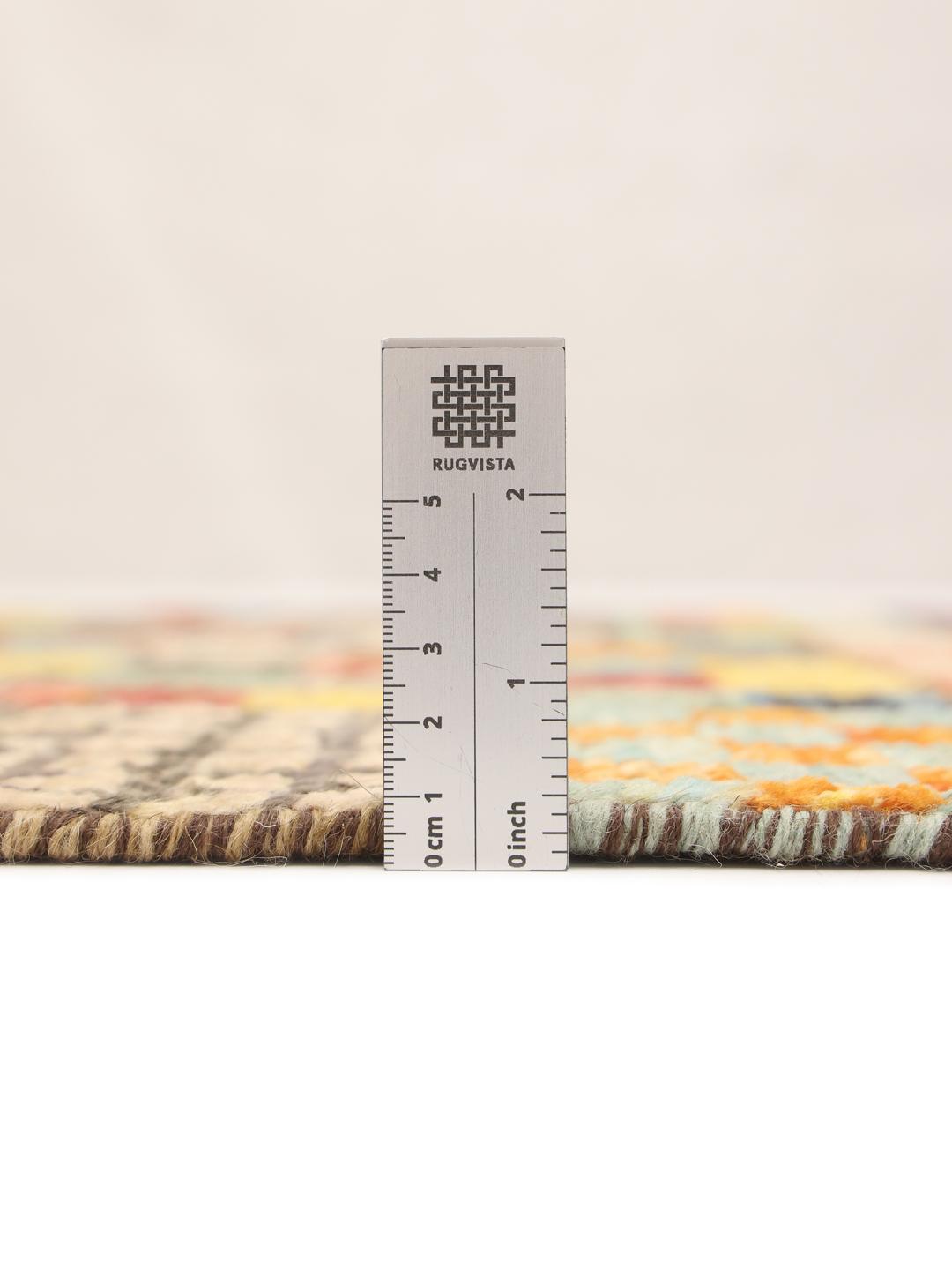
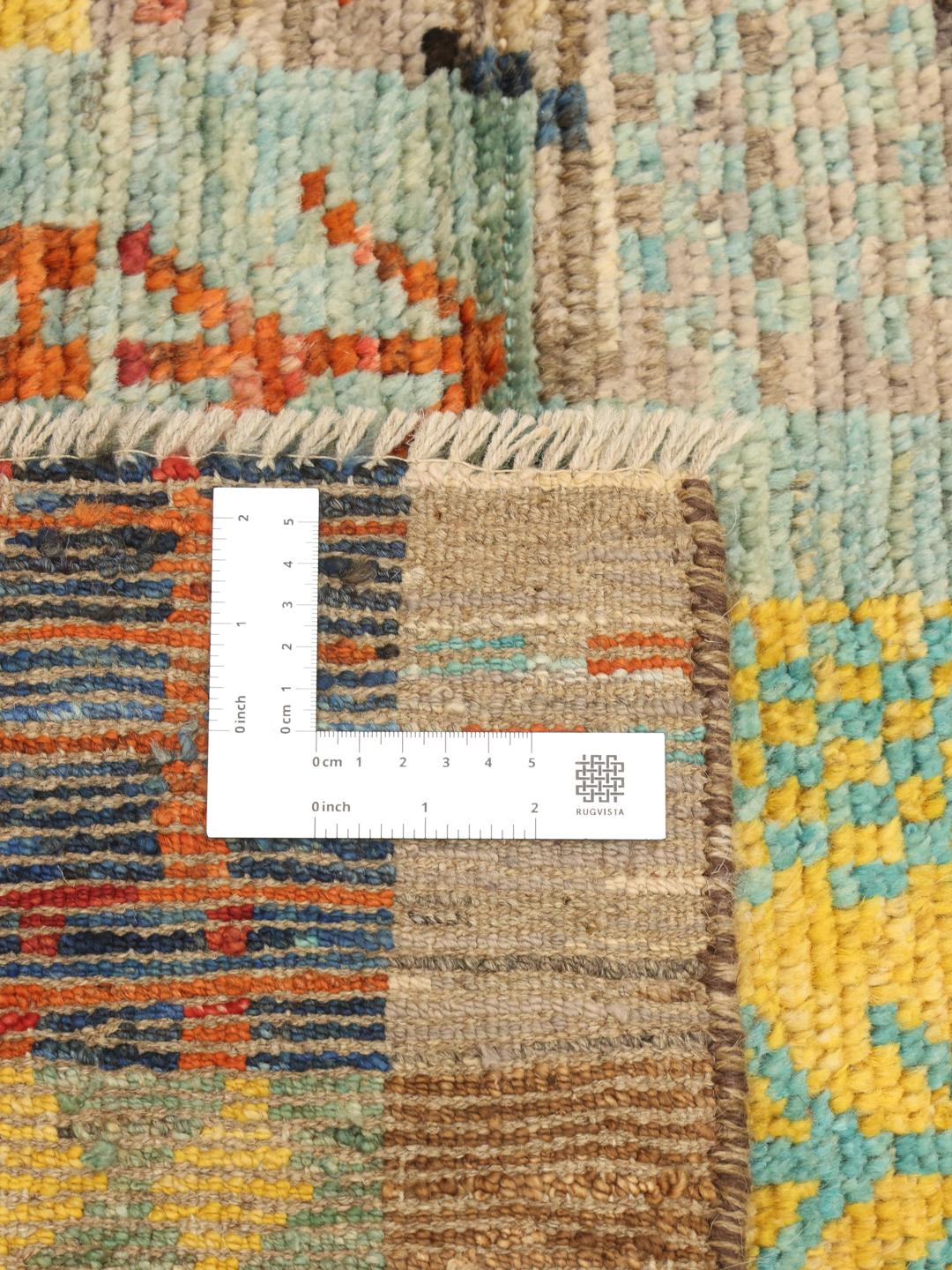
The term hand-knotted refers to the technique of manually looping strands of wool around the warp threads of the foundation. This method is the hallmark of quality in the rug world, as it allows for intricate design detail and a pile that is firmly anchored, resulting in a much longer lifespan than mass-produced alternatives.
This particular rug showcases a vibrant, patchwork design language, blending geometric blocks with symbolic motifs. Such rugs often incorporate tribal imagery—trees, diamonds, and checkered patterns—that serve as a visual narrative. The unexpected colour palette and asymmetrical layout make it a standout example of contemporary artistic freedom within a historical craft framework.
Collecting a rug like this is an investment in cultural heritage. It represents the skill of a weaver who translates traditional knowledge into a functional object for the modern home. Owning one means valuing the human touch and the enduring, tangible quality that only a hand-made textile can provide.