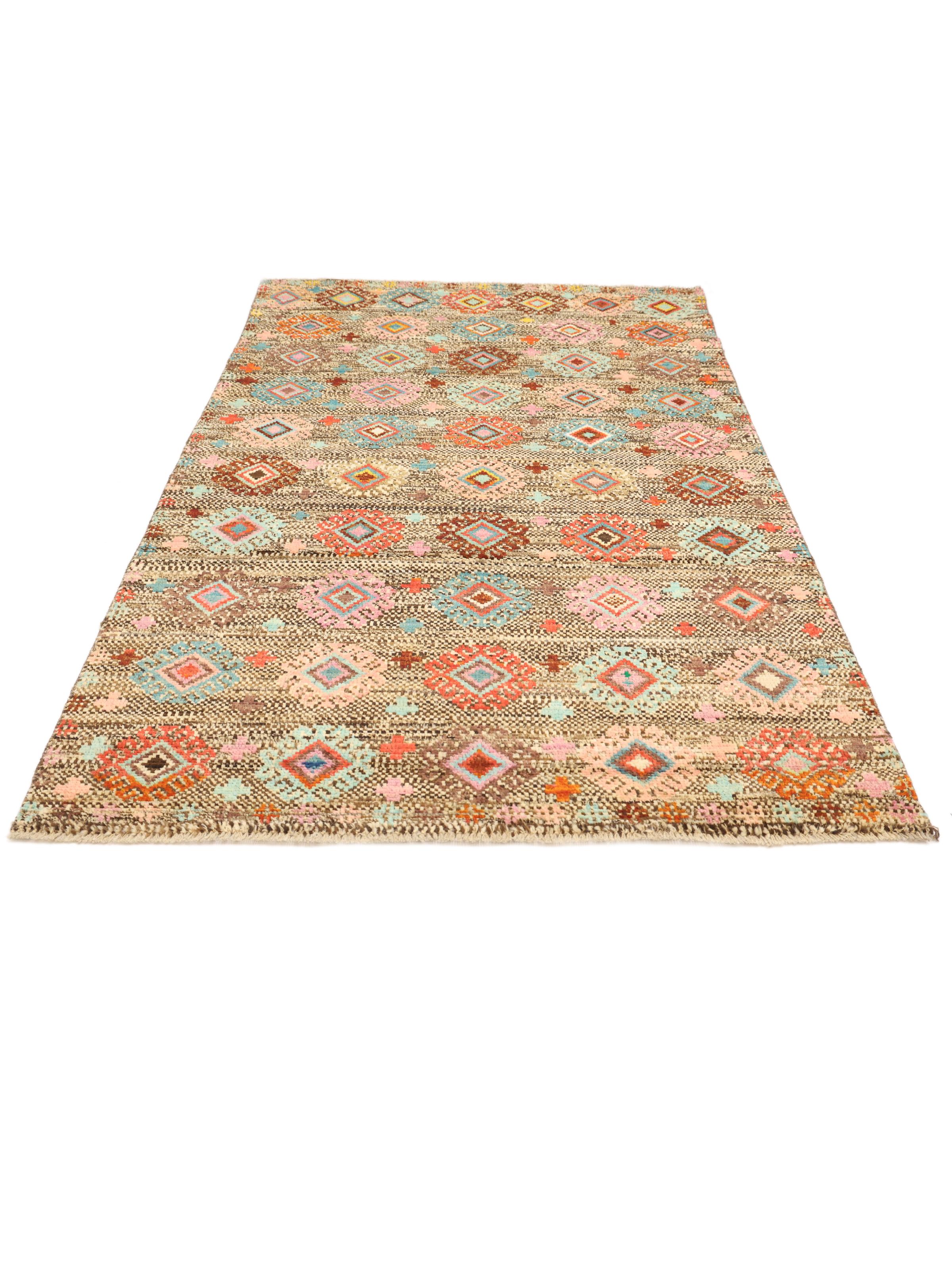
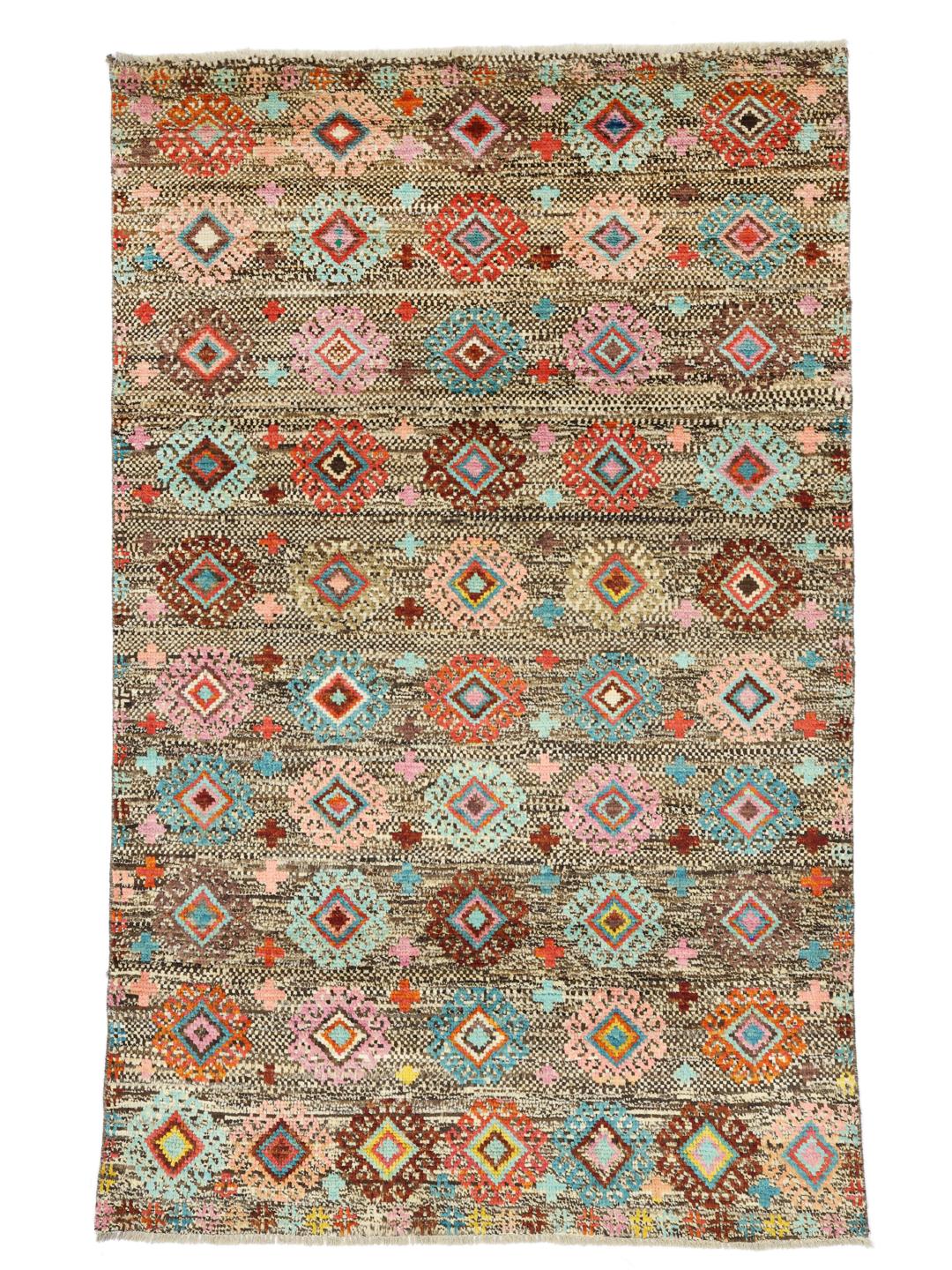
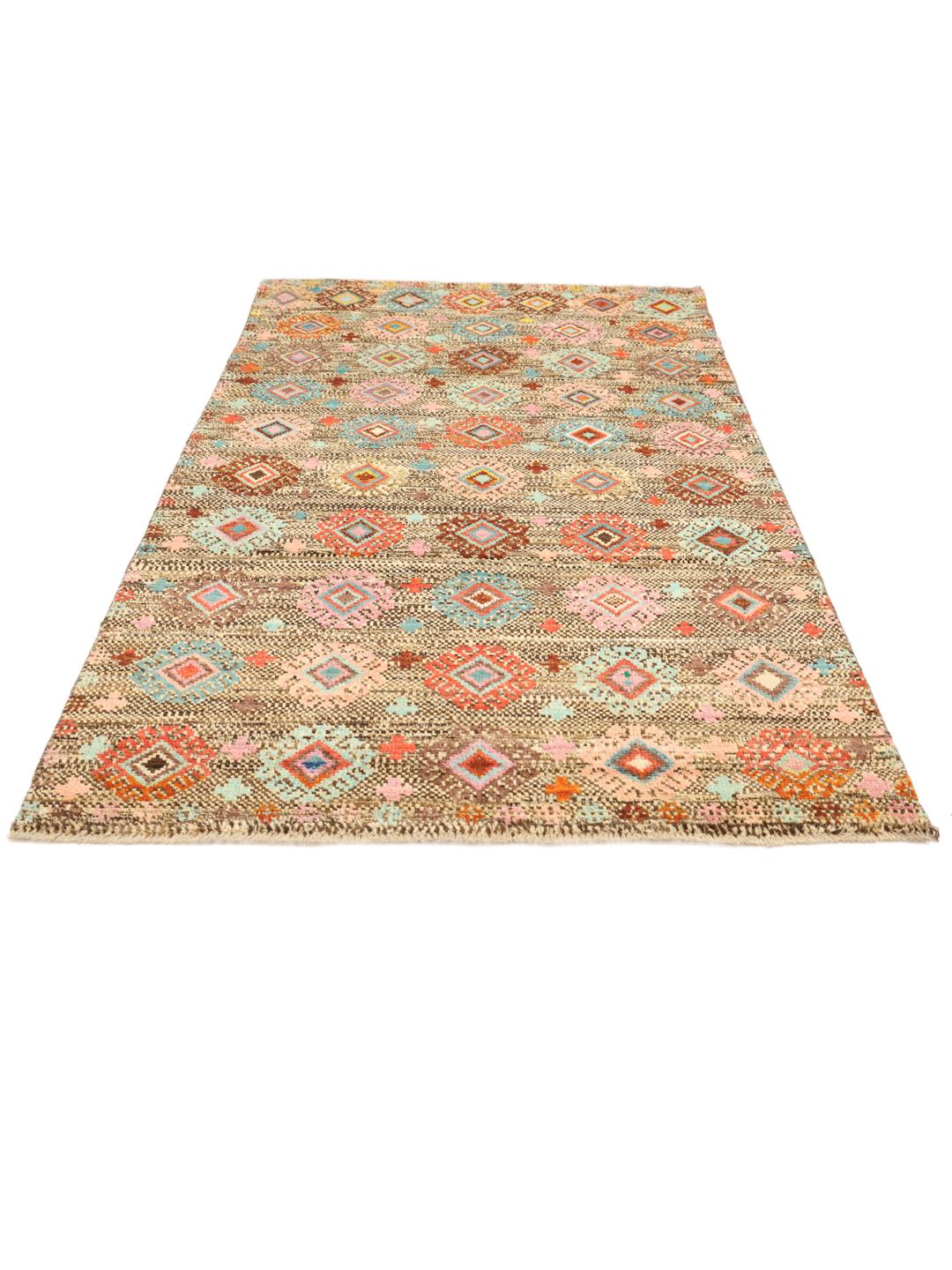
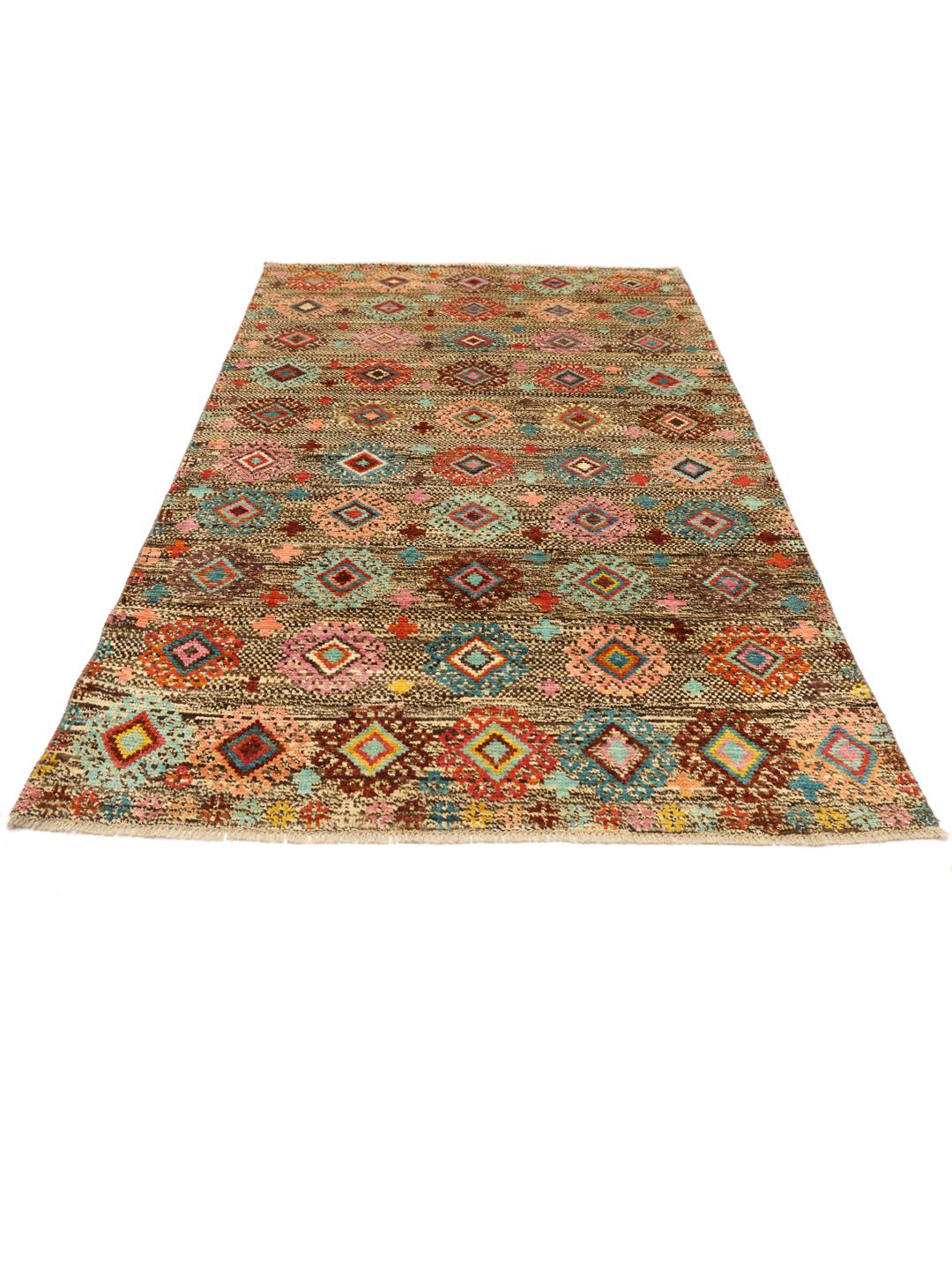
The Berber rug tradition traces its origins to the indigenous tribes of North Africa and Central Asia, where weaving served as both a practical necessity and a vital form of artistic expression. Rugs from Afghanistan have evolved through centuries of cultural exchange along ancient trade routes, blending nomadic traditions with sophisticated regional aesthetics.
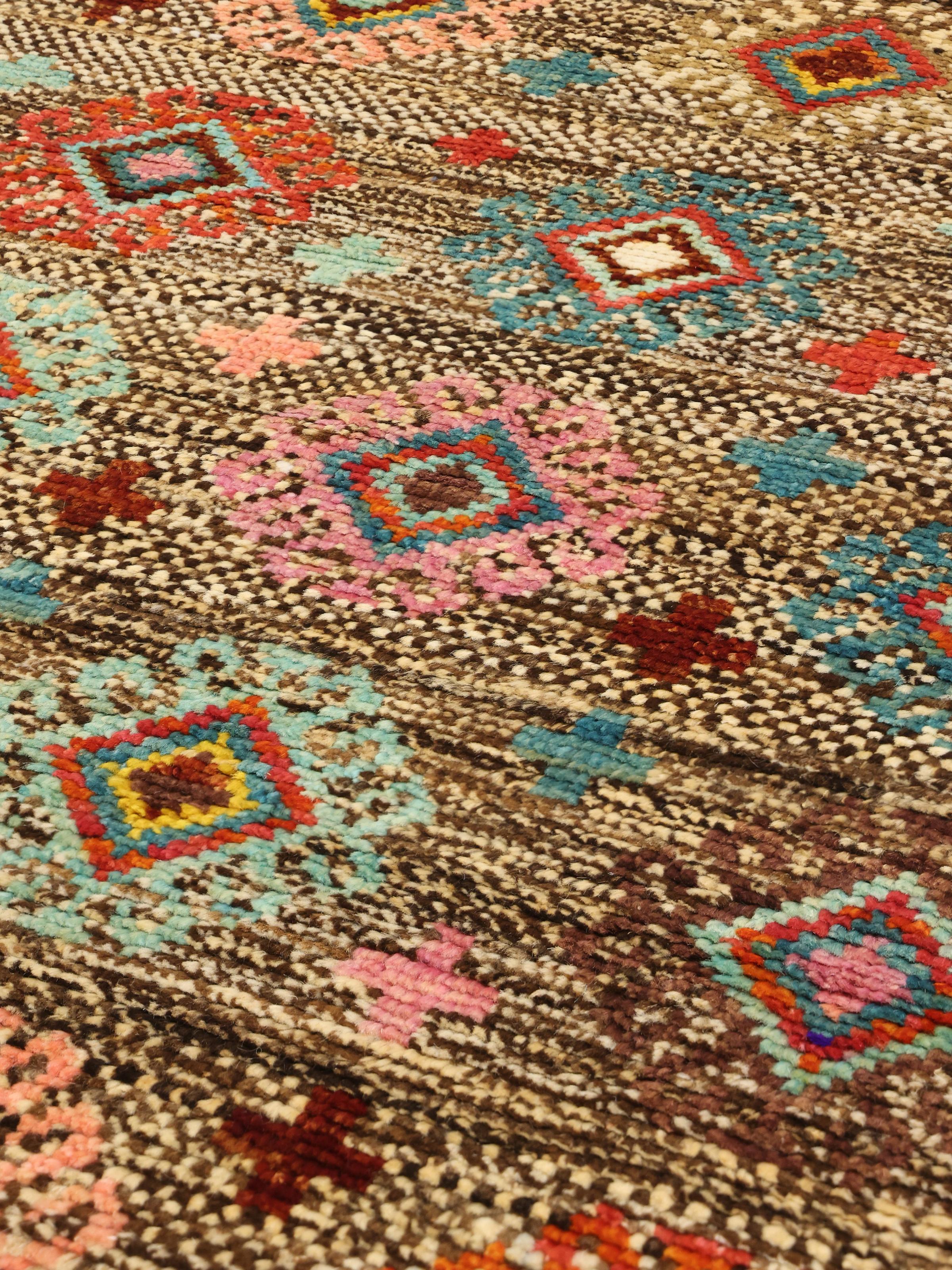
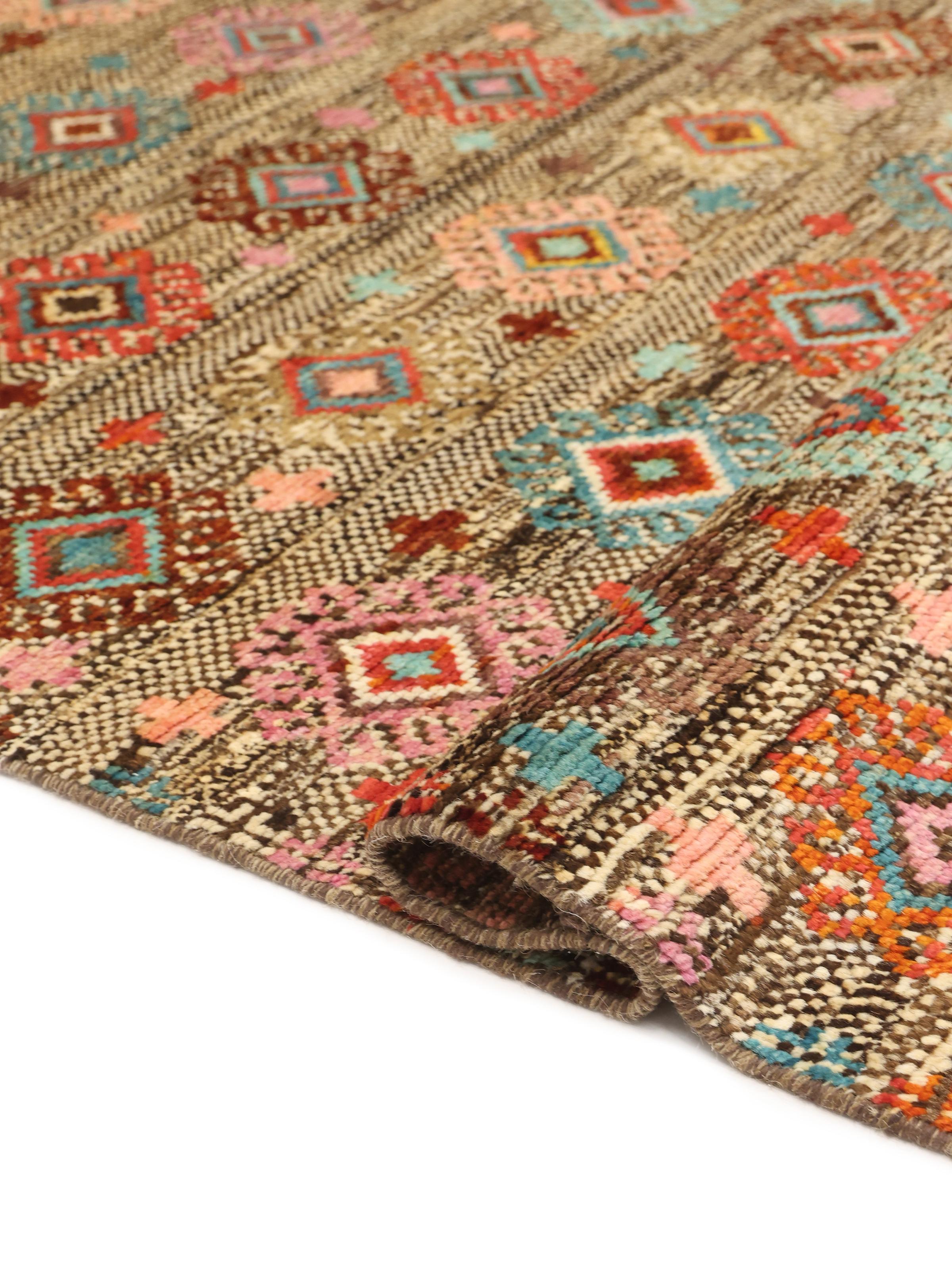
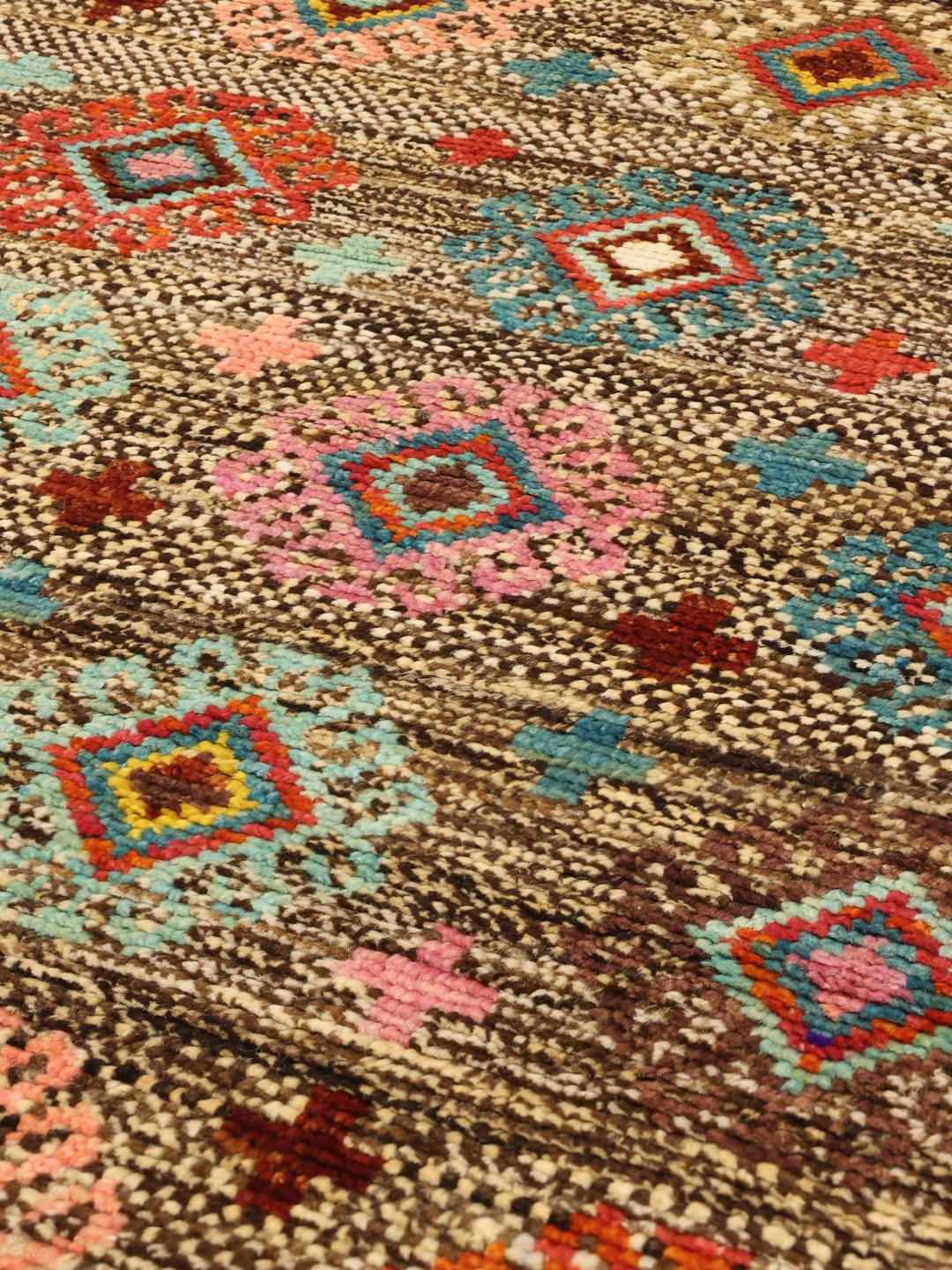
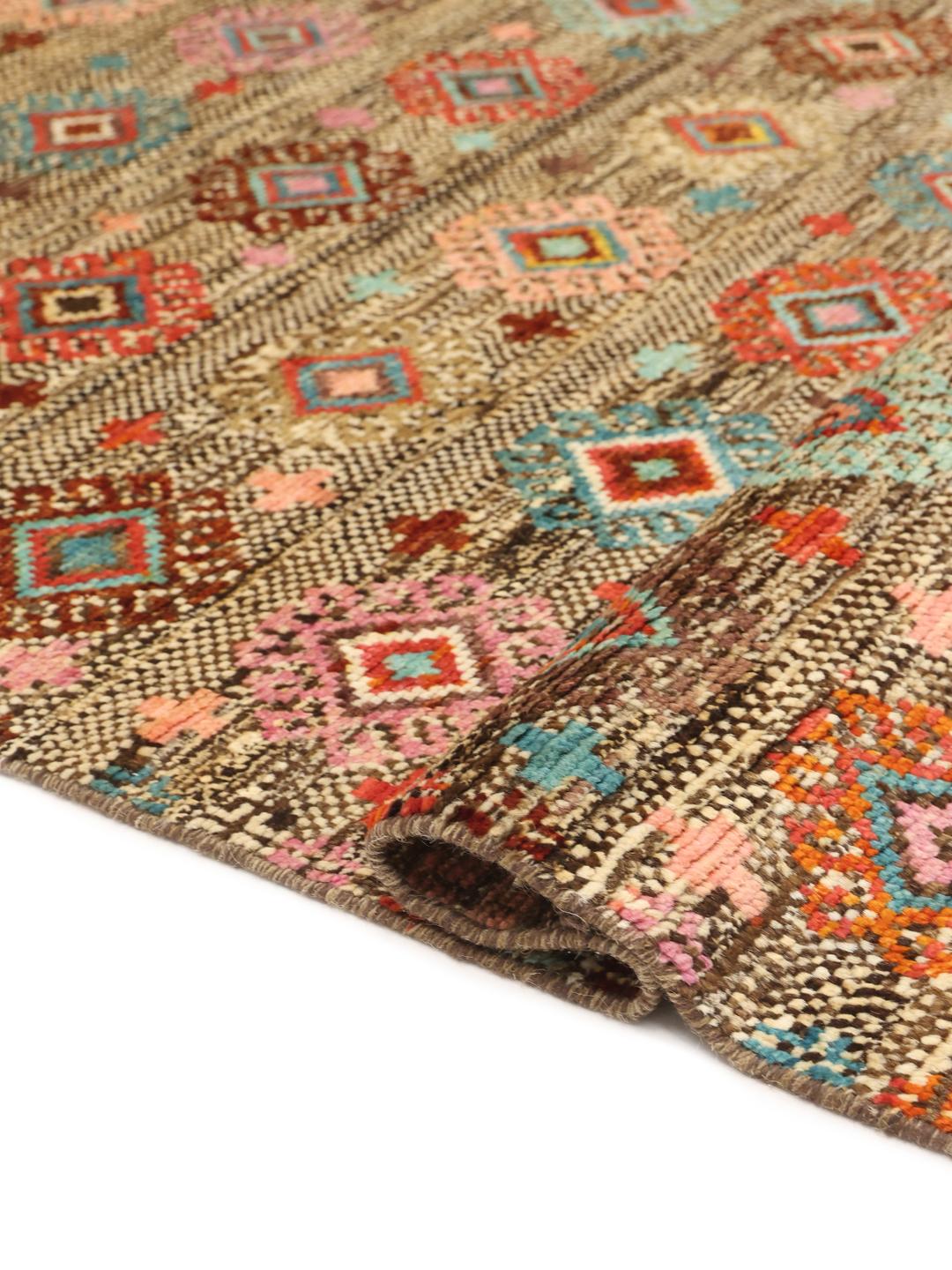
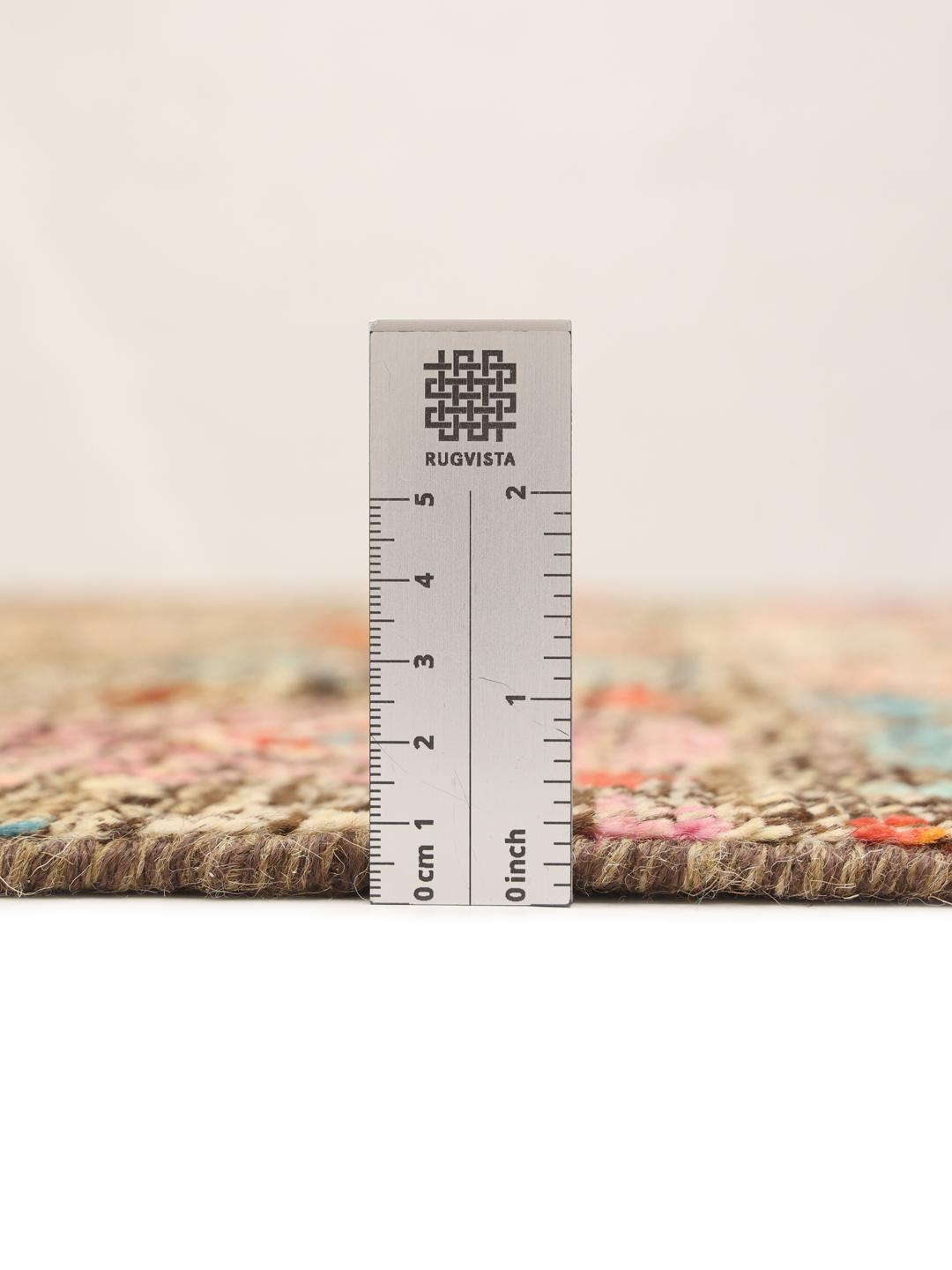
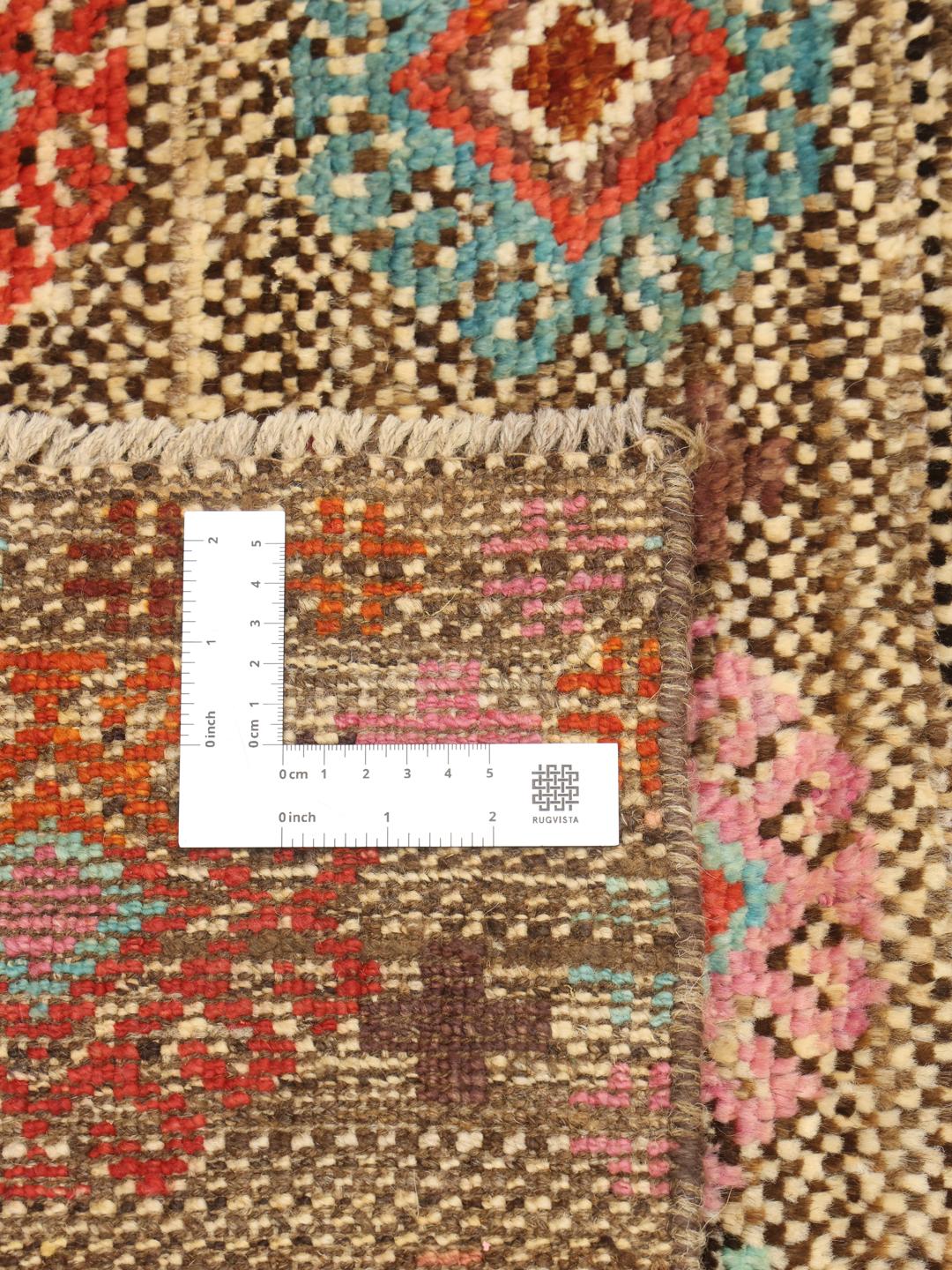
Technical terms such as hand-knotted construction refer to the traditional method of securing individual tufts of Wool to the foundation using complex knotting techniques. This method is essential for creating a durable, long-lasting pile that does not shed or flatten easily, providing a superior experience compared to tufted or woven alternatives.
Visually, these rugs are defined by their symbolic geometric language. The patterns often mirror the environment and folklore of the region, utilising bold, repeating medallions and diamonds that create a rhythmic visual flow. The use of vibrant, contrasting colours against a dark or natural field is a signature of this style, intended to bring light and life into the dwelling.
Owning a piece from this tradition is an act of preserving a heritage of skill and human effort. These rugs are highly valued by collectors not only for their aesthetic appeal but for the way they represent a connection to a slower, more intentional way of making, ensuring that the legacy of the craft continues to thrive in modern homes.