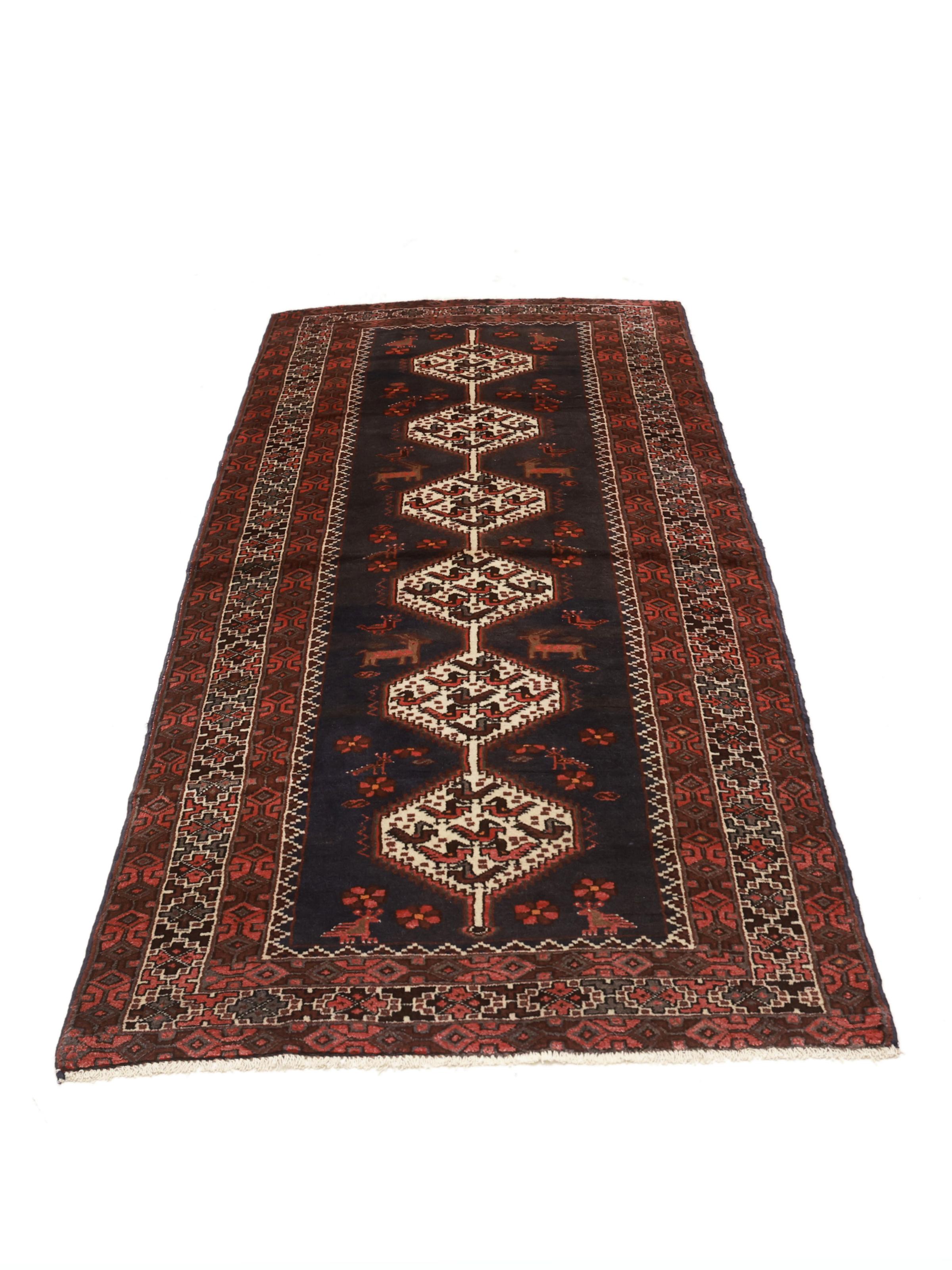
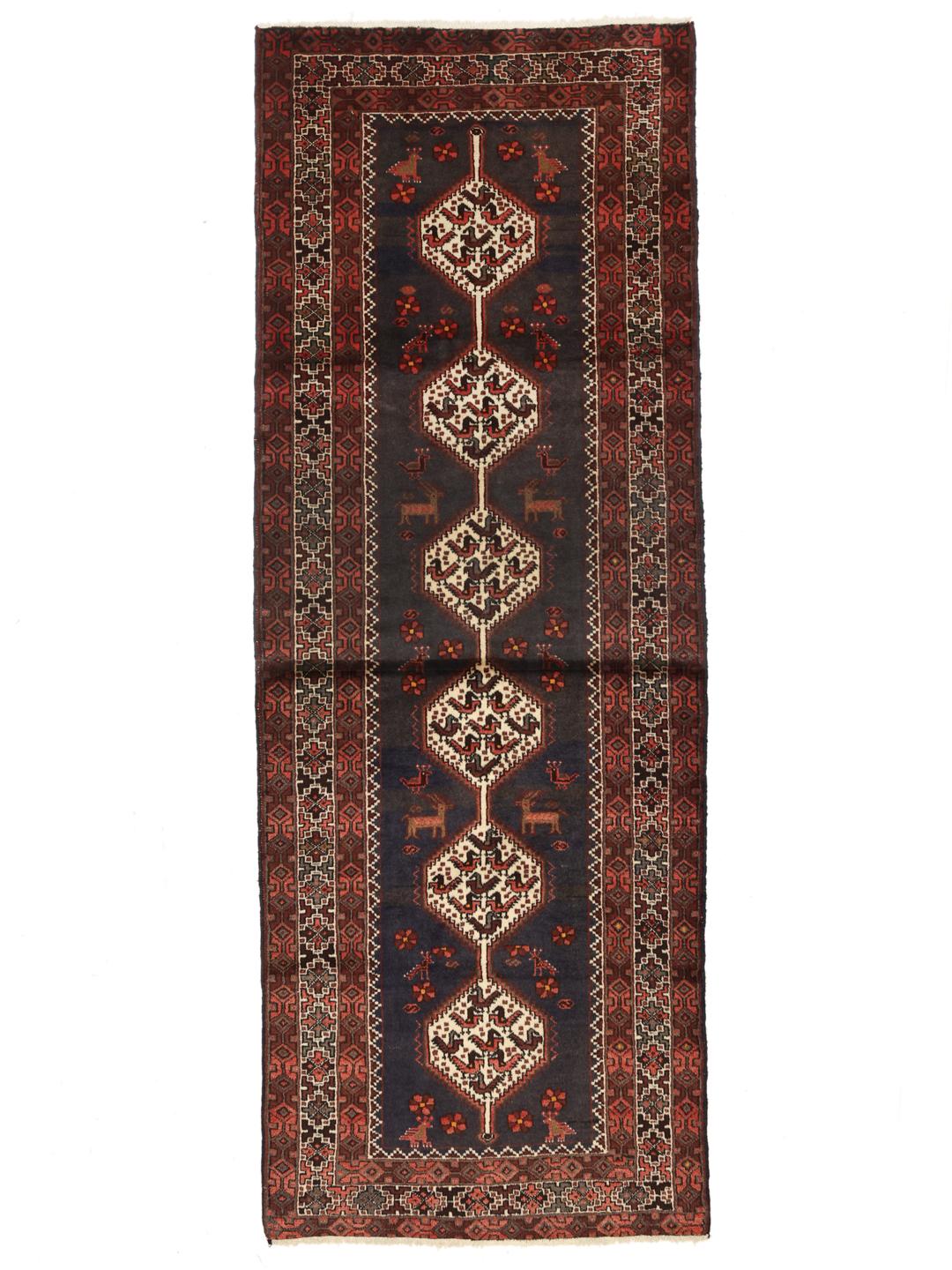
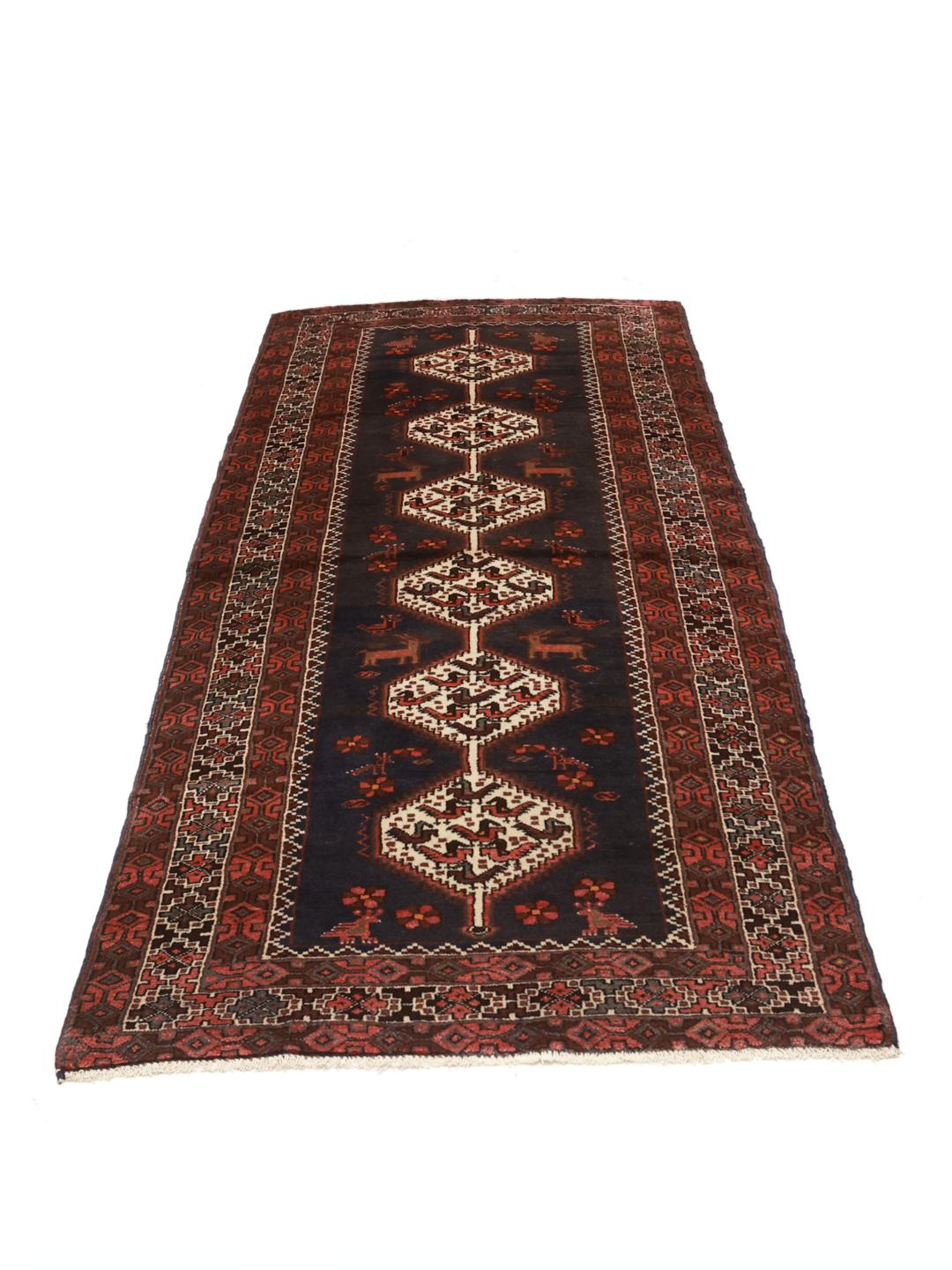
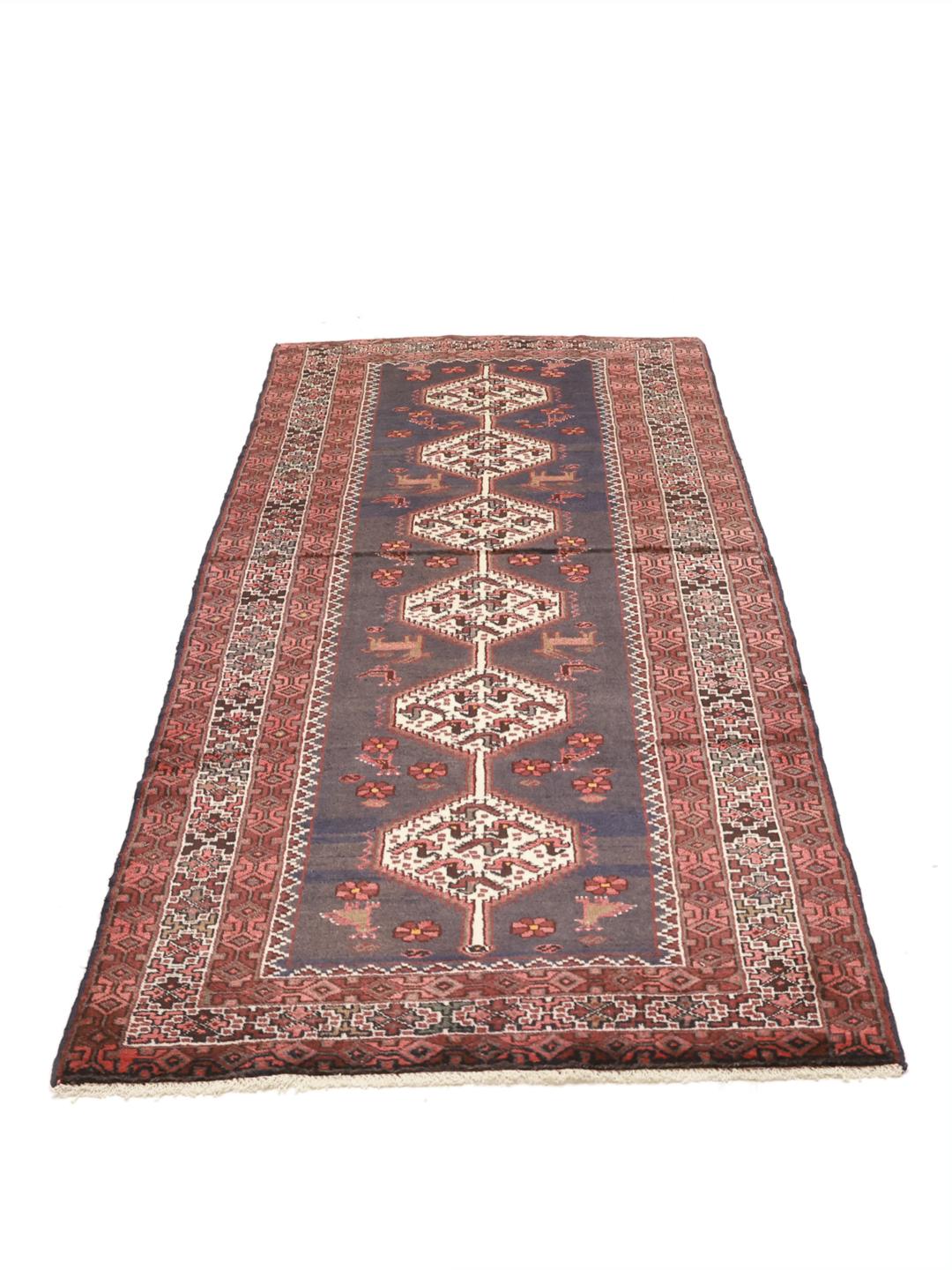
The Beluch rugs originate from the nomadic and semi-nomadic tribes residing in the border regions between the Middle East, Afghanistan, and Pakistan. These weavers have long been celebrated for their ability to create intricate, durable textiles in often challenging environments, passing down their techniques through generations.
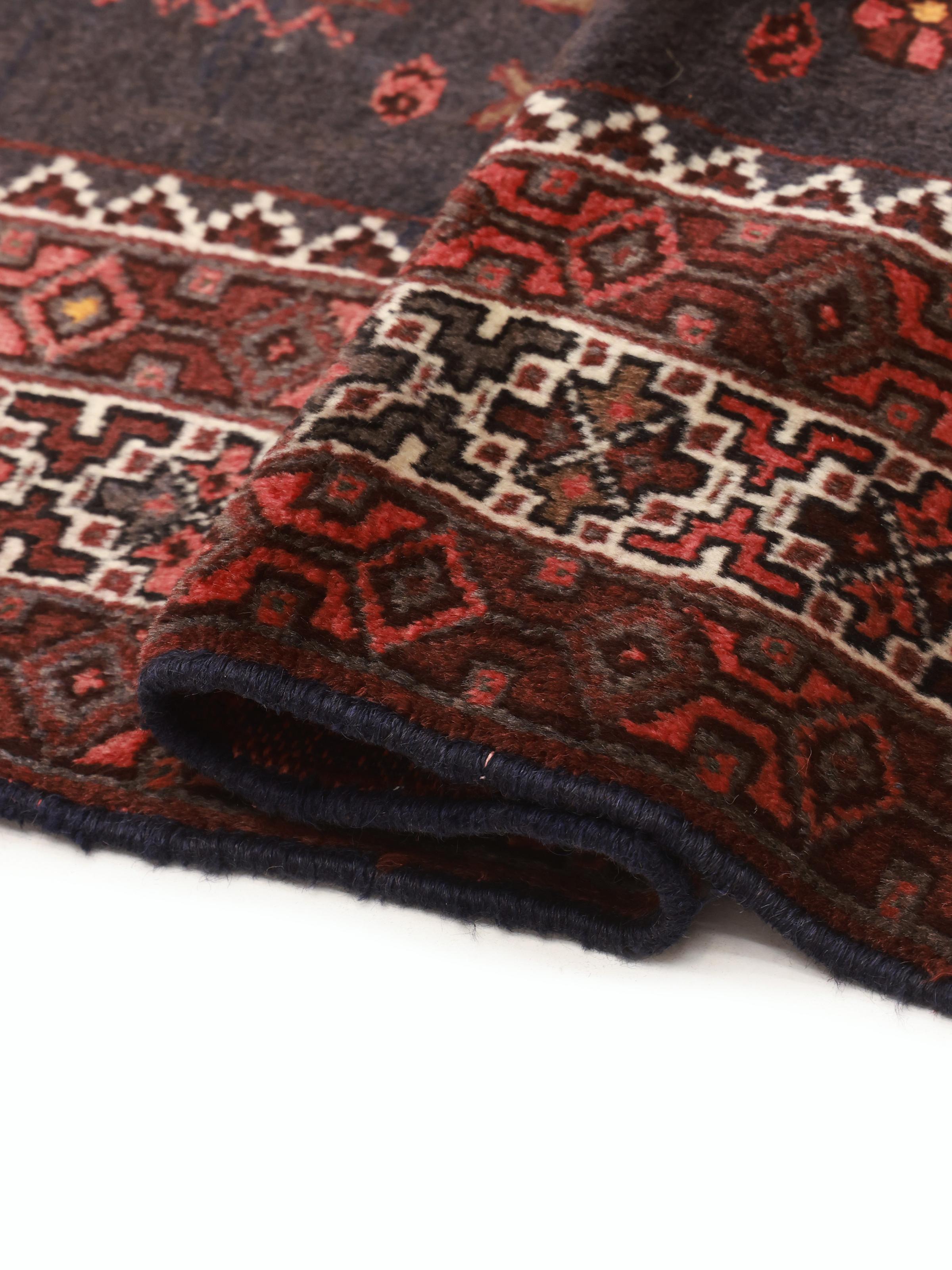
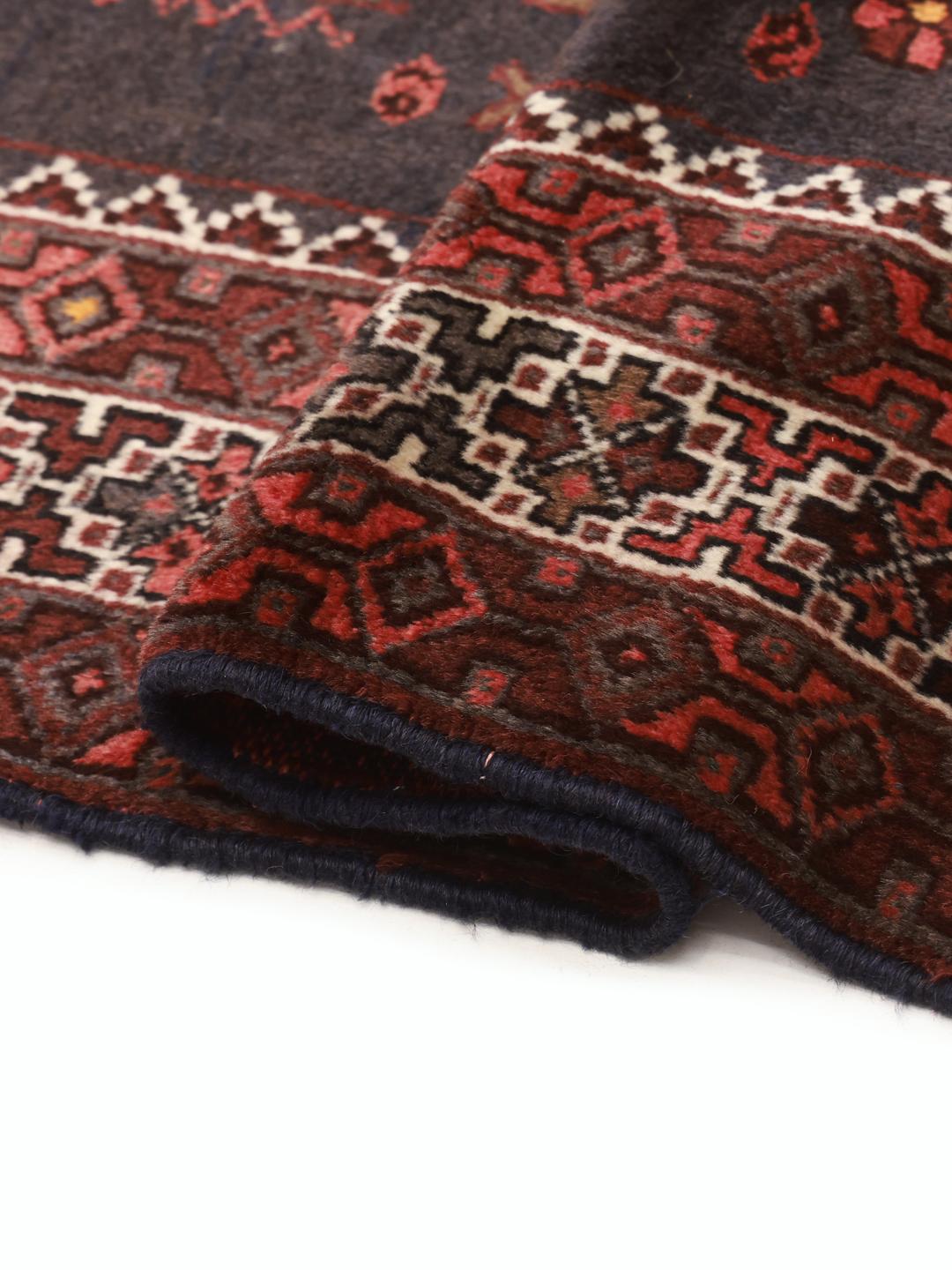
The term Beluch refers to these tribal origins, and the rugs are typically characterised by their wool construction and earthy colour palettes. The focus on geometric precision and symbolic patterns reflects a deep connection to the natural world and the cultural identity of the weaving communities.
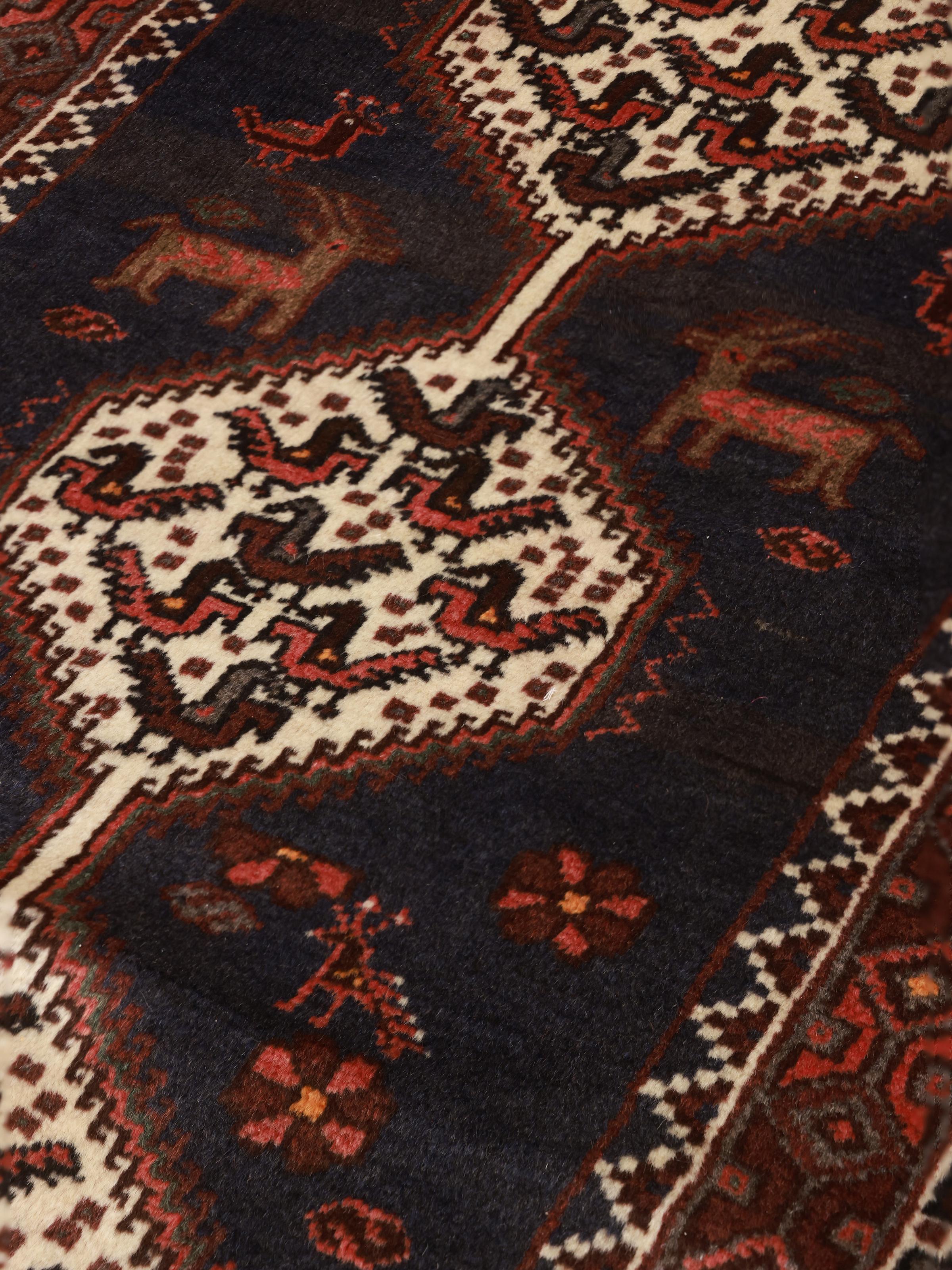
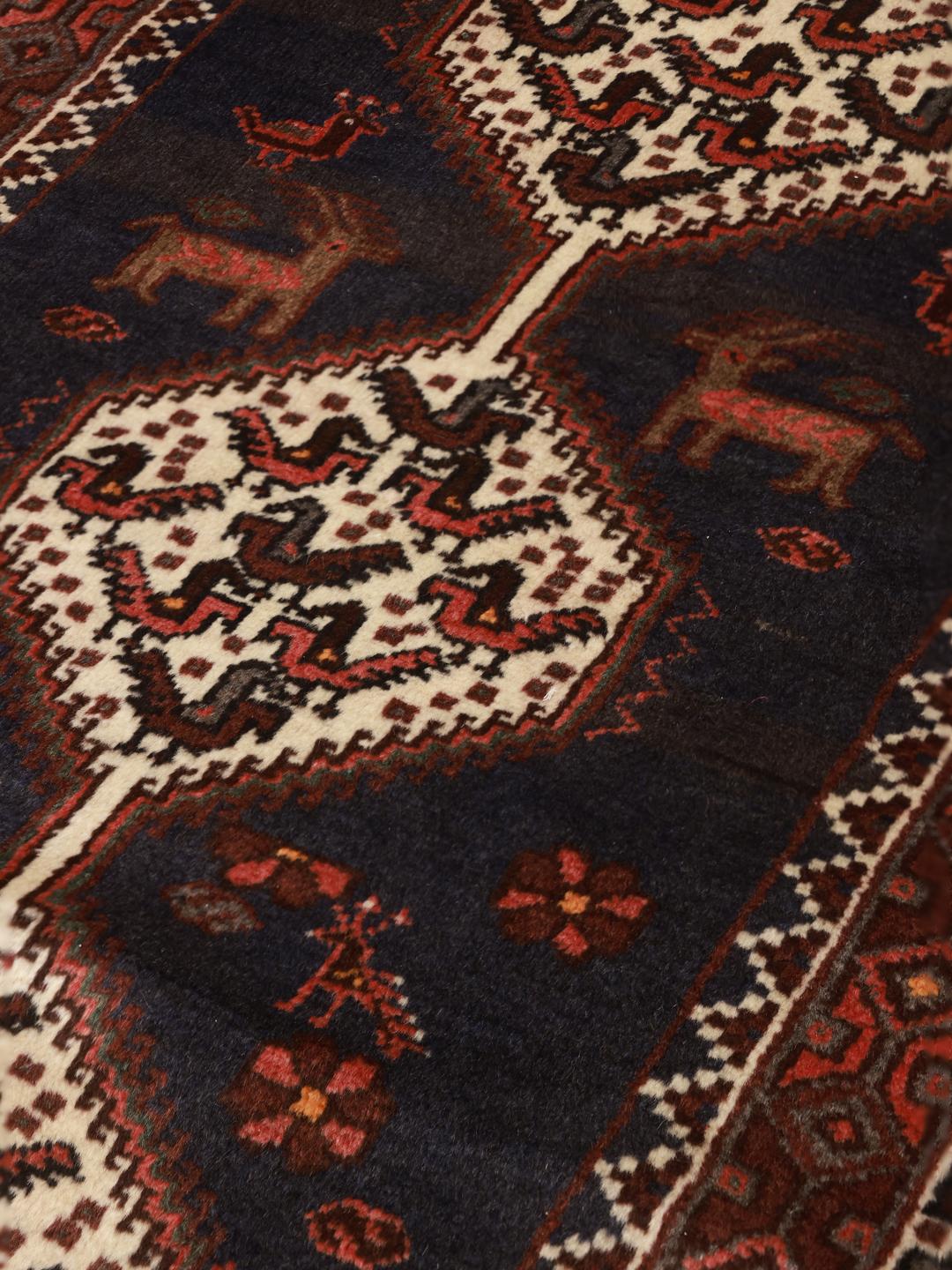
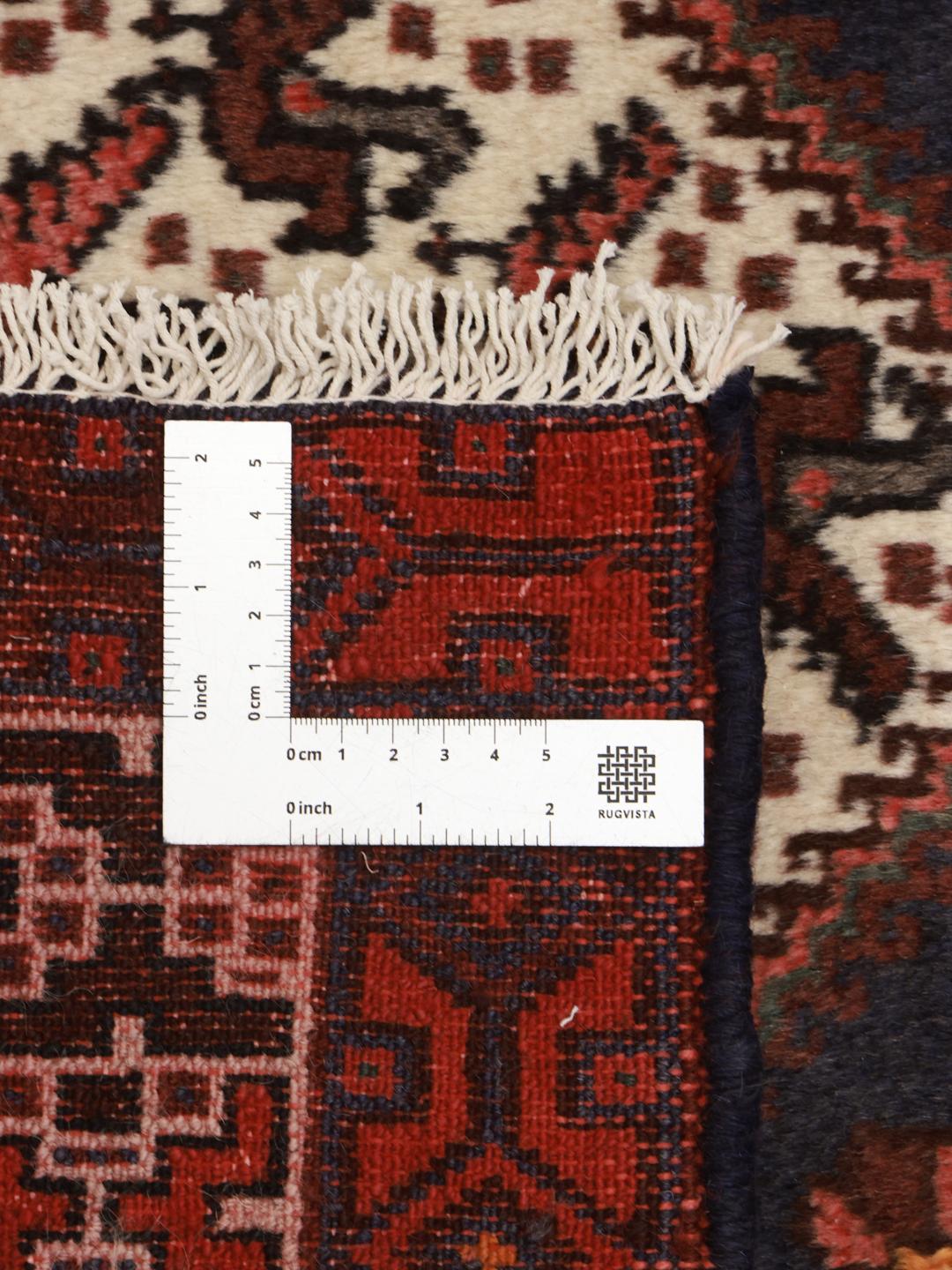
Signature design elements in this tradition often include repeating guls or diamond medallions, which serve as a visual language for the weaver. The inclusion of stylised animals and floral motifs, as seen here, is a hallmark of this style, representing a blend of local folklore and artistic expression that sets these rugs apart from more formal, city-based weaving traditions.
These rugs are highly valued by collectors for their authenticity and the human story imbued in every knot. Owning a piece from this tradition is an investment in cultural heritage, offering a glimpse into a history of craftsmanship that prioritises resilience and beauty in equal measure.