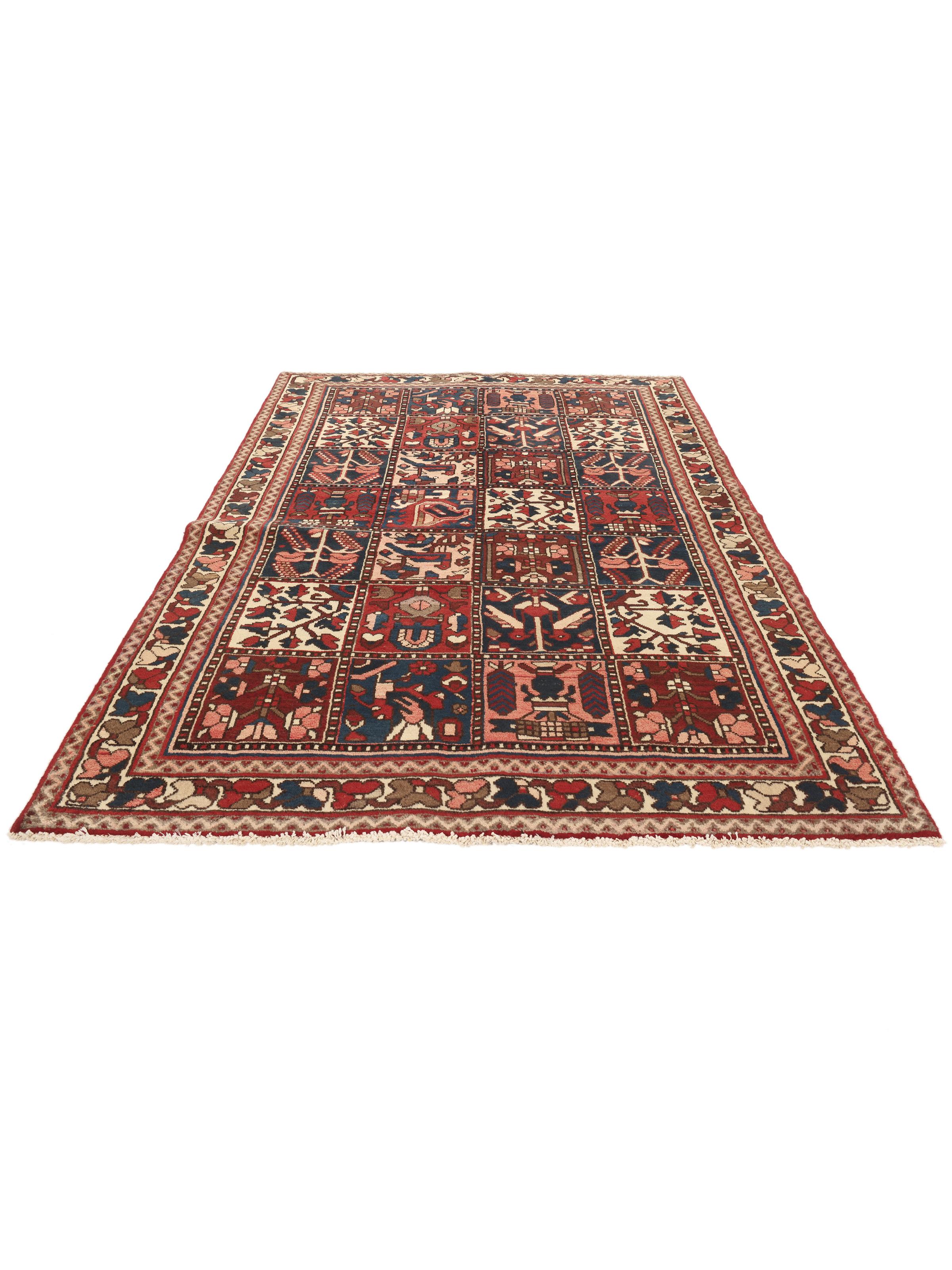
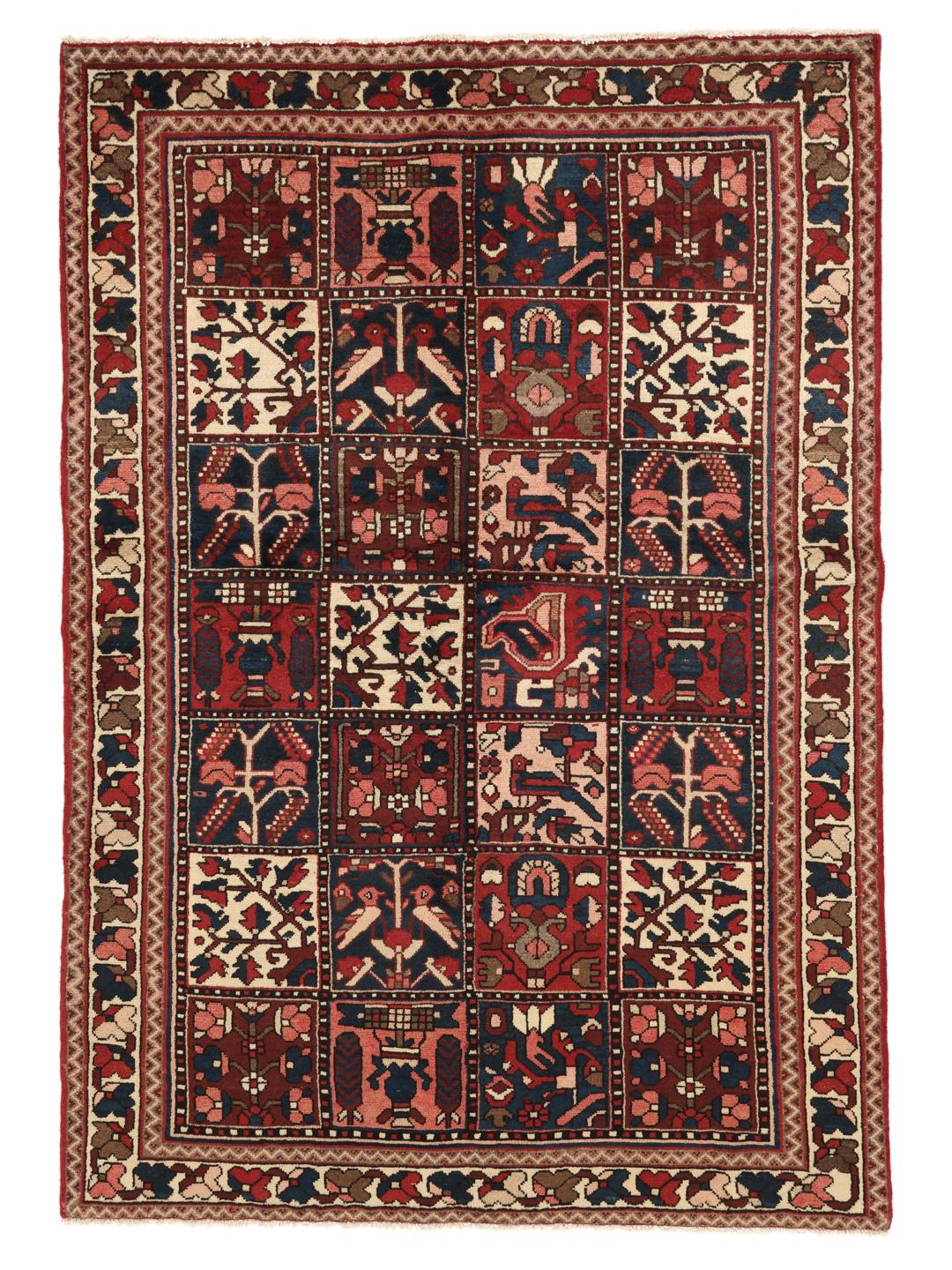
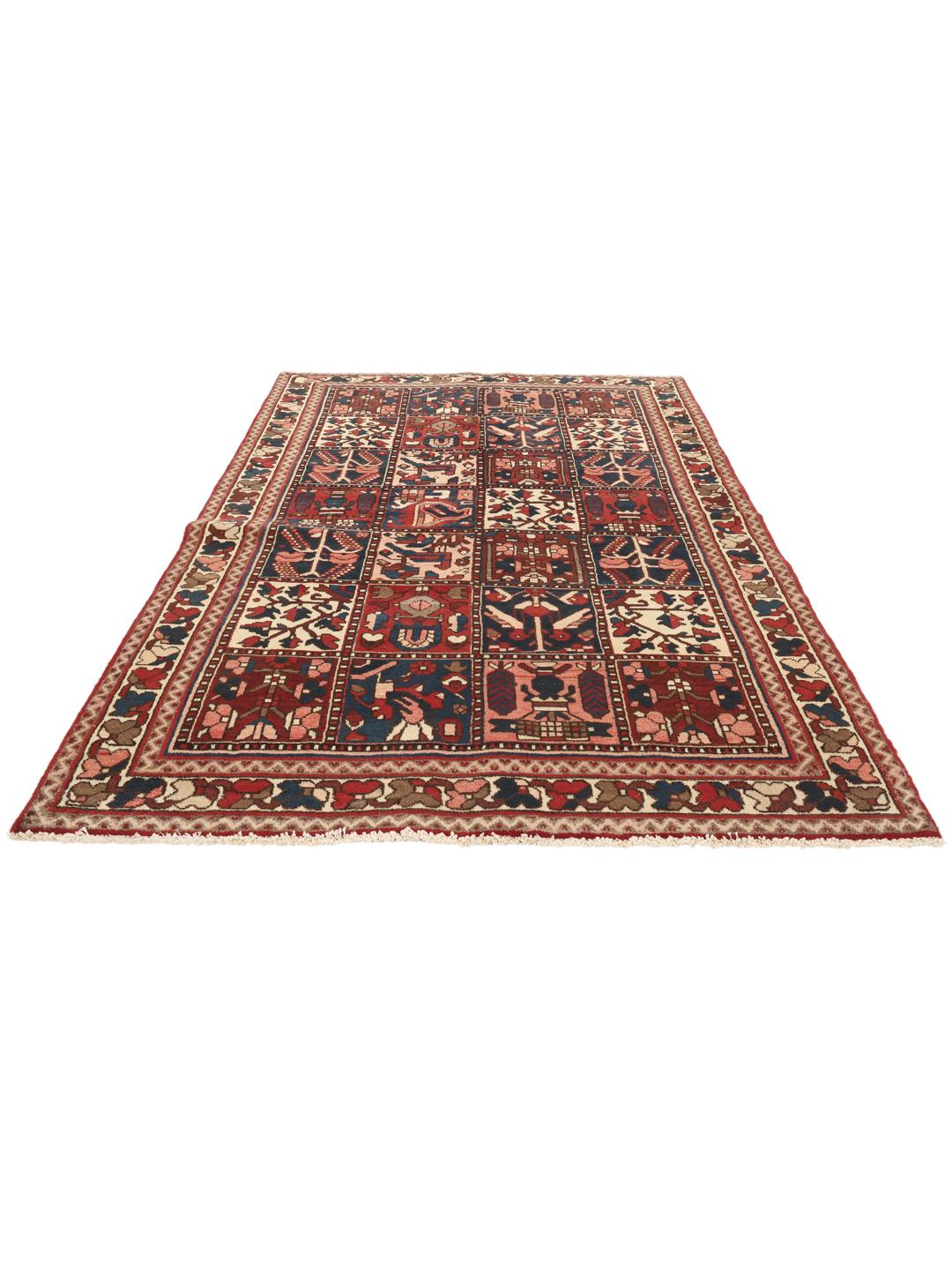
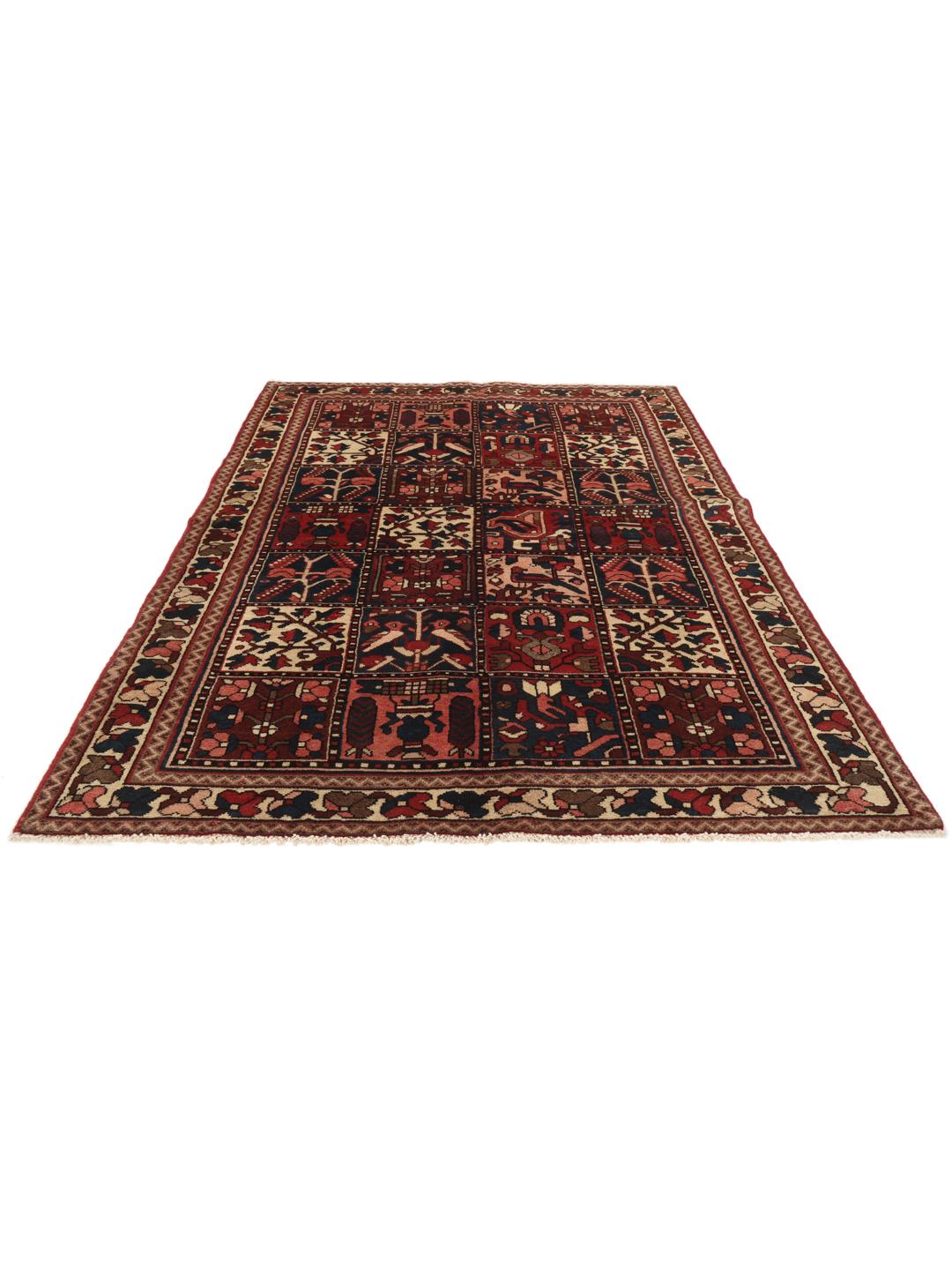
Bakhtiari rugs originate from the mountainous regions of the Middle East, traditionally crafted by the Bakhtiari tribe. These nomadic and semi-nomadic people have a long history of weaving, drawing inspiration from their natural environment, the rugged landscape, and the seasonal migrations that define their way of life.
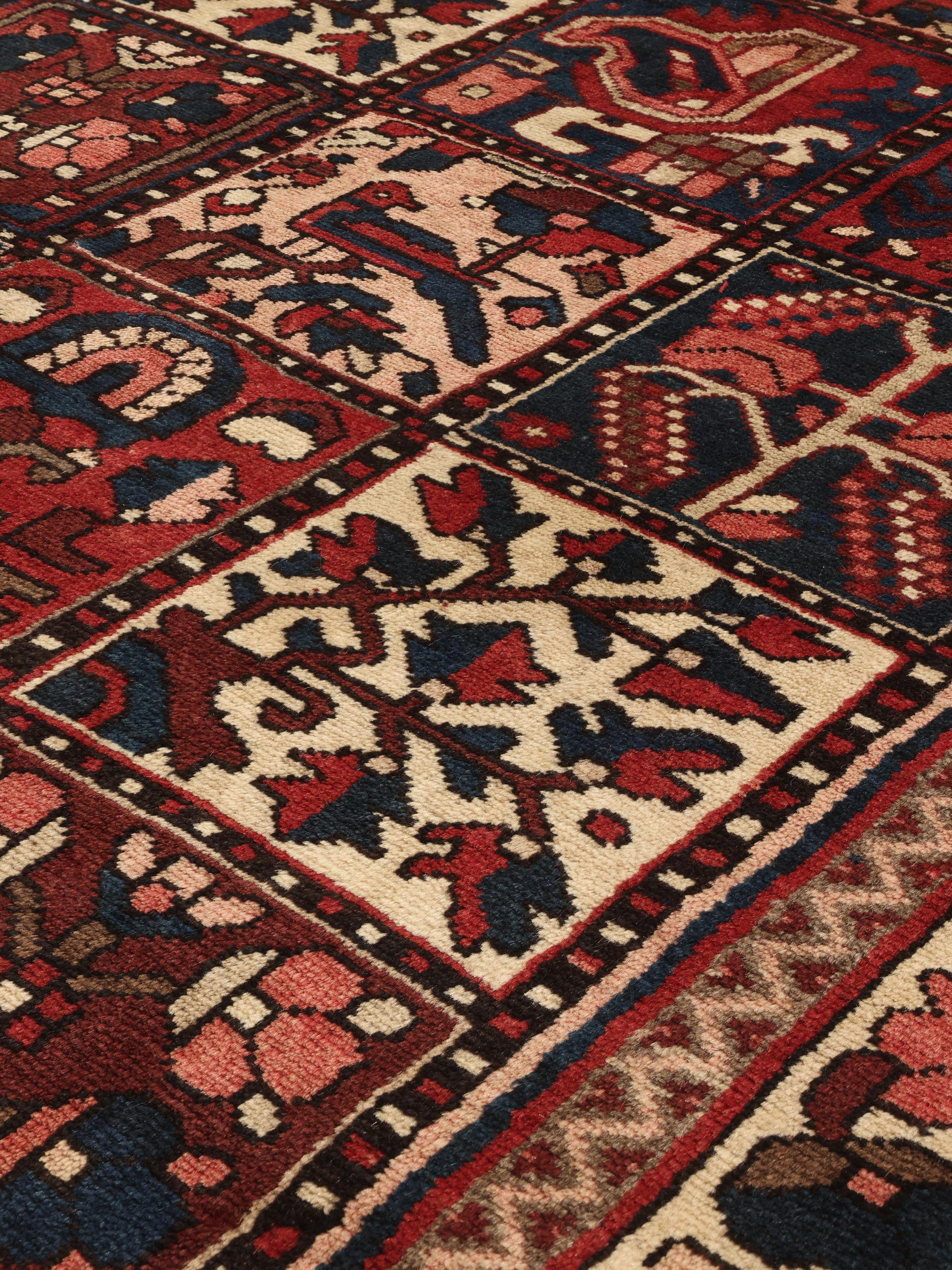
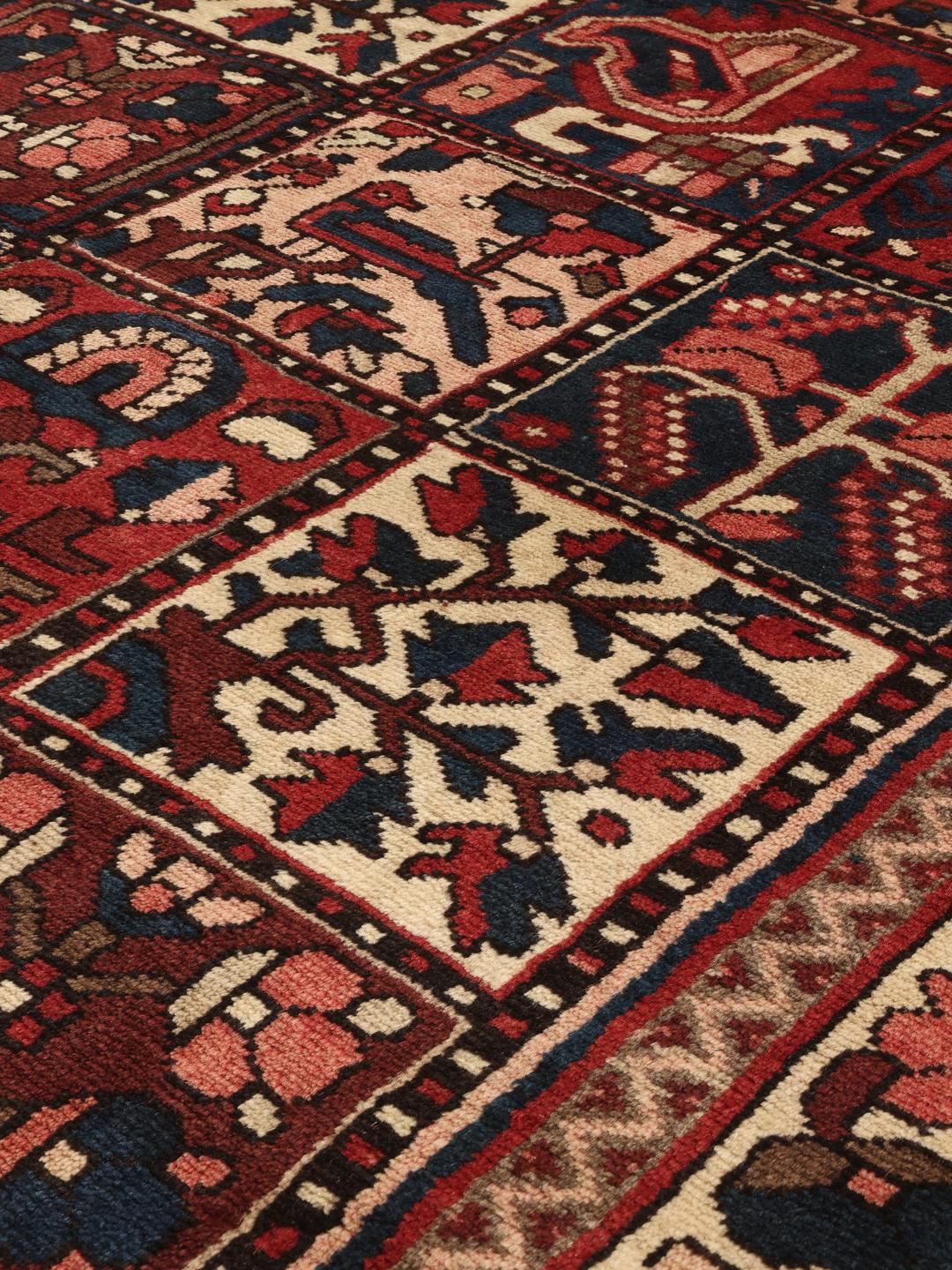
The hallmark of this tradition is the khesti or garden-panelled design. This motif is deeply symbolic, representing the classic Middle Eastern garden, a concept that serves as a sanctuary and a paradise on earth. Each panel typically contains a different motif, such as trees, flowers, or birds, creating a highly organised yet diverse field that reflects the weaver's surroundings.
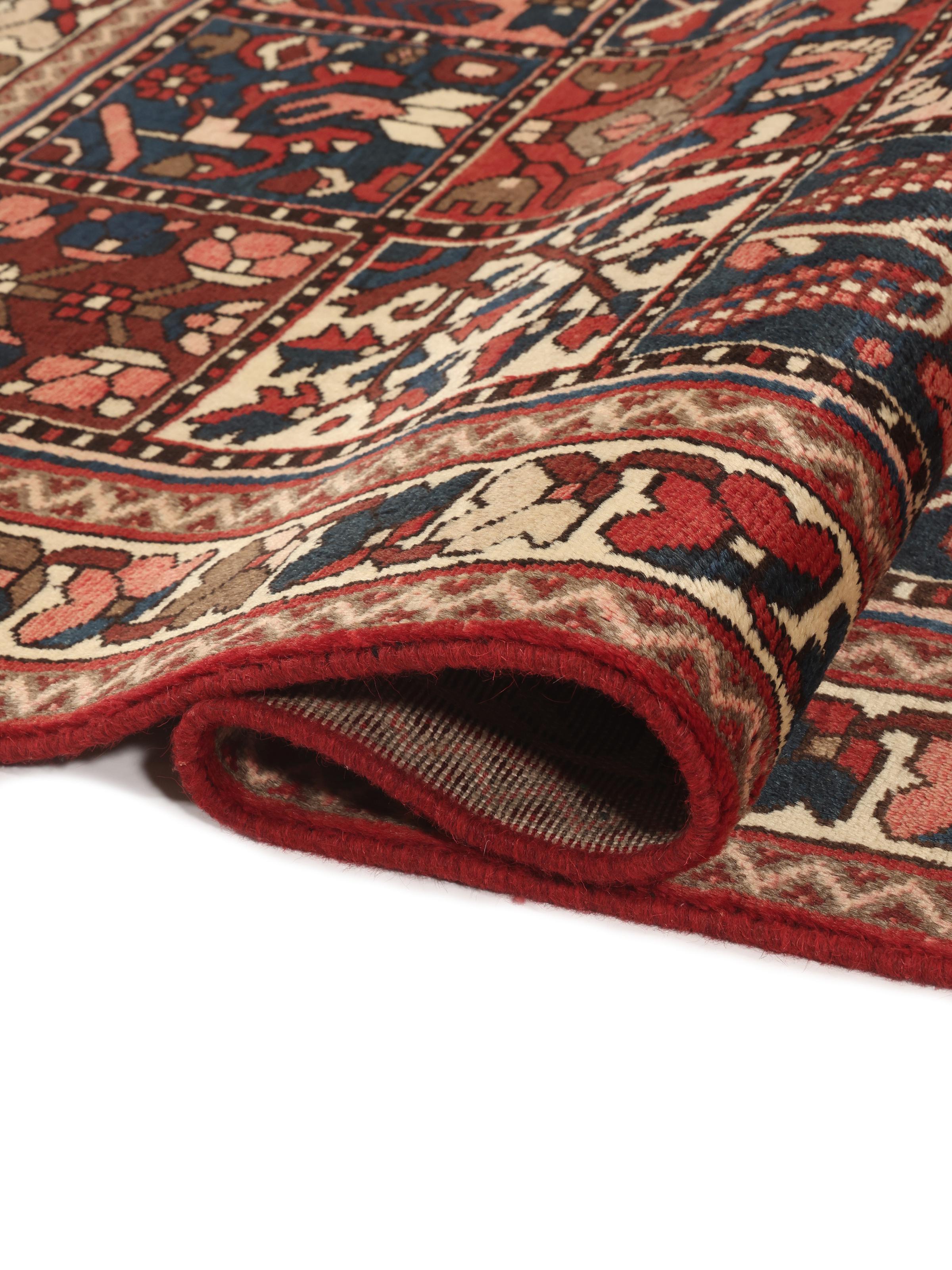
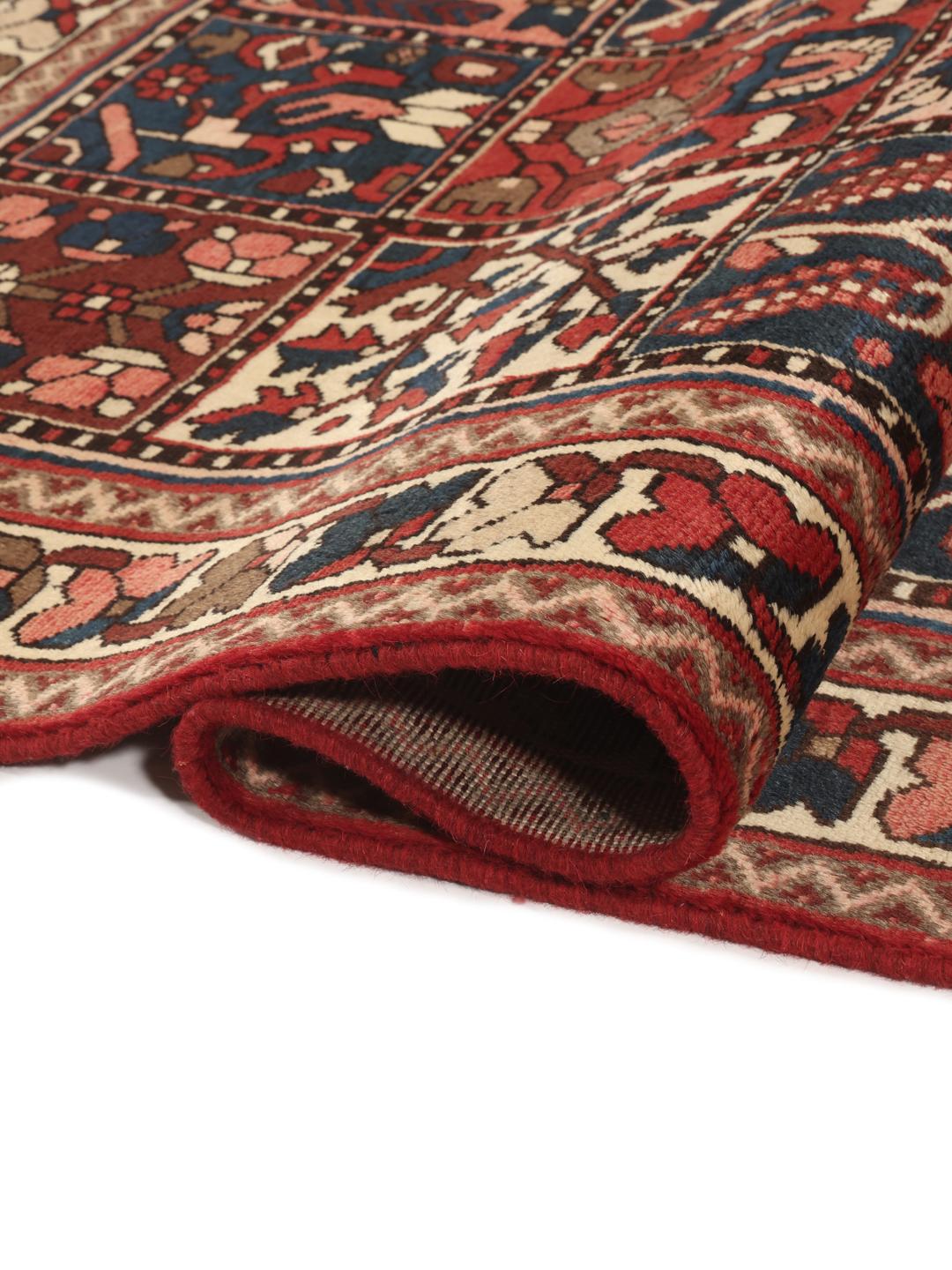
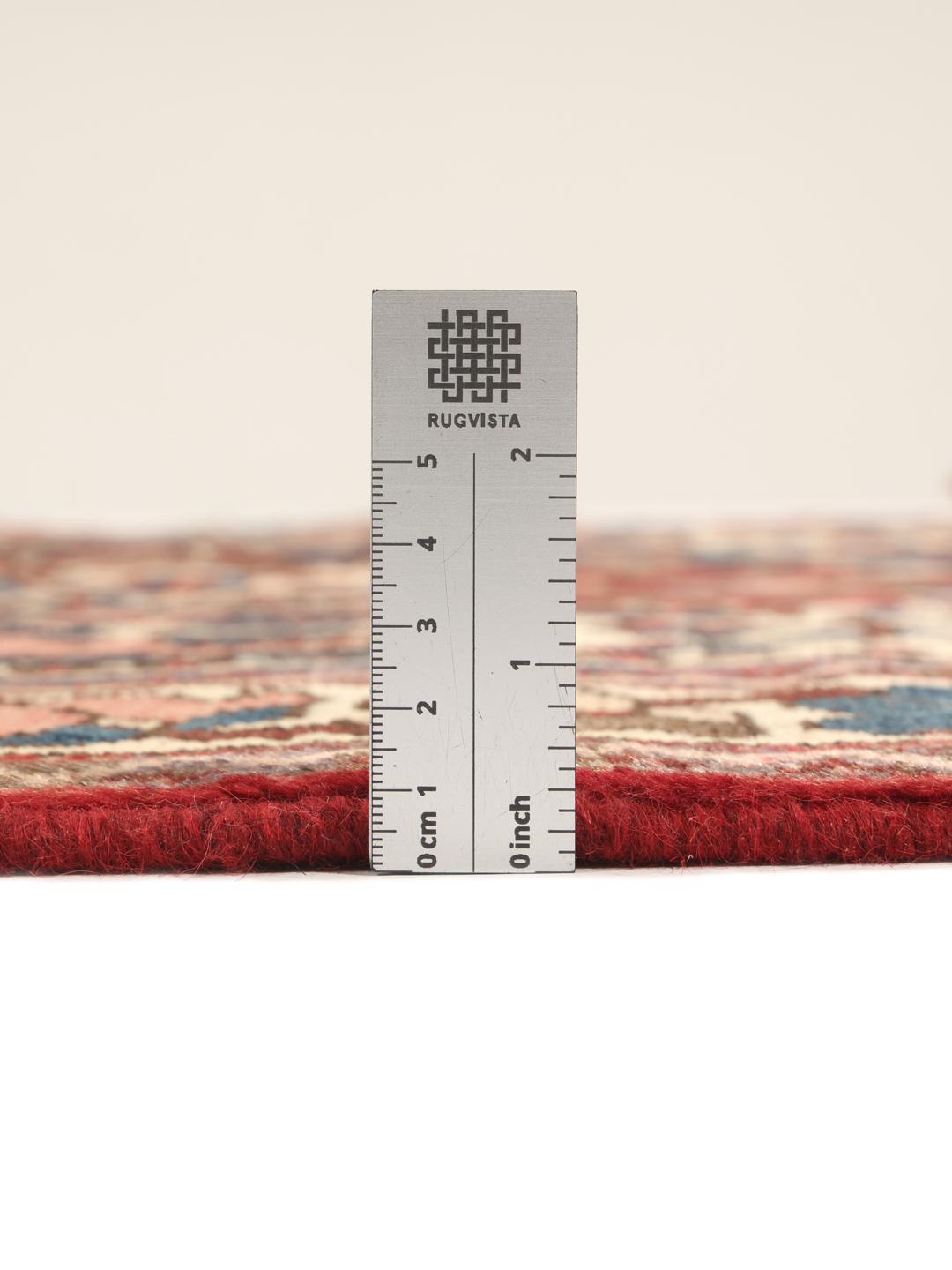
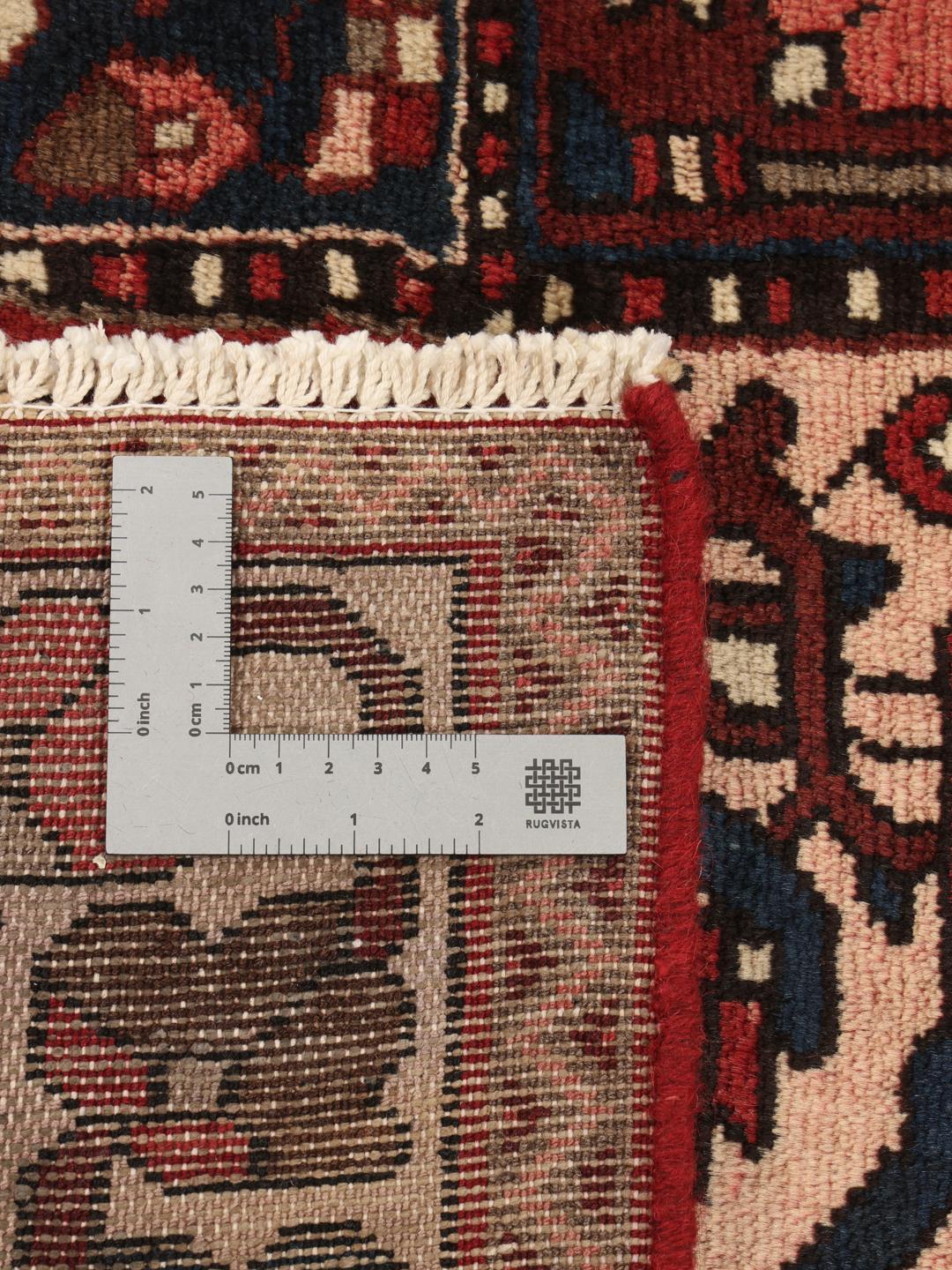
Quality in these rugs is determined by the mastery of the knotting technique and the quality of the wool used. The wool is typically sourced from local sheep, known for its resilience and ability to take deep, rich dyes. This combination of robust material and skilful knotting produces a rug that is not only visually striking but also incredibly hard-wearing.
Collecting a Bakhtiari rug is an investment in a storied craft tradition that has been passed down through generations. These pieces are highly valued for their individuality and the way they bridge the gap between functional floor covering and cultural history. Owning one is a testament to an appreciation for human skill and the enduring legacy of nomadic artistry.