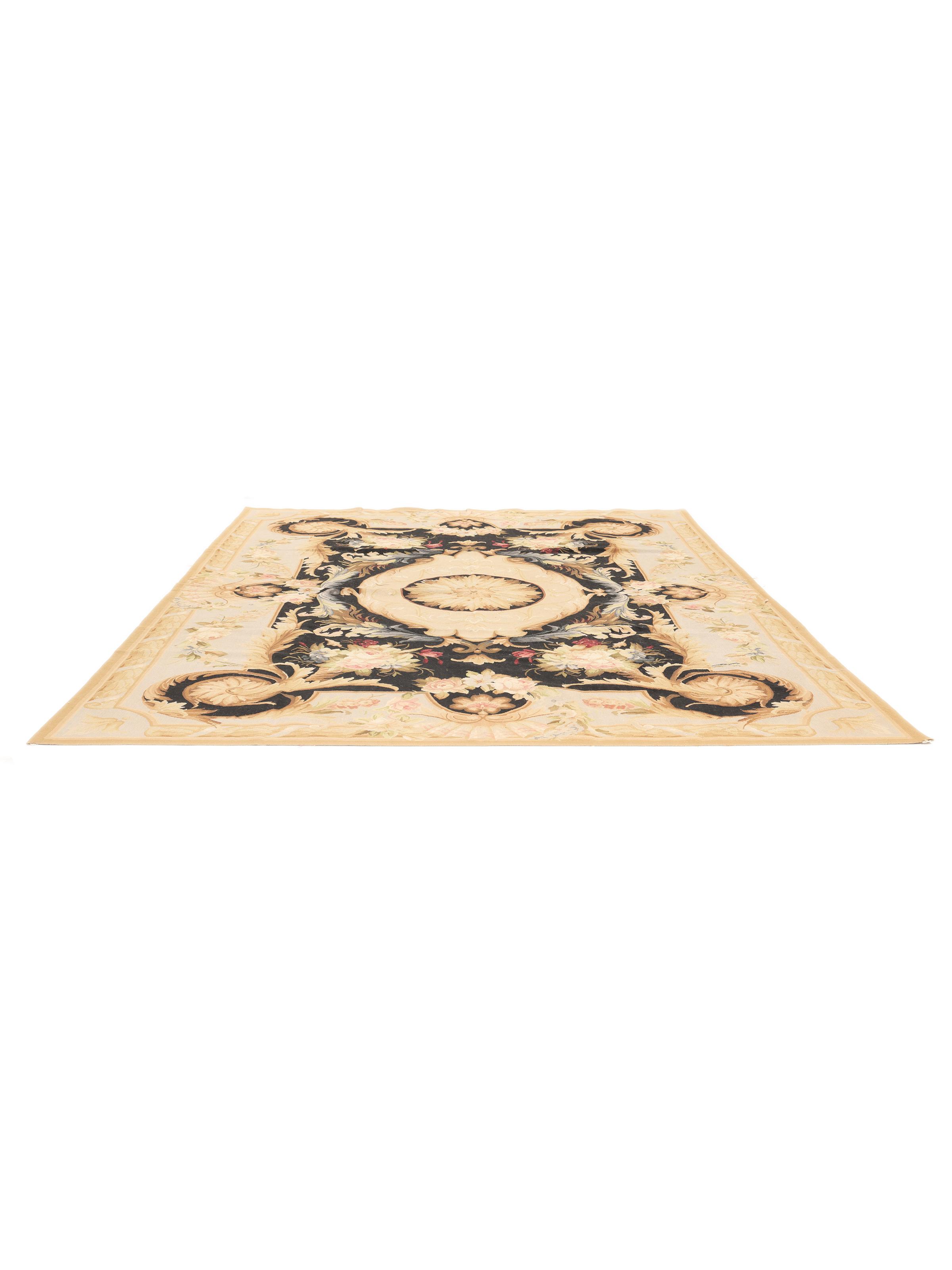
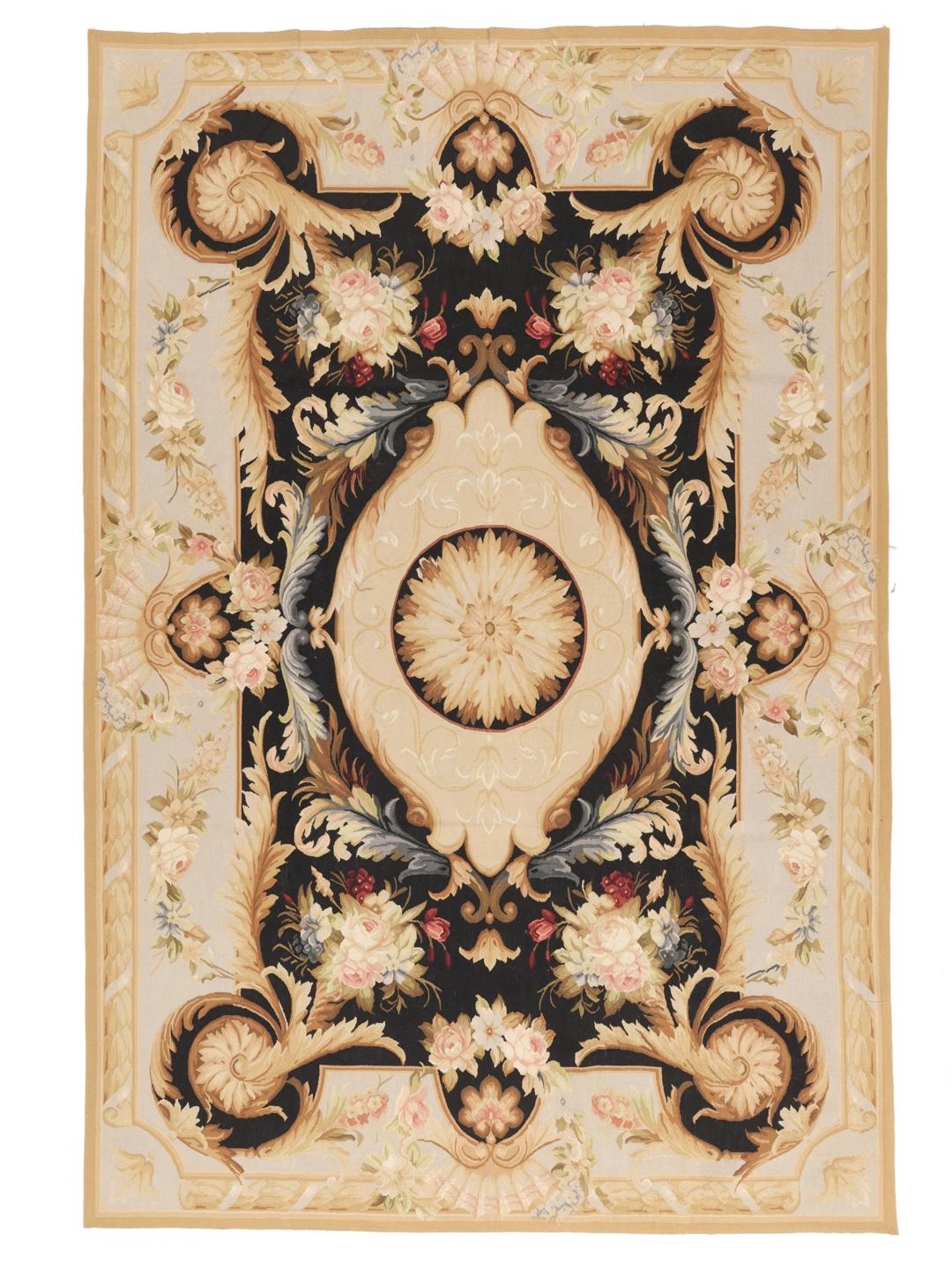
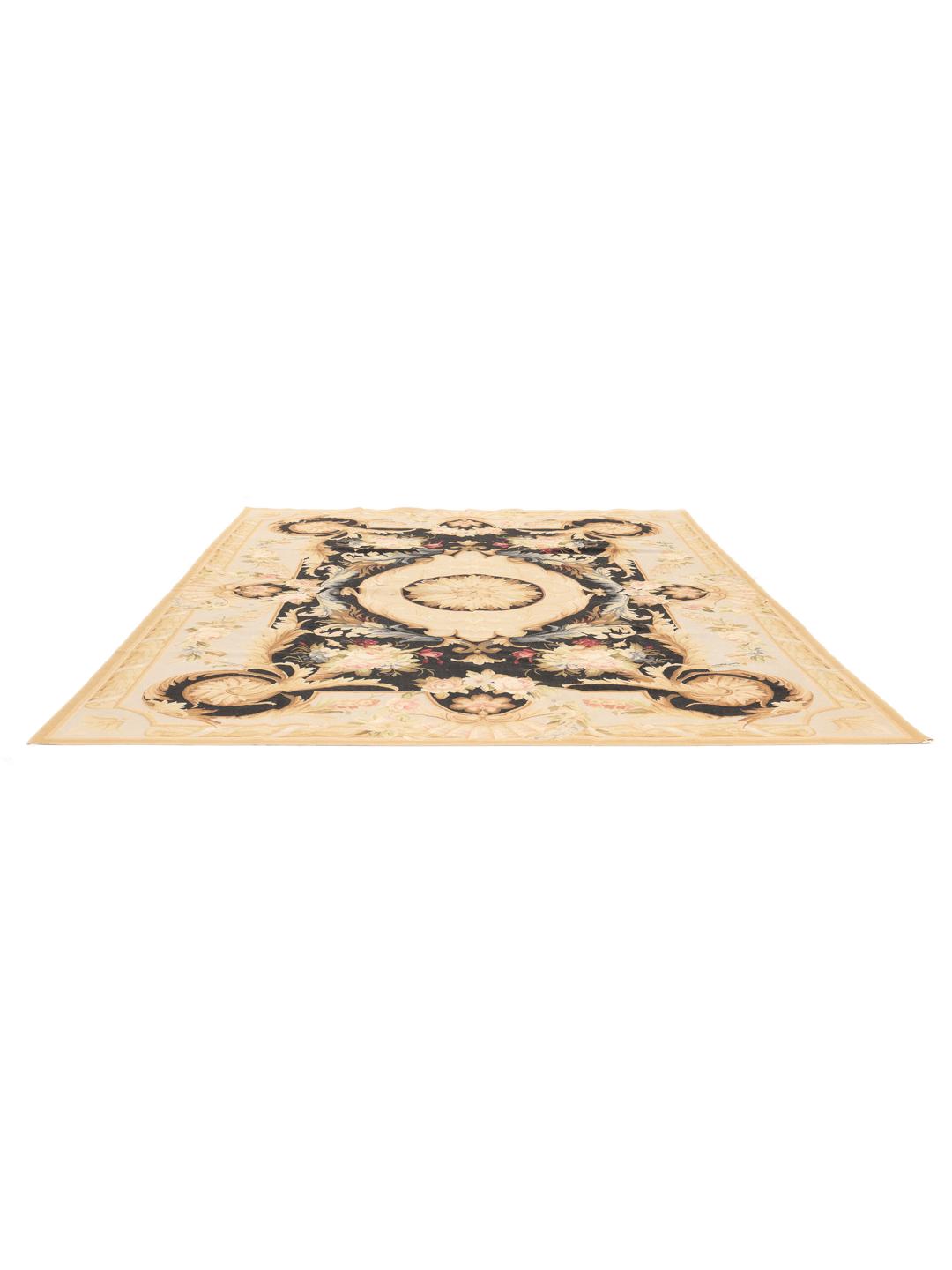
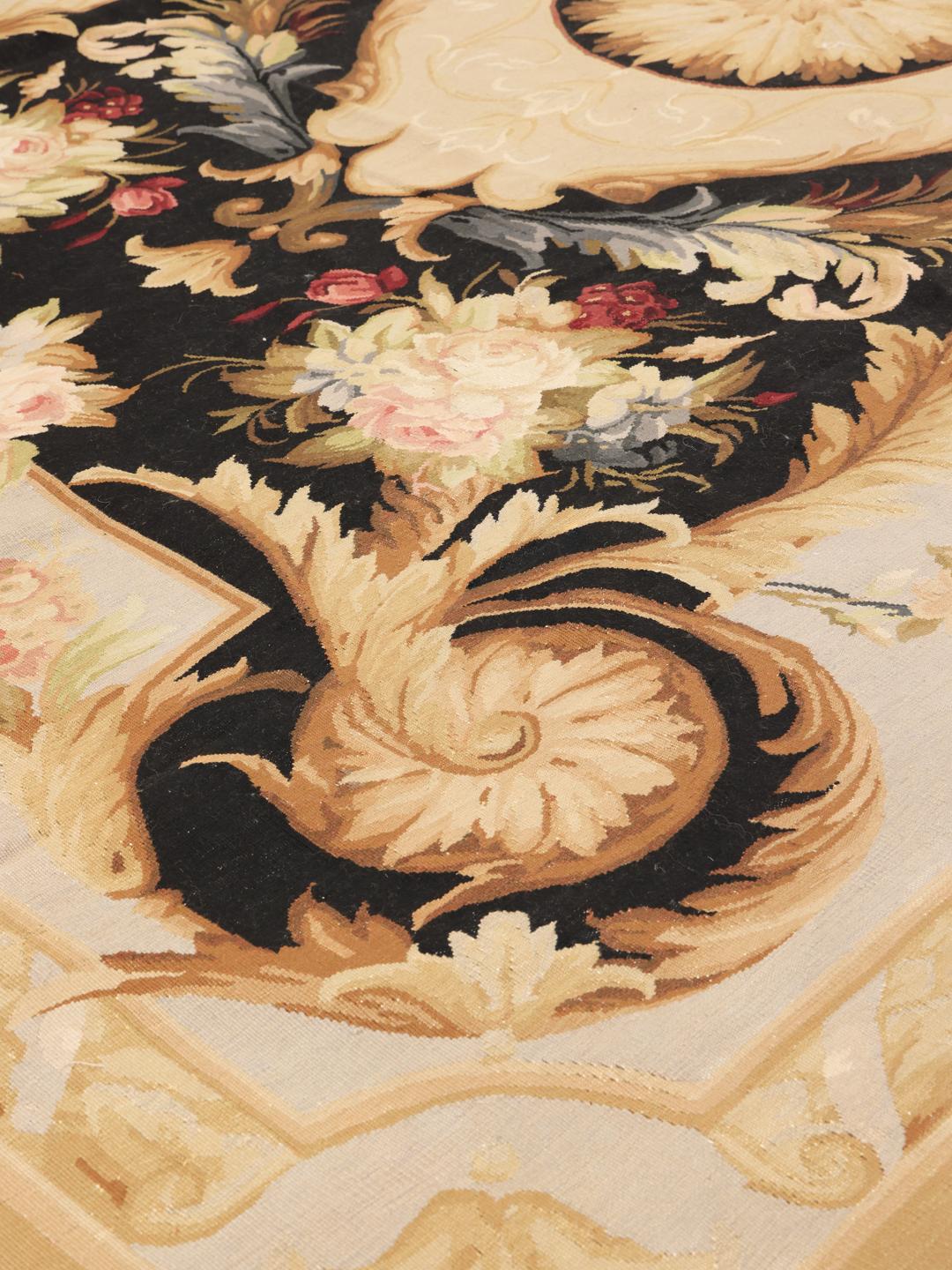
The Aubusson tradition traces its roots to the town of Aubusson in central France, where the craft of tapestry weaving flourished for centuries. Originally commissioned by royalty and the aristocracy, these tapestries were prized for their intricate floral designs and pastoral scenes. Over time, the style evolved into the flat-weave rug designs we recognise today, becoming a staple of refined European interior decor.
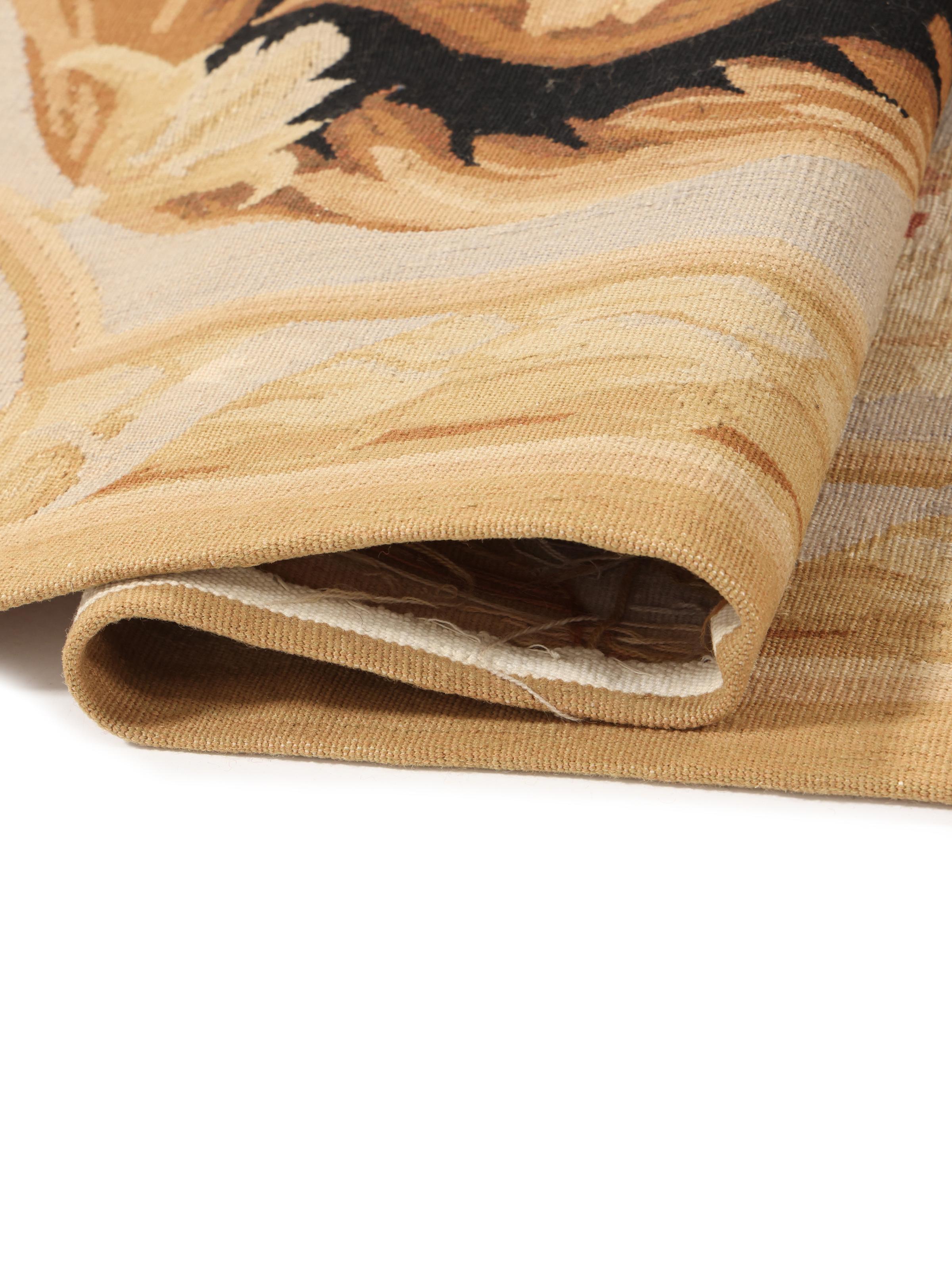
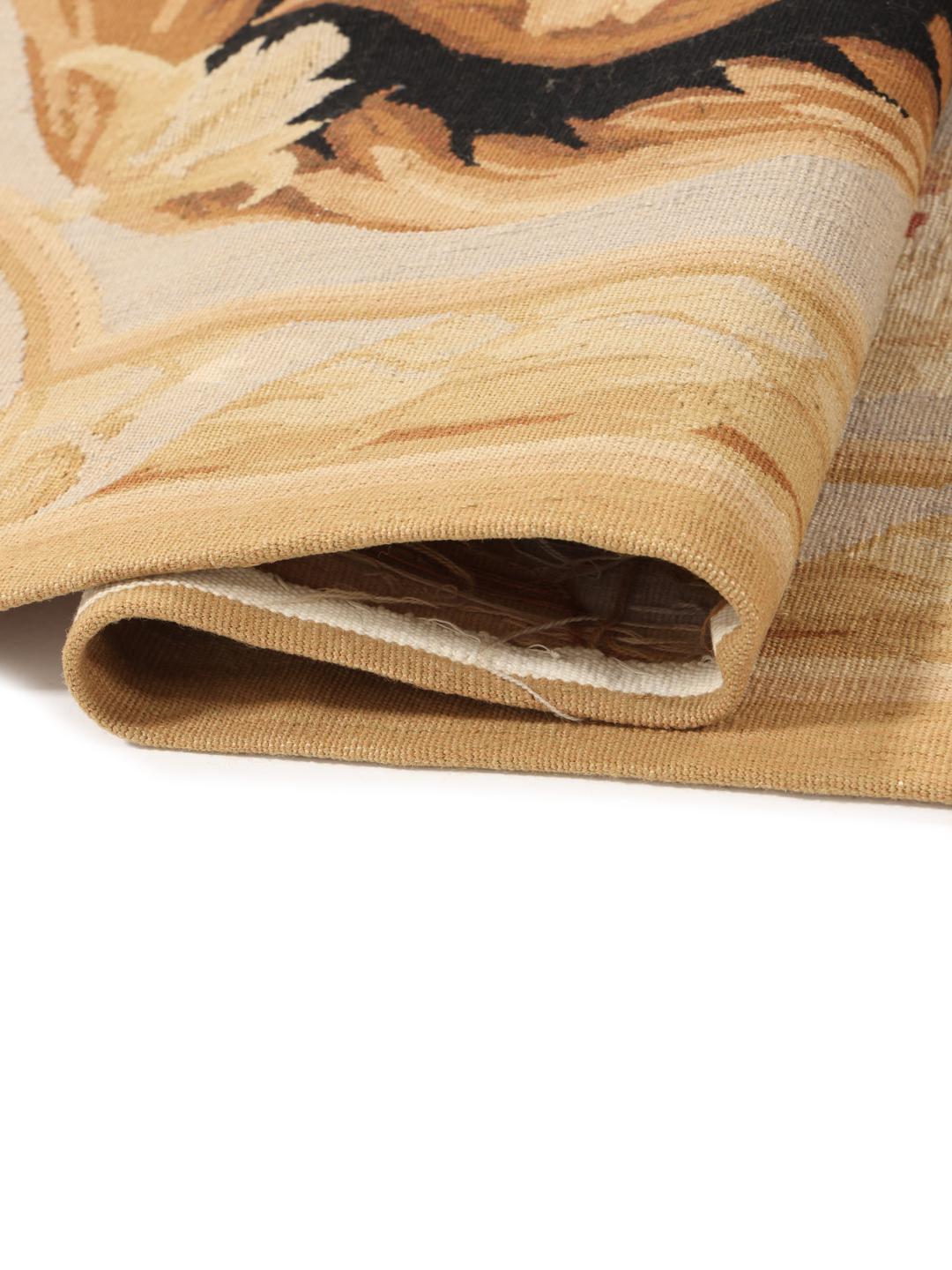
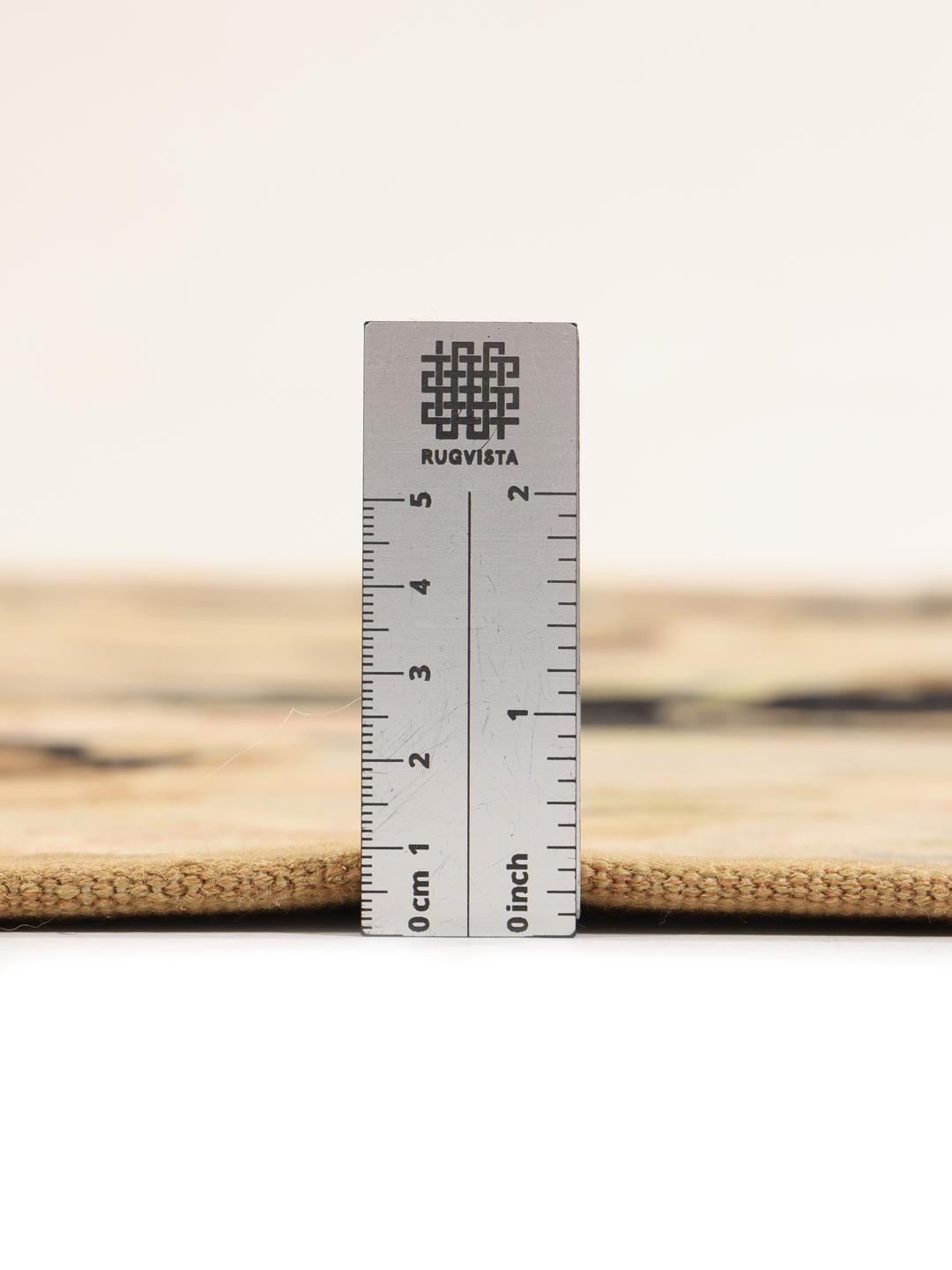
In the context of this rug, the term flat-weave refers to the absence of a raised pile, a hallmark of the Aubusson style. This technique allows for the creation of exceptionally crisp and detailed patterns, as the design is woven directly into the foundation rather than formed by the ends of yarn. This results in a thinner, more versatile rug that sits elegantly on the floor, showcasing the complexity of its design.
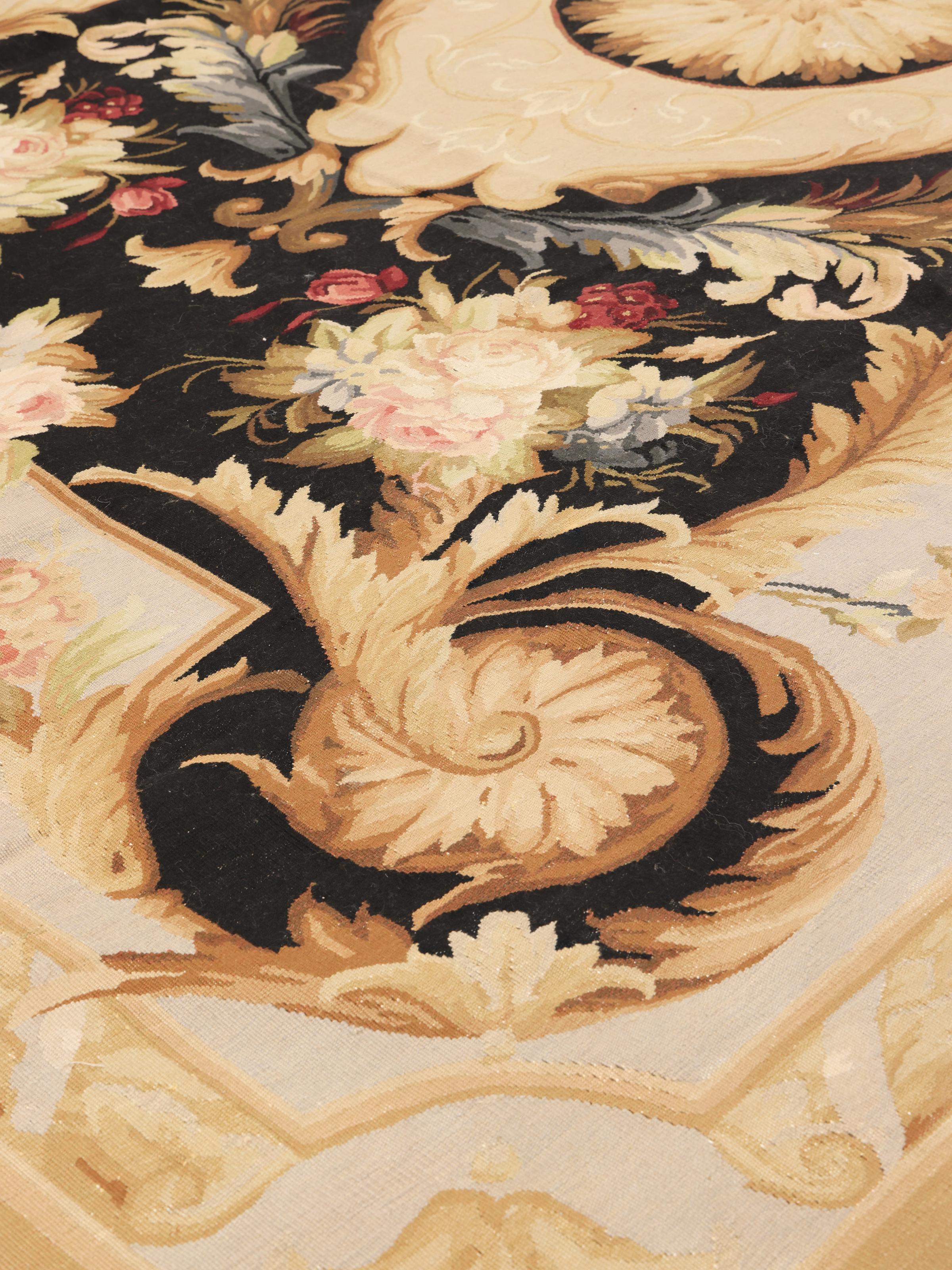
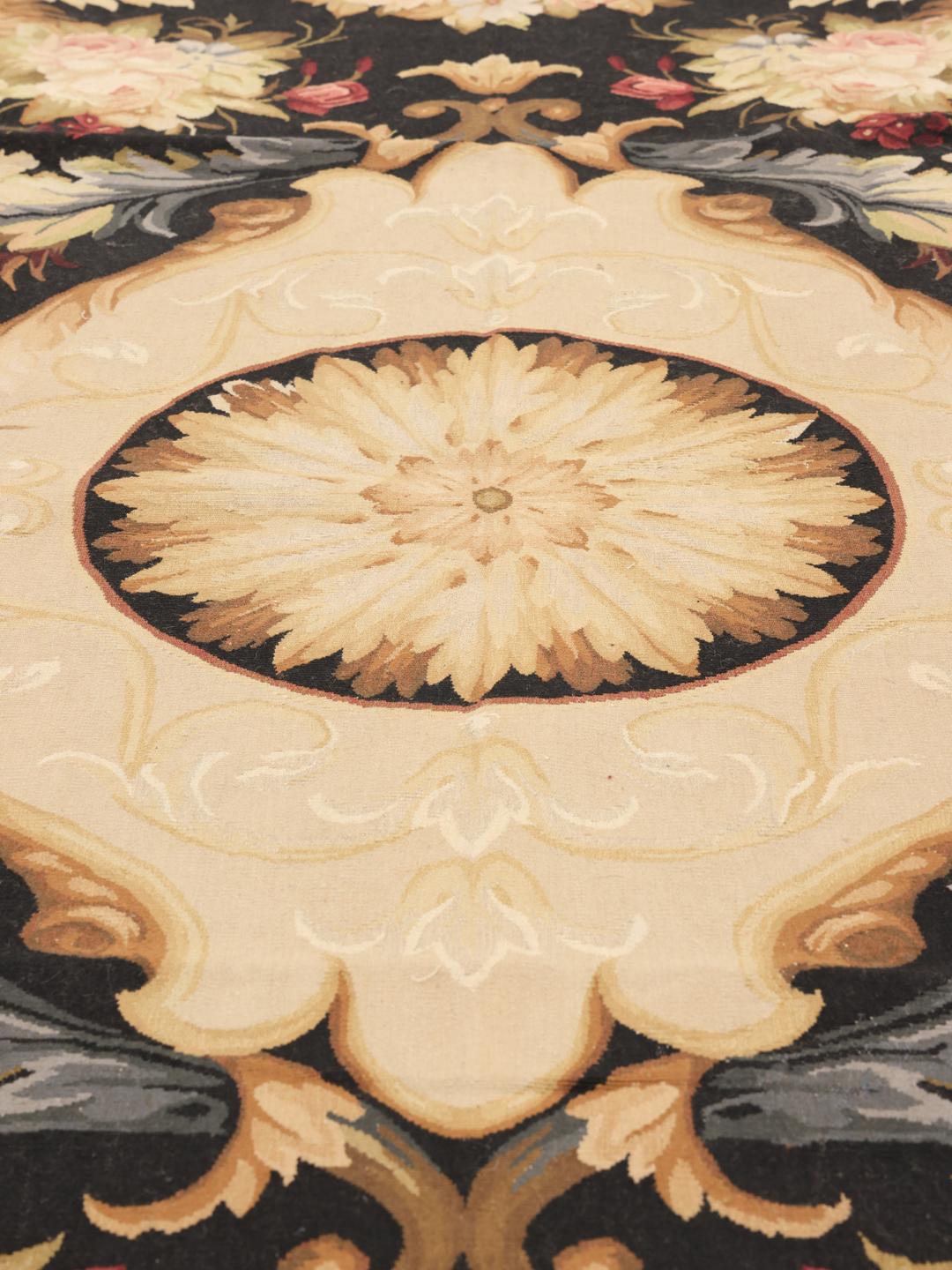
The signature design elements of this tradition include the use of grand, central medallions, elaborate scrolls, and overflowing floral bouquets. The formal composition is typically framed by a decorative border that acts as a frame for the central scene. Using a black field is a striking choice that provides a modern contrast to the traditional, soft-toned floral motifs, creating a look that feels both historic and fresh.
Collecting a rug from this tradition is an investment in a storied craft that bridges the gap between textile art and interior design. These rugs are valued not only for their aesthetic beauty but for the immense skill required to execute such complex, multi-layered designs by hand. Owning one is a way to connect with a long heritage of decorative arts, bringing a sense of history and permanence to a contemporary home.