The history of these rugs is deeply rooted in the French tradition of Aubusson, which gained international renown for its exquisite tapestries and flat-weave carpets. Originally crafted in the Creuse valley of central France, these designs became symbols of luxury and artistic refinement throughout Europe, influencing interior decor for centuries.
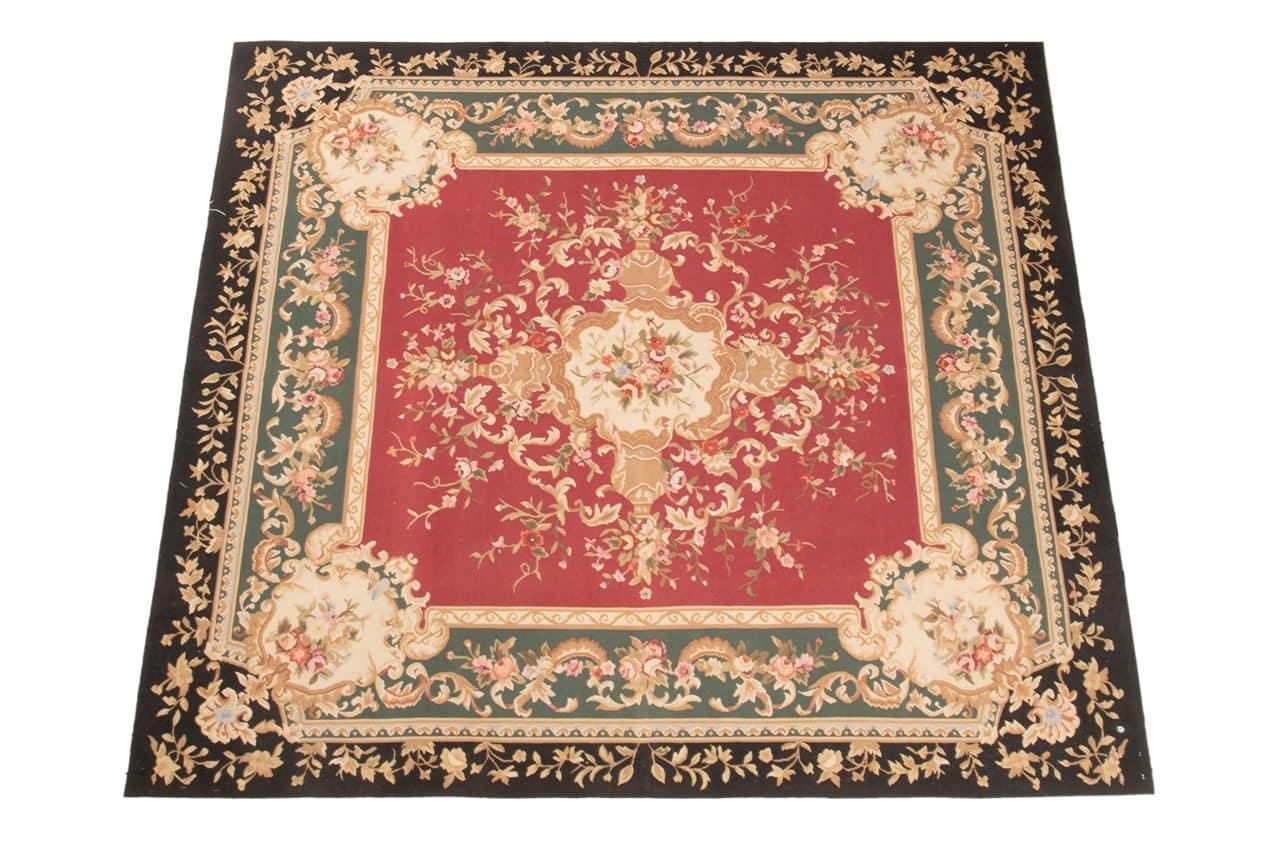
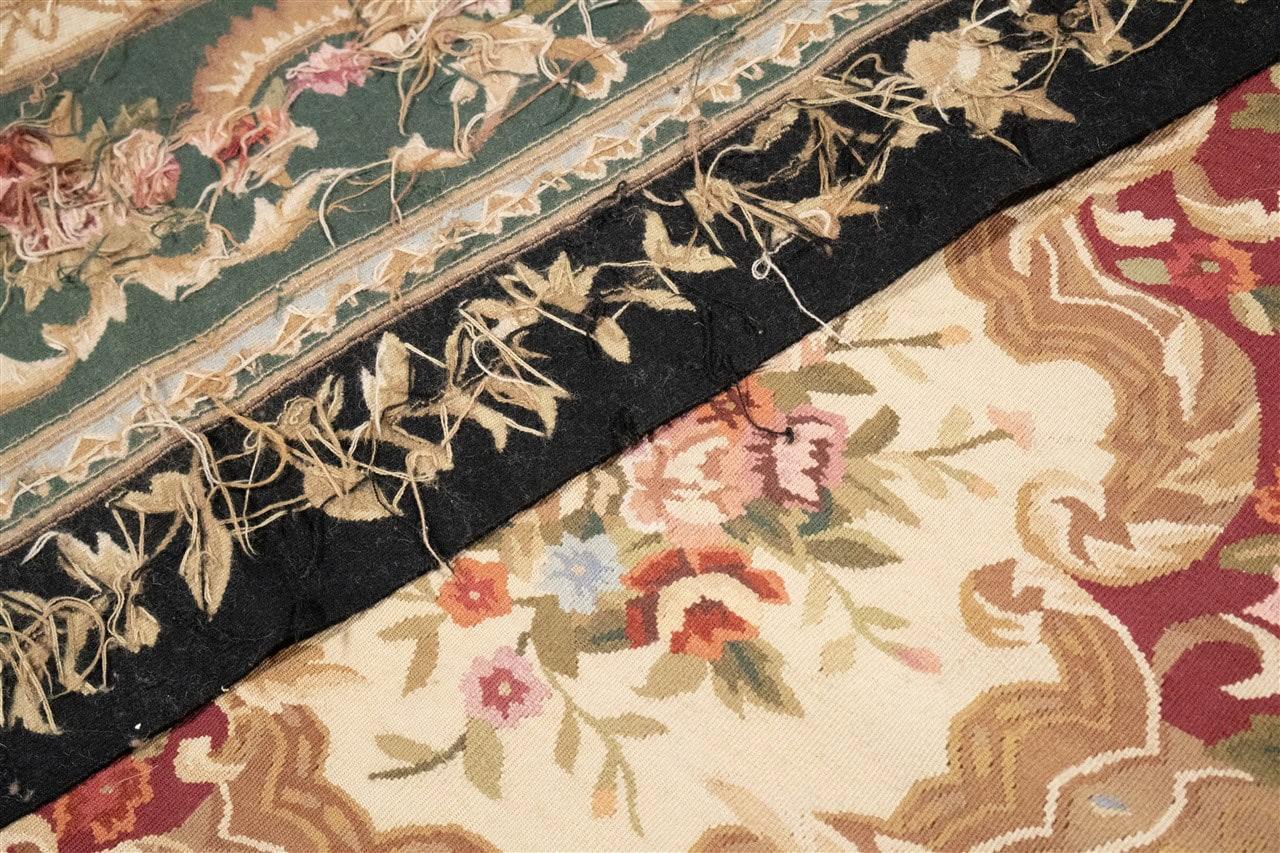
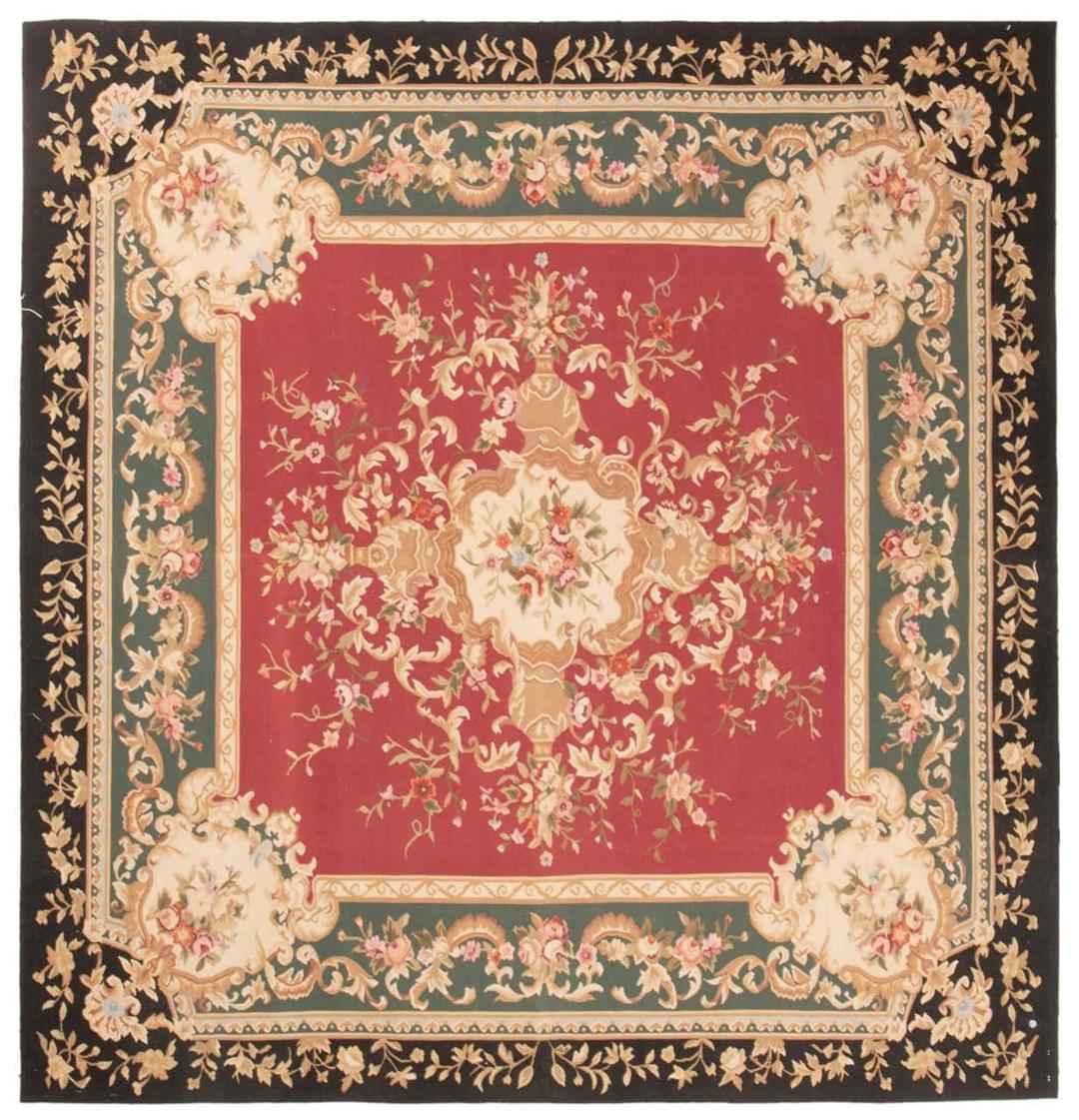
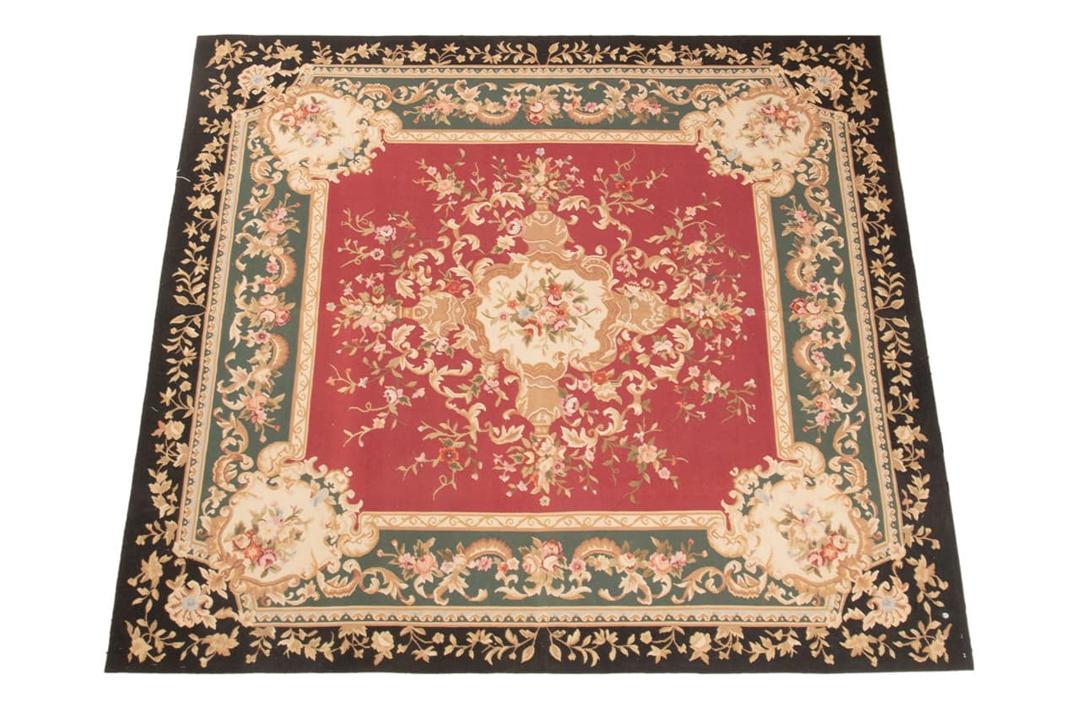
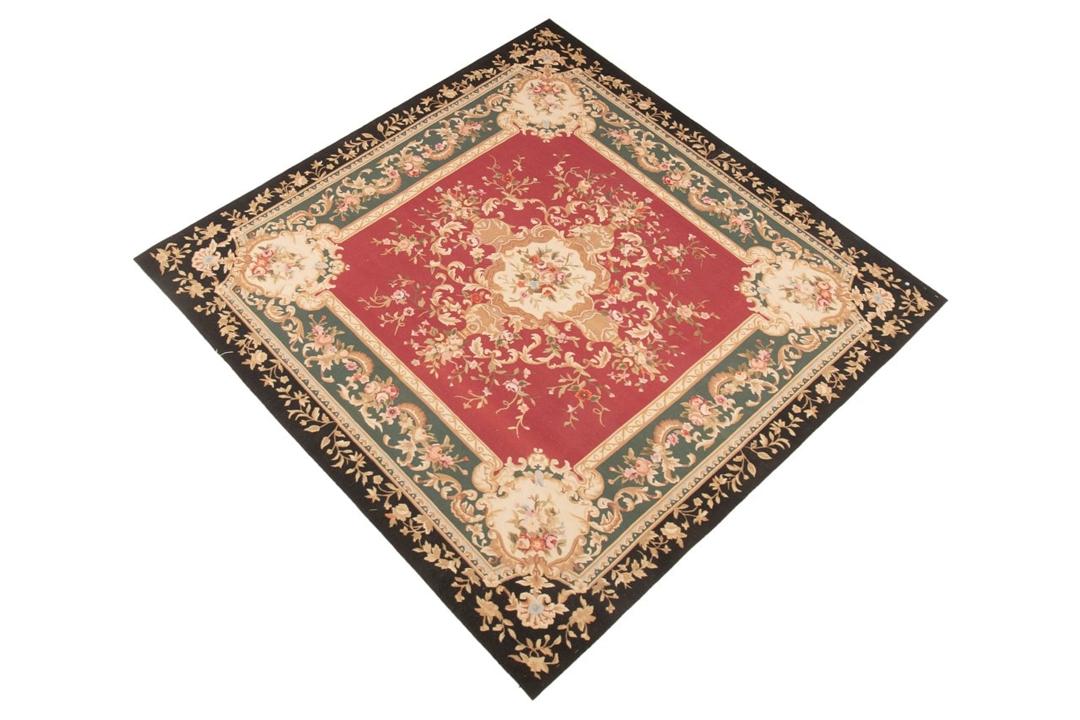
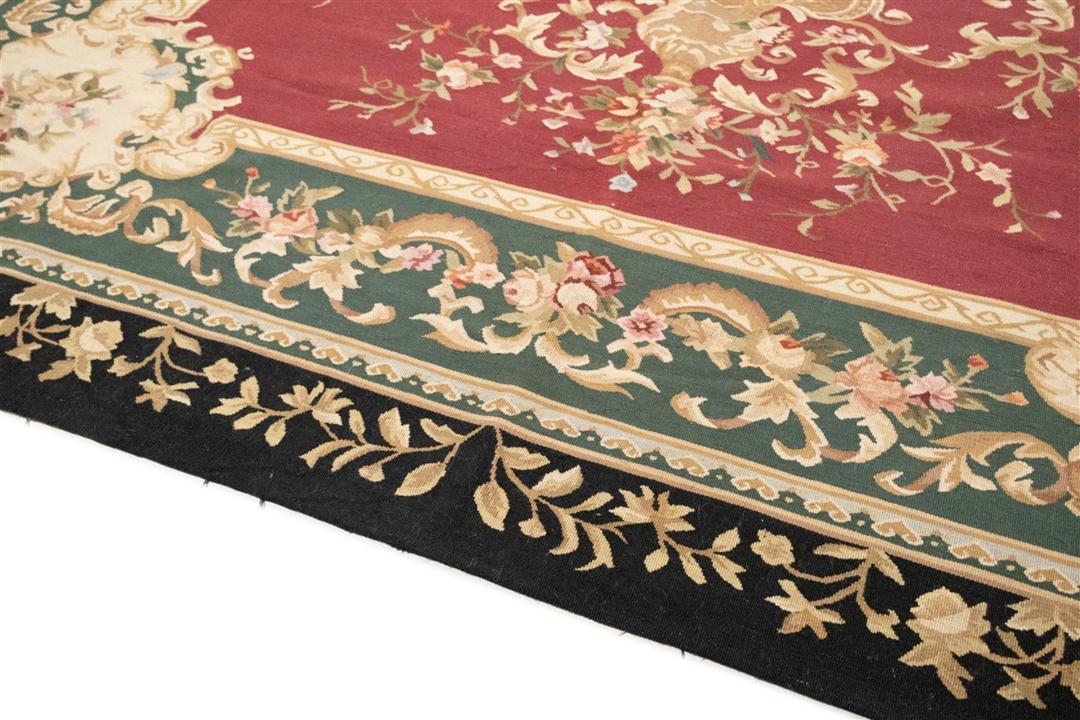
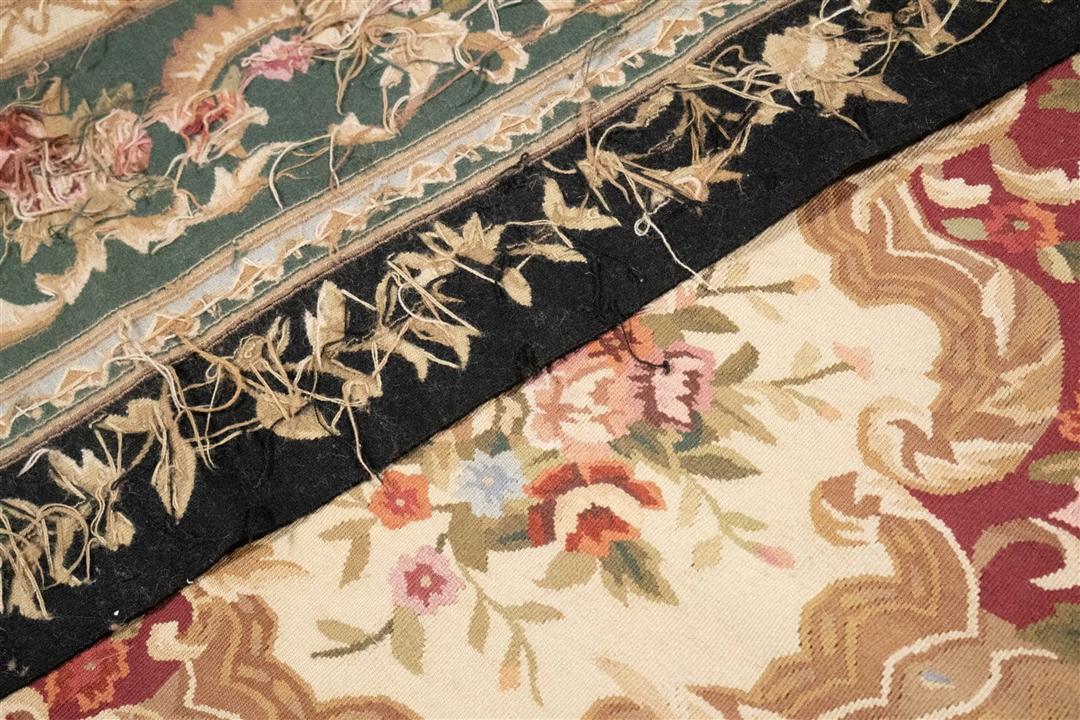
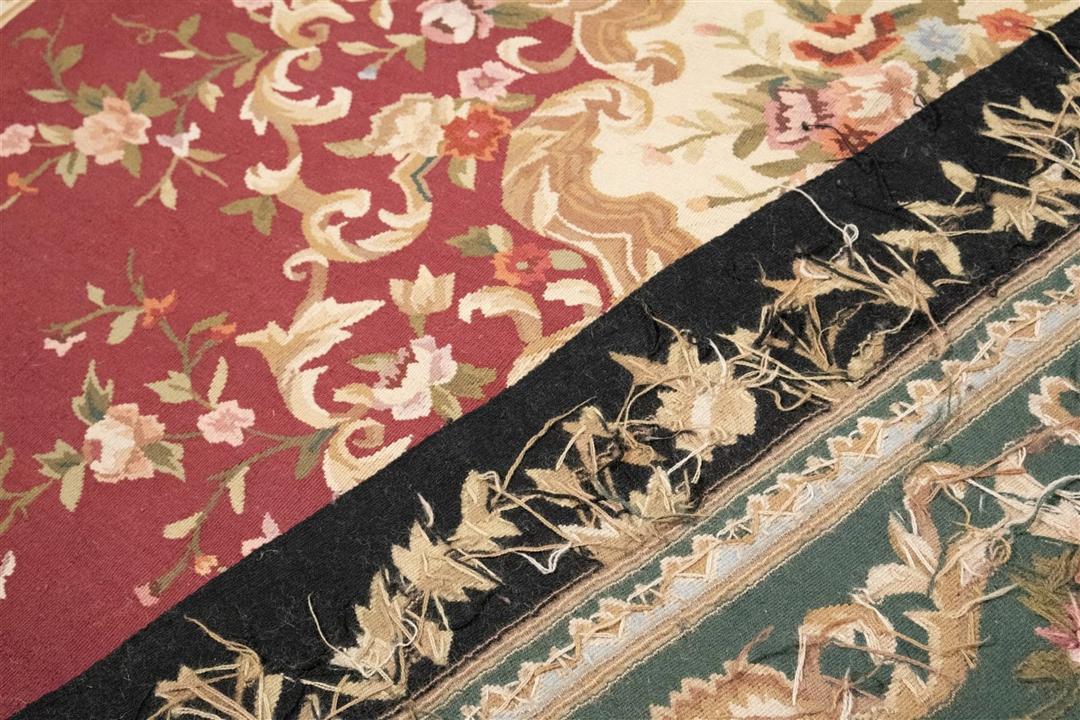
The term flat-weave refers to the absence of a raised pile, which distinguishes these pieces from traditional knotted rugs. This construction method allows for a much finer and more detailed rendering of complex patterns, such as the elaborate floral bouquets and decorative borders seen in this piece, as the weaver can achieve greater precision with each pass of the shuttle.
Signature elements of this style include the use of grand, central medallions surrounded by lush, flowing floral arrangements. The borders are often heavily decorated with scrolling acanthus leaves or floral garlands, framed within a distinct dark border that provides a striking contrast to the vibrant, often red or cream-coloured fields.
Collecting these pieces is an investment in a storied design tradition. They are valued not only for their aesthetic beauty but also for the historical continuity they represent. Owning such a rug is a way to bridge the gap between historical European elegance and modern interior design, bringing a sense of heritage and refined taste into your home.